

Deep house cleaning goes beyond everyday tidying to remove built-up dust, dirt, grease, and hidden grime from every corner of your home. Whether you live in a small flat or a large family house in the UK, a thorough cleaning routine can make your space fresher, healthier, and more comfortable. From cleaning kitchens and bathrooms to tackling carpets, windows, and hard-to-reach areas, this step-by-step guide will help you deep clean your home efficiently and keep it looking its best.
Deep Cleaning vs Regular Cleaning: What’s the Difference?
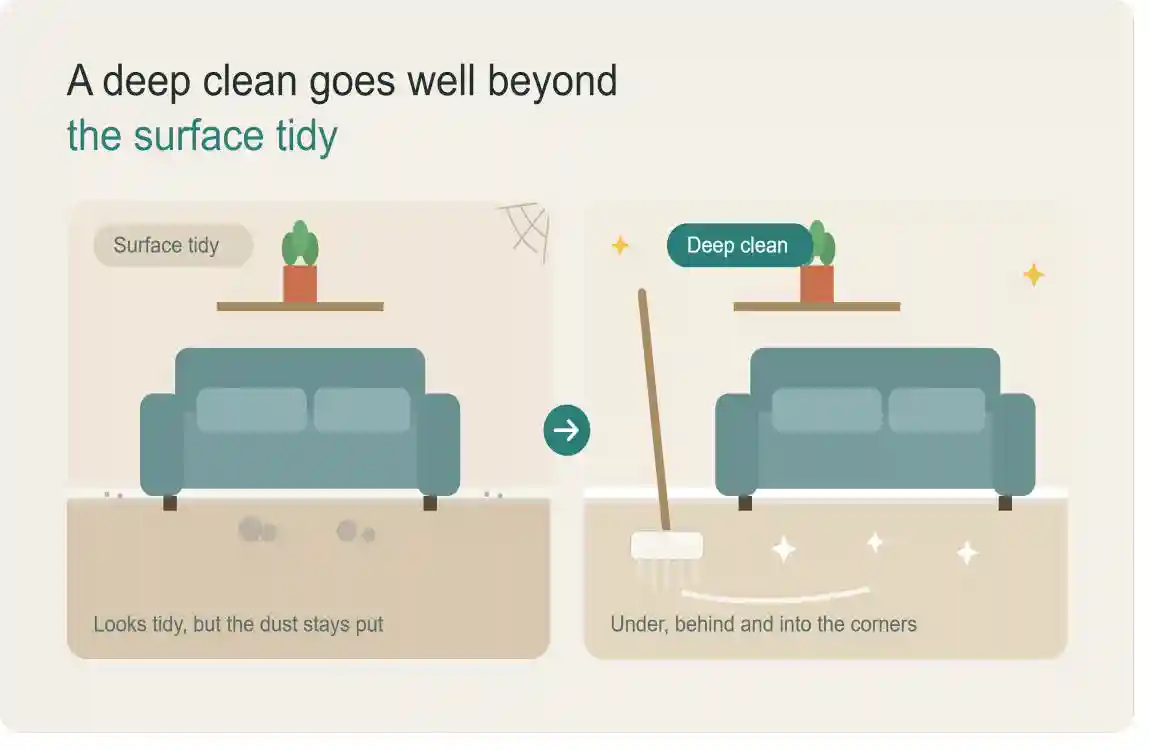
A regular clean maintains. A deep clean restores. Regular cleaning handles the visible bits: dusting shelves, wiping sides, mopping floors and a quick scrub of the loo. Deep cleaning goes after the grime that builds up slowly and out of sight.
That matters for more than appearances. Homes in the UK are often warm, closed-up and damp for much of the year, and that suits dust mites very well. According to Allergy UK, house dust mite allergy is common and is linked with asthma, eczema and rhinitis, and the mites live in bedding, carpets and soft furnishings. Likewise, official GOV.UK guidance on damp and mould explains that damp and mould in a home can produce allergens, irritants and spores that affect health.
A deep clean won’t fix a damp problem on its own, but it removes a lot of what feeds it.
What Is Included in a Deep House Cleaning in the UK? (Quick Checklist)
Every company and every home is a little different, but a proper deep clean normally includes the following:
- Kitchen: inside and outside of the oven, hob and extractor, fridge and freezer, microwave, dishwasher filter, cupboard fronts, tiles and grout, sink and taps
- Bathrooms: descaling taps and showerheads, scrubbing tiles and grout, cleaning the extractor fan cover, toilet (base and behind), bath and shower screens
- Bedrooms: mattress vacuuming, bedding washed, wardrobes wiped, under-bed areas, bedside tables, curtains and blinds
- Living areas: sofa and upholstery vacuuming, behind and under furniture, TV stand, shelving, light fittings
- Whole home: skirting boards, door frames, door handles, light switches, radiators, windowsills, internal windows, cobwebs, carpets and hard floors
Step-by-Step: How to Deep Clean Your Home
Prepare and Declutter
You can’t clean around clutter. Start by clearing surfaces, putting stray items back where they belong and bagging up rubbish. Open the windows if the weather allows, and gather your kit: microfibre cloths, a good vacuum, a bucket, scrubbing brushes, rubber gloves and your cleaning products.
Work Top to Bottom, Back to Front
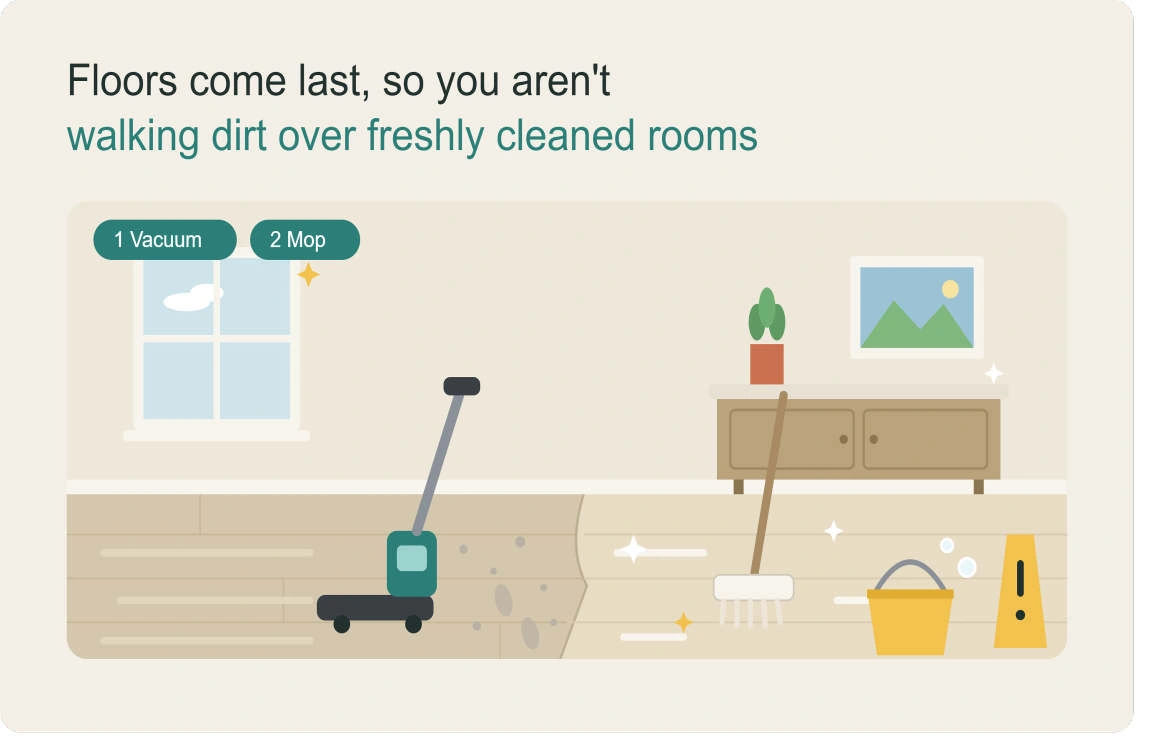
Dust and dirt fall, so always start high. Clear cobwebs from ceiling corners, wipe light fittings, tops of wardrobes and curtain rails, then work downwards to shelves, surfaces and finally the floor. Move room by room and finish with the floors so you’re not walking dirt back over clean areas.
Deep Clean the Kitchen
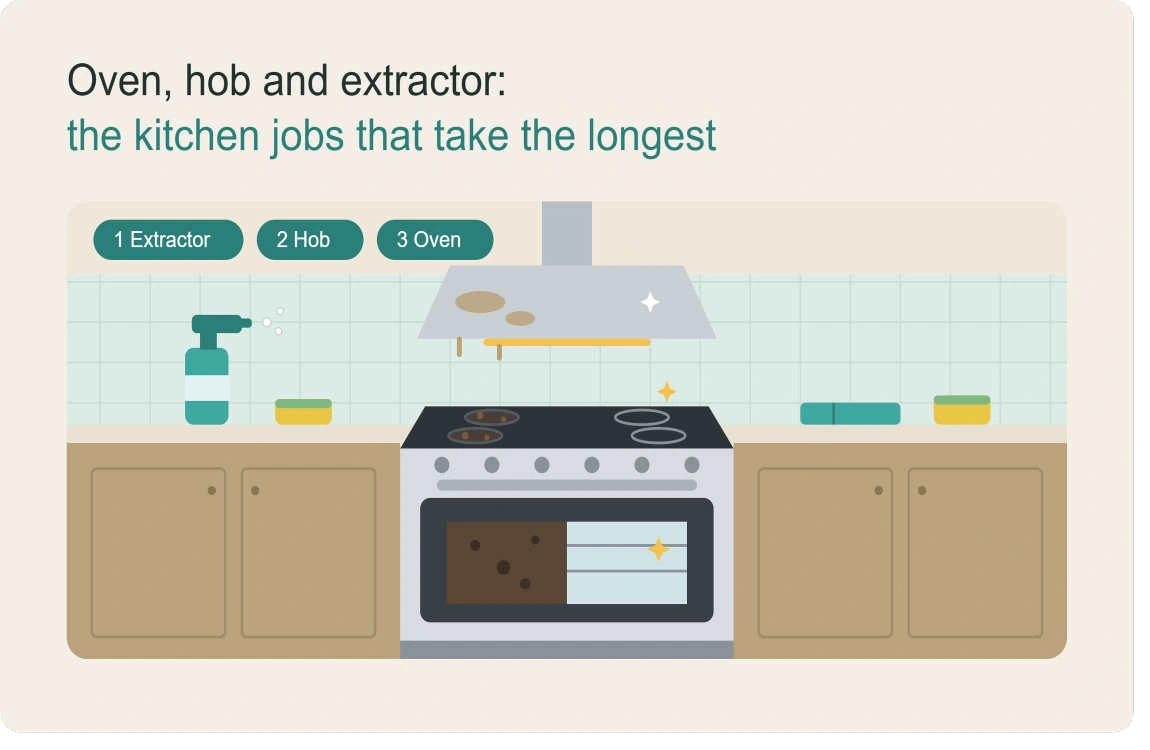
The kitchen takes the longest, so give it proper time. Before you touch the oven, switch it off at the mains. That’s the advice from consumer experts Which? in their guide to deep cleaning kitchen appliances.
- Remove shelves and trays and soak them while you clean the oven cavity and door glass.
- Wipe the hob, extractor and filter, as grease builds up quickly there.
- Empty and wipe the fridge, throwing out anything out of date.
- Descale the kettle. Which? suggests doing this roughly every six months, and notes that limescale is behind many kettle faults.
- Run the dishwasher filter under the tap and wipe the door seals.
Tackle the Bathroom
Hard water is the enemy in many parts of the UK, so expect limescale around taps, showerheads and glass screens. Let your descaler sit for the time stated on the label, then scrub grout lines with a small brush. Don’t forget the extractor fan cover, the back of the toilet and the underside of the toilet seat.
Good ventilation is part of keeping bathrooms fresh. NHS guidance on damp and mould, for example, recommends keeping the home well ventilated, using extractor fans and avoiding drying clothes indoors where possible.
Refresh Bedrooms and Living Areas
This is where the dust mites live, so it’s worth being thorough:
- Wash bedding at 60°C. Allergy UK advises that washing at 60°C or above kills mites, whereas lower temperatures wash the allergen away but leave the mites alive.
- Use a vacuum with good filtration. Allergy UK recommends a high-filtration vacuum cleaner, particularly where carpets can’t be removed.
- Dust with a damp cloth. An NHS hospital patient leaflet suggests damp dusting and leaving a room for around two hours after vacuuming so the dust can settle.
- Don’t forget soft toys. The same leaflet suggests freezing them in a bag for at least six hours to kill mites.
Be realistic, though. Allergy UK is clear that these measures lower dust mite allergens rather than remove them completely.
Don’t Skip the “Forgotten” Spots
These are the places most people miss, and the ones a good professional will always hit:
- Skirting boards and door frames
- Light switches, plug sockets and door handles
- Radiators and the gaps behind them
- Window frames, tracks and sills
- Behind and underneath large furniture
- Air vents and extractor covers
Finish with the Floors
Vacuum first, then mop hard floors. For carpets, consider hiring or buying a carpet cleaner every year or so, especially if you have pets, children or allergy sufferers at home. Let everything dry fully before putting furniture back.
A Note on Mould
If you find mould during your clean, treat it seriously. The NHS notes that mould produces spores that can be breathed in and that dust mites are a bigger problem in damp, warm homes (NHS Healthier Together). If someone in your home has asthma that is triggered by mould, health guidance from the NHS in West Yorkshire says they shouldn’t try to remove it themselves.
Cleaning removes surface mould, but if it keeps coming back, the underlying cause (condensation, a leak, poor ventilation) needs fixing. Renters should report it to their landlord.
Safety First: Never Mix Cleaning Products
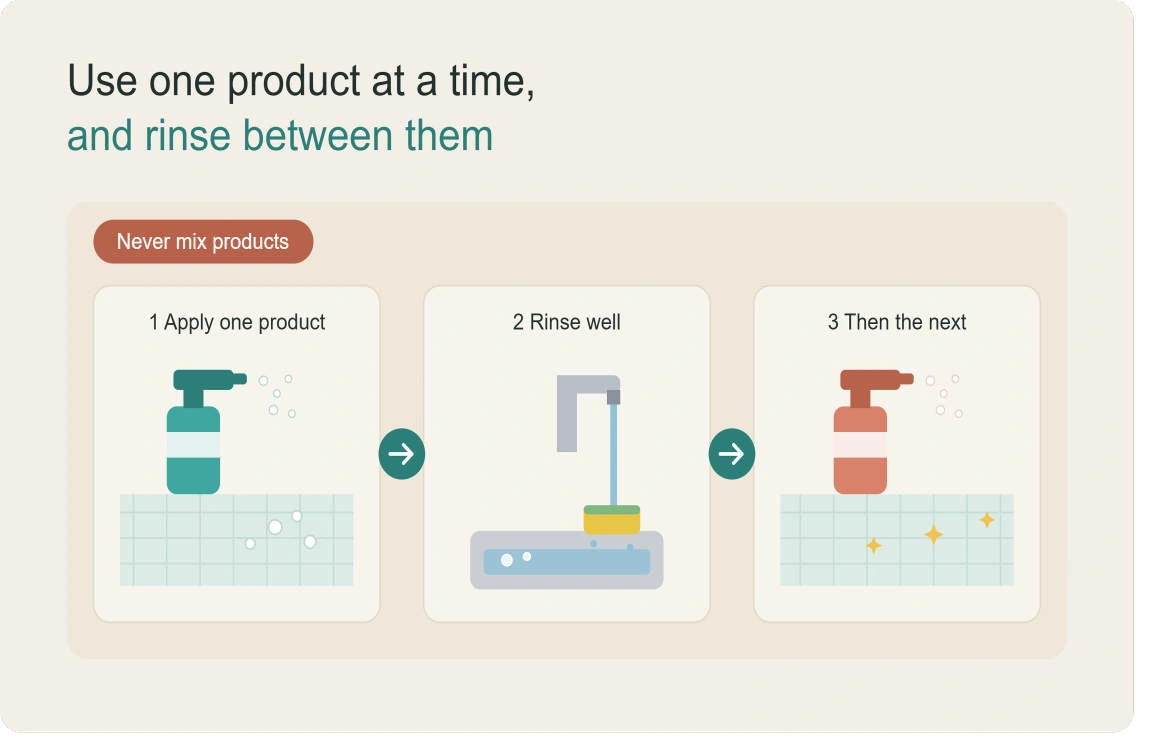
Deep cleaning tempts people to combine products for “extra power”. Don’t. The London Fire Brigade has warned that most cleaning chemicals are acid or alkali based, and mixing them can release harmful or even toxic gas. Its advice is to follow the label instructions, rinse away one product before using another, and keep products sealed and out of children’s reach. If you do cause a reaction, leave the property immediately and call 999.
How Often Should You Deep Clean?
There’s no single rule, but a sensible rhythm for most UK households is a full deep clean once or twice a year, with a seasonal spring clean as a popular starting point. Do extra deep cleans after moving in or out, after building work, following illness, or if you have pets or allergy sufferers at home. Smaller jobs, such as descaling the kettle or washing bedding at 60°C, work better as regular habits.
DIY or Hire a Professional?
DIY costs you time and energy, but little else. A professional team brings speed, commercial-grade equipment and a consistent checklist. If you hire, get a clear quote, confirm exactly what is included (ovens, fridge, windows, carpets) and check whether the company brings its own products and equipment, and whether it has insurance.
Frequently Asked Questions
What is included in a deep house cleaning in the UK?
Most deep cleans cover kitchens, bathrooms, bedrooms and living areas, including inside appliances, skirting boards, door frames, switches, radiators, windowsills, and behind and under furniture. Always check the exact checklist with your cleaner.
How long does a deep clean take?
It depends on the size and condition of the property, but it takes noticeably longer than a standard clean. A small flat may take a few hours with a team, while a larger, heavily lived-in house could take a full day or more.
Does a deep clean include windows and carpets?
Interior windows are often included. Carpet and upholstery steam cleaning, and external windows, are frequently separate add-ons, so confirm this when booking.
Can deep cleaning help with allergies?
It can help reduce triggers such as dust mite allergens, but not eliminate them entirely. Allergy UK recommends measures like 60°C bedding washes and high-filtration vacuuming as part of a wider approach.
Final Thoughts
A deep clean isn’t about perfection. It’s about getting to everything your weekly routine can’t, so the rest of the year feels easier. Work top to bottom, take your time in the kitchen and bathroom, wash bedding hot, ventilate well, and never mix your products. Do that, and you’ll have a healthier, fresher home
