

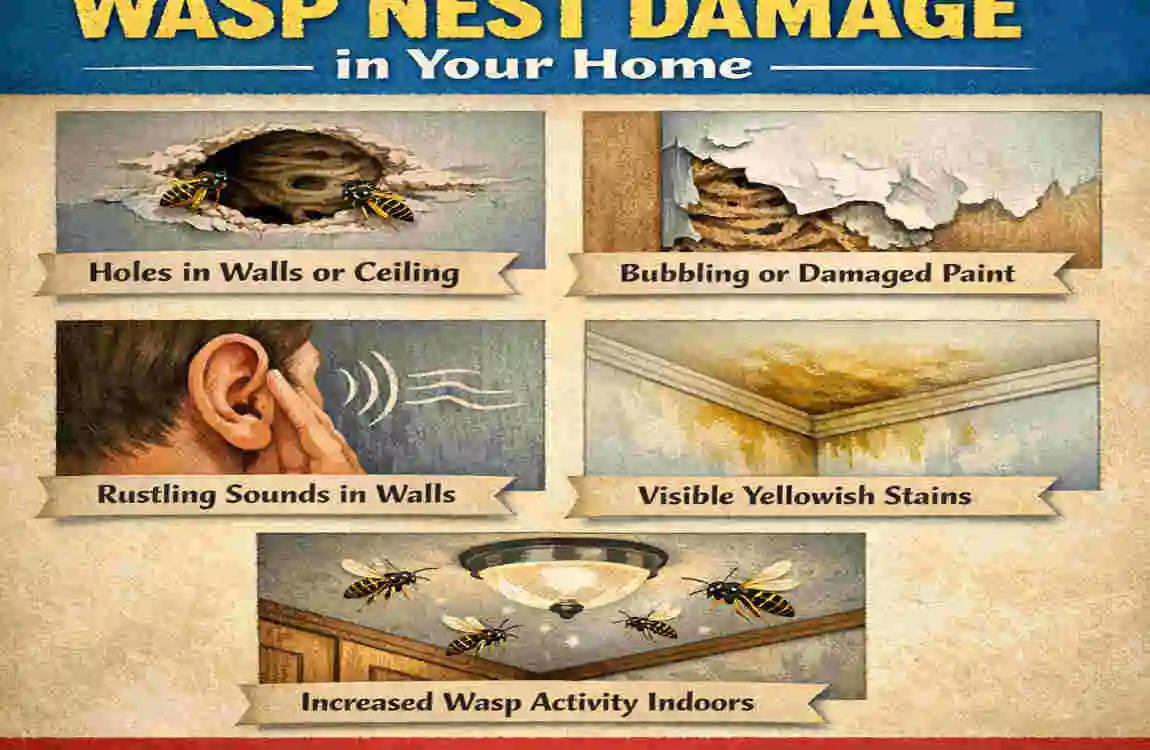
If you are wondering whether a wasp nest can damage a house in the UK, the short answer is yes — but usually in indirect ways. A wasp nest does not smash through walls like a major storm, but it can create moisture problems, add weight to weak areas, and make use of existing gaps in your home. That is why early spotting matters so much.
Many UK homeowners first notice the problem in a very ordinary way. You may hear a faint buzzing inside a wall. You may see wasps moving in and out of one tiny opening near the roof. Or you may find a damp patch that does not make sense at first. These small signs can point to a nest hidden in a loft, a cavity wall, a shed, or the eaves.
Where Wasp Nests Usually Hide in UK Homes
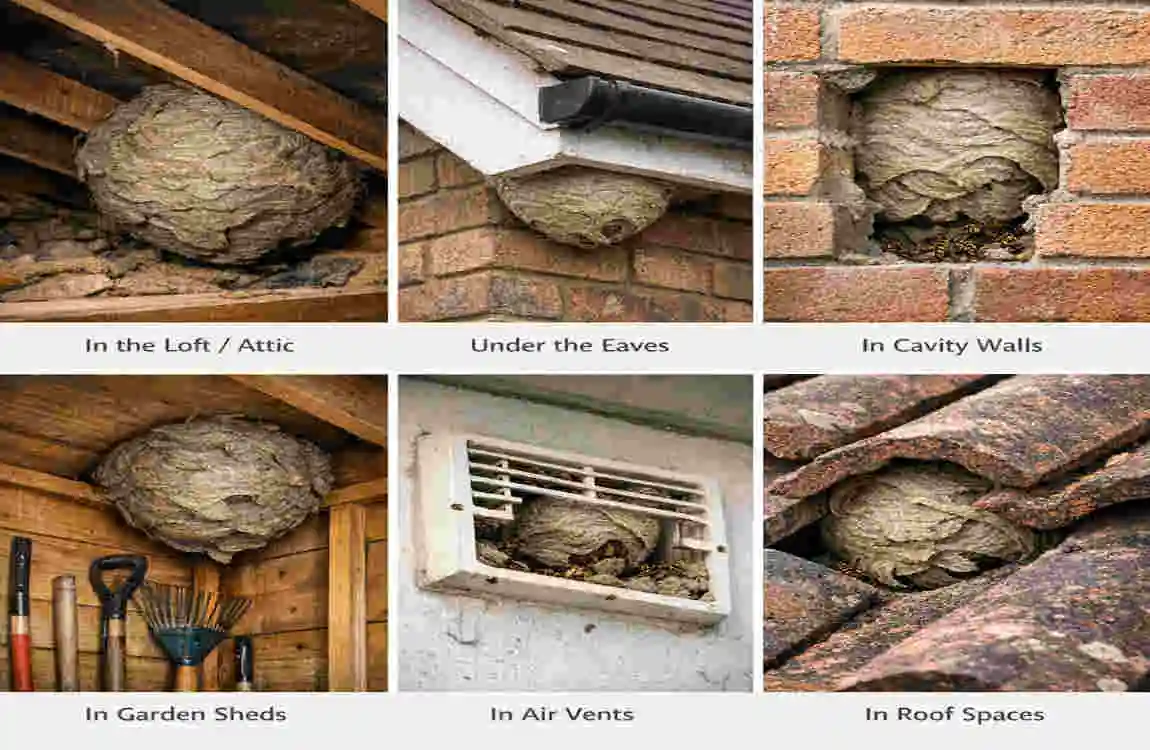
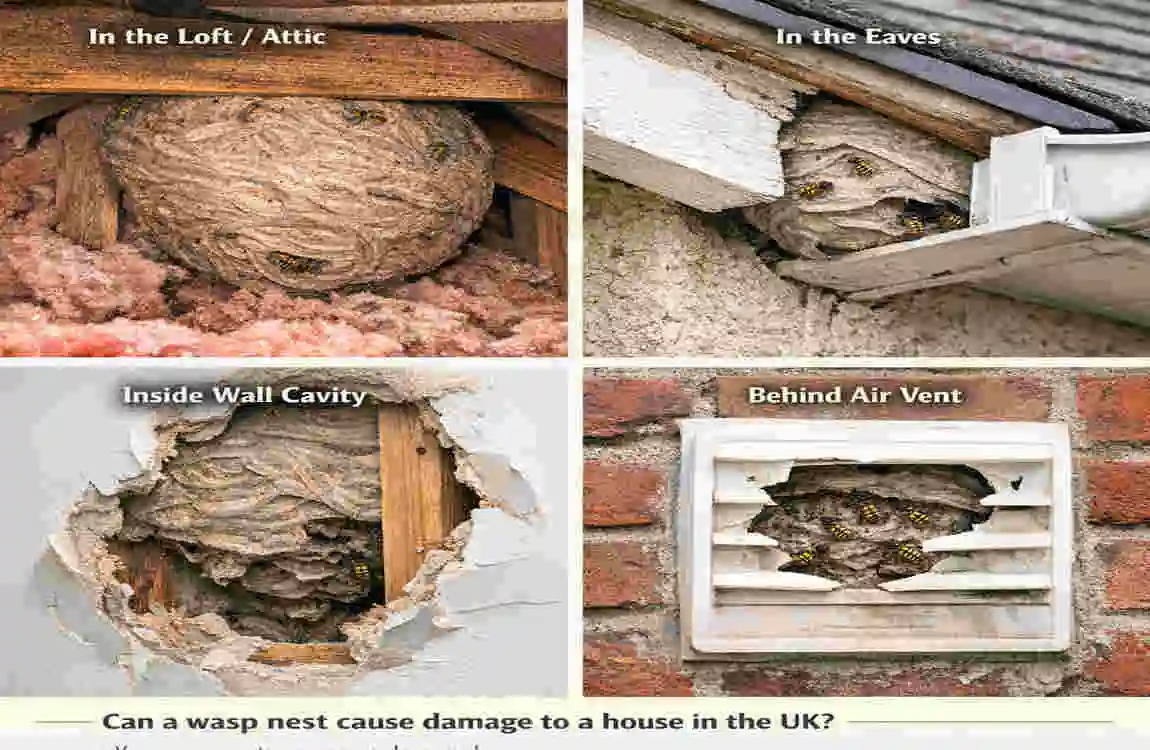
Lofts and Attics
Lofts are one of the most common hiding places for wasps. They stay warm, quiet, and dark, which makes them ideal for nesting.
In many UK homes, wasps enter through tiny gaps near roof tiles, vents, or loose flashing. Once inside, they build nests from chewed wood fibers mixed with saliva, creating the grey, papery look people often recognize.
Wall Cavities
Wasp nest house damage in the UK often starts in wall cavities. These spaces are hidden so that the nest can grow for a long time before anyone notices.
Wasps may squeeze in through cracks around pipes, vents, brickwork gaps, or old mortar joints. As the nest grows, it can press on plaster and insulation.
Sheds and Garages
Sheds, garages, and outbuildings are easy targets because they often have weak spots, open joints, or unsealed panels.
These spaces are also more exposed to damp and temperature changes. That can cause the nest to break down faster and leave a mess.
Eaves and Gutters
Eaves and gutters are another common place for nests. They are sheltered from wind and rain, but still close to the outside world.
If water reaches the nest, it can mix with the papery material, creating dampness in nearby wood or plaster.
UK Timing Matters
In the UK, wasp activity usually becomes more obvious in the warmer months, especially from late spring through summer. This is when nests grow fast, and wasp infestation signs are easiest to spot.
Signs of Wasp Activity to Watch For
Buzzing in Walls or Ceilings
One of the most common clues is a steady buzzing sound from inside a wall, loft, or ceiling.
You may hear it more clearly during the day when wasps are active and moving around the nest.
Wasps Returning to One Spot
If you keep seeing wasps fly to the same crack, hole, or roof edge, that is a strong warning sign.
Try not to stand too close. Watch from a safe distance and follow the flight path instead.
More Wasps Around the Garden
A sudden increase in wasps near bins, outdoor food, or patio areas may indicate a nest nearby.
If they seem to keep coming from the same direction, the nest may be close to your luxury house.
Papery debris or Droppings
You may also spot tiny bits of papery material near windowsills, walls, or the ground.
This can happen when the nest is breaking apart, or when wasps are carrying material in and out.
What Kind of Damage Can Happen?
Moisture and Damp Problems
The biggest issue is often not the wasps themselves, but the damage their nests can cause.
A nest can hold moisture. If it sits near timber, plaster, or insulation, that damp can spread and lead to rot or mould.
Structural Strain
Large nests can become surprisingly heavy, especially in lofts or eaves.
Over time, that added weight can put pressure on weak ceilings, plasterboard, or insulation.
Opening the Door to Other Pests
Wasps often enter through existing cracks and gaps. Once those openings are there, other pests may follow.
That means one small problem can turn into several.
Visible Warning Signs
Here is a simple comparison to help you identify wasp nest damage that UK homeowners should watch for:
Damage Type: What You Might Notice, UK Risk Level, Common Areas
Moisture/Damp Soft wood, dark patches, moldy smell High Lofts, beams
Structural Strain Sagging ceiling, bulging plaster , Medium Eaves, attics
Wood Wear Weak timber, rough or chewed surfaces. Low Sheds, roof edges
Entry Holes: Small gaps with repeated wasp traffic. High Roofs, walls
If you notice grey or brown papery nests, discolored walls, or wood that feels soft, do not ignore it.
How to Inspect Safely
Watch From a Distance
Look at the area in the evening or early morning when wasp activity is lower.
This helps you see where they are entering without disturbing them.
Listen Carefully
Stand quietly near the area and listen for a low hum or repeated buzzing.
That sound often gives away a hidden nest.
Check for Damp or Soft Wood
Tap wooden areas gently. If they sound hollow or feel soft, that may suggest moisture damage.
Do Not Open Cavities Yourself
If you suspect the nest is inside a wall or roof space, avoid poking around.
That can make the wasps defensive and increase the risk of stings.
How to Prevent Wasp Nest House Damage in UK Homes
Seal Gaps and Openings
Check roof edges, vents, and cracks around pipes.
Even small openings can be enough for wasps to get inside.
Keep Outdoor Areas Clean
Remove food waste quickly and keep bins closed.
Wasps are drawn to easy food sources.
Trim Plants Near the House
Thick shrubs and overgrown plants can hide nest entry points.
Keeping them neat makes it easier to spot activity early.
Book Professional Checks When Needed
If you have had wasp issues before, an autumn or early-season inspection can help.
A professional can often spot a problem before it becomes serious.
When to Call a Professional
Call for Help If the Nest Is Large
If the nest is bigger than your hand, it is better to get expert support.
Call for Help If It Is Indoors
Nests inside walls, lofts, or cavities are harder to deal with safely.
Call for Help If Anyone Has Allergies
If someone in the luxury home is allergic to stings, do not take risks.
Call for Help If You Want a Safer Approach
Professional UK wasp control can handle the job with the right tools and protection.
Quick FAQ
Can a small wasp nest damage a house?
Yes, but usually the risk is lower. Small nests are still worth checking, as they can grow quickly.
Do wasps damage wood directly?
They do not usually eat wood as termites do, but they can chew fibers to build their nests.
What is the biggest risk from a wasp nest?
The biggest risks are damp, hidden damage, and access through weak points in the home.
| Step | Key Actions | Layout Tips | Benefits |
|---|---|---|---|
| Define Purpose | Assign roles: one “working” kitchen (messy cooking) and one “show” kitchen (plating/guests). | Wet kitchen near utility; dry near dining. | Reduces chaos; ideal for joint families. |
| Plan Layout | Choose U-shape, L-shape, or galley for multi-cook flow; add islands for separation. | Position sinks/appliances apart; shared central prep zone. | Maximizes counter space; prevents crowding. |
| Optimize Space & Storage | Zone appliances (e.g., dual sinks, fridges); use vertical cabinets/pull-outs. | Island with cooktop in one, bar seating in other. | Hides clutter; supports two cooks. |
| Select Appliances & Finishes | Commercial-grade for work kitchen; sleek integrated for display. | Matching palettes (e.g., white quartz) for cohesion. | Durability + aesthetics; easy maintenance. |
| Add Lighting & Flow | Pendant over islands; cross-ventilation between spaces. | Open sightlines to dining; acoustic barriers if needed. | Enhances mood; improves usability. |
