

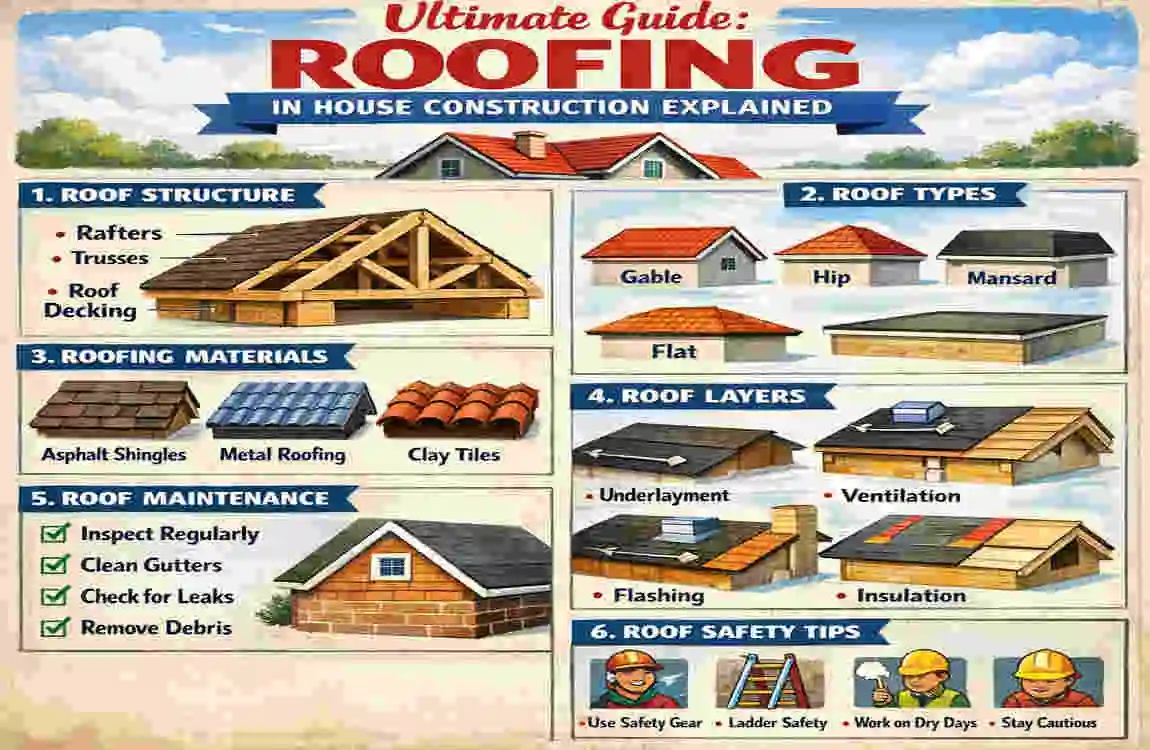
Imagine standing in your living room while a severe thunderstorm rages outside. The wind is howling, the rain is pouring in heavy sheets, and the temperature is dropping rapidly. Yet, you are perfectly dry, warm, and comfortable. What makes this possible? The answer sits right above your head. The critical role of roofing in house construction cannot be overstated. It is the ultimate shield, the uppermost layer of your home that stands bravely between your family and the unpredictable forces of nature.
At its core, roofing is the process of constructing the top protective covering of a building. However, it is so much more than just a functional lid. The house roof types you choose dictate the entire aesthetic appeal and architectural personality of your property. A beautiful roof can make a modest home look incredibly luxurious. In contrast, a failing roof can make even the grandest mansion look tired and neglected.
If you are planning to build your dream home or replace an aging canopy, you are likely feeling overwhelmed by the sheer number of choices available. That is exactly why we created this comprehensive guide. We want to demystify the entire process for you.
| Component | Description | Role in House Construction |
|---|---|---|
| Rafters/Trusses | Sloped beams or triangular frames forming the roof’s skeleton. | Support weight of materials and loads like snow; span from walls to ridge. |
| Sheathing/Decking | Plywood or OSB boards nailed over rafters. | Creates a solid base for roofing materials; resists wind uplift. |
| Underlayment | Waterproof membrane (e.g., asphalt felt or synthetic). | Secondary barrier against leaks; protects decking from moisture. |
| Roofing Material | Shingles, tiles, metal sheets, or slate as the visible top layer. | Sheds water, adds aesthetics; chosen for durability (20-70 years). |
| Flashing | Metal strips at joints (e.g., chimneys, valleys). | Seals gaps to prevent water infiltration in vulnerable areas. |
| Ridge Cap/Vents | Caps at roof peak; vents for airflow. | Seals top edge; allows attic ventilation to prevent mold. |
Why Roofing Matters in House Construction
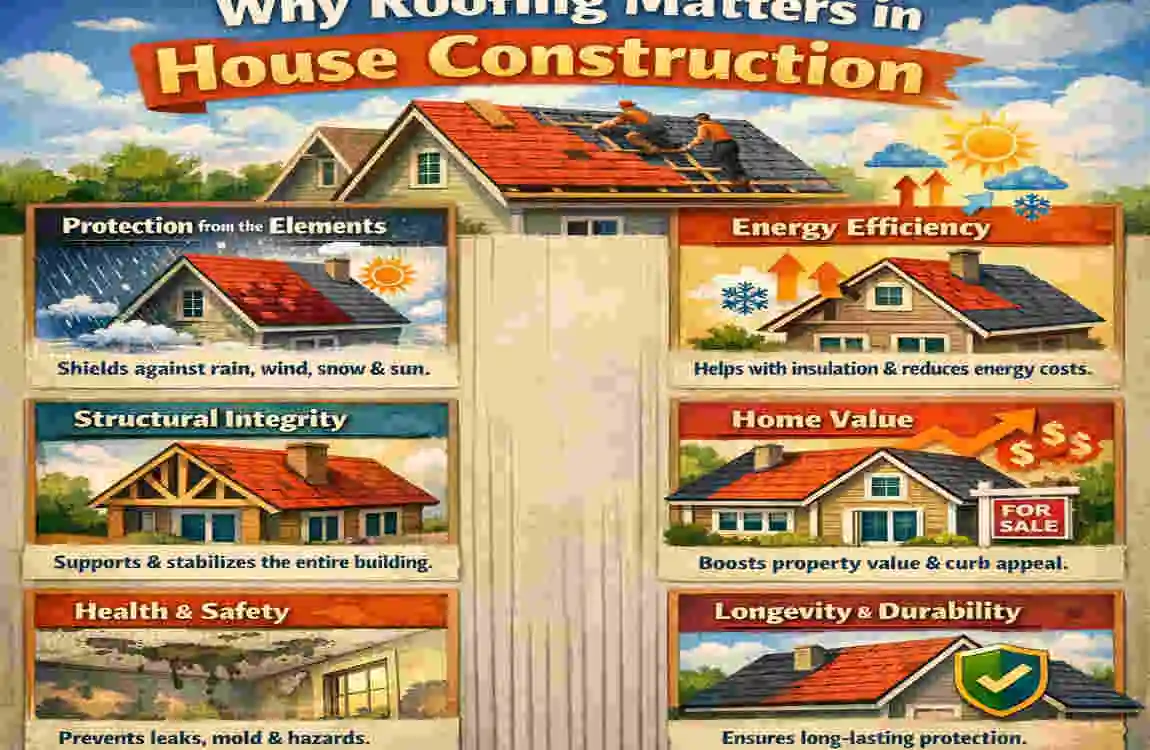
You may think of a roof as just a giant umbrella for your house. While keeping the rain out is certainly a major part of its job, a roof actually performs several complex structural and environmental duties simultaneously.
The Backbone of Structural Integrity
First and foremost, your roof is essential for the structural integrity of your entire house. Think of your home’s framing like a cardboard box. If you leave the top flaps of a box open, the sides are flimsy and easily pushed over. Once you tape the top shut, the box becomes incredibly rigid and strong. Your roof acts exactly like that taped top. The heavy wooden or metal trusses lock your exterior walls together, preventing them from shifting, bowing, or collapsing under the weight of heavy winds.
Mastering Waterproofing and Insulation
Water is the ultimate enemy of any home. If moisture penetrates your living spaces, it leads to devastating wood rot, structural decay, and hazardous black mold. A well-constructed roof provides a flawless waterproofing barrier. But it does not just keep the weather out; it keeps your expensive indoor climate securely inside.
Proper roofing works hand in hand with attic insulation. During the freezing winter months, it traps your central heating inside the house. During the blistering summer heat, a well-ventilated roof allows trapped, boiling air to escape from the attic, significantly lowering your air conditioning bills and massively boosting your overall energy efficiency.
Lifespans, Failures, and the Local Climate
The financial impact of your roof is staggering. A brand-new, high-quality roof instantly boosts your home value and curb appeal. Depending on the materials you choose, a modern roof can have an impressive lifespan of 20 to 50 years.
However, common failures like persistent leaks, missing shingles, or poor attic ventilation can drastically shorten that lifespan. This is why you must consider your specific regional climate. For example, if you are building in Lahore or other regions of Pakistan, you face unique weather challenges. You have to endure scorching summer temperatures that can literally bake cheap roofing materials, followed immediately by torrential monsoon rains that test every single waterproof seal. Choosing the right pitch and the right heat-resistant material is the only way to prevent rapid deterioration in these extreme environments.
Anatomy of a Roof in House Construction
To truly understand how to protect your home, you need to learn the basic vocabulary of builders. A roof is not a single, solid object. It is a highly engineered system made up of dozens of interlocking components. Let us break down the anatomy of a roof into understandable segments.
- Rafters and Trusses (The Bones): This is the massive wooden or metal skeleton that gives the roof its shape. Trusses are pre-engineered triangles that carry the massive weight of the roof and distribute it safely down into the exterior load-bearing walls.
- Sheathing or Decking (The Muscle): Once the skeleton is up, builders cover it with sheathing. These are the large, flat wooden boards (usually plywood or OSB) that are nailed directly onto the rafters. This creates a solid, flat surface for everything else to rest on.
- Underlayment (The Raincoat): Before any visible tiles go on, the sheathing is covered in a waterproof membrane called underlayment. Usually made of synthetic materials or asphalt-saturated felt, this is your home’s secondary line of defense against sneaky water leaks.
- Shingles or Tiles (The Armor): This is the outermost, visible layer of the roof. Whether you choose asphalt, clay, or metal, this layer takes the direct beating from the sun, rain, and hail. It serves both a heavy-duty protective role and a major aesthetic role.
- Flashing (The Joints): Wherever a roof meets a vertical surface—like a chimney, a skylight, or a dormer window—water can easily slip inside. Flashing is thin pieces of galvanized metal installed over these seams to direct water completely away from these vulnerable joints.
- Vents (The Lungs): A roof needs to breathe. Roof vents are installed to pull fresh air into the attic from the bottom edges and push hot, stale air out through the top. This prevents dangerous moisture buildup and heat warping.
- Ridge Cap (The Crown): This is the special set of tiles or shingles that run along the very highest peak of the roof where the two slopes meet, sealing the top seam perfectly.
- The Eaves: This is the lower edge of the roof that actively overhangs the exterior walls of the house. Eaves are incredibly important for shedding rainwater far away from your home’s foundation.
Types of Roof Structures for Houses
Now that you know how a roof is built, let us look at the shapes they take. The architectural design of your roof affects how water flows, how much attic space you get, and how well it withstands severe storms. Here are the most common types of house roofs.
Gable Roofs: The Classic Triangle
When you ask a child to draw a house, they almost always draw a gable roof. It features two flat, sloping sides that meet at a central ridge, creating a distinct triangular shape at the ends. Why it works: Gable roofs are incredibly simple to build, making them very cost-effective. Because the slope is generally quite steep, they offer excellent drainage during heavy rain and provide substantial vertical space for attic ventilation or a loft conversion.
Hip Roofs: The Stable Pyramid
Unlike a gable roof that has two flat ends, a hip roof has slopes on all four sides. All four sides angle upwards and meet at the top to form a ridge. Why it works: This is the ultimate choice for stability. Because there are no flat, vertical ends for the wind to crash into, the hip roof is incredibly aerodynamic and wind-resistant. It is heavily favored in regions that experience severe storms or high coastal winds.
Flat and Low-Slope Roofs: The Modern Urbanite
Do not let the name fool you; a flat roof always has a very slight pitch to allow rainwater to run off into a drainage system. Why it works: These roofs are the hallmark of sleek, modern urban homes. They are incredibly popular for property extensions because they do not block the view from upper windows. Furthermore, they allow you to utilize the top of your house as a rooftop garden or an outdoor terrace.
Mansard and Gambrel Roofs: The Space Maximizers
Originating in France, the mansard roof has four sides, each with two distinct slopes. The lower slope is almost entirely vertical, while the upper slope is quite flat. A gambrel roof is similar but only has two sides (think of a classic barn shape). Why it works: These roofs are designed for one specific purpose: maximizing interior attic space. The steep lower walls allow you to add an entire extra story of usable living space to your home without officially building a taller house.
Roof Type Comparison Table
To help you make a quick, informed decision, here is a breakdown of how these structures compare.
Roof Type: Major Pros, Major Cons, Best For Houses
Gable: Highly cost-effective, excellent ventilation. Vulnerable to high winds catching the flat ends. Traditional family homes
Hip: Incredibly durable, highly aesthetic, and balanced. Complex to install, reduces available attic space. Homes in storm-prone areas.
Flat: Modern look; creates usable outdoor rooftop space—high maintenance, prone to pooling water—ideal for modern urban extensions.
Mansard: Maximizes living space and adds an incredible level of luxury appeal. Very expensive to build, vulnerable to snow buildup. High-end homes want extra loft rooms.
Popular Roofing Materials for Residential Use
Choosing the actual material that covers your roof is the biggest financial decision of the entire project. You have to balance durability, aesthetic beauty, and your available budget. Here is an in-depth look at the best roofing materials 2026 has to offer.
Asphalt Shingles: The Budget-Friendly Standard
Asphalt shingles are by far the most common roofing material used globally. They are manufactured with a fiberglass base, coated with asphalt, and topped with ceramic granules to block UV rays. The Verdict: They are cheap, relatively easy to install, and come in a massive variety of colors. However, they have a lifespan of only 20 to 30 years and can warp or crack under severe, relentless summer heat.
Metal Roofing: The Long-Term Investment
Metal roofs—often made of steel, aluminum, or copper—are having a massive resurgence. They are typically installed in large, interlocking sheets with raised seams. The Verdict: Metal is virtually indestructible. It lasts 40 to 70 years, sheds rain and snow easily, and is completely fire-resistant. While the upfront cost is higher than that of asphalt, it is a brilliant choice for modern eco-houses because it reflects solar heat, lowering cooling costs dramatically.
Clay and Concrete Tiles: The Heat Deflectors
If you travel through regions with scorching climates, you will see clay and concrete tiles everywhere. They are formed by baking natural earthen materials at extremely high temperatures. The Verdict: These tiles are incredibly dense and completely immune to rot and insects. They are fantastic for homes in hot regions like Lahore because they absorb the sun’s heat slowly during the day and release it at night, keeping the interior cool. However, they are exceptionally heavy, requiring reinforced roof framing to support their weight.
Slate: The Ultimate Luxury
Slate roofs are made from actual slabs of natural stone mined from the earth. The Verdict: Slate is the undisputed king of durability. A well-installed slate roof can last over 100 years. It looks incredibly elegant and luxurious. The downside? It is eye-wateringly expensive and incredibly heavy, making it suitable only for high-end, custom-built homes.
Green Roofs: The Living Canopy
A green roof replaces traditional tiles with a waterproof membrane topped with soil and living vegetation. The Verdict: This is a massive trend for 2026. Green roofs offer unbeatable natural insulation and effectively manage urban stormwater runoff. While they require intense structural support and ongoing gardening maintenance, they are the ultimate choice for the environmentally conscious homeowner.
Material Cost and Suitability Table
Material Estimated Lifespan Cost (per sqm)House Suitability
Asphalt 20 – 30 years, Low-budget, traditional homes
Metal 40 – 70 years Medium to High Modern eco-houses, areas with extreme weather
Clay Tiles 50 – 100 years old, High, Hot climates like Pakistan, Mediterranean designs
Slate 100+ years Very High Luxury estates with reinforced structures
Green Roof 30 – 50 years High Flat urban extensions, sustainable builds
Step-by-Step Roofing Installation Process
Have you ever wondered what actually happens when the roofing crew shows up at your house? Installing a roof is a highly orchestrated dance that requires precision and a deep respect for safety. Here is a numbered guide detailing the exact step-by-step installation process.
Preparation and Site Assessment Before a single hammer is swung, the crew must prep the site. They lay down heavy tarps to protect your landscaping and position a dumpster nearby to catch debris. The project manager will conduct a final safety assessment and review the local building regulations to ensure everything is strictly up to code.
Frame the Structure. If this is a brand-new house, the crew will use a crane to lift the heavy wooden trusses into place and secure them to the exterior walls. If it is a roof replacement, they will tear off the old shingles and inspect the existing wooden decking for signs of rot, replacing any damaged wood immediately.
install Sheathing and Underlayment. With a solid skeleton in place, the crew nails down the wooden sheathing. Next, they roll out the synthetic underlayment. They staple this waterproof raincoat securely to the wood, ensuring every inch of the house is protected from potential moisture penetration.
Add Drip Edge and Flashing. Water naturally wants to curl back under the edges of a roof. To prevent this, metal drip edges are installed along the eaves. The team will also nail down metal flashing around the chimney, skylights, and in the “valleys” (the inward angles where two roof slopes meet).
Lay the Shingles or Tiles. Now comes the visible armor. Starting at the very bottom edge of the roof, the crew begins nailing down the shingles or tiles, carefully overlapping them as they work their way up toward the peak. This staggered overlapping ensures water cascades down the roof without ever touching the wood beneath.
install Vents and the Ridge Cap. As they reach the peak, the crew cuts slots into the wood to install the exhaust vents. Finally, they apply the specially shaped ridge cap shingles over the very top seam, locking the two sides of the roof together.
Final Inspection and Cleanup The job is not done until the yard is spotless. The crew will run a large magnetic sweeper across your lawn to pick up any stray, dangerous nails. The foreman will then walk the roof one last time, checking every seal and flashing joint before handing the project over to you.
House Tip: Never attempt to install a roof yourself to save money. Working at heights is incredibly dangerous, and improper installation immediately voids your material warranties.
Maintenance and Inspection Tips for Homeowners
You just invested a significant amount of money into a beautiful new roof. How do you protect that investment? You must adopt a proactive maintenance routine.
Conducting Seasonal Checks
You should never wait for a leak to appear before inspecting your roof. You need to perform visual checks at least twice a year, ideally in the spring and the autumn. Grab a pair of binoculars and stand in your yard. Look closely at the metal flashing around your chimney—is it peeling away? Are there any obvious missing, cracked, or severely curled shingles?
Next, grab a ladder and check your gutters safely. Gutters are the unsung heroes of your roofing system. If they are clogged with dead leaves and twigs, rainwater will back up, pool under your shingles, and rapidly rot your wooden eaves.
Warning Signs: What to Look For
One of the earliest signs of a failing asphalt roof is actually found inside your gutters. If you are cleaning out the leaves and notice a thick layer of coarse, sand-like granules at the bottom of the gutter, pay attention. These granules are the UV-protective coating that washes off your shingles. Once the granules are gone, the sun will rapidly destroy the bare asphalt underneath.
DIY vs. Professional Maintenance
While cleaning your gutters and sweeping off light debris are excellent DIY tasks, you must draw the line at major repairs. If you notice sagging areas on your roof, massive moss growth, or water stains appearing on your bedroom ceilings, it is time to call the experts.
You can significantly extend the life of your roof with professional cleaning and chemical sealing. If you need a thorough inspection or a routine tune-up, follow the link to our professional business services, and let our highly trained technicians ensure your roof is perfectly secure.
Roofing Trends in House Construction
The construction industry never stands still. As we move deeper into 2026, technology and a massive push for environmental sustainability are drastically changing how we design and build our homes.
The Rise of Sustainable Eco-Materials: We are seeing a huge shift away from petroleum-based asphalt toward recycled synthetics. Manufacturers are now producing stunning composite slate tiles made entirely from recycled plastics and rubber. These eco-materials divert waste from landfills while providing a lightweight, incredibly tough roof that visually resembles natural stone.
Smart Tech Integration Homes are getting smarter, and roofs are no exception. One of the most exciting 2026 trends is the integration of micro-sensors placed directly under the underlayment. These smart sensors continuously monitor moisture levels. If a microscopic leak develops, the sensor instantly sends an alert to your smartphone, allowing you to fix the problem months before water ever stains your ceiling.
Cool Roofs and Solar Power. For homes in exceptionally hot climates like Pakistan, “cool roofs” are the standard. These utilize specially coated metal or highly reflective white tiles that bounce the sun’s radiant heat back into the atmosphere, massively reducing indoor cooling costs.
Furthermore, we are moving past bulky, ugly solar panels. The modern standard is solar shingles—sleek, low-profile tiles that look exactly like standard roofing materials but quietly generate off-grid electricity for your home. You can often take advantage of government energy rebates to significantly offset the cost of these incredible upgrades.
Cost Breakdown and Budgeting for House Roofs
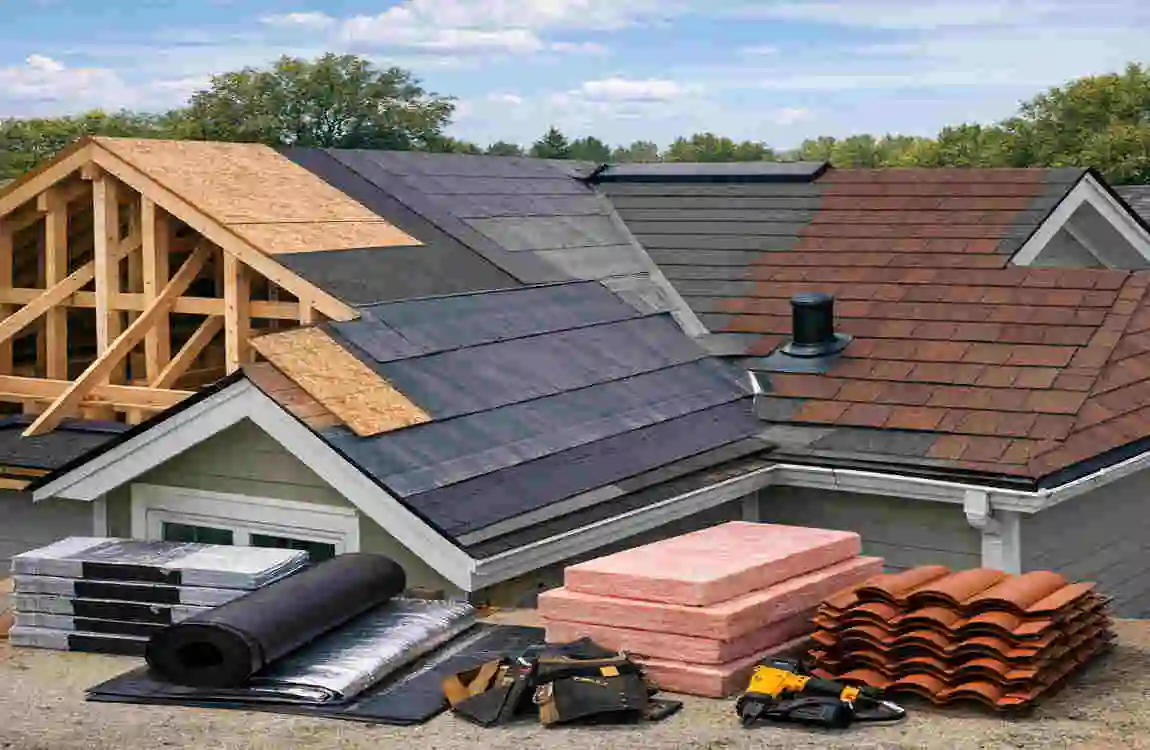
Budgeting for a new roof can feel intimidating, but understanding the variables helps you take control of the costs. The final price tag for your roof is determined by three main factors: the total square footage of your home, the materials you choose, and the complexity of the labor.
If you are building or renovating in regions like Lahore, Pakistan, you need to understand the local market. For standard residential roofing, you can generally expect to pay between PKR 500 and PKR 1500 per square meter, depending on whether you use basic corrugated sheets or Premium, imported, weather-resistant tiles.
Smart Savings Tips: Do not assume that the cheapest initial quote is the best deal. A cheap, poorly installed roof will cost you thousands in future water damage repairs. To save money intelligently, consider bulk buys if you are building multiple units or coordinating with a neighbor. Additionally, try to schedule your roof replacement during the off-season. Roofing contractors are often incredibly busy before the monsoon season hits; booking your project during quieter, dry months can often secure you a much better labor rate.
Frequently Asked Questions (FAQs)
What are the most popular house roof types? The most popular styles include the Gable roof (classic triangle shape), the Hip roof (slopes on all four sides for extreme stability), and Flat roofs (commonly used for modern extensions and urban properties).
What are the best roofing materials 2026 recommends? For 2026, the best materials focus on sustainability and longevity. Highly reflective metal roofing, recycled synthetic composite slate, and solar-integrated shingles are currently leading the market.
How often should I have my roof inspected? You should conduct a visual inspection from the ground at least twice a year (spring and autumn). However, you should hire a professional for a comprehensive roof inspection every 3 to 5 years, or immediately following a severe hailstorm or wind event.
Can a new roof really lower my energy bills? Absolutely. A modern roof with proper attic ventilation and reflective materials (like a “cool roof”) prevents heat from becoming trapped inside your house, drastically reducing the strain on your air conditioning system during the hot summer months.
