
Modern gable roof homes are popular because they blend classic roof shape with clean, modern style. The simple triangular roof line gives a home a fresh look while also helping with drainage, airflow, and cost control. That is one reason many homeowners and builders choose this design for both beauty and function.
These homes also fit well with modern home architecture, often featuring large windows, open layouts, and energy-saving features. If you want a house that feels stylish yet practical, modern gable-roof homes are a strong choice.
What Are Modern Gable Roof Homes?
Definition of Gable Roof Design
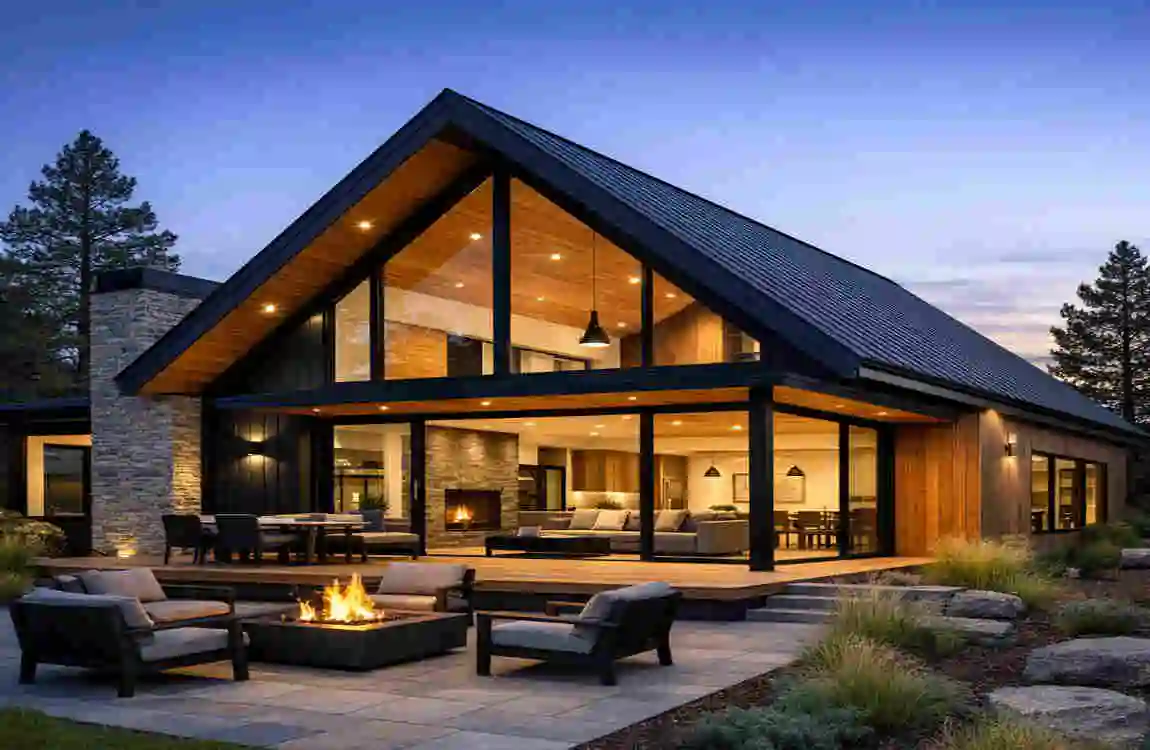
A gable roof has two sloping sides that meet at a ridge, forming a triangular shape. This is one of the oldest and most reliable roof styles. In modern roof house designs, the shape stays simple, but the look becomes cleaner and more refined.
Key Features of Modern Gable Roof Homes
Modern gable homes usually include:
- Large windows for more daylight
- Open floor plans for easy movement
- High ceilings that make rooms feel bigger
- Sustainable materials for better efficiency
- Natural lighting that lowers power use
Why Homeowners Prefer Them
People like this style because it is cost-effective, attractive, and practical. It also works well in many climates, which makes it a flexible option for building modern homes.
Planning Your Modern Gable Roof Home
Choosing the Right Location
Before building, consider climate, lot size, and home orientation. A well-placed home can improve light, comfort, and energy use. It should also fit the neighbourhood’s style.
Setting a Construction Budget
Your budget should cover land, materials, labour, permits, and design fees. It helps to leave a little extra money for surprise costs. That way, the project stays under control.
Hiring Architects and Contractors
Work with people who understand gable roof construction and modern design. Ask about their past projects, timelines, and cost estimates. Good professionals can save you time and stress.
Understanding Building Codes
Every area has rules about roof pitch, structure safety, and materials. These rules protect the home and make sure the building is legal. Always check them early in the process.
Designing Modern Gable Roof Homes
Selecting the Perfect Floor plan
The floor plan should match your lifestyle. A single-story home is easier to move through, while a multi-story home may give you more space. Open-concept layouts are popular in contemporary gable homes because they feel bright and spacious.
Choosing Exterior Materials
Common exterior materials include wood siding, brick, concrete, and metal roofing. Each one gives a different look. Metal roofing is often a smart choice for modern roofing ideas because it lasts longer and looks sleek.
Modern Interior Design Ideas
Inside, keep things simple. Use neutral colours, clean lines, and minimal décor. Add smart home features for more comfort and control. This style works well with minimalist gable roof house designs.
Energy-Efficient Design Tips
To build energy-efficient roof homes, focus on:
- Strong insulation
- Energy-efficient windows
- Proper ventilation
- Solar panels, if possible
These choices lower energy bills and improve comfort year-round.
Step-by-Step Construction Process
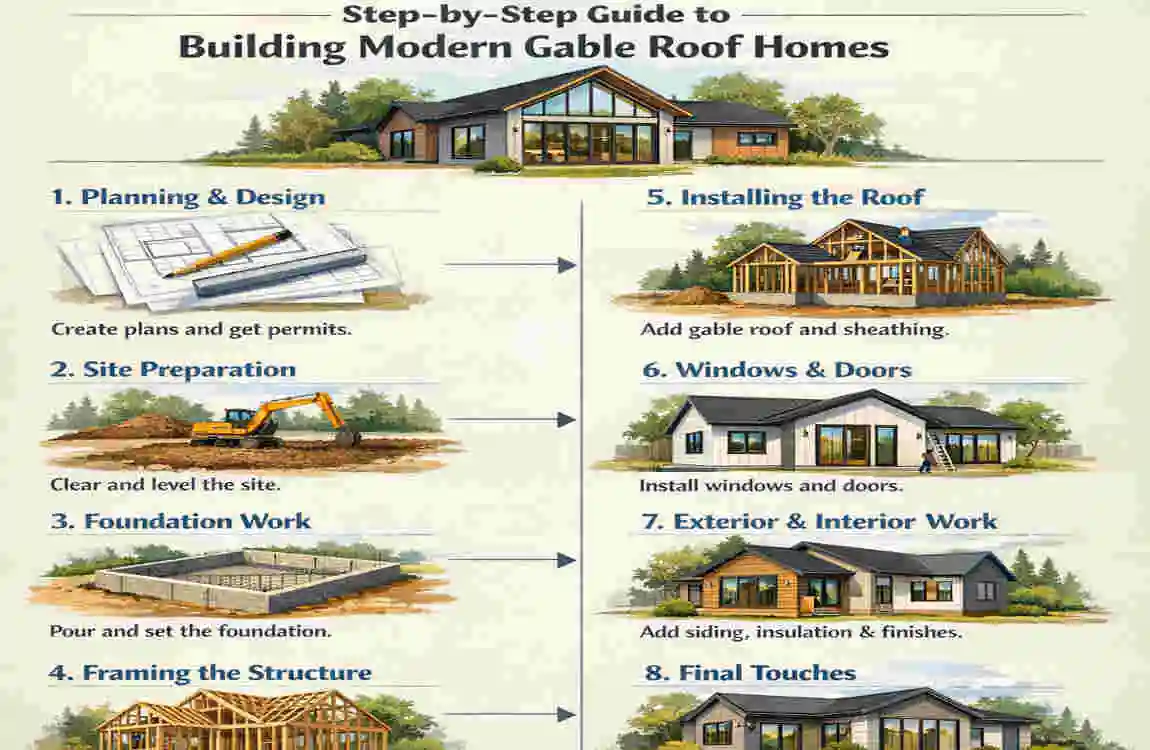
Preparing the Site
First, clear the land and check the soil. Soil testing helps builders know if the ground can support the structure. This is also the time to plan drainage and foundation placement.
Building the Foundation
The foundation is the base of the home. Many modern homes use a concrete slab, while others use a crawl space or a basement. The best option depends on climate, budget, and design.
Framing the Structure
Next comes framing. Builders create the walls and the main shape of the house. At this stage, the structure starts to look like a real home. Strong framing is very important for safety and long-term stability.
Constructing the Gable Roof
This is the heart of gable roof construction. Workers install trusses or rafters, then choose the roof pitch. A steeper pitch helps water and snow slide off more easily. After that, waterproofing materials are added to protect the home.
Installing Windows and Doors
Windows and doors bring light, fresh air, and access into the house. Large windows are common in modern roof house designs because they make interiors feel open and bright.
Electrical and Plumbing Work
Now the hidden systems go in. Electric wiring, water lines, and drainage pipes are installed before the walls are fully closed. This step must be done carefully to avoid future repairs.
Interior and Exterior Finishing
Finally, the home gets its finished look. This includes flooring, painting, cabinets, siding, and landscaping. Small details matter here because they shape the house’s final style.
Common Construction Materials at a Glance
Part of HomeCommon Material ChoicesWhy It Matters
Roof Metal, shingles, clay tiles, durability, and style
Exterior walls: Wood, brick, concrete. Strength and appearance
Windows, double-glazed glass, better insulation
Foundation Concrete Stability and Support
Common Challenges When Building Modern Gable Roof Homes
Weather-Related Delays
Rain, strong wind, and extreme heat can slow down work. Since roof framing and exterior finishing depend on dry conditions, weather delays are common.
Budget Overruns
Material and labour prices can rise during the project. To avoid stress, build a buffer into your budget from the start.
Poor Ventilation or Insulation
If airflow is weak or insulation is poor, the house may feel too hot or too cold. Good planning helps avoid energy waste.
Choosing the Wrong Roof Pitch
A roof pitch that is too shallow or too steep can cause problems with drainage, structure, and appearance. This is why design choices should be reviewed carefully.
Cost of Building Modern Gable Roof Homes
Factors Affecting Costs
The total cost depends on:
- Home size
- Material quality
- Labor rates
- Location
- Design complexity
Average Construction Estimates
A simple build usually costs less, while luxury finishes, larger floor plans, and Premium materials raise the price. Modern home architecture can stay affordable if you keep the design clean and practical.
Ways to Save Money
You can reduce costs by using prefabricated parts, smart planning, and efficient systems. Choosing durable materials also helps because it lowers repair costs later.
Benefits of Modern Gable Roof Homes
Excellent Drainage
The sloped roof shape helps rainwater and snow move away quickly. That is a big advantage in wet or snowy areas.
Better Ventilation
The roof design supports airflow, helping keep the home cooler and more comfortable.
Timeless Modern Appearance
Modern gable-roof homes combine a classic shape with contemporary style. That makes them attractive now and still appealing years later.
Increased Property Value
Because they look clean, efficient, and stylish, these homes often have strong market appeal.
Maintenance Tips for Modern Gable Roof Homes
Roof Inspection Routine
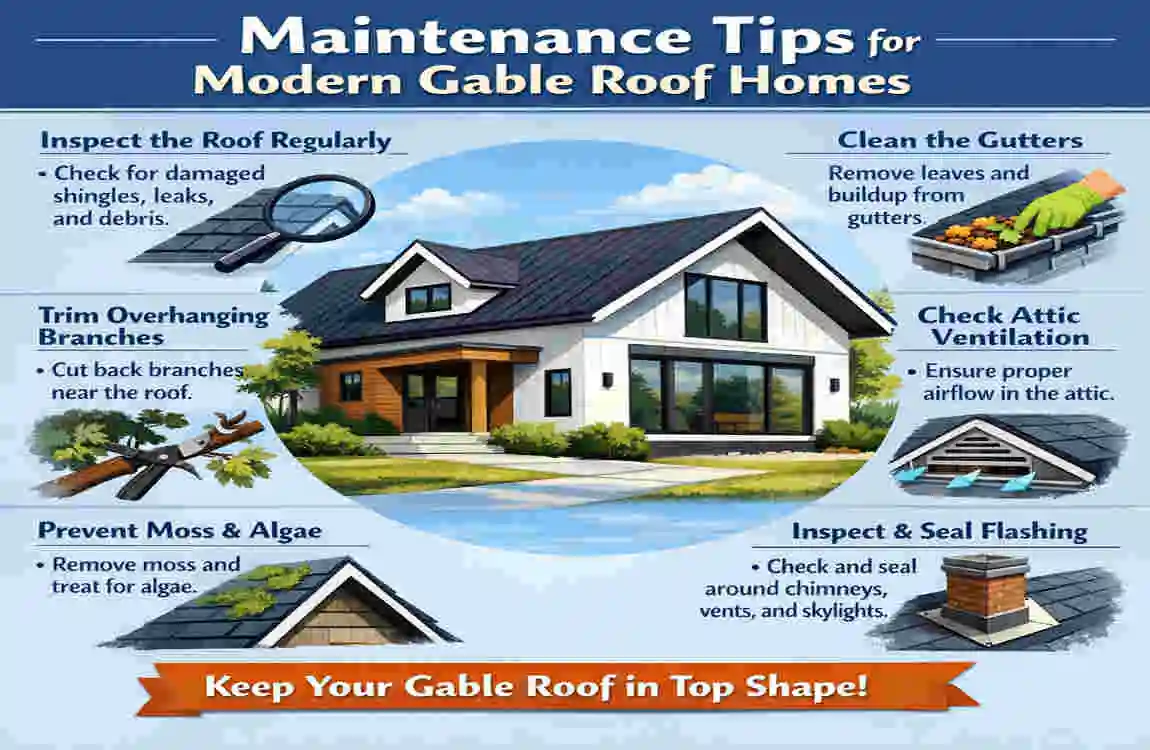
Check your roof regularly for loose shingles, leaks, or damaged flashing. Early repairs are usually cheaper than major fixes.
Cleaning Gutters Regularly
Clean gutters help prevent water buildup and protect the roof and walls from damage.
Exterior Maintenance
Keep siding and paint in good shape so the home stays protected and looks fresh.
Energy System Maintenance
If you use HVAC systems or solar panels, keep them serviced so they work efficiently.
FAQ
What makes modern gable roof homes popular?
They are popular because they look stylish, cost less to build than many complex roof types, and support energy efficiency.
Are modern gable roof homes expensive to build?
Not always. Costs depend on size, materials, labour, and location.
Which roofing material is best for gable roof homes?
Metal roofing, asphalt shingles, and clay tiles are common choices.
How long does it take to build a modern gable roof home?
Most projects take about 6 to 12 months, depending on design and weather.
Are gable roofs good for all climates?
Yes, especially in rainy and snowy regions because they drain well.
Can modern gable-roof homes be energy-efficient?
Yes. With good insulation, windows, and ventilation, they can be very efficient.
| Step | Short guide |
|---|---|
| Plan pitch | Choose the roof pitch and calculate rafter length . |
| Gather materials | Get straight lumber, rafters, ridge board, nails, plywood, and connectors . |
| Build top plate | Install and secure the top plates along the wall tops . |
| Mark joists | Mark spacing, then cut and place ceiling joists . |
| Cut rafters | Measure and cut rafters with proper plumb and seat cuts |
