

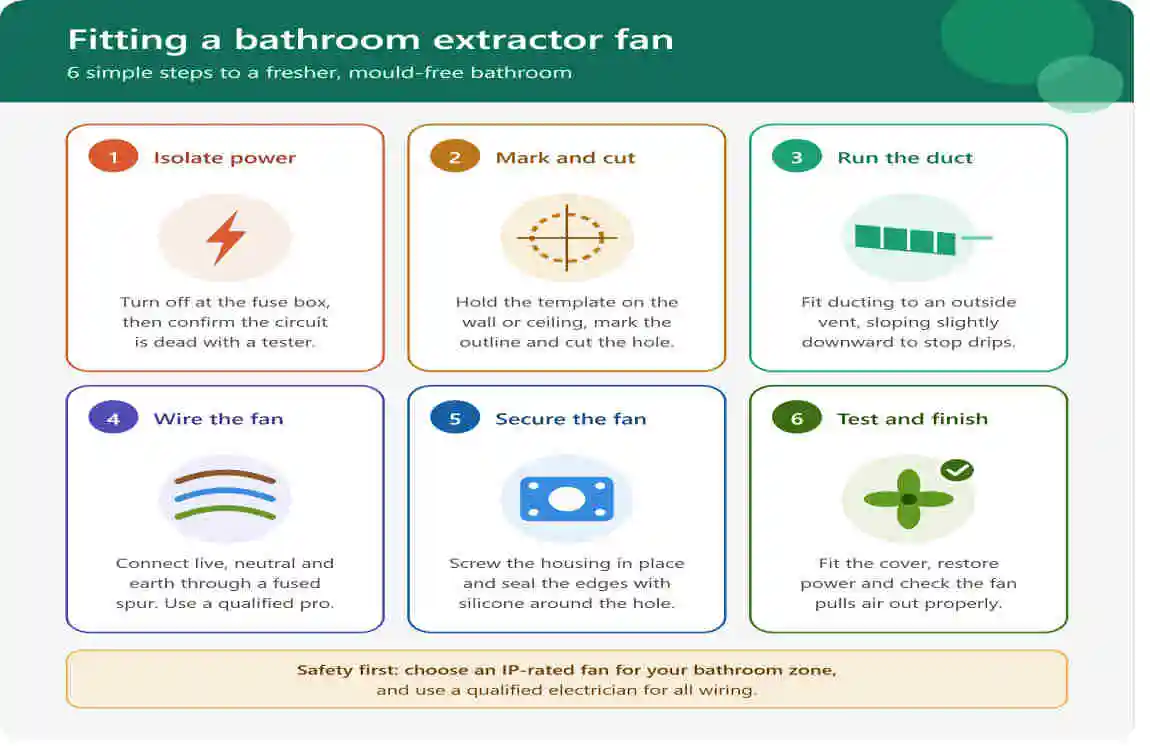
Fitting a bathroom extractor fan is a practical way to reduce moisture, prevent condensation, and improve air circulation. Whether you’re replacing an old fan or installing a new one, understanding the process can make the job easier. This step-by-step guide explains how to choose the right extractor fan, prepare the installation area, fit the unit, connect the ventilation duct, and test that everything works correctly. For electrical connections, always use a qualified electrician to ensure the installation is safe and meets local regulations.
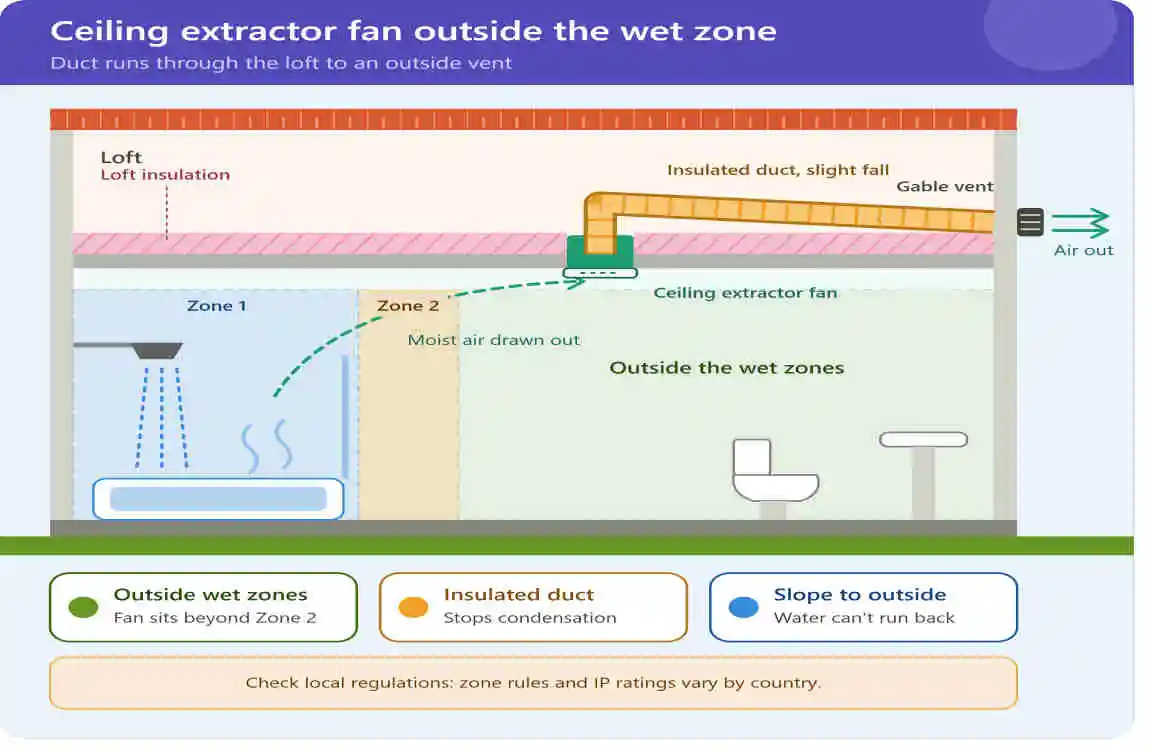
Why does a bathroom need an extractor fan?
A single hot shower releases a large amount of water vapour. Without extraction, that moisture settles on cold walls and ceilings as condensation, which feeds mould and can damage paint, plaster and joinery. A working fan removes humid air before it condenses.
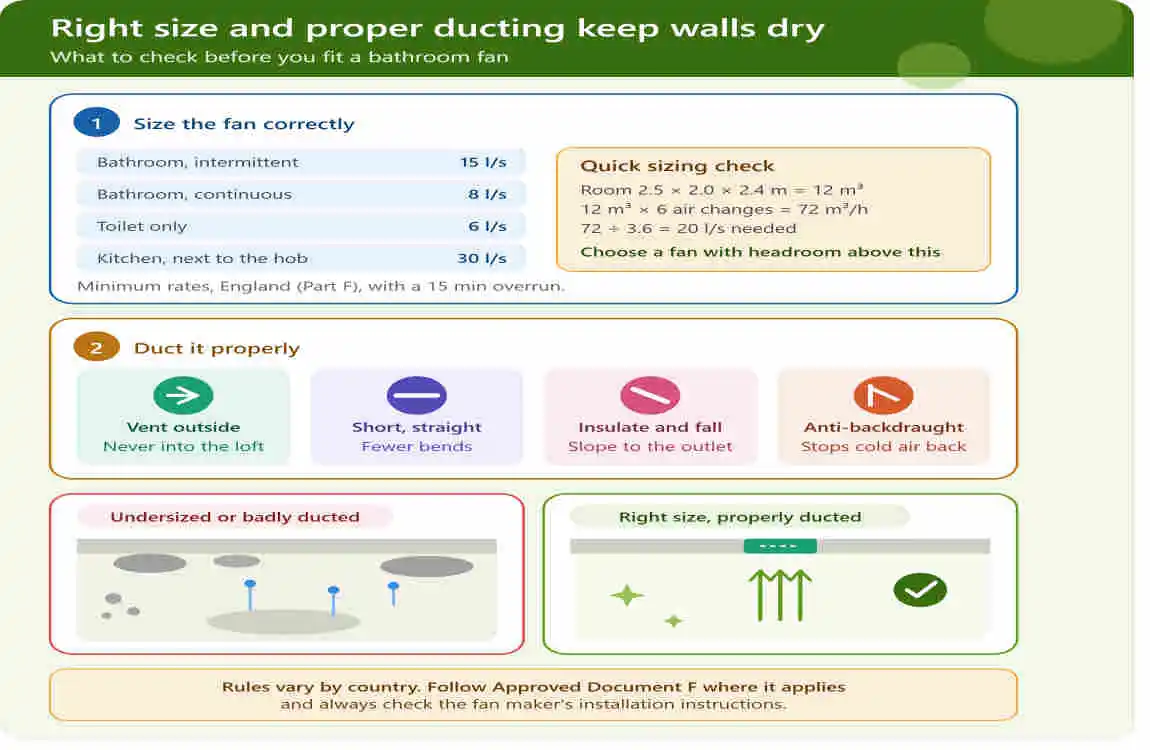
It is also a regulatory matter. Approved Document F sets ventilation guidance for homes in England, and BEAMA’s guide to Part F lists a minimum extract rate of 15 litres per second for bathrooms, 30 l/s for utility rooms and 6 l/s for separate toilets. A newer 2026 edition of the document has been published and is due to take effect in England on 24 March 2027, so check the current version before you start. Wales and Scotland follow their own versions.
What do you need before you start?
Tools and materials
- Extractor fan with a timer or humidity sensor (IPX4 or higher)
- 100 mm rigid or semi-rigid ducting, insulated if it passes through a cold loft
- External wall grille with a backdraught shutter
- Core drill or hole saw sized to your duct, plus a standard drill
- Spirit level, pencil, tape measure, sealant, screws and wall plugs
- Non-contact voltage tester, ladder, dust sheet, eye and dust protection
How do you choose the right fan?
Match the fan to the room and the duct run:
- Axial fans suit short runs straight through an outside wall or window.
- Centrifugal fans push air against more resistance, so they suit longer or bent ducts.
- Inline fans sit in the loft, which makes them quiet in the bathroom itself.
- Controls: an overrun timer keeps the fan running after you leave; a humidity sensor switches it on automatically. Buying guides such as the one from Checkatrade put typical standard fans at roughly £60 to £90.
Remember that a fan’s stated rating is for the fan alone. Long ducts, tight bends and blocked grilles reduce the airflow you actually get once it is installed.
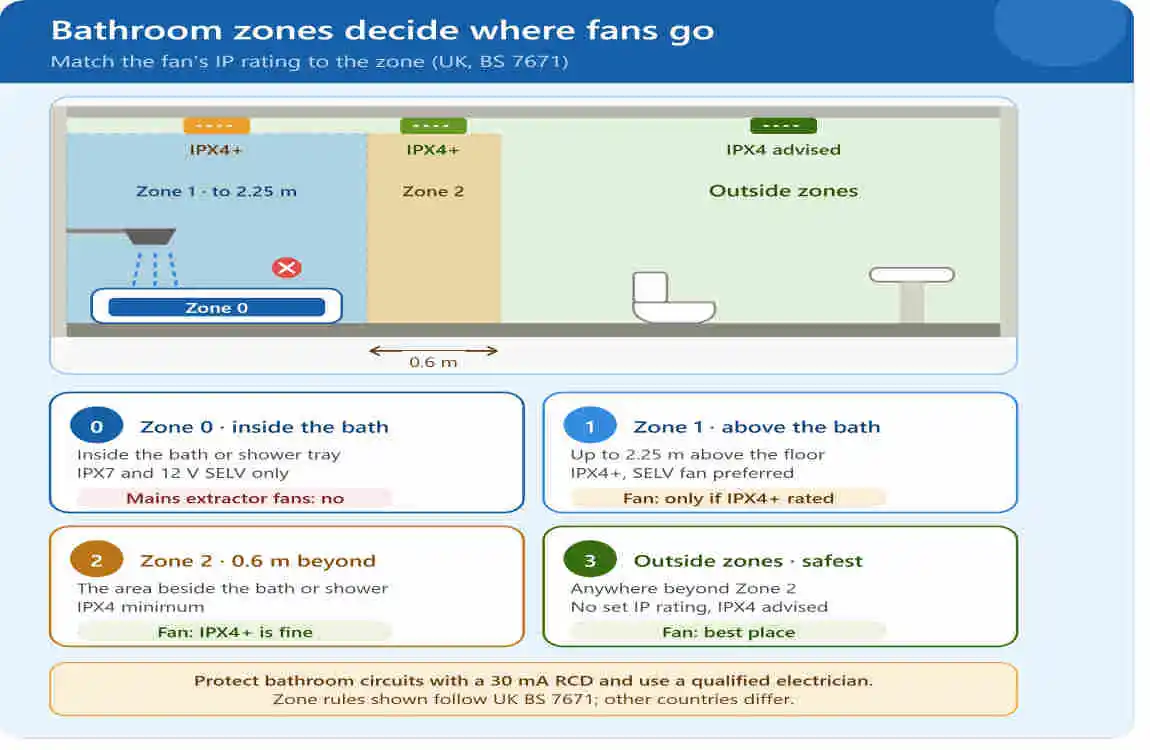
Which bathroom zone and IP rating does the fan need?
UK wiring rules divide a bathroom into zones based on how close each area is to water. Screwfix’s zone guide explains that each zone has its own protection requirements, and that RCD protection is recommended for bathroom circuits. NICEIC explains how IP ratings work: the first digit covers solids such as dust, the second covers water.
| Where the fan goes | What to look for |
|---|---|
| Zone 1 or 2 (above or near the bath or shower) | At least IPX4, and the manufacturer must state the fan is suitable for that zone |
| Outside the zones (most ceilings and walls away from water) | Fan approved for bathrooms; IPX4 is still sensible in steamy rooms |
| Wet room or inside a shower enclosure | Take professional advice; this needs higher protection |
Do you need an electrician to fit a bathroom extractor fan?
The mechanical work, such as drilling and ducting, is often within a confident DIYer’s reach. The electrical connection is different. Electrical Safety First advises using a registered electrician to select, fit and replace an extractor fan, and notes that the wiring regulations require an easily reached means of isolation for fixed fans.
Building rules apply too. Local authority guidance, such as Hammersmith & Fulham’s Part P page, explains that adding to or altering circuits in a special location such as a bathroom is normally notifiable work. A like-for-like swap on existing wiring is often treated differently, but confirm with your building control body or electrician before you begin.
How to install an extractor fan in a bathroom: 9 steps
- Pick the position. Place the fan high, ideally between the shower and the door or window, so it pulls moist air across the room. Check for joists, pipes and cables first.
- Plan the shortest duct route. Fewer bends mean better airflow. Aim for a direct run to an outside wall or roof outlet.
- Switch off and confirm the circuit is dead. Turn off the lighting circuit at the consumer unit and test it. Do not rely on the light switch, because many fans have a separate permanent live for the timer.
- Mark and cut the opening. For a wall fan, drill a pilot hole through to the outside, then core-drill to the duct size from the inside. For a ceiling fan, cut the opening with a hole saw and make sure the loft above is accessible.
- Fit the duct. Run it with a slight fall towards the outside so condensation drains out, not back into the fan. Insulate any duct passing through a cold loft.
- Install the external grille. Fix it to the outside wall, seal around it and check the shutter opens freely.
- Mount the fan. Secure the housing, keep it level and seal gaps so air cannot leak back into the room or ceiling void.
- Have the wiring connected. A registered electrician should connect the supply, the switched live, the neutral and any earth, and fit the isolator in an accessible position.
- Test and set up. Hold a tissue to the grille to check the draw, listen for rattles, then set the overrun timer or humidity threshold. A run time of 15 to 20 minutes after showering is a common starting point.
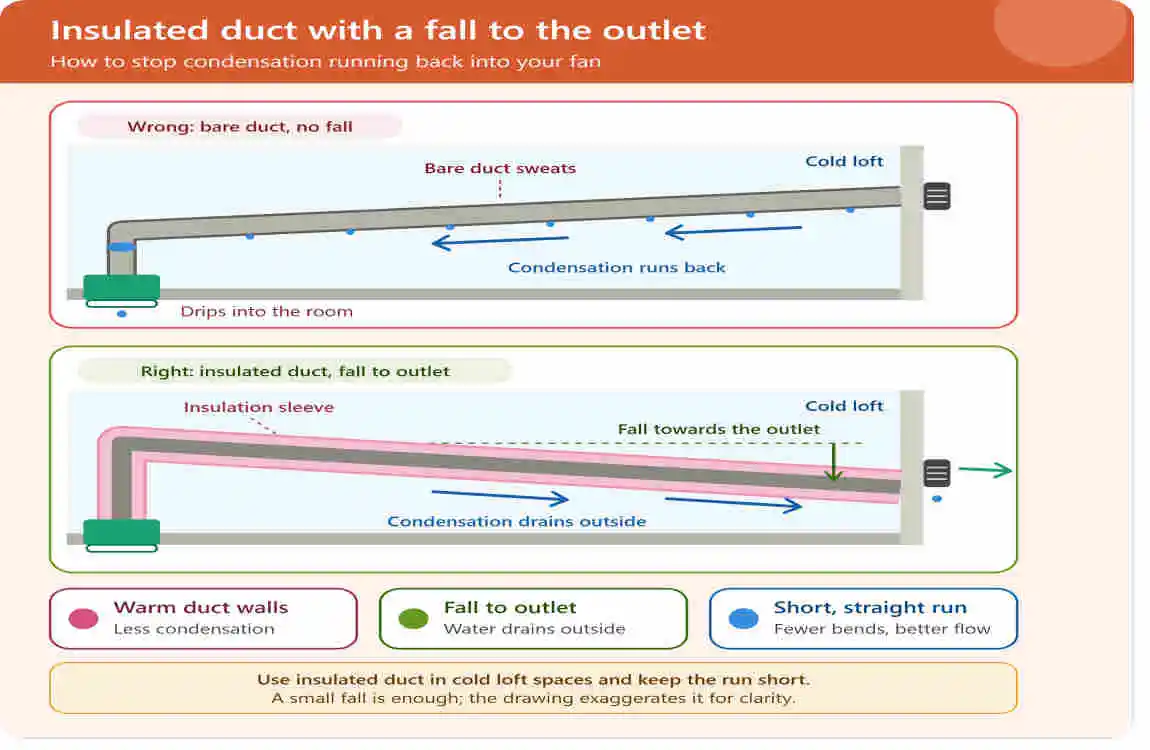
Common mistakes to avoid
- Venting into the loft. This moves the damp problem upstairs and can rot roof timbers.
- Choosing a fan by looks alone. Check airflow, IP rating and noise level on the data sheet.
- Long, kinked or crushed ducting. It can cut real airflow well below the fan’s stated rating.
- No isolator or poor access. Maintenance then becomes unsafe.
- Skipping cleaning. Electrical Safety First warns that dust and grime can block a fan, make it overheat and allow damp to build up.
How do you keep the fan working well?
Every few months, switch the fan off at the isolator, then clean bathroom the cover and visible blades following the maker’s instructions. If the blades spin slowly, the fan is noisy, you smell burning or hear buzzing, switch it off and call a registered electrician.
Frequently asked questions
What size extractor fan do I need for a bathroom?
For England, guidance sets a minimum of 15 litres per second for a bathroom with an intermittent fan. Choose a model that delivers at least that once installed, not only on the box.
Can I fit an extractor fan myself?
You can often handle drilling and ducting, but the wiring should be done by a registered electrician, and notifiable work needs to go through building control or a competent person scheme.
Where is the best place to put a bathroom extractor fan?
High on a wall or on the ceiling, near the shower and away from the door so air flows across the room. It must sit in a zone that suits its IP rating.
Can a bathroom extractor fan vent into the loft?
No. Warm, damp air in a loft condenses on cold timber and insulation. Always duct to the outside.
How long should the fan run after a shower?
Use the overrun timer so it keeps running after you leave. Around 15 to 20 minutes is a typical setting, adjusted to how steamy your bathroom gets.
Does a fan need to be on its own switch?
Not always, but it needs an accessible means of isolation, and timer fans usually need a permanent live as well as a switched one.
Sources
This guide draws on the following references. Regulations change, so always confirm the current rules with your local building control office.
- GOV.UK: Ventilation, Approved Document F
- Planning Portal: Approved Document F, Volume 1 (dwellings)
- BEAMA: Guidance on Part F for dwellings in England
- Electrical Safety First: Extractor fan safety advice
- NICEIC: Bathrooms and electrics
- London Borough of Hammersmith & Fulham: Electrical wiring and Part P
- Screwfix: Electrical bathroom zones guide
- Checkatrade: Bathroom extractor fan buying guide
