

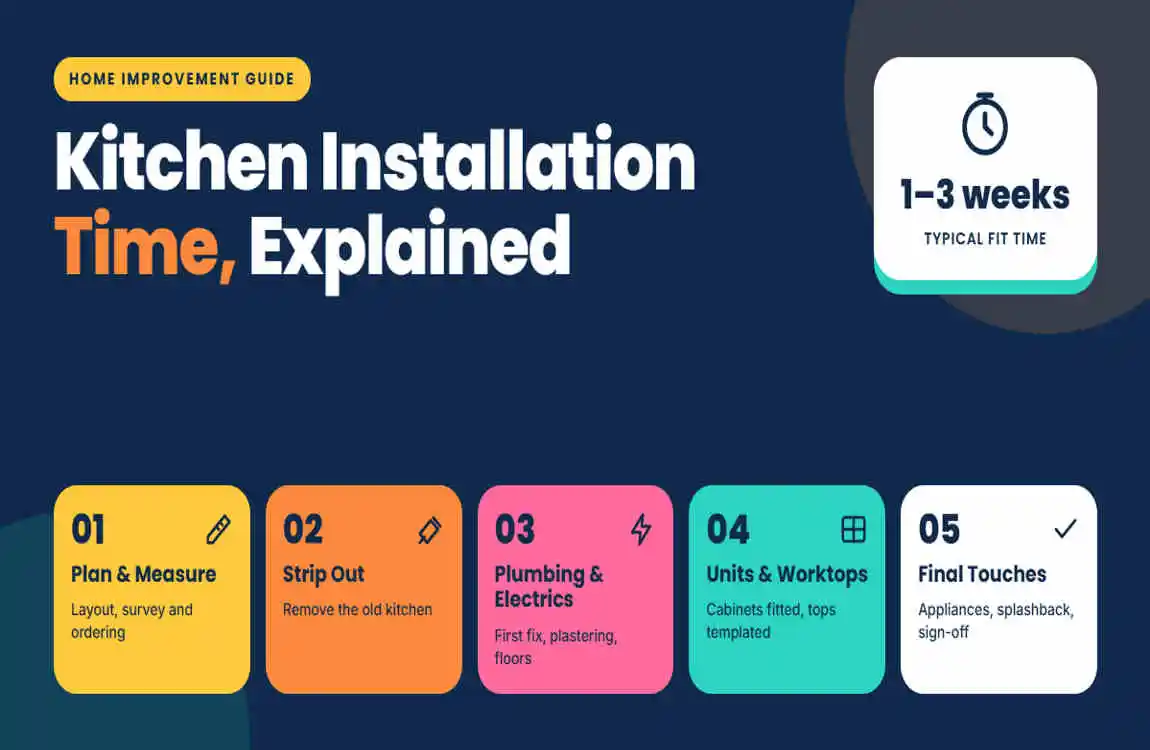
Fitting the units, worktops and appliances themselves usually takes days to about two weeks. A full kitchen remodel, from demolition to final sign-off, typically takes 6 to 10 weeks in the US and 4 to 10 weeks in the UK. Planning and ordering before work starts often adds weeks or months on top.
If you are about to replace your kitchen, the first practical question is how long you will be without one. The honest answer is that “installing a kitchen” can mean two very different things: the few days when cabinets, worktops and appliances actually go in, or the whole project from first design meeting to final inspection.
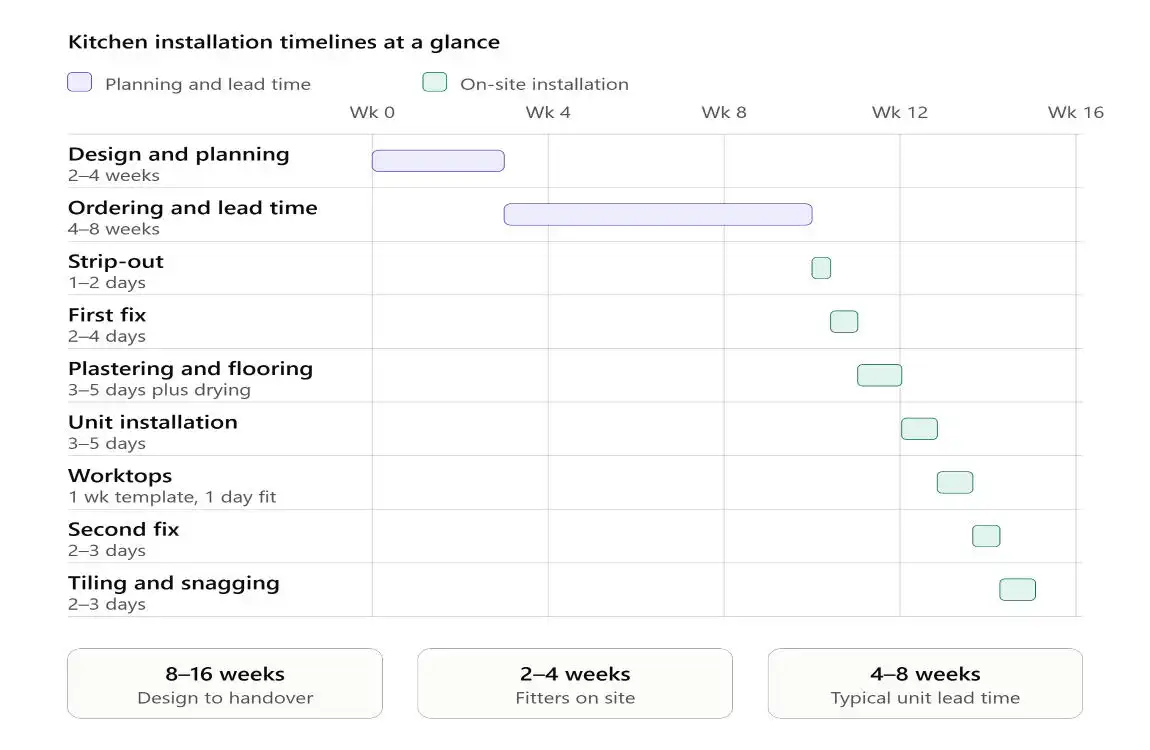
Kitchen installation timelines at a glance
Angi, a large US home-services marketplace, breaks kitchen projects into three scopes. Its guide says a minor cosmetic remodel, such as painting cabinets and adding a backsplash, may take one to two weeks, a midrange remodel replacing cabinets, countertops and appliances may take four to eight weeks, and an extensive remodel that changes the layout can take eight to 12 weeks or more. It adds that most kitchen remodels take six to 10 weeks.
In the UK, Checkatrade puts a typical kitchen renovation at four to ten weeks. It says a project that keeps the same footprint may need only a few weeks, while a kitchen that moves rooms, gains an island, is very large or is fully renovated could take 10 to 12 weeks.
How long does the actual fitting take?
If you only count the hands-on fitting, the number shrinks fast. A writer at Ideal Home who fitted her own kitchen reported that installing the units, worktop, appliances and sink took about five days split over two weekends. The same article is a useful reality check, though: the wider project, including decisions on handles, lighting and finishing touches, dragged on for months.
Phase-by-phase breakdown
Angi splits a remodel into phases, each with its own estimate. Knowing which phase you are in explains why a kitchen can sit half-finished for days without anything being wrong.
| Phase | Estimated time | What happens |
|---|---|---|
| 1. Planning and design | 2 weeks to 3 months | Hire a contractor, set scope and budget, choose cabinets, appliances, counters and finishes |
| 2. Permits | 2–4 weeks | Apply for permits, especially where plumbing or electrical work is involved |
| 3. Demolition | 1–2 weeks | Remove old cabinets, counters, appliances and flooring; take out walls if the layout changes |
| 4. Installation | 8–12 weeks (full remodel) | Electrical, plumbing and HVAC first, then cabinets, countertops, flooring, lighting and appliances |
| 5. Finishing | 2–4 weeks | Final inspections, walkthrough, snag list, sign-off |
What “installation” really involves
Inside the installation phase, order matters. Angi notes that electrical, plumbing and HVAC work comes first, followed by inspections where required, before cabinets and countertops go in. If everything is prefabricated, this stage moves quickly; custom cabinets or countertops can introduce manufacturing delays. Checkatrade adds that standard kitchen deliveries usually take two to four weeks, while bespoke kitchens take longer, and that replacing counters and cabinets can take up to four weeks in total.
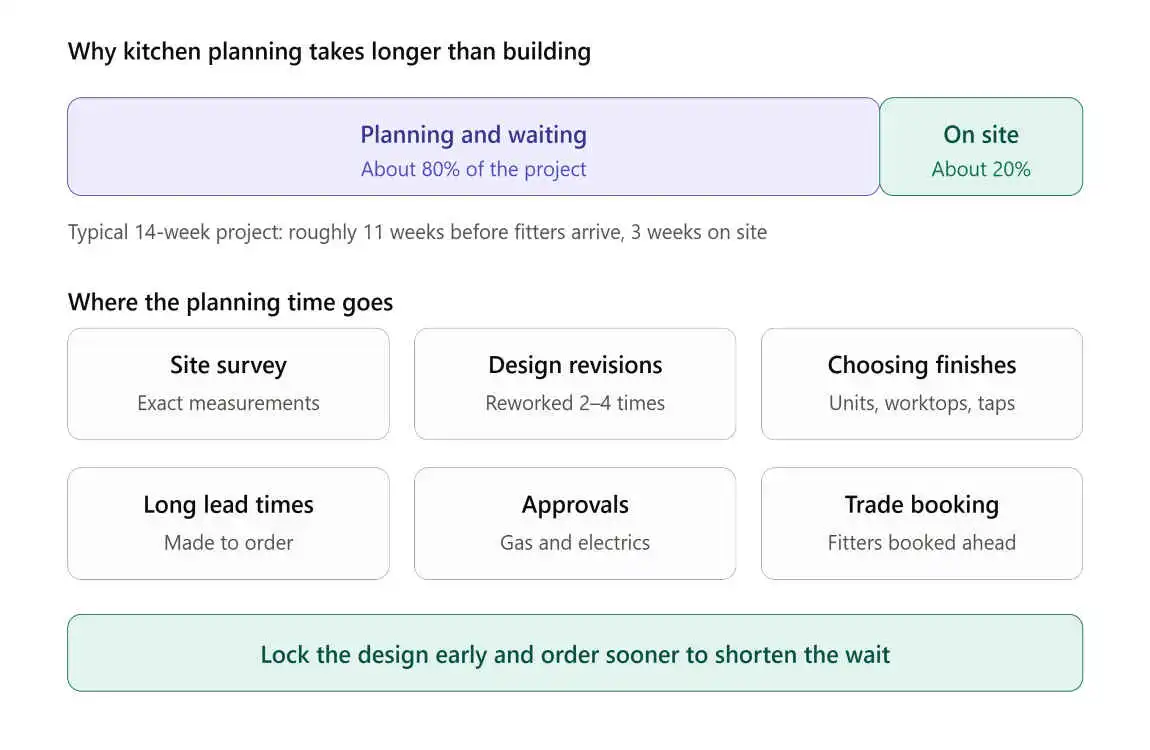
Why planning takes longer than building
Most homeowners underestimate the time before the first cabinet design arrives. The 2020 U.S. Houzz & Home study, which surveyed more than 87,000 respondents about projects completed in 2019, found that kitchens took the longest of any room to plan, averaging 8.3 months, and the longest to build, at 4.5 months on average. Houzz notes these are averages that include both DIY projects and professionally managed ones, and that planning often takes longer than construction.
Because that data is a few years old and covers every kind of kitchen project, treat it as evidence that planning is the long pole, not as a forecast for your own job. Angi’s more recent phase estimate (two weeks to three months for design) is a better guide for a contractor-led remodel with decisions made promptly.
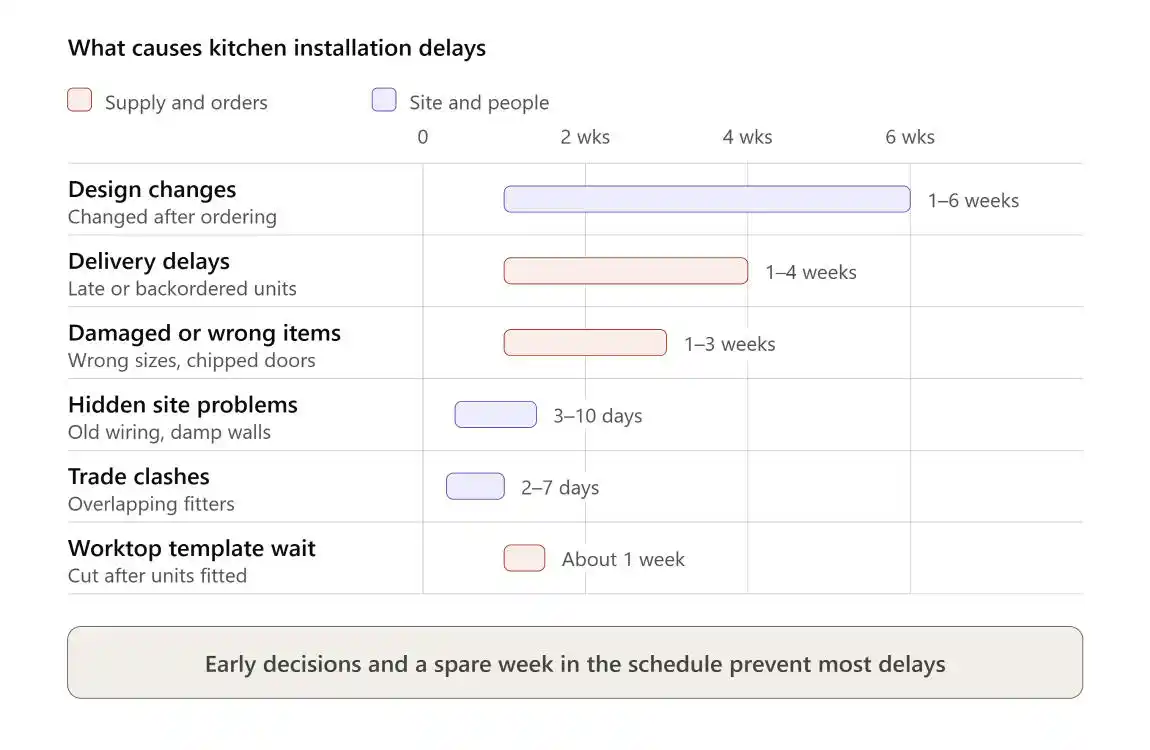
What causes kitchen installation delays
- Permits. Angi says approval can take up to four weeks, depending on the inspections needed and how backed up your local office is.
- Subcontractor scheduling. The more trades involved (electrician, plumber, HVAC), the greater the chance of a gap, according to Angi.
- Custom or back-ordered materials. Both Angi and Checkatrade flag bespoke cabinets, worktops and appliances as common causes of waiting. Houzz designers recommend ordering in-stock items where speed matters, since “available by” dates can slip.
- Awkward worktops. Checkatrade explains that uneven walls, curved counters or cut-outs for a kitchen sink or hob take extra time compared with a straight run.
- Surprises behind the walls. Angi gives the example of removing old drywall to find water damage that must be fixed before work continues.
- Shipping problems and illness. Angi also lists shipping delays and contractor illness as typical interruptions.
How to finish your kitchen faster
Angi’s advice for shortening the time your kitchen is out of action is practical and consistent with what Houzz designers recommend:
- Set a clear budget before you start.
- Avoid changing the plan once the home design is approved.
- Choose premade materials over custom ones where you can.
- Buy materials early to dodge shipping and supply delays.
- Stay reachable so your contractor can get quick answers.
- Pay on time.
- Finalize every decision, down to hardware, before demolition begins, a point Houzz designers stress.
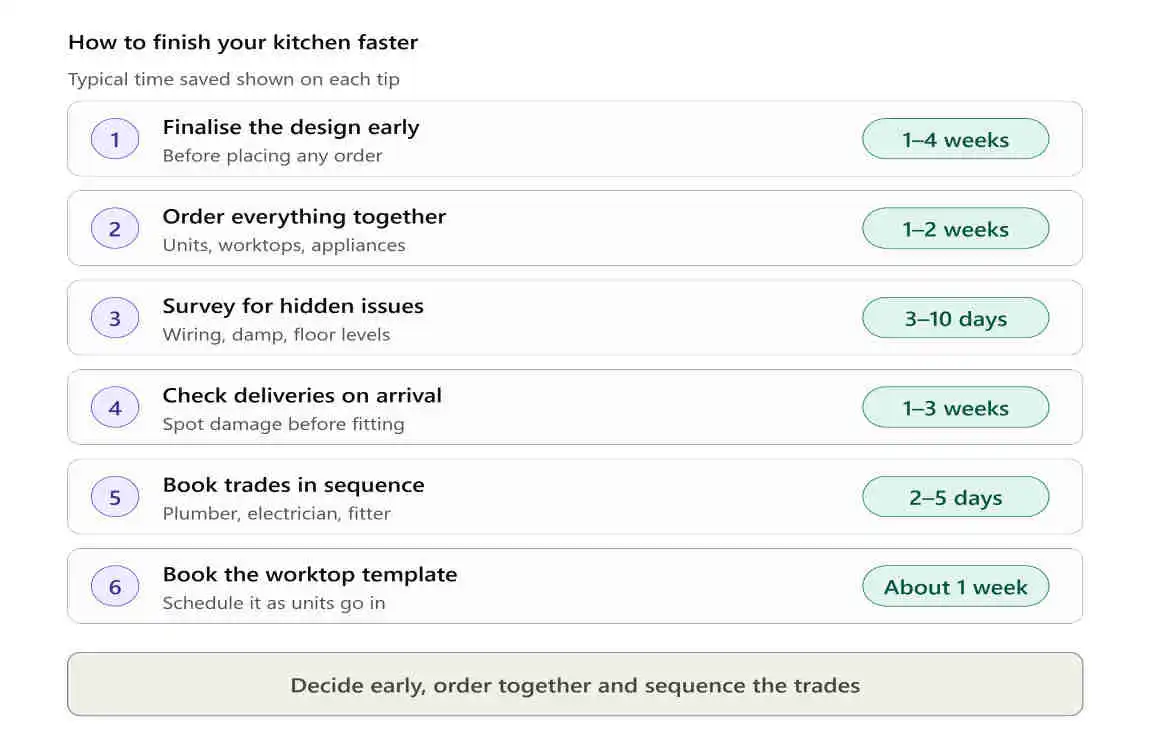
If your contractor handles permits, the process is also usually less stressful, since Angi notes contractors deal with applications and inspections regularly.
How Long Does It Take to Install a Kitchen? (FAQ)
How long does a kitchen installation take?
Most standard kitchen installations take 1 to 3 weeks from removing the old kitchen to the final finishing touches. A small, simple kitchen can be fitted in as little as 3 to 5 days.
How long does the fitting itself take?
Fitting units, worktops and appliances usually takes 5 to 10 working days. Larger kitchens or those with custom cabinetry can take longer.
What affects the installation time?
- Kitchen size and layout: larger or more complex kitchens take longer
- Structural changes: moving walls, windows or plumbing adds time
- Worktop type: stone and quartz often need templating and a 1 to 2 week wait for fabrication, while laminate and wood can be fitted straight away
- Electrical and plumbing work: rewiring, new sockets and moving water or gas lines add days
- Flooring and tiling: these need drying or curing time
- Delivery delays: missing or damaged items can hold up the job
How long does the whole project take, including planning?
From design to completion, expect 6 to 12 weeks. Made-to-order cabinets and worktops can lead to a 4 to 8 week lead time before fitting starts.
How long will I be without a kitchen?
Typically 2 to 3 weeks. Setting up a temporary kitchen with a microwave, kettle and small hob makes this much easier.
Can I speed up the installation?
Yes. Order everything in advance, confirm measurements early, choose in-stock units and have all trades booked before work begins.
Does a DIY installation take longer?
Usually, yes. A confident DIYer may need 2 to 4 weeks, especially working weekends only, while a professional fitter will be much quicker.
The bottom line
Budget days for fitting, weeks for a full remodel, and months in total if you count design, ordering and permits. Lock in your design early, order materials as soon as the plan is final, and ask your fitter for a written schedule that names the delivery dates for cabinets, worktops and appliances. Timelines in this article are estimates from published sources and vary by country, kitchen size and contractor availability, so confirm dates with your own installer.
