

A kitchen can feel calm and normal one minute, then turn into a mess the next. A faucet starts dripping. The sink drains slowly. Water gathers under the cabinet. Dinner is waiting, the family is hungry, and now you are dealing with a plumbing problem you did not expect.
That is exactly why kitchen plumbing basics for house owners matter so much. When you understand the simple parts of your kitchen plumbing system, you can spot trouble early, handle small fixes with confidence, and avoid bigger repair bills later. You do not need to be a plumber to understand the basics. You only need a clear, simple explanation of how the system works.
Why Kitchen Plumbing Basics Matter for Your House
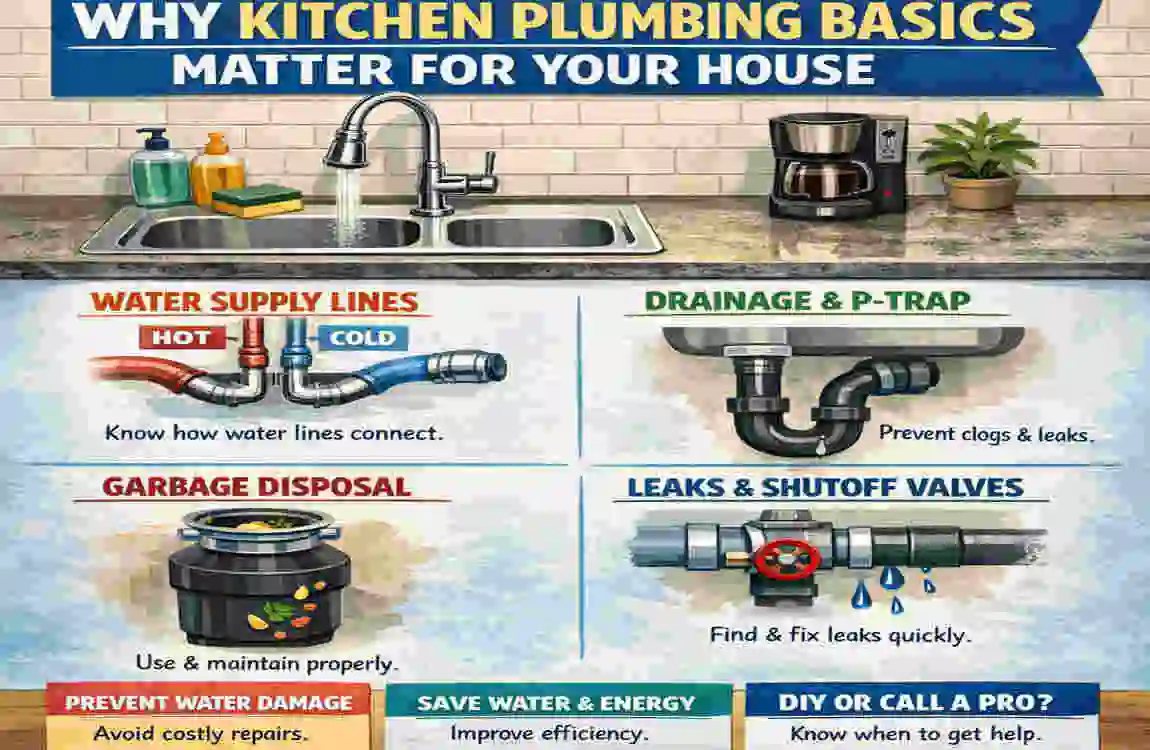
The kitchen is one of the hardest-working spaces in any home. It handles cooking, cleaning, food prep, dishwashing, and often a lot of daily traffic. Because of that, the plumbing in this room gets used constantly.
The Kitchen Uses Water All Day Long
Think about how many times water flows through the kitchen in a single day. You wash your hands. You rinse vegetables. You clean dishes. You fill a pot. You run the dishwasher. You may even use a garbage disposal. All of this activity depends on a plumbing system that works smoothly in the background.
That is why kitchen sink plumbing is such an important part of the home. Even a small issue in one part of the system can affect your whole routine.
Small Problems Can Become Expensive Fast
A slow drip may look harmless, but over time it can waste water, stain cabinets, and damage wood. A small clog can turn into a full backup. A loose hose can leak under the sink for weeks before you notice it.
When kitchen plumbing problems are ignored, the damage often spreads beyond the sink area. Cabinets can swell. Floors can warp. Mold can grow in hidden spaces. A simple repair that could have been handled early may turn into a much larger job.
Understanding the System Saves Time and Stress
Once you know the basics, you can react faster. You will know where the shut-off valve is. You will know what a P-trap does. You will understand the difference between a supply problem and a drainage problem. That knowledge can save you a lot of stress.
Kitchen Plumbing Is Part of the Home’s Bigger Water System
The kitchen plumbing system overview starts with the home’s main water line and ends with how used water leaves the house. Inside that flow, there are supply pipes, drains, valves, traps, and fixtures. When all of those parts work together, the kitchen feels effortless.
But when one part is blocked, cracked, loose, or worn out, the whole system can struggle. That is why basic knowledge is so useful. It helps you protect the kitchen, your budget, and your peace of mind.
Core Components of Kitchen Plumbing Basics for the House
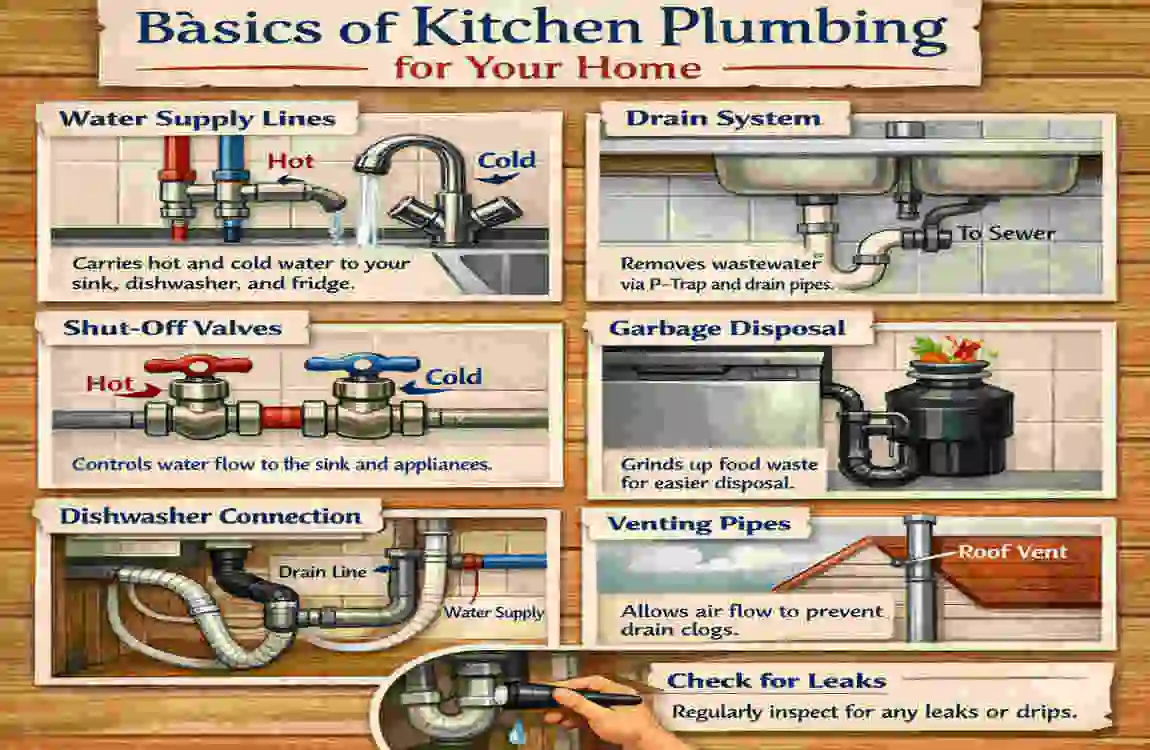
To understand the basic kitchen plumbing parts in a home, it helps to break the system into simple components. Your kitchen plumbing is not one single thing. It is a group of interconnected parts that work together to bring in water and carry wastewater out.
Pipes and Materials
Pipes are the hidden pathways of your kitchen. Some carry clean water to the faucet and dishwasher. Others carry wastewater away from the sink. Different pipe materials are used for different jobs.
The most common materials in home kitchens include:
- PEX for flexible supply lines
- PVC or CPVC for drainage and some supply uses
- Copper for durable supply lines in many homes
Each material has its own strengths. PEX bends easily and is helpful in tight spaces. PVC is light and often used in drain systems. Copper lasts a long time and handles heat well, but it usually costs more.
Here is a simple comparison table:
MaterialDurabilityCostBest For
PEX High Low to medium New homes, flexible supply lines
PVC/CPVC Medium Low Drain lines, some supply applications
Copper Very high High Long-lasting supply lines, Premium upgrades
Most homeowners do not need to replace pipes often, but it helps to know what is under the sink and behind the walls. If a pipe starts looking green, white, rusty, or brittle, it may be time to inspect it more closely.
Fixture Sizes Matter Too
A kitchen sink usually uses a 1/2-inch supply line for water delivery. Drain lines are usually larger, often around 1.5 inches in diameter. These sizes are important because they help water move at the right speed.
If pipes are too narrow or blocked by buildup, flow slows down. If drains are not sized correctly or connected properly, backups can happen. Even though the parts are hidden, the size and shape of the pipes make a big difference in how well the kitchen works.
Fixtures and Appliances
Your kitchen plumbing includes more than just pipes. It also includes the fixtures and appliances you use every day.
The Sink
The sink is the center of the kitchen plumbing setup. Some homes have a single-basin sink, while others use a double-basin design. An under-mount sink sits below the counter for a smooth look, while a top-mount sink rests on the counter surface.
Each type works well when installed properly. What matters most is that the drain connects securely and the seal around the sink stays watertight.
The Faucet
The faucet controls the water you see and use. Two common faucet types are compression faucets and cartridge faucets. Cartridge faucets are very common in modern homes because they are often easier to use and maintain.
A faucet may look simple, but inside it has parts that control water flow and temperature. When those parts wear out, you may notice drips, weak flow, or stiff handles.
Garbage Disposal
If your kitchen has a garbage disposal, it is connected directly to the sink drain system. It helps break down food waste before it moves into the drain. But it is not designed to handle everything. Hard objects, grease, fibrous foods, and large scraps can create jams or damage the unit.
Dishwasher Connections
Dishwashers connect to the kitchen plumbing through a water supply line and a drain hose. Some homes also need an air gap to help prevent dirty water from flowing backward into the machine. The setup depends on local rules and the way the home was built.
Valves and Connections
Valves may be small, but they are extremely important. They control water flow and let you shut off the water when something goes wrong.
Shut-Off Valves
Most kitchens have shut-off valves under the sink. These let you stop the water supply to the faucet without turning off water for the whole house. If a faucet leaks or needs to be replaced, these valves are your first line of defense.
P-Traps
A P-trap is the curved pipe section below the sink. It holds a small amount of water that blocks sewer gases from coming back into the house. This is one of the most useful parts of the kitchen plumbing system.
Without a P-trap, your kitchen could smell bad even if everything looks clean. It is a simple part, but it plays a big role in comfort and safety.
Unions and Connectors
Unions and connectors help join different pipe sections. Good connections reduce leaks and make repairs easier. Bad connections can loosen over time or start dripping around the joints.
How Kitchen Water Supply Works in Your House
Now that you know the main parts, let’s look at how clean water gets to your kitchen.
From Main Source to Kitchen Sink
The water usually starts at a municipal supply line or a private well. From there, it travels through the home’s main line, then branches into different rooms. One of those branches leads to the kitchen.
When you turn on the faucet, the pressure pushes water through the pipes and out the spout. If your home has a dishwasher or refrigerator water line, those appliances may also connect to this branch.
Hot and Cold Water Lines
Most kitchen faucets get both hot and cold water. These two lines mix inside the faucet or at the handle, depending on the design. Hot water usually comes from the water heater, while cold water comes directly from the main supply.
If one line is blocked or weak, you may notice that only hot or only cold water is affected. That can help you narrow down the problem.
Water Pressure Matters
Good water pressure usually falls between 40 and 60 PSI. That is strong enough for normal use but not so strong as to damage fixtures. Too little pressure can make washing dishes frustrating. Too much pressure can strain joints, valves, and appliances.
If your kitchen plumbing basics for house maintenance include one yearly check, make water pressure a part of it. A simple gauge can help you see whether pressure is in a healthy range.
Common House Layouts
The way your home is built can change how the kitchen water supply is routed.
Slab Homes
In slab homes, pipes often run through or under the concrete foundation. This can make repairs more complicated because some pipes are less accessible.
Crawlspace Homes
In homes with a crawlspace, pipes are often easier to inspect. You may be able to spot leaks, rust, or loose fittings earlier. That can make maintenance simpler.
Regardless of the layout, the goal is the same: steady, clean water reaching the kitchen without leaks or pressure loss.
Understanding Kitchen Drainage Basics for the House
If supply lines bring water in, drain lines carry wastewater out. This is where kitchen drainage basics for the house become very important.
Gravity Does Most of the Work
Kitchen drains usually rely on gravity. Water moves downward through the sink drain, into the trap, and then into the larger waste line. As long as the pipes slope correctly, wastewater continues to flow away from the kitchen.
If the slope is wrong or the line is blocked, water can back up. That is why drain installation needs careful planning.
The Role of Vents
Drainage is not only about moving water. Air also matters. Vents allow air to enter the system, allowing water to flow smoothly. Without proper venting, drains may gurgle, slow, or draw water out of the trap.
That small air balance is easy to forget, but it is a big part of a healthy plumbing system.
Why Traps Are So Important
The P-trap under the sink does two jobs. First, it catches small debris before it moves deeper into the drain. Second, it prevents sewer gases from rising back into the house.
If the trap dries out, gets installed incorrectly, or is clogged, you may smell something unpleasant. You may also see slower drainage. That is often a clue that the trap or drain line needs attention.
Cleanouts Make Repairs Easier
A cleanout is an access point that lets a plumber or homeowner reach the drain line more easily. It is helpful when a clog needs to be cleared. Not every kitchen setup is the same, but if your home has a cleanout nearby, it can make maintenance much faster.
Multi-Story Homes Need Special Attention
In multi-story houses, drainage systems are more complex. Wastewater has to move down through several floors while remaining vented and balanced. If one section is blocked, the issue may show up in more than one bathroom or kitchen area.
That is why a slow kitchen drain in a multi-story home should not be ignored. It may be a sign of a larger system issue.
Common Kitchen Plumbing Problems and Fixes
Every homeowner deals with plumbing issues at some point. The good news is that many kitchen plumbing issues for house setups are simple enough to understand and sometimes fix on your own.
Leaky Faucets
A dripping faucet is one of the most common kitchen problems. It may happen because a washer is worn out, a cartridge is damaged, or a connection has loosened.
In many cases, a leak can be fixed by tightening a fitting or replacing a worn part. If the faucet uses a cartridge system, the cartridge may need to be changed. This is often a quick repair if the shut-off valves work properly.
Clogged Drains
A slow or clogged drain usually happens because grease, soap, food particles, or debris have built up inside the pipe.
You can often start with a plunger. If that does not work, a simple drain snake may help. Some homeowners try a baking soda and vinegar mix to loosen mild buildup, but it will not solve every clog.
For disposal-connected drains, be careful. If the clog is deeper or the disposal is involved, you may need a more direct approach.
Low Water Pressure
If the sink has weak flow, the cause may be a clogged aerator, mineral buildup, a partly closed valve, or pressure trouble elsewhere in the home.
A good first step is to remove and clean the faucet aerator. If that does not help, check the shut-off valves under the sink to make sure they are fully open. If the problem continues, the supply line or pressure system may need a closer look.
Garbage Disposal Jams
A jammed disposal can stop the whole sink from draining properly. You may hear a humming sound, or the unit may stop running altogether.
Never reach inside the disposal by hand. Instead, turn off the power, use the reset button if needed, and follow the unit’s manual for safe unjamming. In many cases, the problem is caused by something simple, like a bone, a peel, or a hard food scrap.
Dishwasher Leaks
Dishwasher leaks often come from a loose hose, a bad seal, or an improper connection. Sometimes the issue is under the sink where the water line and drain hose connect.
If you see water on the floor after a wash cycle, inspect the hose path and connection points. A small alignment problem can cause a big mess over time.
Here is a quick troubleshooting table for common problems:
ProblemSymptomQuick Fix
Dripping faucet, constant water drops. Tighten parts or replace the washer/cartridge.
Slow drain. Water drains slowly. Plunge, snake, or clean the trap
Low pressure , weak water flow , clean aerator, check valves
Disposal jam, humming, or no movement. Reset the unit, and safely unjam it
Dishwasher leak; water under the sink or on the floor. Check hose alignment and seals
Knowing When a Problem Is Bigger Than It Looks
Some issues are easy to handle. Others are warning signs of a hidden problem.
Call a plumber if you notice:
- Water stains inside cabinets
- Repeated clogs in the same sink
- Bad smells that do not go away
- Rusty or discolored water
- Damp floors or soft cabinet bottoms
- A leak you cannot locate
These signs may point to hidden damage behind walls or under the floor. It is better to act early than wait for the problem to spread.
Essential Tools for Kitchen Plumbing Basics in Your House
You do not need a full workshop to handle basic kitchen plumbing tasks. A small, practical kit is enough for many simple jobs.
A Budget-Friendly DIY Kit
You can build a simple plumbing tool kit without spending much. For many homeowners, a starter set costs around $50 or a little more, depending on the quality of the tools.
The most useful item for kitchen work is often the basin wrench, because it helps reach the tight spaces behind sink faucets and supply lines.
Why These Tools Matter
The right tool makes a job easier and safer. Using the wrong tool can damage a fitting or make the repair harder. A bucket and flashlight may seem basic, but they are often the first things you reach for when checking under the sink.
DIY Kitchen Plumbing Maintenance Tips for Homeowners
Good maintenance is one of the easiest ways to protect your kitchen plumbing. Small habits can prevent bigger problems later.
Simple Monthly and Seasonal Habits
Here is a practical checklist you can follow:
- Inspect under the sink every month for dampness, drips, or stains.
- Clean faucet aerators every few months if the water flow seems weak.
- Check shut-off valves once a year to ensure they still turn properly.
- Flush the drain with hot water after greasy cooking, but avoid pouring grease into the sink.
- Watch for odors that might point to trap or vent issues.
These steps do not take long, but they can make a big difference.
Be Careful With What Goes Down the Drain
Not everything belongs in the kitchen sink. Grease, coffee grounds, fibrous peels, rice, and pasta can build up or clog over time. Even if the drain seems fine today, repeated misuse can slowly narrow the pipe.
A good rule is simple: if it can harden, expand, or tangle, keep it out of the drain.
Turn Off Water Before Repairs
This sounds obvious, but it is one of the most important safety habits in DIY kitchen plumbing basics for house maintenance. Before you loosen a pipe, remove a faucet part, or replace a hose, shut off the water first.
Wear gloves if needed, and keep a towel or bucket nearby. A small spill is easier to manage when you are prepared.
Clean Around the Sink Area
Leaks do not always start with a dramatic flood. Sometimes they begin with a tiny drip that goes unnoticed in a messy cabinet. Keeping the under-sink area clean makes it easier to spot moisture early.
If you keep cleaning supplies, trash bags, or food items under the sink, check them regularly. Damp packaging, warped shelves, or a musty smell can all hint at a hidden leak.
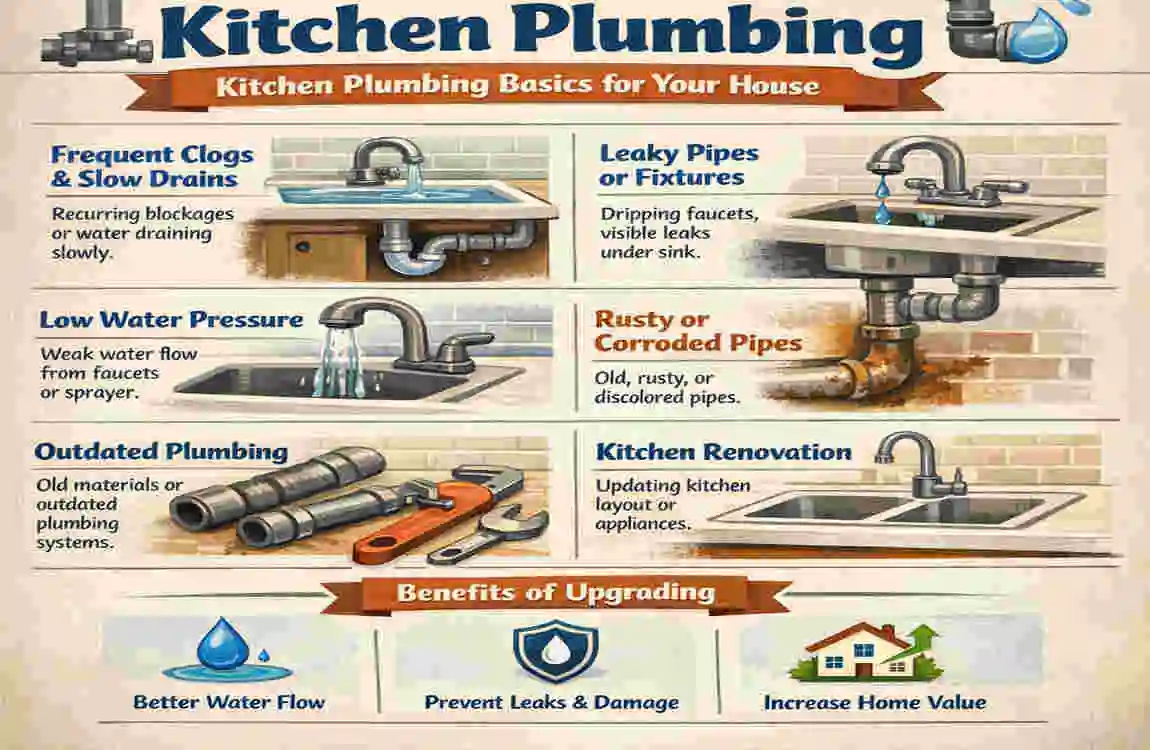
When to Upgrade Your House’s Kitchen Plumbing
Even well-maintained plumbing does not last forever. At some point, upgrading makes more sense than repeatedly patching old parts.
Signs It May Be Time
You may need an upgrade if you notice:
- Rusty or corroded pipes
- Outdated galvanized plumbing
- Frequent leaks in different areas
- Poor water pressure that keeps returning
- Old fixtures that waste water
- Repeated clogs or slow drainage
If your kitchen plumbing is old, repairs may become more frequent and less reliable. That is often a sign that the system is reaching the end of its useful life.
Modern Materials Can Make Life Easier
Many homeowners choose PEX during upgrades because it is flexible, easier to install, and often less expensive than copper. It can also help reduce the number of fittings needed in some layouts.
That said, every home is different. A good upgrade should match the house’s layout, water conditions, and long-term needs.
Why an Upgrade Can Be Worth It
A plumbing upgrade is not just about fixing a problem. It can also improve daily comfort, reduce leaks, and raise home value. In many cases, updated plumbing gives buyers more confidence because it suggests the home has been well cared for.
FAQs: Kitchen Plumbing Basics for the House
What are the kitchen plumbing basics for house beginners?
The basics are the main parts and systems that bring water into the kitchen and carry wastewater out. This includes supply pipes, drain lines, faucets, shut-off valves, traps, and appliance connections.
How do I fix a kitchen sink leak?
Start by finding the source of the leak. Check the faucet, shut-off valves, drain connections, and P-trap. Tighten loose parts if needed. If a washer, cartridge, or hose is damaged, it may need to be replaced.
Why does my kitchen sink drain slowly?
A slow drain is usually caused by buildup inside the pipe. Grease, food scraps, soap, and debris are common reasons. A plunger, drain snake, or trap cleaning may help.
What is a P-trap, and why is it important?
A P-trap is the curved pipe under the sink. It holds water, which blocks sewer gases from entering your kitchen. It also catches some debris before it goes deeper into the drain.
How often should I check my kitchen plumbing?
A quick monthly visual check is a good habit. Look under the sink for leaks, inspect hoses, and make sure the water flows normally. A more detailed check once a year is also smart.
When should I call a plumber?
Call a plumber if you see hidden leaks, recurring clogs, rusted pipes, water damage, or anything affecting more than one fixture. If you are unsure, it is better to ask for help early.
