
Small modern timber frame homes are becoming a favorite choice for many people in 2026. More buyers now want homes that are affordable, stylish, energy-efficient, and easier to maintain. At the same time, many people are choosing a simpler lifestyle, which makes compact homes even more attractive.
These homes combine the warmth of wood with clean, modern design. They often feel cozy, open, and practical at the same time. If you want a home that looks beautiful but also fits today’s lifestyle, timber frame living is worth exploring.
What Are Small Modern Timber Frame Homes?
Definition and Basic Features
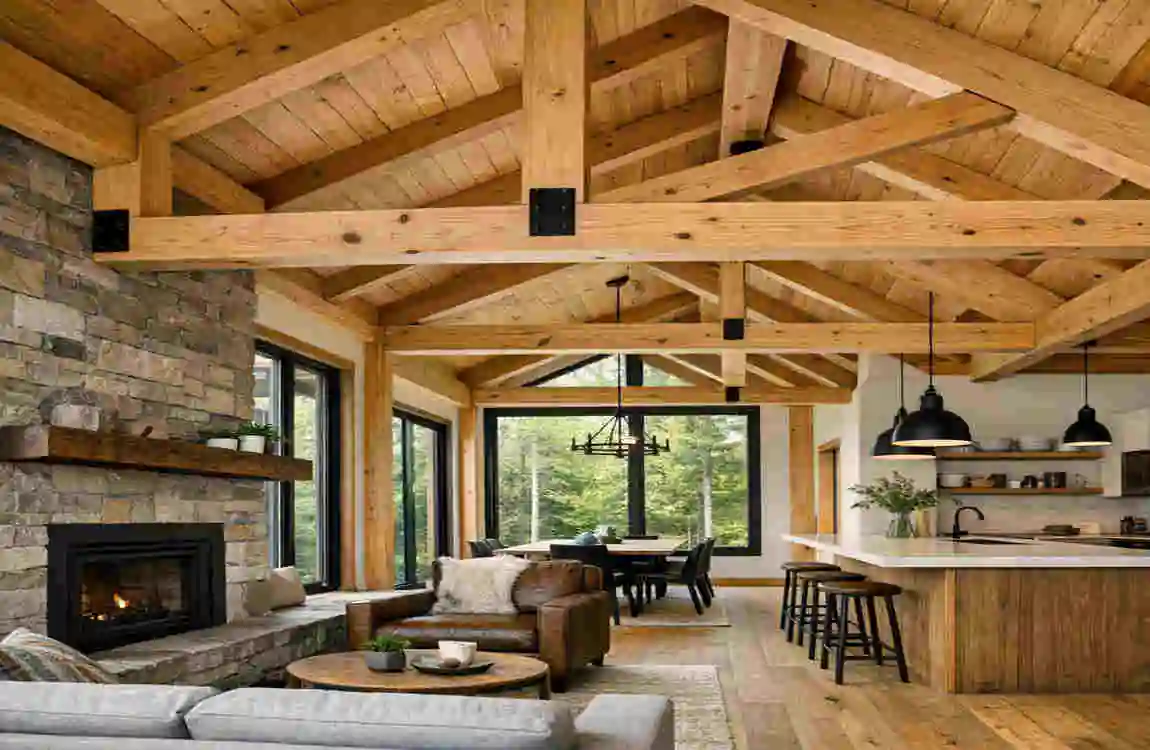
Small modern timber-frame homes are compact houses built with a wooden frame. The timber frame supports the home, while the design focuses on smart space use, open layouts, and modern style.
These homes usually have:
- Simple, clean lines
- Open floor plans
- Large windows
- Natural wood details
- Efficient use of space
They are designed to feel bigger than they are. Even with small square footage, the layout helps the home feel open and comfortable.
Difference Between Traditional and Modern Timber Homes
Traditional timber homes often feel more rustic and heavy in style. Modern timber frame homes look more refined and fresh. They use large glass windows, open rooms, and smooth finishes to create a brighter look.
The modern version also emphasizes energy savings, simple maintenance, and practical living. That is one reason many homeowners prefer them today.
Why Are Small Modern Timber Frame Homes So Popular?
Affordable Housing Solution
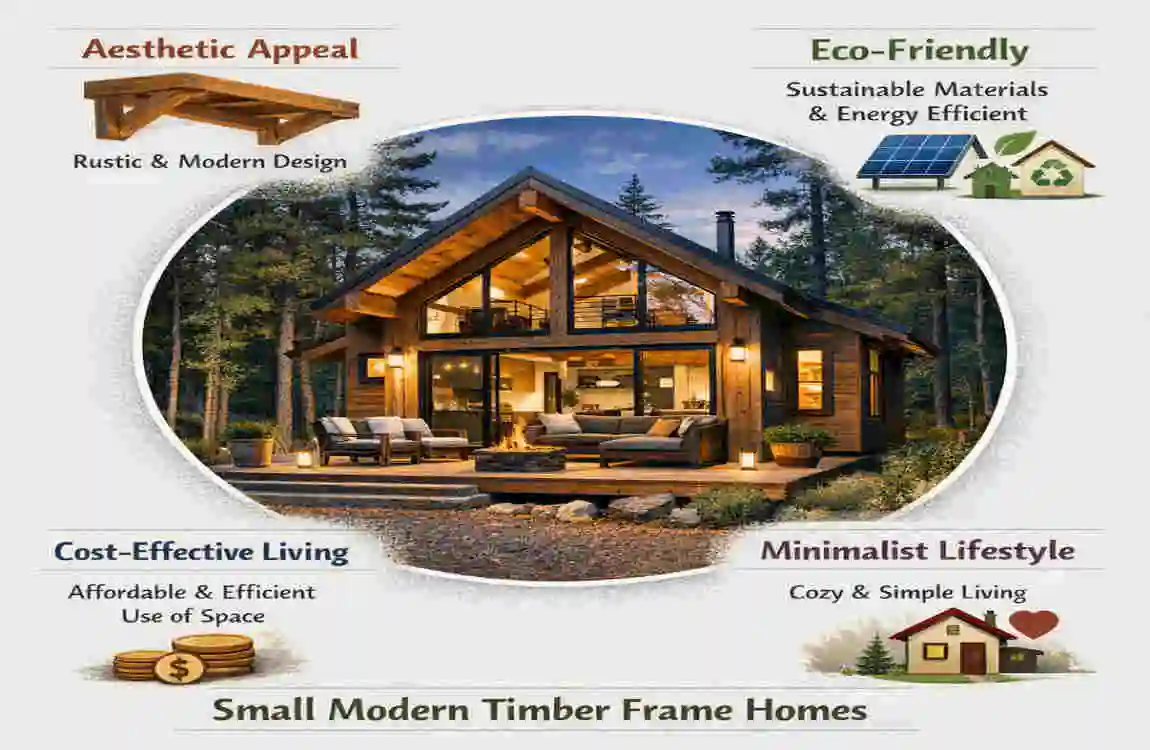
One big reason people love these homes is cost. Small homes usually need fewer materials, which helps lower building costs. They can also be less expensive to heat, cool, and maintain.
This makes them a smart option for:
- First-time buyers
- Retirees
- Small families
- People want a second home
Energy Efficiency
Wood has natural insulating properties, helping keep the home warmer in winter and cooler in summer. Many small timber frame homes also use energy-saving windows, better insulation, and efficient heating systems.
That means lower utility bills and less energy waste. For many people, this is a major reason to choose timber frame living.
Sustainable and Eco-Friendly Living
Timber is a renewable building material, especially when sourced responsibly. Small homes also use fewer resources than large ones, which lowers their environmental impact.
Many homeowners like the idea of living in a home that supports green building practices. It feels good to know your home is both practical and kinder to the planet.
Minimalist Lifestyle Appeal
A small home naturally encourages a simpler lifestyle. You keep only what you need, which can reduce stress and clutter.
This way of living helps people enjoy:
- Easier cleaning
- Better organization
- More functional spaces
- Less wasted room
For many readers, that simpler daily life is a big part of the appeal.
Key Design Features of Small Modern Timber Frame Homes
Open Concept Interiors
Open layouts make small homes feel much larger. The kitchen, dining area, and living room often blend, improving flow and making the space more flexible.
You can use the same area in different ways without feeling crowded.
Large Glass Windows
Large windows bring in more sunlight. This makes the home feel brighter, warmer, and more open. They also help connect the indoors with the outdoors, which adds to the modern feeling.
Smart Storage Solutions
Storage matters a lot in a smaller home. Built-in cabinets, hidden shelves, and multi-purpose furniture help save space and keep the home organized.
A well-designed small home always feels better than a cramped one.
Natural Wood Aesthetics
One of the best things about timber frame homes is the natural wood look. It adds warmth, texture, and charm. The result is a home that feels both modern and welcoming.
Benefits of Living in Small Modern Timber Frame Homes
Faster Construction Time
Timber frame homes can often be built faster than traditional homes. In many cases, parts of the structure are prepared in advance, which speeds up construction.
That means less waiting and quicker move-in times.
Lower Environmental Impact
Because these homes are smaller, they usually create less waste during construction. They also need fewer building materials overall.
If the timber is sourced responsibly, the home becomes an even better eco-friendly choice.
Easy Maintenance
Smaller homes are generally easier to care for. There is less space to clean, fewer systems to manage, and often fewer repairs over time.
This is ideal for people who want a home that is simple to live in, not hard to maintain.
Flexibility and Customization
Even though these homes are small, they can still be highly customized. Homeowners can choose different layouts, finishes, colors, and storage features.
That means you can create a home that matches your personal style and daily needs.
Common Benefits at a Glance
BenefitWhy It Matters
Lower cost , easier to build and maintain
Energy efficiency helps reduce utility bills
Eco-friendly : Uses renewable materials
Stylish design , looks modern and warm
Easy upkeep saves time and effort
Best Locations for Small Modern Timber Frame Homes
Rural and Mountain Areas
These homes fit beautifully in nature-focused settings. Many people use them as vacation retreats, weekend homes, or quiet full-time residences in the countryside or mountains.
Urban and Suburban Settings
Small timber frame homes also work well in cities and suburbs. They can be used as compact homes, backyard guest houses, or ADUs for extra living space.
Off-Grid Living Opportunities
Some homeowners want a more self-sufficient lifestyle. Small timber frame homes can support off-grid living with solar power, water-saving systems, and efficient heating.
This makes them popular with people who want more independence.
Challenges to Consider Before Building
Initial Design Planning
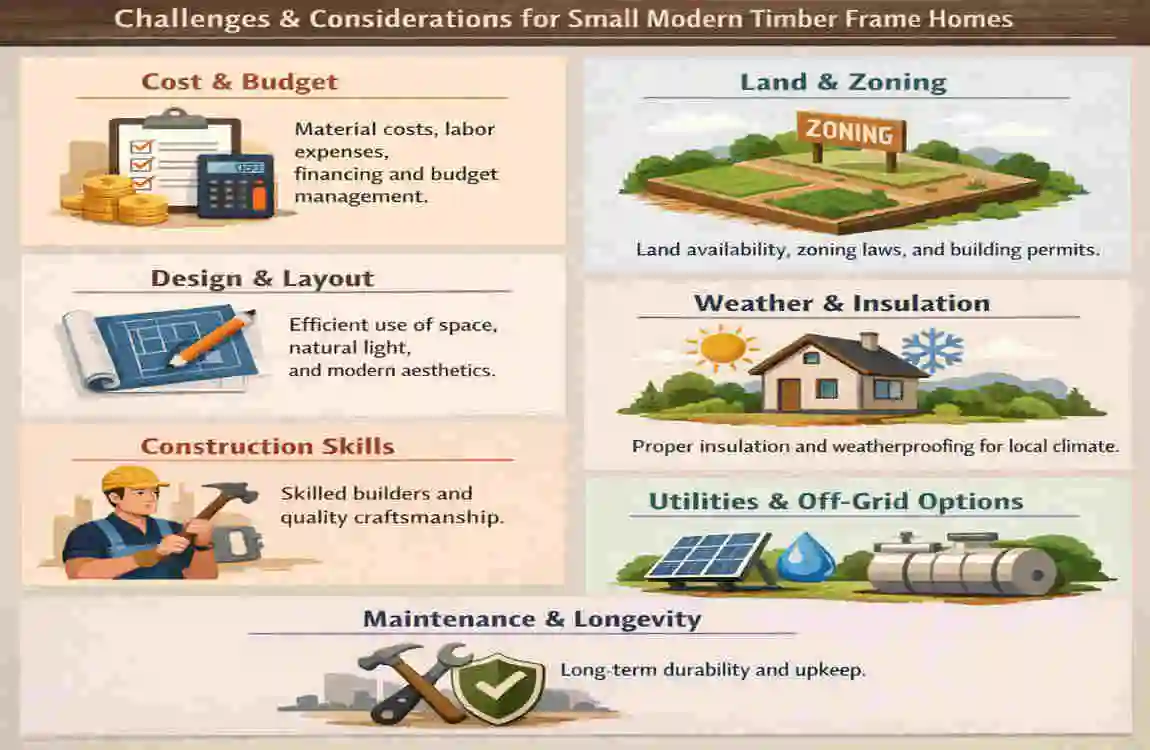
Planning matters a lot. You need to choose the right layout, size, and features before construction begins. A poor plan can make a small home feel even smaller.
Budget planning is also important to keep costs under control.
Weather and Climate Factors
Climate affects how the home performs. In wet or cold areas, you need strong moisture protection and good insulation.
The right materials and design choices can help the home last longer and stay comfortable.
Local Building Regulations
Before building, always check local rules, permits, and zoning laws. Timber frame construction may have special code requirements depending on the area.
This step helps avoid delays and legal issues.
Future Trends in Small Modern Timber Frame Homes
Smart Home Integration
More small homes now include smart features like energy monitoring, automated lighting, and security systems. These tools make daily life easier and more efficient.
Sustainable Innovations
Builders are using more recycled materials and designing homes that use less energy. Some homes are even moving toward net-zero living, where the house produces as much energy as it uses.
Growing Tiny Home Movement
The tiny home trend continues to grow. Many people want less space, lower costs, and more freedom. Small, modern timber-frame homes fit that lifestyle very well.
FAQ
What are small modern timber frame homes?
Small modern timber-frame homes are compact houses built with exposed wooden structural frames and modern design features.
Are timber frame homes energy efficient?
Yes, they usually offer good insulation and can help reduce heating and cooling costs.
How long do small timber frame homes last?
With proper care and maintenance, they can last for many decades.
Are small modern timber frame homes affordable?
Yes, they are often more affordable than larger homes because they use fewer materials and cost less to maintain.
Can timber frame homes be customized?
Yes, they can be customized with different layouts, finishes, and storage solutions.
Are timber frame homes environmentally friendly?
Yes, timber is a renewable material, so these homes are often a more sustainable choice.
| Factor | Why It Makes Small Modern Timber Frame Homes Popular |
|---|---|
| Energy Efficiency | Structural insulated panels (SIPs) + excellent wood insulation = lower utility bills and great U-values |
| Open Floor Plans | Fewer interior walls create spacious, interconnected living areas that feel larger than their square footage |
| Eco-Friendly | Wood is renewable; uses up to 30% less wood than conventional homes; reduces carbon emissions during construction |
| Durability & Strength | Heavy timber withstands harsh weather, earthquakes (up to UBC Zone 4), and has higher fire tolerance than stick-framing |
| Modern Aesthetics | Large windows, mixed materials (glass, steel), flat roofs, and contemporary cladding create unique, stylish designs |
