

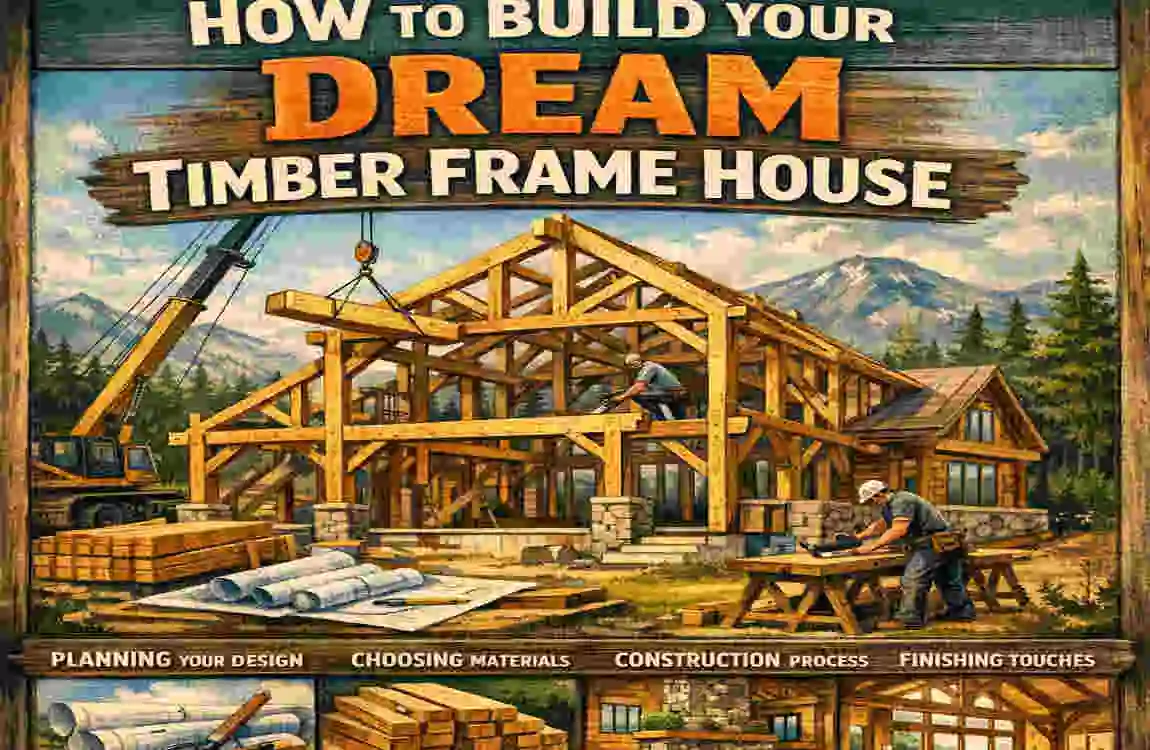
Timber frame houses have been gaining popularity in recent years, and it’s easy to see why. These homes combine rustic charm, energy efficiency, and quick assembly, making them an ideal choice for anyone dreaming of a unique and sustainable home. But what exactly is a timber frame house, and how do you go about building one?
| Step | Description | Key Tasks | Duration Estimate | Tips |
|---|---|---|---|---|
| 1. Planning & Design | Create blueprints and secure permits. | Hire architect/engineer; site survey; budget. | 2-3 months | Use 3D software like SketchUp for visualization. |
| 2. Site Preparation | Clear land and build foundation. | Excavate, level site, pour concrete slab or walls. | 2-4 weeks | Ensure level base to avoid frame misalignment. |
| 3. Timber Fabrication | Source and cut timbers off-site. | Select FSC-certified wood (e.g., Douglas fir); cut joinery. | 4-6 weeks | Label pieces for easy assembly. |
| 4. Ground Assembly | Build frame sections like bents. | Assemble posts, beams with pegs; test fit. | 1-2 weeks | Work in shop for precision. |
| 5. Frame Raising | Erect skeleton with crane. | Lift bents, add trusses, brace structure. | 1-2 weeks | Prioritize safety; weatherproof immediately. |
What Is a Timber Frame House?
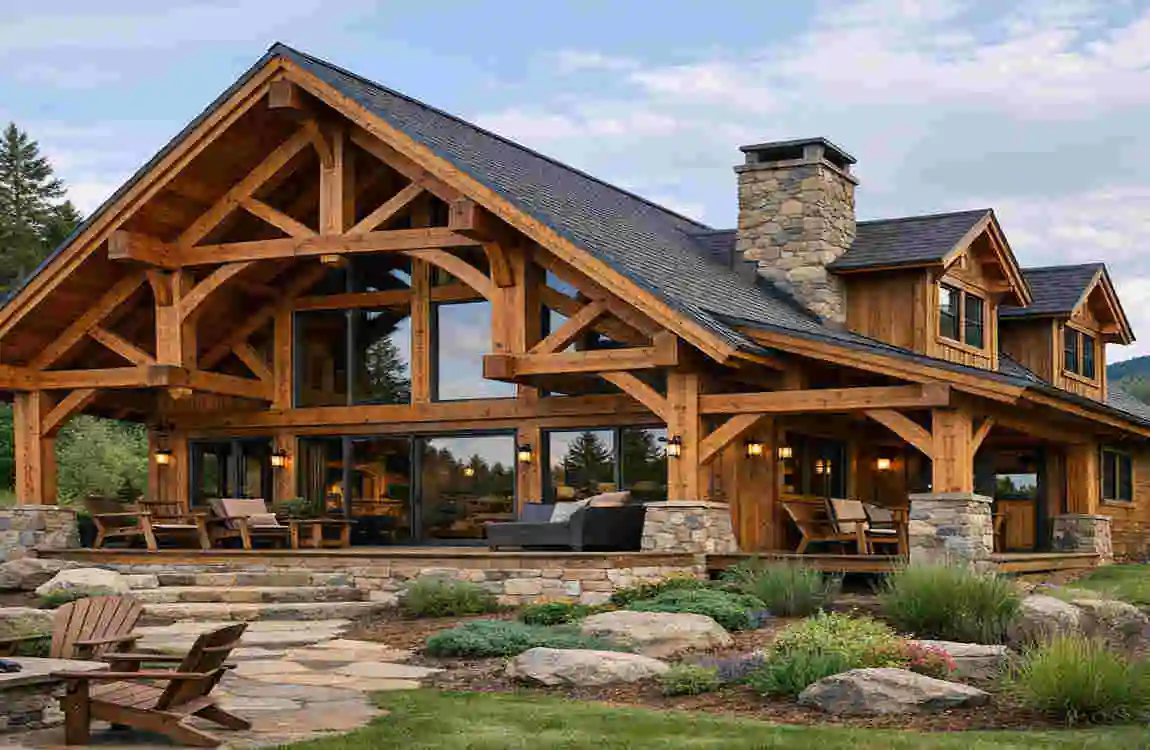
Timber frame construction is a building method that uses heavy timbers, typically 6×6 inches or larger, to create the structural skeleton of a house. Unlike stick framing, which relies on smaller, closely spaced studs, timber framing uses fewer but larger beams. These beams are often left exposed, adding a touch of elegance and warmth to the interior.
A Brief History
Timber framing has been around for centuries, with roots in medieval Europe. Many historic barns and homes were built using this method, and some still stand today as a testament to its durability. In modern times, timber frame construction has evolved to incorporate Structural Insulated Panels (SIPs) or other infill materials, making it a popular choice for eco-friendly homes.
Key Advantages
- Durability: Timber-frame homes are built to last, with some structures standing for hundreds of years.
- Aesthetic Appeal: The exposed beams create a timeless, rustic look that’s hard to replicate with other materials.
- Faster Build Time: Once the foundation is ready, the frame can be raised in as little as 1-2 weeks.
Benefits of Building a Timber Frame House
Building a timber frame house offers a range of benefits that go beyond its visual appeal. Let’s explore why this construction method is a smart choice for modern homeowners.
Superior Insulation and Energy Savings
When paired with Structural Insulated Panels (SIPs), timber-frame homes offer excellent insulation. This means lower energy bills and a more comfortable living environment, no matter the season.
Open Floor Plans and Customizable Designs
The strength of timber framing allows for large, open spaces without the need for load-bearing walls. This flexibility makes it easier to design a home that fits your lifestyle and preferences.
Eco-Friendly Construction
Timber is a renewable resource, and many builders now source their wood from sustainably managed forests. Additionally, the precision of timber frame construction reduces waste compared to traditional methods.
Cost Savings
While the upfront cost of materials may be higher, the quicker assembly time can cut labor costs by 30-50%. Over time, energy savings and durability also make timber frame homes a cost-effective investment.
Increased Resale Value
The unique appeal of timber frame homes often translates to higher resale values. Buyers are drawn to their character, energy efficiency, and long-lasting construction.
Tools and Materials Needed
Before you start building, gather the right tools and materials. Here’s what you’ll need:
Essential Tools
- Chainsaws and Chisels: For cutting and shaping the timber.
- Wooden Mallets and Pegs: Used to secure the joints.
- Cranes: For lifting heavy beams during assembly.
- Measuring Tools: Precision is key in timber framing.
Materials
- Timber: Common choices include Douglas fir and oak for their strength and beauty.
- Structural Insulated Panels (SIPs): For infill walls and insulation.
- Fasteners and Hardware: Wooden pegs, screws, and brackets.
Budget Breakdown
The total cost of building a timber-frame house typically ranges from $150 to $250 per square foot, depending on factors such as location, materials, and labor.
Step-by-Step Guide: How to Build a Timber Frame House
Building a timber frame house is a rewarding process, but it requires careful planning and execution. Follow these steps to bring your dream home to life.
Planning and Design
Start by hiring an architect or designer specializing in timber-frame construction. They’ll help you create custom plans that factor in your site, zoning regulations, and budget. Tools like SketchUp can be used for 3D modeling to visualize your design.
Timeline: 2-3 months
Site Preparation and Foundation
Clear the site of any debris and excavate the foundation area. Depending on your design, you may choose a concrete slab or basement walls. Ensure the base is level to provide a stable foundation for the timber frame.
Timeline: 1-2 weeks
Timber Sourcing and Cutting
Select high-quality, FSC-certified wood for your frame. The timber is typically milled and cut to size off-site to ensure precision. This step also involves cutting the joinery, such as mortises and tenons, which will be used to assemble the frame.
Timeline: 2-4 weeks
Frame Assembly on the Ground
Assemble the frame on the ground by building bents (wall frames) and trusses. Use wooden pegs to secure the joints, and test-fittest-fit each section to ensure accuracy.
Timeline: 1-2 weeks
Raising the Frame
Using a crane, lift the bents into place and secure them with pegs. The walls are typically raised first, followed by the roof trusses. This is one of the most exciting phases, as the structure begins to take shape.
Timeline: 1-2 weeks
Infill Walls and Roofing
Install the infill walls, which can be made from SIPs or stick framing. Once the walls are in place, add roof sheathing and your choice of shingles or metal roofing.
Timeline: 1-2 weeks
Exterior Finishing
Add siding, windows, and doors to complete the exterior. Don’t forget to weatherproof the structure to protect it from the elements.
Timeline: 1-2 weeks
Interior Build-Out
Focus on the interior by installing insulation, drywall, flooring, and mechanical systems like plumbing and electrical.
Timeline: 2-4 weeks
Final Inspections and Landscaping
Obtain the necessary permits and certificates of occupancy. Finish the project with landscaping, decks, or gardens to enhance the home’s curb appeal.
Timeline: 1-2 weeks
Cost Breakdown and Budgeting
Here’s a breakdown of the estimated costs per square foot for building a timber frame house:
Item Estimated Cost per Sq Ft
Foundation $10-20
Frame Materials $20-40
Labor $50-80
Finishes $40-70
Total $150-250
Factors like home size, location, and whether you choose DIY or professional services will influence the final cost.
Common Mistakes to Avoid
Building a timber frame house is a complex process, and mistakes can be costly. Here are some common pitfalls to watch out for:
- Poor Joinery: Weak or imprecise joints can compromise the frame’s stability.
- Skipping Engineering Stamps: Always have your plans reviewed by a structural engineer.
- Ignoring Moisture Control: Proper weatherproofing is essential to prevent rot and decay.
Trends in Timber Frame Homes
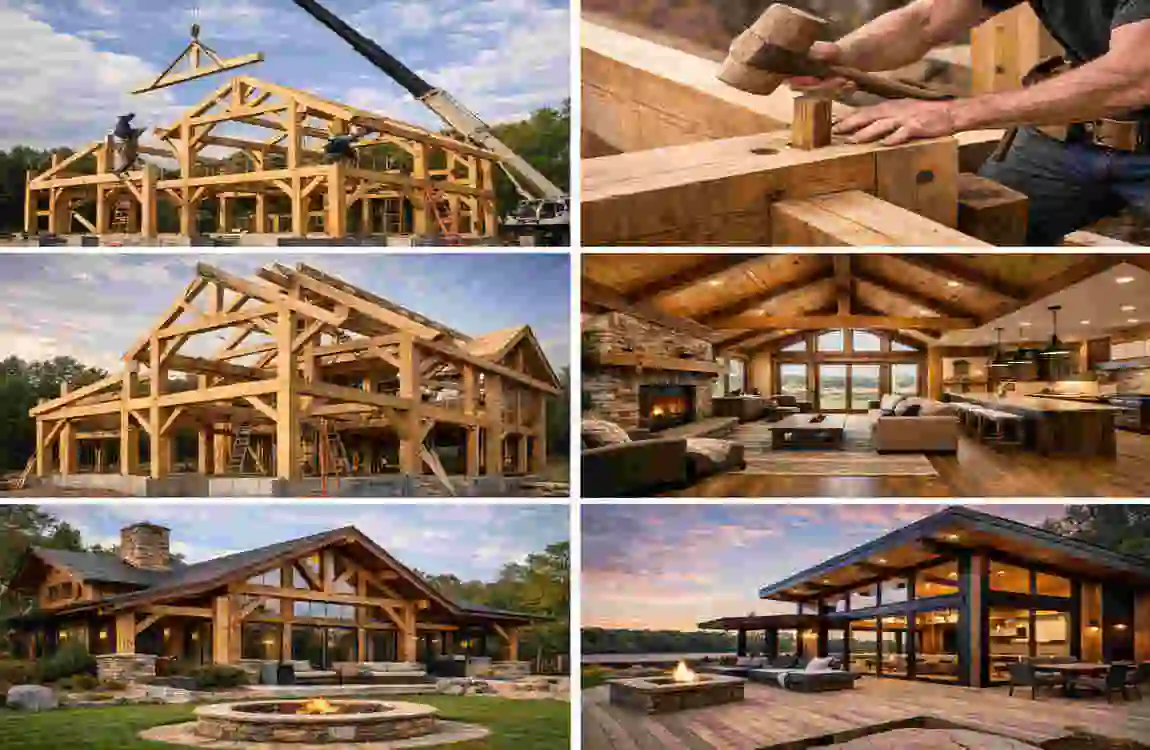
As we move further into 2026, timber frame homes are evolving to incorporate modern trends:
- Hybrid Designs: Combining timber with steel accents for a contemporary look.
- Net-Zero Features: Solar panels, energy-efficient windows, and other sustainable technologies.
- Modular Kits: Pre-cut timber frame kits for faster assembly and reduced waste.
How to Build a Timber Frame House – FAQ
What is a timber frame house?
A timber frame house uses a structural skeleton made of large wooden beams, with spaces filled by insulated panels or other materials.
Is building a timber frame house expensive?
Costs vary by design and materials. It can be similar to or slightly higher than conventional builds, but often saves money on labor and energy over time.
How long does it take to build?
The timber frame structure can be erected in days or weeks, but the full house (including finishes) may take several months.
What wood is best for timber framing?
Common choices include oak, pine, spruce, and Douglas fir due to strength and durability.
Do I need a foundation first?
Yes, a strong and level foundation (usually concrete) must be completed before assembling the timber frame.
Are timber frame houses energy efficient?
Yes, especially when combined with modern insulation panels. They are known for excellent thermal performance.
Can I build it myself?
Small projects are possible DIY, but full homes usually require skilled professionals due to structural complexity.
Do timber frame homes last long?
Yes, with proper maintenance they can last hundreds of years.
Are they safe in harsh weather?
Yes, when engineered properly, timber frame homes are strong and can handle wind, snow, and seismic activity.
What are the main steps to build one?
Design planning → foundation → timber frame fabrication → frame raising → roofing → wall panels/insulation → utilities → interior finishing.
