
Imagine this scenario: It is the middle of July in 2026, and you are living. The afternoon sun is aggressively beating down on your home, pushing the outdoor temperature to a blistering 45°C. Inside, your air conditioning units are working overtime, groaning under the immense pressure to keep your living room comfortable. Then, your monthly electricity bill arrives, and your jaw drops. Thanks to recent energy price hikes, your cooling costs have surged by 20% to 30%.
You know you need a permanent solution to keep the heat out and the cool air in. You start researching options, and one highly effective solution keeps popping up: residential window films. But before you call a contractor, you are likely asking the most important question of all: how much does window tinting cost for a house?
You are certainly not alone in asking this. As global temperatures rise, homeowners are desperately seeking ways to lower their energy bills without having to sit in total darkness. Window tinting offers a brilliant compromise. It blocks harmful ultraviolet (UV) rays, reduces annoying glare on your television, and traps the cool air inside your home.
| Category | Cost per Sq Ft (PKR) | Total for 1,500 sq ft Home (PKR) | Key Notes |
|---|---|---|---|
| Basic Dyed Film | 800–1,500 | 50,000–150,000 | Privacy-focused; 40–60% heat block; 5–10 year lifespan |
| Metalized Film | 1,500–3,000 | 150,000–300,000 | Better glare reduction; 60–80% heat rejection |
| Ceramic/Carbon | 3,000–6,000 | 300,000–500,000 | Premium UV/heat block (80–95%); ideal for summers |
| Smart/Switchable | 10,000+ | 800,000+ | Luxury; remote-controlled tinting |
| Labor/Extras | 500–1,000 | 50,000–100,000 | Scaffolding, old tint removal; bulk discounts apply |
Average Costs Breakdown: What to Expect
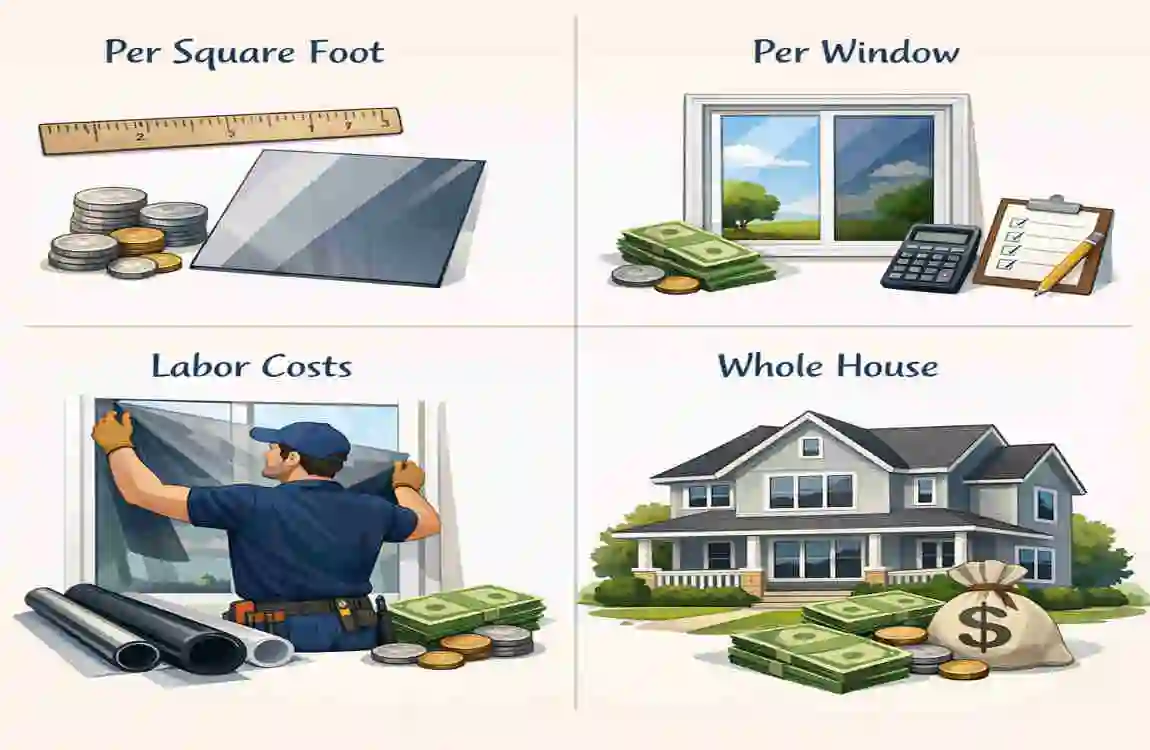
When you ask a professional, “How much does window tinting cost for a house?” they will almost always answer in terms of a price per square foot. This is the standard measurement used across the entire window tinting industry.
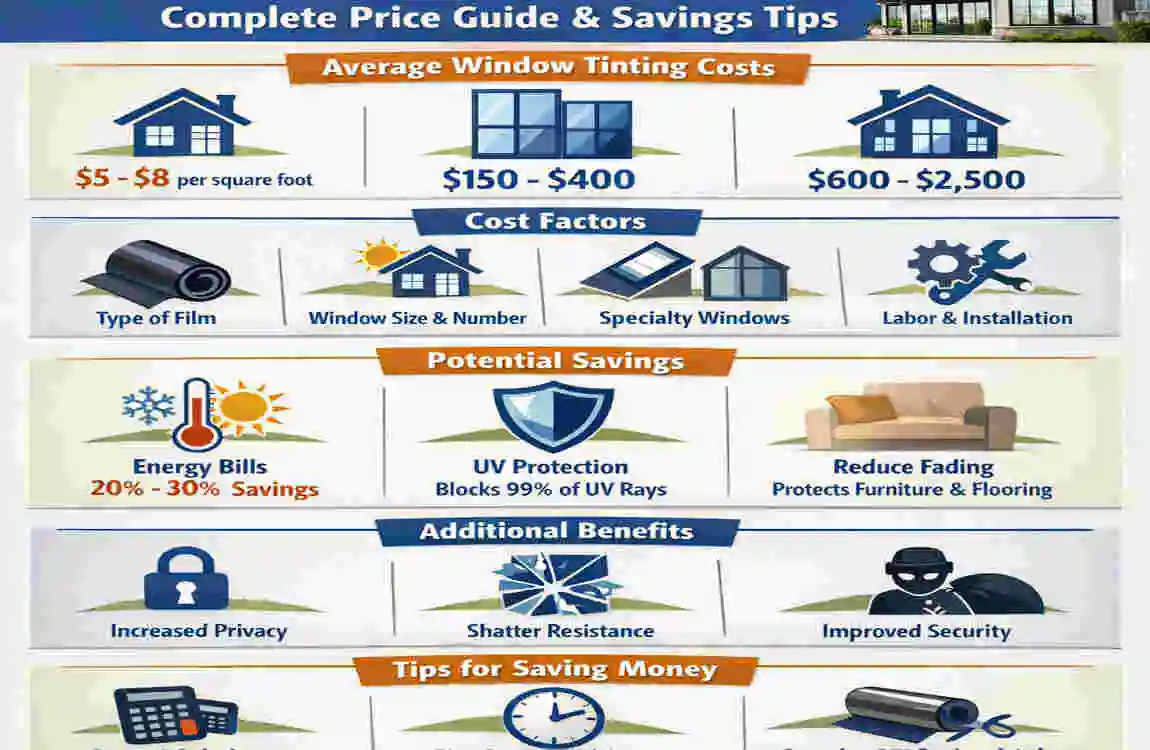
In 2026, national and global averages have shifted slightly due to material costs. Still, we have adapted these figures specifically for homeowners. Generally, you can expect to pay anywhere from PKR 800 to PKR 6,000 per square foot, fully installed.
Let us look at a detailed breakdown of these average costs so you can start budgeting effectively.
Cost Factor Average Range (PKR)US$/sq ft Equivalent Important Notes
Per sq ft (Basic Film) 800–2,500 $5–$15 Covers standard dyed or basic metalised films. Good for tight budgets.
Per sq ft (Premium Film) 2,500–6,000 $15–$45 Covers advanced ceramic and low-E films. Offers maximum UV and heat rejection.
Small Home (10 Windows) 100,000–300,000 $500–$1,800 Based on an average 1,500 sq ft home with easily accessible ground-floor windows.
Large Home (20+ Windows) 300,000–800,000 $1,800–$5,000 Based on larger villas. Requires specialised equipment, such as scaffolding, which adds roughly 20% to labour costs.
How Contractors Calculate Your Total Price
How do contractors arrive at these final numbers? The calculation is actually quite simple, and you can even do a rough estimate yourself before calling for a quote.
First, the installer will measure the length and width of each glass pane you want covered. They multiply the length by the width to find the total square footage of the glass.
Next, they multiply that total square footage by the cost of the specific film material you have chosen. Finally, they add a labour charge. In the window tinting industry, labour typically makes up about 30% of the total bill.
Because local installers charge less for their time, your total project cost is often about 20% lower than what a homeowner would pay for the same installation in North America or Europe. This makes window tinting an even more attractive and affordable upgrade for your property.
Types of Window Films & Pricing
Not all window films are created equal. The type of material you choose will have the single biggest impact on the final cost of your project.
Some films are designed purely for daytime privacy, while others use advanced nanotechnology to block the sun’s invisible heat rays. Let us compare the most popular types of window films on the market in 2026, complete with their costs, benefits, and expected lifespans.
Film Type Cost/sq ft (PKR)Heat Block Lifespan Best For Homes
Dyed Film 800–1,500 40–60% 5–10 yrs Budget-friendly privacy and basic glare reduction.
Metalised Film 1,500–3,000 60–80% 10–15 yrs Excellent glare reduction and moderate heat rejection.
Carbon/Ceramic 3,000–6,000 80–95% 15–25 yrs Maximum energy savings and UV protection without darkening the room.
Smart (Switchable) 10,000+ 90%+ 20+ yrs Luxury villas wanting on-demand electronic privacy.
Dyed Window Film: The Budget Option
Dyed window film is the most basic and affordable option available. Manufacturers add a layer of dye to the polyester film to darken the glass. Think of it like a pair of standard sunglasses for your house.
The Pros: It is highly cost-effective and does a great job of reducing harsh glare on your computer screens and televisions. It also provides excellent daytime privacy, preventing neighbours from seeing inside. The Cons: Dyed film absorbs solar heat rather than reflecting it. Over time, the intense sun can cause the dye to fade, turn purple, and bubble.
Metalised Window Film: The Reflective Shield
If you want better heat protection, metalised film is a massive step up. This film contains microscopic metallic particles embedded right into the material. These metal flakes act like tiny mirrors, physically reflecting the sun’s heat away from your glass.
The Pros: It is incredibly durable, highly scratch-resistant, and blocks a significant amount of heat. It gives your windows a sleek, slightly mirrored appearance from the outside. The Cons: Because it contains actual metal, this film can occasionally interfere with cell phone signals, Wi-Fi routers, and GPS devices inside your home.
Carbon and Ceramic Window Films: The Premium Protectors
If you want the absolute best performance for your home, you must look at carbon or ceramic window films. Instead of dyes or metals, these films use advanced nanotechnology. Ceramic films, in particular, are coated with microscopic ceramic particles that are completely non-conductive.
The Pros: Ceramic film blocks up to 99% of harmful UV rays and rejects up to 95% of the sun’s infrared heat. The best part? It does all of this without heavily darkening your windows. You keep your beautiful, natural sunlight while leaving the heat outside. It will also never interfere with your electronic signals. The Cons: It is the most expensive traditional option on the market. However, the energy savings usually pay for the premium price tag over time.
Smart (Switchable) Film: The Ultimate Luxury
Welcome to the future of window treatments. Smart film, also known as switchable privacy film, connects directly to your home’s electrical system. With a single press on your smartphone or remote control, the glass instantly transitions from completely transparent to frosted and opaque.
The Pros: It offers ultimate, on-demand privacy and massive heat rejection. It eliminates the need for bulky curtains or dusty blinds. The Cons: The price is exceptionally high, starting around PKR 10,000 per square foot. It requires an electrician to install the wiring, making it a major renovation project best suited for luxury villas and high-end corporate spaces.
Understanding the Massive Benefits
Why are homeowners willing to spend thousands of rupees on these micro-thin layers of polyester? The benefits go far beyond simple aesthetics.
First, high-quality films block 99% of UV radiation. UV rays are responsible for fading your expensive hardwood floors, bleaching your Persian rugs, and damaging your delicate artwork. By blocking these rays, window film actively protects your interior investments.
Second, the installation process is surprisingly fast. Unlike a major kitchen remodel, a professional crew can usually tint an entire house in just one to three days, with zero construction dust or noise.
Most importantly, you will see immediate financial returns. By significantly lowering indoor temperatures, a premium ceramic film can save a standard household up to PKR 20,000 a year in air conditioning costs alone. Furthermore, reputable installers offer comprehensive warranties that protect you against bubbling, peeling, or fading for up to 15 years.
Factors Affecting House Window Tinting Cost
Now that you understand the baseline prices, it is crucial to recognise that your specific quote might fluctuate. Every house is unique, and several hidden variables can influence the final number on your invoice.
When figuring out how much window tinting costs for a house, you must factor in the following crucial elements.
Window Count, Size, and Shape
Naturally, a sprawling 5-bedroom home will cost more to tint than a compact 2-bedroom apartment. More glass equals more material and more labour time.
However, the shape of the windows also matters heavily. Standard rectangular windows are incredibly easy and fast to tint. If you have custom-built arched windows, circular portholes, or intricate French doors with multiple tiny panes, the installer has to meticulously hand-cut the film to fit each unique shape. This precise, time-consuming work will significantly increase the labour cost.
Accessibility and Scaffolding Needs
Where are your windows located? If an installer can easily walk up to a ground-floor window, the job is simple.
However, many modern homes feature stunning, two-story vaulted ceilings with massive skylights or high-reaching aesthetic windows. If the installation crew has to bring in heavy, specialised scaffolding or use safety harnesses to reach second-story exterior glass safely, you will see a sharp increase in your quote. Renting and setting up scaffolding can easily add an extra PKR 50,000 to your total bill.
Removal of Old Window Film
Are you replacing an old, bubbling, purple-tint job from ten years ago? If so, the installer cannot simply place the new film over the old one.
Removing old window film is notoriously frustrating and labour-intensive. The crew must use chemical solvents, heat guns, and razor blades to painstakingly scrape away the old, sticky adhesive without scratching your glass. This removal process usually adds an extra 20% to 30% to your total labour costs.
Home Specifics: Bungalows vs Apartments
The style of your home dictates the workflow. If you live in a sprawling, single-story bungalow, the crew can work rapidly from room to room.
If you live in a high-rise apartment building, logistics become harder. The crew might have to deal with service elevators, parking restrictions, and strict building management rules regarding work hours. These minor delays add up to increased labour hours.
Pro Installation vs The DIY Route
With inflation squeezing budgets, it is incredibly tempting to buy a cheap roll of tint online and try to apply it yourself. While DIY kits exist, we strongly advise against them for residential properties.
Applying window film requires an incredibly clean environment, precise squeegee techniques, and a specialised slip solution. If a piece of dust or a single dog hair gets trapped under the film during a DIY job, it creates a massive, permanent bubble. Furthermore, attempting a DIY installation will instantly void any manufacturer’s warranties.
Professional installers generally charge around PKR 100-200 per square foot for labour. Paying this premium guarantees a flawless, bubble-free finish and ensures your long-term warranty remains intact. Leave this job to the experts!
Savings Tips & ROI Calculator
We are currently navigating a significant energy crisis in 2026. Electricity rates continue to climb, and keeping a house comfortable during the peak summer months feels like a financial burden.
Because of this, you should not view window tinting as a mere decoration. You need to view it as a highly strategic financial investment. Let us look at actionable ways you can lower your upfront installation costs and maximise your long-term Return on Investment (ROI).
How to Secure the Best Price
- Ask for Bulk Discounts: Window tinting companies love large, straightforward jobs. If you only want two windows tinted, you will pay a premium rate. However, if you commit to tinting your entire house (10+ windows), most contractors will happily offer a volume discount, often slashing the total price by 10% to 15%.
- Book During the Off-Season: Do not wait until mid-July to call an installer. During peak summer heatwaves, contractors are swamped with frantic calls, and they charge premium prices. Instead, schedule your installation during the cooler winter months. Installers are often looking for work during the slow season and are willing to offer highly competitive quotes.
- Compare Local Quotes: Never accept the very first estimate you receive. Call three to four reputable, local firms in your area. For example, local companies often provide excellent, localised service at a better rate than massive, corporate franchises. Compare their warranties and the specific film brands they use.
- Look for Green Government Rebates: Keep a close eye on local government announcements. In an effort to reduce strain on the national power grid, energy-efficiency incentive programs sometimes offer minor tax rebates or utility bill credits to homeowners who install energy-saving upgrades, such as ceramic window films.
The Real Cost of DIY Pitfalls
We mentioned this briefly, but it bears repeating when discussing savings. Attempting to save money by doing it yourself often leads to financial disaster. If you crease the film, trap debris under it, or cut it too short, you have to throw the material away and buy it all over again. By the time you buy your second or third roll to fix your mistakes, you will have spent just as much as you would have on a professional, minus the peace of mind.
The ROI Calculator: When Does It Pay for Itself?
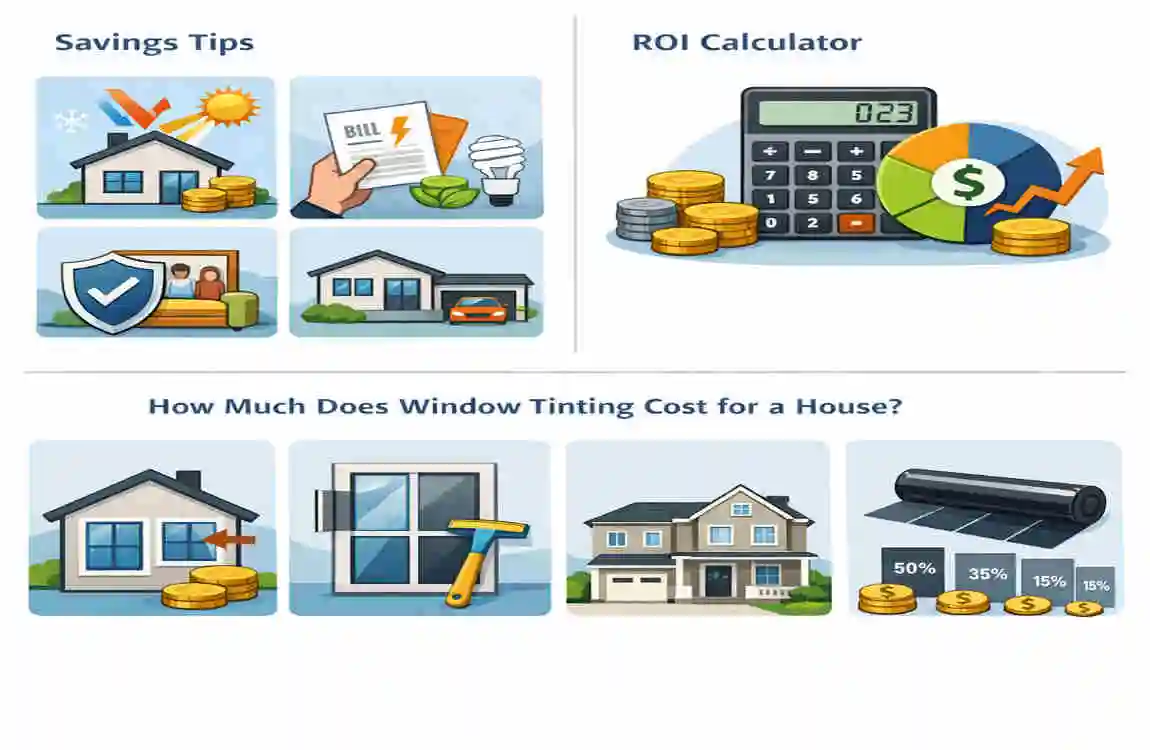
The greatest advantage of residential window tinting is that it actively pays you back every single month via your electricity bill.
When you install premium heat-blocking film, your air conditioning unit does not have to work nearly as hard to cool your rooms. It cycles on less frequently and runs for shorter periods. This dramatically extends the life of your expensive AC compressor and slashes your monthly WAPDA bill.
Let us look at a conservative, real-world example of how quickly this investment pays off.
Home SizeUpfront Tinting CostAnnual AC Energy SavingsEstimated Payback Period
1,500 sq ft (Standard) PKR 250,000 PKR 40,000 ~6 Years
3,000 sq ft (Large) PKR 450,000 PKR 75,000 ~6 Years
As you can see in the table, if you spend PKR 250,000 to tint a standard home and save PKR 40,000 a year on cooling costs, the tint pays for itself in about 6 years.
Because high-quality ceramic films easily last 15 to 25 years, you will enjoy a decade or more of pure, unadulterated financial profit after the payback period ends. That is an incredible return on investment!
Frequently Asked Questions (FAQs)
We know this is a significant home improvement project, and you want to be completely confident before moving forward. Let us answer some of the most common questions homeowners ask us regarding the cost and process of residential window tinting.
Is house window tinting actually worth it?
Absolutely. With global energy prices soaring, the ability to cut your air conditioning costs by up to 30% makes window tinting one of the highest ROI home improvements you can make. It pays for itself in roughly 5 to 7 years.
Will window tinting make my house too dark inside?
Not at all! This is a common misconception based on old technology. If you choose a high-quality ceramic film, you can select a virtually clear shade that blocks 95% of heat while letting 70% of natural visible light shine through.
How do I clean my tinted windows?
Maintenance is incredibly easy. Use a clean, soft microfiber cloth and warm, soapy water. You can also use commercial glass cleaners, provided you check the label to ensure they are 100% ammonia-free. Ammonia will degrade the film’s adhesive over time.
Does window tinting provide nighttime privacy?
This is a vital point to understand. Most standard and reflective window films only provide daytime privacy. At night, when it is dark outside, and your interior lights are on, people can see inside. For true 24/7 privacy, you need heavy frosted film or electronic smart film.
Can residential window film stop my glass from shattering?
Yes, it offers a great security bonus. While it will not stop an intruder from breaking the glass with a heavy brick, the strong adhesive holds the shattered glass together into a single piece. This prevents dangerous glass fragments from flying across your living room and makes it much harder for thieves to climb through the window quickly.
How long does a professional installation take?
For an average-sized residential home, a professional crew of two or three installers can complete the entire job in one to two days. There are no harsh chemical smells, and you do not need to leave your house during the process.
Will the tint bubble or turn purple like old car windows?
If you buy cheap, low-quality dyed film, yes, it eventually will. However, if you invest in a premium metalised or ceramic film installed by a certified professional, it will not bubble or turn purple. Reputable brands offer 10- to 15-year warranties that specifically guarantee against these defects.
