

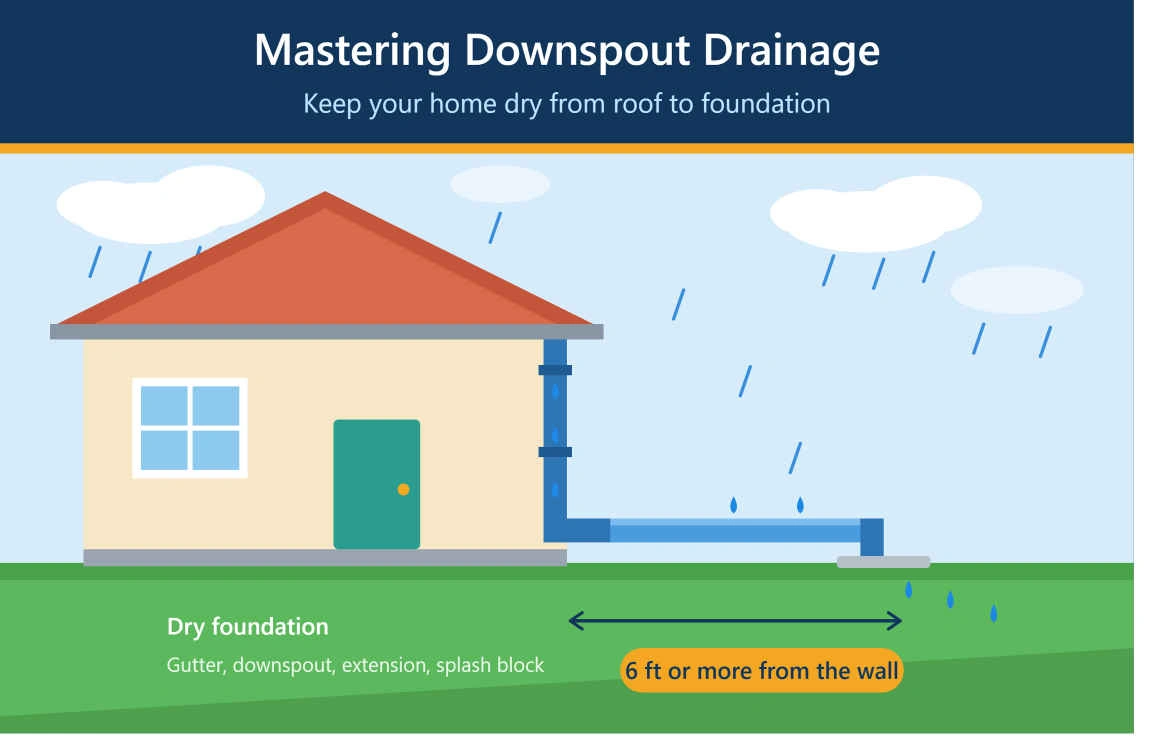
If you have ever walked outside after a storm and found a muddy puddle sitting right beside your foundation, you already know the problem. Your gutters did their job, but the water has nowhere useful to go. Learning how to drain downspout water away from house walls is one of the cheapest, most effective ways to protect your home from wet basements, cracked foundations and soggy landscaping.
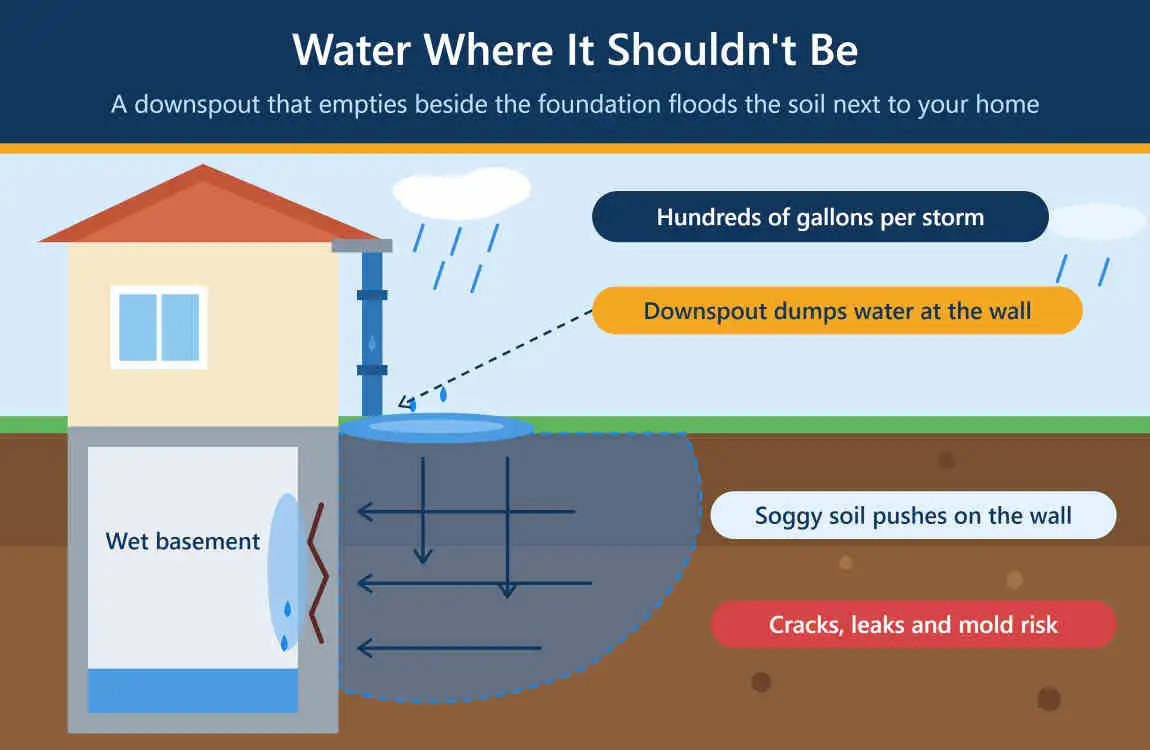
Why Downspout Drainage Matters More Than You Think
A roof design collects a surprising amount of water. Even a modest rainfall can send hundreds of gallons through your gutters in a single storm. When downspouts discharge too close to the house, that water can collect against the foundation wall or footing and seep into your basement or crawl space, according to This Old House.
Over time, poor drainage can lead to:
- Basement and crawl space moisture, including musty smells and mold growth
- Foundation cracks caused by saturated, shifting soil
- Soil erosion and washed-out mulch or flower beds
- Damaged siding and rot where splashing water hits the wall
- Pest problems, since constantly house damp soil attracts termites and ants
The good news: preventing all of this usually costs far less than repairing it.
How Far Should a Downspout Drain From the House?
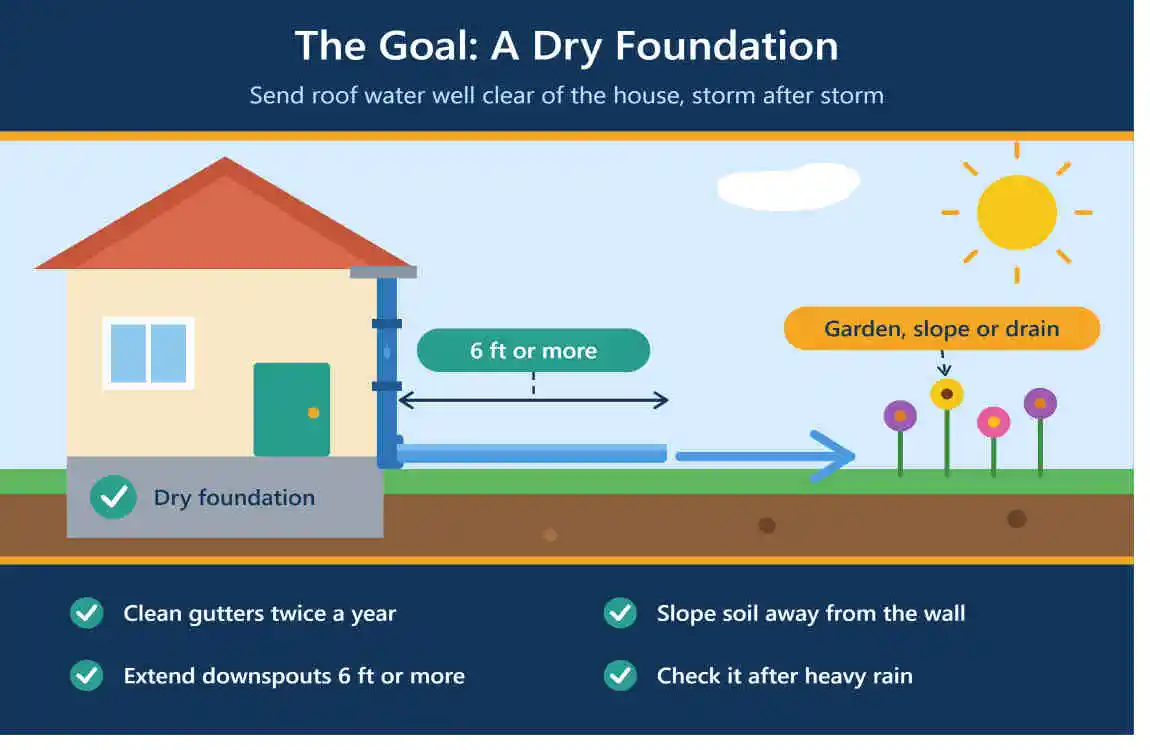
This is the question homeowners ask most. As a practical rule, aim to discharge water at least 4 to 6 feet from the foundation, and 10 feet or more when your yard allows it. Stormwater guidance from university extension programs, such as materials published by Oregon State University Extension, commonly points to 10 feet or more for disconnected downspouts.
Distance alone is not the whole story, though. The ground has to slope away from the house, otherwise the water simply flows back toward the house foundation. A good rule of thumb is to check that the soil falls about an inch per foot for the first several feet. If it does not, regrading or a buried pipe is a better choice than a longer extension.
7 Ways to Drain Downspout Water Away From Your House
Add a Downspout Extension (Fastest, Cheapest Fix)
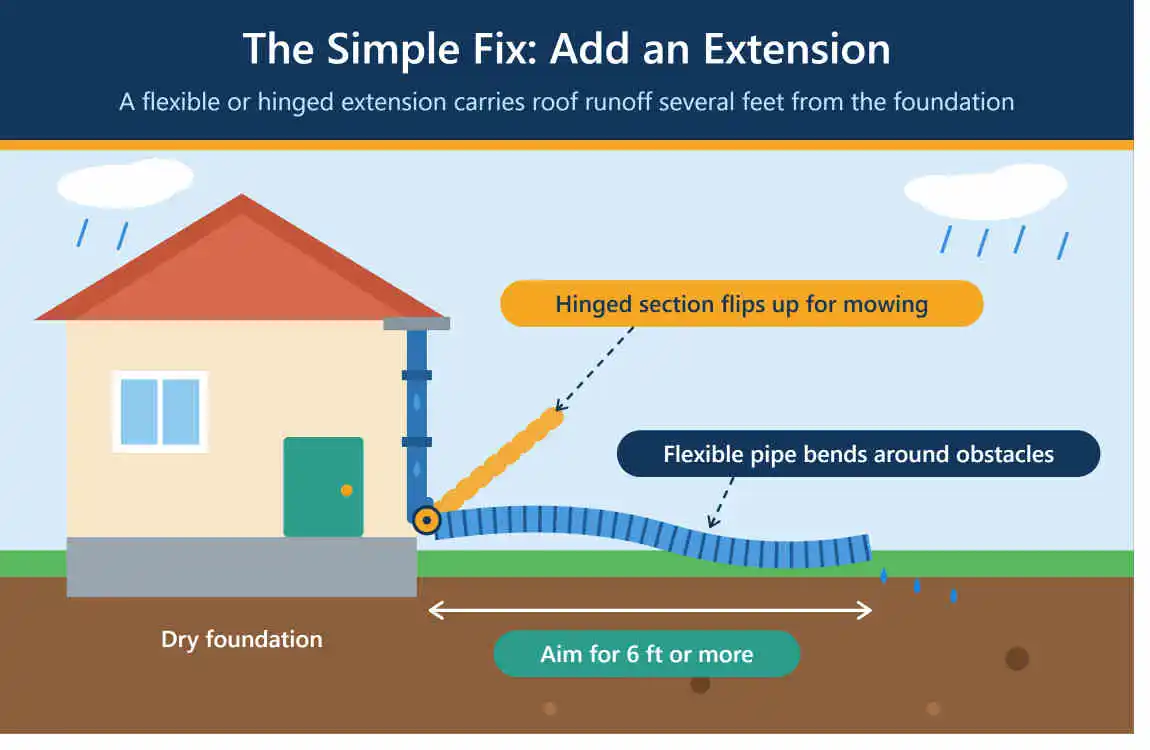
An extension is a length of vinyl, aluminum or plastic that attaches to the bottom of the downspout and carries water outward. It is the easiest upgrade you can make, and many homes only need this.
- Rigid extensions are durable and stay put in wind.
- Flexible extensions are inexpensive and easy to reposition around landscaping.
- Roll-out (hinged) extensions unroll when water flows and retract afterward, which is handy for lawns you mow.
One installation detail worth knowing: researchers at North Carolina State University explain that the extension should fit over the end of the elbow, not the other way around, or it will leak. Secure joints with short sheet-metal screws so a heavy storm does not pop them apart.
Use Splash Blocks (Good Helper, Weak Solo Fix)
A splash block is a small trough placed under the outlet. It prevents erosion directly beneath the downspout, but on its own it rarely moves water far enough. Pair it with an extension for the best result.
Bury a Drain Pipe for a Clean, Invisible Fix
If you dislike hoses and extensions across the lawn, an underground pipe is the premium option. The basic process looks like this:
- Dig a trench from the downspout toward a lower, well-draining part of the yard, sloping it gently downhill.
- Lay solid (non-perforated) 4-inch pipe in the trench and connect it to the downspout with an adapter.
- Finish the pipe at “daylight” on a slope, or at a pop-up emitter, so water can exit freely.
- Backfill, then cover with soil and sod.
Before digging, contact your local utility-locating service so you do not hit buried lines. Also keep leaves out of the system with gutter guards, because a buried pipe that clogs is harder to clear than an open extension.
Install a Rain Barrel
A rain barrel captures roof water so you can use it on your garden later. The U.S. Environmental Protection Agency lists downspout disconnection and rain barrels among simple ways to manage runoff at home. Always connect the barrel’s overflow outlet to an extension or hose so excess water still travels away from the foundation once the barrel is full.
Build a Dry Well
A dry well is an underground pit filled with gravel or a prefabricated chamber that lets runoff soak slowly into the soil. According to Bob Vila’s guide to dry wells, a well should be large enough to handle runoff during typical rain events, and it should include an overflow path, such as a pipe leading to a storm sewer. The same guide notes that sediment can eventually home clog a dry well, and the usual remedy is to dig it out and repack it, so protect it with gutter guards and a filter layer. A simple percolation (soil drainage) test helps you decide whether your soil can handle one.
Create a Rain Garden
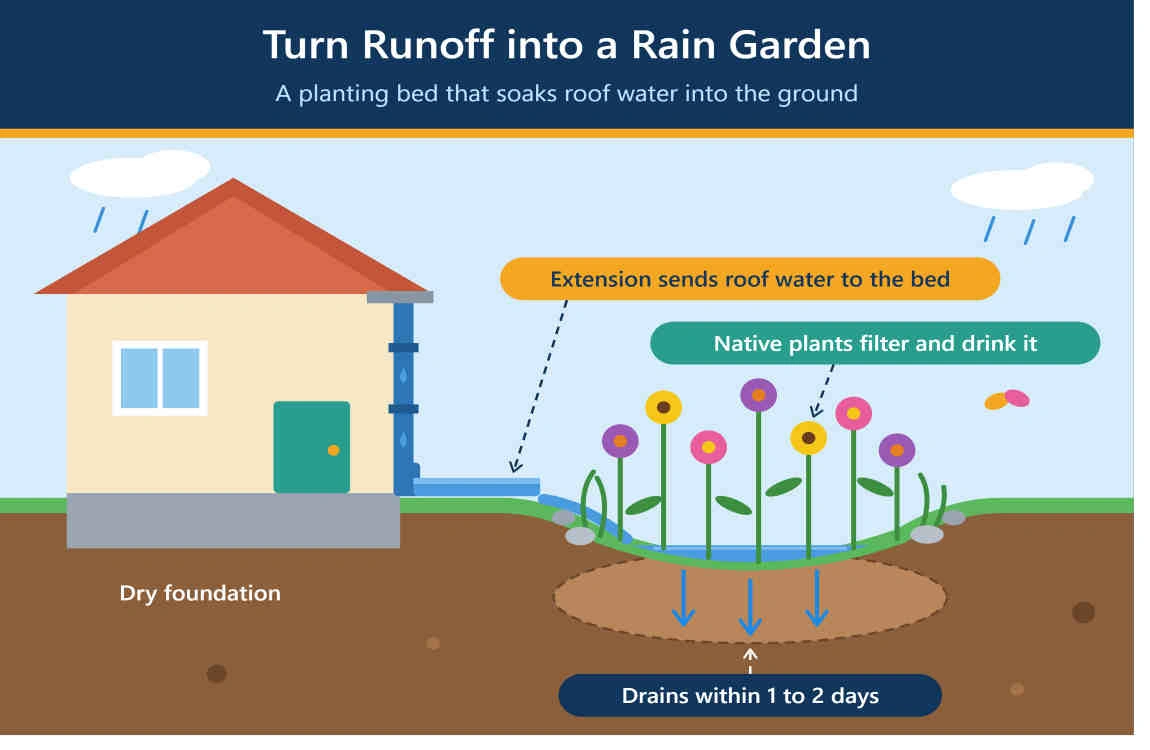
A rain garden is a shallow, planted depression that soaks up roof runoff. It is both functional and attractive. Specialists at Oregon State University Extension describe home rain gardens as a way to treat stormwater and reduce flooding, in contrast to older systems that rushed runoff away through pipes and ditches. Place it well away from the house, choose native plants that tolerate both wet and dry spells, and run your downspout extension straight into it.
Regrade the Soil Around Your Foundation
Sometimes the real culprit is the landscape. If soil has settled and now slopes toward the house, no extension will fully fix it. Add compacted fill soil next to the foundation so the ground falls away from the walls, and keep mulch and plant beds from blocking that slope. Keep soil at least a few inches below siding to avoid moisture and pest issues.
Quick Comparison: Which Fix Is Right for You?
| Solution | Typical Effort | Best For |
|---|---|---|
| Downspout extension | Very low | Most homes with a gentle slope |
| Splash block | Very low | Preventing erosion under the outlet |
| Buried drain pipe | Medium to high | Clean look, long distances |
| Rain barrel | Low | Garden watering and reducing runoff |
| Dry well | High | Flat yards with well-draining soil |
| Rain garden | Medium to high | Landscaping and stormwater control |
| Regrading | Medium | Soil that slopes toward the house |
Common Downspout Mistakes to Avoid
- Draining onto a neighbor’s property or toward a driveway or walkway where it can ice over in winter.
- Pointing the outlet at a window well or basement stairwell.
- Skipping gutter maintenance. Clogged gutters overflow right beside the foundation, no matter how good your downspouts are.
- Burying pipe with no exit. Water needs somewhere to go, whether it is daylight, a dry well or a rain garden.
- Ignoring local rules. Some towns restrict connecting downspouts to storm sewers or sending runoff across property lines, so check with your local home building department.
Simple Maintenance Checklist
- Clean gutters and downspouts at least twice a year, more often near trees.
- Flush each downspout with a hose and confirm water exits freely.
- Check extensions and joints for cracks or loose screws.
- Walk the yard during a rainstorm to see where water actually travels.
- Look for pooling, erosion or damp spots near the foundation and fix them early.
When to Call a Professional
DIY works for most downspout fixes, but call a licensed contractor if you notice horizontal foundation cracks, repeated basement flooding, a yard that stays swampy for days, or a project that involves large excavation. Early expert advice can save you from costly structural repairs later.
Frequently Asked Questions
How do I drain downspout water away from my house without digging?
Use a downspout extension, a roll-out extender or a rain barrel with an overflow hose. These solutions require no trenching and can be installed in minutes.
How far should downspout water be from the foundation?
At least 4 to 6 feet is a common minimum, and 10 feet or more is better when the slope allows it.
Is it a good idea to bury downspouts?
Yes, when the pipe is sloped properly and ends in a free-flowing exit such as a pop-up emitter, dry well or sloped area. It keeps the yard tidy and moves water farther away.
Can I connect downspouts to a sewer or French drain?
Rules vary by location, so check local codes. A properly built French drain can work, but poorly planned connections may clog or overload the system.
Final Thoughts
Mastering downspout drainage does not require a big budget. Start with clean gutters, add extensions that carry water well away from the house, and step up to buried pipes, dry wells or rain gardens when your yard needs more. A few hours of work today can protect your foundation, basement and landscaping for decades.
