

To clean walls after a fire, get the all-clear to enter, ventilate and put on an N95 respirator, gloves and eye protection. Lift loose soot with a dry chemical sponge or HEPA vacuum, wash the wall in small sections with mild detergent and warm water, rinse with clean water, then let it dry completely before priming and painting. Greasy soot or heavy residue calls for a professional.
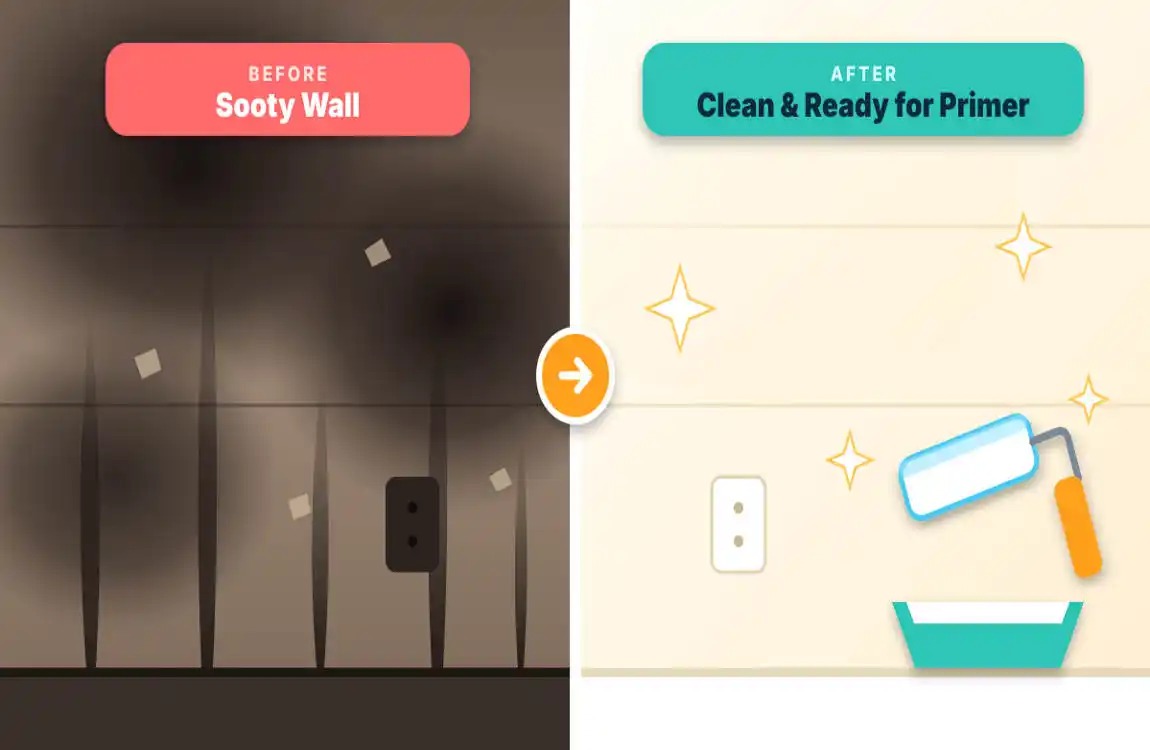
A house fire does not end when the flames go out. Smoke and soot travel through the house, settle on paint, ceilings and furniture, and leave a film that can stain and smell for months if it is left alone. Walls are usually the largest surface in a room, so they are where most of the visible damage, and most of the lingering odor, sits.
Before you touch the walls: safety first
Do not go back inside until the fire department has confirmed the building is safe. Fire damage can weaken floors and walls, so step carefully once you are inside. FEMA advises contacting your insurance agent as early as possible to start a claim (FEMA fact sheet). Take photos and video of the damage before you clean anything, because cleaning changes the evidence.
Protect yourself while cleaning
Soot and ash are made of fine particles and chemicals that can irritate the lungs, eyes and skin. Public health agencies give consistent advice:
- Wear a close-fitting, NIOSH-approved N95 or P100 respirator with two straps. The EPA notes that surgical masks and single-strap dust masks do not protect your lungs the same way (U.S. EPA).
- Cover up with gloves, long sleeves, long pants, socks and sturdy shoes, and add goggles (Colorado Department of Public Health and Environment).
- Open windows and doors where conditions allow, and use fans to push air outdoors.
- Clean for limited periods and take frequent fresh-air breaks. If you develop coughing, shortness of breath, chest pain or headaches, stop and speak to a health care provider (CDPHE).
- People with heart or lung disease, older adults and pregnant people should avoid cleanup, and children and pets should stay away (CDPHE).
Never mix cleaning products. Combining bleach with ammonia or acids can release toxic gases. Use one product at a time, rinse between products and keep the room ventilated.
Work out what kind of soot you have
The method that works on one wall can ruin another. The Los Angeles County Department of Public Health explains that fast, high-oxygen fires usually leave dry, dusty soot, while slow, low-oxygen fires leave greasy, wet deposits that smear easily (LA County Public Health fact sheet).
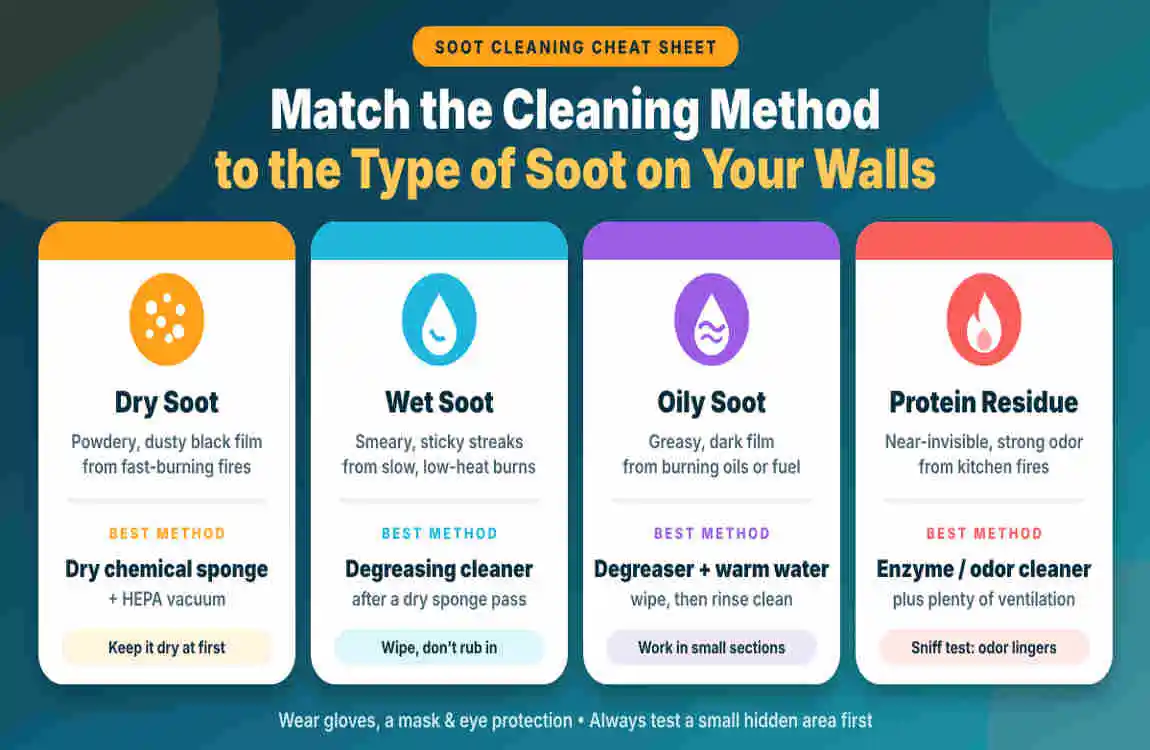
| Soot type | What it looks like | Best first move |
|---|---|---|
| Dry, powdery | Dusty, brushes off, from fast-burning fires | Dry chemical sponge, then mild detergent |
| Greasy, smeary | Oily film that smears when touched, from slow-burning fires | No dry sponge. Use a stronger degreasing cleaner or call a pro |
Gather the right supplies
You do not need specialist gear for light soot, but you do need the right basics.
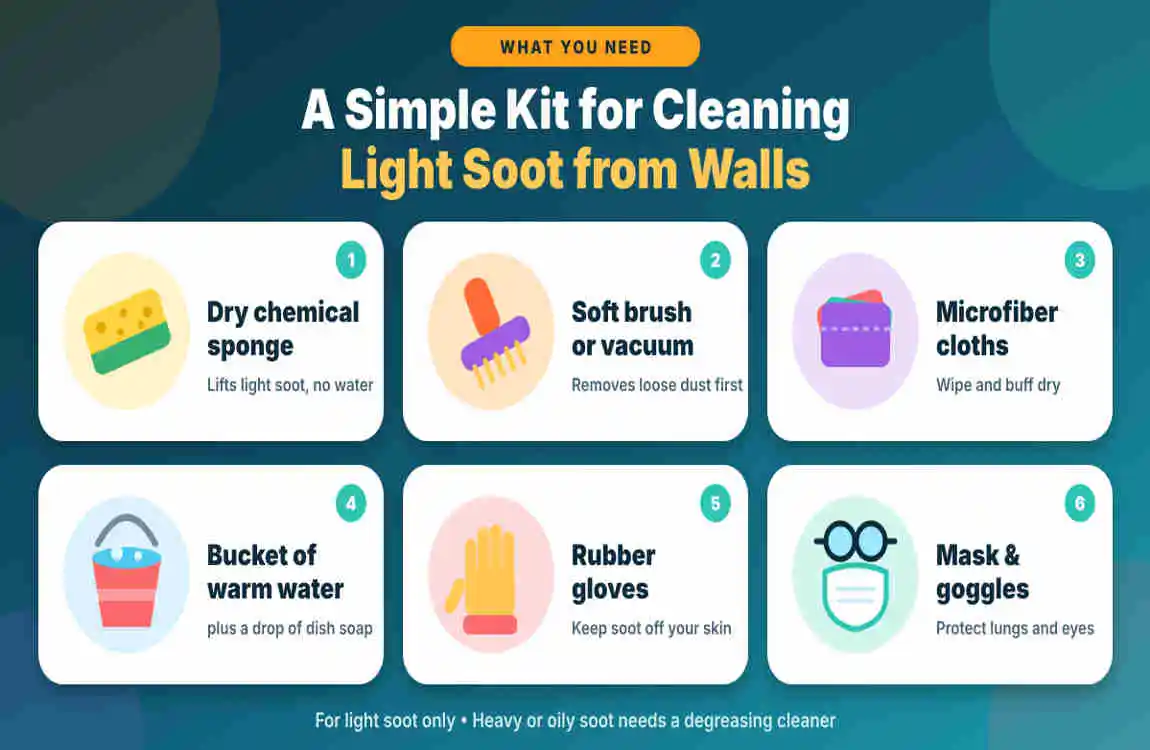
- N95 or P100 respirator, gloves, goggles and old long-sleeved clothing
- Dry chemical (soot) sponges. The EPA lists soot sponges, vacuuming and sticky rollers as dry methods that suit thick deposits and absorbent materials (U.S. EPA).
- A HEPA vacuum if you can get one. If you only have a household or shop vacuum, the EPA says to wear a respirator, ventilate and run an air cleaner.
- Two buckets (cleaner and rinse), soft sponges and microfiber cloths
- Mild dish detergent or a low-alkali household detergent, plus clean towels
- Drop cloths to protect floors and furniture
Clean the walls step by step
Ventilate and prepare the room
Ventilating the space is the first step in cleaning up after a fire (LA County Public Health). Open windows, run fans that exhaust outdoors, cover floors and move or cover furniture. Switch off power to the area if outlets or wiring may have been damaged.
Remove loose soot with a dry method
If the soot is dry and powdery, start dry. Use a HEPA vacuum with a soft brush attachment, then wipe the wall with a dry chemical sponge using light, straight strokes rather than scrubbing in circles. When a sponge face turns black, cut off the dirty layer to expose a clean surface. Work ceilings first so that falling dust lands on surfaces you have not cleaned yet. Skip this step on greasy soot, because a dry sponge can smear it across the wall (LA County Public Health).
Test your cleaner on a hidden spot
Paint finishes react differently to cleaners. LA County Public Health suggests testing a solution on a small area and letting it dry for 24 hours to check for discoloration before cleaning the whole wall.
Wash in small sections
Mix mild detergent with warm water and wipe one small section at a time with a well-wrung sponge. Washing from the floor upward helps stop dirty drips from streaking clean paint, a technique recommended in extension guidance on smoke stains (University of Georgia Extension). Change your water often, because dirty water simply redistributes soot.
For stubborn residue, University of Georgia Extension describes a solution of about one tablespoon of washing soda, trisodium phosphate (TSP) or ammonia per gallon of warm water on painted surfaces, increasing to no more than two tablespoons if needed. It warns that too much TSP can dull or strip paint. Wear gloves and eye protection with any of these products. Colorado health officials also caution against harsh chemical cleaners and vinegar on ash residue, so start with the mildest option that works (CDPHE).
Rinse with clean water
Go over each section with a sponge dipped in clear water to remove cleaner residue. Leftover residue can leave streaks and can stop primer from bonding properly.
Dry completely, then reassess
Let the walls dry fully with open windows, fans or a dehumidifier. LA County Public Health advises not repainting walls and ceilings until both are completely dry. If a shadow or smell remains, repeat the cleaning or prepare to prime and paint with a stain-blocking primer.
How to clean different wall surfaces
- Painted drywall: Follow the steps above and avoid soaking the surface. Excess water can damage drywall and paint.
- Washable wallpaper: Clean it like painted walls but do not wet it through the paper. Non-washable wallpaper usually cannot be restored and often has to come down.
- Unsealed or porous surfaces (raw wood, brick, plaster): These absorb soot, so dry methods such as vacuuming and soot sponges tend to work better than water (U.S. EPA). Stubborn stains may need professional help.
- Tile and other sealed hard surfaces: Light deposits usually respond well to damp wiping with mild detergent, followed by a rinse and dry.
Getting the smoke smell out of walls
Smell comes from residue, not just from the air. LA County Public Health notes that both deposits and odors need thorough cleaning and neutralizing before you redecorate. Clean every surface including ceilings, replace dirty HVAC filters, and run HEPA and activated-carbon air cleaners until odors fade (CDPHE). Do not rely on ozone generators. Both the EPA and CDPHE advise against them for smoke odor in occupied homes (U.S. EPA).
Common mistakes to avoid
- Scrubbing with plain water first. It can turn dry soot into a smear.
- Dry sweeping or dusting. This sends fine ash and soot into the air.
- Skipping protective gear. A cloth or surgical mask is not enough.
- Painting too early. Paint over damp or dirty walls can peel, stain or trap odor.
- Cleaning before documenting. Photograph damage first for your insurance claim.
- Mixing chemicals. Use one product at a time and rinse between them.
When to call a professional
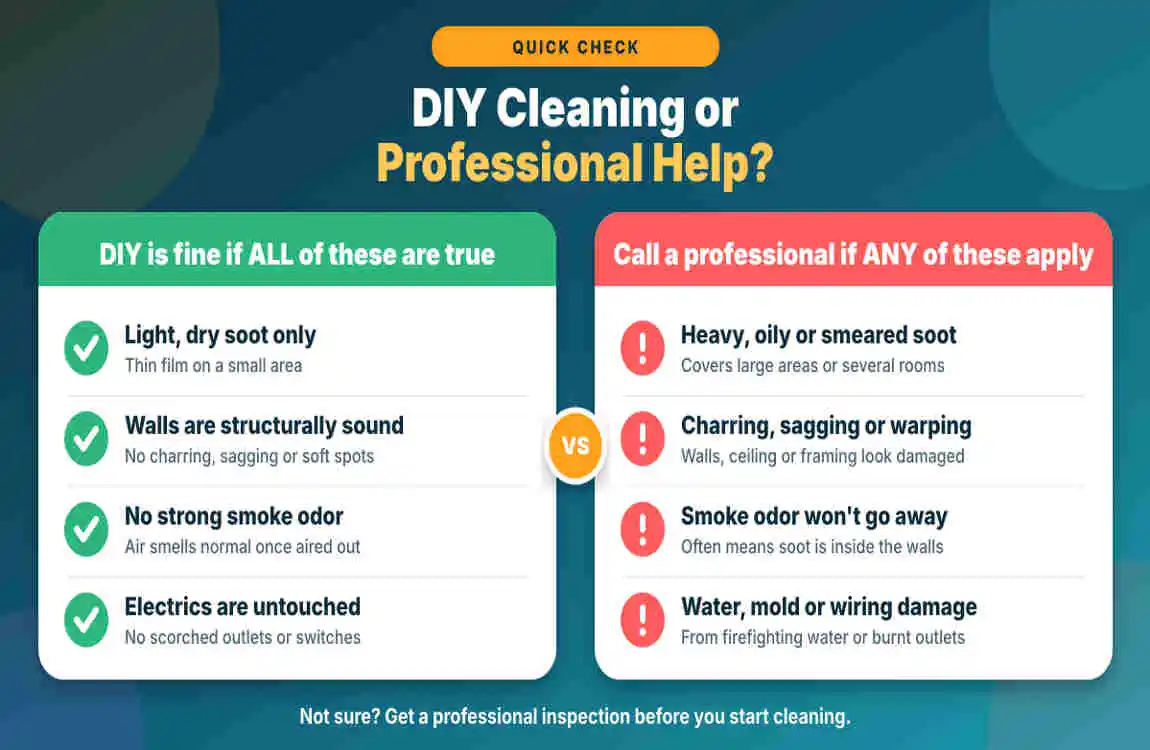
Light soot on a few walls after a small, contained fire is a realistic DIY job. Heavy residue is different. LA County Public Health says it may require professional help and mechanical cleaning methods such as low-pressure blasting, sodium bicarbonate blasting or dry ice blasting. Call a restoration professional if:
- Soot is thick, oily or covers most of the house
- Walls or insulation were soaked by firefighting water, or drywall is soft, swollen or crumbling
- The smoke smell stays after cleaning
- You or someone in your home has asthma, heart disease or another condition that makes cleanup risky
- You are unsure whether the structure is safe
Your insurer may also want certain work done by approved contractors, so check your policy before spending money on repairs.
After cleaning: priming and repainting
Once walls are clean and bone dry, many homeowners apply a stain-blocking primer before repainting, because soot shadows and smoke odor can bleed through ordinary paint. Use the paint manufacturer’s directions for the surface and ventilate well while the paint cures. Replace HVAC filters when you return to normal use, and CDPHE suggests replacing them monthly for up to a year after cleanup if they clog.
Frequently asked questions
What is the best way to clean soot off walls after a fire?
For dry, powdery soot, lift loose residue with a dry chemical sponge or HEPA vacuum, wash in small sections with mild detergent and warm water, rinse with clean water and let the wall dry completely. Greasy, smeary soot should not be dry sponged first and often needs a stronger degreasing cleaner or a professional.
Can I clean fire-damaged walls myself?
Yes, if the fire was small, the soot is light, the walls are sound and you have proper protective gear. Heavy, thick or greasy residue, water-damaged drywall or persistent smoke odor are good reasons to hire a restoration professional.
Do I need to repaint after cleaning smoke damage?
Often, yes. Even careful cleaning can leave faint stains or odor, so most people clean, let the walls dry fully, then prime and repaint.
Is it safe to clean soot without a mask?
No. Health agencies recommend a well-fitted NIOSH-approved N95 or P100 respirator, plus gloves, long sleeves and eye protection. Surgical and cloth masks do not protect against the fine particles in soot.
Should I use an ozone generator for smoke smell on walls?
No. The EPA and Colorado public health officials advise against ozone generators for smoke odor in occupied homes. Clean the surfaces that hold the smell, ventilate and use HEPA and activated-carbon air cleaners.
Final thoughts
Cleaning walls after a fire is mostly about doing things in the right order: stay safe, identify the soot, clean dry before wet, rinse, dry and test. Take your time, work in small sections and do not hesitate to bring in a professional when the damage goes beyond a light film. A careful cleanup protects your health and gives fresh paint the best chance of looking right.
Sources
- Los Angeles County Department of Public Health. How to Clean Up Smoke and Soot from a Fire (health fact sheet).
- U.S. Environmental Protection Agency. Protect Yourself from Ash.
- Colorado Department of Public Health and Environment. Indoor Air Quality After a Fire.
- FEMA / U.S. Fire Administration. After the Fire: Advice for Salvaging Damaged Family Treasures (fact sheet).
- University of Georgia Cooperative Extension. Remove Stains from Smoke, Soot.
- Canadian Red Cross. Preparing to Return Home After a House Fire.
