

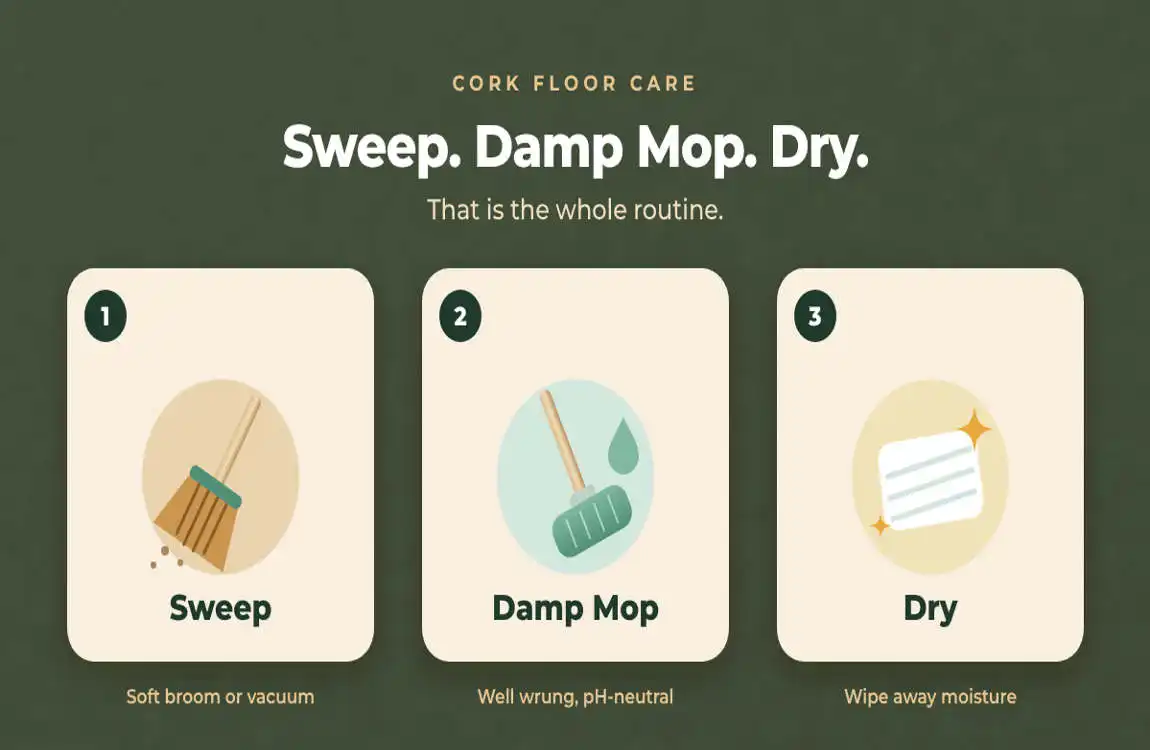
To clean cork flooring, sweep or vacuum with a soft brush to remove grit, damp mop with a pH-neutral cleaner and a well-wrung mop, then wipe the floor dry right away. Never soak the floor and never use a steam mop. Manufacturers such as Wicanders and HARO both describe cork as an easy-care floor when it is kept clean and not left wet.
Cork is warm, quiet underfoot and a favourite in kitchens, family rooms and home offices. It is also a natural, slightly porous material, so how you clean it matters more than how often.
First: Is Your Cork Floor Sealed or Unsealed?
The right method depends on the finish. Most modern cork planks and tiles are factory-sealed, but older or raw cork may not be. According to Hunker, sealed and unsealed cork are cleaned differently, and unsealed cork absorbs moisture and products more readily, which makes swelling and discoloration more likely.
Quick test: put a single drop of water in a hidden corner. If it beads up, the surface is sealed. If it soaks in and darkens the cork within a minute or two, treat the floor as unsealed: use a dry or barely damp cloth only, and consider having it sealed.
Whatever you have, check the care sheet from your floor’s manufacturer. Finishes vary, and following their guidance also helps protect your warranty.
What You Need
- Soft-bristle broom, dust mop or a vacuum with a soft floor head
- Flat microfibre mop (easier to wring out than a string mop)
- A pH-neutral wood or cork floor cleaner, or mild diluted detergent
- Soft, clean towels for drying
- Felt pads for furniture and non-rubber entrance mats
How to Clean Cork Flooring: Step by Step
Remove loose dirt
Sweep or vacuum first. Grit works like sandpaper under shoes and mop heads, so removing it protects the finish. Wicanders suggests attaching an antistatic cloth to a broom handle for quick daily passes so dust lifts instead of settling again. Use the soft brush setting on your vacuum, not a hard beater bar.
Mix a gentle cleaning solution
Use a cork-safe or pH-neutral wood floor cleaner diluted to the label directions. No product to hand? A few drops of mild dish soap in a bucket of warm water is a common stop-gap. Avoid ammonia, bleach, abrasive powders and anything solvent-based. Amorim’s maintenance guidance specifically warns against abrasive or solvent-based products such as acetone, and against wire brushes.
Damp mop, do not wet mop
Dip the mop, then wring it out until it is barely damp and not dripping. Mop in small sections, following the plank direction. A wet mop pushes dirt around and leaves residue, and standing water can reach seams and edges.
Dry straight away
Go over the floor with a dry microfibre cloth or towel, or let it air dry with a window open or a fan running. Wait until the floor is fully dry before putting rugs and furniture back. Cancork’s care guide is blunt on this point: do not soak cork floors or leave standing water.
Natural Homemade Cork Floor Cleaner (Vinegar Method)
Diluted white vinegar is popular for cleaning cork and, per Homes & Gardens, it can help with stains, mould and sticky build-up. Because vinegar is acidic, keep it well diluted and use it sparingly on a sealed floor.
- Mix about 1 cup of white vinegar into 1 gallon (roughly 4 litres) of warm water. For a light spot treatment, a 1:10 vinegar to water mix on a cloth is plenty.
- Test in an out-of-sight corner and wait for it to dry.
- Wring out the mop well and clean in small sections.
- Dry the floor with a towel.
Home tip: if your floor has a specialist or waxed finish, skip the vinegar and stick to the manufacturer’s cleaner.
What NOT to Use on Cork Floors
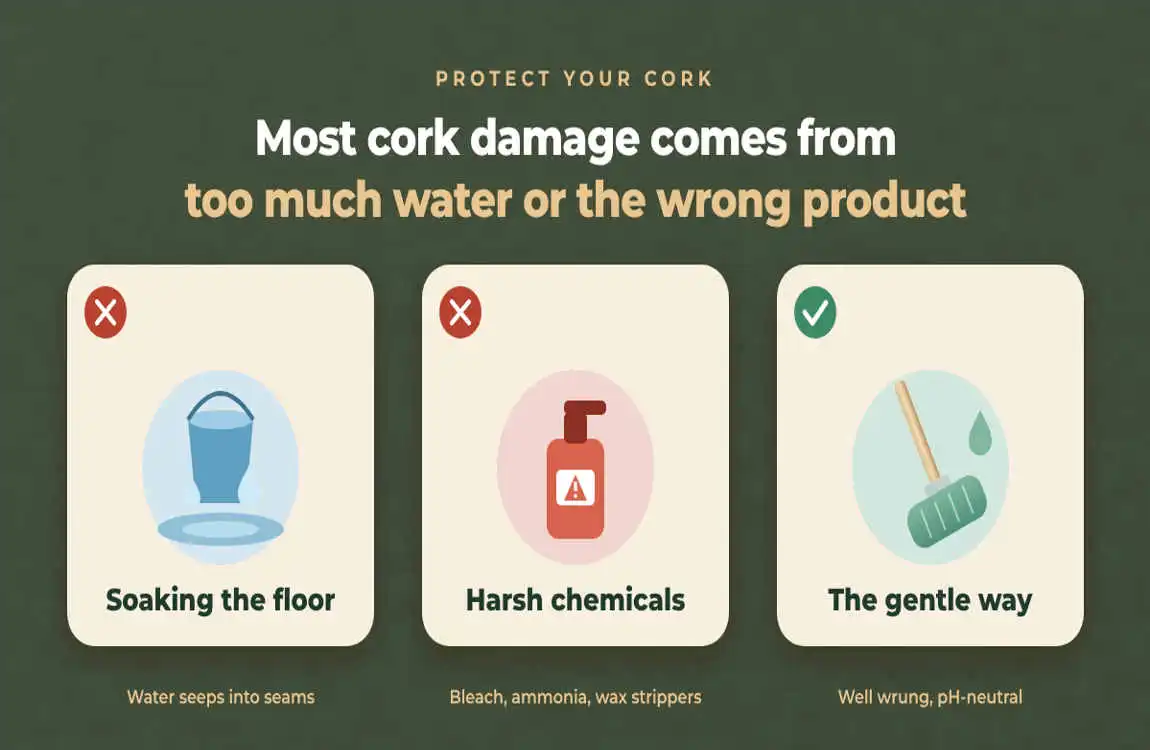
- Steam mops: steam pushes heat and moisture into the cork and seams. Cancork lists “do not steam clean cork flooring” as a first rule, and Hunker notes that excess water from a steamer can be absorbed, causing swelling and staining.
- Oil soaps: Hunker also warns that oil soap builds up on the finish and can make refinishing very difficult.
- Soaking or flooding: water that reaches the core can make planks swell and delaminate.
- Abrasive pads, wire brushes and solvents: these scratch or strip the finish.
- Tape stuck directly on the floor: it can lift the finish when removed.
How to Remove Common Stains From Cork Floors
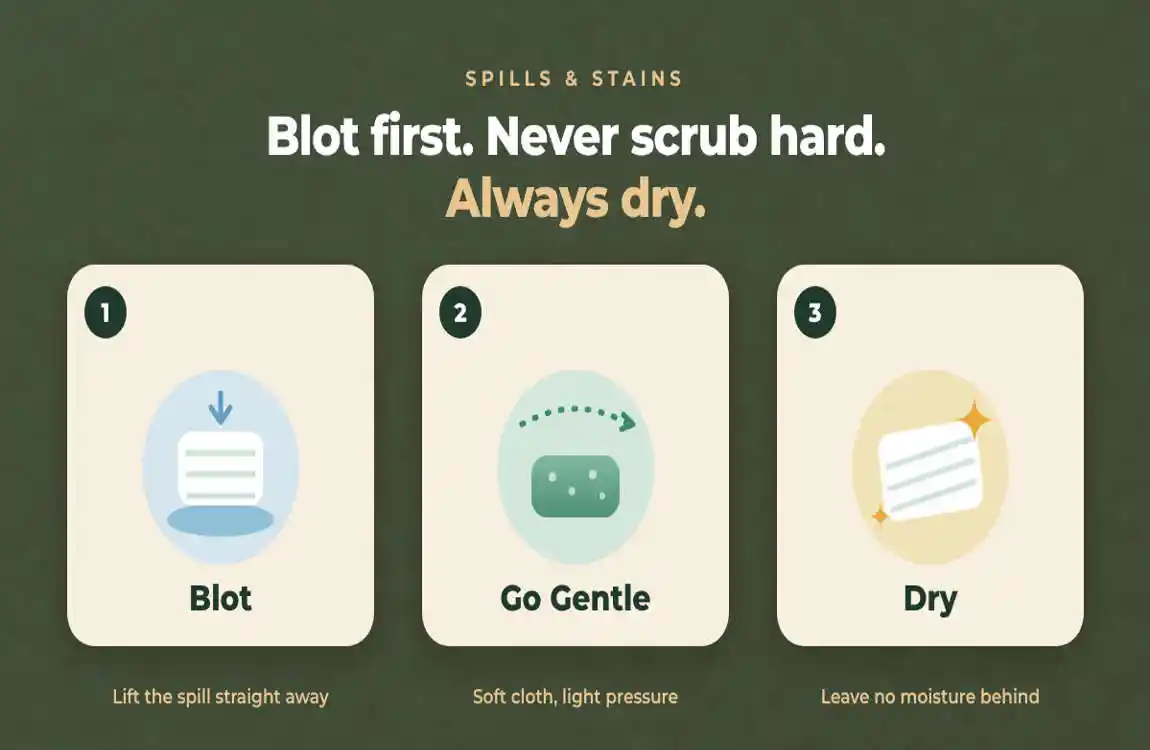
Act quickly. Blot spills rather than rubbing, because rubbing spreads the stain and pushes liquid into the cork.
| Stain | What to do |
|---|---|
| Food and drink | Blot, then wipe with a barely damp cloth and a drop of mild soap. Dry. |
| Grease and oil | Blot the excess, wipe with a cloth dampened in diluted vinegar, then wipe dry. |
| Mud | Let it dry, brush off the crumbs, then use a barely damp cloth. |
| Scuff marks | Rub gently with a soft dry or slightly damp cloth. Avoid abrasive pads. |
| Stubborn marks | Use a soft brush with mild cleaner. Do not saturate. Patch-test first. |
| Old, ingrained stains | Light surface sanding and resealing may be needed. Ask a flooring professional first. |
How Often Should You Clean Cork Flooring?
| Task | Frequency |
|---|---|
| Sweep or vacuum | Daily in busy areas, otherwise weekly |
| Damp mop | Every 1 to 4 weeks, depending on traffic |
| Spills and pet accidents | Immediately |
| Deep clean | Once or twice a year with a cork-safe cleaner |
| Check sealant wear | Every year, reseal when the finish looks worn |
Homes & Gardens quotes a cleaning expert who recommends adding a cork sealant, since it helps protect the surface and makes later cleaning and disinfecting easier. Ask your installer which sealer suits your specific floor.
Keep Your Cork Floor Looking New Between Cleans
- Use mats at doors. LL Flooring recommends non-rubber-backed, colourfast mats, because some rubber backings can stain flooring.
- Add felt pads under chairs and tables, and lift rather than drag furniture.
- Protect from strong sunlight. Curtains or UV film help prevent fading over time.
- Mind plant pots. Use trays so overflow never reaches the floor.
- Control humidity. Green Building Supply cites the National Wood Flooring Association’s guidance of 30% to 60% relative humidity year-round. Too dry and cork can show tiny cracks. Too damp and it can curl or buckle.

Frequently Asked Questions
Can you mop cork floors?
Yes, but only with a well-wrung, damp mop. Never use a soaking wet mop, and dry the floor straight afterwards.
Can you use a steam mop on cork flooring?
No. Steam adds heat and moisture that can cause swelling, staining and damage to seams and finish.
Is vinegar safe for cork floors?
Diluted white vinegar is commonly used on sealed cork, but always test a hidden spot first and keep the mop barely damp. Follow your manufacturer’s advice if your finish is specialised.
What is the best cleaner for cork floors?
A pH-neutral cleaner made for cork or wood floors, or the cleaner recommended by your floor’s manufacturer.
How do you get scratches or dull spots out of cork?
Clean the area first. Minor surface marks may be improved with a manufacturer-approved polish or sealant refresh. Deeper damage can need light sanding and resealing by a professional.
How do you clean unsealed cork?
Use dry methods first: vacuum and a dry or barely damp sponge. Avoid liquids wherever possible, and think about sealing the floor to make long-term care easier.
Final Thoughts
Cork rewards a light touch: remove grit, use a barely damp mop and a gentle cleaner, and dry the floor. Do that regularly, keep water and steam away, and your cork floor can stay soft, warm and good-looking for years. When in doubt, follow the care sheet from your floor’s manufacturer.
Sources and Further Reading
- Wicanders (Amorim Cork Flooring): Cork flooring, how to clean and maintain it
- HARO: How to clean cork flooring properly
- Cancork: How to clean and maintain cork flooring
- Homes & Gardens: How to clean cork
- Hunker: How to clean cork flooring
- Green Building Supply: How to clean and maintain a cork floor
- LL Flooring: Cork flooring care and maintenance guide
