


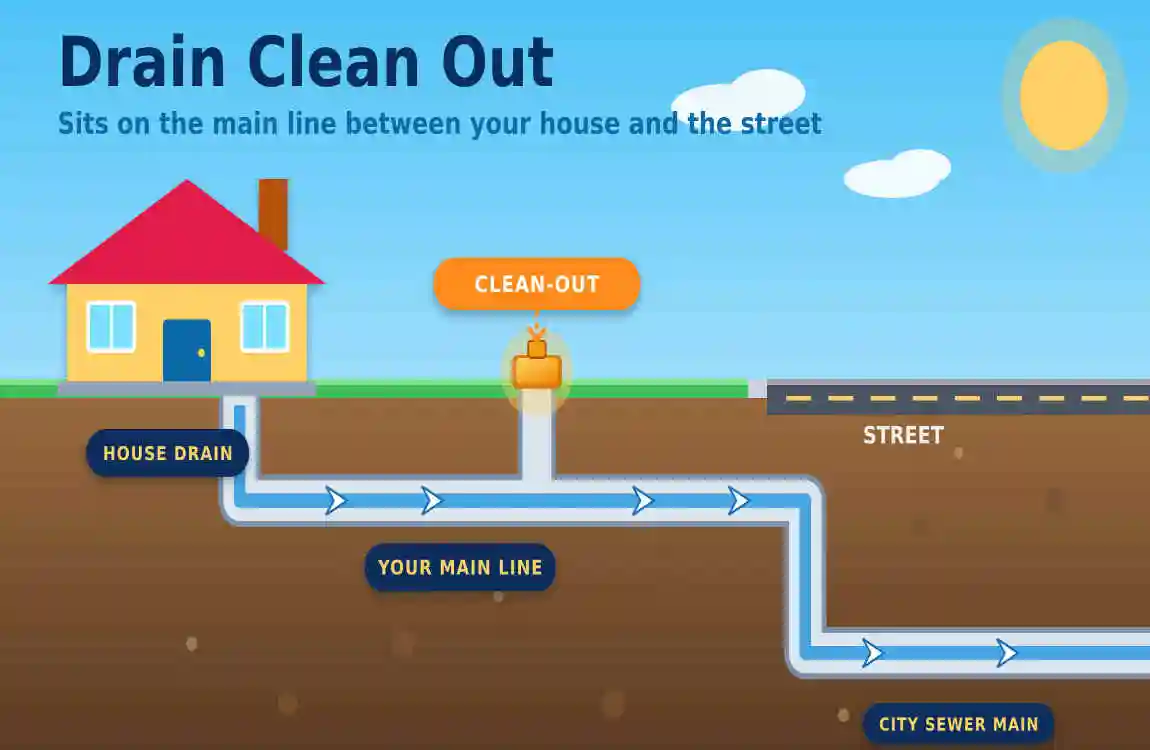
A drain clean out is a capped access point on your home’s drain or sewer line. Take the cap off and a plumber can inspect, snake, or flush the pipe directly, with no need to pull toilets or dismantle fixtures. It is usually a 3 to 4 inch pipe with a threaded cap, found outside near the foundation or inside a basement, crawl space, garage, or utility room.
How does a drain clean out work?
Think of it as a side entrance to your plumbing. Your drain lines are normally sealed, which keeps sewer gas out and wastewater in. A home clean out adds a short vertical pipe with a removable cap, attached to the line with a gentle curved fitting. According to Hunker, that curve is what makes it easy to feed an auger into the pipe and reach a blockage further downstream. The cleanout usually matches the pipe it serves in diameter, typically 3 or 4 inches.
When a plumber opens it, they can do three main jobs:
- Clear clogs with a drain snake or a water jet.
- Inspect the line by sending a camera down the pipe.
- Relieve a backup by giving water a place to go other than your floor drain.
Camera work is a big one. HomeServe explains that inspectors commonly run the camera in through a clean out to find clogs and damage, and says it can be worth installing one if you plan on regular sewer inspections.
Where is the drain clean out in my house?
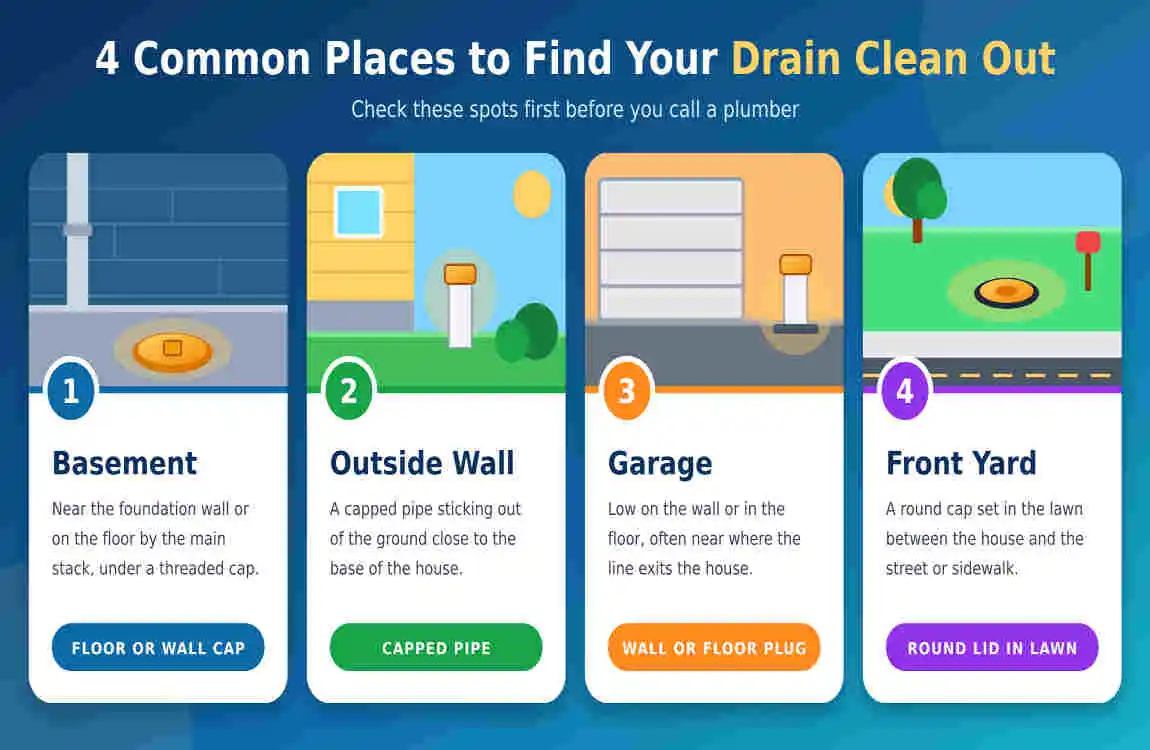
It depends on your climate and when your home was built. Mr. Rooter notes that in colder climates the deep clean out is most often indoors, near a bathroom, utility room, garage, or basement, to keep it from freezing. In warmer regions it is commonly outdoors along the foundation. HomeServe adds that outdoor ones tend to sit close to the foundation at the lowest point on the exterior of the house.
A simple way to find yours
- Start inside. Look near the floor drain, laundry area, or where the main pipe heads out through the foundation wall.
- Walk the outside perimeter. Check near the foundation, especially on the side closest to your clean bathrooms and the street.
- Look for the cap. A white, black, or metal cap with a square or round knob on a pipe about 3 to 4 inches wide is the usual giveaway.
- Don’t confuse it. A floor drain is an open drain, and a vent pipe is a different pipe. Neither is a clean out.
- Mark it. Once found, label it or snap a photo so you can show a plumber quickly.
If you really can’t find one, an older home may only have access through the roof vent stack, as Nick’s Plumbing points out. That is a strong sign it may be worth adding a proper clean out.
Types of drain clean outs
| Type | What it does | Best for |
|---|---|---|
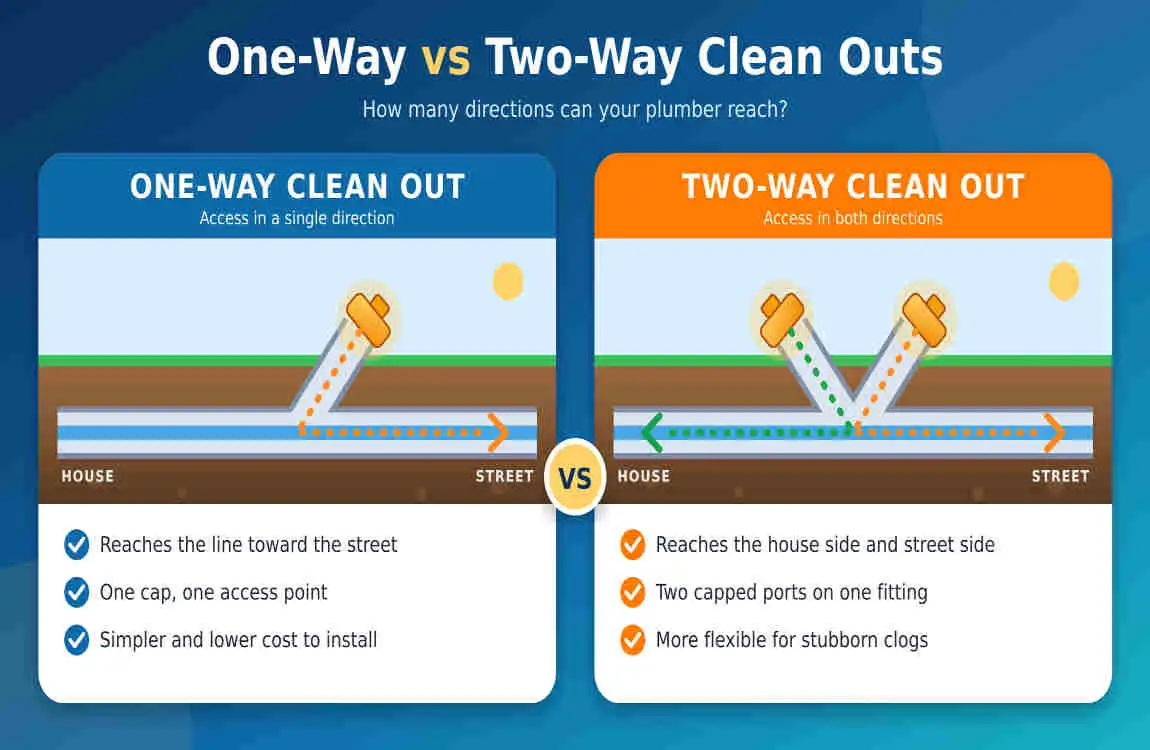
| One-way | Gives access in a single direction along the line | Simple setups and tight budgets |
| Two-way | Gives access toward both the house and the street | Most modern homes |
| Indoor (basement or crawl space) | Protected from frost and weather | Cold climates |
| Outdoor (yard or foundation) | Easy to reach without entering the house | Warm climates, new builds |
 What do plumbing codes say about clean outs?
 What do plumbing codes say about clean outs?
Codes exist so a plumber can reach any stretch of pipe without tearing up your house or yard. As PHCP Pros explains, the International Code Council publishes the International Plumbing Code and IAPMO publishes the Uniform Plumbing Code, and both address the size, location, and installation of clean outs. Under the IPC, horizontal drains generally need a clean out no more than 100 feet apart.
Local rules can be tighter. The City of Chicago plumbing code, for example, sets a 50 foot maximum for drains of 4 inches or less. The practical lesson from PHCP Pros is to check with your local code authority before you add or move one.
Why does a drain clean out matter for homeowners?
It speeds up repairs
With a clean out, a plumber can start work in minutes instead of pulling a toilet. Angi reports that a typical sewer line cleaning averages about $335, with a range of roughly $100 to $600 based on HomeAdvisor member data. Costs rise when access is poor.
It helps during a home purchase
A standard home inspection stops where the main line leaves the foundation. InterNACHI describes the sewer scope as an optional extra many inspectors offer, and Redfin says it can reveal clogs, cracks, tree root intrusion, and pipe collapse. The scope typically starts at the clean out, so having a good one makes the job easier. And since Pillar To Post notes that maintenance and replacement of the sewer line fall to the current homeowner, finding problems early matters.
It gives backups somewhere to go
If your main line blocks, wastewater looks for the lowest exit, often a basement floor drain. A clean out gives it, and your plumber, a better path.
Signs it’s time to use your drain clean out
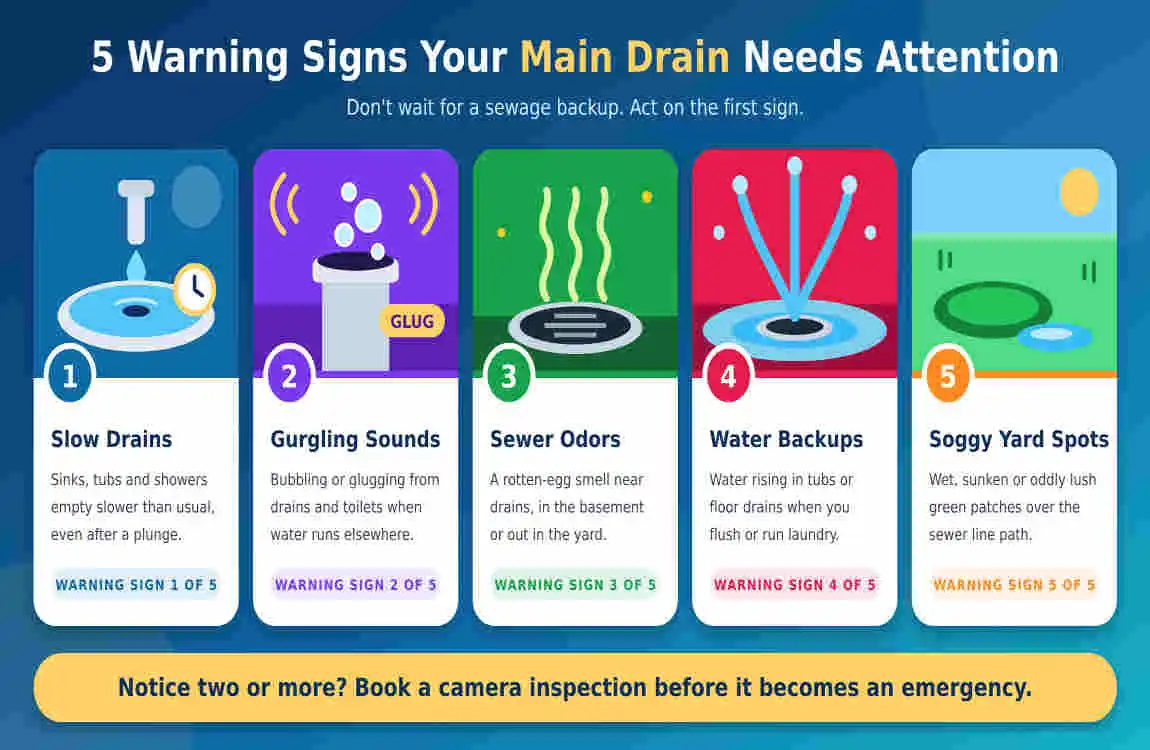
Slow drains on a single sink usually mean a local clog. When several fixtures act up at once, suspect the main line. Rocket Homes adds that you shouldn’t see water or sewage around the cap or standing inside the clean out. If you do, you likely have a blocked sewer drain, and it’s time to snake it or call a pro.
How much does it cost to install a drain clean out?
Prices in the US vary a lot by depth, access, and permits. Angi puts two-way installation at roughly $1,400 to $3,500, with an average around $2,700, while HomeGuide reports $2,000 to $5,000 with labor making up most of the bill. Get at least two quotes, and ask whether permits are included.
Can I open a drain clean out myself?
Many homeowners can, but go slowly. If the line is backed up, the clean pipe can be full of water, so crack the cap gently with a bucket and towels ready, wear gloves and eye protection, and stand to the side. Never use a flame on a plastic cap. If sewage is already rising, the cap won’t budge, or you see a cracked fitting, stop and call a licensed plumber. Keep a cap on whenever the pipe isn’t in use to block odors and pests.
Frequently asked questions
What is a drain clean out in simple terms?
It is a capped pipe fitting that gives direct access to your drain or sewer line, so a clog can be cleared or the pipe inspected without removing fixtures.
Is a drain clean out the same as a floor drain?
No. A floor drain is an open drain that collects water. A clean out is a sealed, capped access point for maintenance.
Does every house have a drain clean out?
Not always. Many modern homes have one, but older homes may have none or only a roof vent for access. A plumber can add one.
How often should I check my drain clean out?
A quick look once or twice a year is enough. Check that the cap is intact, the area is dry, and nothing is blocking access.
Who is responsible for the sewer line?
In most cases the homeowner is responsible for the line from the house to the municipal connection, so it pays to confirm with your local utility.
Bottom line
A drain clean out is a small fitting with a big job. Find yours today, make sure the cap is in good shape, and save your plumber’s number next to its location. If you don’t have one and your home has had repeated backups, adding one is usually a smart upgrade.
Sources
- PHCP Pros: Code requirements for drainage system cleanouts
- PHCP Pros: Cleanouts in drainage systems
- InterNACHI: Sewer scope inspection
- City of Chicago Municipal Code (American Legal Publishing)
- HomeServe: What is a plumbing cleanout?
- HomeServe: What happens during a sewer line inspection?
- Redfin: What is a sewer scope inspection?
- Pillar To Post: Sewer line inspections
- Angi: Sewer cleanout installation cost
- Angi/HomeAdvisor: Cost to clean a sewer line
- HomeGuide: Sewer cleanout cost
- Hunker: What is a sewer cleanout?
- Mr. Rooter: How to find a buried sewer cleanout
- Rocket Homes: What is a sewer cleanout?
