


Sometimes. Some dry cleaners accept small rugs, but rug cleaning is not a standard service at most of them, and many shops have size limits or pass rugs along to a specialist. For large, wool, silk, antique or fringed rugs, a dedicated rug cleaner is usually the safer bet for your home.
It usually happens right after something goes wrong. A glass of red wine, a muddy-pawed dog, or a hosting weekend that leaves your living room rug looking tired. You already trust your dry cleaner with your good coat, so it feels natural to wonder: will dry cleaners clean area rugs too?

What does “dry cleaning a rug” actually mean?
The phrase is slippery, and it trips people up. Garment dry cleaning uses a solvent instead of water. In the rug world, though, “dry cleaning” can also describe low-moisture methods such as dry compounds or bonnet-style cleaning, where very little water touches the rug.
That difference matters. According to the IICRC, low-moisture methods reduce the risk of shrinkage but do not remove it, and rugs that are prone to shrinking are best cleaned in a plant setting (IICRC Area Rug Tip Sheet). Consumer group Checkbook also cautions that bonnet cleaning is mostly a surface treatment that rarely rinses, so residue can build up over time (Checkbook).
So before you say yes to anything, ask the shop to describe the method in plain words. If they cannot, that tells you something.
Which area rugs might a dry cleaner handle?
Every shop is different, so treat this as a rough guide rather than a promise. Small, sturdy, colorfast rugs are the best candidates: think a bath mat, a kitchen runner, or a small synthetic accent rug that fits through the door. Many dry cleaners already handle bulky household cleaning items like comforters and drapes, so a small rug is not a stretch for some of them.
Where it gets risky is anything large, heavy, delicate or valuable. Retailer Wayfair advises that very large area rugs are often best sent to a professional rug cleaning service, since those teams have the tools to handle big surfaces (Wayfair).
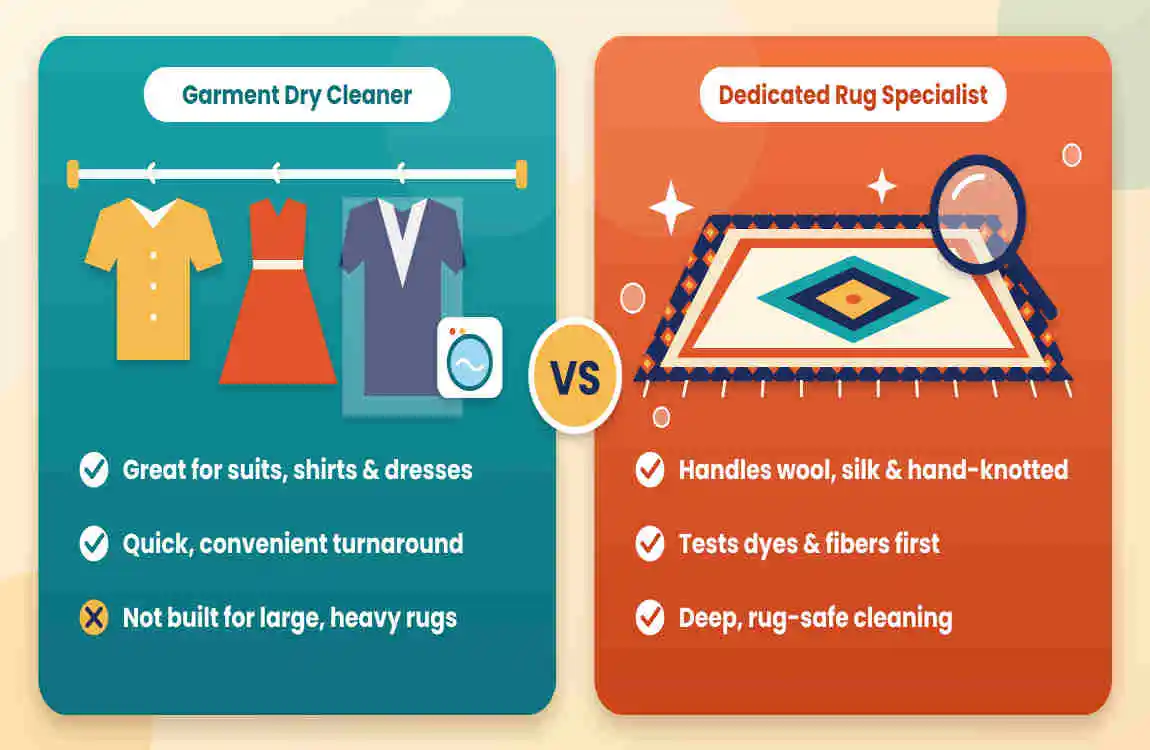
Why a rug specialist is often the better choice
Rugs are not oversized sweaters. They have knots, backings, dyes, fringes and fibers that all react differently to water, heat and chemicals. Checkbook puts it bluntly: rugs need specialized care, and the wrong chemicals or technique can cause permanent damage. It lists dye run, torn fringe, warping and shrinkage as real possibilities with expensive handmade or antique pieces (Checkbook).
The IICRC adds a few specifics worth knowing:
- Shrinkage and buckling: woven rugs can shrink or buckle after cleaning, often because their materials behave differently.
- Browning: plant fibers like cotton or jute can turn yellow or brown if they dry too slowly.
- Fringe: it is vulnerable to wear, pets, aggressive vacuuming and bleach, and soiled fringe is best cleaned at a rug washing plant.
(All from the IICRC Area Rug Tip Sheet.) The same guidance notes that the ANSI/IICRC S100 standard recommends removing area rugs for in-plant cleaning, where conditions are controlled. That is the setup most dry cleaners simply do not have.
Match the cleaning to your rug’s fiber
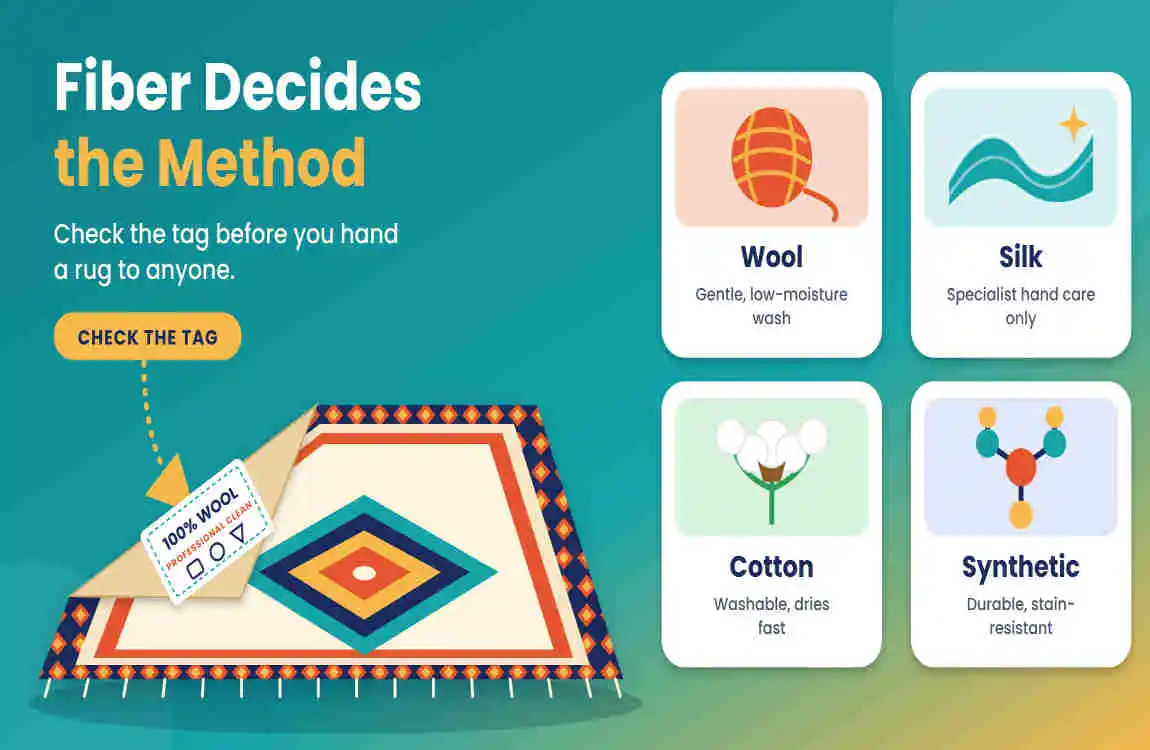
Before you pick anyone, flip the rug over and read the care tag. Angi explains that natural fibers like wool, silk, cotton and jute need different cleaners and techniques than synthetics like nylon, olefin and polyester. Silk rugs are fragile and generally need professional deep cleaning, and a rug with no tag should be spot-treated or handed to a pro (Angi).
A trending twist: the dry cleaning solvent shake-up
There is a bigger story behind the question, and it is one reason more homeowners are rethinking where their rugs go. The most common dry cleaning solvent, perchloroethylene (often called “perc”), is being phased out. The EPA has set a 10-year phaseout of PCE in dry cleaning, with use in newly acquired machines prohibited after six months and compliance dates for existing machines depending on the machine type. The agency notes that many dry cleaners have already started the transition (U.S. EPA). The EPA also opened a comment period in 2025 to reconsider parts of the rule, so details could still shift.
What does that mean for your rug? Mostly that dry cleaners are changing their equipment and processes, and not every shop will be set up the same way. It is one more reason to ask exactly how a shop would clean your rug instead of assuming.
5 questions to ask before you drop off a rug
These come straight from the kind of due diligence consumer researchers recommend (Checkbook):
- How do you clean rugs? Ask for the process step by step. Immersion washing with thorough rinsing is the approach Checkbook prefers.
- Do you clean it yourselves or send it out? Neither answer is wrong, but you should know where your cleaning rug is going.
- Do you have dedicated rug cleaners? Rugs are a specialty, not a side job.
- Is there a size limit? Better to learn it at the counter than after you have wrestled the rug into your car.
- Can I get a written, fixed price and a receipt? The receipt should describe the rug’s type, size and appearance. For a valuable rug, consider an appraisal too, so you can be compensated if something goes wrong.
One more tip: point out every stain you know about, and be upfront about pet accidents or anything biological. Cleaners can only treat what they know is there.
How much does rug cleaning cost?
Angi’s estimate for professional rug cleaning is roughly $1.25 to $8 per square foot, or about $50 to $300 for full projects, with small rugs sometimes costing as little as $10 (though you may pay a trip fee for a single rug) (Angi). A dry cleaner may price a small rug differently, often by size or by piece, so ask for a number in writing. Those are U.S. figures; prices elsewhere will differ.
Can you skip the pro and clean it at home?
Sometimes. Angi notes that new wool, cotton or synthetic rugs are generally fine for DIY cleaning, which can save money. The usual routine is simple: vacuum thoroughly, test any cleaner on a hidden spot for colorfastness, clean gently, and let the rug dry completely (Angi). Interior designers also suggest air drying a rug on a clean surface or hanging it on a sturdy line, which can take a full day (Homes & Gardens).
But call a professional when the rug is silk, antique, unlabeled, or marked with heavy or set-in stains such as blood.
Everyday care that keeps rugs cleaner for longer
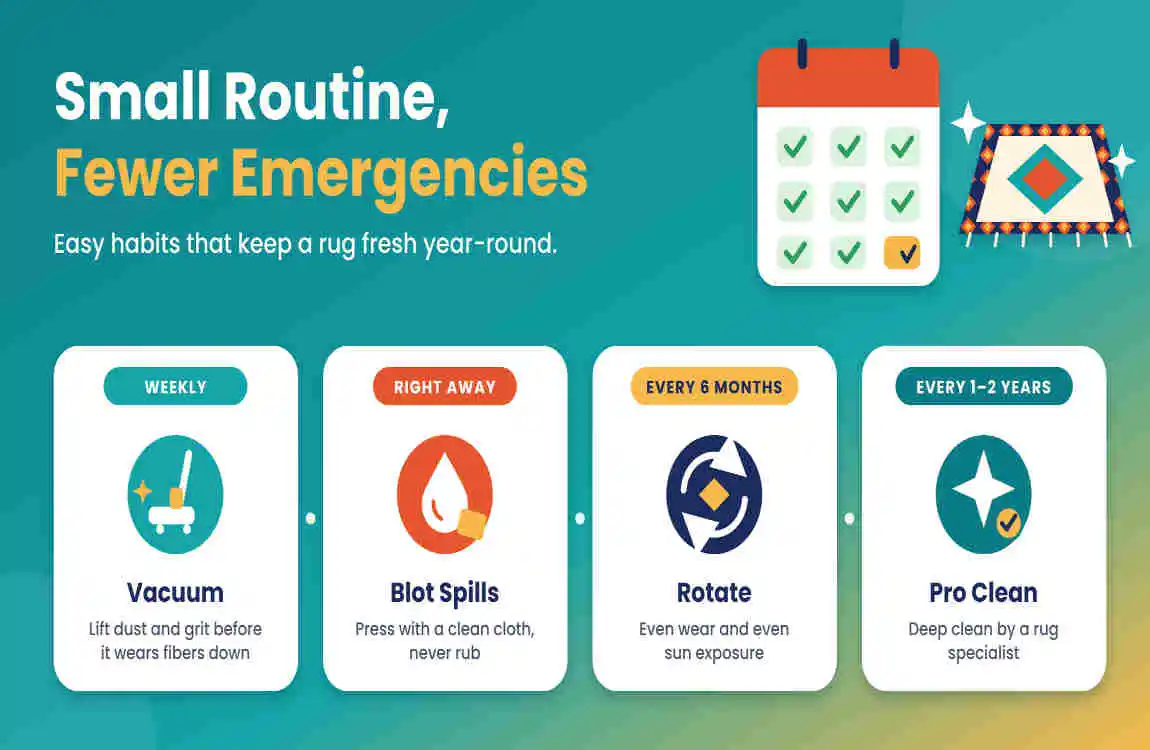
The easiest way to avoid a dry cleaning dilemma is to need it less often. The IICRC suggests rotating your rug once or twice a year to prevent uneven wear and fading, vacuuming often, and even flipping the rug to run a full-size upright with a beater bar over the back to loosen embedded dry soil. It also recommends a fabric protector on a new rug and again after professional cleaning (IICRC). For most homes, a professional clean every 12 to 24 months, depending on placement and traffic, is a good target (ANSI).
Frequently asked questions
Will dry cleaners clean area rugs?
Some will, but it is not a standard service. Many only take small rugs, and many send rugs to a specialist. For large, wool, silk, antique or fringed rugs, a dedicated rug cleaner is usually safer.
Can you dry clean a large area rug?
Usually not at a regular dry cleaner. Most shops have size limits, and large rugs are better handled by a rug cleaning service with the space and equipment to wash and dry them properly.
How much does professional rug cleaning cost?
Angi estimates about $1.25 to $8 per square foot, or roughly $50 to $300 for full projects. Always get a written fixed price first.
How often should an area rug be professionally cleaned?
The ANSI/IICRC S100 standard points to every 12 to 24 months, depending on placement and traffic.
Can I clean a rug at home instead?
Often, yes, if it is a newer wool, cotton or synthetic rug and you spot-test first. Leave silk, antique, tagless or heavily stained rugs to a professional.
The bottom line
So, will dry cleaners clean area rugs? Some will, and a small, sturdy rug might do fine there. For anything large, delicate, valuable or fringed, a rug specialist is the better investment, because a bad cleaning can cost far more than a good one. Read the tag, ask the five questions, get the price in writing, and your rug should keep anchoring your room for years.
Sources
- IICRC: Consumer Tip Sheet on Area Rugs (Institute of Inspection, Cleaning and Restoration Certification)
- ANSI Blog: ANSI/IICRC S100-2021 Standard for Professional Cleaning of Textile Floor Coverings
- U.S. EPA: Risk Management for Perchloroethylene (PCE)
- Checkbook: In-Plant Rug Cleaning
- Angi: How to Clean an Area Rug in 5 Easy Steps
- Wayfair: Cleaning 101, How to Clean an Area Rug
- Homes & Gardens: How to Clean an Area Rug
