

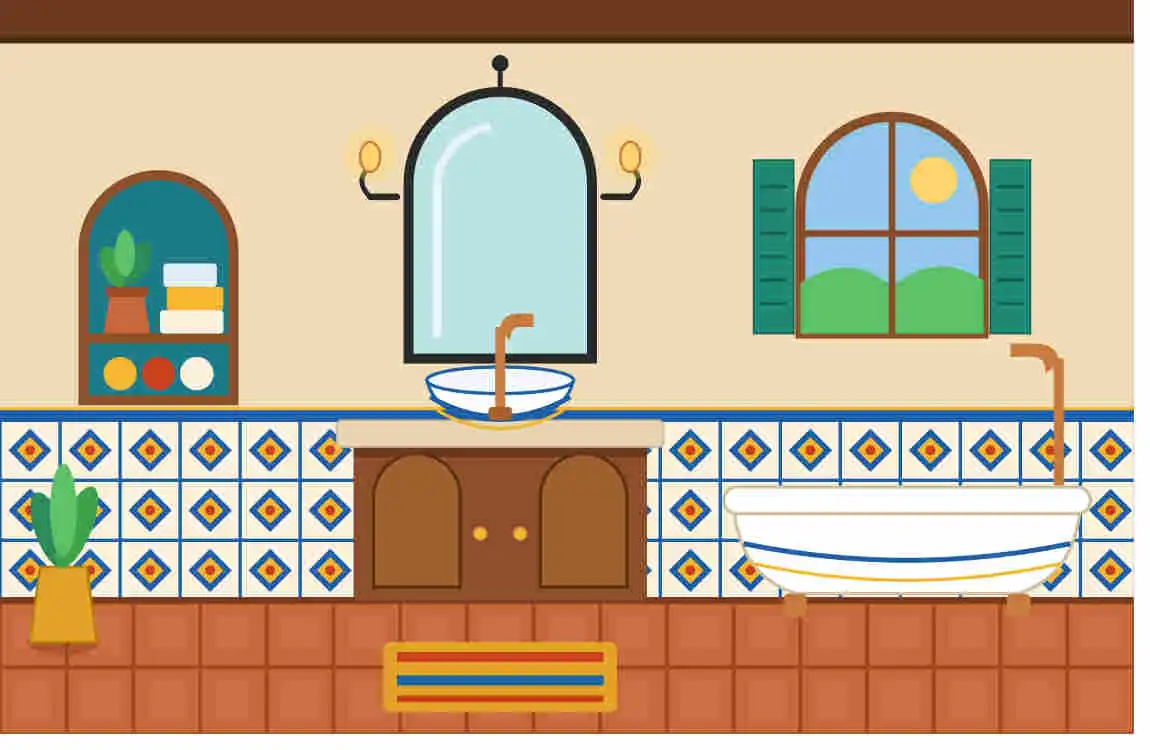
Step into the bathroom of a well-kept Spanish hacienda, an Andalusian townhouse, or a Santa Barbara-style villa, and you notice the same thing within seconds: the room feels handmade. The tiles are painted or patterned, the walls have a soft, uneven texture, and the metalwork looks like it belongs to another century. That layered, warm character is what defines bathroom Spanish homes have become known for, and it is easier to recreate than most people think.
Where the Spanish Bathroom Look Comes From
The style did not appear overnight. Its roots run through several centuries and a few continents.
Moorish tilework. The Spanish home word azulejo comes from the Arabic al-zulayj, and glazed tiles of this kind were being produced in Spain from the 14th century. According to Encyclopaedia Britannica, they were introduced by the Arabs during the Moorish occupation and used to face walls and pave floors in Islamic architecture. That habit of covering surfaces in colourful ceramic is exactly why tile dominates Spanish interiors today.
Talavera ceramics. Spanish tile is closely tied to Talavera de la Reina, in central Spain, where the traditional home Talavera-style wall tile became popular in the 15th and 16th centuries, as described by Porcelanosa. The craft later travelled to Mexico, and in 2019 UNESCO added the making of Talavera from Puebla and Tlaxcala in Mexico and from Talavera de la Reina and El Puente del Arzobispo in Spain to its Representative List of the Intangible Cultural Heritage of Humanity.
Spanish Colonial Revival. In the United States, the look spread through architecture. The Pennsylvania Historical and Museum Commission notes that the Spanish Colonial Revival style became popular in the early 20th century after the 1915 Panama-California Exposition in San Diego. Old House Online adds that the exposition, showcasing Bertram Goodhue’s Spanish Revival designs, is when the “Spanish craze” began in earnest, with decorative tile trim and carved doors becoming hallmarks of the style.
The result is a design language built on Moorish geometry, Mediterranean warmth and colonial craftsmanship. HGTV describes it as casual, comfortable and welcoming, drawn from regions around the Mediterranean, with bold colour as its signature trait.
Spanish-Style Bathroom Features at a Glance
| Element | Typical Spanish choice | Where to use it |
|---|---|---|
| Wall tile | Talavera, azulejo-style, glazed handmade tile | Backsplash, shower wall, mirror surround |
| Floor | Terracotta, Saltillo, encaustic cement tile, stone | Whole floor or a rug-style inset |
| Walls | Textured plaster, limewash, stucco finish | Dry areas above tile |
| Metal | Wrought iron, hammered copper, aged brass | Lighting, mirror frames, taps, towel hardware |
| Wood | Dark, carved or rustic timber | Vanity, shelving, doors |
| Shape | Arches, niches, rounded corners | Shower entry, mirrors, wall recesses |
Which Tiles Define a Spanish-Style Bathroom?
Talavera tile
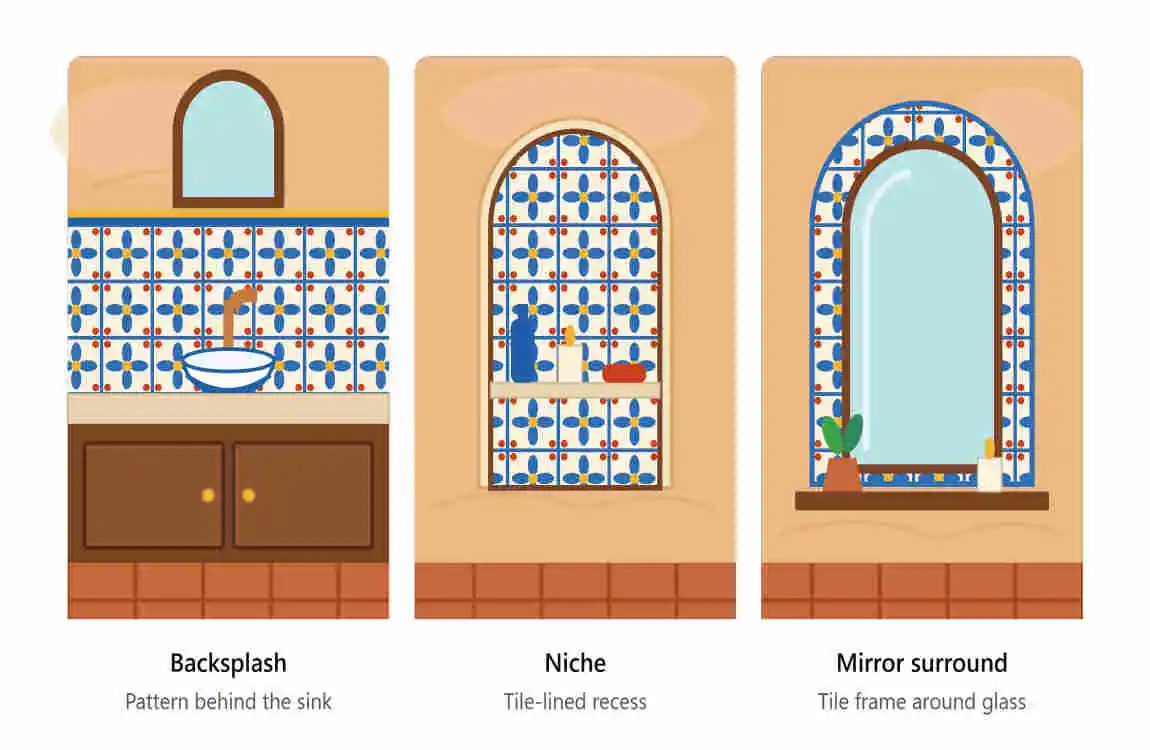
Hand-painted, glossy and full of floral or geometric patterns, Talavera is the tile most associated with the style. Interior designers use it as a staple of Spanish-style bathrooms, and it works as a backsplash, shower wall or small accent around a mirror. Because each piece is painted by hand, slight variations are part of the charm. Do not expect machine-perfect repeats.
Azulejo and geometric tiles
Azulejo-style tiles carry the Moorish tradition of dense geometric patterns. In a bathroom, a tile border or a single feature wall in cobalt, white and green gives you that Andalusian feel without overwhelming the room.
Encaustic and cement tiles
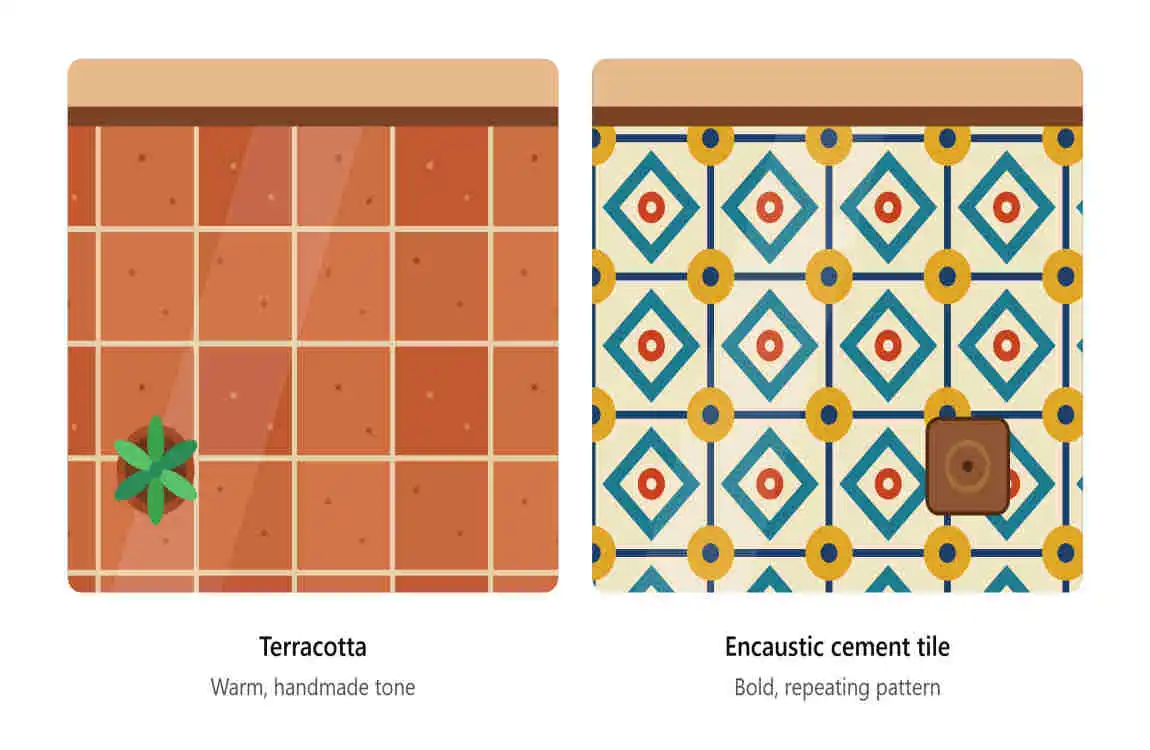
Patterned cement tiles are durable, artistic and very Spanish in spirit. Houzz’s gallery of Mediterranean bathrooms with cement tiles shows how well they work on floors, shower walls and vanity backsplashes. They need to be sealed properly and cleaned with pH-neutral products, so ask your supplier for care instructions before you buy.
Terracotta and Saltillo floors
Warm, earthy terracotta is the traditional floor of bathroom Spanish homes. Houzz lists thousands of bathrooms with terracotta floors, often paired with mosaic tile and freestanding tubs. Raw terracotta is porous, so it must be sealed, and for wet areas a matte or textured finish gives better grip underfoot.
Spanish-Style Bathroom Fixtures
If tile is the star, fixtures are the supporting cast that makes the room feel finished.
- Sinks: Hand-painted ceramic vessel sinks, hammered copper basins, pedestal sinks, or a stone trough set into a carved wooden vanity.
- Bathtubs: Freestanding clawfoot tubs and copper tubs are the classic choices for a statement piece.
- Taps and hardware: Aged brass, oil-rubbed bronze or black iron. Avoid shiny chrome, which tends to look too modern against rustic surfaces.
- Lighting: Wrought-iron sconces, lantern-style pendants and, in larger rooms, an ornate chandelier.
- Mirrors: Arched or round mirrors in iron or carved wood frames.
Walls, Colour and Texture
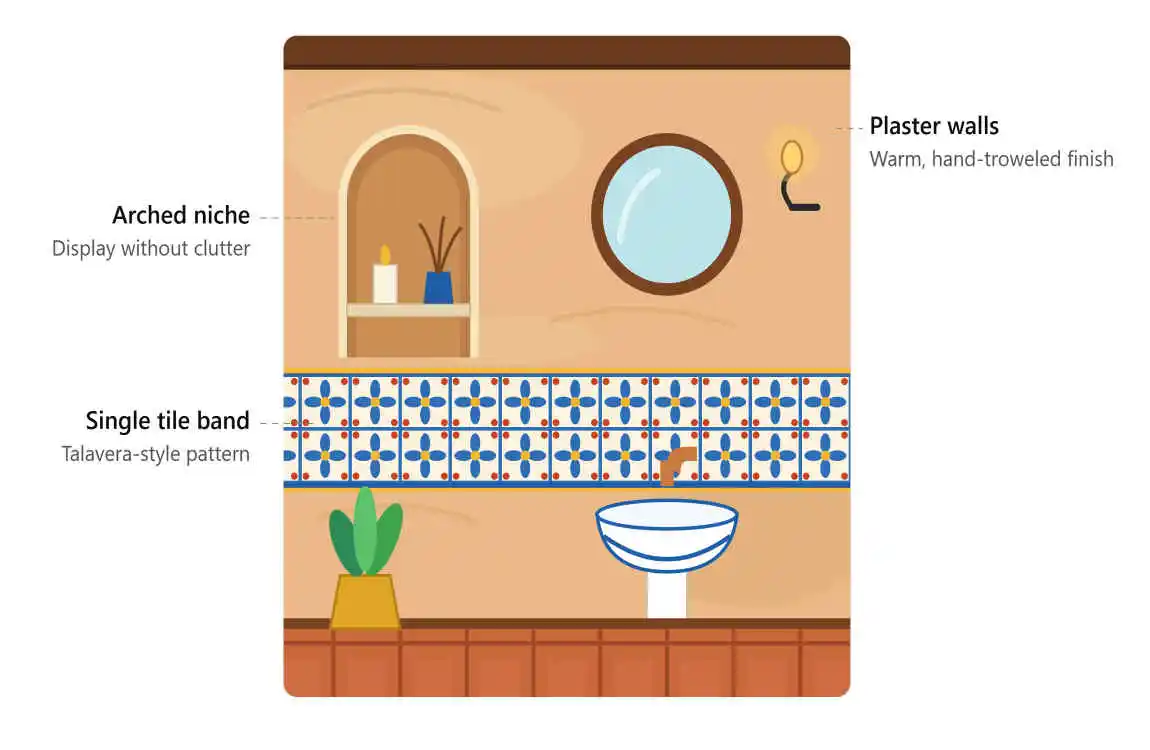
Smooth, flat paint rarely suits this style. Look instead for hand-troweled plaster, limewash or a light stucco texture. Thick, adobe-like walls are a hallmark of the architecture itself, and the uneven surface catches light beautifully in a bathroom.
Popular colour palettes:
- Warm whites and creams to let the tile breathe.
- Terracotta, ochre and sun-baked yellow for a sunny Mediterranean mood.
- Cobalt, turquoise and deep green borrowed from Talavera and azulejo patterns.
- Charcoal or black in the ironwork for contrast.
Spanish-Style Bathroom Design Ideas You Can Copy
Start with one hero surface
Choose a single feature, such as a Talavera backsplash or a patterned cement floor, and keep everything else quiet. This is the quickest way to get the look without a full renovation.
Add an arch
An arched shower opening, a recessed niche or an arched mirror immediately signals Spanish architecture. Even a painted arch behind a mirror works in a rental or a tight budget.
Layer natural textures
Combine terracotta, plaster, rough timber and woven baskets. The contrast between glossy tile and matte, earthy surfaces is what makes the room feel authentic.
Go modern-Spanish in small bathrooms
In a compact room, use white or cream tile on most surfaces and add a single band of patterned tile at shower height. Pair it with a simple wood vanity and one iron light fixture for a lighter, contemporary take.
Bring in plants and soft textiles
Trailing greenery, linen towels and a cotton rug in earthy tones soften the hard surfaces and echo the courtyard feeling of traditional Spanish houses.
Common Mistakes to Avoid
- Too many patterns. Pick one lead pattern and one supporting plain tile.
- Ignoring slip resistance. A glossy glazed tile on a wet floor is a safety risk. Use textured finishes for floors.
- Skipping sealing. Terracotta and cement tiles absorb moisture and stains if left unsealed.
- Mixing cold finishes. Cool chrome and glossy white fixtures can clash with warm rustic materials.
- Treating it like a theme. Aim for authentic materials and craft rather than a pile of souvenirs.
Frequently Asked Questions
What is a Spanish-style bathroom?
A Spanish-style bathroom uses decorative tile, terracotta or stone floors, textured plaster walls, arched details and wrought-iron or copper fixtures. It draws on Moorish, Mediterranean and Spanish Colonial design.
What tiles are used in Spanish bathrooms?
The most common are hand-painted Talavera tiles, azulejo-style glazed tiles, encaustic cement tiles and terracotta or Saltillo floor tiles.
What colours suit a Spanish-style bathroom?
Warm whites, terracotta, ochre and sun-washed yellows, plus cobalt blue, turquoise and green for tile accents, with black iron details.
Can a small bathroom be Spanish-style?
Yes. Use light walls, one patterned tile feature, an arched mirror or niche and a single iron or brass light. Restraint works better than covering every surface.
Is Spanish-style bathroom design hard to maintain?
Handmade tile, terracotta and cement tile need sealing and gentle, pH-neutral cleaning. Glazed Talavera and azulejo-style tiles are generally easier to wipe clean. Follow the manufacturer’s care guidance for each material.
Final Thoughts
The appeal of bathroom Spanish homes comes down to warmth and craft: beautiful tile, earthy surfaces, metal with some age to it, and rooms that feel lived in rather than staged. You do not need a villa or a large budget. One hero tile, one arch and a few well-chosen fixtures will take any bathroom a long way toward the Spanish look.
Sources and Further Reading
- Encyclopaedia Britannica: Azulejo
- UNESCO Intangible Cultural Heritage: Artisanal Talavera of Puebla and Tlaxcala and ceramics of Talavera de la Reina and El Puente del Arzobispo (inscribed 2019)
- Pennsylvania Historical and Museum Commission: Spanish Colonial Revival Style
- Old House Online: Spanish Revival Architecture in America
- HGTV: Spanish-Style Bathrooms
- Porcelanosa: Spanish Tiles
- Houzz: Mediterranean Bathroom Design Ideas with Cement Tiles
- Houzz: Bathroom Design Ideas with Terra-cotta Floors
