

How Fast Does Bleach Kill Ants?
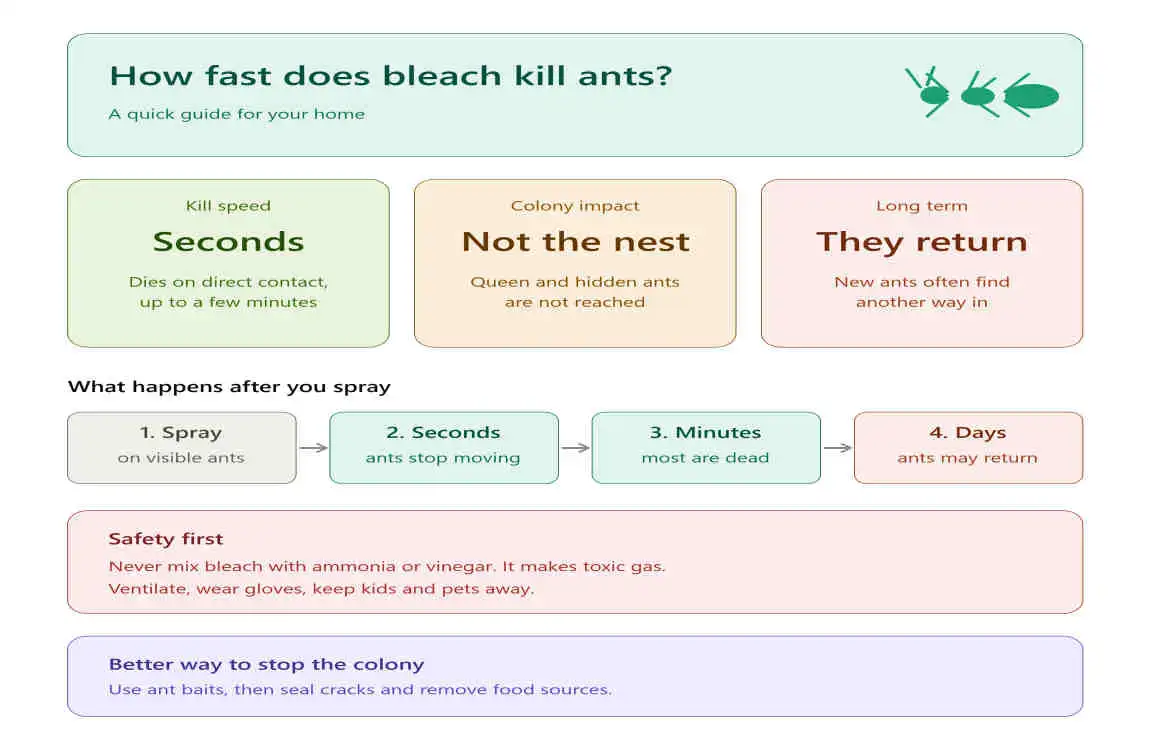
People searching this usually want a number, so here is the realistic picture. I could not find a controlled university study that times bleach on ants to the second. The figures below reflect what pest control professionals and home-care publishers commonly report, and they vary with the ant species, the bleach strength and how much liquid actually lands on the insect.
| Situation | Typical result | Reliability |
|---|---|---|
| Ants sprayed or soaked with liquid bleach | Stop moving within seconds to about a minute | High, but only for those ants |
| Ants crossing a wet, freshly wiped surface | Within a minute or a few minutes | Moderate |
| Ants crossing a dried bleach residue | Little to no effect | Low |
| Bleach poured into or near a nest | May kill some workers; colony often survives or relocates | Low and not recommended |
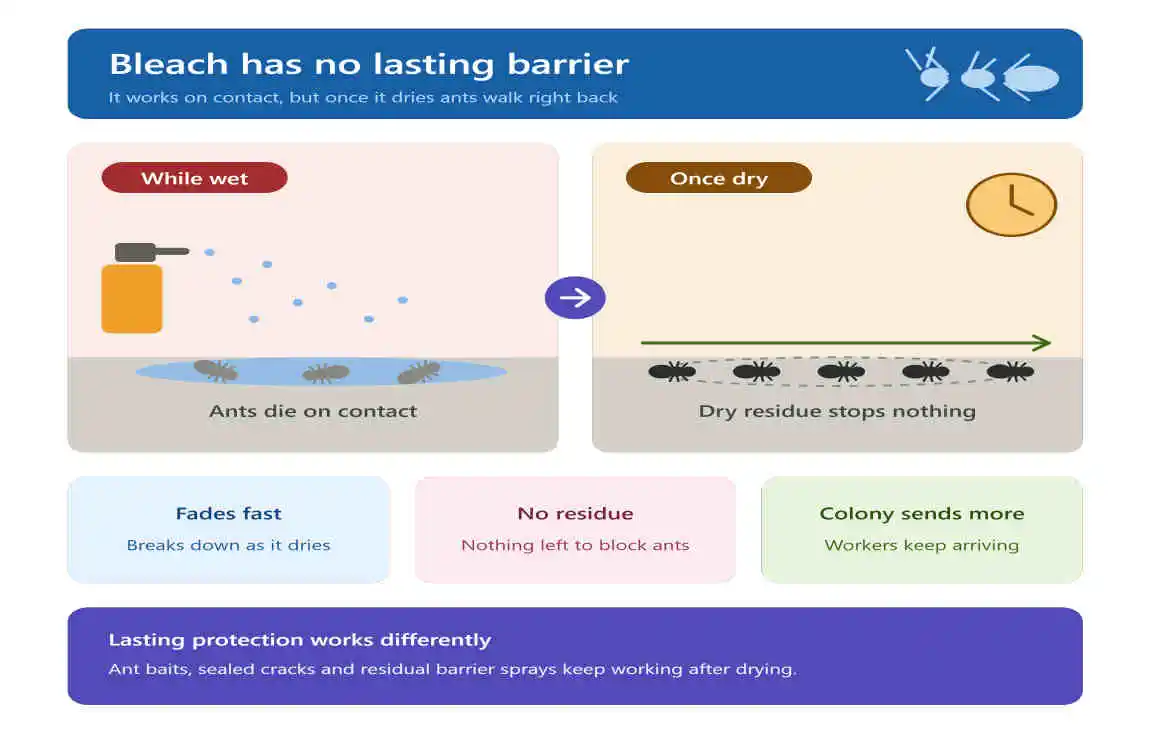
Pest-control sources describe bleach as a corrosive chemical that breaks down an ant’s protective outer layer and disrupts its body functions, which is why contact pest kills are fast (Today’s Homeowner). The catch is that it has no lasting effect after it dries, so it only affects ants that are wet with it at that moment.
Why Bleach Does Not Solve an Ant Problem
The colony lives somewhere else
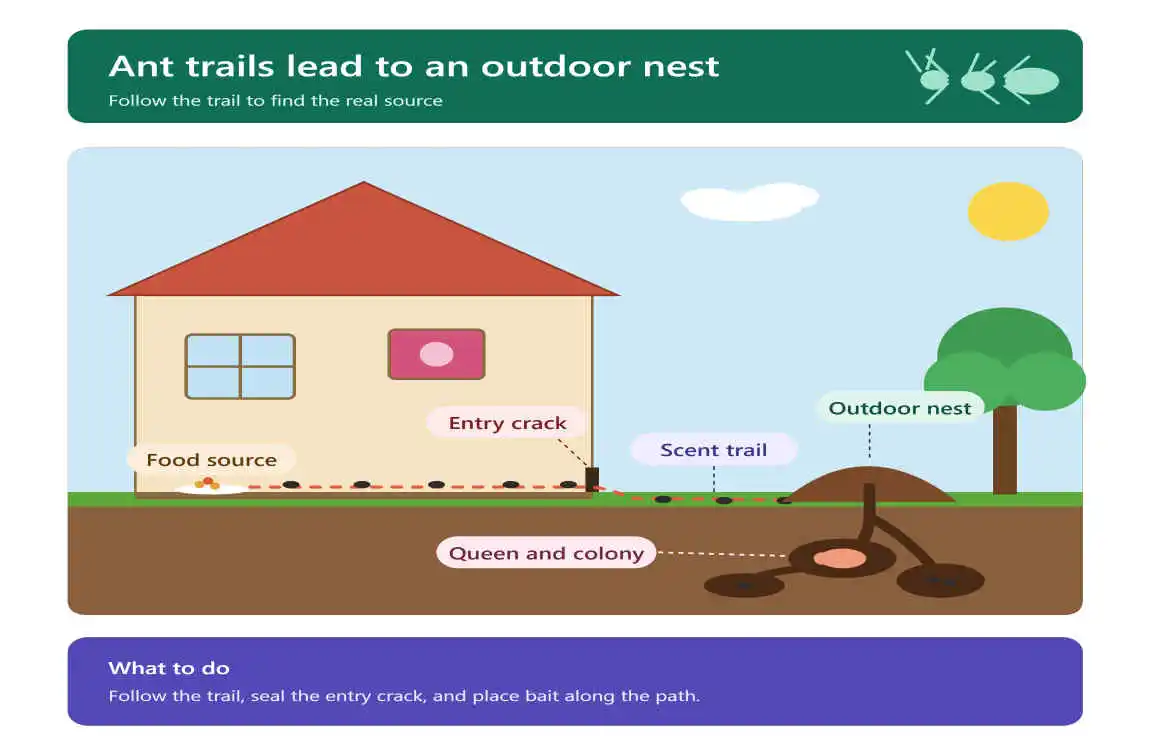
The ants you see indoors are mostly foraging workers. University of California integrated pest management (IPM) specialists explain that most household ants nest outdoors, so killing the ones inside the kitchen will not stop more from coming in (UC IPM Pest Notes: Ants). They recommend focusing on keeping ants out and removing what attracts them instead.
The queen is never touched
As long as the queen keeps laying eggs, the colony replaces lost workers. Bleach sprayed on a counter will not get anywhere near her.
It can scatter the colony
Fast-acting sprays act like a keep-out sign. Ants that survive may avoid the treated area and re-route to a new entry point, which can make the problem harder to track.
Wiping a trail is only temporary
Ants follow scent trails. Deep cleaning with bleach can erase a trail, but scouts will lay a new one as long as food, water and an open entry point remain.
Is Using Bleach on Ants Safe?
This is the part most “home remedy” articles skip. Bleach is a strong chemical, and using it as a pesticide brings real risks.
Never mix bleach with other products
The Centers for Disease Control and Prevention (CDC) warns that household chlorine bleach can release chlorine gas when mixed with certain other pest cleaning products (CDC: Chlorine Fact Sheet). Mixing bleach with ammonia produces toxic chloramine gas, which can be life-threatening depending on the amount (Healthline). The same applies to vinegar and other acids. A CDC report documented a real case where bleach was applied right after an acid cleaner, producing a noxious gas (CDC MMWR).
If you smell a sharp, pool-like odor after mixing cleaners, leave the area, get fresh air and contact your local poison control center or emergency services. In the United States, poison control is 1-800-222-1222.
Other risks to consider
- Fumes: use bleach only in well-ventilated spaces, with gloves and eye protection (Medical News Today).
- Surfaces: bleach can discolor or damage wood, stone, fabric and some floors. Always check labels (Clorox safe-use guidance).
- Food and pets: residue near food prep areas, pet bowls and play areas is a poor idea.
- Soil and plants: pouring bleach into an outdoor nest can harm soil life and nearby plants.
What Works Better Than Bleach for Ants in the House
If your goal is to stop ants for good, the experts point in a different direction.
Use ant baits
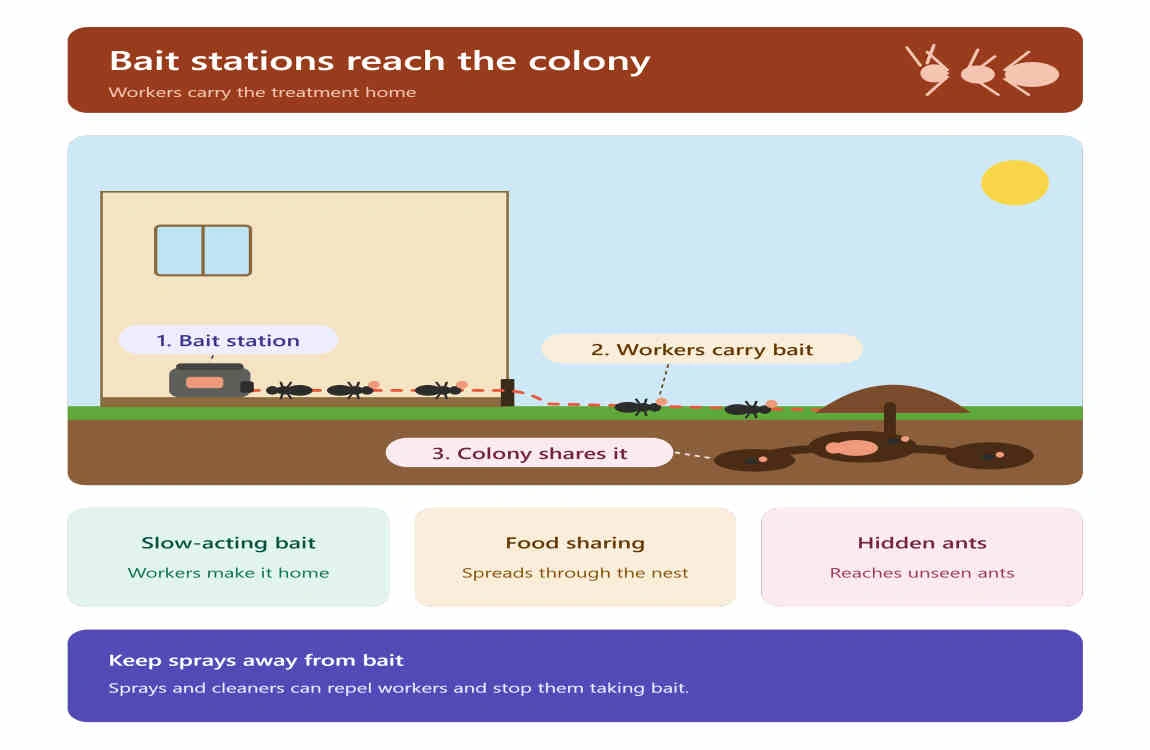
Baits contain a slow-acting ingredient mixed with food ants like. Workers carry it back and share it, which can reach the colony. UC IPM researchers note that baits are more effective and less toxic than traditional perimeter pesticide treatments (UC Master Gardeners). The key is patience: leave bait in place and do not spray the ants feeding on it. Keep bait stations out of reach of children and pets (UCSF Child Care Health Program).
Find and seal entry points
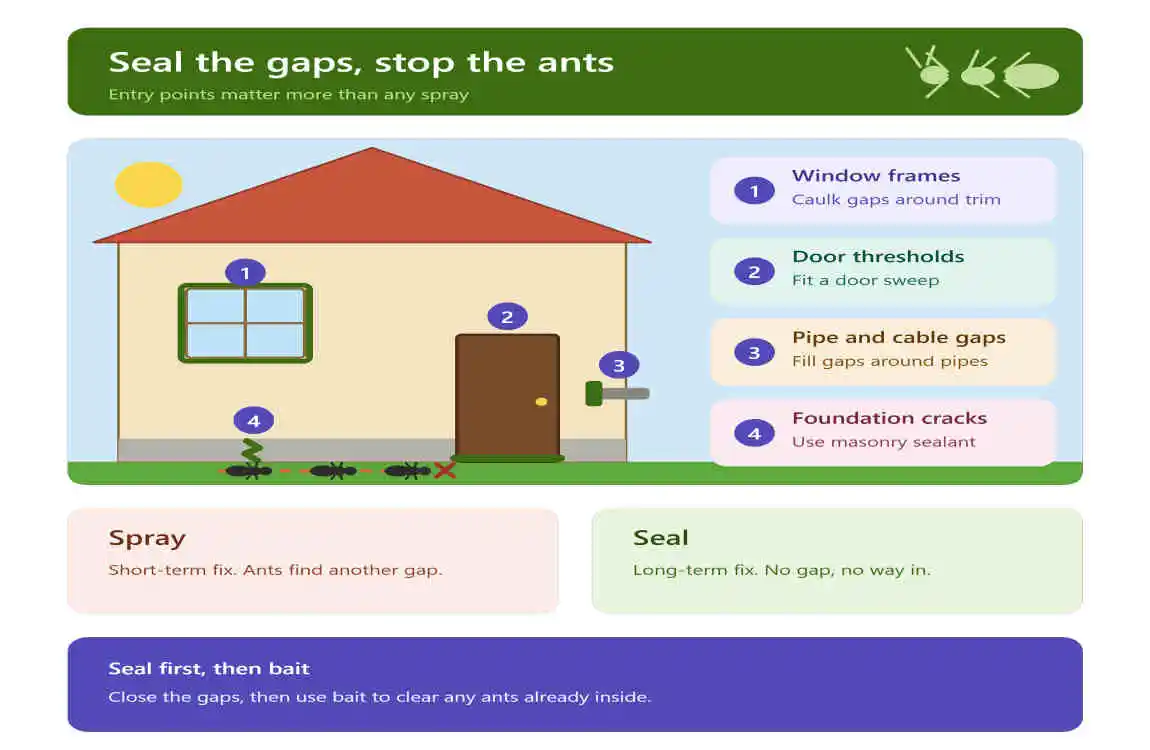
Follow the trail back to where ants enter, then seal cracks and gaps with caulk. Check window frames, door thresholds, utility lines and baseboards.
Remove food and water sources
Wipe counters, store sweet and greasy foods in sealed containers, take out trash regularly, fix leaks and do not leave pet food sitting out. Ants are mostly looking for sugar, fats, protein and moisture.
Identify the ant species
Different ants respond to different baits and treatments. UC IPM publishes an identification key for common household ants that can help you choose the right approach (UC IPM Key to Household Ants).
Call a professional when needed
If ants persist after a few weeks of baiting and sealing, or you suspect carpenter ants (which can damage wood), hire a pest-management professional who follows IPM practices (UC IPM).
Bleach vs. Other Ant Control Methods
| Method | Speed on visible ants | Reaches colony? | Long-term result | Safety concern |
|---|---|---|---|---|
| Bleach spray | Seconds to a minute | No | Poor | High (fumes, mixing hazards, surface damage) |
| Contact insecticide spray | Fast | No | Poor | Moderate to high |
| Ant bait stations or gel | Slow (days) | Yes | Good | Lower when used per label |
| Sealing and sanitation | Gradual | Prevents entry | Very good | Very low |
| Professional IPM service | Varies | Yes | Very good | Managed by licensed pro |
If You Still Want to Use Bleach: A Cautious Approach
I would not make it your main strategy. But if you have a handful of ants on a hard, bleach-safe surface and you simply want to clean house, this is the safest way to do it:
- Ventilate the room and put on gloves.
- Use bleach diluted with water only, following the label directions. Do not add any other product.
- Wipe the surface with a cloth rather than spraying a mist into the air.
- Rinse the area afterward, especially where food is prepared.
- Immediately begin the real fix: find the entry point, seal it and set out bait.
Frequently Asked Questions
Does bleach kill ants in house?
Yes, bleach kills ants it directly touches, but it does not reach the nest or queen, so the colony keeps sending workers into your home.
How fast does bleach kill ants?
Ants that are sprayed or soaked usually stop moving within seconds to about a minute. Dried residue and fumes are much less reliable.
Will bleach kill the ant queen?
Almost never. The queen stays deep inside the nest, typically outdoors, where surface cleaning and spraying do not reach.
Can bleach get rid of an ant infestation?
No. It can clear the ants you see, but infestations continue while the colony, food sources and entry points remain.
Is it safe to mix bleach with vinegar or ammonia to kill ants?
No. Mixing bleach with vinegar, other acids or ammonia can release chlorine or chloramine gas. Use bleach only with water, if at all.
Does bleach remove ant trails?
It can wipe away scent trails temporarily, but ants will lay new ones if food, water and an entry point are still available.
What kills ants in the house permanently?
Slow-acting baits that workers carry to the colony, combined with sealing entry points and good sanitation, give the most lasting results.
Final Verdict
So, how fast does bleach kill ants in a house? On direct contact, usually within seconds to a minute. But speed is not the same as success. Bleach clears the ants in front of you while leaving the colony, the queen and the entry point untouched, and it brings real safety risks. For a lasting fix, bait, seal and clean up food sources, and bring in a professional if the problem keeps coming back.
Sources and Further Reading
- University of California Statewide IPM Program: Pest Notes, Ants
- University of California Statewide IPM Program: Key to Identifying Common Household Ants
- UC Master Gardeners of Butte County: Dealing with an Ant Invasion
- UCSF California Childcare Health Program: Integrated Pest Management, Ants
- Centers for Disease Control and Prevention: Chlorine Fact Sheet
- CDC MMWR: Chlorine Gas Toxicity from Mixture of Bleach with Other Cleaning Products
- Healthline: Bleach and Ammonia, Safety Facts
- Medical News Today: Bleach Safety and Risks
- Clorox: Do’s and Don’ts of Cleaning with Bleach
- Today’s Homeowner: Does Bleach Kill Ants?
