

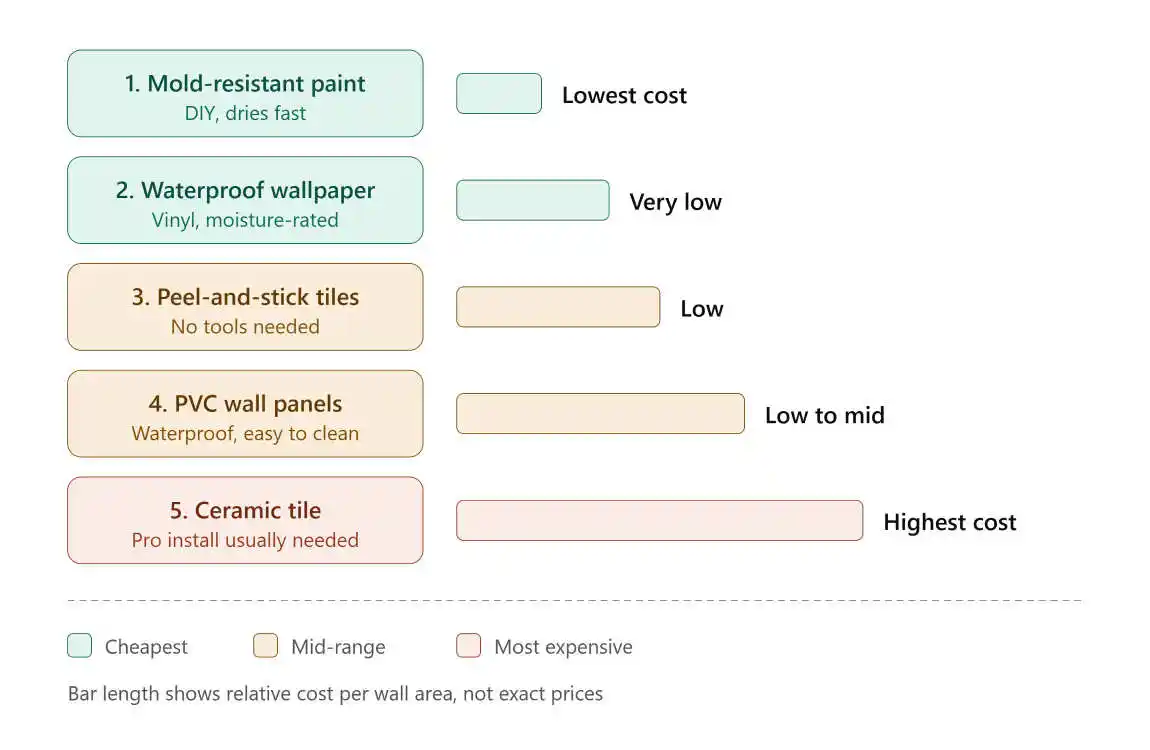
The cheapest way to cover bathroom walls is moisture-resistant paint (satin or semi-gloss). If you want pattern without tiling, the next most affordable option is vinyl-coated or peel-and-stick wallpaper. So, can I wallpaper a home bathroom? Yes, as long as you choose a moisture-resistant vinyl paper, prepare the wall properly and keep the room ventilated.
What Are the Cheapest Ways to Cover Bathroom Walls?
Bathroom walls face steam, splashes and temperature swings, so the cheapest option is not always the best value. Here are the most budget-friendly choices, from lowest to highest cost.
| Option | Typical Cost | DIY Difficulty | Best For |
|---|---|---|---|
| Moisture-resistant paint | Lowest cost per sq ft (a gallon commonly runs roughly $30–$60) | Easy | Whole bathroom, including wet zones |
| Vinyl-coated wallpaper | About $20–$40+ per roll; roughly $0.80–$1.50 per sq ft | Moderate | Powder rooms, walls away from the shower |
| Peel-and-stick wallpaper | About $20–$45 per roll | Easy | Renters, accent walls, quick updates |
| Wall panels or tile | Higher upfront cost, higher durability | Moderate to hard | Shower walls and constant-splash areas |
Can I Wallpaper a Home Bathroom?
Yes. A bathroom is not off-limits for wallpaper, but the material matters. Design experts quoted by Woman & Home recommend vinyl, vinyl-coated or non-woven papers made to handle moisture, because they can be wiped clean without damaging the print. Houzz also points to peel-and-stick vinyl as a good option for renters.
Wallpaper Types That Work in a Bathroom
- Solid vinyl: the most moisture-resistant and easiest to wipe clean.
- Vinyl-coated paper: a paper base sealed with a vinyl layer. It handles splashes but is less rugged than solid vinyl.
- Washable non-woven: tear-resistant and easy to hang, suitable for well-ventilated rooms.
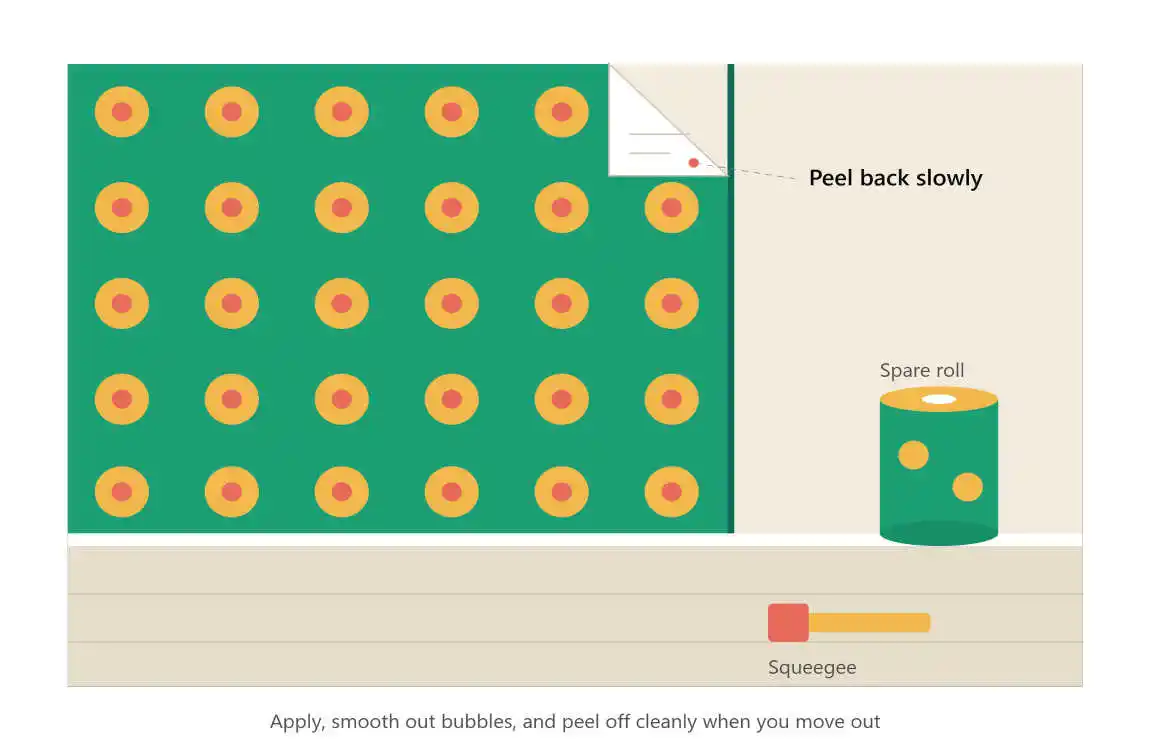
- Peel-and-stick vinyl: no paste, easy to remove, and popular for rentals.
Wallpaper to Avoid
Standard uncoated paper wallpaper can bubble, peel and stain when exposed to steam. Skip it for any bathroom that is used daily.
Where in the Bathroom Is Wallpaper Safe?
Placement is as important as the paper itself. The Home Depot advises keeping luxury wallpaper away from the sink area, because even vinyl can handle occasional splashes but should not be wet on a regular basis.
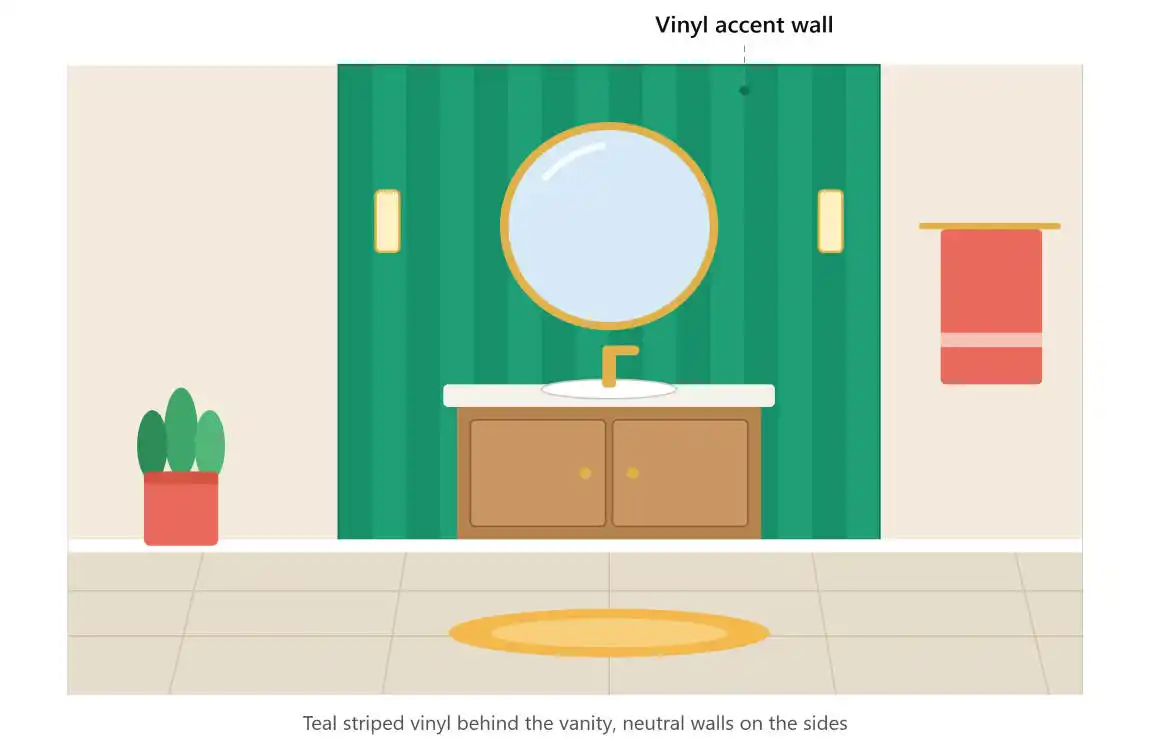
- Best spots: powder rooms, the wall opposite the vanity, above a half-height wainscot or tile line, and feature walls.
- Risky spots: inside the shower, directly behind the tub faucet and right next to the sink.
Why Humidity Decides Whether Bathroom Wallpaper Lasts
Moisture is the real enemy of any wall covering. The U.S. Environmental Protection Agency states that moisture control is the key to mold control, and it recommends house cleaning and drying damp building materials within 24 to 48 hours. The EPA also advises keeping indoor humidity roughly between 30% and 60% by venting bathrooms outdoors and running exhaust fans.
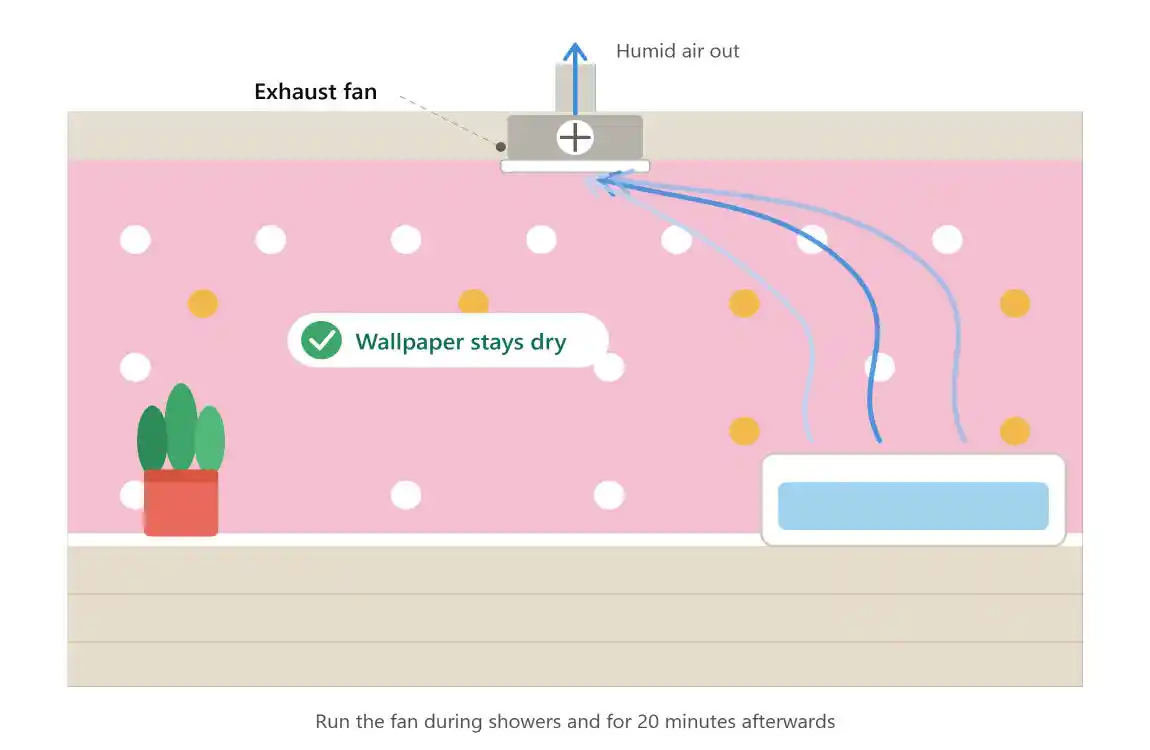
Bob Vila’s guide to home humidity notes that running a bathroom exhaust fan during and after bathing helps pull steamy air out of the room.
Simple Humidity Habits
- Run the exhaust fan during every shower and for 20–30 minutes afterward.
- Open a window when possible.
- Wipe wet surfaces with a squeegee or towel.
- Fix leaks quickly, since hidden moisture will lift any wallpaper.
How to Wallpaper a Bathroom on a Budget (Step by Step)
- Measure the wall. Calculate the area and divide by the coverage printed on the roll label. Buy one extra roll for mistakes and pattern matching.
- Clean thoroughly. Remove soap film, grease and dust. The Home Depot stresses cleaning the walls well before applying any wallpaper.
- Repair and smooth. Fill holes and sand rough patches. Peel-and-stick vinyl shows bumps and texture through the surface.
- Prime if needed. Use a primer suited to the wallpaper type if you are hanging paste-based paper.
- Hang from a plumb line. Start at a straight vertical line, not the corner, then smooth outward to remove air bubbles.
- Trim and seal edges. Cut cleanly around cozy fixtures and press the seams firmly.
- Let it settle. Keep the room ventilated and avoid long hot showers for the first day or two.
How Much Does It Cost to Wallpaper a Bathroom?
DIY is the cheapest route because you only pay for materials. According to Angi, budget wallpaper brands commonly cost around $20 to $50 per roll, and professional labor averages roughly $25 to $35 per roll on top of that. Because bathrooms are small, the wallpaper for a powder room or a single feature wall usually needs only a few rolls, which keeps it far cheaper than retiling.
Ways to Save More
- Wallpaper one accent wall instead of the whole room.
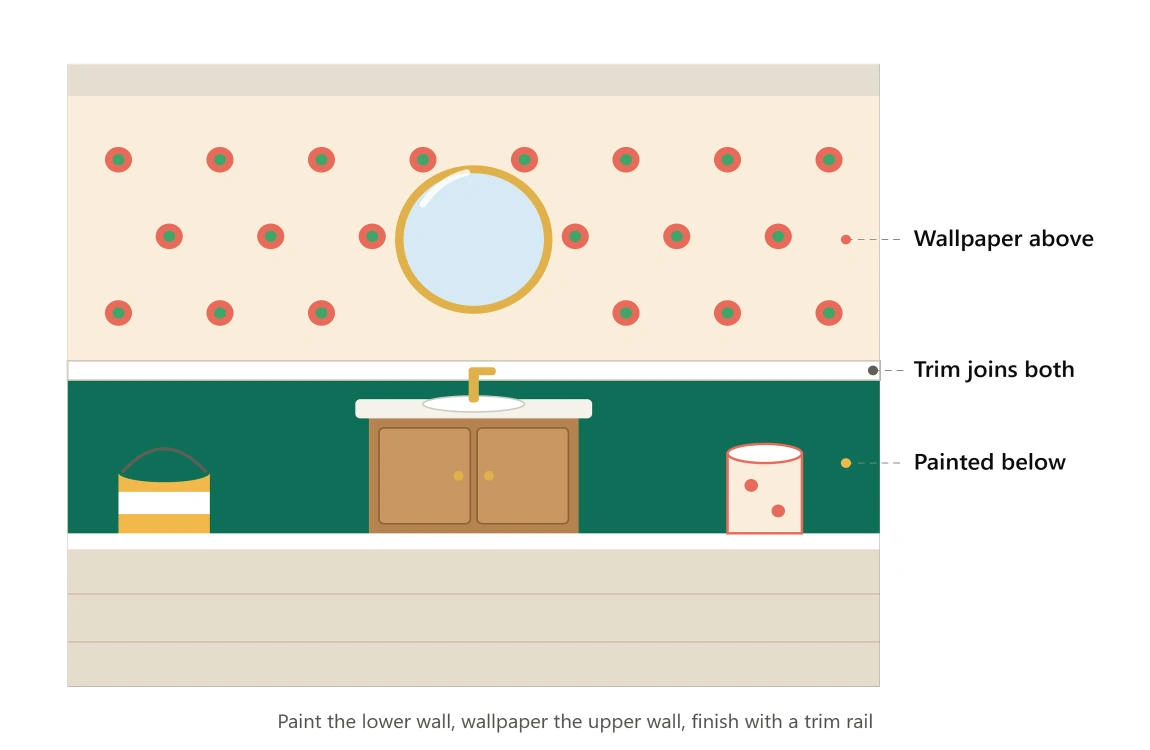
- Combine paint on the lower or wet walls with bathroom wallpaper on the dry wall.
- Choose peel-and-stick to avoid paste, tools and removal costs later.
- Buy only the rolls you need and check batch numbers so patterns match.
Common Mistakes to Avoid
- Using standard paper wallpaper in a steamy bathroom.
- Applying wallpaper over dirty, damp or textured walls.
- Skipping ventilation.
- Placing wallpaper inside the shower or directly beside the sink.
- Ignoring paint peeling edges. Press them down quickly before moisture creeps in.
Frequently Asked Questions
Can I wallpaper a home bathroom?
Yes. Use vinyl, vinyl-coated, washable non-woven or peel-and-stick vinyl wallpaper, prepare the wall well and ventilate the room.
What is the cheapest way to cover bathroom walls?
Moisture-resistant paint is usually the cheapest. Vinyl-coated and peel-and-stick wallpapers are the cheapest options when you want pattern or texture.
Can you use peel-and-stick wallpaper in a bathroom?
Yes, vinyl peel-and-stick wallpaper works in most bathrooms if the wall is clean and smooth and the room is well ventilated. Keep it out of direct shower spray.
Will wallpaper peel in a bathroom?
It can if the paper is not moisture-resistant, the wall is not prepared properly or humidity stays high. The right material and good ventilation prevent most problems.
Is wallpaper cheaper than tile in a bathroom?
Generally yes for dry areas. Wallpaper costs less in materials and labor, but tile or panels are the better choice for shower walls.
What bathroom humidity level is safe?
The EPA recommends keeping indoor humidity below 60%, ideally between 30% and 50%.
Final Verdict
If your goal is the lowest possible cost, paint wins. If you want personality, a vinyl or peel-and-stick wallpaper on a dry wall is an affordable upgrade that answers the question “can I wallpaper a home bathroom?” with a confident yes. Pair it with a good exhaust fan and tile or panels in the shower zone, and your budget makeover can last for years.
Sources
- U.S. Environmental Protection Agency: Ten Things You Should Know About Mold
- U.S. Environmental Protection Agency: Reducing indoor humidity to limit mold growth
- Angi: How Much Does It Cost to Install Wallpaper?
- Angi: Wallpaper cost per roll by type
- HomeAdvisor: How Much Does It Cost to Install Wallpaper?
- Woman & Home: Can You Wallpaper a Bathroom? Experts Reveal All
- Houzz: Can You Use Wallpaper in a Bathroom?
- The Home Depot: How to Wallpaper Your Bathroom
- Bob Vila: Your Home’s Ideal Indoor Humidity Level
