
If you are looking for a home that feels practical, affordable, and easier to manage, a 2-bed, 2-bath, 16.5×70 trailer home may be a smart choice. It gives you enough space for comfort without the high cost of a larger house.
Many people choose trailer homes because they can be more budget-friendly, faster to set up, and easier to maintain. They can work well for couples, small families, retirees, and anyone who wants to downsize without sacrificing comfort.
Understanding the Basics of a 2 Bed 2 Bath 16.5×70 Trailer Home
What does 16.5×70 mean?
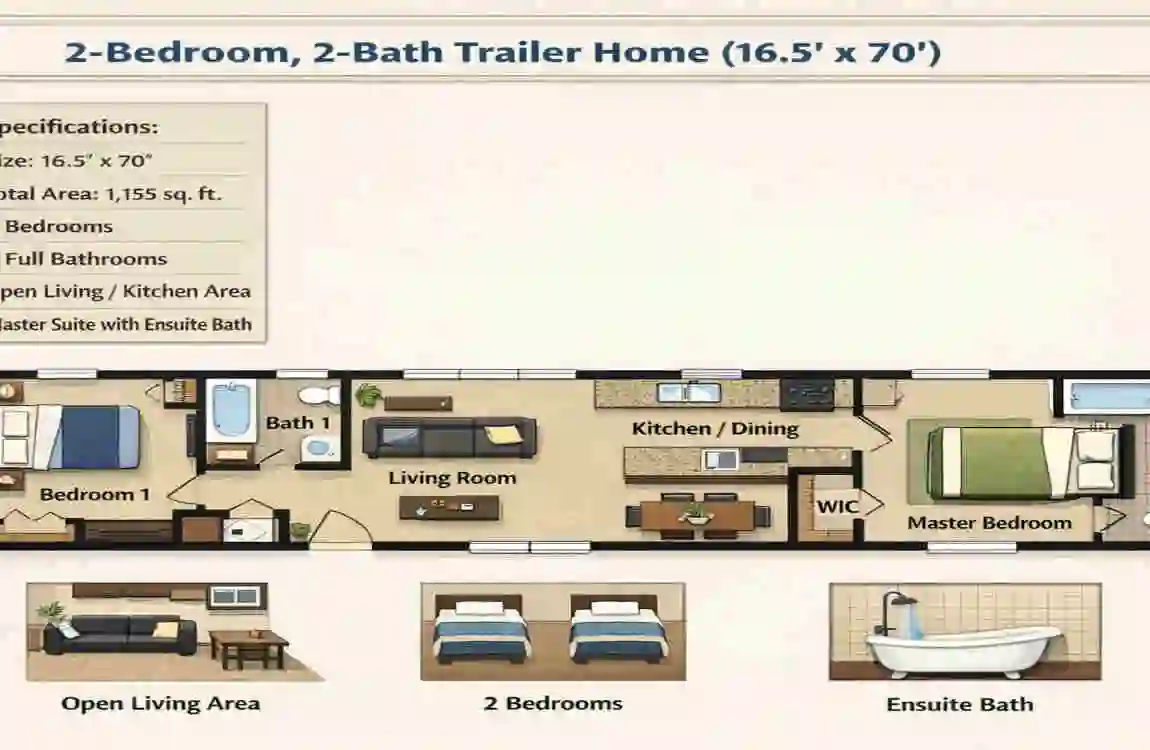
The numbers 16.5×70 usually refer to the luxury homes width and length. That size gives you a long, narrow layout that is designed to use space wisely. In a 2-bed 2-bath 16.5×70 trailer home, you usually get:
- Two bedrooms
- Two bathrooms
- A living area
- A kitchen and dining space
- Storage areas in key spots
This layout is popular because it feels balanced. You get privacy in the bedrooms and bathrooms while keeping shared spaces open and easy to use.
Who is it best for?
This type of home is a good fit for:
- Couples who want extra room
- Small families with one or two children
- Retirees who want a simpler lifestyle
- First-time buyers who want lower costs
- People downsizing from a larger home
If you want something easier to care for than a large house, this size can be a very practical option.
Why do people like this size
A 2-bed, 2-bath, 16.5×70 trailer home offers a nice mix of comfort and efficiency. It is often cheaper than a bigger luxury homes, uses less energy, and can be easier to clean and maintain. For many buyers, that is a major advantage.
Key Factors to Consider Before Buying
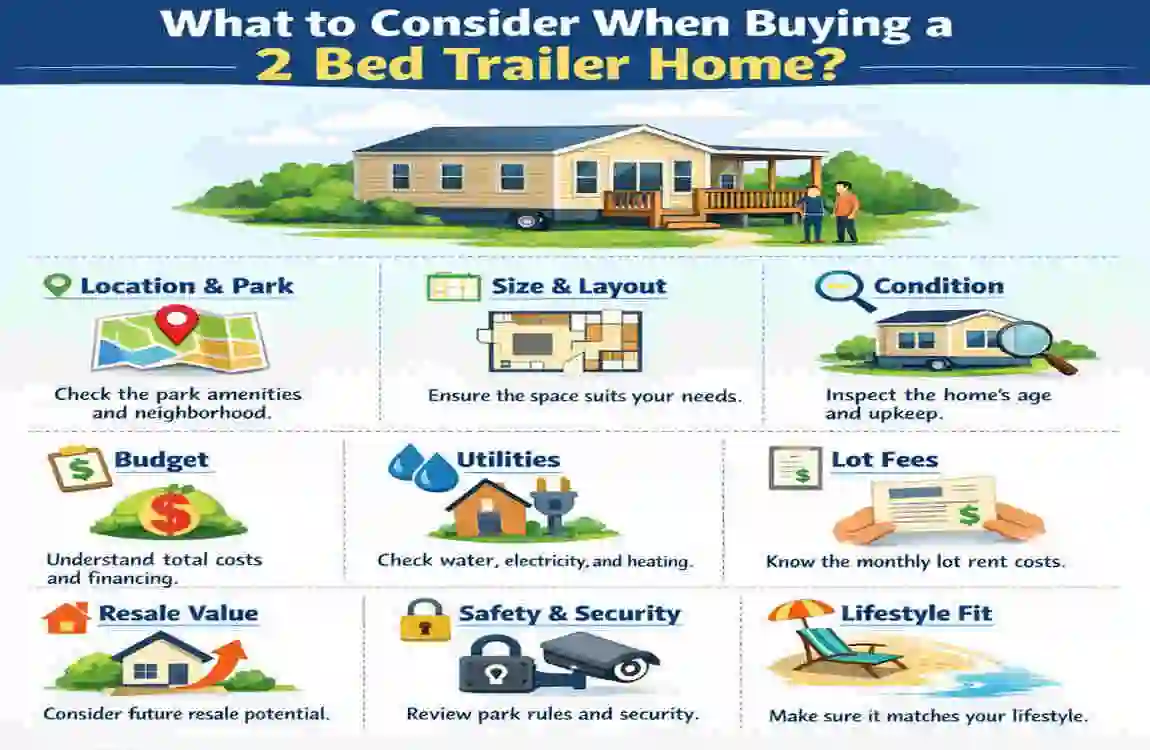
Budget and financing
Before you buy, set a clear budget. The price of a 2-bed, 2-bath, 16.5×70 trailer home can vary based on age, condition, materials, and upgrades. New models usually cost more, while used ones may be more affordable.
You should also think about how you will pay for it. Common options include:
- Personal loans
- Manufactured home loans
- Dealer financing
- Cash purchase, if possible
But do not focus only on the sale price. You also need to plan for extra costs like:
- Delivery and setup
- Insurance
- Lot rent or land purchase
- Maintenance
- Utility hookups
- Taxes, depending on your location
Location and zoning
Where you place the home matters just as much as the luxury homes itself; check local zoning rules before you buy. Some areas allow trailer homes only in certain zones or mobile home parks.
Ask yourself:
- Is the land already owned?
- Will you rent a lot?
- Are utilities available?
- Is the location close to schools, stores, or work?
A good location can make daily life easier and may also help protect your home’s value.
Builder reputation and build quality
Always research the manufacturer or dealer. A trusted builder usually offers better support, stronger materials, and clearer warranty terms. Read reviews and look for signs of good customer service.
Also, check the build quality carefully. Look for:
- Strong framing
- Good insulation
- Durable windows and doors
- Safe electrical and plumbing systems
- Clear safety certification
If the home is built well, it will last longer and cost less to maintain.
Customization and features
One reason people like trailer luxury homes is the chance to customize them. You may be able to choose flooring, cabinets, paint colors, and extra storage. For this home size, useful features often include:
- Open living space
- Built-in storage
- Good bathroom layout
- Energy-efficient windows
- Strong kitchen workspace
If you plan to live in the home for years, choose features that make everyday life easier, not just prettier.
New vs. Used Trailer Homes
FactorNew Trailer HomeUsed Trailer Home
Upfront cost Higher Lower
Condition: No wear and tear. May need repairs
Features: Modern and efficient. Maybe older style
Warranty : Usually included , often limited or none
Move-in time may take longer , or it can be faster
Why buy new?
A new home offers modern design, improved energy efficiency, and fewer repair worries from the start. You also usually get a warranty, which can give peace of mind.
Why buy used?
A used home can save you a lot of money up front. Sometimes it already has appliances or furniture, which can make the move easier. It can also be a faster purchase if you need housing soon.
What to inspect in a used home
If you are buying used, check these carefully:
- Floors and walls for damage
- Roof condition
- Plumbing leaks
- Electrical problems
- Mold or water stains
- Signs of pests
- Age of the home
The older the home, the more important the inspection becomes.
Setting Up and Maintaining the Home
Transportation and installation
Moving a trailer home is not as simple as towing a small camper. You need proper transport, safe placement, leveling, anchoring, and utility connections. This often requires trained professionals.
You should budget for:
- Transport fees
- Setup labor
- Utility hookup costs
- Permits, if needed
A proper installation helps the luxury home stay safe and stable.
Maintenance tips
To keep your 2-bed 2-bath 16.5×70 trailer home in good shape, do regular checks on:
- Roof and gutters
- Plumbing lines
- Heating and cooling systems
- Windows and seals
- Floors and walls
Also, try to keep the home energy-efficient by sealing gaps, using good curtains, and maintaining your HVAC system. Seasonal care matters too, especially before winter or heavy rain.
Insurance and legal needs
Do not skip insurance. Trailer home insurance can help protect you from damage, theft, and liability issues. Also, check local rules to stay compliant with land-use and ownership laws.
Real-Life Examples
A young couple starting out
One couple chose a 2-bed, 2-bath, 16.5×70 trailer home because they wanted a lower monthly cost. They used the second bedroom as a home office, which made remote work easier. Their biggest win was saving money while still getting private space.
A retired homeowner downsizing
A retiree moved from a larger house into a smaller trailer home to reduce upkeep. They liked that cleaning took less time and utility bills were lower. They also added extra storage and better lighting to make the home feel brighter and more open.
These kinds of stories show that the right trailer home can fit a wide range of lifestyles.
How to Get the Best Deal
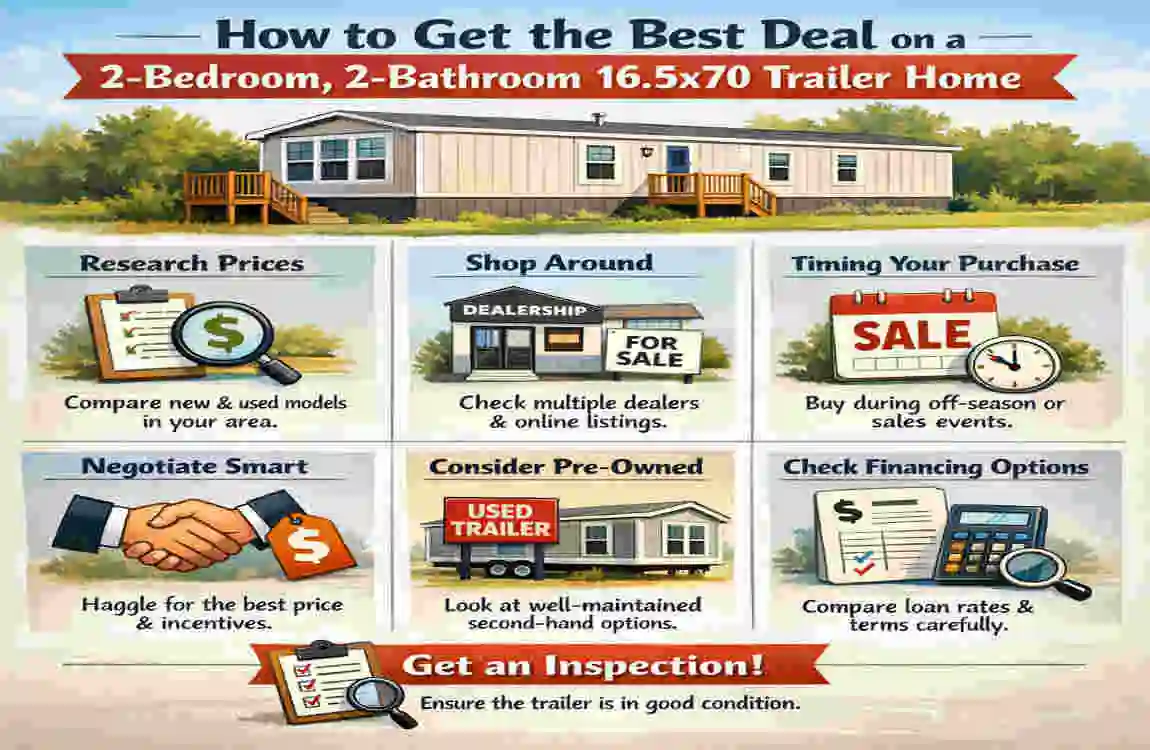
If you want better value, timing and patience matter.
Simple ways to save money
- Shop during slower buying seasons
- Compare several sellers
- Ask about discounts or special offers
- Look for trade-in deals
- Check both new and used options
Smart buying habits
Do not rush. Ask questions, inspect carefully, and compare the full cost, not just the sticker price. A lower price isn’t always the best deal if repairs and setup costs later turn out to be expensive.
Frequently Asked Questions
How much does a 2-bed, 2-bath, 16.5×70 trailer home usually cost?
The price can vary a lot based on condition, age, features, and location. New homes usually cost more, while used homes are often more affordable.
How long does this type of home last?
With proper care, a trailer home can last many years. Regular maintenance and good installation make a big difference.
Can I move it later if needed?
Yes, but moving it takes planning, transport equipment, and professional help. It is not something to do without checking costs first.
Is it a good choice for families?
Yes, for small families it can be a very practical choice. The two bedrooms and two bathrooms offer useful space without making the home too large.
| Factor | What to Check | Why It Matters |
|---|---|---|
| Budget | Home price, delivery, setup, and monthly costs | Helps you avoid overspending |
| Size & Layout | Bedrooms, bathrooms, storage, and living space | Makes sure the home fits your needs |
| Location | Land, lot rent, nearby services, and safety | Affects comfort and daily convenience |
| Zoning Rules | Local laws for trailer homes | Confirms you can place the home there |
| Build Quality | Materials, insulation, windows, and frame | Improves durability and comfort |
| New vs. Used | Condition, age, and warranty | Helps you choose the best value |
| Setup Costs | Transport, leveling, and utility hookups | Prevents surprise expenses |
