

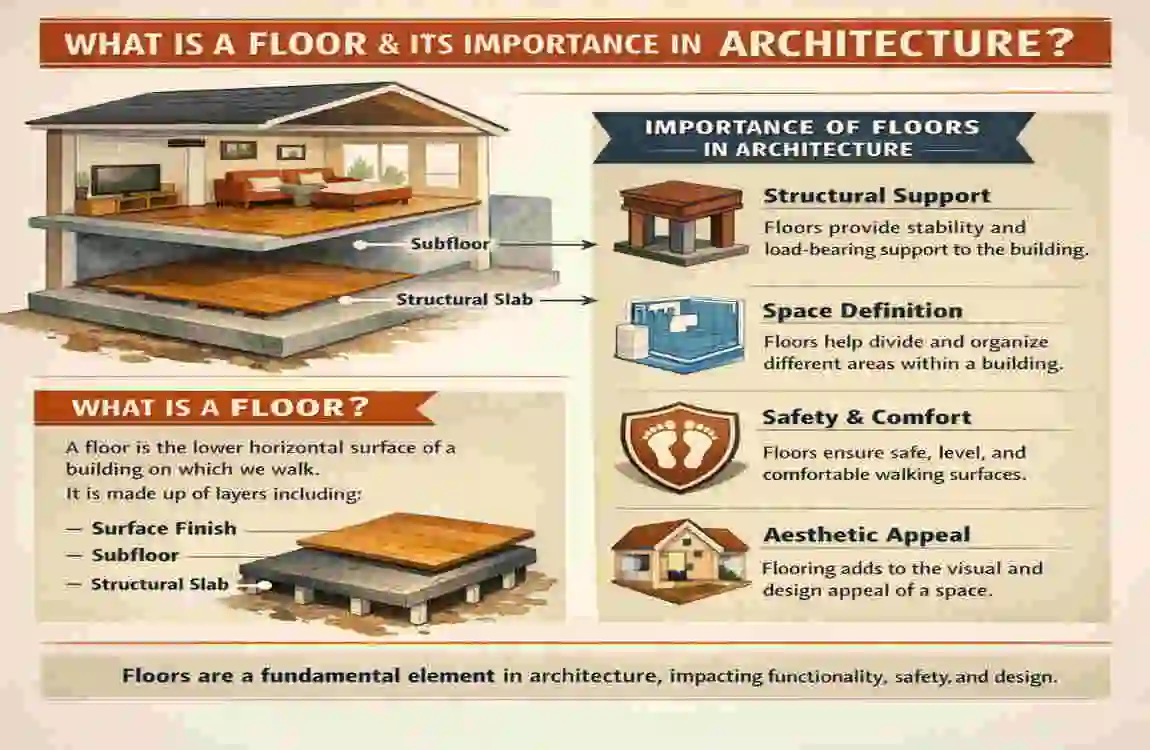
A floor is one of the most basic parts of any building, yet it plays a significant role in how a space functions and feels. In simple words, it is the horizontal surface you walk on inside a building. It supports people, furniture, and daily activities while also helping divide one level of a building from another.
When you think about a home, office, shop, or school, the floor is always there doing quiet but important work. It adds strength, safety, comfort, and style to a building. The right floor can also improve the look of a room and make it easier to clean, maintain, and use.
What Is a Floor?
Definition of a Floor
In architecture, a floor is the structural surface of a building that provides support and a usable walking area. People often use the word flooring, too, but it is not the same thing.
- Floor = the structural base
- Flooring = the top finish or covering placed on that base
So, the floor is the foundation of the walking surface, while flooring is the visible layer you see and use every day.
Purpose of a Floor in a Building
A floor serves several simple but important purposes. It gives people a safe place to walk, place furniture, and carry out daily tasks. It also helps separate one level of a building from another.
In a multi-storey building, floors make each level usable and organized. Without floors, a building would not function properly or feel complete.
Main Functions of a Floor
Structural Support
One of the main jobs of a floor is to carry weight. It holds both:
- Live loads such as people, chairs, and tables
- Dead loads such as the floor itself and fixed materials
A strong floor spreads weight evenly so the structure stays stable.
Safety and Stability
Floors create a secure surface for walking and working. A properly built floor reduces shaking, movement, and the risk of accidents. This is especially important in busy homes, commercial spaces, and public buildings.
Space Division
Floors help divide a building into separate areas or stories. This makes the space more useful and organized. For example, one floor may be used for living, another for sleeping, and another for work.
Comfort and Convenience
A good floor can also make a room feel more comfortable. It can reduce noise, help with insulation, and make walking easier. In simple terms, it improves the everyday experience of using the building.
Importance of Floors in Architecture
Enhancing Building Strength
Floors are not just for walking. They are part of the building’s structural system. A well-designed floor helps the building stay strong for many years.
Improving Interior Design
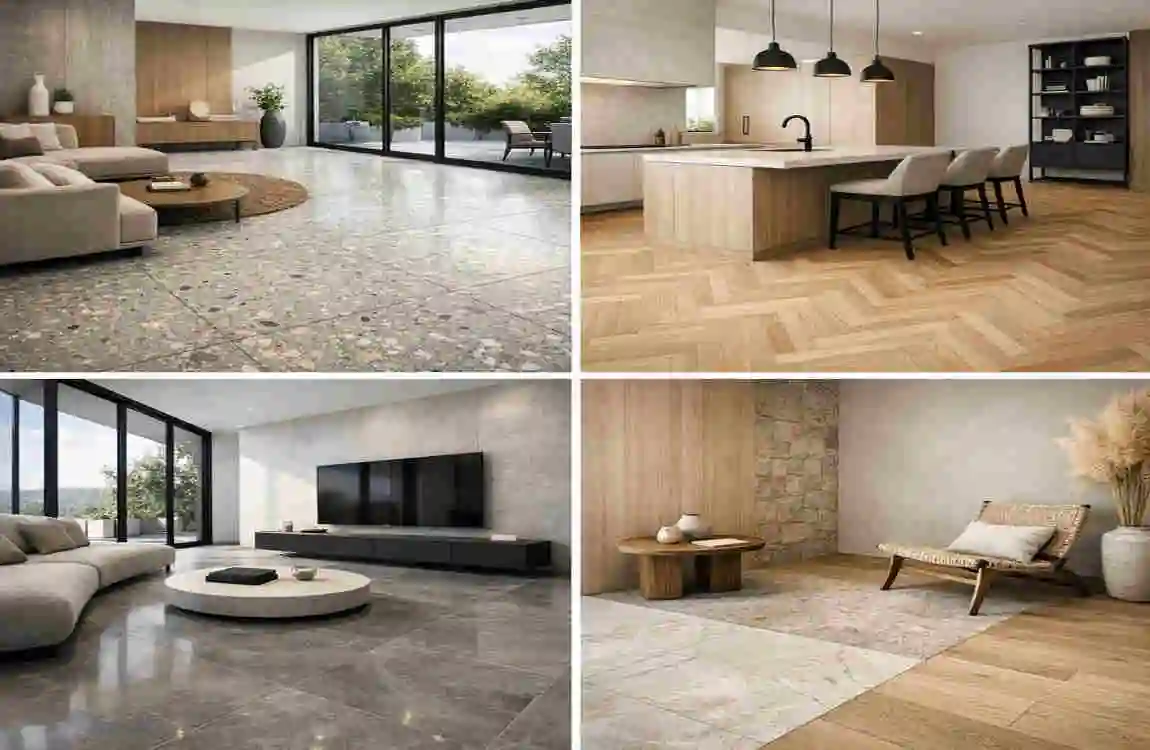
Floors have a big effect on how a room looks. The color, texture, and material of the floor can make a space feel warm, modern, classic, or luxurious. In architecture, floors often help define the whole style of the interior.
Supporting Building Performance
Good floors can improve energy efficiency, resist moisture, and reduce damage over time. This makes the building more practical and easier to maintain.
Increasing Property Value
A quality floor can increase a property’s value. Buyers often notice flooring first because it affects both appearance and comfort. A durable and attractive floor can make a building more appealing.
Different Types of Floors Used in Architecture
Type of FloorMain UseKey Feature
Ground Floor Lowest level of a building Easy access and direct contact with land
Suspended Floor Upper levels or raised structures Provide space below and better design flexibility.
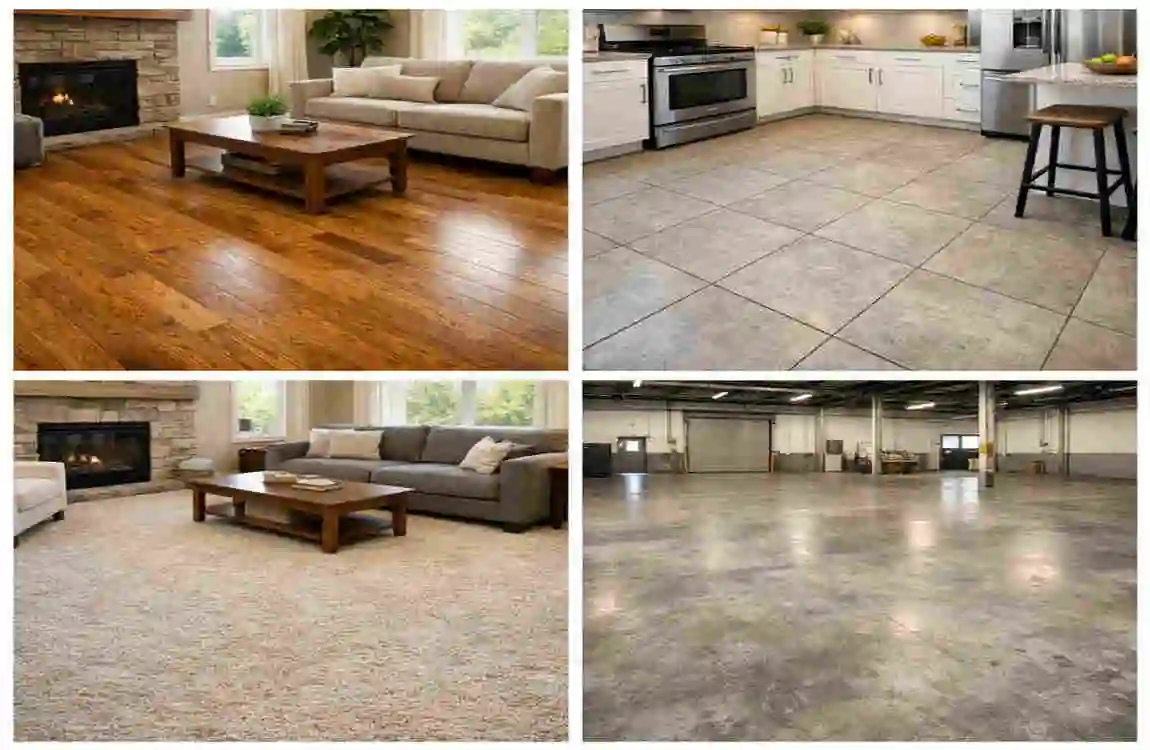
Concrete Floor Homes, factories, commercial buildings Strong and long-lasting
Timber Floor Traditional and modern homes Warm look and natural feel
Steel/Composite Floor High-rise and large buildings High strength and lighter structure
Ground Floors
The ground floor sits directly on or near the land. It is common in homes, shops, and offices. It often uses concrete or other strong materials because it must handle daily foot traffic and outdoor conditions.
Suspended Floors
Suspended floors are raised above the ground and supported by beams, walls, or columns. They are common in modern buildings because they allow space for services, ventilation, or storage below.
Concrete Floors
Concrete floors are known for their strength and durability. They are often used in industrial spaces, garages, and even homes. They can handle heavy loads and last a long time.
Timber Floors
Timber floors are made from wood. They are popular because they look natural and feel warm. However, they may need more care than concrete or tile floors.
Steel and Composite Floors
These floors are often used in large or tall buildings. They offer strong support while keeping the structure efficient. Architects like them because they work well in modern construction.
Common Flooring Materials
Hardwood Flooring
Hardwood gives a room a rich and natural look. It can last for many years if maintained properly. It does need regular care to protect it from scratches and moisture.
Tile Flooring
Tile is a popular choice because it is easy to clean and water-resistant. Ceramic and porcelain tiles are common in kitchens, bathrooms, and other wet areas.
Laminate Flooring
Laminate is a more affordable option that can look like wood or stone. It is a practical choice for people who want style without high cost.
Vinyl Flooring
Vinyl is widely used in modern homes because it is flexible, affordable, and moisture-resistant. It works well in areas where spills and moisture are common.
Concrete Flooring
Concrete is not only strong but also budget-friendly in many cases. It fits both industrial and modern design styles.
Components of a Floor Structure
Subfloor
The subfloor is the base layer underneath the visible floor finish. It gives strength and stability to the whole floor system.
Underlayment
The underlayment sits between the subfloor and the final finish. It helps with comfort, sound reduction, and sometimes moisture control.
Floor Finish
The floor finish is the top visible layer, such as wood, tile, vinyl, or carpet. It affects both the look and performance of the room.
Factors to Consider When Choosing a Floor
If you are choosing a floor for a building, keep these points in mind:
- Building type: Residential and commercial spaces need different flooring
- Durability: Busy areas need stronger materials
- Budget: Think about both purchase cost and long-term maintenance
- Climate: Moisture and temperature can affect flooring performance
- Design style: Match the floor with the overall look of the space
Choosing carefully helps you avoid problems later.
Advantages of Quality Flooring
Improved Safety
Good flooring can reduce slips and accidents. This is especially important in homes with children, schools, hospitals, and workplaces.
Better Comfort
A quality floor feels better underfoot and can also improve insulation. That means the room may stay warmer in cold weather and quieter overall.
Easier Maintenance
The right floor is easier to clean and care for. Some materials need only simple sweeping and mopping, while others may need polishing or sealing.
Enhanced Appearance
A nice floor improves the visual appeal of any room. It can make a space feel cleaner, brighter, and more professional.
Modern Trends in Architectural Flooring
Cracks and Structural Damage
Cracks may occur due to heavy loads, settling, or poor construction. Regular inspection and timely repair can help prevent bigger issues.
Moisture Issues
Water can damage many floor types. Good sealing, waterproof layers, and proper drainage help protect the floor.
Uneven Floors
Uneven floors may happen when the ground shifts or the structure settles. Repairs may include leveling compounds or structural fixes.
Squeaky Floors
Squeaks usually come from loose boards or movement in the floor system. Tightening fasteners or replacing damaged parts often solves the problem.
Floor Maintenance Tips
Regular Cleaning Practices
Keep floors clean by promptly removing dust, dirt, and spills. This helps protect the surface and extend its life.
Preventive Maintenance
Use mats, pads, and sealants where needed. Small steps like these can prevent bigger damage.
Protecting High-Traffic Areas
Busy areas wear out faster, so they need extra care. Rotate rugs or use stronger materials in these spaces.
When to Replace Flooring
Replace flooring when it becomes badly damaged, unsafe, or too costly to repair. A worn floor can affect both appearance and performance.
FAQs
What is a floor in architecture?
A floor is a horizontal structural surface in a building that supports people, furniture, and daily use while separating levels.
Why is a floor important in a building?
Floors provide support, safety, comfort, insulation, and design value.
What are the main types of floors?
Common types include ground, suspended, concrete, timber, and composite floors.
What is the difference between a floor and flooring?
A floor is the structure, while flooring is the finish placed on top.
Which flooring material lasts the longest?
Concrete, stone, and high-quality hardwood are among the longest-lasting options.
| Aspect | What It Is / Why It Matters |
|---|---|
| Definition | A floor is the bottom surface of an enclosed space (room, building, vehicle) that people stand or walk on |
| Basic Components | Consists of a subfloor (support structure) and floor covering (smooth, durable walking surface) |
| Structural Importance | Divides buildings into levels, creating more accommodation within limited space; supports static/dynamic loads |
| Safety Function | Must meet building codes for safety; provides stable support for occupants and superimposed loads |
| Aesthetic Role | Defines visual character through texture, color, and design; influences how environments are perceived |
| Space Organization | Delimits and visually organizes different uses of space (e.g., pedestrian areas vs. green spaces) without walls |
| Utility Integration | Modern subfloors often contain electrical wiring, plumbing, and other services |
| Environmental Function | Exterior pavements manage water drainage; permeable pavements prevent flooding and erosion |
