

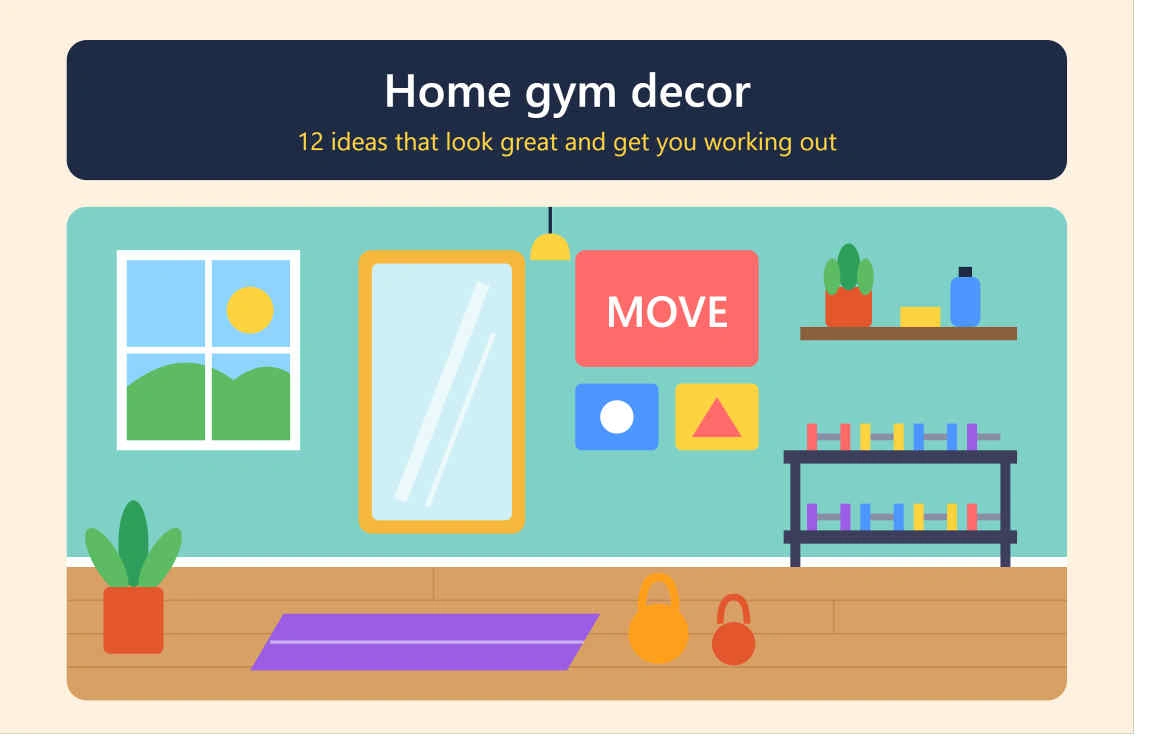
Most home gyms start the same way: a treadmill in the corner, a pile of dumbbells, and a bare wall nobody wants to look at. Then the motivation fades, and the room turns into a very expensive coat rack. The fix is rarely more equipment. It is better home gym decor: a space you enjoy walking into at 6 a.m. or 9 p.m.
Why Home Gym Decor Matters More Than You Think
Public health guidance asks a lot of us. The CDC’s adult activity guidelines say adults need at least 150 minutes of moderate-intensity activity a week, plus muscle-strengthening work on at least two days. The same page points out that you don’t have to do it all in one go. That is good news for home gyms, because a space that is pleasant to step into makes short, frequent sessions much easier to repeat.
Design brands that build home gyms say the same thing from the other side. REP Fitness frames the right decor and art as the difference between a plain workout area and an environment that pushes you toward your goals.
Start with the Room, Not the Equipment
Before you buy anything, decide where the gym lives. Parade Home & Garden’s roundup of small home gym ideas shows how many places can work: a spare bedroom, a basement, an attic, a converted shed, or even a nook under the stairs. Their advice for tight spaces is worth following: sort out the flooring and walls first, then add equipment.
Pick a Color Palette You Won’t Get Bored Of
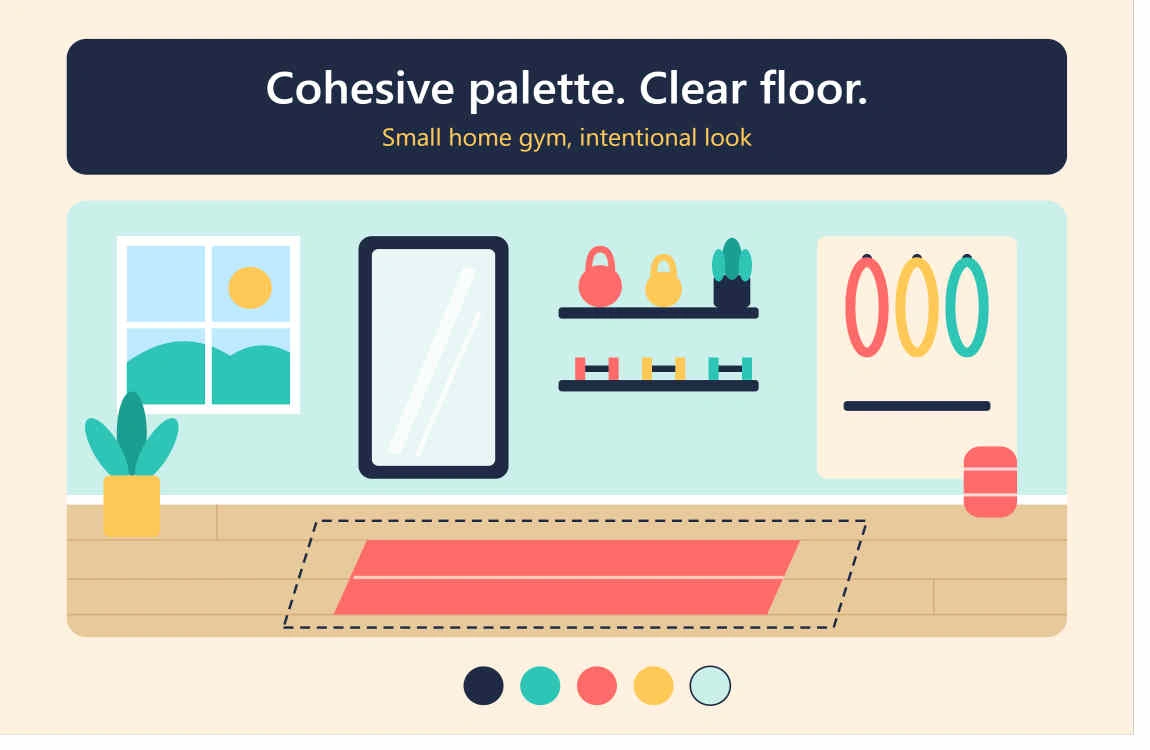
Dark, moody colors are having a moment. Interior magazine OSMOZ recommends Sherwin-Williams Iron Ore (SW 7069) for a private-club feel, because black dumbbells, dark screens and rubber flooring look deliberate against it. If that is too heavy for your room, the same publication suggests a softer route with dusty rose, charcoal trim and brass details.
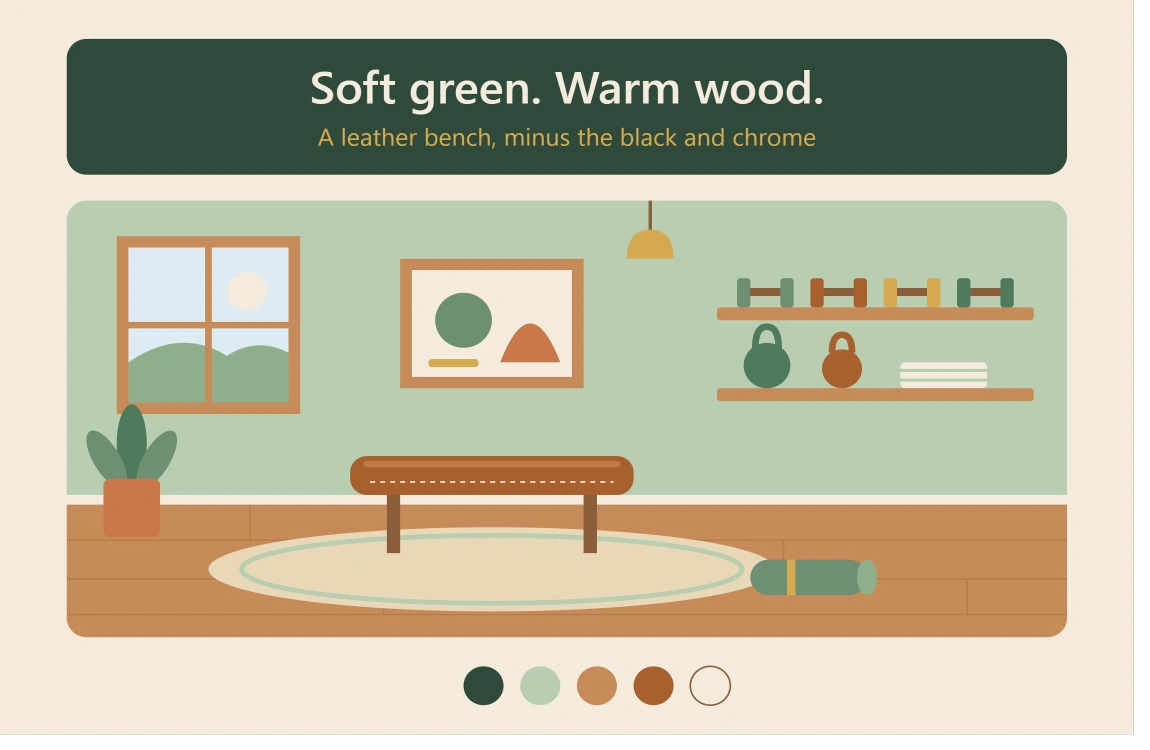
In an aesthetic home gym makeover, the author used muted green walls with warm cream trim and natural wood, which showed that a gym doesn’t have to be limited to black, gray and chrome.
Treat Your Floor as Part of the Design
Flooring is both the most practical and the most visible decision in the room. OSMOZ’s industrial home gym guide suggests an 8 x 10 ft rubber mat zone before you spend a cent on decorative shelving. Rubber doesn’t need to cover every inch either. Defining a lifting zone and letting the rest of the room look like a normal room is a clean, modern approach.
Hang One Big Mirror, Not Ten Small Ones
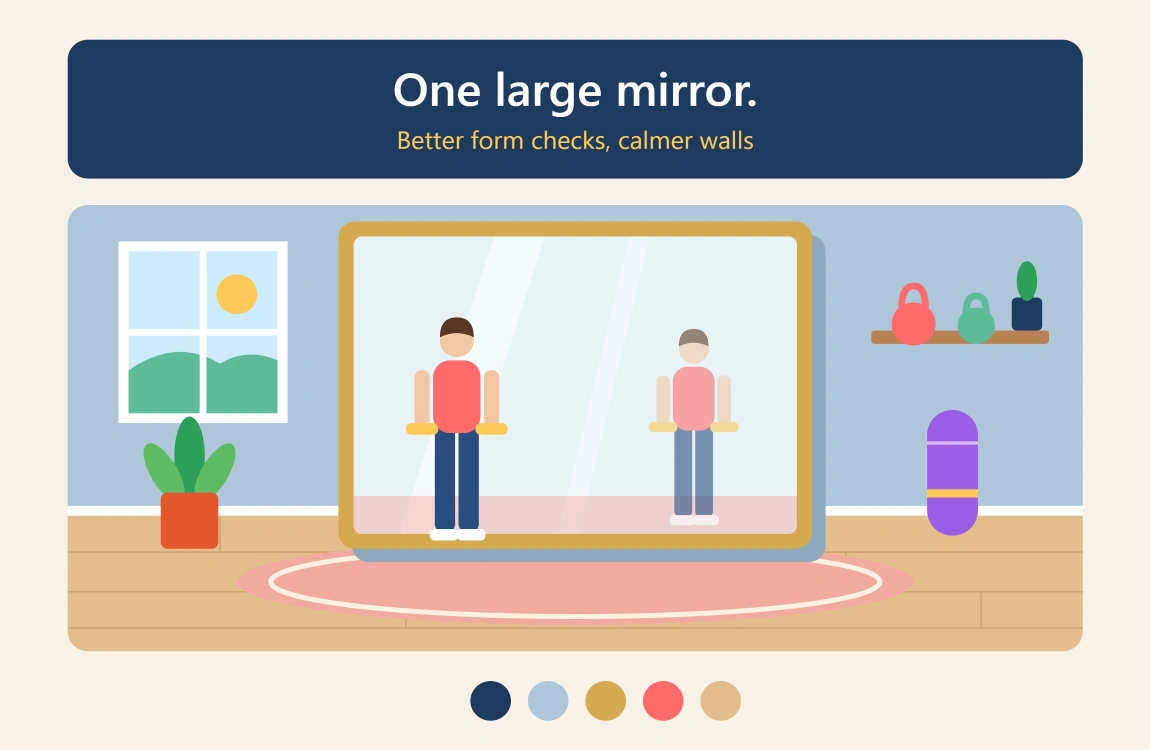
A large mirror is close to essential. Parade calls it a must for any home gym, and it does two jobs: you can check your form, and the room looks bigger and brighter. Mirrors typically cost between $100 and $400 depending on size and mounting, according to OSMOZ. The same magazine advises against a collage of small mirrors because the broken reflections make a space feel fussy. A single wide or arched mirror at eye level looks calmer and more expensive.
Fix the Lighting (Overhead Bulbs Make Gyms Feel Like Break Rooms)
Lighting is the most overlooked part of home gym decor. OSMOZ points out that relying on one overhead light is the fastest way to a cold, tired-looking room, and that adding a lamp is perfectly acceptable in a gym. If you have a window, use it: natural light lifts both mood and energy. Layer a ceiling light with a floor lamp or wall light, and choose warm-white bulbs for evenings.
Use Wall Art Where a Commercial Gym Would Put a TV
Instead of mounting a screen on every wall, try framed prints, a large canvas or a gallery arrangement. OSMOZ suggests hanging art in the spot a commercial gym would usually give to a TV. If you like words on the wall, Property Finder lists motivational quotes and DIY decor among the affordable options. Parade also shows decorative wallpaper as a way to add energy to a small gym.
Choose a Wall-Mounted Rack to Free Up the Floor
Several of the designers quoted above reach the same conclusion: a wall-mounted rack gives you the floor back. You can see the room, you have space to move, and the setup looks settled when you’re not lifting.
Organize Everything with an Obvious Home
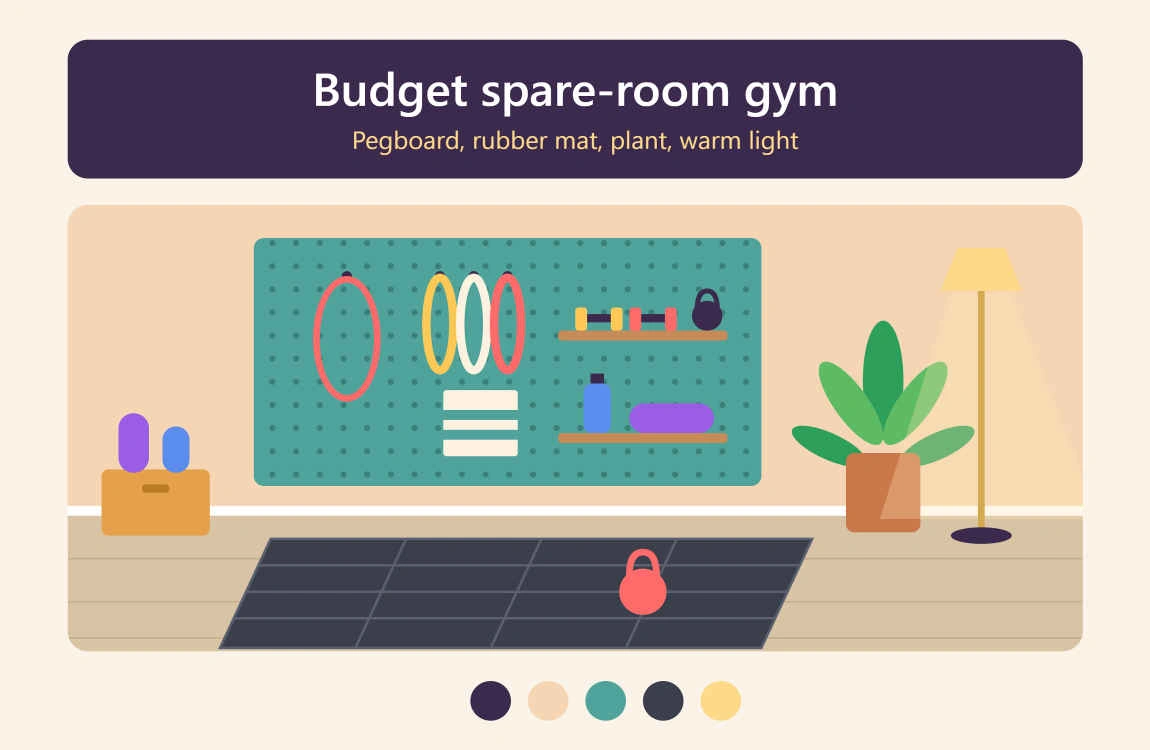
Gym storage should not look like a school hallway. Parade features a pegboard system for hanging bands, ropes and small gear, as well as a cubby-style shelf for rolled mats and towels. The principle from OSMOZ is simple: you’ll put things away if every item has one obvious spot. Baskets, hooks and closed cabinets all work.
Add One Comfortable, Non-Gym Piece
A bench near the window with a tan leather finish gave one OSMOZ home gym a lived-in warmth, and doubled as a place to tie shoes and drop a towel. A caution from the same author: leather can hold odors and needs more care than a gym usually gets, so wipeable upholstery or a good wood bench may suit you better.
Build a Small Hydration and Recovery Corner
Property Finder’s decor guide recommends a dedicated hydration corner, and it’s an easy upgrade: a small shelf or cart with a water dispenser, bottles, towels and a foam roller. It keeps the clutter off your equipment and makes the room feel like a boutique studio.
Bring in Scent and Sound
Small details finish the job. Property Finder suggests an essential oil diffuser with energizing scents, and a simple entertainment setup, such as a compact speaker or a screen on a swivel arm. Keep the sound system as tidy as the rest of the room by hiding cables behind a shelf or in a cable cover.
Set a Budget Before You Shop
You don’t need a six-figure build. OSMOZ estimates that a boutique-style home gym can cost between $300 and $1,200 if you spend on flooring, lighting and one strong wall first. Here is a simple order of priority:
- Flooring: a rubber mat zone.
- Lighting: one lamp plus overhead light.
- One feature wall: paint or wallpaper.
- Mirror: one large piece.
- Storage: pegboard, hooks or a cubby shelf.
- Finishing touches: art, scent, plants and a speaker.
Frequently Asked Questions About Home Gym Decor
How do I decorate a small home gym?
Keep the walls and floor as your first priority, use a single large mirror, store gear on the wall, and stick to a limited color palette so the room doesn’t feel crowded.
What colors work best for a home gym?
Dark neutrals like deep charcoal and muted greens are popular, while dusty rose and warm cream give a softer look. Whatever you choose, keep to one main color and one accent.
How much does it cost to decorate a home gym?
A stylish setup can start at around $300 and reach about $1,200 for a boutique look, based on figures from OSMOZ. Mirrors alone typically run $100 to $400.
Can a garage or basement gym still look good?
Yes. Parade shows basements, attics and sheds converted into polished gyms. Flooring, lighting and a feature wall do most of the work.
Final Thoughts
Great home gym decor isn’t about showing off. It is about removing every small reason not to start your workout: a dim room, a messy floor, a wall you don’t want to look at. Start with flooring and lighting, add one big mirror and one feature wall, and build from there. When your space feels good, the 150 minutes a week the CDC recommends starts to feel a lot more doable.
