

Running out of space at home can feel frustrating. Maybe you need a bigger storage area, a quiet office, a playroom for the kids, or even a private space for guests. When that happens, many homeowners start asking the same question: ” Can I build a basement under my house?
The idea sounds appealing because a basement gives you more room without taking up more yard space. It can turn unused ground under your home into something useful and valuable. But building a basement under an existing house is not a simple weekend project. It is one of the most complex home improvements you can take on.
Can I Build a Basement Under My House?
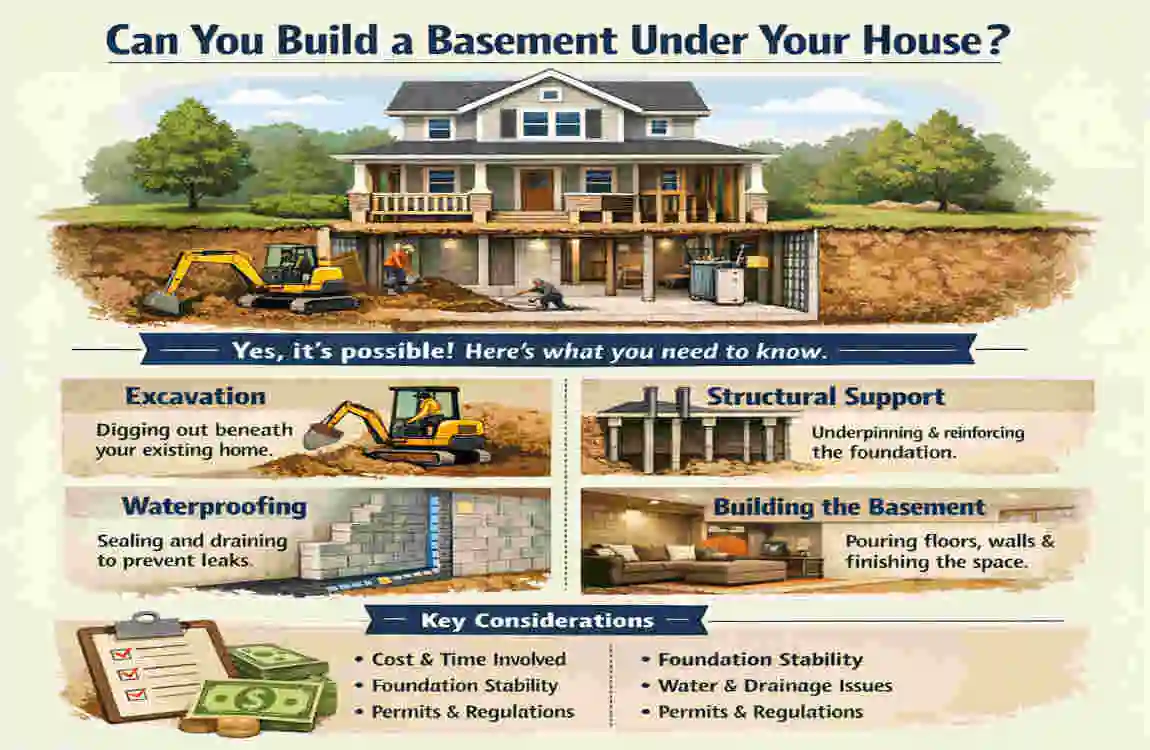
The Short Answer
Yes, you can sometimes build a basement under your house. But the real answer depends on several important things. The biggest ones are your home’s foundation, the soil below it, the water level in the ground, and the strength of the structure above.
This is not the kind of project where every house qualifies. Some homes can support the change with careful planning and strong engineering. Others are too risky, too expensive, or too unstable to make the idea practical.
A basement conversion under an existing house usually involves underpinning the house for basement support. That means strengthening or replacing the foundation so the house can safely sit above the new lower level. In many cases, this also means excavation, temporary support systems, waterproofing, drainage work, and major structural upgrades.
So, while the answer to ” Can I build a basement under my house is often “yes in theory,” the real answer is, “only after a full professional assessment.”
Key Factors That Determine Feasibility
Several things decide whether this project is realistic for your home.
Foundation Type
The type of foundation you already have matters a lot.
A slab foundation can be more difficult to work with because the home rests directly on a concrete pad. In some cases, that slab must be removed and the entire structure supported while digging happens underneath.
A crawl space may give you a small head start because there is already some open area below the house. Still, expanding that space into a full basement is a major job and still needs careful design.
Soil Condition
Soil is not just dirt. It acts like the base that holds your home up.
If the soil is stable and drains well, the project is more manageable. If the soil is loose, sandy, clay-heavy, or prone to shifting, the risks increase. Weak soil can move over time and put pressure on the basement walls and foundation.
Water Table Level
The water table is the level where the ground becomes saturated with water.
If that level is high, your basement may face constant moisture pressure, leaks, or flooding risks. That does not always make the project impossible, but it does raise the cost and the complexity a lot.
House Structure
Your house must be able to handle the work. Some homes are light enough and structurally strong enough to support temporary lifts and foundation changes. Others are not.
If load-bearing walls, beams, or the original foundation are weak, the project may become unsafe very quickly.
When It’s Not Possible
Sometimes the best answer is to walk away from the idea.
A basement may not be realistic if your foundation is already damaged, if the soil is unstable, if the area has a very high water table, or if the building sits in a location with serious drainage problems. In these cases, the risk may be far greater than the reward.
You also may need to avoid the project if your home’s structure cannot safely be supported during excavation. No amount of enthusiasm can replace solid engineering.
Benefits of Adding a Basement
More Usable Space
One of the biggest benefits is simple: more room.
A basement can become almost anything you need. It can be a storage area, a laundry room, a home office, a guest room, a gym, or a play space. If your current house feels cramped, a basement can make daily life much easier.
Higher Property Value
A finished basement often adds value to a property.
Buyers usually like homes that offer extra space. A basement can make your house more attractive when it is time to sell. In many markets, a well-built basement can also make your home stand out from similar properties.
Better Energy Efficiency
Basements can help with energy efficiency because the earth around them acts like natural insulation.
That can help stabilize indoor temperatures. In simple terms, basements often stay cooler in summer and warmer in winter than upper floors. This can make your home more comfortable and may help reduce energy use.
Flexible Living Options
A basement gives you flexibility that few other home additions can match.
You might turn it into:
- A rental suite
- A private home gym
- A movie room
- A hobby workshop
- A quiet office
- A storage and organization zone
That flexibility is one reason many homeowners look at DIY basement construction as a long-term investment rather than just a space upgrade.
Challenges and Risks to Consider
Structural Risks
This is the biggest concern.
When you build below an existing house, you are changing the support system that holds the whole structure up. If the job is done poorly, the house can settle unevenly, walls can crack, and serious damage can occur.
This is why the project is not something to guess through. A small mistake in support planning can have large consequences.
Moisture and Waterproofing Issues
Basements naturally deal with more moisture than the rest of the house.
Water can enter through cracks, seep through walls, or collect around the foundation. Without proper waterproofing, you may face mold, mildew, damp smells, and damage to finished surfaces.
If you want the basement to last, moisture control must be part of the plan from the beginning, not something added later.
Cost and Time Investment
A basement under an existing home is usually expensive.
It often requires engineering, excavation, structural support, drainage systems, waterproofing, and finishing work. It can also take months, not weeks. In some cases, the project takes much longer if the home is difficult to access or the soil is tricky.
Legal and Permit Requirements
You cannot usually start digging.
Most areas require permits, inspections, and approval from local building officials. There may also be zoning rules about what you can build and how the finished space can be used.
If you ignore the legal side, you may face fines, delays, or problems when you try to sell your home later.
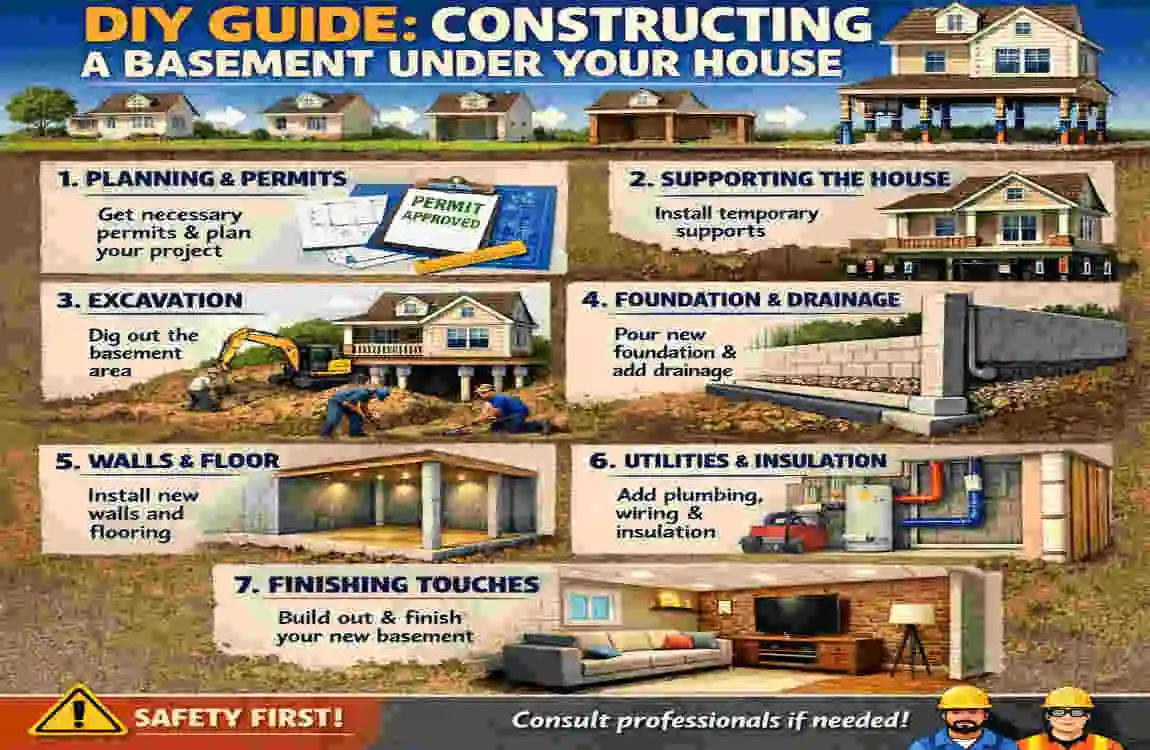
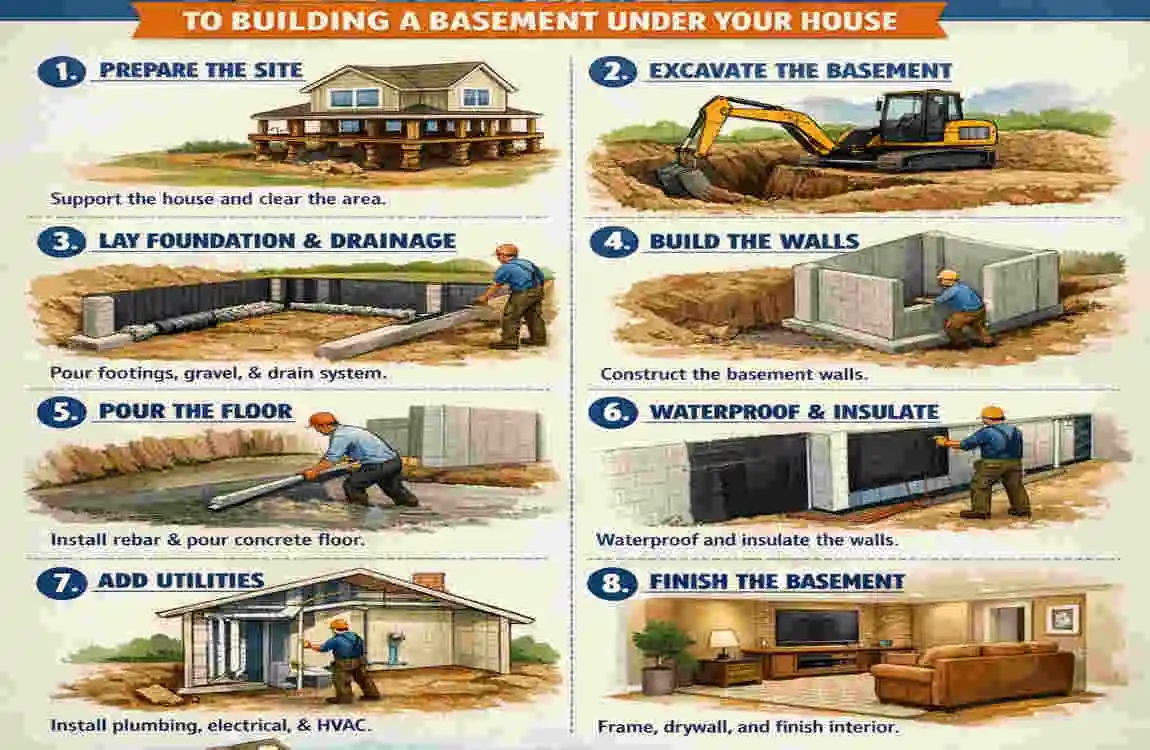
Step-by-Step DIY Guide to Building a Basement
Assess Feasibility and Get Professional Advice
Before you move any dirt, start with a full reality check.
This means speaking with a structural engineer, a soil specialist, and possibly a basement contractor. Their job is to tell you whether the project can be done safely and what kind of support your house needs.
A soil test is especially important. It shows how the ground behaves, how much water it holds, and whether it can support new excavation work.
You should also build a realistic budget at this stage. Many homeowners underestimate the true cost because they focus only on digging. In reality, the support work often costs as much as, or more than, the excavation itself.
If your numbers do not make sense at this stage, it is better to know now than halfway through the project.
Obtain Permits and Approvals
Once the project seems possible, handle the paperwork.
Local building departments often require detailed plans showing how the new basement will be built, how the house will be supported, and how safety will be maintained during construction. In many places, you will also need approval for electrical, plumbing, and drainage work.
This step may feel slow, but it protects you. Permits help make sure the work meets code and reduce the chance of unsafe shortcuts.
Do not skip this part. A basement is too big and too important to build without proper approval.
\Prepare the House: The Underpinning Process
This is where the real structural work begins.
Underpinning means strengthening the existing foundation or creating a new, deeper one so the house can stand safely, both before and after the basement is built. It is one of the most important parts of building a basement under existing house spaces.
Temporary support systems are installed first. These supports hold the house in place while the original soil and foundation areas are adjusted. In some cases, the house may also need to be lifted slightly or stabilized in sections.
This step is highly technical. It is not where you want to improvise. If the support system is wrong, the entire structure can shift.
Excavation Process
After the home is supported, the digging can begin.
Excavation under a house must be done carefully and in stages. Workers usually remove soil in small sections instead of digging everything out at once. That helps keep the structure stable.
Depending on the site, excavation may be done by hand in tight areas or by machine in more open access points. Soil must be removed safely and taken away from the site in a controlled way.
A basement under an existing house often has limited space for equipment, which makes this stage slower and more difficult than digging during new home construction.
Foundation Strengthening
Once the excavation reaches the right depth, the new foundation work begins.
New footings may be poured to support the walls and distribute weight evenly. The walls may be reinforced with concrete, steel, or other structural materials, depending on the design.
Concrete needs time to cure properly. Rushing this stage can weaken the final result. Good curing helps create a strong base that can support the house and resist pressure from the soil around it.
Waterproofing and Drainage
This step is not optional.
Basements sit below ground level, so they are naturally more exposed to water. Good waterproofing helps keep moisture out and protects everything you build inside.
You may need:
- Exterior waterproof membranes
- Interior sealants
- Drainage channels
- Sump pumps
- Gravel or perimeter drainage systems
Drainage is just as important as sealing. If water has nowhere to go, it will build up around the basement walls. A sump pump can help remove that water before it becomes a problem.
If you skip waterproofing, the basement may look finished on day one and still fail later.
Basement Flooring and Walls
Once the structure is stable and dry, you can build the interior shell.
A common choice for the floor is a concrete slab, because it creates a strong and level surface. For the walls, you may choose framing materials that fit your intended use, especially if you want insulation, drywall, or built-in storage.
At this stage, think about future use. A storage basement needs different materials than a bedroom or office. Planning ahead saves time and money later.
Utilities and Ventilation
A basement without proper utilities is just a shell.
If you plan to use the space regularly, you may need electrical wiring, outlets, plumbing, and heating or cooling. You should also think about airflow. Basements can feel stale or damp if they do not have enough ventilation.
Good airflow helps reduce moisture and makes the room more comfortable. In some designs, that means HVAC extensions, fans, vents, or dehumidifiers.
If you are adding a bathroom, laundry area, or kitchenette, the plumbing must be designed carefully so it works with the rest of the home.
Finishing Touches
This is the stage where the basement starts to feel like part of the house.
You may add insulation, wall finishes, flooring, paint, trim, and lighting. A well-lit basement feels larger and more welcoming. Soft, layered lighting works better than one harsh ceiling light in most cases.
Think about comfort and usefulness. A basement that is dry, bright, and well laid out will feel much better than one that is technically finished but still awkward to use.
Cost Breakdown of Building a Basement
Average Costs by Region
The cost to add basement space can vary a lot depending on where you live. Labor, permits, soil conditions, and access to the site all affect the price.
Here is a simple estimate table to show how costs can differ:
Region Type, Typical Cost Per Square Foot, Notes
Lower-cost rural areas $120–$220 Easier labor access, but soil and drainage still matter.
Average suburban areas $180–$350 Common range for many projects with standard conditions
High-cost urban or coastal areas $300–$600+ Higher labor costs, stricter permits, and tougher site conditions
These are general estimates, not fixed prices. A small basement with simple conditions may cost less than a large one with heavy waterproofing needs. On the other hand, a difficult project can go far above these numbers.
Factors Affecting Cost
Several things can push the cost up quickly:
Soil Condition
Bad soil makes the project harder. It can require more engineering, extra support, and slower excavation.
Depth of the Basement
The deeper you go, the more soil must be removed and the more support you may need. Deeper basements usually cost more.
Waterproofing Needs
If your site has poor drainage or a high water table, the waterproofing system becomes more advanced and more expensive.
Access to the House
If machines cannot easily reach the work area, labor costs can rise because more of the digging has to be done by hand.
Interior Finish Level
A basic storage basement will cost less than a finished family room with lights, flooring, heat, and plumbing.
Budget-Saving Tips
You can lower costs by planning smartly.
One option is to build the basement in phases. For example, you could complete the structure and waterproofing first, then finish the interior later. Another option is to reuse materials where possible, as long as they meet code and fit the design.
Some homeowners also handle the cosmetic work themselves while leaving the structural and excavation work to experts. That can help control the budget without risking safety.
DIY vs. Hiring Professionals
What You Can Do Yourself
You can often handle parts of the project that do not affect the house’s structural safety.
This might include:
- Initial research and planning
- Interior design decisions
- Painting
- Flooring installation
- Basic shelving and storage setup
- Some finishing work
If you are comfortable with home improvement projects, these tasks can save money and give you more control over the final look.
What Requires Experts
Some parts should almost always be handled by professionals.
That includes:
- Structural engineering
- Foundation work
- Excavation under the house
- Underpinning
- Waterproofing system design
- Electrical and plumbing work that must meet code
These are not areas where guesswork is safe. The structural side of the project protects your entire home.
Safety Considerations
It is tempting to save money by doing more yourself. But this is one project where cutting corners can be dangerous.
A basement project affects the bones of the home. If you make a mistake, you may not see the damage right away. Problems can show up months later as cracks, leaks, or uneven floors.
For that reason, the smartest approach is often a hybrid one: hire experts for the dangerous work and do the finishing tasks yourself.
Design Ideas for Your New Basement

Home Office Setup
A basement can become a quiet, focused workspace.
This is especially helpful if the rest of the house is busy during the day. With the right lighting and ventilation, a basement office can feel private and productive.
Rental Apartment
If local rules allow it, a basement can become a small rental space.
This can help offset construction costs over time. Just remember that rental use usually brings more code requirements, especially for exits, fire safety, and plumbing.
Entertainment Room
Many homeowners love turning a basement into a movie room, game room, or family hangout area.
Since basements are naturally enclosed, they can work well for screen viewing and sound control. A few comfortable chairs, good lighting, and proper wiring can transform the space.
Storage Optimization
If your main goal is organization, think vertically.
Use shelving, labeled bins, wall hooks, and built-in storage units to keep the basement tidy. A well-planned storage area can free up space throughout the rest of your house.
Small Basement Space-Saving Tips
If your basement is not large, keep the design simple.
Light colors, mirrors, compact furniture, and open floor space can make the room feel bigger. Avoid filling every corner. A little breathing room goes a long way in a small underground space.
Common Mistakes to Avoid
Skipping Soil Testing
This is one of the biggest mistakes.
If you do not understand the soil, you do not fully understand the risks. Poor soil can lead to shifting, cracking, and water problems later.
Ignoring Waterproofing
A basement that is not properly sealed is asking for trouble.
Even a tiny leak can become a big problem over time. Moisture leads to mold, odor, and damage to flooring and walls.
Underestimating Costs
Many homeowners budget only for digging and basic materials.
But the real cost includes engineering, permits, support systems, drainage, and finishing. Always leave room in your budget for surprises.
Not Getting Permits
This can cause expensive delays and legal issues.
If the city or county expects permits, get them before the work starts. It is much easier to do things properly from the beginning than to fix paperwork later.
Poor Ventilation Planning
A basement can feel stuffy if air does not move well.
Without good ventilation, moisture may build up, and the room can become unpleasant to use. Plan for airflow early so the finished space stays healthy and comfortable.
FAQs
Can I build a basement under my house without moving out?
Sometimes, but not always.
In many cases, the work is so disruptive that homeowners choose to move out temporarily. There may be noise, dust, structural support work, and safety restrictions during construction. If the project is small or split into phases, staying may be possible, but you should only decide this after talking to your contractor and engineer.
How long does it take to build a basement?
Timelines vary widely.
A smaller, simpler project may take a few months. A more complex basement under an existing home can take much longer, especially if permits, soil conditions, drainage work, or structural repairs slow the process. The planning stage alone can take time before construction even begins.
Is it cheaper to build a basement or an extension?
That depends on the project.
An extension may be simpler if you have enough land, but it also uses yard space. A basement uses space below the home, which can be valuable in tight areas. Sometimes a basement costs more because of the engineering and foundation work. In other cases, it may be the better long-term value because it adds space without changing the footprint of the home.
Do I need planning permission?
In most cases, yes.
You usually need permits or approval from your local building office. Rules vary by location, but basement construction often triggers structural, plumbing, electrical, and zoning requirements. Always check before you start.
Will adding a basement increase home value?
It often can.
A finished basement may raise buyer interest and improve your home’s market appeal. The size, quality, and usefulness of the basement matter a lot. A dry, well-designed, usable basement is usually more valuable than an unfinished one.
