

If you have ever dealt with a slow drain, a gurgling toilet, or a surprise backup in the bathroom or kitchen, you already know how stressful plumbing problems can be. They do not just waste water. They interrupt daily life, create bad smells, and can quickly turn into costly repairs.
That is why understanding what is DFU plumbing is so important for homeowners. DFU stands for Drainage Fixture Unit. It is a simple way to measure how much wastewater each fixture in your house sends into the drainage system. A toilet, sink, shower, or washing machine all add different loads to your pipes, and DFU helps plumbers size those pipes correctly.
For many homes and across, this matters more than people realize. Houses are often expanded over time, bathrooms are added later, and renovations are done without checking whether the drainage system can handle the extra load. When that happens, the system becomes overloaded. Pipes clog faster, vents stop working properly, and water starts to move the wrong way.
The good news is that you do not need to be a plumbing expert to protect your home. You only need a basic understanding of house plumbing DFU capacity and a few smart habits. A little attention now can help you avoid big repair bills later. In many cases, homeowners can reduce the risk of clogs, leaks, and backups simply by keeping the plumbing system clean, checking fixture loads, and making sure pipes are not undersized.
What Is DFU Plumbing? A Complete Beginner’s Guide
DFU Meaning in Simple Words
Let’s make this simple.
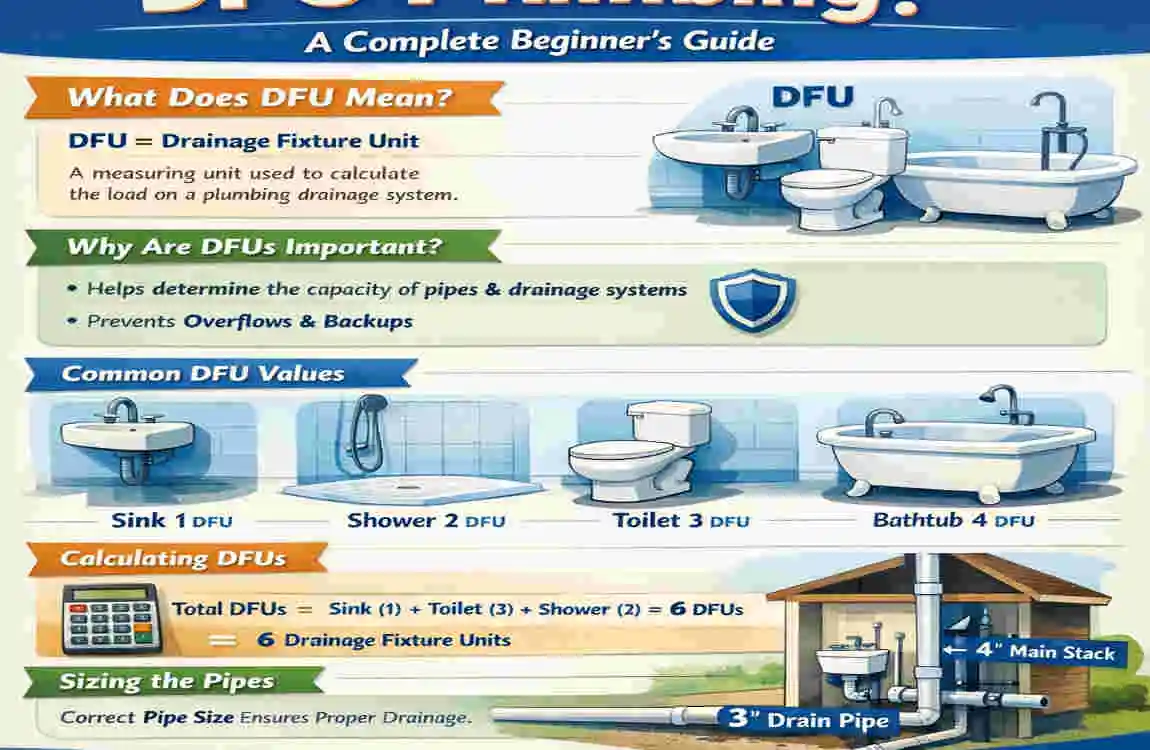
A Drainage Fixture Unit is a rating that indicates the drainage demand created by a single fixture. In plain language, DFU tells you how much wastewater a fixture adds to the plumbing system. It is not just about how much water comes out of the tap. It is also about how quickly the water drains away and how much pressure the system must withstand.
For example, a toilet puts a bigger load on the system than a bathroom sink. A kitchen sink can also put extra strain on plumbing due to grease, soap, and food waste. A washing machine may discharge water quickly, so the drain needs sufficient capacity to safely carry that volume.
Plumbers use DFU ratings to help decide:
- the right pipe size
- the correct drain slope
- how many fixtures can connect to one line
- whether the plumbing needs better venting
This is why DFU is so useful. It gives a standard way to plan a drainage system without guessing.
Why DFU Is Used in Plumbing Design
DFU is part of plumbing design standards used in many countries, including systems based on IPC and UPC rules. These standards help professionals avoid overload. If a pipe is too small for the total fixture load, wastewater may move too slowly or back up. If venting is poor, traps may lose their water seal and allow foul odors into the home.
In a house, the goal is simple: move wastewater out quickly, quietly, and safely. DFU helps make that possible.
Standard DFU Ratings for Common House Fixtures
Below is a simple table that shows typical DFU ratings for common fixtures. Keep in mind that exact ratings can vary depending on fixture type, local code, and plumbing design.
Fixture Typical DFU Rating Usual Flow Consideration Notes
Toilet (1.6 GPF) 4–6 High discharge at once Common in new builds and renovations
Kitchen Sink 2 Moderate flow, frequent use Grease control is very important
Shower 2 Regular daily use Good venting helps prevent slow draining
Washing Machine 3 Fast discharge cycles Hose and standpipe setup must be correct
Bathtub 2 Higher volume, slower use Drain slope and trap condition matter
Bathroom Sink 1 Light to moderate use Small clogs can still build up over time
This table is a starting point, not the full answer. A real plumbing system should be checked as a whole, because the total DFU load matters more than one single fixture.
A Simple Way to Think About DFU Capacity
Think of your drainage pipes like a road. Each fixture is a vehicle. One car is easy to handle. A few cars are fine. But if too many vehicles enter the road at once, traffic slows down and accidents happen.
Your plumbing works the same way. If the total DFU load exceeds the pipe’s capacity, the system becomes congested. That is when you get slow drains, gurgling sounds, and backups.
So when people ask what is DFU plumbing, the easiest answer is this:
It is a way to measure how much drainage load your home plumbing system can safely handle.
That is the heart of it.
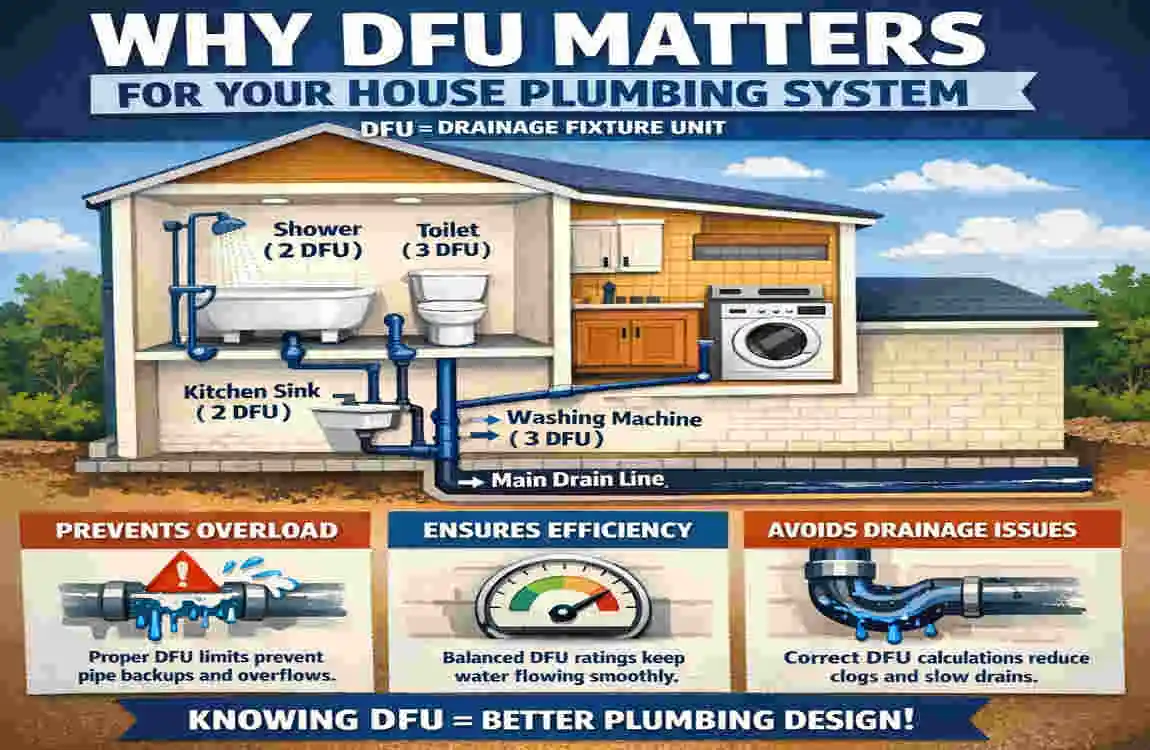
Why DFU Matters for Your House Plumbing System
Prevents Backups and Overflow
One of the biggest reasons DFU matters is simple: it helps prevent backups.
When the drainage system is overloaded, water cannot move away fast enough. It starts to sit in pipes, push air around, and sometimes flow back into sinks, tubs, or floor drains. In serious cases, wastewater can overflow and damage floors, walls, and cabinets.
This is especially important in homes with:
- multiple bathrooms
- large families
- older pipework
- basement or low-level drains
- recent extensions or added washrooms
If the system was not designed for the new load, trouble usually follows.
Helps You Plan Renovations Better
Many homeowners renovate without thinking about drainage capacity. They add a new bathroom, shift a kitchen, or install a washing machine in a new location. These changes may look small, but they can create a big load on the plumbing system.
DFU helps you ask the right question before you build:
Can the existing drainage system support the new fixtures?
If the answer is no, then the system may need larger pipes, better venting, or a new drainage route.
Important for Homes and Similar Urban Areas
many homes face the same issue: plumbing systems are often modified over time. A house may begin with one bathroom, then later gain a second or third. Sometimes the added fixtures are connected to the old drain lines without proper sizing checks.
That is where DFU becomes useful. It gives you a better way to evaluate whether the plumbing can handle the real load in the home. It also supports more careful planning when working with local plumbing codes and building standards.
A Small Problem Can Become a Big Repair
When DFU is ignored, plumbing problems often show up slowly. First comes a slow drain. Then a gurgling sound. Then bad smells. Then repeated clogs. If the underlying capacity issue is not fixed, the system keeps failing.
That is why the right approach is not only to clear clogs when they happen. It is also to maintain the system so the load stays within safe limits.
Now let’s move into the practical part: the top maintenance tips that help your DFU house plumbing system work better for longer.
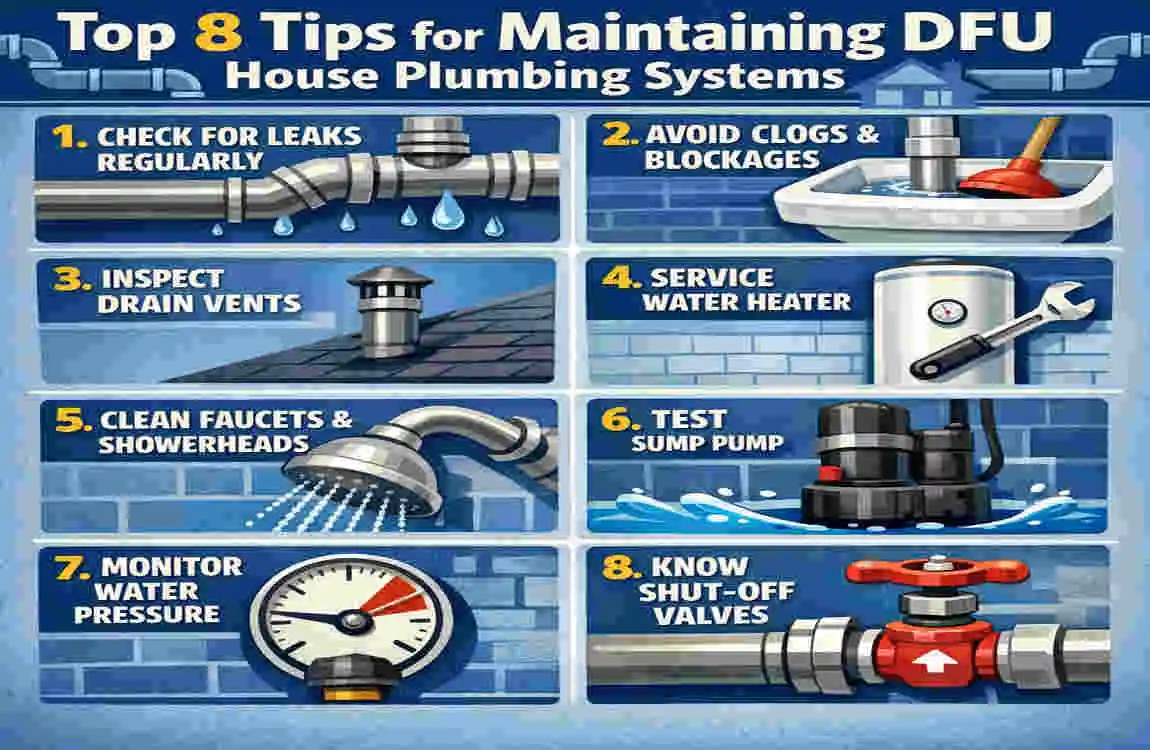
Top 8 Tips for Maintaining DFU House Plumbing Systems
Regularly Inspect and Calculate Your Home’s DFU Load
The first step in good plumbing care is knowing what you have.
Many homeowners do not know how many fixtures are connected to their drainage system, or how much load those fixtures create. That makes it hard to see problems early. When you calculate your DFU load, you get a clearer picture of how hard your system is working.
How to do it
Start by walking through your house and listing every fixture that drains into the system. Include:
- toilets
- bathroom sinks
- showers
- bathtubs
- kitchen sinks
- washing machines
- utility sinks
- floor drains
Then assign a DFU rating to each fixture based on a standard chart or a plumber’s advice. Add the numbers together. That total gives you a rough idea of your home’s drainage demand.
Why this helps
If your total load is close to the limit of your piping, the system may already be under stress. That does not always mean the pipes will fail immediately, but it does mean you should watch the system more carefully.
A good routine
Make this a yearly habit, especially if your home has:
- extra bathrooms
- new appliances
- a changed kitchen layout
- frequent drain issues
This is one of the most useful DFU plumbing maintenance tips because it gives you real information instead of guesswork.
Clean Drains Often to Protect Flow Efficiency
A DFU rating is based on expected flow under normal conditions. But real drains are not always clean. Over time, grease, soap, hair, lint, and food particles stick to the inside of pipes. This reduces the effective space for water to move through.
That means even if your home is within safe DFU limits, the system can still act as if it’s overloaded if the drains are dirty.
What to do
Keep drains clean with simple, safe methods:
- flush sinks with hot water regularly
- use baking soda and vinegar for light buildup
- clean sink strainers often
- remove hair from shower drains
- use enzyme-based cleaners when appropriate
What to avoid
Do not rely too much on harsh chemical drain cleaners. They can damage pipes, especially in homes with PVC plumbing. They may also create safety risks if used often or mixed with other products.
Why this matters
A clean pipe moves water better. A dirty pipe behaves like a smaller pipe. Regular cleaning helps preserve your system’s true capacity.
If you want a plumbing system that performs well, keep the drains clear before they become a problem.
Install Proper Venting for Better DFU Performance
A drainage system needs more than just pipes. It also needs air movement. That is where venting comes in.
Vents help balance pressure inside the plumbing system. Without proper venting, water can siphon out of traps, which allows sewer smells to enter the home. Poor venting can also slow drainage and make fixtures behave unpredictably.
Why venting matters
When multiple fixtures drain simultaneously, air must move through the system to keep water flowing smoothly. If that air cannot move, the water flow becomes unstable. The result may be gurgling, slow drainage, or trap-seal loss.
Common venting solutions
Depending on the home design, a plumber may use:
- a standard vent stack
- wet venting
- individual fixture vents
- air admittance valves in limited retrofit situations
For tight renovation spaces in older homes, venting upgrades can be very helpful. Sometimes even a small change in the vent layout can improve the whole system.
What to watch for
If you hear a toilet gurgle when a sink drains, or if a shower drains slowly after another fixture is used, the system may have a venting problem. That is worth checking early, before the issue becomes bigger.
Good venting supports good house plumbing DFU capacity by helping the drainage system do its job without strain.
Use DFU-Compliant Fixtures When Renovating
Renovation time is the best time to improve your plumbing.
If you are replacing fixtures, choose models that work well with your home’s drainage design. This does not mean you must buy expensive products. It means you should choose fixtures that fit your plumbing capacity and daily needs.
Smart fixture choices
Look for:
- water-efficient toilets
- properly sized showers
- sinks with reliable drain fittings
- washing machines that discharge within the system’s capacity
Low-flow toilets, for example, can reduce water use and lessen strain on the drainage system when they are installed properly. The goal is not just saving water. The goal is to make the whole system more balanced.
Why this matters during upgrades
A beautiful bathroom is not enough if the drain line cannot handle it. If new fixtures are added without checking their DFU rating, the system may become overloaded, even if everything looks fine on the surface.
A practical tip
Before buying new fittings, ask whether the fixture matches the existing pipe size and venting setup. This small step can save a lot of trouble later.
Monitor Pipe Sizing Against DFU Totals
This is one of the most important ideas in plumbing maintenance.
Your total DFU load should match the pipe size that carries the wastewater. If the pipe is too small, the system cannot safely move waste. If the pipe size is appropriate, flow stays smoother and backups are less likely.
Basic pipe sizing guide
Here is a simple reference chart. Exact sizing should still be verified by a qualified plumber and in accordance with local code requirements.
Total DFU Minimum Pipe Diameter Typical Slope General Use
1–6 1.5 inches 1/4 inch per foot Small fixture runs
7–20 2–3 inches 1/8 inch per foot Grouped bathroom lines
21–50 4 inches 1/16 inch per foot Main house drainage lines
50+ Larger system review needed Depends on design Multi-bath or expanded homes
What this means for you
If you add a new bathroom, laundry area, or kitchen line, the existing pipe may no longer be enough. Even a small change can push the total beyond safe capacity.
How to inspect your pipes
You do not always need to open walls to begin checking. A plumber can often look at exposed lines, cleanout points, and visible pipe sections to estimate the system. If the house has had several additions over the years, a full review is a smart idea.
This is a key part of what is DFU plumbing in practical terms: it is not just about counting fixtures. It is about making sure the pipes can truly support them.
Schedule Professional DFU Balancing Every Few Years
Some plumbing issues are easy to spot. Others are hidden inside walls, floors, or underground lines.
That is why professional inspections matter.
A skilled plumber can review the entire system, check pipe sizes, assess venting, assess fixture load, and suggest changes if needed. This is especially useful after a renovation or after repeated drainage problems.
When to call a professional
Consider a full plumbing review if:
- drains keep clogging in more than one area
- toilets gurgle when other fixtures are used
- sewage smells appear without a clear reason
- your home has been expanded
- you are planning a remodel
- the building is older and the original pipes may be undersized
What “balancing” means
DFU balancing means ensuring the fixture load, pipe size, and venting work together. The system should not be asked to carry more than it was built for.
In many cases, a plumber can improve performance without replacing everything. Sometimes a small vent upgrade or a better pipe routing plan solves the problem.
Why professional help saves money
It may feel like an extra cost, but it often saves money over time. One correct adjustment can prevent repeated clogs, hidden leaks, and emergency repairs.
Prevent Overloading the System With Better Water Habits
Good plumbing care is not only about pipes. It is also about how people in the house use the fixtures.
Many drainage problems happen because the system receives things it should never have to handle. Grease, wipes, sanitary products, paper towels, and other waste can quickly create blockages.
Simple habits that help
Try these everyday habits:
- do not pour cooking oil down the sink
- keep food scraps out of the drain
- use sink strainers
- flush only toilet paper in toilets
- avoid dumping paint, chemicals, or construction waste into drains
- run laundry in balanced loads instead of back-to-back heavy cycles
Why this matters to DFU
Every extra blockage makes the pipe act smaller. That means the system reaches its limit faster, even if the DFU rating looked fine on paper.
Make the whole house part of the solution
Everyone in the home should understand the basics. One person’s bad habit can affect the whole drainage system. This is especially true in busy households, where many fixtures are used for short periods.
A healthy plumbing system depends on smart use, not just strong pipes.
Prepare Your DFU System for Weather Changes
weather creates its own plumbing challenges. Heavy monsoon rain, hot summers, and cooler winter nights can all affect drainage performance.
Even though DFU is about fixture load, weather still matters because it affects surrounding pipes, drains, and access points.
Monsoon preparation
Before the rainy season, check:
- roof drains
- outdoor gully lines
- yard drainage points
- basement or low-level outlets
- exposed pipes that may collect debris
If outside drains are blocked, water can enter places it should not. That can create pressure on the house drainage system and increase the risk of flooding.
Cold weather care
In colder periods, exposed pipes may contract or become more fragile. Insulate vulnerable sections if needed, especially in unprotected utility areas.
Emergency readiness
Keep a small plumbing kit at home. It should include:
- a plunger
- a hand auger
- rubber gloves
- a bucket
- basic pipe tape
These tools will not solve every issue, but they can help you respond quickly before a problem grows.
Common Signs Your DFU Plumbing System Needs Attention
Even with good maintenance, problems can still appear. The key is noticing them early.
Watch for these signs:
- slow-draining sinks or tubs
- gurgling sounds in toilets or drains
- recurring clogs in the same fixture
- sewer smells in bathrooms or kitchens
- water backing up after laundry cycles
- wet patches near drain lines
- frequent need to plunge or snake the same drain
If you see more than one of these signs, the issue may not be a simple clog. It may be a load, venting, or pipe sizing problem.
That is why understanding what is DFU plumbing is so helpful. It helps you move from guesswork to smart diagnosis.
A Quick DFU Maintenance Checklist for Homeowners
Here is a simple list you can use during routine home checks:
- Count all fixtures connected to the drainage system.
- Compare fixture loads with DFU ratings.
- Clean sink, shower, and floor drains regularly.
- Watch for slow drainage and gurgling sounds.
- Check venting during renovations.
- Make sure new fixtures match pipe capacity.
- Use better household drain habits.
- Call a plumber when problems repeat.
This checklist is small, but it can make a big difference over time.
How to Tell If Your Home’s Plumbing Is Under-Sized
An under-sized system does not always fail immediately. Often, it gives warning signs first.
You may have an under-sized plumbing system if:
- several fixtures drain slowly at the same time
- the toilet bubbles when the sink drains
- water backs up during laundry
- kitchen drainage gets worse after heavy use
- odors appear even after cleaning
- the home has added bathrooms without pipe upgrades
Older houses, in particular, may have been built with fewer fixtures than they have today. A home that once had one bathroom may now have two or three. That is a major change in drainage demand.
If that sounds familiar, a DFU review is worth your time.
Why Good DFU Planning Saves Money Over Time
It is easy to think plumbing only matters when something goes wrong. But that way of thinking usually leads to higher repair costs.
A well-maintained system can help you:
- reduce emergency callouts
- avoid water damage
- extend pipe life
- lower the risk of hidden leaks
- prevent repeated clogging
- make renovations safer
In other words, DFU planning is not just a technical topic. It is a money-saving habit.
When you understand the DFU capacity of household plumbing, you make better decisions about repairs, upgrades, and daily use. That keeps your home safer and your budget under more control.
FAQ: What Is DFU Plumbing and How Does It Work?
What is DFU plumbing?
DFU plumbing uses Drainage Fixture Units to measure the amount of wastewater a fixture adds to the drainage system. It helps plumbers size pipes and vents correctly.
How do I calculate the DFU load in my house?
List all fixtures in your home, assign each one a DFU rating, and add the numbers together. The total gives you a rough idea of your home’s drainage demand.
Why is DFU important for home plumbing?
DFU helps prevent overloaded pipes, slow drains, backups, and venting problems. It makes plumbing systems safer and more reliable.
What happens if the DFU load is too high?
If the load is too high for the pipe size, the system may drain slowly, clog often, or back up. In some cases, wastewater may overflow.
Can I add a new bathroom without checking DFU?
You can, but it is not a good idea. New fixtures increase drainage demand, so the pipe size and venting should be checked first.
What are the most common DFU mistakes in older homes?
Common mistakes include undersized pipes, poor venting, adding fixtures without system upgrades, and blocked drains due to buildup.
How often should I check my plumbing system?
A basic check once a year is a good habit. You should also inspect the system after renovations or if you notice repeated drainage problems.
