

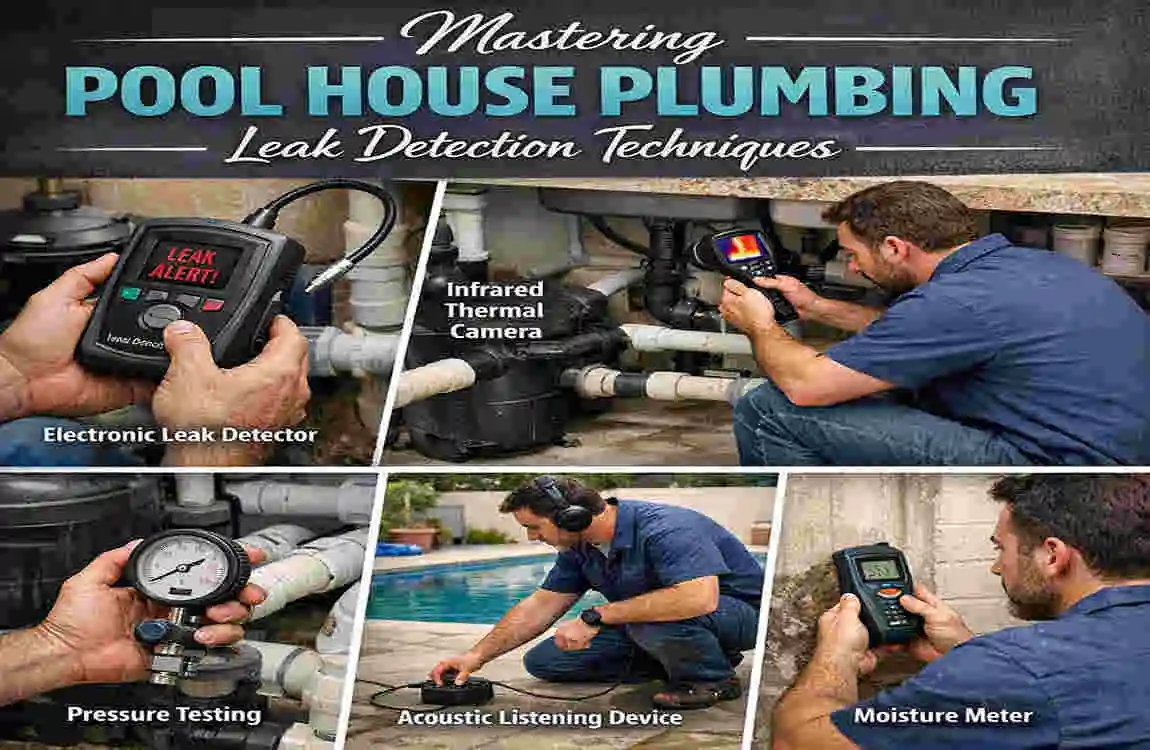
Plumbing leaks in your pool house can cause more than just minor inconveniences. They can lead to water loss, higher utility bills, and even structural damage, disrupting your daily life and draining your finances. If you’re a homeowner, especially in regions like Lahore or Punjab, where aging infrastructure and extreme weather conditions are common, understanding how to find leaks in your house’s plumbing is essential.
Why Pool House Plumbing Leaks Are a Serious Concern
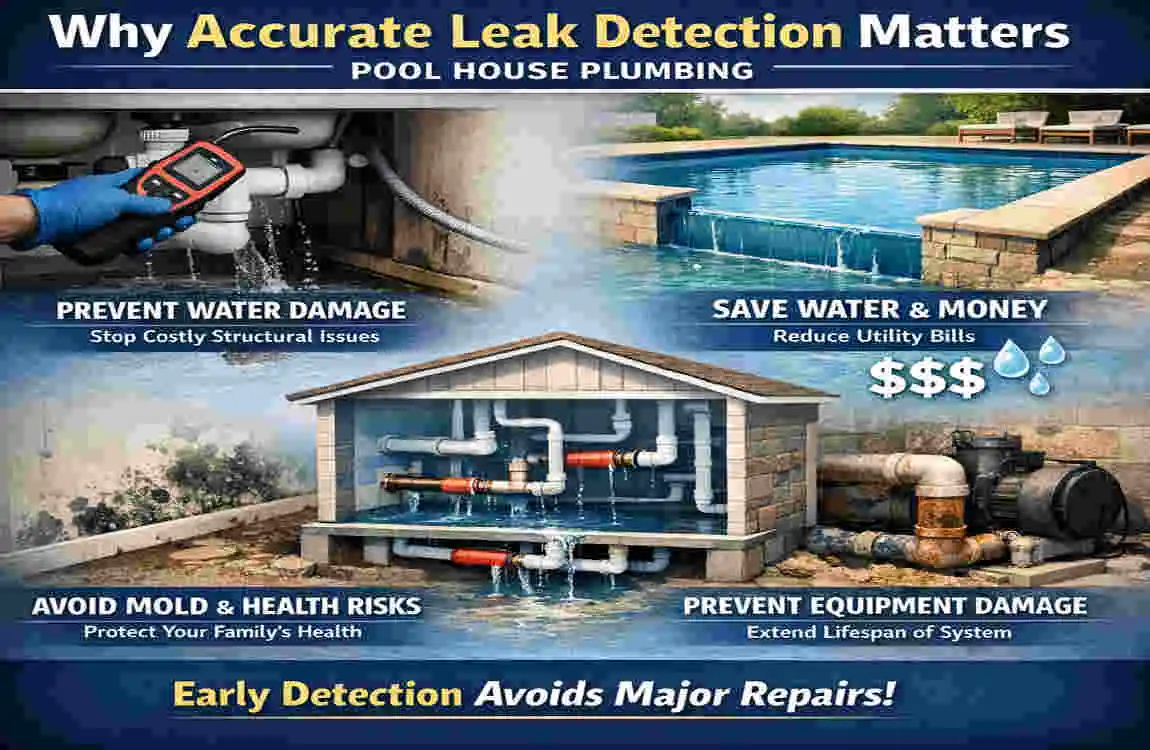
Financial Impact of Undetected Leaks
Leaks in your pool plumbing can lead to higher water and electricity bills because water is constantly being refilled and pumps run overtime. Additionally, the cost of wasted pool chemicals adds up over time, further straining your budget.
Structural Risks
Beyond financial loss, leaks can cause erosion, weaken your pool’s foundation, and damage nearby decks or basements. Over time, this could lead to major repairs that are far more expensive than early leak detection.
Long-Term Damage
Corrosion, pump failure, and liner damage are just some of the long-term consequences of ignoring small leaks. By addressing leaks early, you can extend the lifespan of your pool house plumbing system.
In short, leak detection is not optional—it’s essential. Let’s dive into how to identify and address these issues systematically.
Common Signs of Pool House Plumbing Leaks
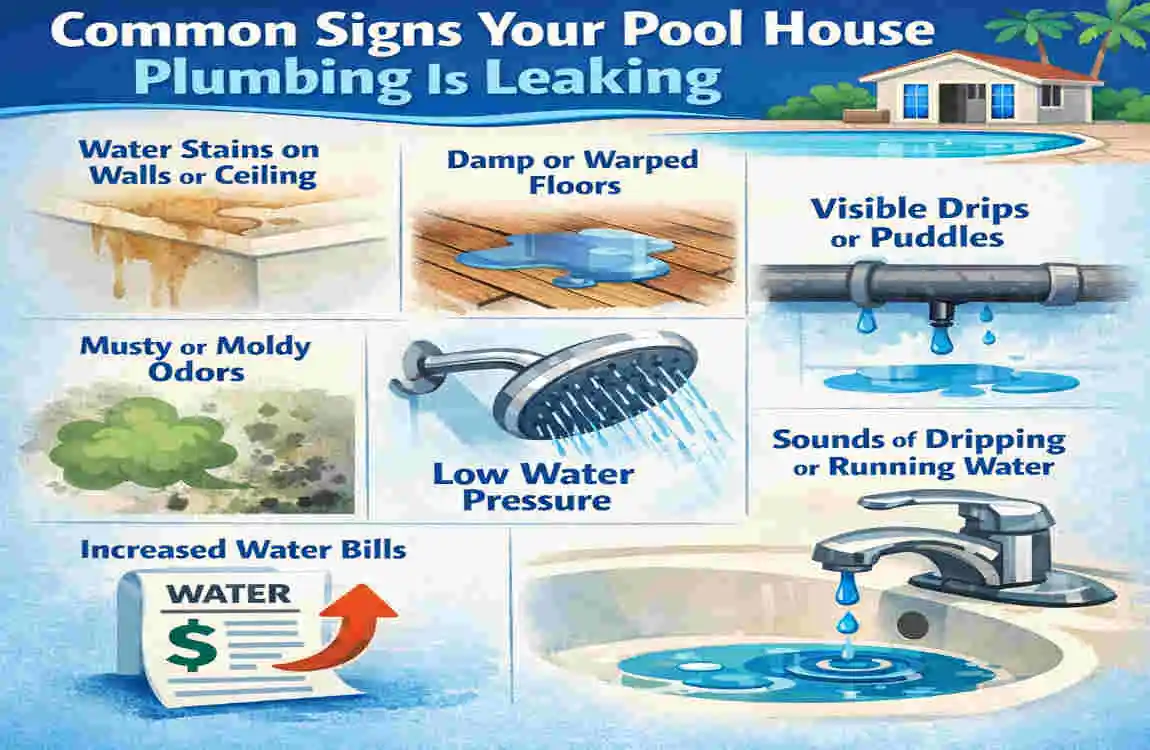
Detecting leaks early can save you a lot of hassle. Here are some common signs to look out for:
- Persistent water loss: If you’re refilling your pool more than usual, you may be leaking.
- Wet or spongy areas: Check around the pool deck, equipment pad, and nearby walls for damp spots.
- Musty smell or mold: Moisture from leaks can lead to mold growth near the pool’s plumbing system.
- Air bubbles in the pump basket: This could indicate that air is being sucked into a leak on the suction side of your plumbing.
- Reduced water pressure: If the flow from your pool jets is irregular or weaker than usual, you might be leaking.
- Higher water bills: An unexplained spike in your water usage is a red flag.
- Strange noises: Hissing or gurgling sounds when your pump is running could point to a plumbing issue.
Confirm It’s a Leak, Not Evaporation
Before panicking about major repairs, it’s wise to rule out normal evaporation. The Bucket Test is a simple DIY method to confirm whether you’re dealing with a leak.
How to Perform the Bucket Test
- Fill a bucket with water, then match its level to your pool’s level.
- Place the bucket in the pool: Position it on a pool step, ensuring it’s stable and submerged halfway.
- Mark the levels: Use tape or a marker to note the water levels inside and outside the bucket.
- Wait 24–48 hours: Ensure there’s no heavy rain or wind during this period.
- Compare the levels: If the pool water level drops more than the bucket’s, you likely leak.
By eliminating evaporation as a cause, you can focus your efforts on effectively finding a leak in the house’s pool plumbing.
Visual Inspection of Exposed Pool Plumbing
Your pool’s plumbing system includes visible components like the pump, filter, heater, and valves. Start by inspecting these areas for obvious issues.
What to Look For During Inspection
- Wet spots or drips: Check around the pump and filter for water accumulation.
- Cracks or loose fittings: Examine unions, valves, and pipes for signs of wear or damage.
- Corroded or discolored pipes: This can indicate prolonged water leakage.
- PVC joint stress: Look for cracks or signs of strain at glued fittings.
Run the pump and observe for dynamic leaks that may occur only under pressure.
Dye Testing Visible Joints and Fixtures
Dye testing is a precise method to identify leaks at visible joints, cracks, or fixtures.
How to Perform Dye Testing
- Gather materials: You’ll need a non-toxic dye and a small syringe for application.
- Turn off the pump: Still water makes leaks easier to spot.
- Apply the dye: Release a small amount of dye near suspected leak points, such as skimmers, returns, or light niches.
- Watch the dye movement: If the dye gets sucked into a crack, you’ve found your leak.
Warning: Avoid using dye near the pump, as suction can create unsafe conditions.
Pressure Testing the Plumbing Lines
Pressure testing is a gold standard for detecting leaks in underground or hard-to-reach plumbing lines.
How Pressure Testing Works
- Seal off plumbing lines: Use plugs to isolate specific sections of the system.
- Apply air or water pressure: Use a pressure gauge to monitor for drops in pressure.
- Identify the leak: A pressure drop indicates a leak in that section of the plumbing.
While this method is typically performed by professionals, understanding the basics can help you make informed decisions during repairs.
Electronic and Acoustic Leak Detection
Professional leak detection tools can pinpoint leaks with incredible accuracy.
Advanced Tools for Leak Detection
- Electronic leak detectors: These devices detect changes in pressure or sound caused by escaping water.
- Acoustic listening devices amplify the sound of underground water leaking.
- Infrared imaging: Thermal cameras can identify temperature differences in wet areas.
With advancements in technology, these methods are becoming more accessible, making it easier to identify leaks in complex systems.
Tracking Leaks by Turning Equipment On/Off
This diagnostic trick uses your plumbing system’s behavior to narrow down the leak’s location.
How It Works
- Run a fill test: Turn off the pump and monitor water levels.
This method helps you focus on the most likely problem areas.
What to Do After You Locate the Leak
Once you’ve identified the source of the problem, you’ll need to decide on the next steps.
DIY Repairs for Minor Leaks
- Replace worn-out O-rings, gaskets, or clamps.
- Repair small cracks with waterproof epoxy or PVC repair kits.
Professional Help for Major Issues
- For underground leaks or extensive pipe damage, it’s best to call a professional.
- Ignoring small leaks can lead to larger problems, so don’t delay repairs.
Preventive Maintenance Tips for Pool House Plumbing
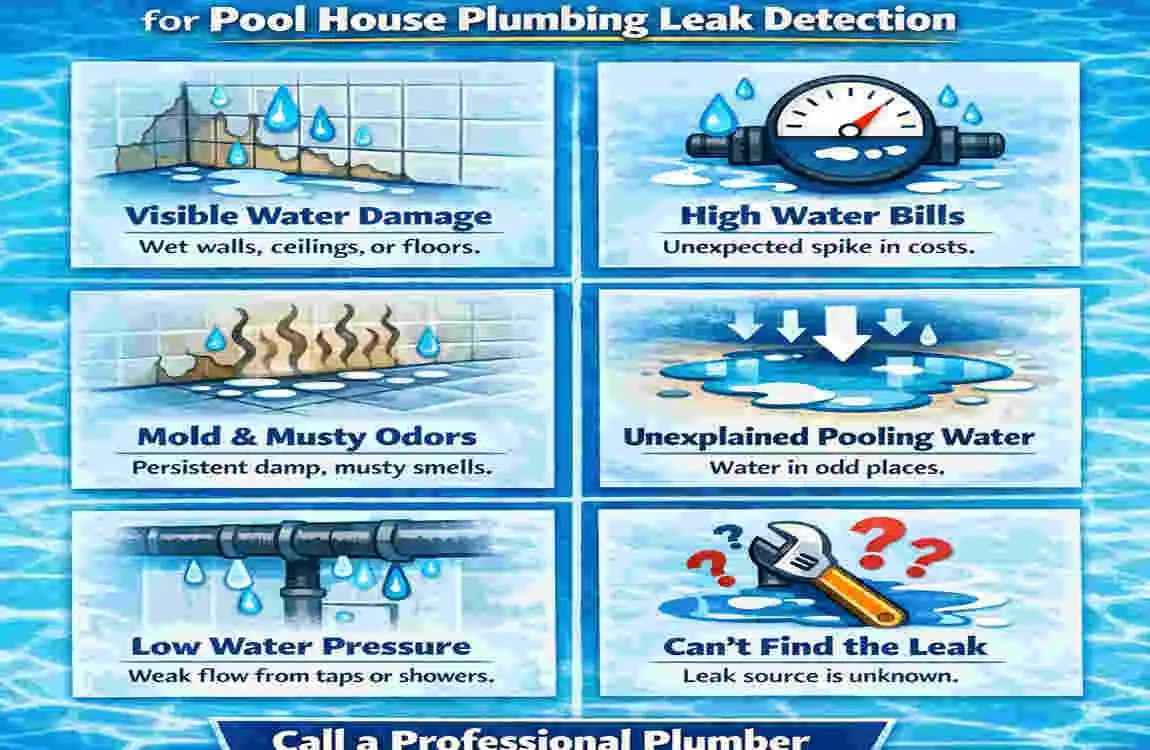
Routine maintenance can help you avoid leaks altogether.
Best Practices
- Conduct visual inspections monthly to spot early signs of wear.
- Use quality PVC fittings and avoid over-tightening connections.
- Schedule annual professional inspections to catch hidden issues.
FAQ
Q: How do I know if I leak my pool house plumbing?
Persistent water loss, wet spots, and higher bills are common signs.
Q: What is the easiest way to find a pool plumbing leak?
Start with the bucket test and visual inspection for DIY detection.
Q: Can I fix a pool plumbing leak myself?
Yes, for minor issues like O-rings, but major leaks require a professional.
