

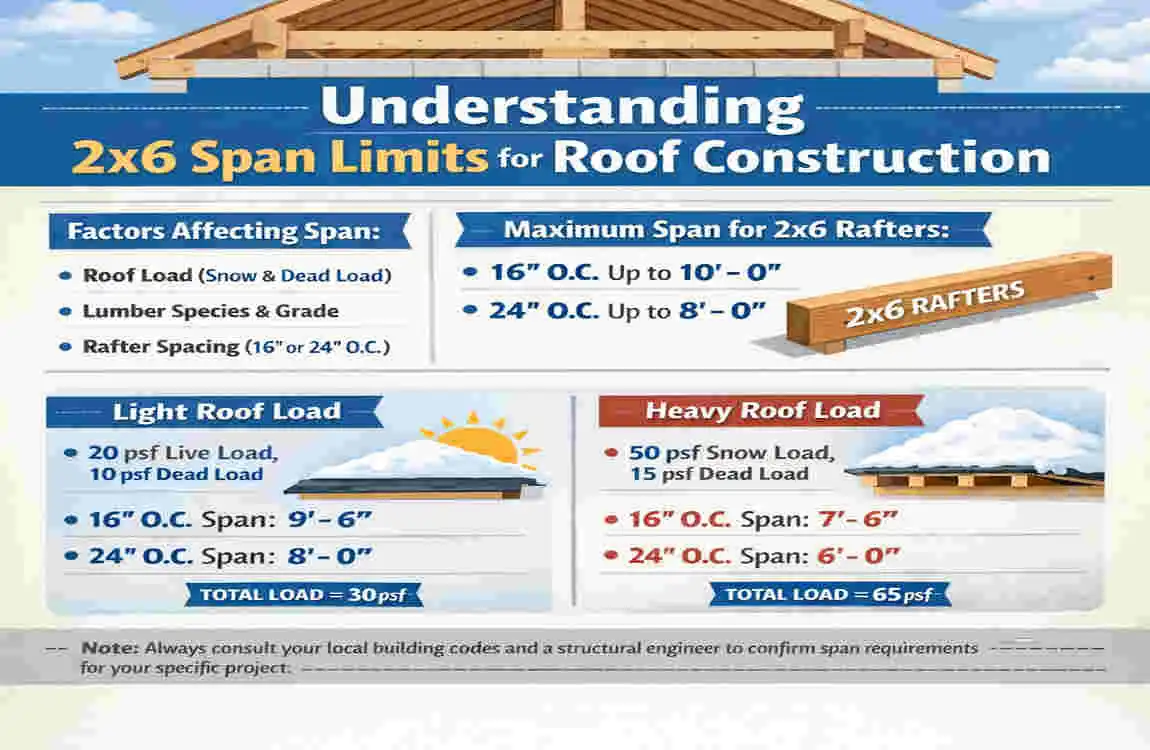
You’re a homeowner in Lahore, planning to build a gable roof for your new home. You’ve decided to use 2×6 lumber for the rafters. Still, a critical question arises—how far can you span a 2×6 for a roof without risking sagging or structural failure? This is a common concern for DIY builders and professionals alike, as the span of a 2×6 directly impacts the safety, cost, and compliance of your construction project.
The span of a 2×6 depends on several factors, including the wood species, grade, spacing, and load requirements. Additionally, local building codes, such as the International Residential Code (IRC), play a significant role in determining the maximum allowable span. Understanding these factors is essential to ensure your roof is both safe and durable.
Key Factors Affecting 2×6 Roof Spans
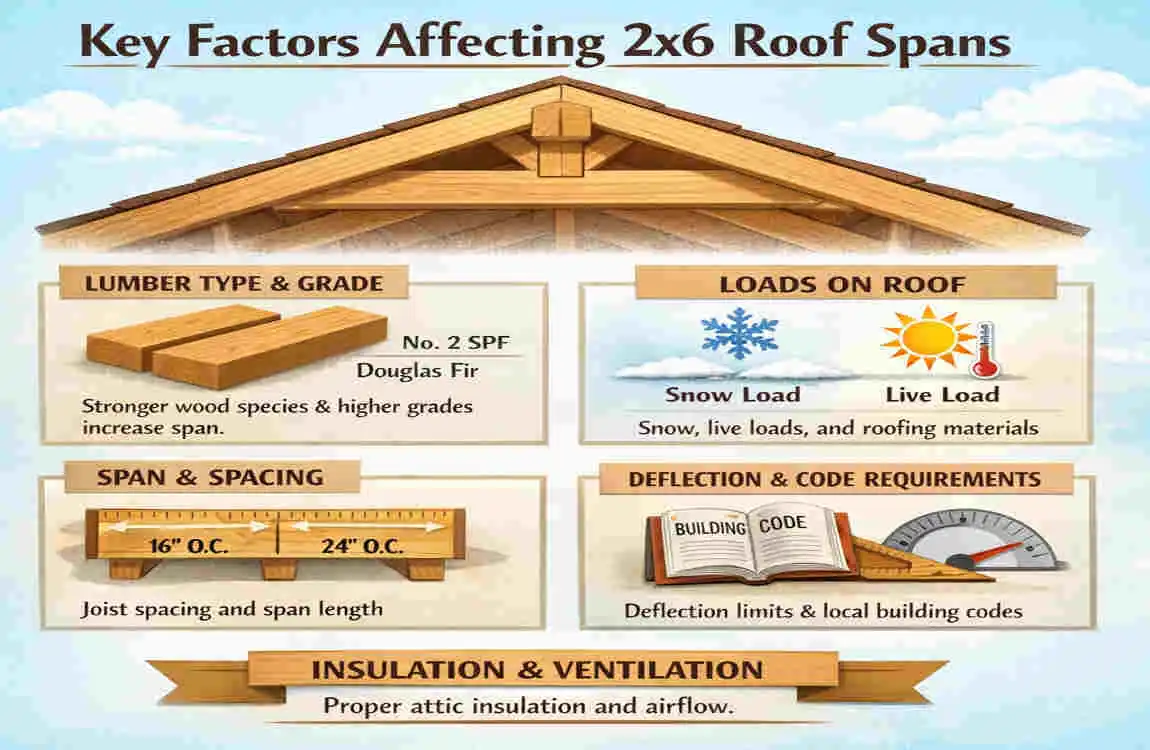
Wood Species and Grade
The type and grade of wood you choose significantly impact the span of a 2×6. Different wood species have varying levels of strength and stiffness, which determine how much weight they can support over a given span.
For example:
- Douglas Fir-Larch (#2 grade) is one of the strongest options, allowing for longer spans.
- Southern Pine (#2 grade) is slightly less strong but still a popular choice.
- Hem-Fir (#2 grade) has a shorter span due to its lower strength.
Here’s a comparison table to illustrate the differences:
Wood TypeGradeMax Span (16″ OC, 30 psf load)
Douglas Fir #2 10’5″
Southern Pine #2 9’11”
Hem-Fir #2 9’6″
As you can see, choosing a stronger wood species like Douglas Fir can give you an extra foot or more of span, which can make a big difference in your project.
Rafter Spacing
The spacing between rafters also affects the maximum span. Common spacing options include 12, 16, and 24 inches on-center (OC). The closer the spacing, the longer the allowable span because the load is distributed more evenly.
- 12″ OC spacing: Allows for the longest spans, up to 11’4″ for Douglas Fir.
- 16″ OC spacing: A standard choice, with spans around 10’9″.
- 24″ OC spacing: Shorter spans, typically around 8’7″.
Roof Loads
Roof loads are divided into two categories:
- Dead Load: The weight of the roof materials, such as shingles and sheathing, typically ranges from 10 to 20 pounds per square foot (psf).
- Live Load: Temporary loads like snow, wind, or maintenance workers. In areas like Punjab, where snow is a factor, live loads can range from 20 to 50 psf.
For example, a roof in Lahore with moderate snow loads might require a live load capacity of 30 psf. Always consult local building codes to determine the appropriate load requirements for your area.
2×6 Roof Span Tables
Rafter Span Charts
To simplify your planning, here’s a span table based on the IRC guidelines. This table assumes a live load of 20-30 psf and a dead load of 10 psf.
SpacingDouglas Fir #2 (20 psf live)Southern Pine #2 (30 psf live)
12″ OC 12’1″ 11’5″
16″ OC 10’9″ 9’9″
24″ OC 8’7″ 7’9″
Joist vs. Rafter vs. Ceiling Limits
It’s important to differentiate between joists, rafters, and ceiling spans:
- Joists: Typically span up to 10’9″ for 2×6 lumber.
- Rafters: Can span up to 13’5″ under light loads.
- Ceiling joists: Often span over 12′, depending on the load.
Pitch Impact
The pitch of your roof also plays a role. Steeper pitches (e.g., 4/12 or higher) reduce the load on the rafters, allowing for spans that are 10-20% longer. This is because the weight is distributed more vertically, reducing the horizontal force on the rafters.
Building Code Requirements
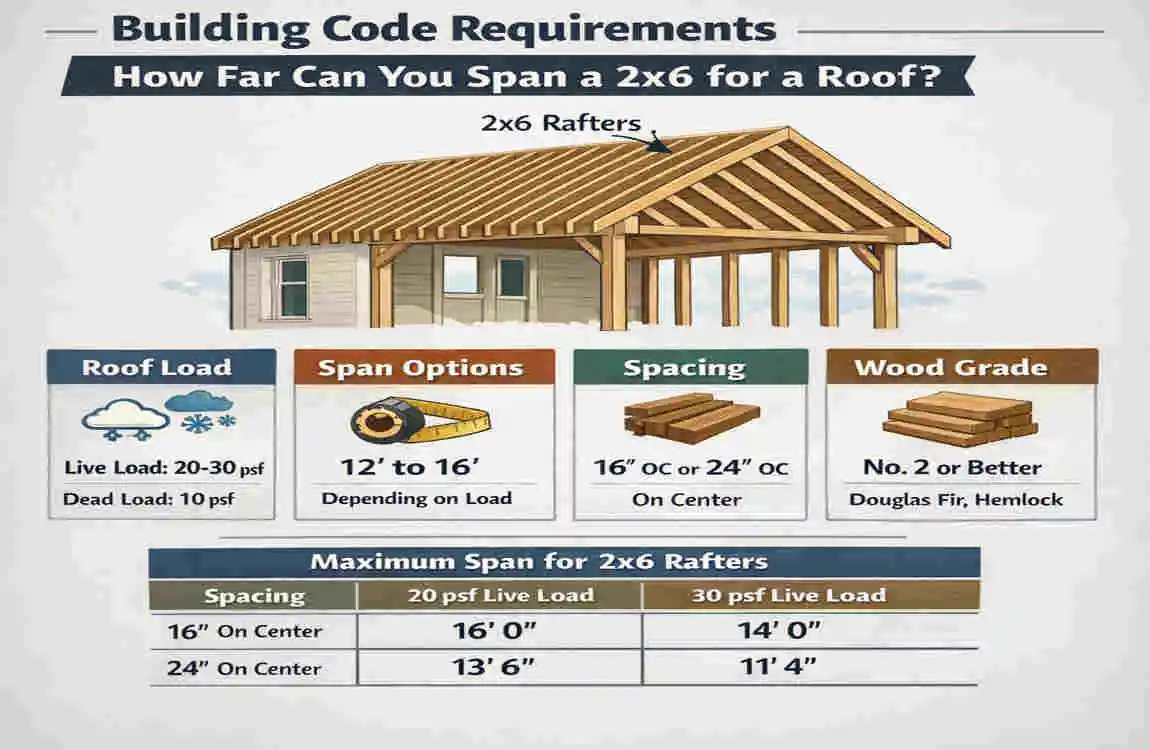
The International Residential Code (IRC) provides detailed guidelines for roof construction. According to IRC R802.4.1 (2021 edition), the span of a 2×6 must comply with specific load and spacing requirements. In Pakistan, local adaptations of the IRC may include additional considerations for seismic activity and snow loads.
For spans exceeding 10 feet, it’s often necessary to obtain a permit and have your plans reviewed by a structural engineer. This ensures that your roof meets all safety and compliance standards.
Practical Examples for House Roofs
Let’s look at some real-world examples to put this information into context:
- Gable Roof on a 20×30 Home in Lahore:
- Using 16″ OC spacing and Douglas Fir #2 lumber, the rafters can safely span up to 9 feet.
- Pergola Add-On:
- A single 2×6 beam can span up to 8 feet, while a doubled beam can span up to 11 feet.
For a quick calculation, you can use this formula: Span = f(species, load, spacing)
Common Mistakes and Fixes
Even experienced builders can make mistakes when working with 2×6 lumber. Here are some common errors and how to fix them:
- Over-Spanning Without Collar Ties: This can cause the ridge to sag. Fix it by adding collar ties or sistering the rafters.
- Ignoring Snow Loads: In areas like Punjab, failing to account for snow can lead to structural failure. Always design for a live load of at least 40 psf.
- Using Low-Grade Lumber: Opt for #2 grade or better to ensure adequate strength.
Alternatives to 2×6 Rafters
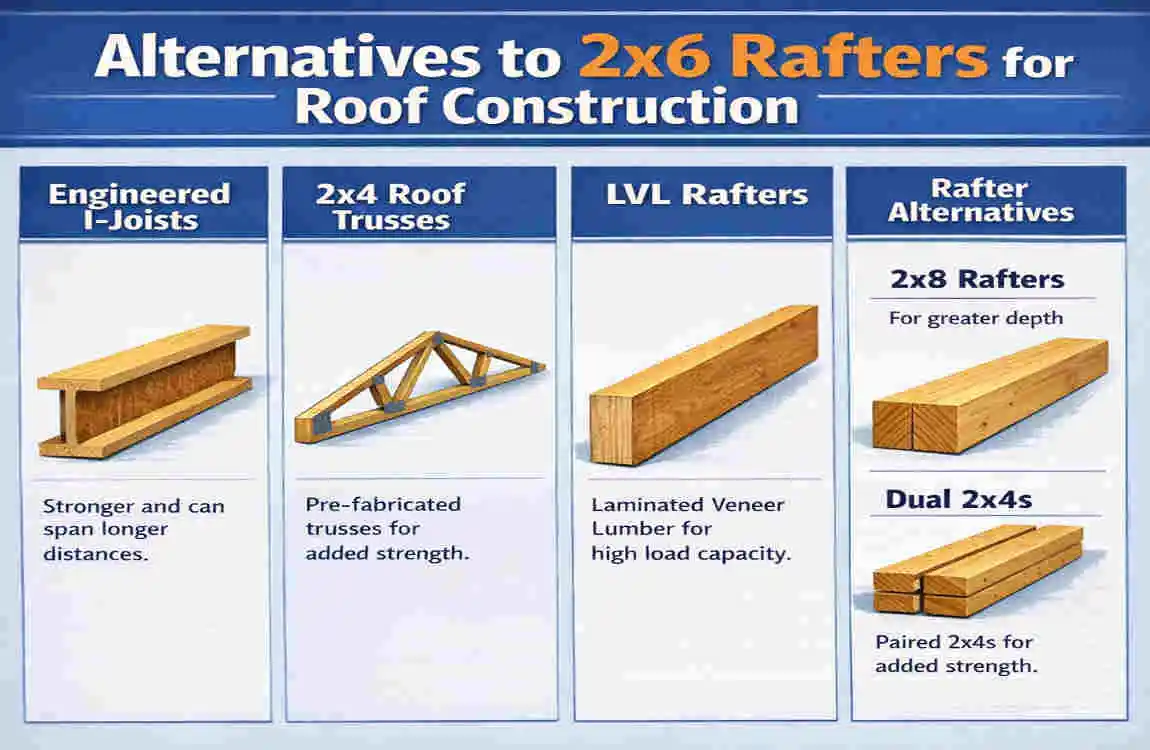
If a 2×6 doesn’t meet your span requirements, consider these alternatives:
LumberMax Span (16″ OC)Cost Factor
2×6 10’9″ Low
2×8 14’2″ Medium
Truss 30’+ High
Trusses and engineered I-joists are excellent options for longer spans, though they cost more.
FAQs
Q: How far can you span a 2×6 for a roof at 24″ OC?
A: Approximately 8 feet, depending on the wood species and load.
Q: Can a 2×6 handle snow loads?
A: Yes, up to 30 psf, but always verify with local codes.
Q: Should I use 2×6 or 2×8 for rafters?
A: Use 2×8 for spans over 11 feet or when higher loads are expected.
