
In 2026, the construction industry is witnessing a sustainable revolution, with natural materials reducing carbon emissions by an impressive 40%. Are you looking for the best natural material for your eco-friendly home? Rising construction costs and climate change concerns are driving homeowners and builders to explore natural materials for a greener and more economical future.
Why Choose Natural Materials for House Construction?
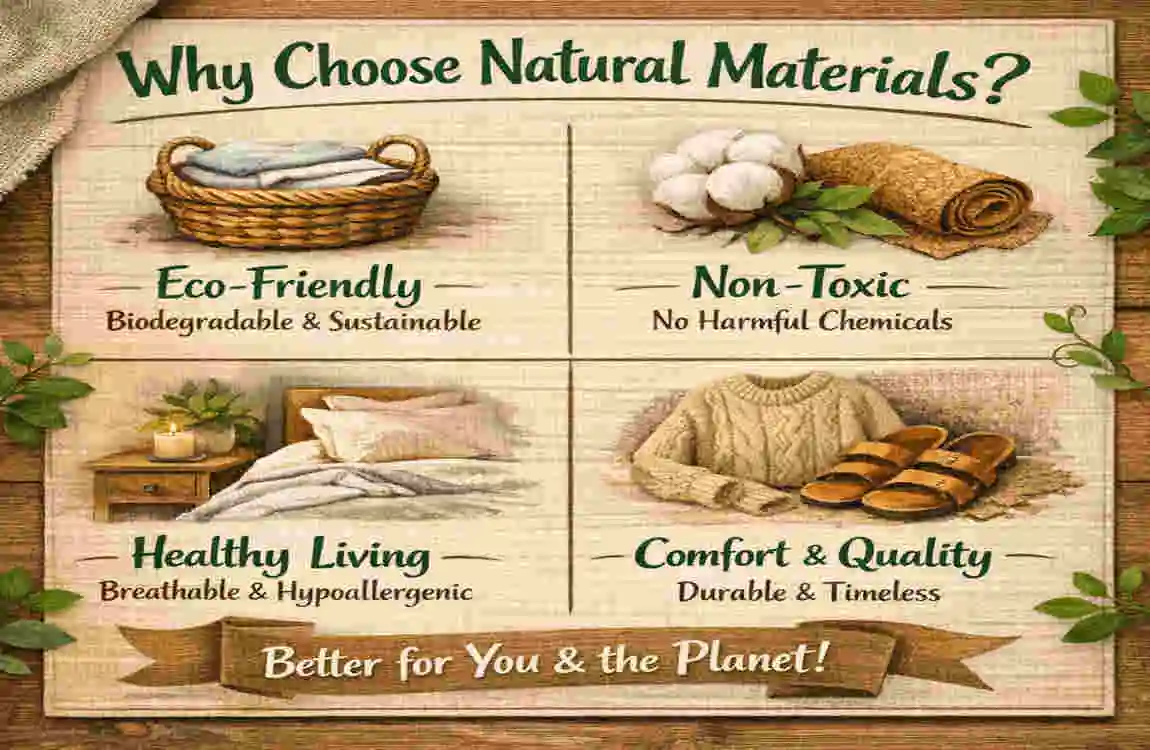
When it comes to building homes, the materials you choose have a significant impact on the environment, your health, and long-term costs. Natural materials offer numerous advantages over synthetic ones, making them an excellent choice for modern, eco-conscious construction.
Health Benefits
Natural materials are free from harmful chemicals and emit low levels of volatile organic compounds (VOCs), promoting healthier indoor air quality. Materials like wood, cork, and clay also regulate humidity, reducing respiratory issues and creating a comfortable living environment.
Sustainability
Natural materials are highly sustainable because they are renewable. For example:
- Timber and bamboo are fast-growing and can be replenished.
- Hempcrete and straw bales are carbon-negative, absorbing more CO₂ than they emit during production.
Climate Adaptability
In countries like, where the climate can be hot and humid, natural materials excel. Materials such as stone and rammed earth provide excellent thermal mass, keeping homes cooler in summer and warmer in winter.
Environmental Impact
Using natural materials significantly reduces the carbon footprint of construction projects. Many natural materials are biodegradable, helping prevent long-term pollution.
Natural materials not only meet aesthetic and functional needs but also align perfectly with the growing demand for sustainable and green architecture. Let’s explore the top materials to consider for your next project.
Top Natural Materials Ranked
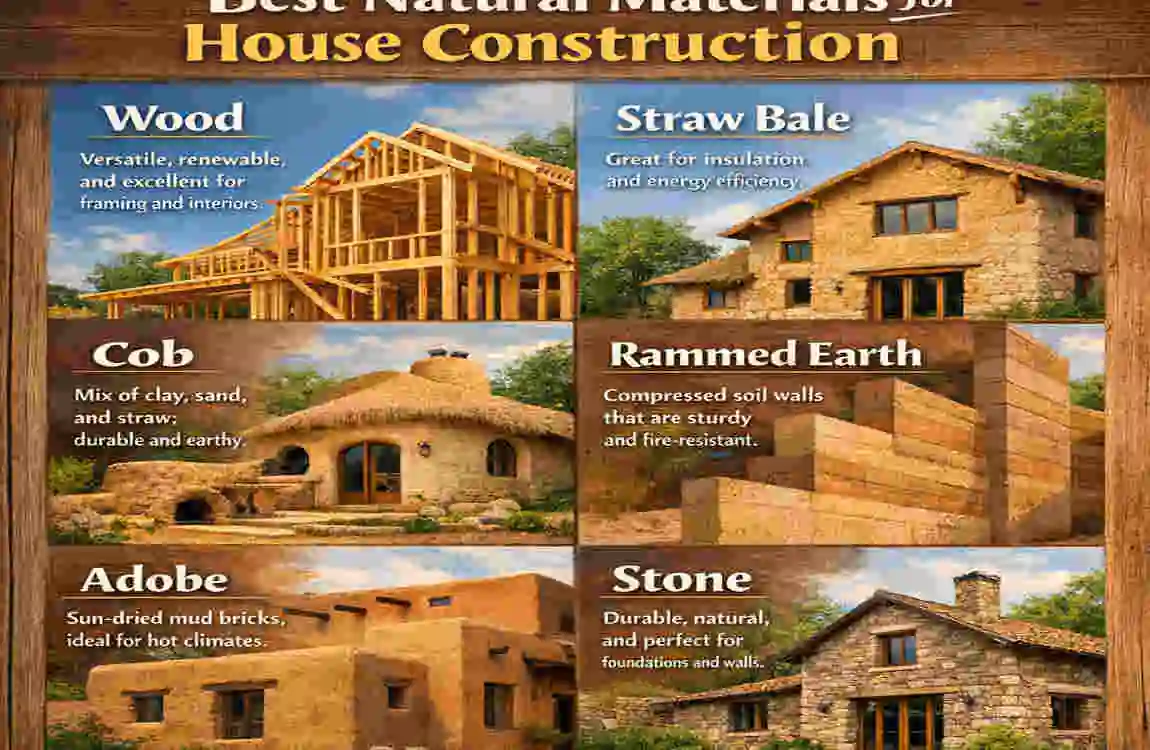
In this section, we’ll dive into the top 8 natural materials for house construction, examining their benefits, drawbacks, and suitability for various climates. Each material is unique so you can choose based on your specific needs.
Timber/Wood
Timber has been a classic choice for centuries, and for good reason. It is renewable, energy-efficient, and versatile. Treated wood is fire-resistant and can be used for frames, roofs, and even cladding.
Pros:
- Renewable and widely available.
- Excellent insulation properties.
- Aesthetic appeal with natural finishes.
Cons:
- Requires treatment to prevent pests and decay.
- Overharvesting can lead to deforestation.
Aspect Pros Cons
Durability 50+ years. Needs regular treatment
Cost (PKR/sqft) 500-800 Variable sourcing
Sustainability , Renewable Deforestation concerns
Bamboo
Bamboo is a fast-growing material known for its flexibility and strength. Its natural resistance to earthquakes and antibacterial properties make it ideal for regions like which are prone to seismic activity.
Pros:
- Grows quickly and replenishes easily.
- Strong and flexible for structural use.
- Anti-seismic, making it ideal for earthquake-prone areas.
Cons:
- Requires proper treatment to prevent pest infestations.
Stone
Stone is a durable, timeless building material often used for walls and flooring. Its thermal mass helps regulate indoor temperatures, making it a great choice for climate.
Pros:
- Highly durable and low maintenance.
- Provides excellent thermal mass for cooling.
Cons:
- Heavy and expensive to transport.
Straw Bales
Straw bales are an affordable, highly insulating material widely available in agricultural regions like Punjab. They are ideal for constructing walls in eco-friendly homes.
Pros:
- Excellent insulation properties.
- Affordable and easy to source locally.
Cons:
- Requires sealing to prevent moisture damage.
Hempcrete
Hempcrete is a lightweight, breathable material made from hemp fibers and lime. It is carbon-negative, meaning it absorbs more carbon than it emits during production.
Pros:
- Fire-resistant and breathable.
- Environmentally friendly and durable.
Cons:
- Higher initial costs compared to other materials.
Rammed Earth
Rammed earth is made by compacting soil into strong, load-bearing walls. This material is not only aesthetically pleasing but also requires minimal processing, reducing its environmental impact.
Pros:
- Zero embodied energy.
- Provides natural insulation.
Cons:
- Labor-intensive to construct.
Cork
Cork is a versatile material used for flooring and insulation. Its natural resistance to mold and pests makes it an excellent choice for humid climates.
Pros:
- Sustainable and renewable.
- Great insulation properties.
Cons:
- Higher cost compared to other materials.
Clay and Lime
Clay and lime are often used for plaster and walls. These materials are hygroscopic, meaning they naturally regulate indoor humidity levels.
Pros:
- Affordable and readily available.
- Promotes healthy indoor air quality.
Cons:
- Requires regular maintenance.
Comparison Table: Best Natural Materials for House Construction
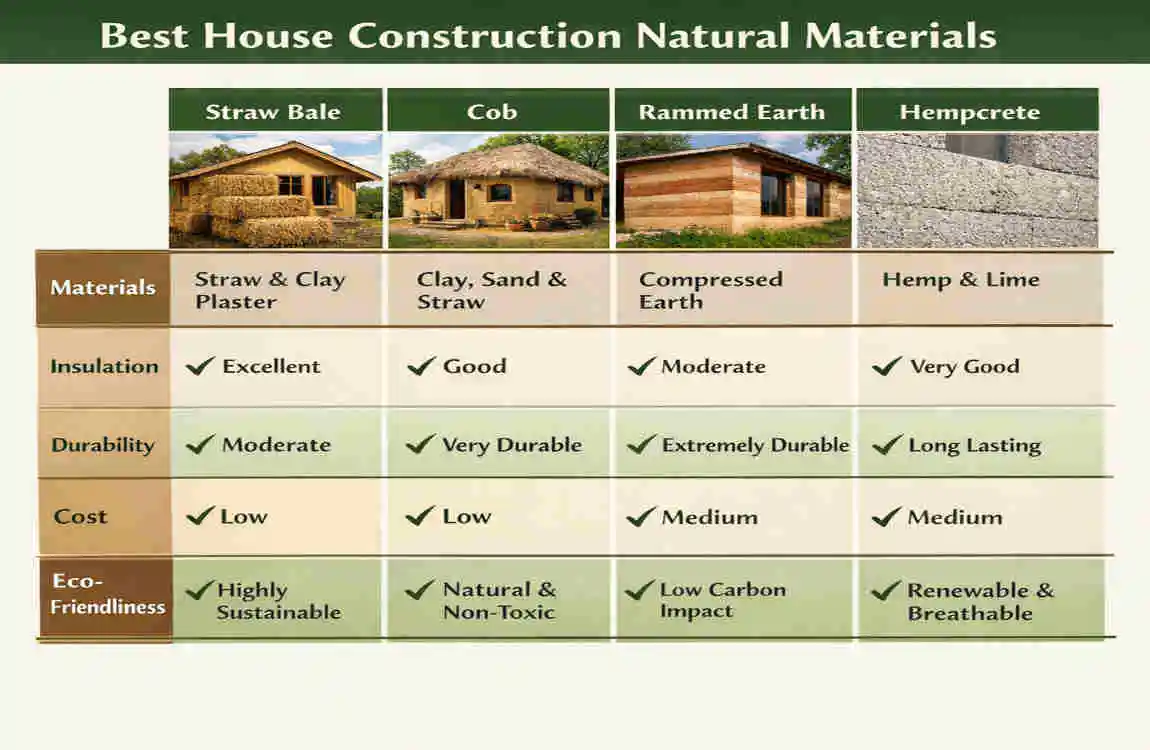
Material Insulation (R-value)Cost (PKR/sq ft)Lifespan Eco-Score (1-10)
Timber 1.4 500-800 50+ years 9
Bamboo 1.2 400-600 30+ years 10
Stone High mass 600-1000 100+ years 8
Straw Bales 30-50 200-400 50 years 9
Hempcrete 2.4 700-900 60 years 10
Rammed Earth High mass 300-500 100+ years 9
Cork 3.5 800-1200 40 years 9
Clay N/A 200-400 50 years 8
Benefits Breakdown
Natural materials offer a wide range of benefits beyond sustainability. Let’s analyze these benefits in detail:
Healthier Living
Natural materials emit fewer volatile organic compounds (VOCs), which are harmful to human health. This improves indoor air quality and reduces allergy symptoms.
Energy Savings
Thanks to their insulating properties, natural materials like straw and hempcrete can reduce annual energy bills by 20-30%.
Durability
Many natural materials, such as stone and rammed earth, are incredibly durable and can last over a century with minimal maintenance.
Cost Efficiency
Local sourcing of materials such as straw and clay inreduces import costs, making them a cost-effective choice for homeowners.
Costs & Installation
In the cost of natural materials varies based on availability and sourcing. Here’s a quick breakdown:
- Timber: PKR 500-800 per square foot.
- Straw Bales: PKR 200-400 per square foot.
- Hempcrete: PKR 700-900 per square foot.
Additionally, labor costs for installing natural materials are about 20% lower compared to concrete structures. This makes natural material-based homes more affordable in the long term.
Challenges & Solutions
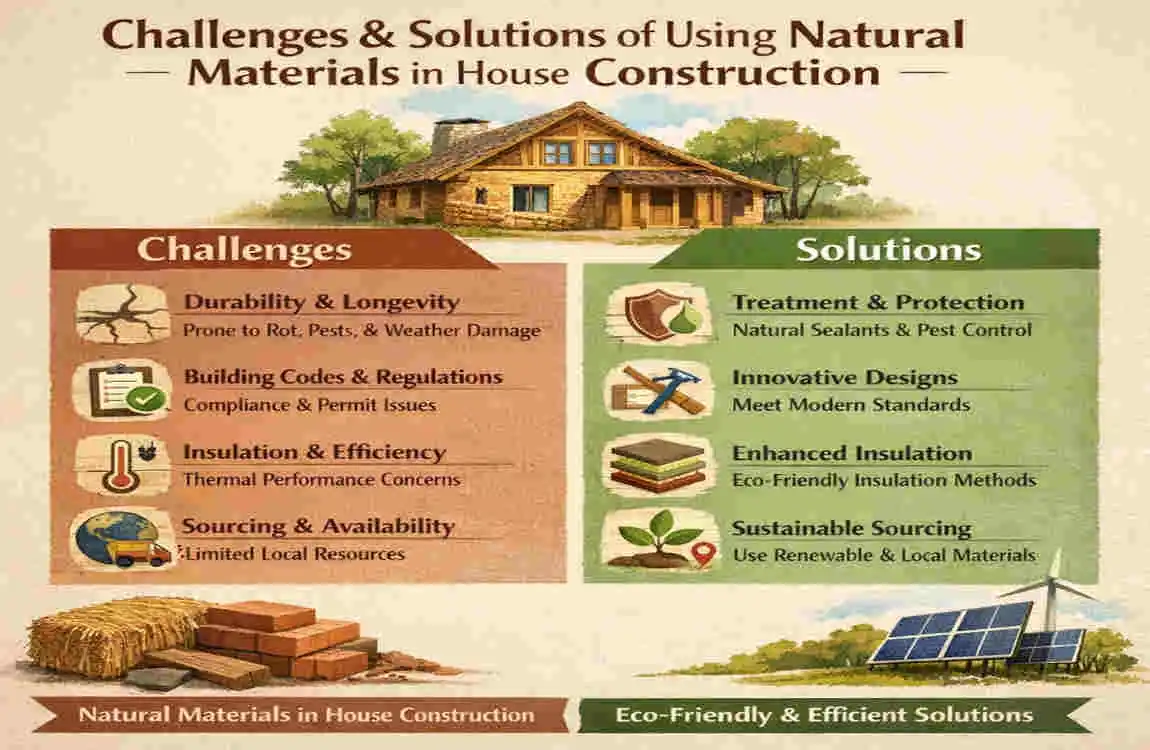
While natural materials offer numerous advantages, they also come with challenges:
- Moisture Issues: Use lime renders to protect materials like straw.
- Availability: Source materials from local suppliers in Punjab.
- Building Codes: Work with qualified engineers to ensure compliance with regulations.
FAQs on House Construction Natural Material
What is the best natural material for house construction in hot climates?
For hot climates likes, materials with good thermal mass and breathability are ideal. Bamboo and stone are excellent choices because they help keep interiors cool by absorbing and slowly releasing heat. Straw bales and hempcrete also provide superb insulation, reducing the need for air conditioning .
How does hempcrete work in construction?
Hempcrete is a mixture of hemp fibers, lime, and water. It is lightweight and breathable but not load-bearing, so it must be used with a supporting frame, usually timber. Hempcrete walls regulate humidity, resist fire, and are carbon-negative, meaning they absorb more CO₂ than they emit during production .
Are natural materials durable enough for modern homes?
Yes! Many natural materials like timber, stone, rammed earth, and hempcrete have proven durability. Stone and rammed earth walls can last over 100 years, while treated timber can last 50+ years. Proper maintenance, such as sealing straw bales or treating wood, ensures longevity .
How do natural materials affect indoor air quality?
Natural materials generally emit very low or no volatile organic compounds (VOCs), unlike many synthetic materials. They also allow buildings to “breathe,” meaning moisture can pass through walls, reducing mold and improving air quality. Materials like clay, lime, and hempcrete are especially good at regulating indoor humidity .
Is building with straw bales practical?
Straw bale construction is practical and affordable, especially in agricultural regions where straw is abundant. The bales provide excellent insulation but must be plastered with breathable materials like lime or clay to prevent moisture damage. This method is gaining popularity for its thermal efficiency and low cost .
How do natural materials compare cost-wise to conventional concrete?
Natural materials often have lower material costs, especially when sourced locally. For example, straw and rammed earth are inexpensive, while timber and hempcrete may be slightly higher but still competitive. Labor costs can be lower too, as some natural building techniques are simpler or require less heavy machinery .
Are natural building materials legal and compliant with building codes?
Yes, natural materials are legal , provided the construction meets local building codes and safety standards. It’s important to work with qualified engineers and architects who understand how to integrate natural materials safely and effectively .
What maintenance do natural material homes require?
Maintenance depends on the material:
- Timber needs periodic treatment against pests and moisture.
- Straw bale walls require annual inspection and resealing of plaster.
- Rammed earth and stone need minimal upkeep but should be protected from excessive water.
- Hempcrete is low maintenance but should be paired with proper framing .
