
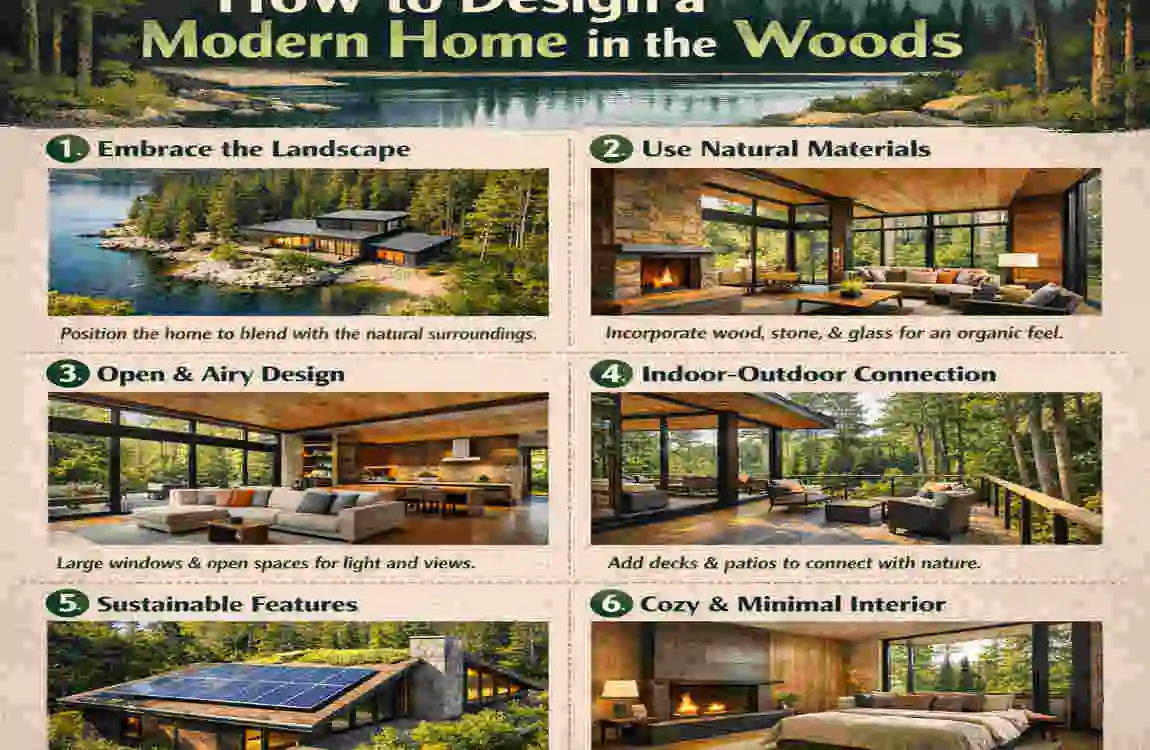
A modern home in the woods is more than just a house surrounded by trees. It is a lifestyle choice that blends clean design, practical living, and a deep connection to nature. For many homeowners, the dream is no longer a city apartment or a busy suburban street. Instead, it is a quiet place in the forest where they can wake up to sunlight through the trees, hear birds in the morning, and enjoy a calmer pace of life.
This home style has become more popular because people want spaces that feel peaceful, private, and inspiring. A modern woodland home gives you that feeling while still offering the comfort and function of contemporary architecture. You get open rooms, large windows, simple lines, and smart use of space. At the same time, you get the beauty of the outdoors right outside your door.
What Defines a Modern Home in the Woods?
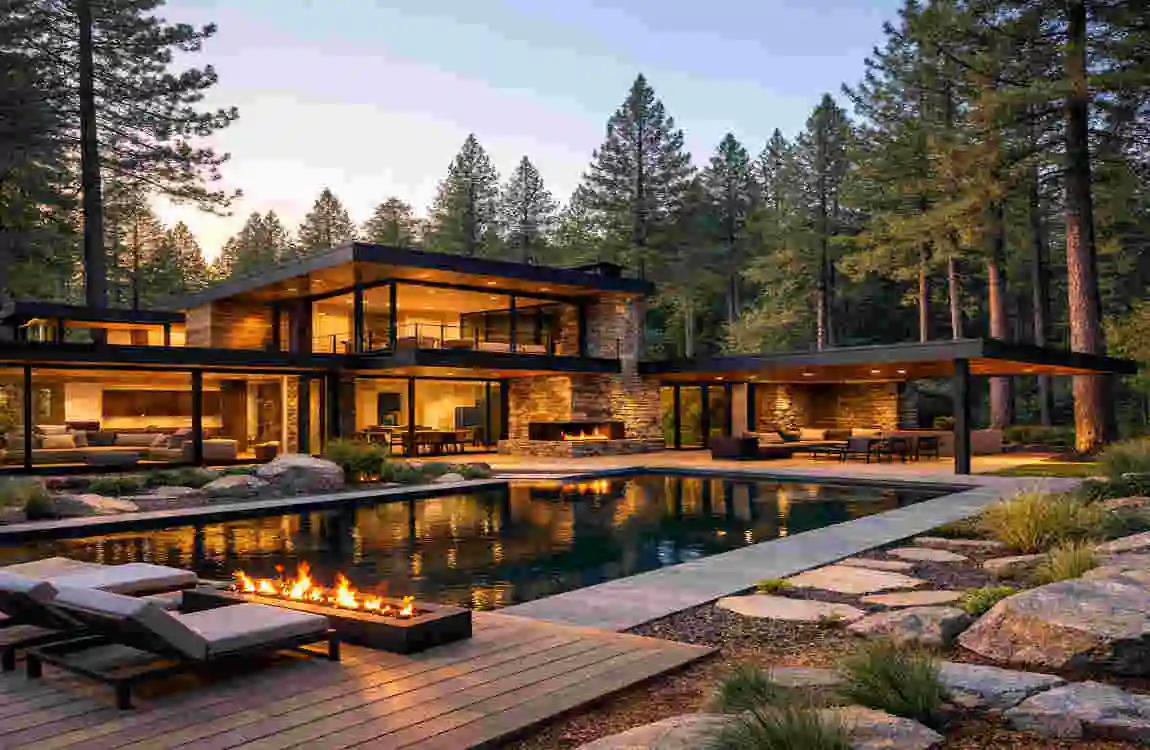
A modern home in the woods is not just about looking stylish. It is about creating a house that works well with the surrounding land. The design should feel fresh, simple, and balanced, while also respecting the natural setting.
Key Characteristics
The first thing people notice in a modern home is the clean architectural lines. These homes usually avoid heavy ornamentation or overly detailed decoration. Instead, they rely on simple shapes, straight edges, and a calm visual style. This makes the home feel neat and timeless.
Another key feature is minimalist design. Minimalism does not mean empty or cold. It means removing unnecessary clutter so the important elements stand out. In a woodland setting, this works especially well because the home does not compete with the landscape. It lets the forest be the star.
Open-concept floor plans are also common. These layouts connect the kitchen, dining, and living areas so the inside feels open and airy. This helps small homes feel larger and allows daylight to travel more easily through the rooms.
Finally, a modern woodland home should have a strong indoor-outdoor connection. Large windows, glass doors, decks, patios, and covered outdoor spaces help the home feel linked to the forest. You should be able to enjoy the view, feel the breeze, and move naturally between inside and outside spaces.
Why Modern Designs Work in Forest Settings
Modern designs work very well in wooded areas because they feel calm and uncluttered. When a home is set among trees, too much visual noise can feel out of place. A simple shape and natural materials blend more smoothly into the environment.
These homes also make it easier to enjoy the scenery. A large window facing a stand of tall pines or a quiet clearing can become the best feature in the house. The forest becomes part of the design instead of just the background.
There is also a lifestyle benefit. Many modern homes are designed with energy efficiency, water savings, and thoughtful material choices in mind. That makes them a strong fit for homeowners who want a more sustainable way of living. In short, modern architecture and woodland settings are a natural match.
Choosing the Perfect Woodland Location
The land you choose will shape almost every part of your home design. Even the best floor plan will struggle if the site is wrong. That is why location should always come first.
Understanding the Terrain
Woodland can vary a lot. Some sites are sloped lots, which can give you amazing views but may require more engineering and careful foundation work. A slope can also help create a dramatic home design with different levels and walk-out spaces.
A flat wooded lot is often easier to build on. It can reduce construction costs and simplify the design of open outdoor spaces. However, flat land may not offer the same dramatic views or natural drainage benefits as a sloped site.
Then there are rocky landscapes. These can create challenges during excavation and foundation work, but they can also give a home a strong, grounded look. In some cases, the natural stone can inspire part of the design itself. The key is to understand the land before you commit.
Evaluating Sunlight and Views
A beautiful forest setting is only useful if your house is positioned well. You want to consider sunlight orientation so that your main living spaces receive enough natural light during the day. This can help reduce energy use and make your home feel brighter and warmer.
At the same time, consider scenic forest views. You may want to place your living room, kitchen, or primary bedroom so it can take in the best view of the trees, hills, or nearby water. The goal is to shape the home around what nature already offers.
Think about the direction of the sun throughout the day. Morning light, afternoon warmth, and evening shadows all affect the way the house feels. A smart site plan uses those changes to your advantage.
Accessibility and Utilities
A beautiful site still needs to be practical. Ask yourself how easy it is to reach the property in different seasons. Good road access is important not only for daily life but also for construction, deliveries, and emergency services.
You should also check the availability of water and power connections. Some woodland properties require extra work to bring utilities to the site. That can raise costs, so it is better to know early.
Internet service is another major factor. Many people now work from home, so internet availability should be part of your decision. A remote setting is wonderful, but it still needs to support modern life.
Planning the Layout of a Modern Home in the Woods
Once the site is chosen, the layout becomes the next big decision. The floor plan should make daily life easy while taking full advantage of the surroundings.
Open Floor Concepts
An open floor concept can make a woodland home feel larger and more welcoming. When the kitchen, dining area, and living room connect, the space feels less broken up. You can move easily from one area to another, and the forest views become visible from more parts of the home.
Open layouts also help distribute natural light. Light from one side of the house can spread farther when fewer interior walls are blocking it. This can make the home feel bright even on cloudy days.
That said, open does not have to mean chaotic. You still want clear zones and a sense of order. Rugs, furniture placement, and lighting can help define each area without closing it off.
Maximising Forest Views
When designing a modern home in the woods, one of your main goals should be to place the rooms where the best views are. This often means thinking about strategic room placement. For example, the living room may face the main tree line, while the kitchen looks out onto a meadow or garden.
Window positioning is just as important. A window should frame the view like a picture. You do not want random openings that miss the best scenery. You want purposeful windows that make the forest feel close.
Bedrooms can also benefit from careful placement. Waking up to tree-filled views can make the entire home feel more peaceful. Even hallways and bathrooms can be designed to borrow light and scenery when possible.
Indoor-Outdoor Living Areas
One of the most enjoyable features of a modern forest home is the connection to outdoor living spaces. A deck or patio can become an extension of the living room, giving you extra space to relax, read, or entertain guests.
A covered outdoor lounge is especially useful in wooded settings. It gives you a place to sit outside even when the weather changes. You can enjoy the fresh air while staying protected from rain, strong sun, or falling leaves.
If you want the home to feel truly connected to the woods, make these spaces easy to access. Wide sliding doors or folding glass walls can help the transition feel smooth and natural.
Functional Zoning
Good design is not only about beauty. It is also about how a home works every day. That is why functional zoning matters.
Private spaces like bedrooms and bathrooms should feel quiet and separate from the busiest areas of the home. Social spaces like the kitchen, dining room, and main living area should be easy to gather in. If you work from home, a dedicated office or study space can help keep your work life organised.
Think of the home as a set of zones that support different parts of your life. When those zones are planned well, the house feels calm and easy to use.
Layout Planning Table
Design GoalBest Layout IdeaWhy It Helps
More natural light Open-plan living area Lets light move through the space
Better views Large windows facing the forest Frames the scenery beautifully
More privacy Bedrooms placed away from social areas Creates quiet and comfort
Outdoor connection Decks and patios near main rooms Makes nature part of daily living
Work-from-home support Small office with side view Keeps work focused without losing the view
Best Exterior Design Features
The exterior is what gives your woodland home its first impression. It should feel modern, calm, and connected to the landscape.
Large Glass Windows and Walls
Large windows are one of the most defining features of modern home design. In a wooded setting, they allow you to enjoy the trees from inside the house. They also bring in daylight, which can make the home feel more open and cheerful.
Some homes even use glass walls in key areas. This can create a dramatic effect, especially when the forest is dense or the view is especially beautiful. Of course, this needs to be balanced with privacy and energy performance.
That is where energy-efficient glazing becomes important. Good glass can help control heat loss in winter and reduce overheating in summer. This allows you to enjoy the view without making the home uncomfortable.
Natural Material Selections
The best modern homes in the woods often use materials that feel grounded and natural. Wood siding can blend beautifully with the setting, especially when the colour is muted and the finish is simple.
Stone accents can add texture and help the home feel connected to the earth. You might use stone around the base of the house, on a fireplace wall, or as a feature near the entry.
Metal roofing is another popular choice. It offers a clean, modern look and often works well in wooded climates. Its simple appearance supports the minimal style that modern homes are known for.
Minimalist Exterior Aesthetics
A modern woodland home should not feel overly decorated. Neutral colour palettes such as grey, soft brown, black, white, and muted green usually work best. These colours blend with the trees and keep the home from standing out too sharply.
Simple geometric forms are also a good choice. Rectangles, clean rooflines, and balanced shapes help the home feel intentional and polished. The goal is to create a design that looks strong without feeling heavy.
Sustainable Landscaping
The land around the home is part of the design too. Instead of stripping the site clean, try to preserve existing trees wherever possible. Mature trees give shade, privacy, and character.
You should also choose native plants that fit the environment. These often require less watering and care, and they help the home feel more naturally rooted in the landscape. A well-planned landscape should look like it belongs there, not like it was forced onto the land.
Interior Design Ideas for a Modern Woodland Home
The inside of your home should carry the same feeling as the outside. It should be calm, natural, and clean, but still warm and comfortable.
Nature-Inspired Colour Schemes
A woodland home usually feels best with earth tones and warm neutrals. Soft beige, cream, taupe, warm grey, olive, and deep brown all work well because they reflect the colours found in the forest.
You do not need to make everything brown or green. Instead, think in layers. A light wall colour can be balanced with wooden furniture, stone textures, and darker accent pieces. This creates depth without making the home feel busy.
These colours also help the home feel timeless. A strong colour scheme should support the view, not fight against it.
Natural Materials Inside
One of the easiest ways to make a woodland home feel complete is to use natural materials indoors. Wood ceilings can add warmth and texture, while also giving the home a deep, welcoming feeling.
A stone fireplace can become a strong centrepiece in the living room. It adds visual weight and creates a cozy focal point during cold months.
You can also bring in organic textures through fabrics, rugs, baskets, and handmade décor. These small touches make the space feel lived-in and comfortable without adding clutter.
Modern Furniture Choices
The furniture in a modern woodland home should feel simple and useful. Minimalist furnishings with clean lines help maintain the overall design style. You do not need bulky or overly decorative pieces.
Choose items that serve a purpose and fit the room well. A comfortable sofa, a simple dining table, and a few well-placed chairs are often enough. Quality matters more than quantity.
Functional décor is also a smart approach. Instead of filling shelves with random objects, choose a few meaningful pieces that support the space’s mood. This keeps the home peaceful and easy to enjoy.
Lighting Design
Lighting is a powerful part of interior design. During the day, your goal should be to optimise natural daylight. Keep window treatments light and simple so sunlight can enter the house freely.
At night, use a mix of ambient lighting and accent lighting. Ambient lighting provides overall brightness to the room, while accent lighting highlights artwork, texture, or architectural features.
Warm light usually works best in woodland homes because it creates a soft, relaxed feeling. You want the interior to feel inviting, not harsh.
Sustainability and Eco-Friendly Design
A modern home in the woods should respect the surrounding environment. Sustainable design is not just a trend. It is a smart way to build a better home for the long term.
Energy-Efficient Building Practices
Good insulation is one of the most important parts of an efficient home. It helps keep heat in during cold weather and keeps the home cooler during hot weather. This is especially helpful in wooded areas where temperatures may change quickly.
High-performance windows also make a big difference. They reduce drafts, help control temperature, and improve comfort throughout the year. Because modern woodland homes often feature large windows, choosing the right glass is crucial.
A well-sealed building envelope can also lower energy use. When the home is designed carefully from the beginning, the results are better comfort and lower utility bills.
Renewable Energy Options
Many homeowners in the woods choose solar panels to reduce dependence on the grid. If the site gets enough sunlight, solar energy can be a strong part of the home’s design.
Battery storage systems add even more value. They let you store extra energy for later use, which can be helpful if your location is more remote or if you want backup power.
Even if you do not go fully off-grid, renewable energy can still support a more efficient lifestyle. It is about reducing waste and making the home work smarter.
Water Conservation Features
Water use matters too. A modern woodland home can include rainwater collection systems that gather water for outdoor use or other approved purposes.
Inside the home, efficient plumbing fixtures help reduce waste without making the house feel less comfortable. Low-flow faucets, showers, and toilets can all support a more sustainable design.
These choices may seem small, but they add up over time. They also fit the idea of living more lightly on the land.
Environmentally Responsible Materials
When possible, choose reclaimed wood for flooring, beams, furniture, or decorative details. It adds character and gives materials a second life.
Low-VOC finishes are another smart choice. They help improve indoor air quality by reducing harmful fumes from paints, sealants, and coatings. In a home meant to feel healthy and peaceful, that matters a lot.
Sustainable design is not about sacrifice. It is about making choices that support comfort, durability, and long-term value.
Smart Technology for Modern Woodland Living
A modern home should also be smart. Technology can make woodland living more comfortable, more secure, and easier to manage.
Home Automation Systems
With lighting controls, you can adjust brightness and mood with ease. This is useful in a home where daylight changes throughout the day and across the seasons.
Climate management systems help regulate temperature more efficiently. You can keep rooms comfortable without wasting energy, which is especially useful in larger homes or homes with lots of glass.
Smart systems should support the home quietly, not take over the experience. The best technology feels invisible when it works well.
Security Solutions
Living in the woods can feel private and peaceful, but security is still important. Smart cameras can help you monitor entrances, driveways, and key areas of the property.
Remote monitoring gives you peace of mind when you are away. It lets you check on the home, receive alerts, and stay informed without being physically present.
These systems are especially helpful for seasonal homes, vacation retreats, or remote properties that are not occupied every day.
Energy Monitoring Tools
Smart thermostats are helpful because they learn patterns and adjust temperature settings for better efficiency. They can keep your home comfortable while lowering unnecessary energy use.
Consumption tracking tools let you see where energy is going. That can help you make better choices over time and catch problems before they become costly.
Technology should support a simple life in the woods, not make it more complicated. The goal is ease, comfort, and control.
Common Design Mistakes to Avoid
Even a beautiful idea can fail if the details are handled poorly. Here are some common mistakes that can hurt a woodland home design.
Removing Too Many Trees
One of the biggest mistakes is clearing too much of the land. Trees provide shade, privacy, and visual softness. If you remove too many, the home may feel exposed and disconnected.
Ignoring Site Conditions
Every site has its own shape, slope, soil, and drainage needs. If you ignore those conditions, you may end up with problems later. Good design begins with the land, not against it.
Poor Window Placement
Windows are powerful, but only when they are placed well. A badly placed window can waste energy, miss the best view, or create privacy issues. Always plan windows with purpose.
Overlooking Energy Efficiency
A woodland home may look beautiful, but if it is inefficient, it will not feel good to live in. Insulation, glazing, airtight construction, and smart systems should all be part of the plan.
Choosing Incompatible Materials
Some materials do not age well in wooded environments. If they are too shiny, too synthetic, or too fragile for the climate, they can feel out of place. Choose materials that can handle the setting and still look good over time.
Budget Considerations for a Modern Home in the Woods
Budgeting is one of the most important parts of the process. A clear plan can prevent stress and help you make better choices.
Land Acquisition Costs
The price of land can vary widely depending on location, privacy, access, and desirability. A beautiful wooded lot may cost more if it has better views or easier access.
Construction Expenses
Building costs depend on design complexity, materials, labour, and site conditions. A simple layout is often more budget-friendly than a highly custom design with challenging terrain.
Infrastructure Costs
Remote sites may require additional investment in roads, utilities, septic systems, drainage, and internet setup. These costs are easy to forget, but they can make a big difference in the total budget.
Long-Term Maintenance Planning
A modern home in the woods also needs long-term care. Exterior finishes, roofs, decks, windows, and landscaping all need attention over time. Planning for maintenance from the start helps protect your investment.
Future Trends in Woodland Home Design
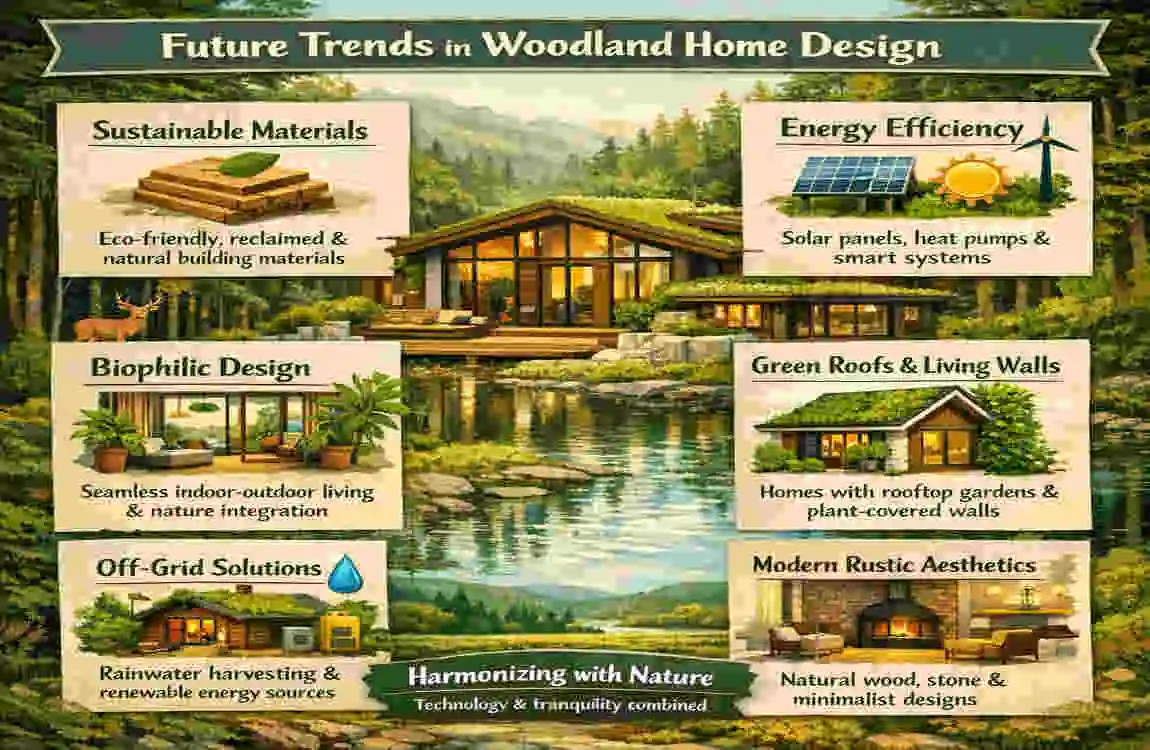
The future of woodland homes is exciting because people want homes that feel healthier, smarter, and more connected to nature.
Biophilic Design
Biophilic design focuses on bringing nature into the home in a deeper way. This can include natural light, organic materials, indoor plants, and views that help reduce stress and improve well-being.
Net-Zero Homes
More homeowners are aiming for net-zero homes, where the house produces as much energy as it uses. This idea aligns well with woodland settings, as many owners already want to live more sustainably and independently.
Smart Sustainable Living
Technology will continue to improve, and homes will become more efficient and easier to manage. Smart systems will likely play a bigger role in managing comfort, energy, water, and security.
Prefabricated Woodland Homes
Prefabricated homes are also becoming more popular. They can reduce construction waste, shorten construction time, and deliver high design quality. For woodland properties, they may provide a practical way to build a modern home with less disruption to the site.
Frequently Asked Questions
What is a modern home in the woods?
A modern home in the woods is a contemporary house designed to blend with a forest environment while featuring minimalist architecture, large windows, and sustainable materials.
What materials are best for a modern woodland home?
Natural wood, stone, steel, glass, and eco-friendly composite materials are commonly used because they feel modern yet fit the natural setting.
Are modern homes in the woods energy efficient?
Yes. Proper insulation, energy-efficient windows, solar power, and sustainable construction methods can significantly reduce energy consumption.
How do you maintain privacy in a woodland home?
Strategic placement of trees, thoughtful home orientation, and landscape design help maintain privacy while keeping the home open to nature.
Is building a modern home in the woods expensive?
Costs vary depending on land, location, materials, and design complexity, but careful planning can help manage expenses effectively.
How can I make my woodland home feel more cozy?
Use warm lighting, natural textures, soft neutral colours, and comfortable furniture. A fireplace, wood accents, and layered fabrics can also help the space feel more inviting.
What style of roof works best for a modern forest house?
Simple rooflines often work best. Flat, low-slope, or clean gabled roofs can support the modern look while fitting well with the natural surroundings.
Can a modern home in the woods still feel warm and inviting?
Absolutely. The key is to balance clean design with natural materials, soft colours, comfortable furniture, and thoughtful lighting.
| Design Element | Key Guidelines for a Modern Woods Home |
|---|---|
| Site Integration | Nestle the home into uneven terrain; use split floor levels to reflect natural hills rather than clearing land |
| Indoor-Outdoor Flow | Install floor-to-ceiling windows to create a “camping with luxury” experience and maximize forest views |
| Materials | Use reclaimed wood, sustainably sourced fabrics, timber, glass, and metal to harmonize with nature |
| Color Palette | Reflect surrounding forest colors; incorporate earth tones plus saturated seasonal colors (greens, browns, autumn hues) |
| Architectural Style | Choose strong, clean lines with a boxy/modern form that stands out against the greenery rather than blending in |
