

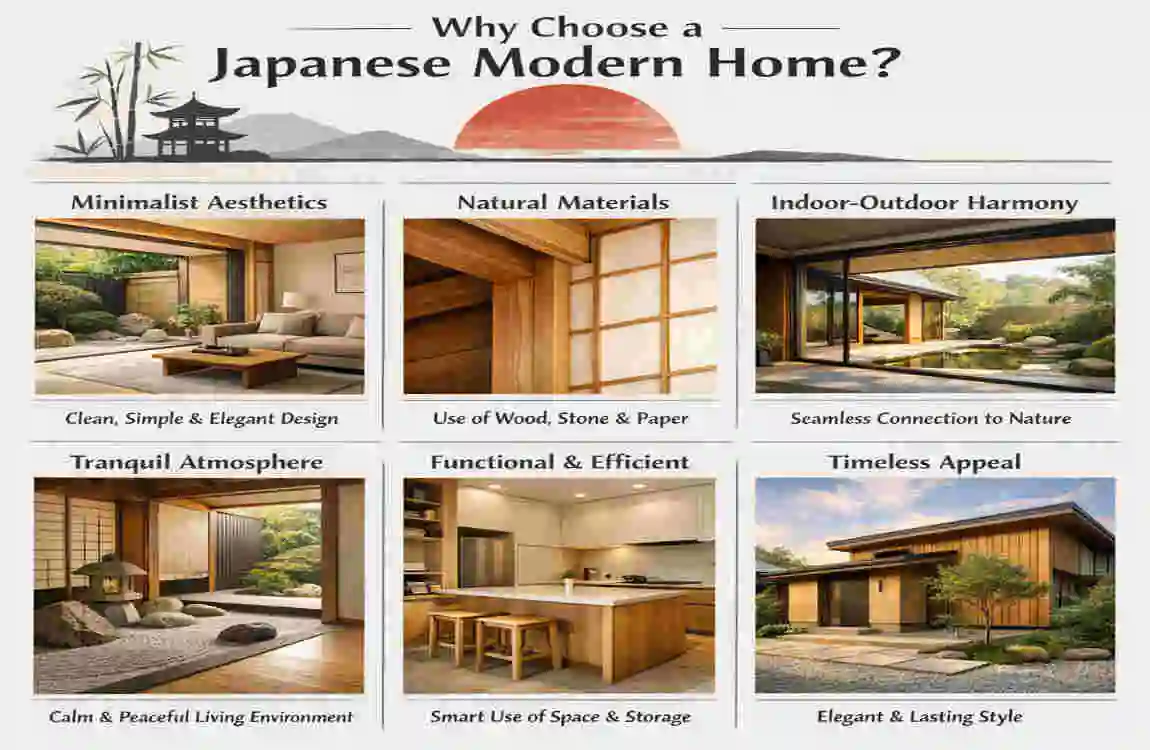
A Japanese modern home is more than a style choice. It is a way of living that values calm, order, and comfort. Many homeowners today want spaces that feel peaceful but still look stylish. That is exactly why this design has become so popular.
Japanese modern design blends traditional Japanese architecture with clean modern lines. It creates homes that feel open, natural, and easy to live in. You will often see wood, soft colours, simple furniture, and large windows that bring in sunlight. These details do more than look beautiful. They also support a calmer daily life.
What Is a Japanese Modern Home?
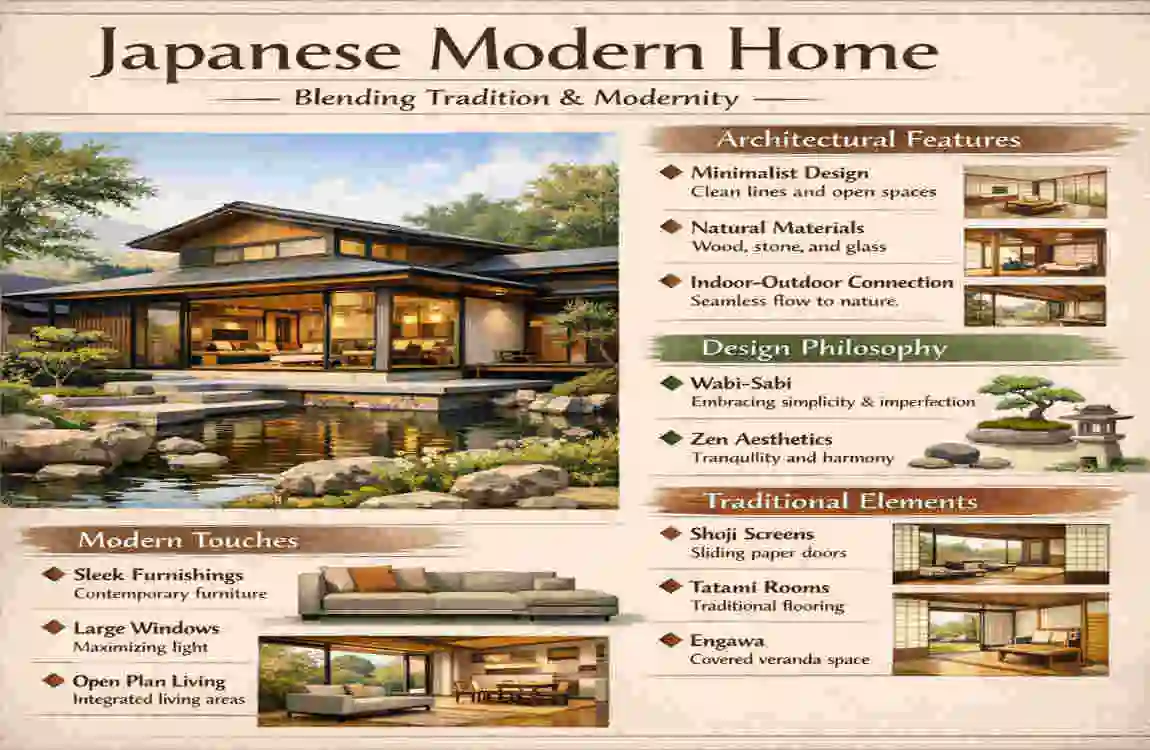
A Japanese modern house combines the calm beauty of Japanese tradition with the clean shape of modern architecture. The result is a home that feels balanced, warm, and practical.
Definition of Japanese Modern Design
This style draws inspiration from traditional Japanese homes but takes a more modern approach. You may see sliding doors, natural textures, and low furniture, but the layout often feels more open and modern. A modern Japanese home design keeps things simple while still feeling comfortable and stylish.
Origins of the Style
Japanese homes have long focused on purposeful living. Traditional homes used natural materials, simple rooms, and a close connection to the outside world. Over time, these ideas influenced modern architecture. Today, designers use those same principles in a more current way.
Core Design Philosophy
The heart of this style is easy to understand. It focuses on simplicity, harmony with nature, and mindful living. Every item in the home should have a reason to be there. That is why a Japanese minimalist home often feels peaceful rather than crowded.
Key Features of a Japanese Modern Home
A Japanese-style house is usually easy to recognise because of a few distinct design features. These features help the home feel calm, open, and functional.
Minimalist Interiors
Minimalism is one of the most important parts of this style. Rooms often have clean lines, uncluttered surfaces, and simple furniture. Instead of filling a room with decorations, the design lets the space breathe. This creates a feeling of order and calm.
Natural Materials
Wood is one of the most common materials in a contemporary Japanese home. You may also see bamboo, stone, and paper-inspired details. These materials make the home feel warm and connected to nature. They also give the space a timeless look.
Open Floor Plans
Many Japanese modern homes use open layouts. This makes rooms feel larger and helps people move easily from one area to another. A more open floor plan also supports flexible living, which is helpful for families, couples, and small homes.
Large Windows and Natural Light
Natural light is a major part of Japanese architecture. Large windows help brighten the space and create a stronger connection between indoors and outdoors. Sunlight also makes rooms feel more welcoming and less closed in.
Neutral Colour Palettes
You will often see soft whites, warm greys, beige, brown, and muted earth tones. These colours create a quiet, calming mood. They also allow the materials and natural textures to stand out without visual noise.
Benefits of Choosing a Japanese Modern Home
A Japanese modern home is popular because it offers more than good looks. It also improves the way people live every day.
Creates a Peaceful Living Environment
When a home has less clutter, it often feels less stressful. Simple spaces are easier on the eyes and the mind. That is one reason many people feel relaxed the moment they step into a Zen home design.
Enhances Functionality
This style is not just about appearance. It is also about the smart use of space. Many homes feature hidden storage, flexible rooms, and furniture that serves multiple purposes. That makes daily life easier and more organised.
Promotes Mindful Living
A Japanese-inspired home encourages you to keep only what you truly need. This can change how you think about your space. Instead of collecting too many items, you begin to value quality, meaning, and intention.
Better Connection with Nature
Japanese modern homes often include gardens, courtyards, or outdoor views. Even a small green space can make a big difference. This connection to nature can improve the mood of the home and help people feel more grounded.
Timeless Appeal
Some styles come and go, but this one lasts. A minimalist home design based on Japanese ideas usually feels stylish for many years. Its clean look and natural materials do not quickly feel outdated.
How Japanese Modern Homes Support Wellness
Many people love this style because it supports a healthier and calmer lifestyle. The design itself can help create a better daily environment.
Improved Mental Well-Being
A room without excess decoration feels less overwhelming. Fewer distractions can help the mind settle. This is one reason a calming home environment matters so much in modern life.
Increased Natural Light Exposure
Bright rooms often feel more alive. Natural light can improve your mood and make spaces feel more open. In a modern Japanese interior, sunlight is often incorporated into the design itself.
Better Airflow and Ventilation
Open layouts and proper window placement can improve airflow. Fresh air makes the home feel cleaner and more comfortable. This is especially useful in warm climates or smaller spaces.
Encouragement of Relaxation
The whole point of a Japanese modern home is to make life feel calmer. Soft colours, simple shapes, and natural textures all support rest. Even a busy person can feel more relaxed in a space that is designed with care.
Japanese Modern Home vs Traditional Modern Home
A Japanese modern home and a traditional modern home may look similar at first, but they are not the same. The difference is mostly in the feeling and philosophy behind the design.
Design Philosophy Differences
Traditional modern homes often focus on clean style and efficiency. Japanese modern homes do that too, but they also place more value on mindfulness, balance, and emotional calm.
Material Selection
A modern Japanese home often uses more natural materials, such as wood and stone. Traditional modern homes may feature a mix of materials, such as metal, glass, and concrete.
Relationship with Nature
Nature plays a much bigger role in Japanese-inspired spaces. There is often a stronger effort to bring the outside in through gardens, plants, and natural light.
Interior Aesthetics
A traditional modern home may feel sleek and sharp. A Japanese modern home usually feels softer and warmer while still staying minimal.
FeatureJapanese Modern HomeTraditional Modern Home
Materials Natural Mixed
Colours Neutral Variable
Nature Integration High Moderate
Atmosphere Calm Contemporary
Essential Elements to Include in a Japanese Modern Home
If you want to create this style in your own home, focus on a few key details.
Shoji-Inspired Sliding Doors
Sliding doors save space and give the home a light, open feeling. They are a smart choice for smaller rooms or areas that need flexibility.
Tatami-Inspired Spaces
You do not need traditional tatami mats to enjoy the look. Even a simple floor area with soft textures can create a quiet resting space.
Indoor Plants
Plants bring freshness and colour into the home. They also strengthen the connection between the indoor space and the natural world.
Zen-Inspired Gardens
Even a small outdoor corner can become peaceful with stones, greenery, and simple lines. A quiet garden adds balance to the home.
Low-Profile Furniture
Low furniture creates a grounded feeling and helps the room look open. It also supports the simple, calm look of modern JapaneseJapanese home design.
Hidden Storage Solutions
Storage is important in a modern Japanese home. When things have a place to go, the house stays clean and visually peaceful.
Is a Japanese Modern Home Suitable for Every Lifestyle?
Yes, in many cases it is. This style adapts well to different kinds of homeowners.
Families
Families benefit from open layouts and flexible rooms. These spaces make it easier to spend time together while still keeping the home organised.
Professionals
If you work from home, this style can support focus and calm. A quiet, uncluttered environment makes it easier to think clearly.
Retirees
Simplicity and comfort are very helpful for retirees. Easy-to-use layouts and less clutter can make daily living more comfortable.
Urban Homeowners
A Japanese minimalist home is a strong choice for smaller city spaces. The style helps make limited square footage feel larger and more useful.
Tips for Designing Your Own Japanese Modern Home
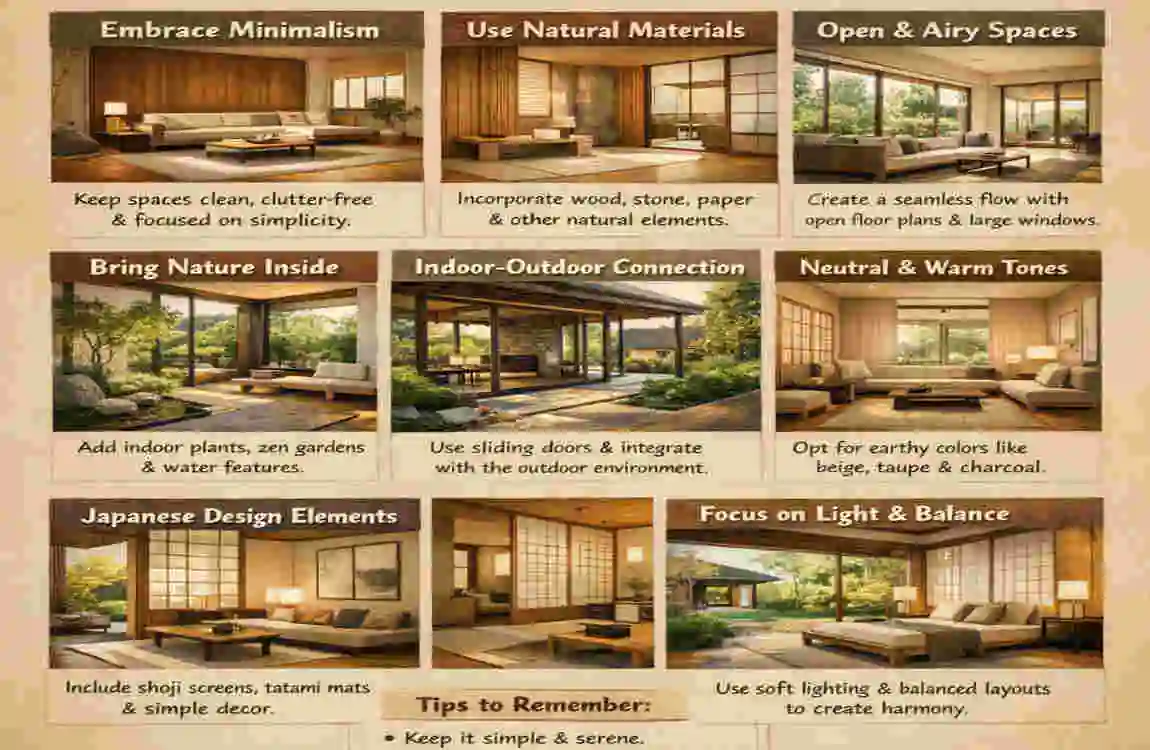
If you want this look in your space, start with small but smart changes.
Declutter Before Designing
Keep only what you need and love. A cleaner space makes the design feel stronger.
Prioritise Natural Materials
Choose wood, stone, linen, and similar textures. They make the room feel more grounded and welcoming.
Maximise Natural Light
Use larger windows when possible, or keep window treatments light. Sunlight is a key part of the style.
Use a Neutral Colour Scheme
Soft colours create a calmer mood and help the home feel more balanced.
Create Indoor-Outdoor Connections
If you have space, add a patio, garden, or courtyard. Even a small plant area can help.
Invest in Quality Over Quantity
A few well-made pieces are better than many low-quality items. This supports the clutter-free living mindset.
Common Mistakes to Avoid
It is easy to misunderstand this style. Keep these mistakes in mind.
- Overdecorating the space
- Ignoring functionality
- Using too many bright colours
- Leaving out natural elements
- Thinking minimalism means emptiness
A Japanese modern home should feel simple yet never cold or bare. The goal is balance, not emptiness.
The Future of Japanese Modern Home Design
This style continues to grow because it fits modern life so well. People want homes that are beautiful, peaceful, and practical.
Sustainable Architecture Trends
More homeowners now care about eco-friendly living. Japanese modern design fits well with this because it already values natural materials and thoughtful planning.
Smart Home Integration
Modern technology can blend well with this style when used discreetly. Smart lighting, hidden speakers, and simple controls can improve comfort without disturbing the clean look.
Eco-Friendly Building Materials
Builders are increasingly adopting more sustainable choices in modern architecture, aligning with the values of Japanese-inspired design.
Growing Global Popularity
From city apartments to large family homes, the contemporary Japanese home is becoming a favourite around the world. Its calm style and practical layout make it easy to love.
Frequently Asked Questions
What is a Japanese modern home?
It is a home style that blends traditional Japanese ideas with modern design. It usually includes simple lines, natural materials, and calm colours.
Why are Japanese modern homes so popular?
They are popular because they feel peaceful, practical, and beautiful. They also work well in both small and large spaces.
Are Japanese modern homes expensive to build?
They can be, but not always. Costs depend on materials, size, and design choices.
What colours are used in modern Japanese home interiors?
Soft whites, beiges, greys, browns, and other earth tones are common.
How can I make my home look more Japanese modern?
Start by decluttering, using natural materials, adding plants, and choosing simple furniture.
Is a Japanese modern home suitable for small spaces?
Yes. In fact, it is one of the best styles for small homes because it uses space wisely.
| Why Choose a Japanese Modern Home Design? | Key Benefit |
|---|---|
| Minimalist Aesthetic | Clean lines, open spaces, and clutter-free rooms create a calm, peaceful environment |
| Natural Materials | Uses wood, bamboo, paper, and stone that add warmth and honor material beauty without hiding it |
| Connection to Nature | Large windows, shoji screens, and inner courtyards (tsuboniwa) bring natural light and airflow indoors |
| Energy Efficiency | Natural ventilation, thick walls, and natural insulation reduce need for heating/cooling |
| Functional Simplicity | Space utilization aligns with modern lifestyle; keeps only what you need and love |
| Zen Atmosphere | Contemplative design with low furniture, neutral tones, and balanced textures promotes introspection |
| Durability & Aging | Materials are chosen to age beautifully over time, accepting natural change |
| Earthquake Resilience | Modern Japanese homes are built with better earthquake-proofing than traditional structures |
