

If you are reading this, there is a good chance you are standing at the start of a major decision. Maybe a fire damaged your home. Maybe a storm left it beyond repair. Or maybe you bought an old property and decided that a full teardown and rebuild makes more sense than patching up problems one by one.
Houses reconstruction means rebuilding a home from the ground up after demolition, major damage, or a full teardown. It is different from renovation, where you keep much of the existing structure and improve selected parts. Reconstruction is bigger, more expensive, and more detailed. It often includes demolition, foundation work, framing, roofing, plumbing, electrical systems, interior finishes, permits, and more.
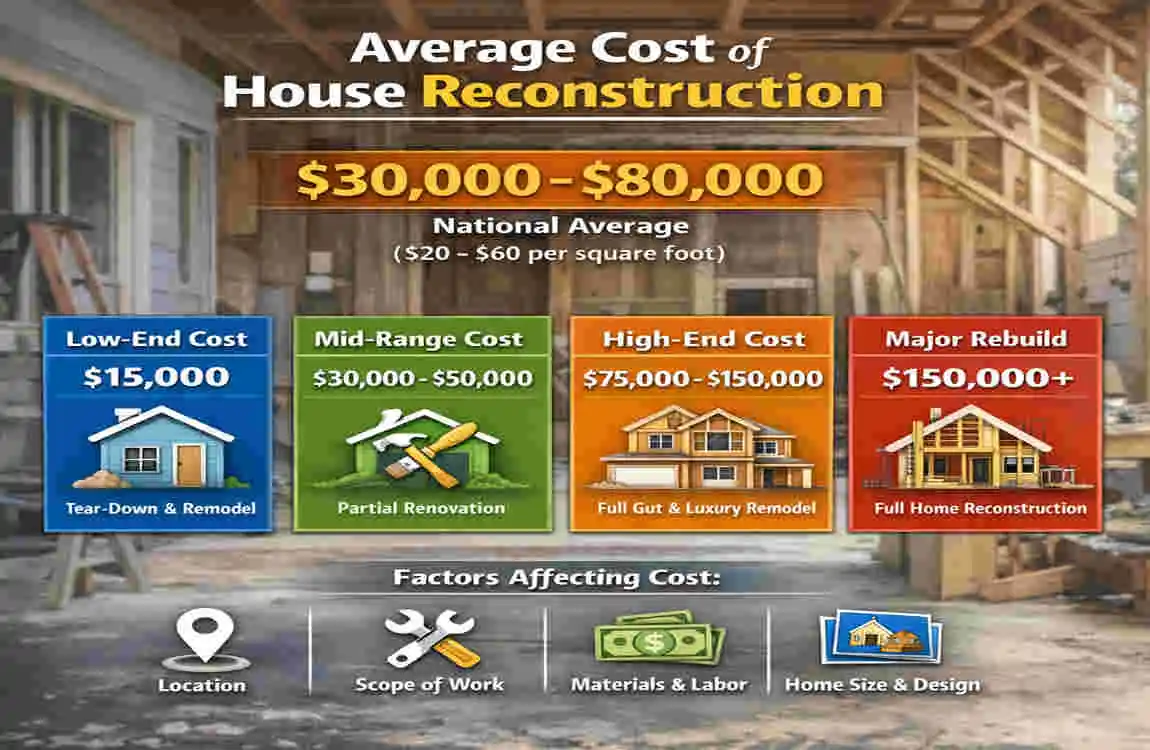
For many homeowners, the national average falls between $135,000 and $525,000, with a common range of about $100 to $500 per square foot. That is widespread, but it reflects the reality of rebuilding. A simple, modest home costs much less than a custom build with Premium finishes, complex design, or labor markets that are expensive.
Average Houses Reconstruction Costs in 2026
When people ask about houses reconstruction, they usually want one number. But in reality, the cost depends heavily on the size of the home, the location, the quality of materials, and the type of work required.
A small rebuild may stay near the lower end of the range. A larger or custom project can climb very quickly. That is why cost estimates should always be treated as a starting point, not a final answer.
National Average Cost Range
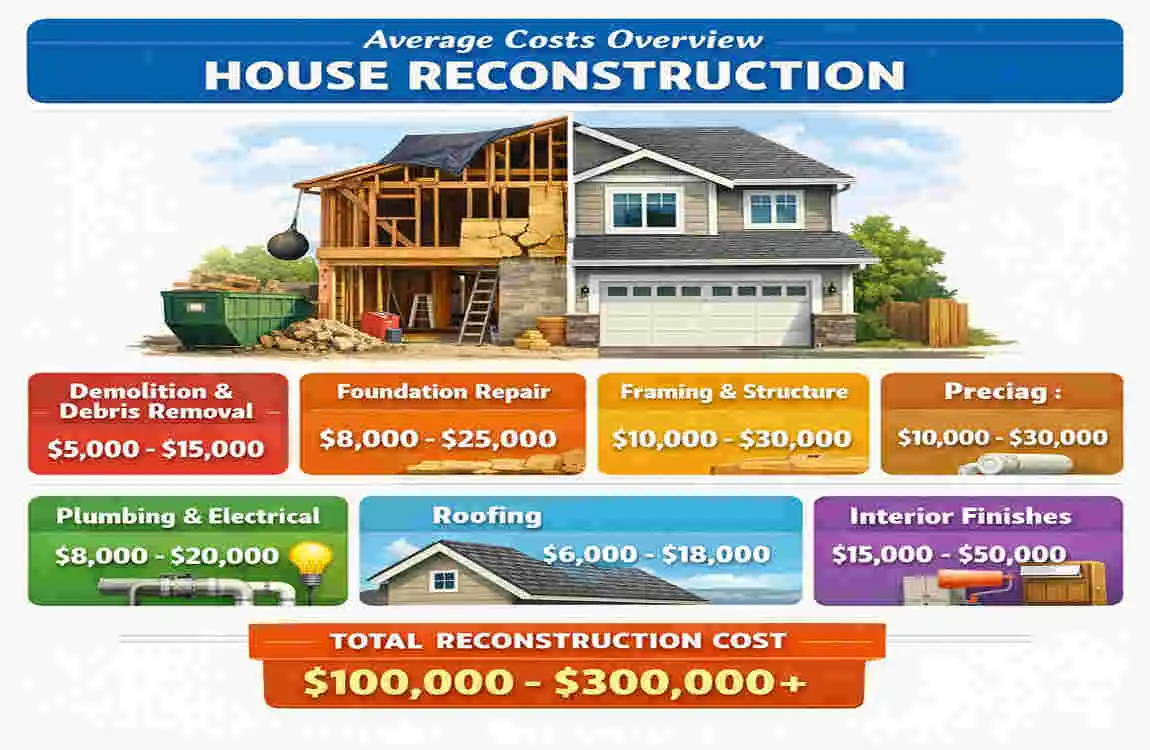
For a typical home rebuild in the U.S., the average total cost is often around $320,000, which works out to roughly $150 per square foot. Smaller homes, such as a 1,250-square-foot house, may fall between $125,000 and $312,000. Larger homes around 2,500 square feet can range from $250,000 to $625,000.
That range may seem broad, but it reflects the many ways a rebuild can be shaped. A basic structure with standard finishes will stay much lower than a home with custom cabinetry, high-end flooring, Premium windows, or luxury bathrooms.
Cost Per Square Foot
The most common way to estimate houses reconstruction is by square footage.
Here is the simple rule of thumb:
- Basic rebuild: around $100 per square foot
- Mid-range rebuild: around $150 to $250 per square foot
- Luxury rebuild: around $300 to $500 per square foot
This method gives you a quick estimate, but it does not tell the full story. Two houses with the same square footage can still cost very differently. One may be a straightforward single-story design. Another may include complex rooflines, high ceilings, extra bathrooms, or custom finishes.
Regional Differences Matter
Your location can significantly affect the budget.
In a city with high labor costs, higher permit fees, and expensive materials, the same rebuild can cost far more than in a smaller or less crowded area. In some regions, delays or shortages may also push prices higher.
If you are comparing quotes for houses reconstruction, always keep location in mind. A price that seems high in one area might actually be normal in another.
Pakistan and Lahore Cost View
For readers in Pakistan, especially in Lahore, rebuild costs may follow a different pattern. Local construction calculators often show a rough range of PKR 3,000 to 6,000 per square foot, depending on the design, material quality, labor rates, and finishing level.
This is why it is important to use local pricing tools and contractor quotes rather than relying solely on international averages. The market in Lahore, for example, may be affected by brick rates, cement costs, finishing preferences, and availability of skilled labor.
Cost Table for Common Home Sizes
Here is a simple table of house reconstruction costs based on common size estimates.
House Size (sq ft)Low-End CostHigh-End CostAvg Cost
1,250 $125,000 $312,500 $219,000
1,500 $150,000 $375,000 $262,500
2,000 $200,000 $500,000 $350,000
2,500 $250,000 $625,000 $437,500
These numbers are useful for early planning. Still, your final house reconstruction budget should be based on real contractor quotes, site conditions, and material choices.
Why 2026 Costs May Be Higher
In 2026, many homeowners are seeing higher rebuild costs because labor, materials, and compliance requirements keep changing. Even a small increase in labor rates can add thousands to a project. Supply chain issues, inflation, and local shortages can all push the final number upward.
That is why it is smart to build a buffer into your budget. A plan that looks fine on paper may fall short once the project begins.
Key Factors That Affect Houses Reconstruction Costs
No two reconstruction projects are exactly alike. That is why houses reconstruction pricing can vary so much from one house to another.
Some factors are easy to see. Others are hidden until work begins. If you understand them early, you can budget more accurately and avoid unpleasant surprises.
Location
Location is one of the biggest cost drivers.
A rebuild in a busy urban area often costs more than one in a rural or suburban area. Labor rates tend to be higher in cities. Materials may also be more expensive because of transport and demand. Permits can take longer, extending the overall project timeline.
If you are rebuilding in a place like urban Lahore, you may face different price pressures than someone building in a smaller town. In many cases, local shortages can add 10% to 20% to the budget.
Size and Design
The larger the home, the more it costs to rebuild.
That part is easy to understand. But design complexity matters a lot too. A simple rectangular home is usually cheaper to rebuild than a house with multiple levels, custom roof shapes, large spans, or unusual architecture.
Custom features can add around 15% or more to the total project cost. These features may include:
- High ceilings
- Decorative windows
- Custom floor plans
- Unique rooflines
- Built-in shelving
- Premium trim work
When you are planning houses reconstruction, every design choice affects the budget.
Materials
Material quality can make or break your budget.
Standard materials usually keep costs under control. Premium materials push them higher very quickly. For example, a home built with basic brick and standard finishes will cost less than one using marble flooring, hardwood throughout, imported fixtures, or designer tiles.
A Premium finish package can raise the total by 30% or more.
You do not always need the most expensive option. In many cases, smart material choices can give you a clean, durable result without blowing up your budget.
Labor and Skilled Trades
Labor is another major cost area.
You need skilled workers for framing, roofing, plumbing, electrical, HVAC, finishing, and inspections. These jobs cannot be rushed or done carelessly. If you cut corners here, you may pay more later.
A full-house reconstruction project often requires several trades working in sequence. Plumbers and electricians are especially important because their work affects safety, comfort, and code compliance. Some markets show professional rates around $325 per day for specialized work, though this varies by region and skill level.
Demolition and Site Clearing
Before the new home goes up, the old structure often has to come down.
Demolition is not just about tearing walls apart. It can include hauling debris, sorting waste, clearing the site, and preparing the land for a new foundation. Depending on the property, demolition can take up 5% to 10% of the total budget.
If the house has asbestos, old wiring, or damaged materials that require special handling, the cost can increase further.
Permanent Features and Add-Ons
Some parts of a home cost more because they are built into the structure.
These include:
- Garages
- Retaining walls
- Porches
- Extra bathrooms
- Basements
- Outdoor structures
These features can add $10,000 or more depending on size and complexity. In a full houses reconstruction, these add-ons should be planned from the beginning, not added as an afterthought.
Permits, Rules, and Inflation
Permits may not seem exciting, but they matter.
Every city or local authority has its own requirements. You may need approvals for demolition, foundation work, plumbing, electrical, and occupancy. These fees may not be huge on their own, but they add up.
In 2026, inflation and changing building rules may also raise costs by around 5% or more in some places. That is why your budget should always include a cushion.
How Location Affects Houses Reconstruction Costs
To make it simple, here is the basic comparison:
U.S. Projects
In the U.S., costs are often higher because of labor rates, permit fees, and stricter building standards. Material quality and energy-code requirements can also increase the total.
Pakistan Projects
In Pakistan, the cost structure looks different. Local labor can be more affordable, but price changes in cement, steel, bricks, and finishing materials can still create serious budget swings. In Lahore, for example, market conditions and contractor availability can affect your total more than you may expect.
No matter where you rebuild, the core rule stays the same: houses reconstruction costs are shaped by local realities, not just square footage.
Detailed Houses Reconstruction Cost Breakdown
A big part of smart planning is knowing where the money goes.
Many homeowners only think about the final total. But when you break the budget into pieces, it becomes easier to manage, compare quotes, and spot areas where you can save.
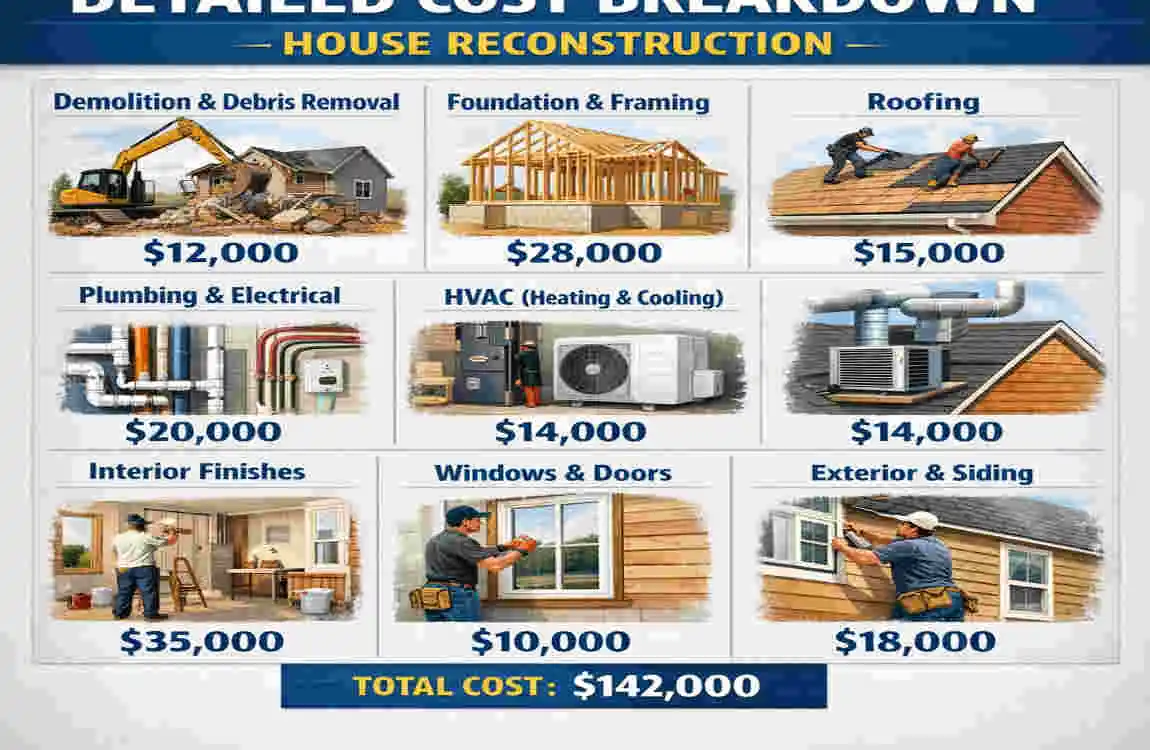
The table below gives a simple overview of a typical houses reconstruction budget.
CategoryAvg Cost Range (+VAT)Notes
Demolition $5,000–$15,000 Full teardown
Foundation $10,000–$30,000 Per 2,000 sq ft
Framing/Structure $20,000–$60,000 Wood vs. steel
Roofing $8,000–$20,000 Asphalt shingles
Electrical Rewiring $4,000–$8,500 Full house
Plumbing/Heating $3,000–$8,500 New systems
Windows/Doors $2,500–$8,000 Energy-efficient options
Kitchen $7,000–$25,000 Mid-range finishes
Plastering/Paint $5,000–$26,000 Walls and ceilings
Total $135,000–$525,000 Avg $320,000
Demolition
Demolition is the first step in many full rebuilds.
This includes tearing down the old structure, removing waste, and cleaning the site. If the property is large or difficult to access, demolition may cost more. If hazardous material is present, the price rises again.
This part of the job can feel fast, but it still requires planning. Once the old house is gone, every next step depends on how well the site was prepared.
Foundation Work
The foundation is one of the most important parts of any rebuild.
If the foundation is weak, poorly designed, or damaged, the entire project can suffer. Good foundation work helps the home stay stable for years. Costs vary depending on soil conditions, foundation type, and size of the structure.
For houses reconstruction, this is not the place to cut corners.
Framing and Structure
Framing creates the house’s skeleton.
This is where walls, floors, and roof structures begin to take shape. Wood framing is often cheaper than steel, but steel may be used in certain designs or locations. The choice of structure can change both cost and durability.
If your home has a complex layout, framing work may take longer and require more labor.
Roofing
Roofing is another major expense.
A standard asphalt shingle roof is usually more affordable than metal, tile, or specialty roofing. Still, even a simple roof can become expensive if the house is large or has several slopes and angles.
A good roof protects the whole investment. In houses reconstruction, it is worth choosing materials that balance cost, durability, and local weather conditions.
Electrical Work
Electrical systems are not just about lights and outlets.
They support safety, comfort, appliances, and modern living. Full rewiring is often necessary in reconstruction projects, especially if the old wiring was damaged or outdated.
This is a job for qualified professionals only. Safety matters more than saving a little money upfront.
Plumbing and Heating
Plumbing and heating are closely linked to daily life.
New pipework, fixtures, water heaters, and heating systems can add a meaningful amount to the total budget. If the house layout changes, plumbing lines may need to be moved or redesigned.
This is one area where a clear plan helps. If the kitchen and bathrooms stay in similar positions, the project may be simpler. If you move them around, costs may rise quickly.
Windows and Doors
Windows and doors affect both appearance and energy use.
Better windows can improve insulation and lower long-term energy bills. Strong doors improve security and comfort. These items may seem small compared with the rest of the project, but they still make a noticeable difference in the final budget.
Kitchen and Interior Finishes
The kitchen often becomes one of the most expensive rooms in the house.
Cabinets, counters, sinks, fixtures, flooring, and appliances all add up. Bathrooms can also become costly if you choose Premium tile, modern vanities, or upgraded fittings.
Interior finishes are where style and budget meet. This is where many homeowners want a beautiful result, but it is also where costs can creep up quietly.
Paint, Plaster, and Final Touches
The last stage is often the most satisfying.
Walls are smoothed, painted, and finished. Ceilings are completed. The house finally starts to look like a home again. Yet even these final touches can take a large bite out of the budget, especially in bigger properties.
Budget Split at a Glance
A typical houses reconstruction budget often breaks down like this:
- 40% structure and exterior
- 30% interior finishes
- 20% systems like plumbing, electrical, and heating
- 10% permits, design fees, and unexpected costs
That split isn’t exact for every project, but it gives you a practical sense of where the money usually goes.
Houses Reconstruction vs. Renovation
People often mix up reconstruction and renovation, but the difference is important.
If you understand it clearly, you can make the right choice for your property and your budget.
What Is Reconstruction?
Houses reconstruction means rebuilding the home, often from scratch, after demolition or serious damage. In many cases, most or all of the original structure is gone before work begins.
This option is usually chosen when:
- The property has severe damage
- The home is unsafe
- The structure is outdated beyond repair
- A full redesign is more practical than repair
What Is Renovation?
Renovation means improving parts of the home while keeping much of the original structure.
Examples include:
- Updating the kitchen
- Remodeling bathrooms
- Replacing flooring
- Painting interiors
- Upgrading windows
Renovation usually costs less because it does not require a full rebuild.
Side-by-Side Comparison
FeatureHouses ReconstructionRenovation
Scope Full rebuild Partial update
Cost Usually $100,000+ Often $20,000–$150,000
Time Longer Shorter
Structural changes Major Limited
Best for Destroyed or unsafe homes Homes that are still sound
Long-term value Can increase value significantly Good, but more limited
Which One Should You Choose?
If the structure is damaged beyond practical repair, houses reconstruction is often the better choice.
If the house is still solid and only needs an update, renovation may save money and time.
A reconstruction can also create long-term value. In many cases, a new home on an existing lot can raise market appeal by 20% to 50% over time, especially when the new design is more functional and energy-efficient.
A Simple Example
Imagine a three-bedroom home so damaged it cannot be repaired properly.
A rebuild might cost around $313,000 depending on size, location, and finish level. That sounds high, but if the house was beyond saving anyway, reconstruction may yield a cleaner, more practical result than endless repair work.
The key is to compare the rebuild cost with the finished home’s real value, not just the emotional value of the old one.
Budgeting Tips for Houses Reconstruction
Good budgeting can make a stressful project much easier.
You may not be able to control every cost, but you can control how well you prepare. That alone can save you a lot of money.
Get at Least Three Quotes
Never rely on just one estimate.
Different builders may approach the same houses reconstruction project in different ways. One may include higher-quality materials. Another may leave out important details. A third may offer a lower number but cut too many corners.
When you compare multiple quotes, look at:
- Labor scope
- Material quality
- Timeline
- Permit handling
- Warranty terms
The cheapest quote is not always the best value.
Add a Contingency Buffer
Always set aside extra money.
A 20% contingency is a smart starting point for a major rebuild. Why? Because hidden issues show up often. Soil problems, weather delays, supply changes, and code requirements can all affect the final bill.
If your budget is too tight, a single surprise can cause major stress.
Decide What You Can DIY
Some tasks can be done yourself. Others should never be touched without professional training.
You may be able to save money on things like:
- Painting
- Basic cleanup
- Simple landscaping
- Minor finishing work
But you should leave these to licensed pros:
- Electrical rewiring
- Plumbing installation
- Structural work
- Gas line work
- Roof framing
In houses reconstruction, safety should always come first.
Choose Standard Materials Where It Makes Sense
Luxury does not always mean better.
Standard materials can still look attractive, last a long time, and keep your project on track. You can often save money by using:
- Mid-range flooring
- Standard cabinetry
- Common tile sizes
- Durable but simple fixtures
This does not mean your home has to look plain. It just means you spend wisely.
Consider Phased Work
If your budget is limited, phased work may help.
You might complete the most important parts first, then finish nonessential spaces later. For example, you may prioritize the structure, kitchen, bathrooms, and living areas before tackling a basement or outdoor features.
This approach can make houses reconstruction feel more manageable.
Use Insurance and Financing Carefully
If your home was damaged by fire, flood, or another covered event, insurance may help pay for the rebuild. But even then, the coverage amount may not match the actual cost unless the policy was set up correctly.
That is why underinsurance is such a serious issue.
You may also use loans or other financing options, but make sure the monthly burden fits your income. A rebuild should restore stability, not create a new financial strain.
Simple Budgeting Checklist
Before work begins, make sure you have:
- A site survey
- Basic design plans
- Several contractor quotes
- Permit estimates
- A contingency fund
- A realistic timeline
- Clear priorities for must-have vs. nice-to-have features
This checklist keeps the project grounded and helps you avoid emotional spending.
Common Mistakes to Avoid in Houses Reconstruction
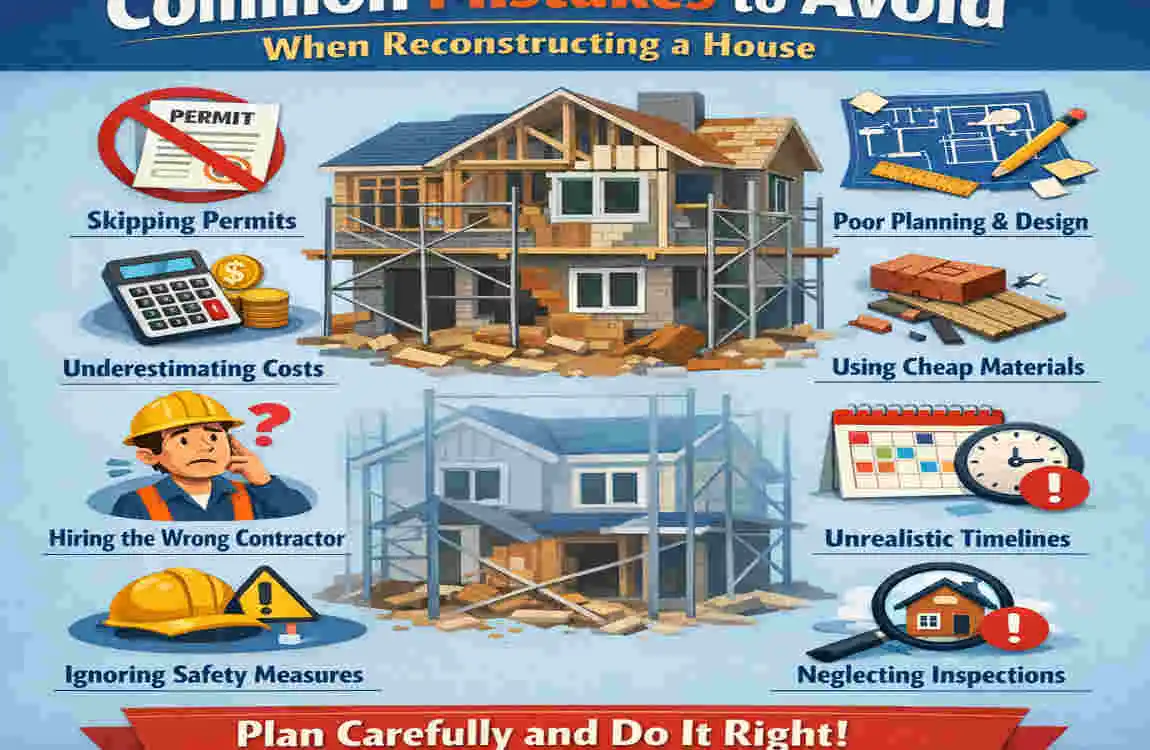
Many cost overruns occur because homeowners make avoidable mistakes.
The good news is that these mistakes are easy to spot once you know what to look for.
Ignoring Hidden Costs
Many people focus only on the visible parts of the home.
But hidden costs often include:
- Demolition cleanup
- Permit fees
- Temporary living costs
- Site preparation
- Waste removal
- Extra inspections
If you do not plan for these items, your budget may fall short very fast.
Underestimating Inflation and Location
A price estimate from last year may not work today.
Inflation, labor shortages, and local demand can all change the numbers. A quote that seemed fair a year ago might now be low. If you are planning a house reconstruction, always check current rates rather than relying on old figures.
Skipping Qualified Professionals
Some homeowners try to save money by handling plumbing or electrical work without proper help.
This can create serious risks. Faulty wiring can pose a fire hazard. Poor plumbing can cause leaks, mold, and damage. In the long run, bad work usually costs more to fix than it would have cost to do right the first time.
Not Planning for Delays
Construction rarely runs perfectly on schedule.
Weather, permits, inspections, and material deliveries can all cause delays. If you do not plan for that reality, the project can quickly become frustrating.
Forgetting the Final Finish Level
A lot of people budget for the shell of the home but forget the finish level.
A house does not feel complete until the floors, paint, fixtures, cabinets, trim, and appliances are installed. These finishing touches can add a large amount to the final houses reconstruction cost.
Visualizing the Houses Reconstruction Process
One helpful way to think about a rebuild is to picture it in phases.
A typical project often moves like this:
- Assessment and planning
- Demolition and clearing
- Foundation and structure
- Roofing and enclosure
- Electrical, plumbing, and HVAC
- Interior finishes
- Final inspection and handover
This sequence matters because one stage depends on the next. If the foundation is late, framing cannot begin. If framing is delayed, electrical and plumbing work must wait as well. That is why timing is just as important as money in houses reconstruction.
A before-and-after style infographic can be useful here because it helps homeowners see the full journey from damaged site to finished home. It also makes the process feel less overwhelming.
Practical Cost-Saving Ideas Without Sacrificing Quality
Saving money does not have to mean building poorly.
In fact, the smartest savings usually come from planning, not cutting quality.
Use a Simple Design
A straightforward floor plan is often cheaper to rebuild.
Why? Because simple shapes are easier to frame, roof, and finish. You also reduce waste and labor time. If your goal is efficiency, clean lines and practical layouts usually win.
Reuse What You Can
In some projects, certain items may be salvaged or reused.
This might include:
- Light fixtures
- Doors
- Hardware
- Some appliances
- Salvageable framing materials
This depends on the condition of the property, but it can save money if handled properly.
Buy Materials at the Right Time
Material prices can change quickly.
If your builder gives you the option to purchase key items early, it may help protect your budget from price jumps. This is especially useful for items with long lead times such as windows, custom cabinetry, or specialty flooring.
Focus on Long-Term Value
Sometimes paying a little more upfront reduces future maintenance costs.
For example, a stronger roof, better insulation, or efficient windows may cost more now but save money later. In house reconstruction, the cheapest choice is not always the smartest.
Why Professional Planning Matters
Good planning is not just about design. It is about protecting your money, your timeline, and your peace of mind.
A well-planned rebuild usually starts with a site visit, a proper survey, and a clear cost estimate. It also includes realistic timelines, material selections, and permit planning.
If you are rebuilding after damage, this step becomes even more important. You may be dealing with insurance claims, temporary housing, family stress, and unexpected damage. Clear planning brings order to that process.
Professional support can also help you avoid mistakes in plumbing, electrical, and structural work. These are the areas where experience matters most.
When done well, houses reconstruction is not just about replacing what was lost. It is a chance to build something stronger, safer, and better suited to your life now.
FAQs About Houses Reconstruction
What is the average cost of houses reconstruction per square foot?
The average cost of houses reconstruction is often around $100 to $500 per square foot, depending on the size of the house, material quality, labor rates, and location.
How do I calculate my houses reconstruction budget?
Start by estimating the square footage, then multiply by a cost-per-square-foot range. After that, add separate amounts for demolition, permits, foundation work, utilities, and finishing. It is also smart to add a 20% contingency for surprises.
What factors raise houses reconstruction costs in 2026?
The biggest factors include labor inflation, material price increases, permit requirements, location, custom design features, and hidden damage found during demolition.
Is houses reconstruction more expensive than renovation?
Usually, yes. Houses reconstruction is typically more expensive because it involves tearing down and rebuilding major parts of the home. Renovation is usually cheaper because it keeps more of the original structure.
Can insurance cover houses reconstruction?
In many cases, yes, especially if the damage came from a covered event such as fire or storm damage. But coverage depends on your policy limits and whether your home was insured for the right rebuild value.
How can I reduce houses reconstruction costs without lowering quality?
Use a simple design, choose standard materials, compare several quotes, and plan carefully before work begins. You can also save by avoiding major layout changes and focusing on the most important spaces first.
What should I do first if I need a full rebuild?
Start with a site assessment, structural review, and contractor estimate. If insurance is involved, document the damage early and speak with your provider as soon as possible.
