

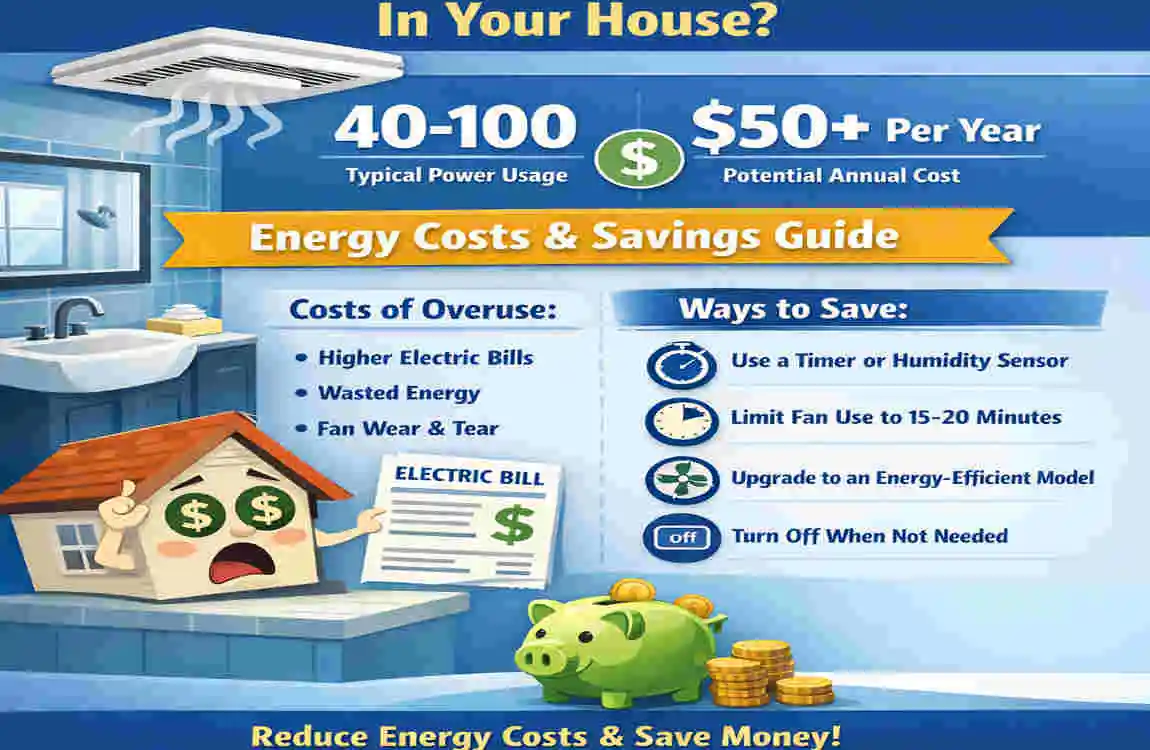
Have you ever wondered, “Do bathroom fans use a lot of electricity?” Maybe you’ve noticed your utility bills creeping up and started questioning whether your bathroom fan is secretly inflating your energy costs. It’s a valid concern, especially with rising electricity rates in regions like Pakistan, where the average cost per kilowatt-hour (kWh) ranges between PKR 0.50 and 0.70.
Here’s the good news: bathroom fans are not energy guzzlers. In fact, they are among the most energy-efficient appliances in your home. A typical bathroom fan uses between 10 and 80 watts, which translates to less than PKR 500 per year of typical use. Compare that to the cost of an air conditioner or a refrigerator, and you’ll see just how negligible the cost is.
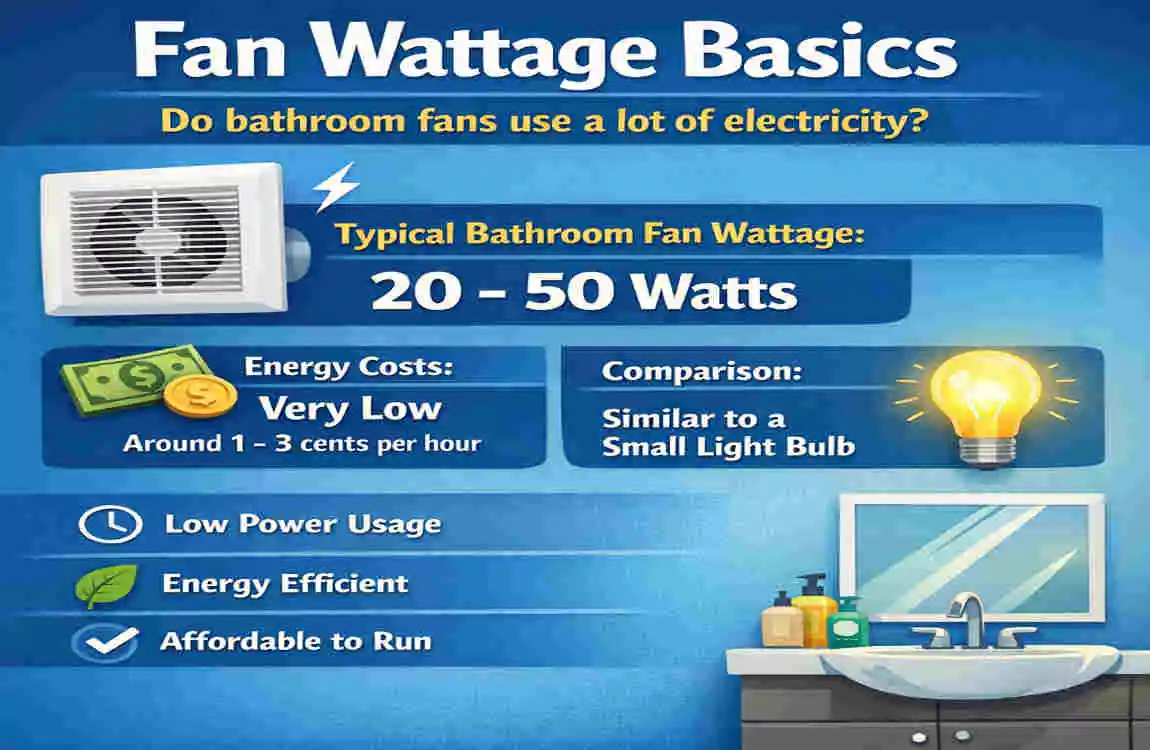
Fan Wattage Basics
How Bathroom Fans Use Electricity
Bathroom fans draw power in watts (W), which are converted to kilowatt-hours (kWh) for billing purposes. The formula is simple:
Watts x Hours of Use ÷ 1000 = Daily kWh Consumption
For example, if your fan uses 50 watts and runs for 1 hour daily, it consumes:
50W x 1hr ÷ 1000 = 0.05 kWh/day
This low energy use is why bathroom fans are considered highly efficient.
Average Wattage Ranges
The wattage of bathroom fans varies depending on the type and features. Here’s a breakdown:
Fan TypeWattsExample Models
Basic Exhaust 20-50 Broan 688 (108W max)
ENERGY STAR Certified 10-30 Delta Breez (14-19W)
With Heater 1400+ Panasonic WhisperWarm
Quiet/Trickle Models 5-36 Constant-flow models
Visualizing Wattage
To put this into perspective, a basic bathroom fan uses less energy than a standard 60W lightbulb. ENERGY STAR-certified models are even more efficient, consuming as little as 10 watts. On the other hand, heater-equipped fans can spike up to 1400 watts, but these are typically used sparingly.
Real Energy Costs
Calculating the Cost of Running a Bathroom Fan
Let’s break it down with an example. Suppose you have a 50W fan that runs for 1 hour daily. Using the formula:
50W x 1hr/day x 365 days ÷ 1000 = 18.25 kWh/year
Now, multiply this by the average electricity rate in Lahore (PKR 0.60/kWh):
18.25 kWh x PKR 0.60 = PKR 10.95/year
Yes, you read that right—just PKR 10.95 per year for standard usage! Even if you run the fan for 5 hours daily, the annual cost would still be under PKR 60.
Cost Breakdown by Usage
Here’s a table to help you visualize the annual costs based on different usage patterns:
Daily Use20W Fan (PKR/yr)50W Fan (PKR/yr)Heater Fan (PKR/yr)
30 minutes ~100 ~250 7,000+
1 hour ~220 ~550 15,000+
5 hours ~1,100 ~2,750 75,000+
Pro Tip
Check the wattage label on your fan or use an online kWh calculator to estimate your specific costs. This small step can help you better understand your energy consumption.
Comparisons to Other Appliances
How Do Bathroom Fans Stack Up?
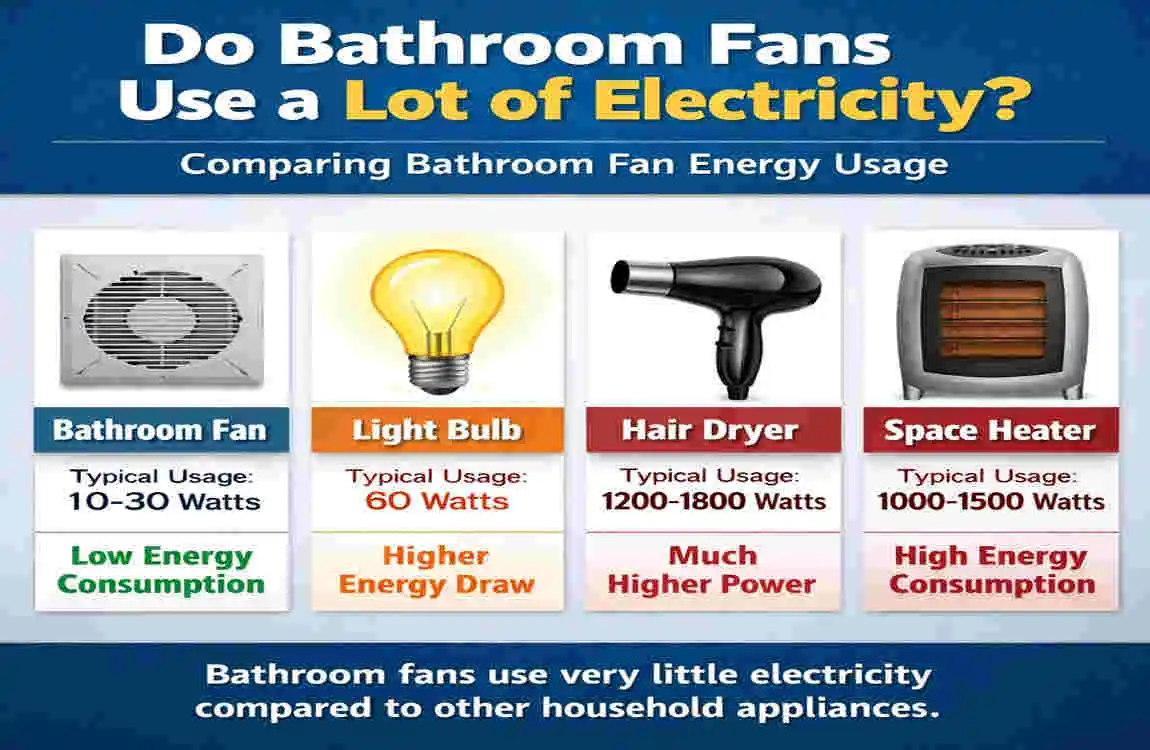
It’s easy to assume that all electrical appliances are energy hogs, but bathroom fans are the exception. Let’s compare their energy usage to other common household devices:
- Hair Dryer: 1500W (30x a basic fan)
- Refrigerator: 150W/day (3x a basic fan)
- Lightbulb: 60W (1.5x a basic fan)
- Air Conditioner: 1500W (30x a basic fan)
Why Fans Save You Money
While fans themselves use minimal electricity, they can indirectly save you money by preventing mold and reducing the need for dehumidifiers or excessive air conditioning. A well-ventilated bathroom reduces strain on your HVAC system, leading to significant savings over time.
Factors Affecting Usage
Runtime
The time your fan runs directly affects its energy consumption. For optimal efficiency:
- Short Showers: 20-30 minutes of runtime
- Long Showers: 40-60 minutes of runtime
Using a timer or humidity sensor can help prevent unnecessary energy waste.
Features
Modern fans come with energy-saving features like:
- Humidity Sensors: Automatically turn off the fan when moisture levels drop.
- DC Motors: Up to 70% more efficient than traditional AC motors.
Maintenance
A clogged or dirty fan can draw up to 20% more power. Regular cleaning and proper installation are essential for maintaining efficiency.
Top Energy-Saving Tips
Want to cut down on your energy costs even further? Here are some actionable tips:
- Upgrade to ENERGY STAR Models: These fans use 50-70% less energy than older models.
- Install Timers or Humidity Sensors: Automate your fan to run only when needed.
- Clean Your Fan Quarterly: Dust and debris can reduce efficiency.
- Seal Ducts Properly: Prevent air leaks that force the fan to work harder.
- Conduct a DIY Energy Audit: Use a multimeter to measure your fan’s actual wattage.
Best Low-Energy Fans for 2026
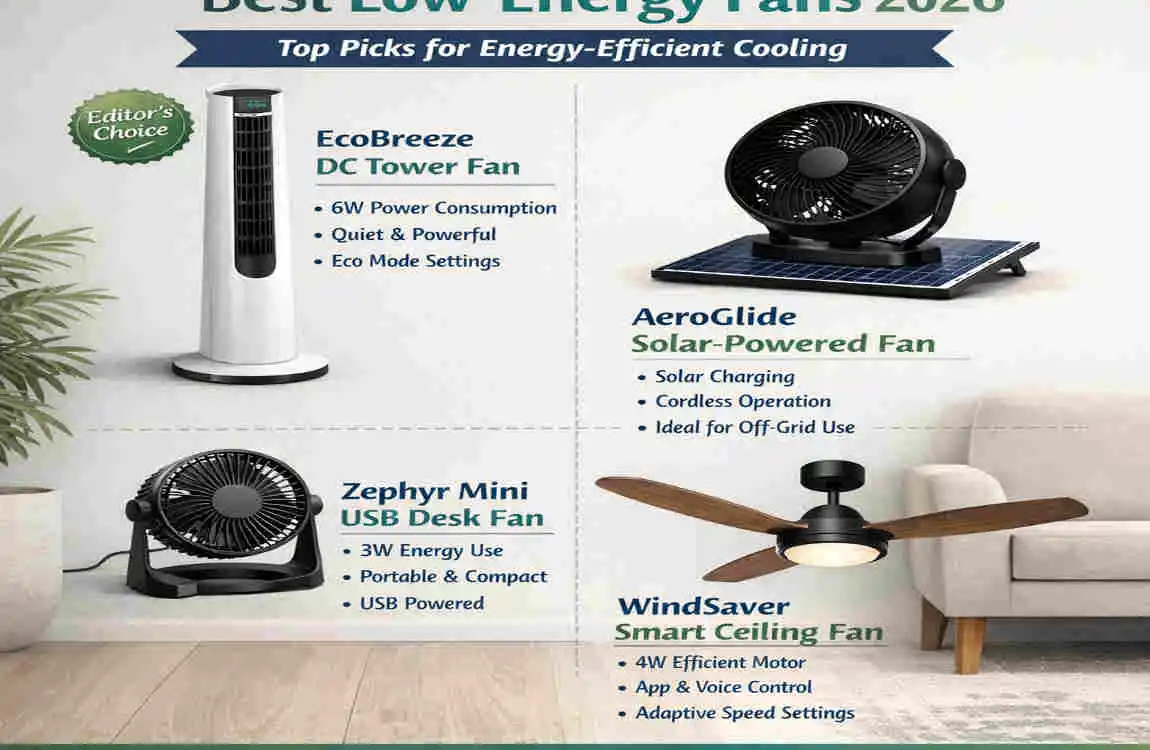
Looking for a new fan? Here are some top recommendations:
ModelCFM/WattsAnnual Cost (PKR)Price (PKR)Best For
Delta BreezGreenBuilder 80/14 ~200 15,000 Small Bathrooms
Panasonic WhisperFit 110/27 ~400 20,000 Quiet Luxury
Broan Very Quiet 80/23 ~350 12,000 Budget-Friendly
Do Bathroom Fans Use a Lot of Electricity? — FAQ
Q: Do bathroom fans use a lot of electricity?
A: No, bathroom fans use surprisingly little electricity. Most models consume between 10 to 60 watts per hour, which is less than a typical lightbulb. This means their energy use is quite minimal and usually doesn’t significantly impact your electricity bill .
Q: How much does it cost to run a bathroom fan?
A: Running a bathroom fan for an hour typically uses about 0.01 to 0.06 kWh of electricity. At average electricity rates, this translates to just a few cents or a few Pakistani rupees per day, making the yearly cost very low .
Q: Is it wasteful to leave the bathroom fan on all the time?
A: While bathroom fans use little power, running them continuously can add up over time. However, for most users, occasional or timed use is enough to keep humidity and odors in check without wasting energy .
Q: Are there energy-efficient bathroom fans?
A: Yes! ENERGY STAR-certified fans and models with DC motors can use as little as 5 to 14 watts, saving up to 50-70% energy compared to older fans .
Q: How long should I run my bathroom fan?
A: Experts recommend running the fan for about 20 to 60 minutes after showering or using the bathroom to effectively remove moisture and odors without unnecessary energy use .
