

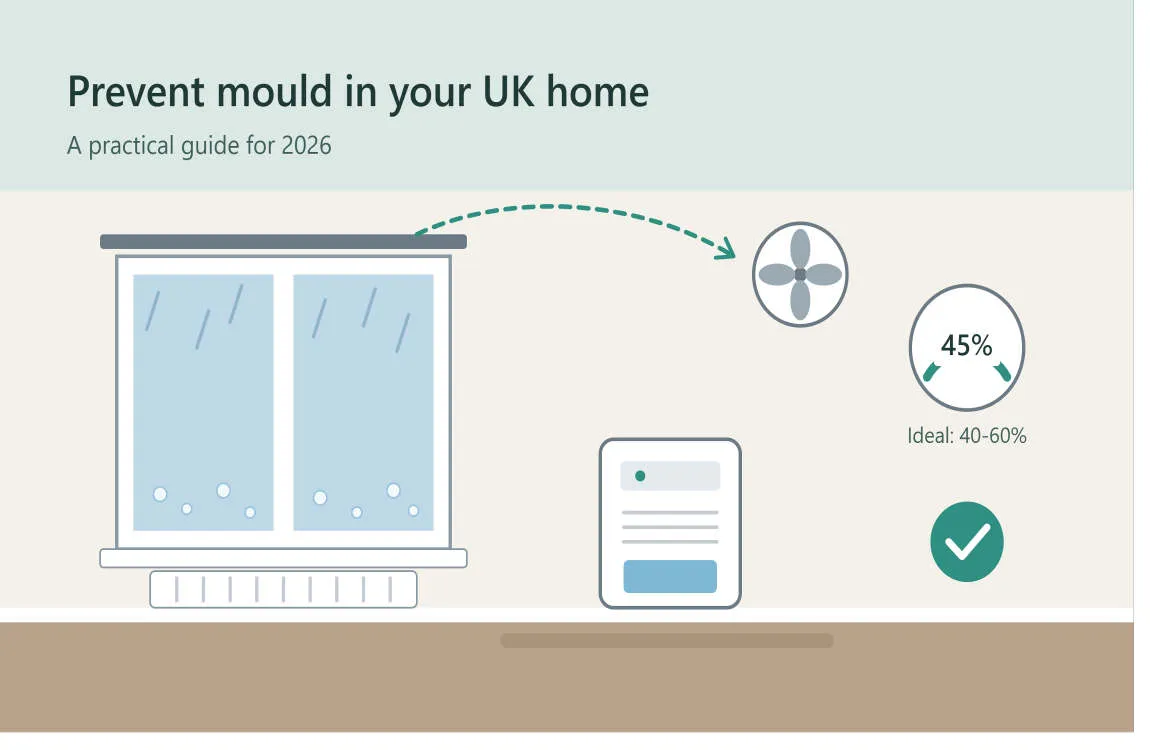
If you’ve ever wiped black spots off a bathroom ceiling or caught a musty smell behind the wardrobe, you’re not alone. Mould is one of the most common household problems in the UK, thanks to our damp climate, older housing stock and well-sealed modern homes that trap moisture.
The good news is that mould is mostly preventable. This guide covers why it forms, the daily habits that stop it, and when to call in the professionals.
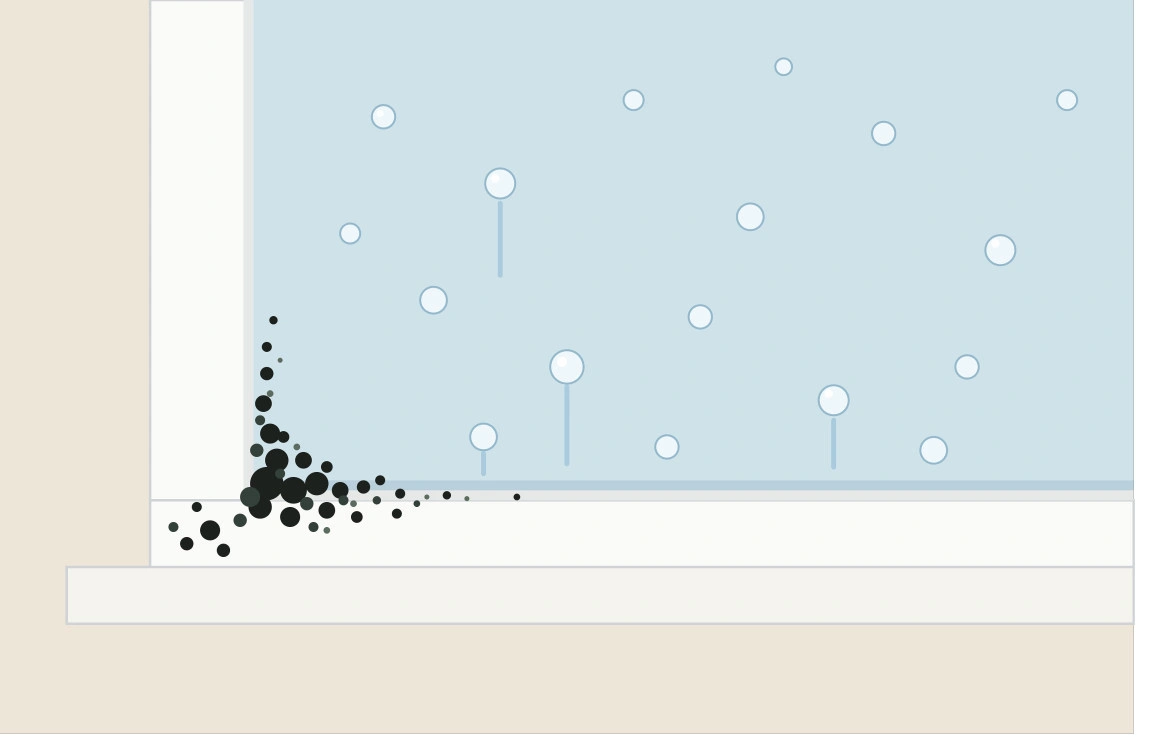
Why Mould Grows in UK Homes
Mould spores are everywhere, indoors and out. They only become a problem when they land on a damp surface and have time to grow. Three things make that likely:
- Excess moisture. Cooking, showering, drying clothes indoors and even breathing add water vapour to the air.
- Poor ventilation. Moist air has nowhere to go, so it settles on cold surfaces.
- Cold surfaces. Warm, damp air turns into condensation when it hits cold walls, windows and corners.
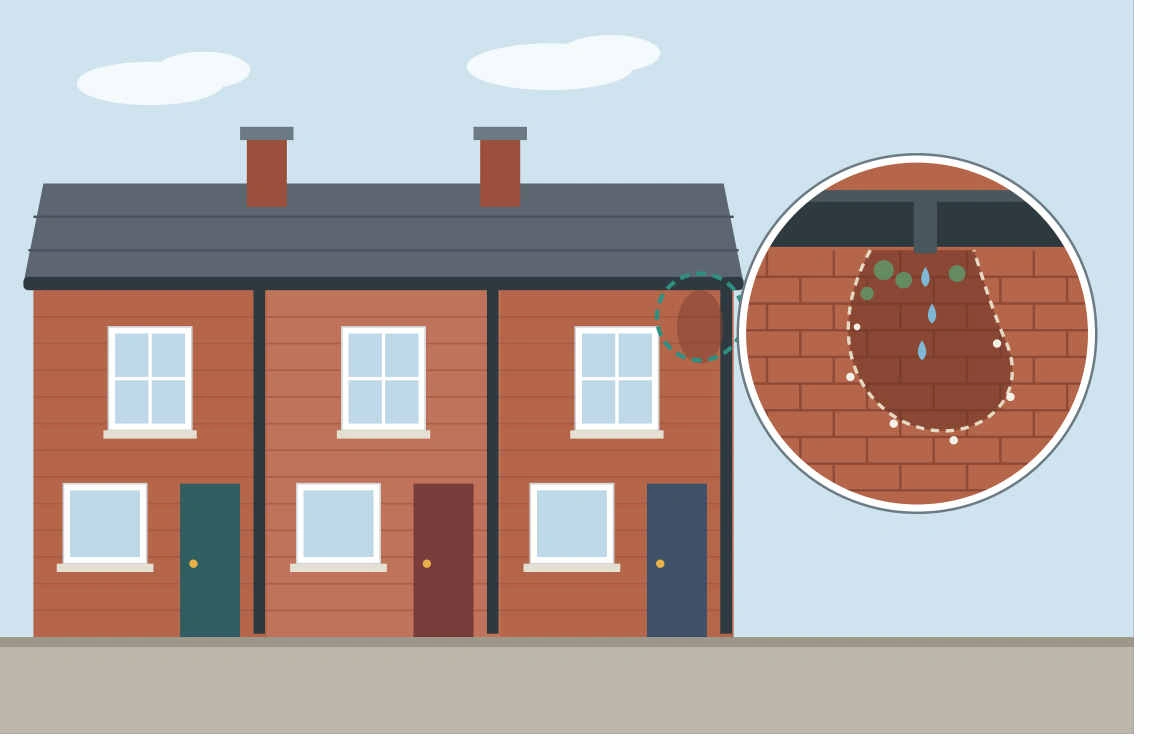
Condensation is the most common cause, but it isn’t the only one. Penetrating damp (leaking roofs, damaged gutters, cracked brickwork) and rising damp (moisture moving up from the ground) can also cause mould. Those need a repair, not just a wipe-down.
10 Ways to Prevent Mould in Your House
Ventilate every day, even in winter
Opening windows for 10 to 15 minutes a day lets moist air out. It feels counterintuitive when it’s freezing outside, but fresh air is easier to heat than damp air. Trickle vents on window frames should stay open.
Use extractor fans properly
Switch on the bathroom fan while showering and leave it running for 15 to 20 minutes afterwards. In the kitchen, use the cooker hood whenever you boil, fry or steam food.
Keep lids on pans and close the bathroom door
Covering pans cuts steam, and closing the bathroom door while you shower stops moisture drifting into bedrooms and hallways.
Dry laundry smartly
Drying clothes on radiators or airers in a closed room is one of the biggest sources of indoor moisture. Better options:
- Dry outside when the weather allows.
- Use a vented or condenser tumble dryer.
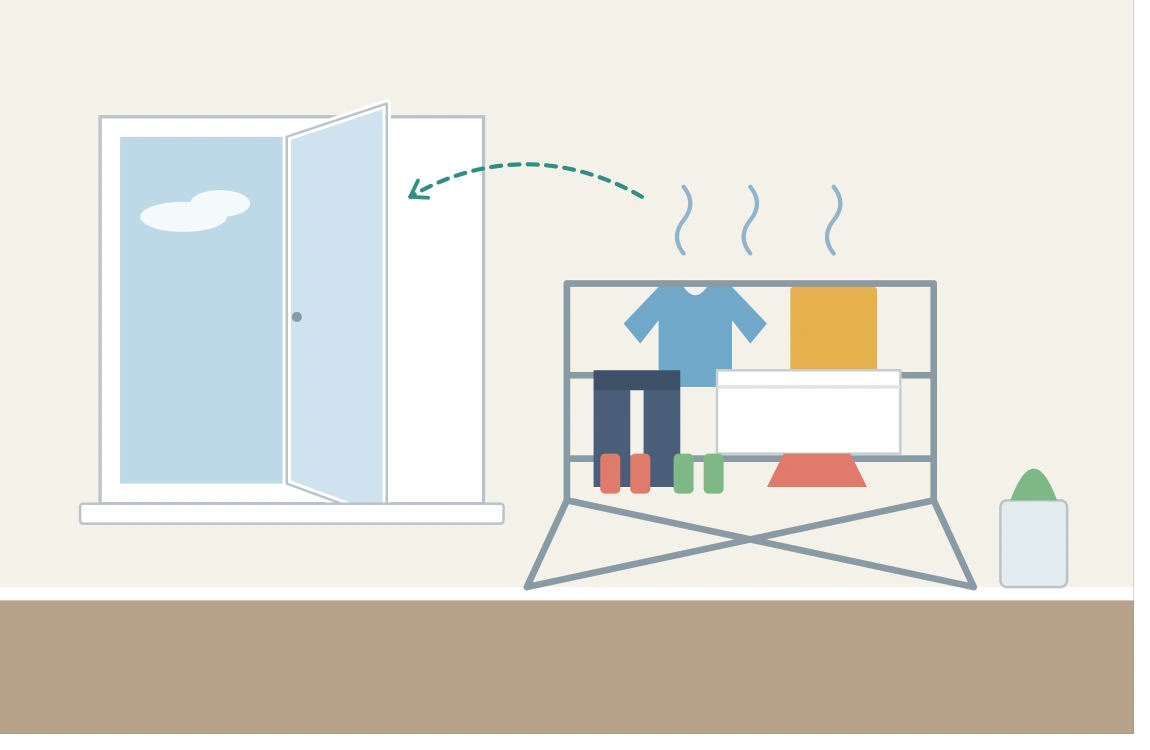
- Dry indoors in a room with a window open or a dehumidifier running.
Keep your home consistently warm
Cold walls are where condensation lands. Steady, low heating usually works better than short, intense bursts. Aim for a comfortable, even temperature (many health bodies suggest around 18°C in living areas) and keep internal doors closed so heat doesn’t escape to colder rooms.
Use a dehumidifier
A dehumidifier is one of the most effective tools for a damp home. Aim to keep indoor relative humidity between roughly 40% and 60%. A cheap hygrometer (a few pounds online) tells you where you stand.
Leave space around furniture
Pushing wardrobes and sofas flush against external walls blocks air movement. Leave a gap of a few centimetres, and avoid overpacking wardrobes.
Wipe condensation off windows
Wipe windows and sills in the morning with a cloth or window vacuum, then wring it out rather than leaving moisture to soak into frames.
Maintain the outside of your home
Many “indoor” mould problems start outside. Check for:
- Blocked or leaking gutters and downpipes
- Missing roof tiles
- Cracked render or pointing
- Garden soil piled above the damp-proof course
Insulate to raise surface temperatures
Loft, cavity wall and window upgrades make walls and glass warmer, so there’s less condensation. Check the Energy Saving Trust (energysavingtrust.org.uk) for grants and advice on insulation. Ventilation should be considered alongside any insulation work so you don’t trap moisture.

How to Remove Existing Mould Safely
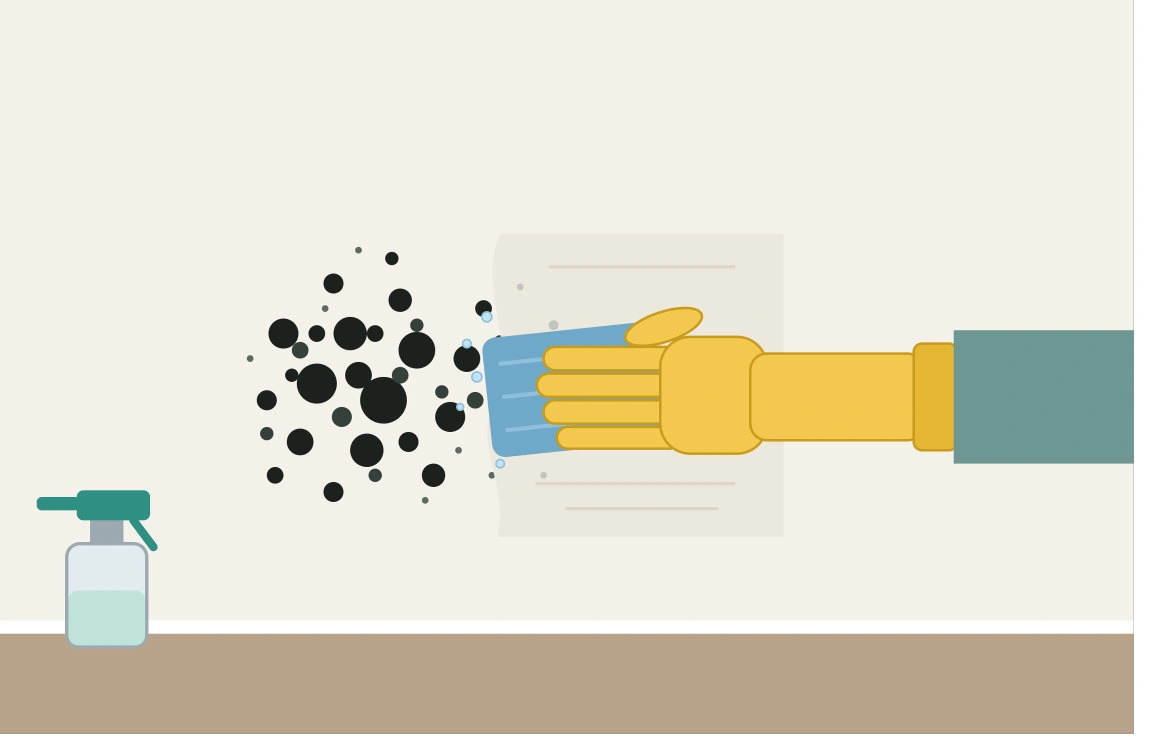
For small patches (less than about A4 size) caused by condensation:
- Open windows and wear gloves and a mask.
- Wipe the area with a damp cloth and a mould-removal spray or a mix of washing-up liquid and warm water.
- Dry the surface thoroughly.
- Don’t brush dry mould, as that spreads spores.
If mould keeps returning, covers large areas, or smells strongly, find the underlying moisture source. Painting over it with anti-mould paint alone won’t fix the cause.
Is Mould Bad for Your Health?
Damp and mould can aggravate asthma, allergies and other respiratory problems, and children, older people and anyone with a weakened immune system are most at risk. Government guidance on the health risks of damp and mould is published jointly by health and housing bodies and is a good starting point if you’re concerned: read the official GOV.UK guidance on damp and mould. If anyone in your household has symptoms you think are linked to mould, speak to your GP.
Renting? Know Your Rights (Awaab’s Law)
Mould is a hot topic in UK housing right now. Awaab’s Law was brought into English law in October 2025 and is named after Awaab Ishak, a two-year-old who died in 2020 from complications caused by mould exposure in his family’s social housing. Under the rules, social landlords must fix emergency hazards within 24 hours, investigate damp and mould within 10 working days, and make homes safe within five working days.
Scotland has now followed: Awaab’s Law came into force in Scotland on 6 October and applies to both social and private landlords. Rules for private renters in England have been extended through the Renters’ Rights reforms, so check the latest position on GOV.UK for your situation.
Official guidance also makes clear that damp and mould is not a result of “lifestyle choices” and landlords are responsible for identifying and addressing the underlying causes. If you rent and mould keeps coming back, report it to your landlord in writing, keep photos with dates, and get advice from Shelter on damp and mould problems, which explains landlord and tenant responsibilities.
FAQs
What causes mould in UK houses?
Mostly condensation from everyday moisture meeting cold surfaces, but leaks and rising or penetrating damp can also be responsible.
Does opening windows in winter really help?
Yes. Short bursts of ventilation remove humid air without cooling your home much.
What humidity level prevents mould?
Aim for 40–60% relative humidity indoors.
Can I get rid of mould permanently?
Only if you fix the cause. Cleaning removes mould, but ventilation, heating and repairs stop it coming back.
Who is responsible for mould in a rented home?
Landlords are responsible for fixing underlying causes such as disrepair or structural damp, while tenants can help with everyday ventilation and heating. Check Shelter’s guidance above for your case.
Final Thoughts
Preventing mould is mostly about controlling moisture: ventilate, heat evenly, dry laundry carefully and fix leaks fast. A few small daily habits protect your health, your belongings and your home’s value, and give you the evidence you need if you ever have to hold a landlord to account.
