
Buying a house is a major financial decision, and one of the first questions buyers ask is how much down payment they actually need. The amount depends on the home’s purchase price, the type of mortgage, the lender’s requirements, and your financial situation. While some home loans allow a relatively small down payment, paying more upfront may reduce your monthly mortgage payments and overall borrowing costs. Understanding your options can help you set a realistic budget and prepare for the additional expenses of buying a home.
Down Payment Requirements by Loan Type
Conventional Loans and Fannie Mae HomeReady (as low as 3%)
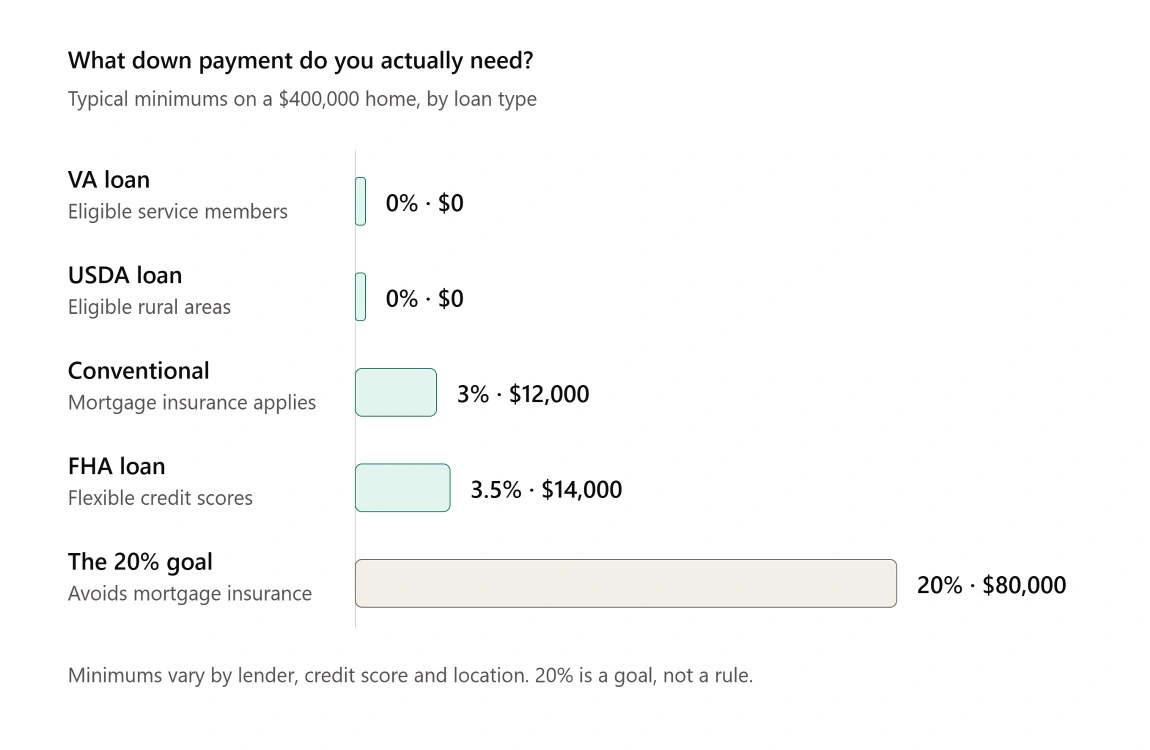
Conventional loans are not backed by a government agency. Many people assume they always require 20% down, but low-down-payment conventional programs exist. Fannie Mae’s HomeReady program allows a down payment as low as 3% for eligible home purchases, according to Fannie Mae’s HomeReady program overview (February 2026). The same document lists an income limit of 80% of area median real estate income, and first-time buyers must complete a homeownership education requirement, which Fannie Mae’s HomeView course can satisfy.
Pros: a low upfront cash requirement, flexible sources of funds (gifts and grants can be allowed), and mortgage insurance that can be removed later.
Cons: income limits apply to HomeReady, credit standards are set by lenders, and with less than 20% down you will usually pay private mortgage insurance (PMI).
FHA Loans (3.5% down with a 580+ credit score)
FHA loans are insured by the Federal Housing Administration, part of HUD. With a credit score of 580 or higher, the minimum down payment is 3.5% of the purchase price. With a score between 500 and 579, the minimum rises to 10%, according to Rocket Mortgage’s FHA down payment guide. Individual lenders often set stricter credit minimums than FHA itself.
The trade-off is mortgage insurance. FHA borrowers pay an upfront premium (commonly cited at 1.75% of the base loan amount, which can be rolled into the loan) plus an annual premium that is added to the monthly payment. How long the annual premium lasts depends on your down real estate payment, so ask your lender to show both figures in writing.
Pros: a low down payment and more forgiving credit rules.
Cons: mortgage insurance costs that can last for years, and loan limits that vary by county.
VA Loans (often 0% down)
Eligible service members, veterans, and some surviving spouses can use a VA-backed purchase loan. According to the U.S. Department of Veterans Affairs, these loans often come with no down payment as long as the sales price isn’t higher than the home’s appraised value, and the VA program does not require monthly mortgage insurance. A one-time VA funding fee may apply, and some borrowers are exempt, so check the VA’s current fee rules.
Pros: no down payment in many cases and no monthly mortgage insurance.
Cons: eligibility requirements, a Certificate of Eligibility, and an appraisal that must support the price.
USDA Loans (often 0% down)
The USDA Single Family Housing Guaranteed Loan Program helps approved lenders offer 100%-financed, no-money-down loans to eligible low- and moderate-income buyers, according to the USDA Rural Development program fact sheet. The home must be in an eligible rural area, and the program isn’t limited to first-time buyers. “Rural” is defined more broadly than many people expect, so it’s worth checking a real estate specific address with USDA’s eligibility tools before ruling it out.
Pros: no down payment and often lower overall costs for qualifying buyers.
Cons: income limits and property-location limits.
What the Numbers Look Like: A $400,000 Home
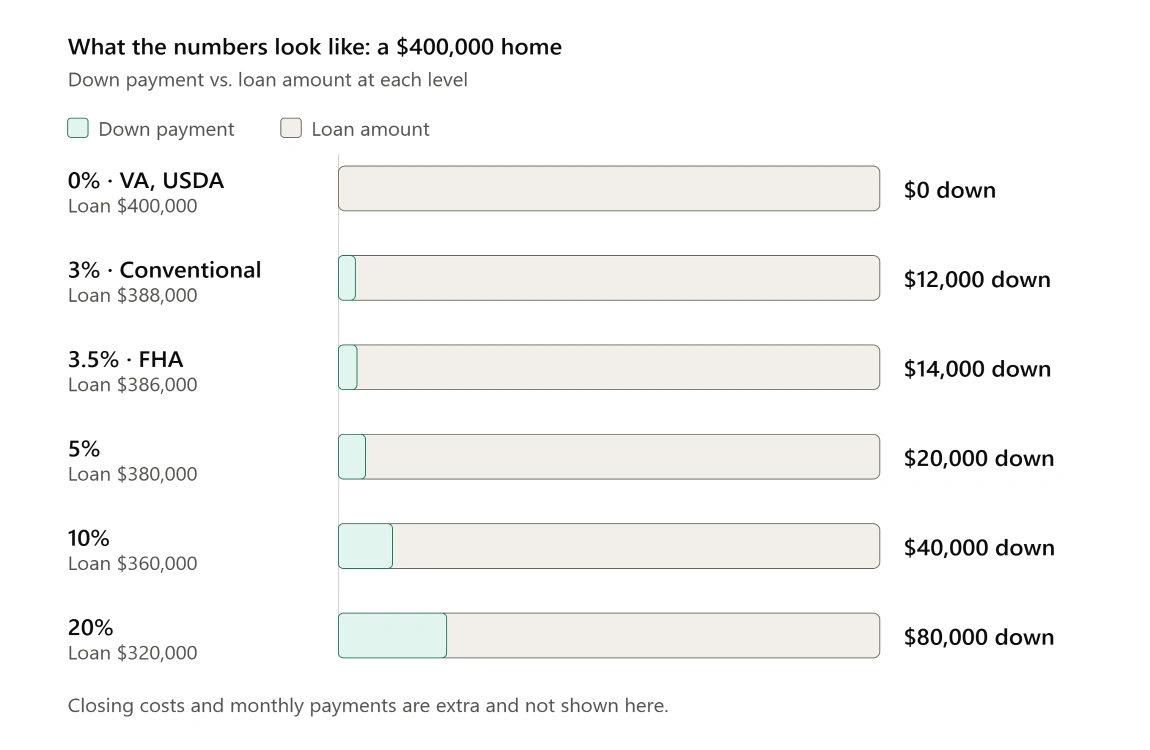
Percentages feel abstract until you turn them into dollars. This illustrative example uses a $400,000 purchase price and simple arithmetic. It ignores closing costs, fees, and insurance, which are covered in the next sections.
| Down payment | Amount | Loan amount before fees |
|---|---|---|
| 0% (VA or USDA, if eligible) | $0 | $400,000 |
| 3% | $12,000 | $388,000 |
| 3.5% (FHA minimum) | $14,000 | $386,000 |
| 5% | $20,000 | $380,000 |
| 10% | $40,000 | $360,000 |
| 20% | $80,000 | $320,000 |
The gap between 3.5% and 20% on this home is $66,000. For many households, that difference is the line between buying this year and waiting five more. It’s also why “how much should I put down?” is really two questions: what is the minimum I can put down, and what is the amount that leaves my finances healthy after closing?
Is Putting 20% Down Worth It?
A larger down payment helps in several ways. It lowers your loan balance and real estate monthly payment, and it can help you avoid PMI. The Consumer Financial Protection Bureau explains that you can ask your servicer to cancel PMI once your principal balance is scheduled to reach 80% of the home’s original value, and that servicers generally must end it automatically when the balance is scheduled to reach 78%. So PMI is not necessarily permanent on a conventional loan, though FHA mortgage insurance follows different rules.
Reasons to put more down:
- A smaller loan means a smaller monthly payment.
- You may avoid or shorten PMI on a conventional loan.
- You start with more equity.
Reasons not to drain your savings:
- Home ownership brings real estate repair and maintenance costs that renters never see.
- An emergency fund protects you from taking on high-interest debt if the water heater or roof fails.
- Money tied up in a house is hard to access quickly.
A useful rule of thumb: don’t choose a down payment so large that you can’t absorb a surprise repair in your first year.
Costs the Down Payment Doesn’t Cover
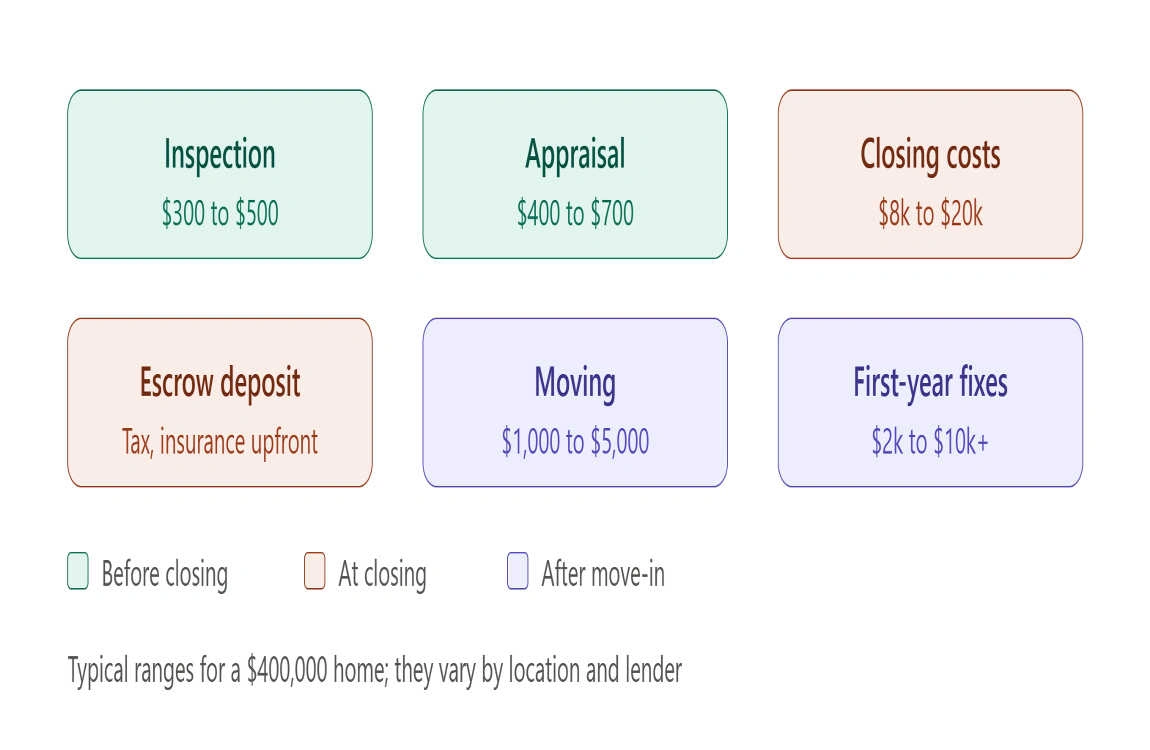
Many first-time buyers focus on the down payment and forget everything else. Plan for these separately:
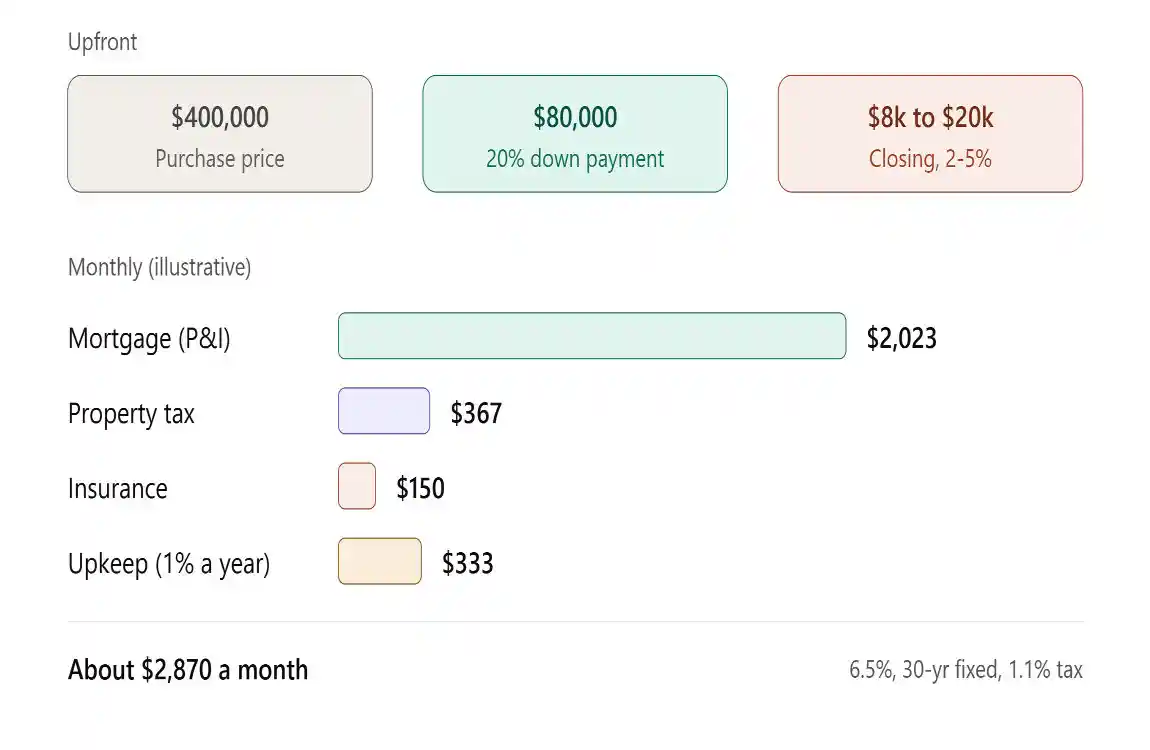
- Closing costs. These are paid at closing in addition to your down payment. Your lender’s Loan Estimate shows them line by line, so compare estimates from more than one lender.
- Inspection and appraisal. A professional home inspection is one of the cheapest forms of protection you can buy. Skipping it to save money can cost far more later.
- Moving expenses and immediate needs. Locks, smoke and carbon monoxide detectors, window coverings, and basic tools add up quickly.
- Reserves for repairs. Set aside a buffer sized to what your inspection report flags, such as an aging roof, an old furnace, or dated wiring.
Safety note for new owners: if your inspection finds problems with electrical systems, gas lines, structural elements, or signs of mold or water intrusion, hire licensed professionals rather than attempting repairs yourself. Cosmetic real estate projects like painting can wait; safety items cannot.
How to Build Your Down Payment
Save with a specific target
Work backward from a price range. Multiply your target price by the percentage you’re aiming for, then divide by the number of months you plan to save. Use a separate account so the money isn’t mixed with everyday spending.
Look at down payment assistance
Many state and local housing agencies offer grants or low-interest second loans. Eligibility, income limits, and homebuyer education rules differ by program, so search your state housing finance agency’s website and ask lenders which programs they work with. The HomeReady program mentioned above also allows certain assistance programs to count toward your funds.
Use gift funds correctly
Family gifts are a legitimate source, but lenders typically require a gift letter confirming the money isn’t a loan, as Citi’s down payment guide points out. Get the paperwork in order early, because unexplained deposits can slow an application.
Be careful with retirement accounts
NAR found that a meaningful share of first-time buyers use financial assets, including 401(k)s and IRAs. Withdrawing or borrowing from retirement accounts can carry real estate taxes, penalties, or lost growth. Talk to a tax professional before tapping them.
How to Choose Your Number
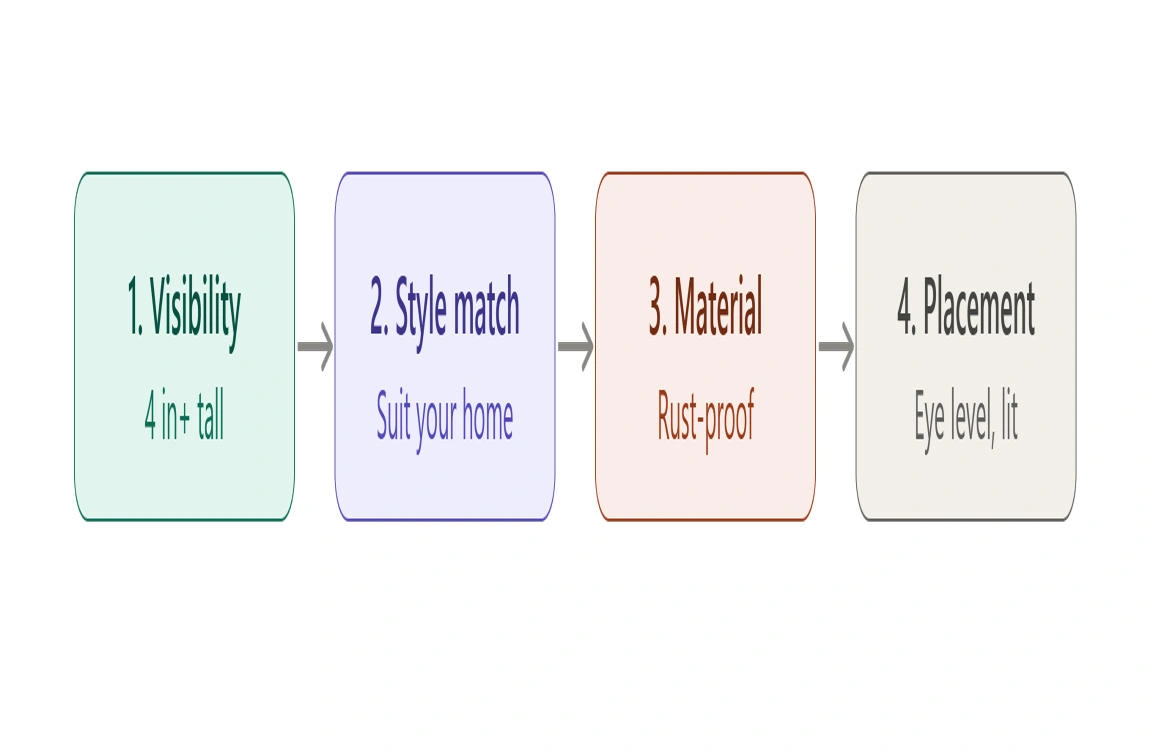
Run through these four questions before you settle on a down payment:
- What does the loan require? Start with the minimum for the loan type you qualify for.
- What will my monthly payment be at different down payments? Ask your lender for side-by-side quotes at 3.5%, 10%, and 20%, including mortgage insurance.
- How much cash will I have left after closing? A good real estate outcome is a house you can afford and repair.
- Could my rate change with a larger down payment? Sometimes it can, so compare quotes rather than assuming.
Frequently Asked Questions
Do I really need 20% down to buy a house?
No. Conventional, FHA, VA, and USDA programs all allow less, and NAR’s 2025 data shows first-time buyers put down a median of 10%. Putting down less usually means paying mortgage insurance, though.
Can I buy a house with no down payment?
Possibly. VA and USDA loans can allow 0% down for eligible borrowers, though each has its own eligibility requirements.
What is the lowest down payment on a conventional loan?
Some programs allow as little as 3%, including Fannie Mae’s HomeReady, which has an income limit tied to area median income.
Does a bigger down payment lower my monthly payment?
Yes, because you borrow less. It can also reduce or eliminate PMI on a conventional loan. A larger down payment may also affect your interest rate, so compare quotes.
Can I use gift money for a down payment?
Often yes, with proper documentation. Lenders typically ask for a gift letter, and some programs have specific rules about gift sources.
Is the down payment the only cash I need?
No. Plan for closing costs, an inspection, and a repair reserve in addition to the down payment.
Conclusion
So, what down payment for a house is right? The minimum depends on the loan: 0% for eligible VA and USDA borrowers, 3% on some conventional programs, and 3.5% for FHA with a 580+ credit score. The typical first-time buyer puts down around 10%, and the best number for you is the one that gets you into a home you can afford without leaving you empty-handed when the first repair bill arrives. Start by checking which loans you qualify for, request side-by-side quotes at a few down payment levels, and keep a cash cushion for the home itself.
