
Clearing a house is rarely a small job. Whether you have inherited a property, sold a family home or finally decided to declutter after twenty years, one question comes up straight away: how much do the council charge to clear a house?
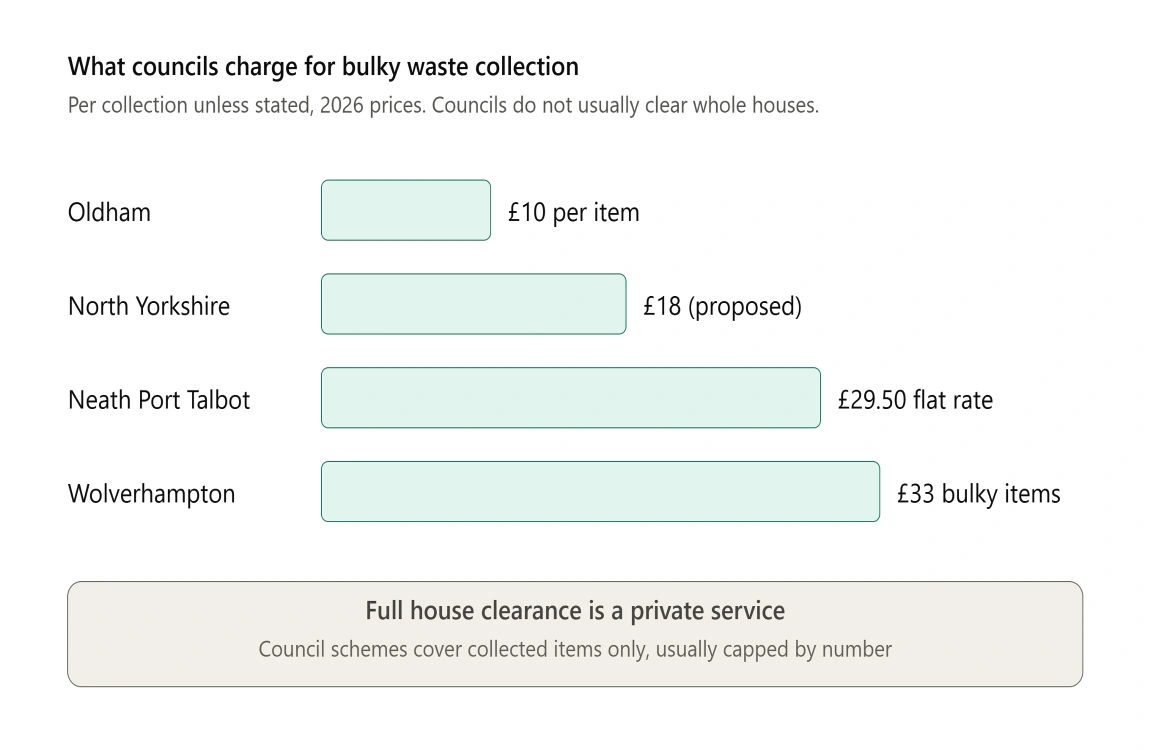
The honest answer surprises most people. Councils do not usually clear whole houses. What they offer is a bulky waste collection, which is a paid pick-up of a few large items such as sofas, mattresses and fridges. For a full clearance, you will normally need a private company, a skip or a lot of trips to the tip.
Do Councils Clear Houses?
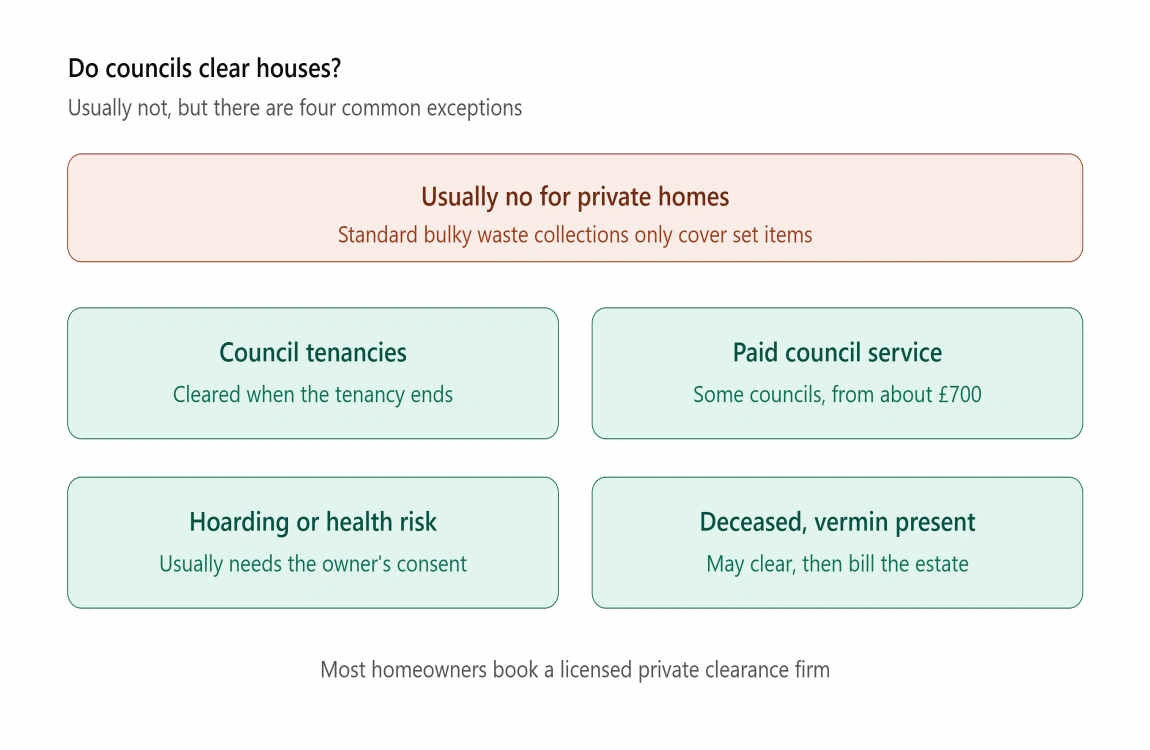
In most cases, no. A council bulky waste service is home designed for individual items, not an entire property. Each council sets its own fees and limits, so prices vary enormously from one postcode to the next.
If you are a council or housing association tenant, or you are dealing with a property left in poor condition, your landlord or local authority may have separate rules and charges. That is a different situation from a normal household clearance, so contact them directly to ask.
How Much Do Councils Charge for Bulky Waste Collection in 2026?
Research by waste firm BusinessWaste.co.uk, which compared charges across all 382 UK councils, found a UK average minimum charge of about £32. Regional differences are huge:
| Area | Typical minimum charge |
|---|---|
| South East England (highest region) | around £44.81 on average |
| Wales | around £34 on average |
| Northern Ireland (lowest region) | around £5.97 on average |
Some real examples from council websites show how much the price can swing:
- East Devon: £60 for one item, rising by £15 for each extra item up to a maximum of 10 (£195).
- South Norfolk: £61.50 for up to three items, then £7 per extra item (maximum six).
- Torfaen (Wales): £29 for up to three items, then £7 per extra item, up to eight in one visit.
- Argyll and Bute (Scotland): a minimum of £90.90, which has been reported as the highest in the UK.
Prices change every April in many areas, so always check your own council’s page before booking. You can find yours quickly with the GOV.UK local council finder.
A sofa and mattress left out ready for council bulky waste collection Image 2 – alt text: “Old sofa and mattress waiting for council bulky waste collection”
What a Council Collection Can and Cannot Do
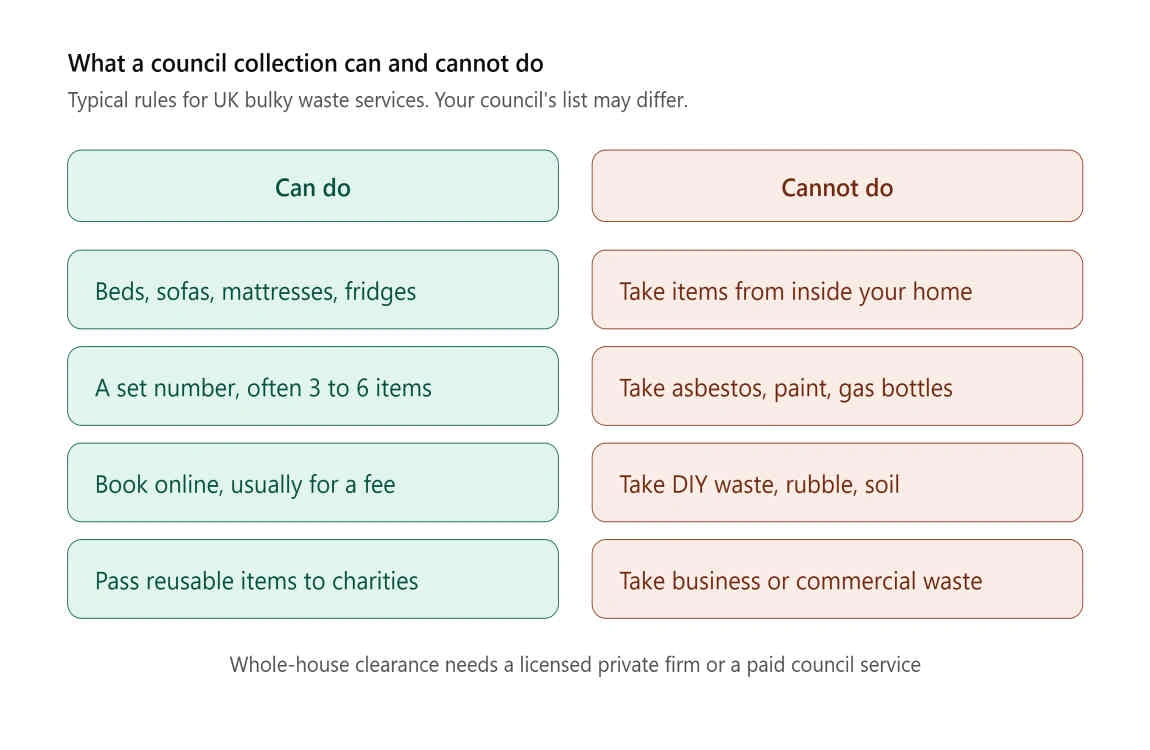
Before you book, check the small print. Most councils:
- Set a maximum number of items per visit, usually between three and ten.
- Charge extra for fridges and freezers.
- Collect only household items, not building rubble, soil or large quantities of loose rubbish.
- Ask you to leave items outside at a set time, because crews do not enter the property.
- Sometimes offer discounts if you receive certain benefits.
That is why a council collection works well for a few big pieces, but not for a full three-bedroom house with a loft, garage and shed.
So What Does It Cost to Clear a Whole House?
For a full clearance, you will be looking at a private house clearance company. Based on 2026 market guides, typical UK prices are roughly:
| Property size | Typical cost (rest of UK) |
|---|---|
| Small clearance (a room or lightly furnished flat) | £150 – £300 |
| Medium home | around £400 |
| Large, fully furnished property | £600 – £2,000+ |
Fantastic Services’ 2026 cost guide also notes that London and the South East usually run 20 to 30 percent higher than the rest of the UK because of tipping fees, congestion charges and access problems.
Treat these as ballpark figures. A proper quote should always be based on the volume of items, access and how much needs sorting.
What Affects the Price?
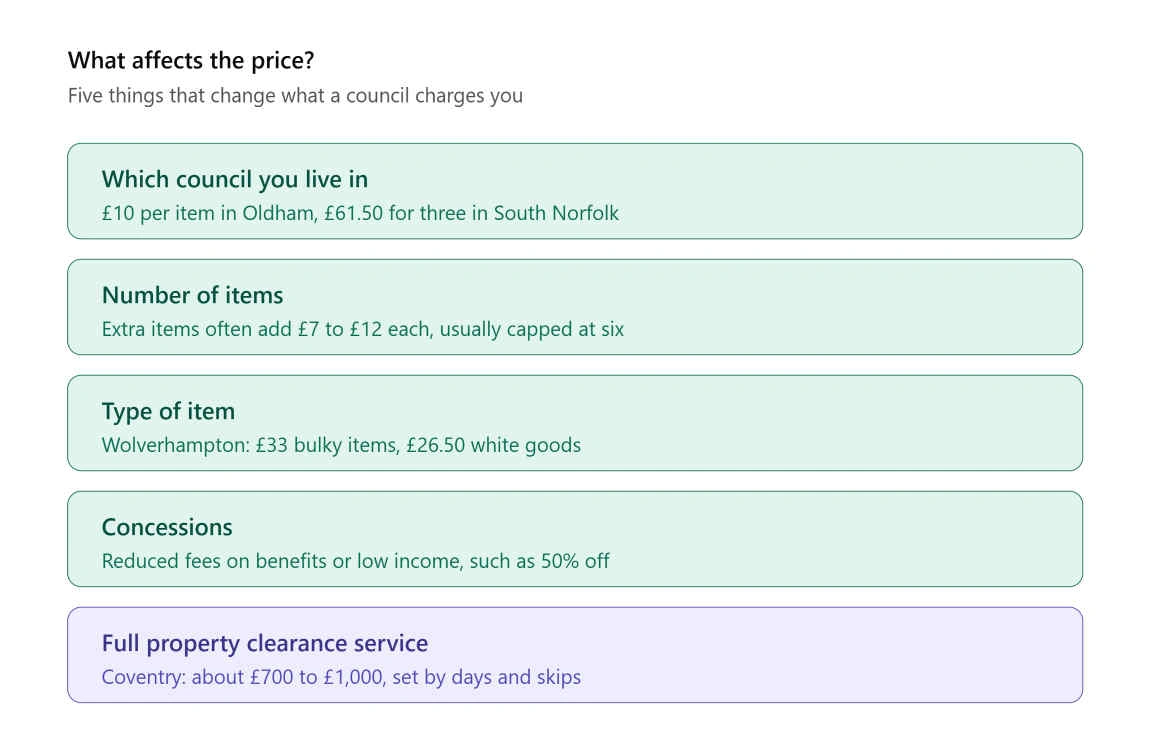
- Volume of items. More rooms and more furniture means more van loads.
- Heavy or awkward waste. Piano, wardrobes, white goods and dense materials cost more to dispose of.
- Access. Stairs, no parking or a top-floor flat add labour time.
- Location. Urban and southern areas are generally pricier.
- Hazardous or specialist waste. Asbestos, paint, chemicals and some electricals may be charged separately or refused.
- Sorting and cleaning. If the crew has to sort valuables, recycling and rubbish, the job takes longer.
A house clearance team carrying furniture into a van Image 3 – alt text: “House clearance team loading furniture into a van”
Cheaper Alternatives to Clearing the Whole House Yourself
If a full clearance quote feels too high, there are other routes:
- Book a council bulky collection for the big items, and take the rest to your local household waste recycling centre.
- Hire a skip. This suits large clear-outs and garden-heavy jobs, but you may need a permit if it sits on the road.
- Use a man and van service for smaller jobs, as long as they are properly licensed.
- Donate usable items to charity shops, reuse schemes or local Facebook and Freecycle groups. Many charities will collect furniture for free.
- Sell what has value. Furniture, antiques, tools and electricals can offset the clearance cost, and some house clearance firms deduct the value of items from your bill.
Donation boxes and furniture ready for a charity collection Image 4 – alt text: “Boxes of unwanted items ready for charity donation”
Always Check the Company Is Licensed
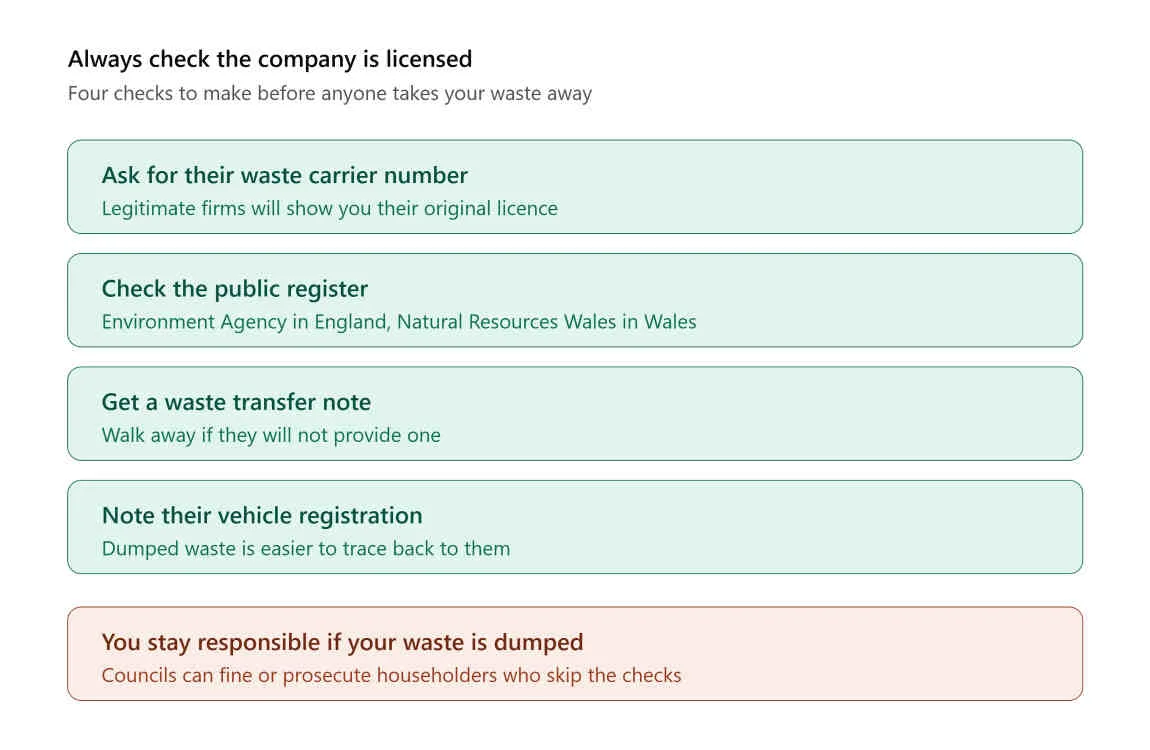
This is the part many people skip, and it can cost you. Whoever takes your waste must be a registered waste carrier. If your rubbish is fly-tipped, the legal responsibility can come back to you as the person who produced it.
You can check a company on the Environment Agency register using the GOV.UK waste carrier checker, and read the official duty of care rules on managing your waste.
Fly-tipping is a real and growing problem. Figures reported in 2026 show 1.26 million incidents were recorded in 2024-25. Some people argue that high council collection fees contribute to it, a point raised in analysis of Welsh bulky waste charges. Councils say fees are set to cover their costs, but either way, never hand your waste to someone who cannot show a licence.
Quick checklist before you hire:
- Ask for their waste carrier registration number and check it online.
- Get at least three written quotes.
- Confirm what is included (labour, van, disposal, VAT).
- Ask what happens to usable items, in case you want to keep or sell them.
- Keep the receipt or waste transfer note.
Person checking a waste carrier licence on a laptop Image 5 – alt text: “Checking a waste carrier licence online before hiring a clearance company”
House Clearance After a Bereavement
If you are clearing a loved one’s home, the emotional side is often harder than the cost. A few practical tips:
- Do not rush. Take time to find paperwork, photos and sentimental items first.
- Check whether the property is subject to probate. The GOV.UK wills, probate and inheritance guidance explains the process.
- Ask clearance companies whether they offer a respectful, probate-friendly service.
Frequently Asked Questions
How much do the council charge to clear a house? Most councils do not clear whole houses. They charge for bulky waste collections, typically from around £15 to £90 for a handful of items depending on where you live. A full clearance is normally done by a private company.
Is council bulky waste collection free? Rarely. A small number of areas still offer free or very cheap collections, but the large majority now charge. Fife in Scotland has been reported as one of the few that still collects for free.
What is the cheapest way to clear a house? Usually a mix of donating, selling, taking items to the tip yourself and booking a council or skip collection for the rest. It takes more time, but it costs less than a full-service clearance.
Can I put house clearance waste in my normal bin? No. Large quantities of waste should not go in your household bin. Use a bulky collection, a recycling centre or a licensed carrier.
How long does a house clearance take? A small property can take a few hours. A large, full house may take one to three days depending on how much sorting is needed.
Final Thoughts
If you only need a few large items removed, a council bulky waste collection is usually the simplest and safest option, with prices typically ranging from about £15 to £90 depending on your area. If you are clearing an entire property, expect to use a licensed private company, with costs starting from around £150 and rising to £2,000 or more for a large home.
Whichever route you choose, compare quotes, check licences and donate or sell what you can. It saves money, helps the environment and keeps your home clear of problems later.
