

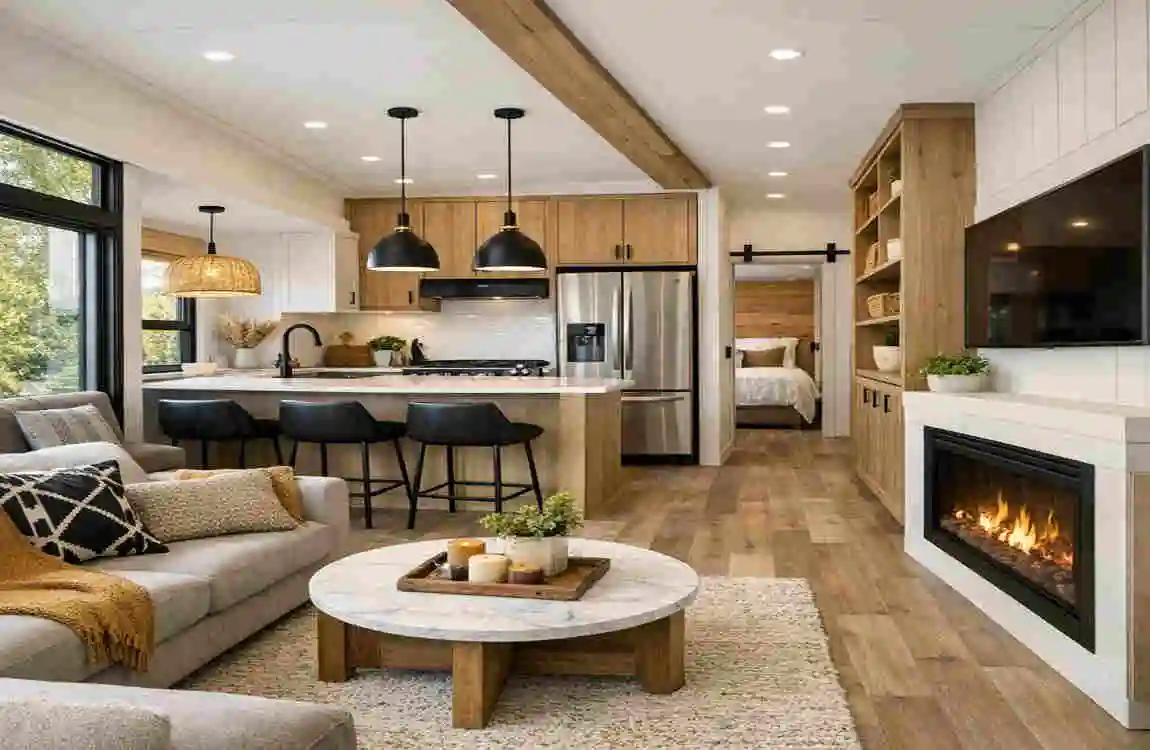
A modern mobile home interior is no longer just about making a small space “work.” It is about making that space feel comfortable, stylish, smart, and personal at the same time.
That is a big shift from the old idea of mobile homes being plain or temporary. Today, many mobile homes feel more like custom apartments or compact designer homes. They can be warm, polished, and highly practical without losing personality. That is what makes them stand out.
If you are thinking about updating your own home, the good news is simple: you do not need a huge budget or a massive floor plan to create a beautiful result. You need the right design choices. In this guide, we will walk through the main ideas that shape a modern mobile home interior, from layout and lighting to color, furniture, and smart updates.
Why the shift happened
First, housing costs rose. Many people began looking for more affordable ways to live without sacrificing comfort or style.
Second, remote work changed daily life. Once people began working from home more often, they wanted spaces that could support both work and rest. That meant better layouts, better lighting, and more flexible furniture.
Third, people became more design-conscious. Social media, home renovation shows, and online inspiration made it easier for homeowners to see what was possible in smaller spaces.
Fourth, sustainability became more important. Many buyers now want homes that use fewer resources, waste less space, and support a simpler lifestyle. Mobile homes fit that mindset well when they are designed thoughtfully.
Why modern mobile home interior design matters
A modern mobile home interior matters because it proves that a smaller home can still feel complete. It can be efficient without feeling cramped. It can be affordable without looking cheap. It can be compact without sacrificing beauty.
That is the real appeal.
A well-designed mobile home makes daily life easier. You know where things belong. You do not feel overwhelmed by clutter. You can move smoothly through the space. And just as important, you feel proud to invite people in.
That feeling is what separates a standard interior from a standout one.
Core Design Principles for a Standout Modern Mobile Home Interior
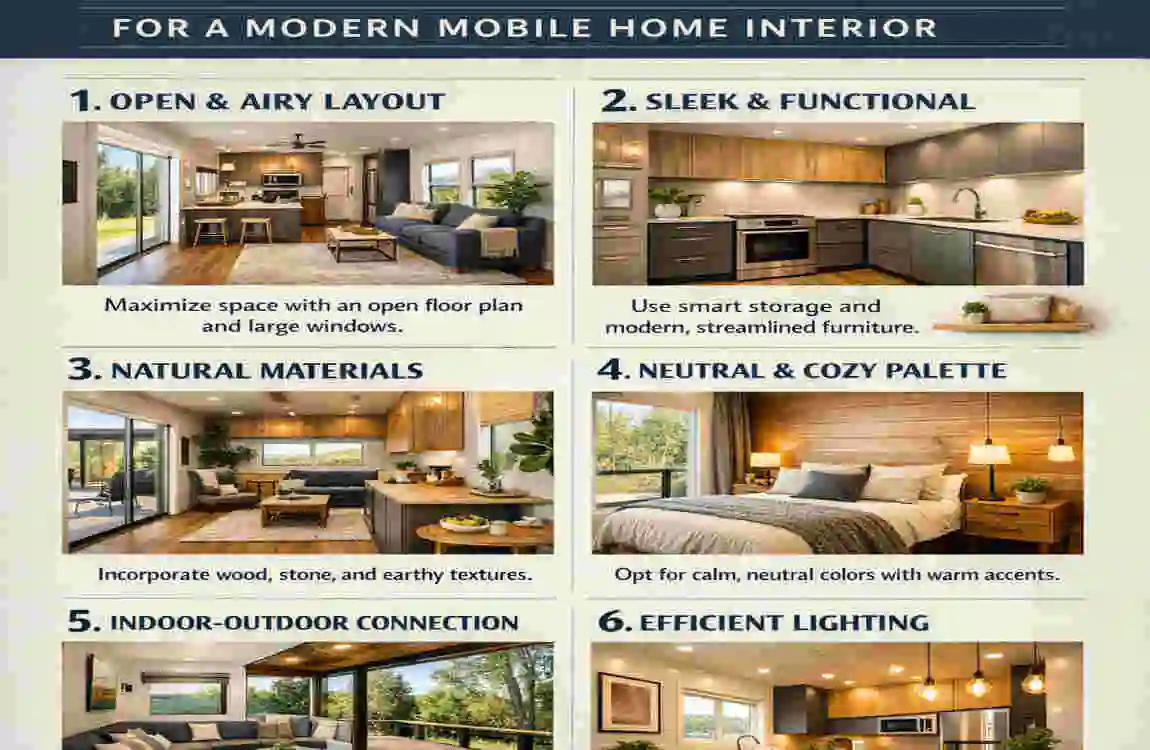
A strong design does not happen by accident. It starts with a few simple principles that help the whole home feel balanced and easy to live in.
Make small spaces work harder.
One of the most important ideas in a modern mobile home interior is multifunctional design. In a smaller home, every piece should earn its place.
That might mean a sofa that hides storage, a dining table that folds out when needed, or a bed frame with drawers underneath. It might also mean using one room for multiple purposes. A guest room can also be an office. A breakfast nook can also serve as a homework station or craft area.
The goal is not to fill the home with more things. The goal is to make each item do more.
A clean layout also helps the home breathe. When a space feels open, it feels bigger. That does not mean you need to remove all walls or buy only tiny furniture. It simply means choosing pieces that fit the room instead of crowding it.
Use neutral colors with bold accents.
Color has a huge impact on how a space feels. In a modern mobile home interior, a neutral base often works best because it keeps the home bright and calm.
Think of colors like white, soft gray, beige, warm cream, or light taupe. These shades reflect light well, helping small rooms feel larger. They also give you a flexible background for other design choices.
Then you can add bold accents in smaller amounts. A matte-black faucet, a deep-green chair, navy pillows, brass handles, or a terracotta throw can add contrast and personality without overwhelming the room.
This balance is important. Too much color in a small home can feel busy. Too much plain white can feel cold. The best modern interiors usually sit in the middle, with a calm base and carefully chosen pops of interest.
Layer the lighting
Lighting is one of the most overlooked parts of design, yet it changes everything.
A modern mobile home interior should use layers of light rather than relying on one bright fixture in the middle of the room. That usually means combining:
- Ambient lighting for general brightness
- Task lighting for reading, cooking, or working
- Accent lighting to highlight art, shelves, or texture
When these layers work together, the home feels warmer and more polished.
For example, recessed ceiling lights can keep the room bright. Pendant lights can add style to a kitchen island. Table lamps can make a living area softer in the evening. Under-cabinet lighting can also make a kitchen much easier to use.
Good lighting does not just help you see. It helps you feel at home.
Choose sustainable and durable materials.
A truly modern mobile home interior often includes materials that are practical, long-lasting, and environmentally thoughtful.
That might mean bamboo flooring, recycled countertops, low-VOC paint, or vinyl plank flooring that looks like wood without the same level of maintenance. These choices matter because mobile homes often need materials that can hold up well in everyday life.
Durability is especially important in smaller homes. When each surface gets used often, you want finishes that can handle wear and still look good.
Sustainable design also adds meaning. Many homeowners feel better knowing their choices are kinder to the environment and more efficient over time.
A simple example
Picture a 600-square-foot modern mobile home interior.
The living room has a soft gray sofa with built-in storage. The dining area features a foldable table that expands for guests. The kitchen features matte-black handles, warm wood tones, and under-cabinet lighting. The bedroom feels calm with simple bedding, a slim wardrobe, and hidden storage under the bed.
Nothing feels crowded. Nothing feels random. Everything has a reason.
That is what thoughtful design does. It makes even a small home feel complete.
Top Trends Shaping Modern Mobile Home Interiors in 2026
Design trends change quickly, but some ideas are especially strong right now because they align with how people actually live.
Biophilic design
Biophilic design means bringing nature into the home.
This can be as simple as adding houseplants, using wood tones, or placing furniture near windows. It can also mean larger windows, natural textures, stone details, and earthy colors. The point is to create a stronger connection between the indoor space and the natural world.
In a mobile home, this style works beautifully, making the space feel calm and alive. Even a small room can feel more open when it includes fresh greenery and natural light.
Smart home integration
Smart home features are becoming much more common in modern mobile home interiors because they save time and make life easier.
You might use voice-controlled lights, app-based thermostats, smart plugs, or remote-controlled blinds. These tools are especially helpful in small homes where convenience matters.
The best part is that smart upgrades do not have to be expensive or complicated. Even a few simple changes can make the home feel more modern and efficient.
Modular and customizable elements
Modular design is another major trend.
This means using pieces that can be changed, moved, expanded, or updated with ease. Think of stackable shelves, adjustable cabinets, reconfigurable seating, or wall systems that can grow with your needs.
This works well in mobile homes because life changes often. A couple may later need a nursery. A home office may need to become a hobby room. Modular elements give you room to adapt.
Industrial chic mixed with Scandinavian simplicity
This style mix is popular because it feels both clean and comfortable.
Industrial touches might include metal details, open shelving, or visible structural elements. Scandinavian design brings in soft textures, light colors, simple shapes, and a calm mood. Put them together, and you get a look that feels modern without being cold.
The key is balance. A little metal can add edge. A lot of soft fabric can keep it cozy. That contrast is often what makes the room stand out.
Warm minimalism
Minimalism is still relevant, but people now want it to feel warmer and more livable.
Warm minimalism uses fewer items, yet the ones it includes feel thoughtful and inviting. Instead of a bare space, you get a space that feels edited. It is clean, but not sterile.
This trend is ideal for a modern mobile home interior because it supports the main goal of small-space living: keep what matters, and let the room breathe.
Trend comparison table
Trend: What It Looks Like, Main Benefit, Possible Drawback
Biophilic design: plants, wood, natural light. Feels calm and fresh. Needs regular care
Smart home features include app-based lights, thermostats, and blinds. Adds convenience. Can add upfront cost
Modular elements, moveable cabinets, flexible furniture, easy to update later, needs planning
Industrial + Scandi Metal details with soft textures. Stylish and balanced. Can feel cold if overdone
Warm minimalism, simple rooms with cozy finishes, clean but inviting, easy to make too plain
Real-world style examples
One common example is a budget-friendly makeover that uses light walls, natural wood accents, and a few black fixtures to create a high-end look without a full remodel. Another is a mobile home that uses modular shelving and hidden storage to keep the main living area open and uncluttered.
These examples work because they focus on the space’s feeling, not just the furniture inside it.
If you want your own home to stand out, think beyond decoration. Think about mood, comfort, and flow.
Space-Saving Furniture and Layout Hacks for Modern Mobile Home Interiors
In a mobile home, layout matters as much as style. Sometimes even more.
A beautiful room can still fail if it is hard to move through or impossible to keep organized. That is why space-saving choices are at the heart of a great modern mobile home interior.
Vertical storage solves more than you think.
When floor space is limited, look up.
Walls are often underused in smaller homes. Adding shelves, tall cabinets, hooks, and wall-mounted organizers can free up valuable space below. This makes the home feel less crowded and keeps everyday items easy to reach.
Vertical storage works especially well in kitchens, bathrooms, entryways, and bedrooms. It helps you use height instead of width, which is one of the smartest moves in compact design.
Multi-use furniture is worth the investment.
Furniture that can do more than one job is a game-changer.
A coffee table with hidden storage can hold blankets or books. An ottoman can serve as a seat, a footrest, and a storage box. A folding dining table can save space when you are not entertaining. A Murphy bed can give you a sleeping area at night and a full room during the day.
These pieces may cost more at first, but they often save money over time by reducing the need for extra furniture. They also help the home stay tidy, which improves the overall look.
Zoning makes a small home feel organized.
Even in an open-plan layout, you can create clear zones.
A rug can define the living area. A small shelf or screen can separate the workspace from the lounge. Lighting can mark out the dining zone. Different wall colors or textures can also help each area feel distinct.
This is useful because it gives the home structure without making it feel boxed in. You still get openness, but with a sense of order.
Think carefully before changing the layout.
Some mobile home updates involve more than furniture. You may want to remove a wall, open a passage, or rework the kitchen flow.
That can be a smart move, but safety matters. Any wall removal should be checked carefully, especially if you are unsure whether it supports part of the structure. In those cases, a professional opinion is the best path.
Layout changes can dramatically improve everyday life, but they should always be done with care.
A simple kitchen redesign approach
Here is one practical way to think through a small kitchen update:
- Clear the counters first. Keep only the items you use daily.
- Measure the work zones. Make sure cooking, prep, and cleaning areas feel close together.
- Add storage vertically. Use wall shelves, hooks, or slim cabinets.
- Choose one flexible feature. A rolling cart or fold-down table can make a big difference.
- Improve the lighting. Bright, even light makes the kitchen feel bigger and easier to use.
- Keep the color palette simple. Fewer visual distractions help the room feel calmer.
- Add one design detail. A backsplash, stylish handle, or statement pendant can finish the look.
This method keeps the process simple and manageable.
Layout hacks that make a difference
Small changes often have the biggest impact. Try to think about traffic flow. Can you move from one area to another without bumping into furniture? Can doors open fully? Can you sit, cook, and work without feeling boxed in?
These are the details that separate a cramped home from a comfortable one.
A standout modern mobile home interior always feels easy to live in. That ease usually comes from smart layout decisions that run in the background.
Color Schemes and Materials That Define Modern Mobile Home Interiors
Color and material choices shape the mood of the whole home. They tell the eye where to rest and how the room should feel.
The power of a simple palette
Most modern mobile home interiors look best with a limited color range. That does not mean boring. It means controlled.
A calm palette makes the space feel cleaner and more polished. It also gives you more freedom to add texture and personality through furniture, fabrics, and decor.
The safest approach is often to start with a light neutral and then add one or two secondary shades. From there, you can layer in accent colors through smaller items.
Popular color directions
Some colors work especially well in mobile homes because they support both style and comfort.
- Soft white: Brightens the room and keeps it airy
- Warm beige: Adds softness and feels welcoming
- Light gray: Creates a clean, modern base
- Terracotta: Brings in warmth and an earthy feel
- Soft blue: Adds calm and freshness
- Muted green: Connects the home to nature
What matters most is how the colors work together. You do not need many shades. You need the right shades.
Materials that look good and last
A modern mobile home interior should use materials that are easy to care for and visually balanced.
Quartz countertops are a favorite because they look polished and hold up well to use daily. Vinyl plank flooring is also popular because it is durable, attractive, and available in many styles that mimic wood. Matte metal finishes add a sleek touch without being too shiny. Soft textiles like cotton, linen, and velvet bring warmth into the room.
The best spaces often combine hard and soft surfaces. That contrast makes the home feel layered and complete.
Texture matters more than people think.
A room can be mostly neutral and still feel rich if the textures are right.
Think of a linen curtain, a woven basket, a smooth table surface, a velvet pillow, and a matte lamp base. Each one brings a different feeling, even if the colors stay simple.
Texture is especially useful in small homes because it adds depth without clutter. You get visual interest without adding more furniture.
Color and material matching chart
Goal: Best Color Choice, Best Material Choice. Why It Works
Make the room feel bigger. White or light gray Gloss-free paint, light flooring Reflects light and opens the space
Add warmth, beige or terracotta Wood, woven fabric, to make the room feel cozy
Create a modern look: Charcoal or soft black accents, matte metal, and quartz. Feels sharp and current
Keep it calm, soft blue or sage green, linen, smooth painted finishes. Feels soothing and easy
Add a luxury touch with cream, dark accents, velvet, brass, and stone-look surfaces. Creates contrast and richness
A practical tip for choosing finishes
If you feel stuck, start with the biggest surfaces first. That means walls, flooring, and countertops. Once those are in place, it becomes much easier to choose smaller items that match.
That is one of the simplest ways to make a mobile home feel coordinated instead of random.
Lighting and Tech Upgrades for Stylish Mobile Home Living
A modern mobile home interior does not just look good during the day. It should also work beautifully at night and make daily life easier.
Lighting shapes the mood.
Lighting controls how a room feels the moment you walk in.
Bright, even light helps with chores and makes small rooms appear larger. Softer light helps the home feel relaxed and cozy in the evening. The best homes usually include both.
A dimmer switch can make a huge difference because it lets you change the atmosphere without changing the fixture itself. That kind of flexibility is very useful in smaller homes, where each room often serves multiple purposes.
Smart upgrades that make life easier
Technology can be very helpful in a modern mobile home interior, especially when the goal is comfort and convenience.
A few practical upgrades include:
- Smart bulbs that adjust brightness and color temperature
- Programmable thermostats that help manage heating and cooling
- Voice-controlled plugs for lamps or small devices
- Motion-sensor lights in hallways or closets
- App-controlled blinds for privacy and sunlight control
These features may seem small, but they make everyday routines smoother. They also give the home a more modern feel without major remodeling.
Energy efficiency matters too.
Many homeowners want a stylish home that also uses less energy. That is where efficient lighting and smart controls shine.
LED bulbs last longer and use less power than older bulbs. Solar-powered outdoor lights can reduce energy use while adding curb appeal. Smart thermostats can help manage temperature more thoughtfully.
When a home uses energy wisely, it often feels better to live in. It is not just about saving money. It is about creating a home that works with your lifestyle instead of against it.
Keep the tech simple.
It is easy to go overboard with gadgets. You do not need every smart feature available to make a home feel modern.
Start with the basics. Focus on the upgrades that save time, improve comfort, or support daily routines. That approach keeps the home easy to use, which is always the real goal.
Personalizing Your Modern Mobile Home Interior on a Budget
A strong design should reflect the people living in the home. That is why personalization matters so much.
Budget-friendly style still has impact.
You do not need luxury prices to create a beautiful result. In fact, some of the most charming interiors come from simple, low-cost changes that are chosen with care.
A fresh coat of paint, new cabinet pulls, updated curtains, or a well-placed mirror can change the entire mood of a room. These are small updates, but they create a big visual difference.
DIY ideas that work well
If you enjoy hands-on projects, there are many ways to improve your space without spending a lot.
Try:
- Peel-and-stick backsplash tiles for a kitchen refresh
- Thrifted artwork to build a more personal wall display
- Refinished furniture to give older pieces new life
- New pillow covers and throws for a quick style update
- Decorative contact paper for shelves or drawer fronts
These ideas are especially useful because they let you test a style before committing to a bigger change.
Smart places to shop
You can often find great pieces if you are patient.
Secondhand marketplaces, discount home stores, local resale shops, and clearance sections can all be useful. What matters most is knowing what to look for. Focus on quality structure, good proportions, and pieces that fit your room.
A stylish home does not require expensive shopping. It requires careful shopping.
Budget comparison table
Project Type: Approximate Budget: What You Can Do: Result
Light refresh $500 Paint, pillows, curtains, small decor Noticeable style improvement
Mid-range update $1,000 New lighting, storage, backsplash, rug Strong visual upgrade
Bigger makeover $2,000+ Furniture replacement, flooring, fixtures. More complete transformation
Think about resale value, too.
Personal style is important, but so is long-term value.
When a home looks clean, updated, and well cared for, it can appeal to more people later. That does not mean you should design for strangers. It means choosing updates that are attractive, practical, and lasting.
A well-planned, modern mobile home interior can support your life now and retain its value later. That is a smart win on both sides.
Common Mistakes to Avoid in Modern Mobile Home Interiors
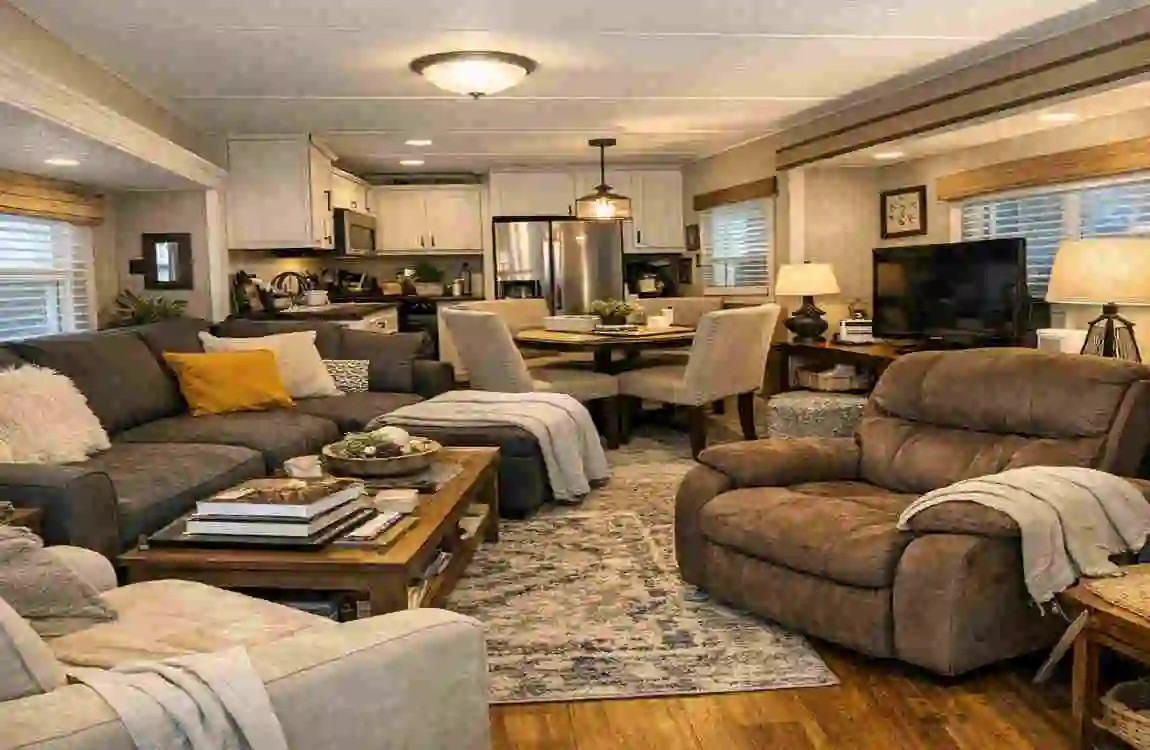
Even the best ideas can fall flat if they are not applied carefully.
Overcrowding the space
This is the biggest mistake by far.
Too much furniture, too many decorations, or oversized pieces can make a small home feel tight and tiring. It is easy to think more items will make a room feel complete, but usually the opposite is true.
Instead, leave space for movement. Let the room breathe. The empty areas matter just as much as the filled ones.
Ignoring moisture and ventilation
Mobile homes need good airflow and moisture control. If you ignore this, problems can build up over time.
Bathrooms, kitchens, and laundry areas should have strong ventilation. Humidity can affect finishes, comfort, and even the lifespan of materials. A beautiful room is not really beautiful if it is hard to maintain.
Choosing cheap materials that wear out fast
Low price can be tempting, especially on a tight budget. But very cheap materials often cost more in the long run because they wear out quickly.
It is better to invest in a few good-quality items than to replace flimsy ones again and again. This is especially true for flooring, hardware, and furniture that are used daily.
Forgetting about flow
A room can look great in photos and still feel awkward in real life.
If the path from the kitchen to the living room is blocked, or if a bed makes a closet hard to reach, the home will become frustrating. Good design supports movement. It does not get in the way of it.
Common pitfalls and quick fixes
- Too much furniture: Remove one or two pieces and improve flow.
- Harsh lighting: Add warm bulbs or dimmers.
- Poor storage: Use vertical space and hidden storage.
- Too many colors: Choose a simpler palette.
- Cheap finishes: Replace the most worn-out pieces first.
Small corrections can make a huge difference.
Why a Modern Mobile Home Interior Feels So Different
A standout modern mobile home interior is not just about style trends. It is about how the home makes you feel every day.
It feels organized
When everything has a place, the home feels calmer. You spend less time looking for things and more time enjoying the space.
It feels personal
A good design reflects your habits, your taste, and your lifestyle. It does not feel like it was copied from a catalog. It feels lived in and real.
It feels adaptable
Life changes. A great mobile home design can change with it. That flexibility is one of the strongest benefits of compact living.
It feels welcoming
When design, lighting, color, and layout work together, guests notice it right away. More importantly, you notice it every time you walk through the door.
That is why modern mobile home interiors stand out. They do more than look good. They support daily life in a way that feels easy, attractive, and thoughtful.
Modern Mobile Home Interior – FAQ
What defines a modern mobile home interior?
A modern mobile home interior focuses on clean lines, minimal décor, neutral colors, and functional layouts. It often includes open spaces, smart storage, and contemporary finishes like laminate flooring and sleek cabinetry.
What colors work best for a modern look?
Neutral tones like white, beige, gray, and soft pastels are popular. These colors make small spaces feel larger and brighter.
How can I make a small mobile home look spacious?
Use multi-functional furniture, mirrors, and open shelving. Keeping clutter minimal and choosing light colors also helps create a spacious feel.
What type of furniture suits modern mobile homes?
Opt for compact, modular, and space-saving furniture. Pieces with clean designs and hidden storage are ideal.
Are open floor plans common in modern mobile homes?
Yes, open floor plans are a key feature. They combine living, dining, and kitchen areas to maximize space and flow.
| Element | Key Features | Why It Stands Out | Budget Tip |
|---|---|---|---|
| Open Layouts | Multifunctional zones, no walls | Feels spacious in 400-2000 sq ft | Use rugs ($50) |
| Neutral + Accents | Whites/grays + bold colors/textures | Modern, airy vibe | Peel-and-stick wallpaper |
| Smart Lighting | LEDs, dimmers, app control | Custom ambiance, energy savings | Wyze bulbs ($20/set) |
| Biophilic Design | Plants, large windows, natural wood | Calming, connects to nature | Faux greenery ($30) |
| Modular Furniture | Foldable beds/tables, wall storage | Maximizes tiny spaces | IKEA hacks ($100) |
| Sustainable Materials | Bamboo, recycled quartz | Eco-friendly, durable | Thrift flips |
| Industrial-Scandi Mix | Metals + plush textiles | Stylish contrast | Marketplace finds ($75) |
| Tech Integration | Voice assistants, hidden chargers | Convenient luxury | Alexa mini ($25) |
