


When the temperature drops, a gas heater for home use can feel like the easiest fix: instant warmth, no waiting for the whole house to catch up. But a gas heater is not a gadget you can pick up on a whim. It burns fuel inside your living space, so a wrong choice can mean wasted money, damp walls, or in the worst case, a real safety risk.

Start With Vented vs. Unvented: It Matters More Than Anything Else
The single biggest decision is how the heater deals with the gases it produces. Gas heaters fall into two groups:
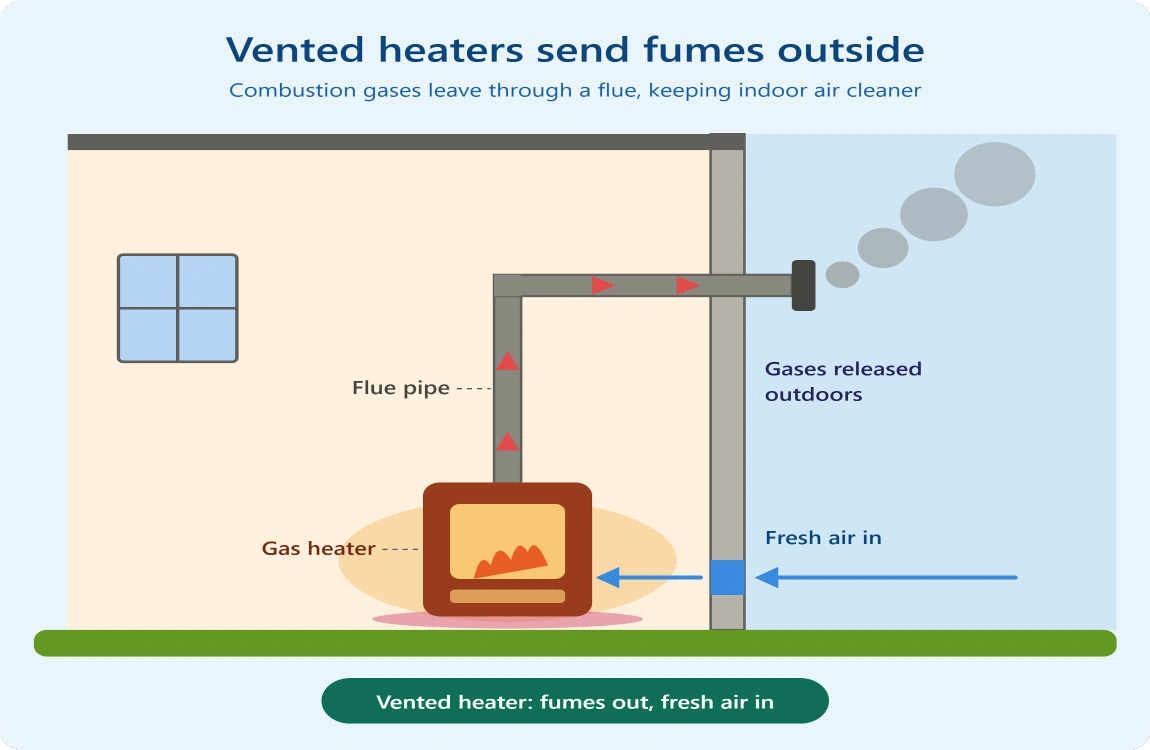
- Vented (flued) heaters are connected to a chimney or flue, so combustion gases leave the house. They are normally placed next to an outside wall so the vent can run directly outdoors.
- Unvented (vent-free) heaters release combustion by-products straight into the room.
The U.S. Department of Energy states that unvented combustion space heaters are not recommended for use inside your home because of the risk of carbon monoxide poisoning, and it notes that some places have banned unvented natural gas heaters in homes altogether. If you are unsure, a vented model is the safer default for a gas heater for home use.
Get the Size Right (Bigger Is Not Better)
Many buyers assume a more powerful heater will simply warm the room faster. In reality, an oversized heater can be both wasteful and unsafe. The Consumer Product Safety Commission warns that an oversized heater could use up the available oxygen and cause excess carbon monoxide to be produced. The New York State Department of Health gives the same advice: do not buy a heater with more heat output than the space needs.
To choose the right capacity:
- Measure the floor area and ceiling height of the room you want to heat.
- Consider insulation, window quality and draughts. A leaky room needs more output than a well-sealed one.
- Use the manufacturer’s sizing chart, which most heaters include on the box or in the manual.
Look for Proper Safety Features
Never compromise on safety to save a little money. When comparing models, check for:
- Oxygen depletion sensor (ODS): shuts the heater off if oxygen in the room falls too low. The CPSC notes that unvented gas space heaters require oxygen depletion sensors to help prevent carbon monoxide production.
- Flame failure device: cuts the gas supply if the flame goes out.
- Tip-over protection: especially important for portable models and homes with children or pets.
- Thermostat control: keeps the room at a steady temperature. The Department of Energy points out that thermostatically controlled heaters avoid the energy waste of overheating a room.
- Recognised safety certification: choose a heater tested to current standards and certified by a nationally recognised testing laboratory, as the CPSC advises.

Plan for Carbon Monoxide Protection
Carbon monoxide (CO) is colourless and odourless, which is exactly why it is dangerous. The CPSC explains that fuel-burning appliances can cause CO poisoning when they are improperly installed, poorly maintained, have compromised venting, or are misused. Early symptoms can look like the flu, so they are easy to miss.
Budget for a CO alarm when you budget for the heater. The CPSC recommends a carbon monoxide alarm outside the bedrooms in each separate sleeping area. The Department of Energy also recommends installing a CO detector if you use a small space heater. Test it regularly, and never place a heater close to anyone who is sleeping.
Think About Running Costs and Efficiency
The purchase price is only part of the story. Over a winter, running costs and efficiency matter more. Here is what influences them:
- Heating the right space: a gas heater is best for the room you use most, rather than as a whole-house solution.
- Thermostat and timer: stops the heater running when it is not needed.
- Insulation: sealing draughts and insulating properly lets any heater do more with less gas.
- Fuel type: mains natural gas and bottled LPG have different costs and availability where you live, so compare local prices.
The Department of Energy also notes that electric space heaters can be more expensive to operate than combustion space heaters, which is one reason gas remains popular. Just remember that cheaper running costs never justify skipping the safety checks above.
Installation and Maintenance Are Part of the Price
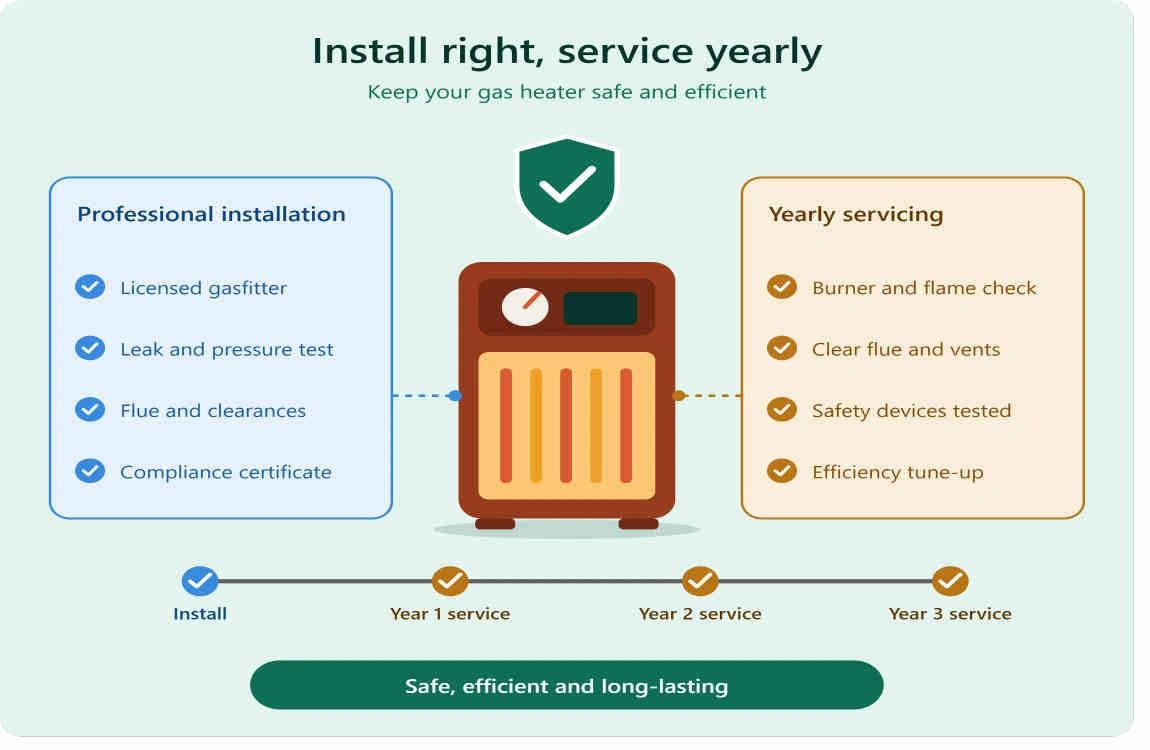
Gas appliances are not a do-it-yourself job. The New York State Department of Health advises that all gas appliances should be professionally installed, and that you should follow the manufacturer’s instructions and have the heater inspected and serviced at least once a year. The CPSC gives the same annual-inspection advice for gas space heaters.
When you compare quotes, include the cost of a qualified installer, any flue or ventilation work, and a yearly service visit. A cheap heater that needs expensive installation is not really cheap.
Placement, Clearance and Ventilation
Where you put the heater is almost as important as which one you buy. Keep it away from curtains, bedding, sofas and anything else that can burn. Do not block vents, and never use a kitchen oven or range to heat your home, since the CPSC warns this can overheat or generate excessive carbon monoxide. Always follow the manufacturer’s instructions so the heater gets enough combustion air.
Quick Checklist Before You Buy
- Is it a vented model, or do local rules allow unvented ones at all?
- Is the output right for your room size and insulation?
- Does it have an oxygen depletion sensor, flame failure device and tip-over protection?
- Does it carry recognised safety certification?
- Do you have a CO alarm, and a qualified installer booked?
- Have you factored in yearly servicing and fuel costs?
Frequently Asked Questions
Is a gas heater for home use safe?
It can be, provided you choose a certified model, size it correctly, have it professionally installed, service it every year and run a working carbon monoxide alarm.
Should I buy a vented or unvented gas heater?
Vented is the safer choice for most homes because combustion gases leave the building. Energy.gov does not recommend unvented combustion heaters for indoor home use, and some areas restrict them.
How do I know what size gas heater I need?
Match the heater’s output to your room size, ceiling height and insulation, and follow the manufacturer’s sizing chart. Avoid oversizing, since that can waste fuel and raise safety risks.
How often should a gas heater be serviced?
At least once a year, according to both the CPSC and the New York State Department of Health.
Final Thoughts
The best gas heater for home use is not the biggest or the cheapest. It is the one that suits your room, has proper safety features, is installed by a professional and is backed by a carbon monoxide alarm. Take your time, ask questions, and treat safety as part of the purchase price rather than an optional extra.
