

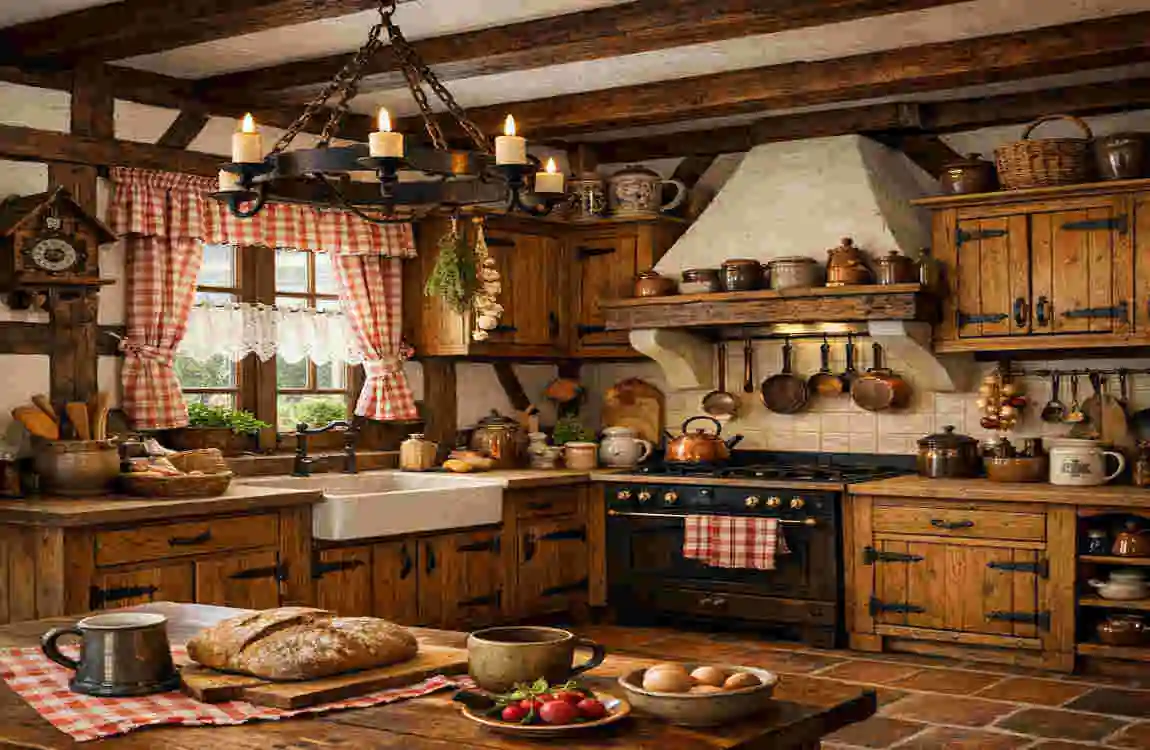
Cozy Bavarian kitchen, where the smell of freshly baked bread fills the air, and sunlight streams through the windows, highlighting exposed wooden beams and rustic cabinets. The scene is warm, inviting, and timeless—a perfect blend of form and function. This is the essence of traditional German home kitchen design, a style rooted in history yet perfectly suited for modern homes.
At its core, this design reflects Germany’s regional architectural styles, especially Fachwerk (half-timbered) houses, which are synonymous with rustic charm and practicality. The heart of this design lies in its iconic rustic Fachwerk cabinets, blending craftsmanship, durability, and an unmistakable aesthetic appeal.
The History of Traditional German Home Kitchen Design
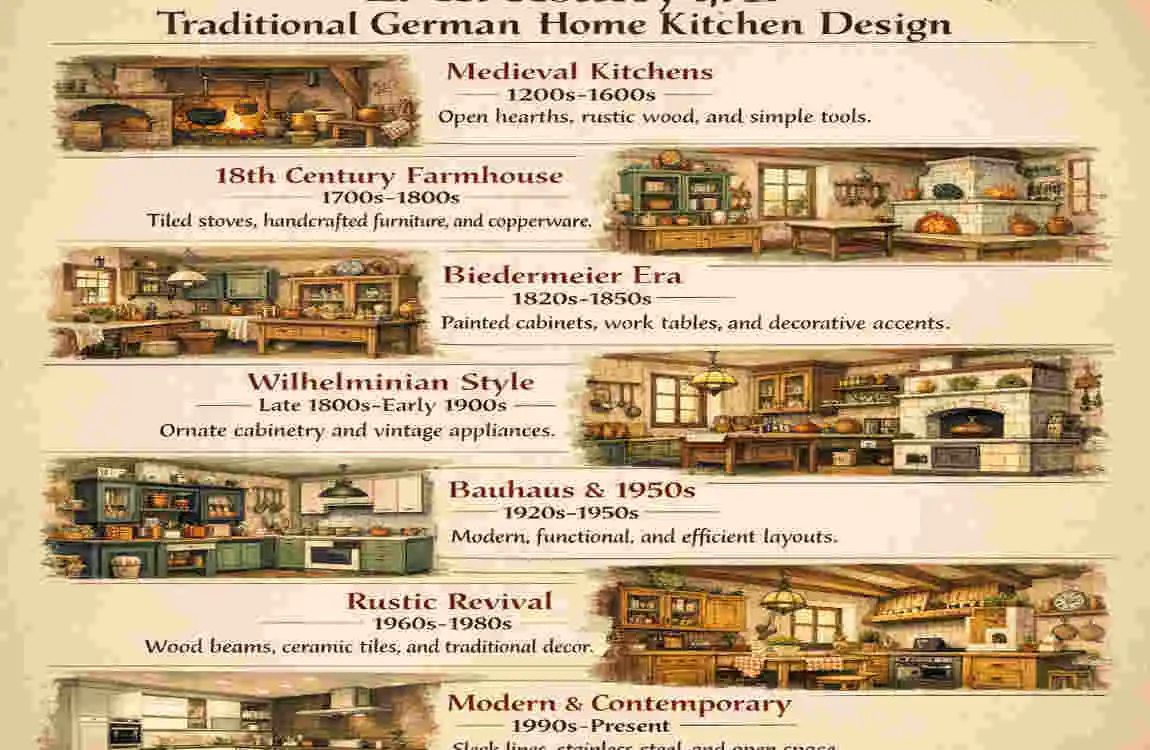
Origins in Medieval Fachwerk Houses
The roots of traditional German home kitchen design trace back to the 15th century, during the rise of Fachwerk houses. Fachwerk, or half-timbered architecture, is characterized by its exposed wooden beams framing a structure, with infill made of plaster, brick, or stone. This architectural style wasn’t just about aesthetics—it was a practical solution for durable and cost-effective construction.
In these medieval homes, the kitchen was the heart of the house, both literally and figuratively. It was where families gathered to cook, eat, and share stories. The design of these kitchens prioritized functionality, with ample storage and sturdy materials that could withstand daily use.
Regional Influences
Germany’s diverse regions brought unique touches to kitchen design:
- Black Forest (Schwarzwald): Known for its dense forests, this region is home to dark, rich woods like oak and walnut.
- Bavarian Alpine Style: Rustic simplicity with bright, airy spaces and hand-carved wooden accents.
- Franconian Farmhouse Kitchens: Focused on practicality, with large communal tables and open shelving.
Each region added its distinct character, but the unifying theme was craftsmanship and durability.
Post-WWII Revival and Modern Sustainability
After World War II, there was a resurgence of interest in traditional German architecture and design. This revival was fueled by a desire to preserve heritage and incorporate sustainable practices. Today, Fachwerk-inspired kitchens are celebrated for their eco-friendly materials, such as reclaimed wood, and their timeless appeal.
Cultural Significance
German kitchens have always been more than just functional spaces. They are the setting for cherished traditions, from Oktoberfest feasts to daily Brotzeit (bread-time) meals. These kitchens embody a sense of warmth, connection, and hospitality that resonates with homeowners worldwide.
Here’s a quick overview of key milestones in German kitchen design:
Era Key Development Iconic Feature
1500s Fachwerk framing emerges , Exposed oak beams
1800s Farmhouse boom , rustic cabinets with iron
2020s Modern revival Sustainable reclaimed wood
Core Characteristics of Traditional German Home Kitchen Design
Architecture Integration
One of the defining features of traditional German home kitchen design is its seamless integration with the home’s architecture. Half-timbered walls often flow into the kitchen, where exposed beams add a rustic texture. This architectural harmony creates a cohesive and inviting atmosphere.
Materials: Durable and Natural
German kitchens are built to last, and the choice of materials reflects this commitment to durability. Common materials include:
- Woods: Oak, beech, and pine are popular for their strength and natural beauty.
- Finishes: Hand-planed surfaces and natural oils enhance the wood’s texture.
- Hardware: Wrought iron handles and hinges add a touch of old-world charm.
Color Palette
The color scheme of a traditional German kitchen is earthy and warm. Think:
- Neutral tones: Whites, creams, and beiges.
- Natural wood stains: Highlighting the grain and texture of the wood.
- Accents: Blue Delftware tiles or colorful ceramics for a pop of personality.
Functional Layouts and Signature Elements
German kitchens are designed with efficiency in mind. Key features include:
- Functional zones: Separate areas for cooking, baking, and storage.
- Corner cupboards (Eckschränke): Maximize storage in tight spaces.
- Open shelving: For easy access to cookware and display of decorative items.
- Tiled backsplashes: Often featuring regional patterns or motifs.
Top 5 Must-Haves in Traditional German Kitchens
- Exposed timber framing.
- Deep cabinets with lattice doors.
- Stone or brick hearths.
- Handcrafted pulls and knobs.
- A cozy nook for a wood-burning stove.
Spotlight on Rustic Fachwerk Cabinets in Traditional German Home Kitchen Design
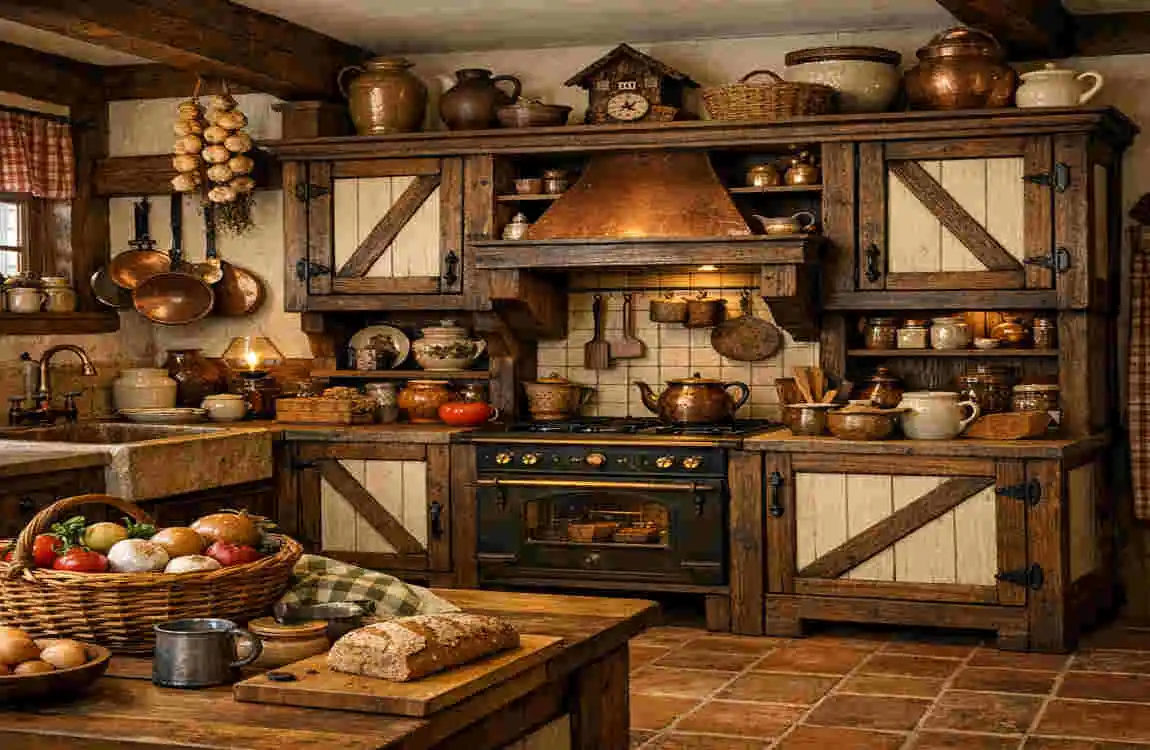
What Are Fachwerk Cabinets?
The half-timbered construction of traditional German houses inspires fachwerk cabinets. They feature thick wooden frames that mimic the structural beams of Fachwerk architecture. Infill panels, often made of glass or latticework, add a decorative touch while maintaining the rustic aesthetic.
Design Details
- Frames: Typically made of oak, with beams 4-6 inches wide.
- Doors: Raised panels or mullioned glass for a classic look.
- Finishes: Natural oils or distressed textures give the cabinets an aged appearance.
Customization Options
Modern Fachwerk cabinets can be tailored to fit contemporary appliances, featuring soft-close hinges and modular designs.
Pros and Cons of Fachwerk Cabinets
ProsCons
Timeless rustic appeal , Higher cost (custom wood)
Excellent durability. Requires maintenance
Customizable to any space. Heavier than modern options
Bringing Traditional German Home Kitchen Design into Modern Homes
Hybrid Trends in 2026
The traditional German kitchen can be easily adapted to modern interiors. Pair Fachwerk cabinets with contemporary elements, such as matte-black appliances or marble countertops, for a stylish contrast.
Small Space Solutions
For apartments or smaller homes, consider scaled-down versions of Fachwerk cabinets or modular designs that maximize functionality without sacrificing style.
Sustainability Focus
Using reclaimed wood for cabinets and furniture is an eco-friendly choice that aligns with modern values of sustainability.
Step-by-Step Guide: Implementing Rustic Fachwerk Cabinets in Your Kitchen
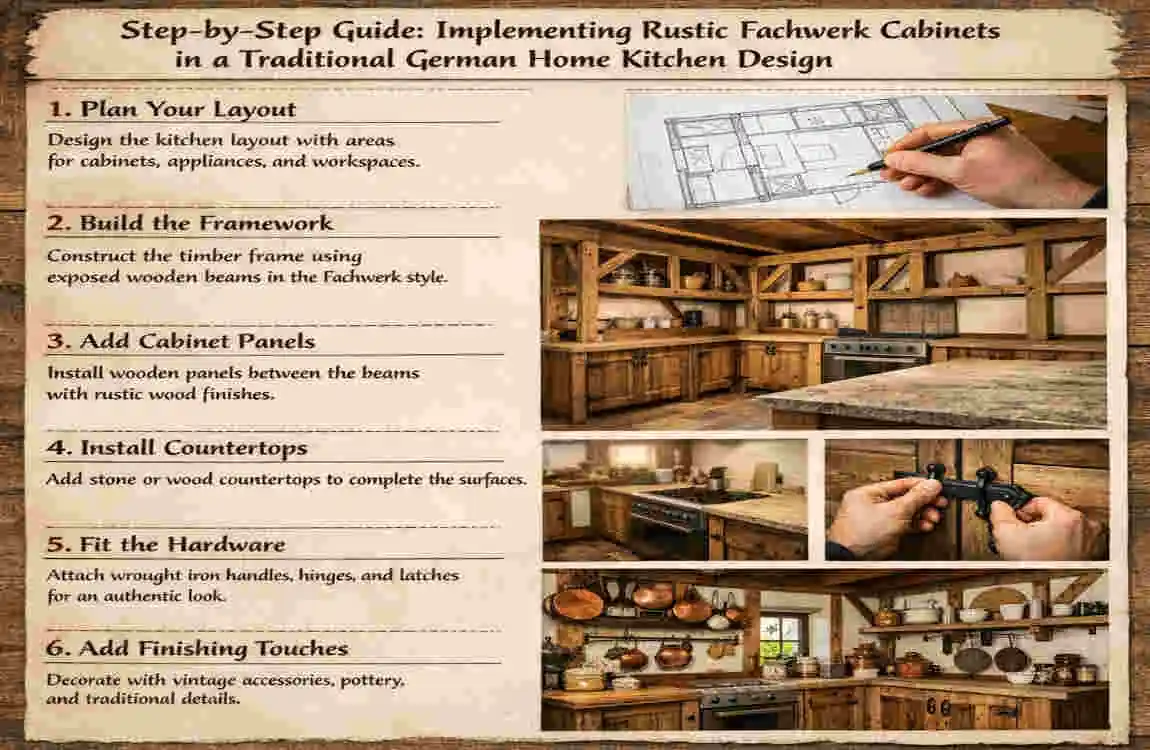
- Assess Your Space: Measure your kitchen and decide on the layout.
- Source Materials: Look for high-quality wood or reclaimed timber.
- Build or Hire: Decide whether to DIY or hire a professional.
- Install Hardware: Choose iron or brass for an authentic feel.
- Style Your Space: Add German accents, such as copper pots or Delftware tiles.
FAQ
What is traditional German home kitchen design?
It’s a style rooted in Germany’s architectural and cultural heritage, featuring rustic materials, functional layouts, and iconic elements like Fachwerk cabinets.
How much do rustic Fachwerk cabinets cost?
Costs vary depending on materials and customization, but they are generally higher than for standard cabinets due to their craftsmanship.
Can I DIY Fachwerk-style cabinets?
Yes, with the right tools and skills, you can create your own Fachwerk cabinets. However, hiring a professional ensures a polished result.
