

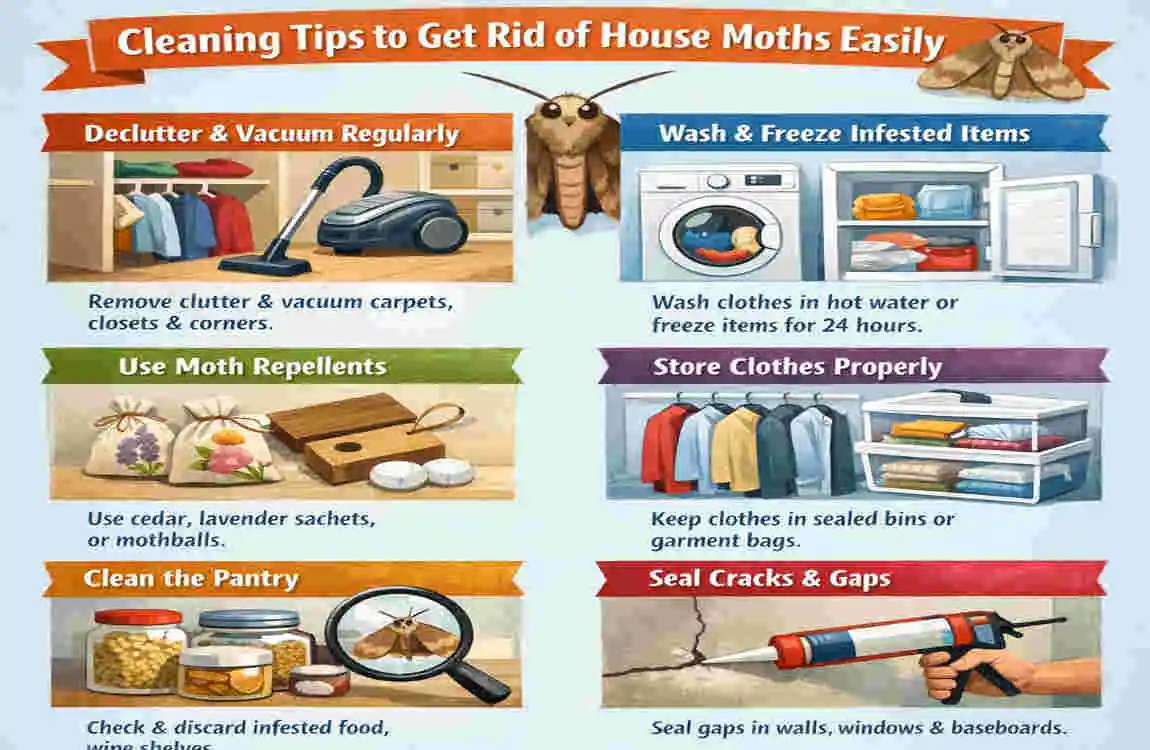
Spotting moths in my house, where they’re coming from, and cleaning them up can feel frustrating, especially when you keep seeing them after you think the problem is gone. One day you notice a small moth near the kitchen light. A few days later, you find tiny holes in a sweater or strange little webbing in the pantry.
The good news is that most house moth problems can be handled with simple, steady cleaning and a few smart prevention habits. You do not need to panic, and you do not always need expensive pest control right away. In many homes, especially in warm, humid places like Lahore and other parts of Punjab, moths appear because they find food, fabric, dust, and quiet, hidden spaces to breed.
Understanding Moths in My House: Where Are They Coming From?
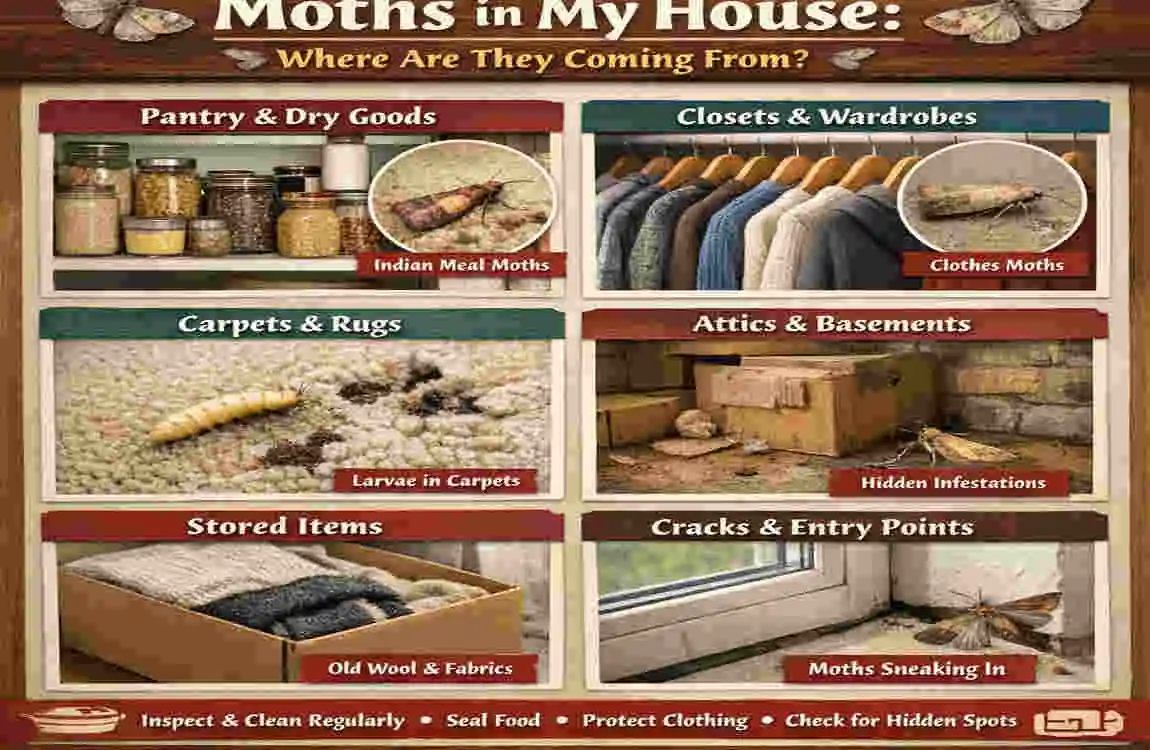
When people ask, “moths in my house where are they coming from?” the answer is usually simple: they came in looking for food, fabric, or shelter.
Moths are not usually a sign that your home is dirty. Even clean homes can get moths if the conditions are right. They love warm corners, hidden cracks, dark cupboards, and forgotten items that sit untouched for weeks.
What matters most is understanding what kind of moth you are dealing with and how it got inside. Once you know that, cleaning becomes much easier.
Common Types of House Moths Invading Pakistani Homes
Not all moths do the same kind of damage. In most homes, you will usually see one of these three types.
Pantry moths are one of the most common. These are often called Indian meal moths. They are attracted to dry foods like flour, rice, lentils, cereal, nuts, spices, and pet food. If even one bag of food is contaminated, the problem can spread fast.
Clothes moths live in wardrobes, drawers, and storage boxes. Adults do not eat your clothes directly. The real damage comes from their larvae, which feed on natural fibers such as wool, silk, and fur, and sometimes cotton blends.
Carpet moths hide in rugs, mats, and upholstered furniture. They often settle in areas with dust, pet hair, and lint. If your home’s carpets are not cleaned thoroughly and regularly, these moths can remain hidden for a long time.
In hot weather, especially during the humid months, moth activity can rise quickly. This is why many Pakistani homeowners notice more moth problems in the spring and monsoon seasons.
How Moths Enter Your Home: Top Entry Points
Moths do not magically appear out of nowhere. They usually enter your home through everyday routes that people often overlook.
One common entry point is open windows and doors. If you keep them open at night without screens, moths can fly in easily, especially when indoor lights are on.
Another major source is grocery bags and dry goods. Pantry moth eggs or larvae can come home inside packaged flour, grains, cereals, pulses, spices, or nuts. You may not notice them until they start multiplying.
Secondhand clothes, curtains, rugs, and furniture can also carry moth eggs or larvae. If an item sat in storage for a long time, it may bring a hidden problem into your home.
Cracks in walls, loose vents, gaps around windows, and openings near ceiling corners also give moths easy access. Older houses, including many older Lahore properties, may have more of these hidden entry points.
The Moth Lifecycle: Why They’re Hard to Spot
Moths are hard to catch early because their life cycle has several stages, and not all stages are easy to see.
First, there are eggs. These are tiny and often hidden in folds, corners, or food packages. You usually will not notice them.
Next come the larvae. This is the stage that causes most of the damage. Larvae eat food, fabric, or carpet fibers, depending on the type of moth. They can stay hidden for quite a while.
Then they become pupae, forming a protective case before becoming adults.
Finally, the adult moths appear. At this stage, they are usually flying around the house, but the real damage has often already been done.
That is why a moth problem can feel sudden. By the time you see the adult moths, the breeding may already be happening in a hidden place.
Signs of a Moth Infestation: Don’t Ignore These Red Flags
A moth problem usually leaves clear signs if you know what to look for. The sooner you notice them, the easier it is to clean up the mess before it spreads.
Here are the most common warning signs:
- Small flying moths around kitchen or closet lights
- Tiny holes in clothes, blankets, or rugs
- Webbing, clumps, or silky threads in dry foods
- Larvae that look like small cream-colored worms
- A musty smell in closets or storage areas
- Fine dust or shed skin near shelves, baseboards, or pantry corners
You may also notice that certain items keep getting damaged. If this keeps happening, the problem is unlikely to be random wear. It may be moth activity.
Pro Tip Table: Moth Damage vs. Normal Wear
SignMoth TypeCommon Location
Holes in wool sweaters Clothes moth Wardrobe or drawer
Silk cocoons in flour Pantry moth Kitchen pantry
Bare patches in rugs Carpet moth Living room or bedroom floor
Tiny webbing in dry goods Pantry moth Kitchen cabinet
Fine damage in stored clothes Clothes moth Storage box or closet
If you are unsure, compare the damage carefully. Moths usually leave more than one sign at the same time. That is what makes them different from ordinary wear and tear.
Step-by-Step Cleaning Guide: Get Rid of Moths in My House Easily
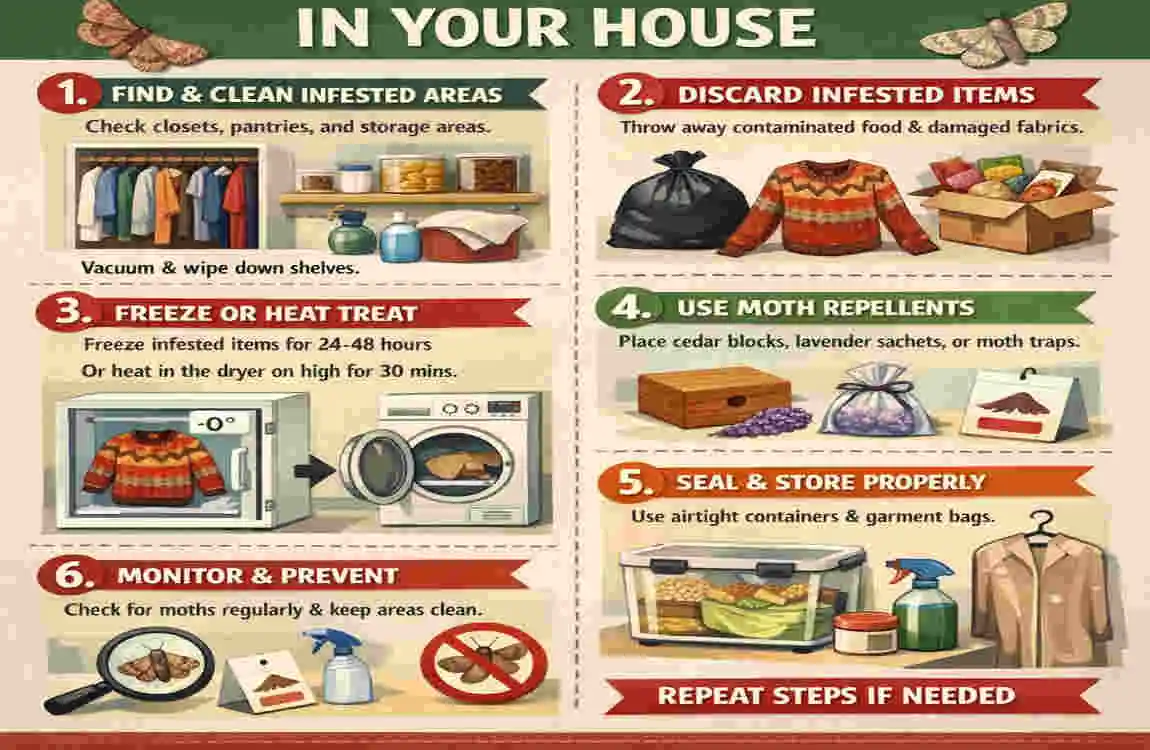
This is the part that matters most. If you want to stop moths, you need to do more than spray a product and hope for the best. You need a proper cleaning plan.
The goal is to remove larvae, eggs, food sources, and hiding places. If you only kill the adult moths, the problem can return very quickly.
Immediate Cleaning for Pantry Moth Infestation
If the infestation appears in the kitchen or pantry, act fast. Pantry moths spread through food and packaging, so the sooner you clean, the better.
Empty the pantry completely
Take everything out of the cupboard, shelf, or storage area. Do not leave items behind while you clean. You need to inspect each package individually.
Look for these signs:
- webbing inside bags
- tiny moving larvae
- clumps in flour or grains
- damaged packaging
- strange odors in dry goods
If a package looks suspicious, it is safer to throw it away. One contaminated item can keep the whole problem going.
Vacuum every shelf, crack, and corner
Use a vacuum cleaner to remove dust, crumbs, eggs, and hidden larvae. Pay close attention to shelf edges, screw holes, corners, and gaps.
After vacuuming, remove the vacuum bag or empty the canister outside the house right away. Do not let the waste sit inside, or moths may escape again.
Wash surfaces with a vinegar-water mix
After vacuuming, wipe all shelves and surfaces with a simple vinegar-water solution in equal parts. This helps remove residue and makes the area less welcoming to moths.
You can also use warm soapy water for a second wipe if needed. The key is to remove all food dust and sticky buildup.
Check and save food carefully
Any dry food you want to keep should be examined closely. If you are not sure about an item, place it in the freezer for 72 hours. This can help kill eggs or larvae hiding inside.
Some people also use low oven heat for certain dry goods, but you must be careful about food safety. Freezing is usually the safer option.
Use simple natural repellents after cleaning
Once the pantry is fully clean and dry, place bay leaves, cedar blocks, or herbal sachets in the storage area. These alone do not solve the infestation, but they can help discourage future activity.
The most important point is this: do the deep cleaning first, then use repellents. Repellents alone will not fix the real problem.
Deep Cleaning for Clothes and Carpet Moths
If the problem is in your wardrobe, bedroom, or living room, you need a different cleaning approach. Clothes moths and carpet moths love fabric, dust, and quiet, well-stored areas.
Wash washable fabrics in hot water
Clothes, blankets, pillow covers, and other washable fabrics should be washed in hot water whenever the fabric allows it. High heat helps kill eggs and larvae.
After washing, dry the items on a high heat setting if possible. Heat is one of your best tools.
Dry clean delicate items
Some fabrics cannot handle hot water. For those, dry cleaning may be the best option. This is especially true for delicate shawls, suits, silk items, or special clothing you want to preserve.
If you do not want to dry clean, you can also seal non-washable items in a bag and freeze them for at least 48 hours. This can help interrupt the moth life cycle.
Vacuum wardrobes, drawers, and under furniture
Do not stop at the visible floor area. Vacuum inside wardrobes, behind furniture, under beds, and along carpet edges. Larvae often hide in places people forget.
For the next two weeks, try to vacuum these areas daily if the infestation is active. The repeated cleaning matters because it helps remove newly hatched larvae before they grow.
Steam clean carpets and rugs
Carpets and rugs can hold eggs, lint, pet hair, and tiny food particles. A steam cleaner can be very useful because the heat helps kill hidden moth stages.
If you do not have a steam cleaner, a deep vacuum plus careful brushing can still help. Focus on corners, edges, and under furniture.
Use a gentle spray for closets
You can make a diluted spray with water and a few drops of lavender oil. Lightly spray the inside of closets, drawers, or storage boxes after cleaning. Do not oversaturate fabric, and always test first on a small area.
If you are in Lahore or another area where natural remedies are popular, some people also use neem oil in a light diluted form. It has a strong scent, so use it carefully and keep the area ventilated.
The aim is not to cover up the moth problem with fragrance. The aim is to make the space less attractive after a full clean.
Whole-House Cleaning Routine to Prevent Reinfestation
After you remove the active moth problem, you need a whole-house routine to prevent them from returning. This is where consistency matters.
Start by sealing possible entry points. Check windows, vents, door gaps, and wall cracks. Use caulk where needed, and install screens if you can.
Next, reduce clutter. Moths love still air and hidden spaces. If you have old boxes of clothes, unused fabrics, or stored items you no longer need, sort through them. Donate, discard, or repackage them in clean sealed containers.
Then build a simple weekly cleaning routine. Vacuum the floors, wipe the shelves, and regularly inspect the stored dry goods. This does not need to be complicated. It just needs to be consistent.
Checklist Table: Whole-House Moth Cleaning Routine
Cleaning StepFrequencyTools Needed
Vacuum floors, closets, and edges Daily in the first week HEPA vacuum
Wipe shelves and pantry surfaces Weekly Vinegar spray or soapy water
Inspect groceries and dry goods Every shopping trip Clean containers, dry storage boxes
Check clothes and storage bins Every 2 weeks Flashlight, lint roller
Clean under furniture and rugs Monthly Vacuum, steam cleaner if available
If you stay on top of these steps, the chances of another infestation drop a lot.
Natural and Chemical Moth Repellents: Safe Cleaning Options
After cleaning comes prevention. This is where repellents can help, but they work best when the home is already clean.
DIY Natural Repellents
Many homeowners prefer natural options first because they are simple and often safer for daily use.
Lavender sachets are a popular choice for wardrobes and drawers. The scent can help discourage moths, and they also make storage spaces smell fresh.
Cedar chips or cedar blocks are another common option. People use them in closets, drawers, and storage boxes. Over time, the scent may fade, so they need occasional refreshing.
Diatomaceous earth can be used in very small amounts in dry corners or cracks. It works by damaging the insects’ outer layer. Use it carefully, keep it dry, and avoid inhaling the dust.
You can also make a simple spray:
- 1 cup water
- 10 drops peppermint oil
- a small spray bottle
Shake it well and spray lightly on non-delicate surfaces. Always test first. Essential oils can stain some materials.
Natural repellents are helpful, but remember this: they support cleaning; they do not replace cleaning.
Store-Bought Solutions
If you want a stronger option, store-bought products can help. Pheromone traps are useful because they target adult moths and help you see whether moth activity is still present.
These traps are non-toxic in many cases and are often used in pantries or closets. They are not a complete fix, but they can be a useful part of your plan.
Mothballs are another option, but they must be used with caution. They have a strong odor and can emit fumes, so they should only be used in well-ventilated spaces and according to the product instructions. Keep them away from children and pets.
When to Call Pros
Sometimes the infestation is too large for home cleaning alone.
You may need professional help if:
- moths keep coming back after repeated cleaning
- you find damage inside walls or hidden structural spaces
- the problem spreads across several rooms
- expensive rugs, upholstery, or large wardrobes are involved
A pest control professional can inspect the source and recommend a stronger treatment plan. This can save time if the issue is severe.
Comparison Table: Moth Repellent Methods
MethodProsConsCost (PKR)
Natural oils Safe, simple, low cost Mild scent, limited power 200–500
Pheromone traps Targeted, easy to use Catch adults only 800–1,500
Mothballs Strong effect Toxic fumes, careful use needed 300–700
Professional treatment Best for severe infestations Higher cost Varies
Prevention Tips: Stop Moths in My House from Coming Back
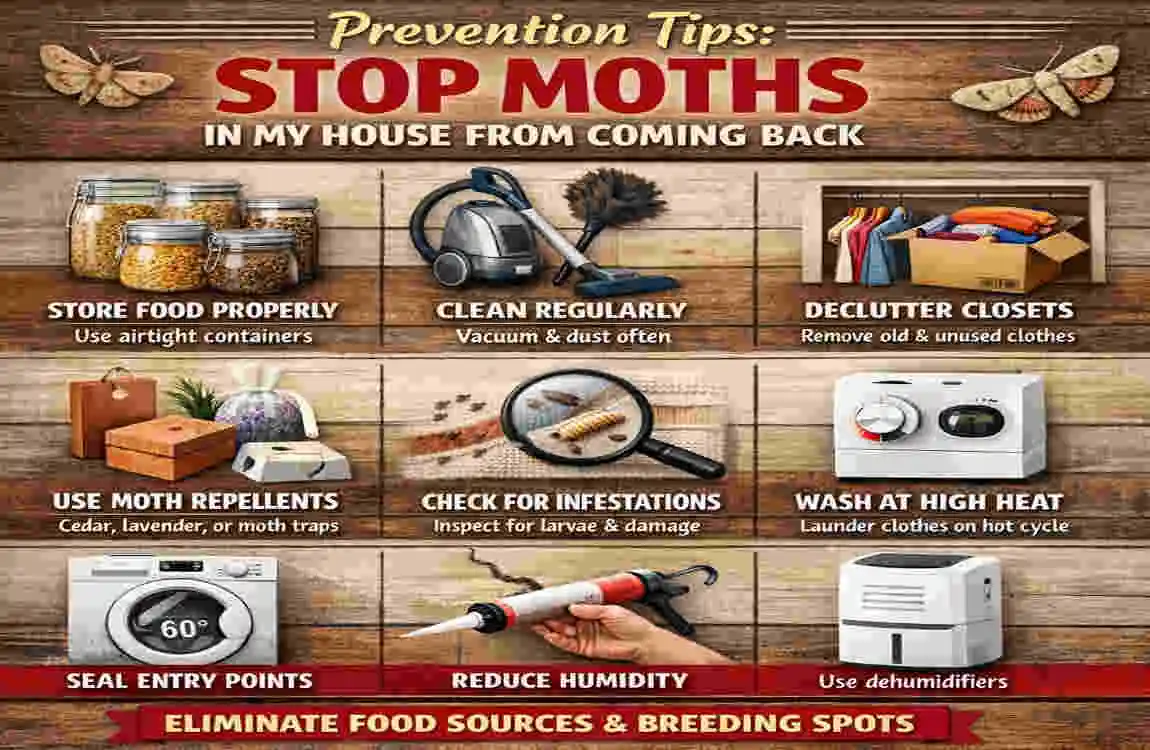
Once you have cleaned the home, the next step is to protect it long term. Prevention is much easier than dealing with a full infestation again.
Store Food the Right Way
Dry foods should be stored in airtight containers. Do not leave flour, rice, pulses, nuts, or spices in open bags for long periods. Even a small gap in packaging can be enough for moths to get in.
Check grocery items before you store them. If you buy something in bulk, inspect it first and transfer it into clean sealed containers.
Keep Closets Clean and Dry
Wardrobes should not be forgotten spaces. Every few weeks, remove items, shake them out, and check for damage. Vacuum the floor of the closet and the corners.
Use cedar or lavender if you like, but keep in mind that these work best as support tools, not as the main solution.
Reduce Humidity When Possible
Moths often do better in warm, damp environments. During the monsoon season, humidity can rise quickly. If your home stays damp, try using a dehumidifier or improving airflow where possible.
Open windows when the weather allows. Use fans. Let stored rooms breathe. Dry air makes your home less friendly to pests.
Stick to a Monthly Deep Clean
A quick clean is not enough if you want long-term control. Pick one day each month for a deeper inspection.
Focus on:
- pantry shelves
- closet corners
- under beds
- rugs and baseboards
- storage boxes
- pet food areas
A little effort each month can stop a major moth problem later.
Seasonal Calendar: Prevention Focus
MonthPrevention Focus
April–June Pantry checks and dry food inspections
July–September Closet vacuuming and humidity control
October–December Wardrobe cleaning and storage review
January–March General deep clean and decluttering
If you follow the seasons, you can stay one step ahead of moths before they spread.
Common Mistakes in Moth Cleaning and How to Avoid Them
Many people try to deal with moths quickly, but a few common mistakes make the problem return.
Ignoring the Larvae
Adult moths are easier to see, so people focus on them first. But the larvae are the real source of damage. If you do not remove eggs and larvae, the cycle starts again.
Keeping Infested Items
Some people wash or shake out an item and then put it back. That can be risky. If clothing, rugs, or pantry goods are badly infested, it is often better to discard them fully.
Relying Only on Sprays
Sprays can help, but they do not clean crumbs, lint, dust, or eggs. If the hiding place stays dirty, moths may return.
Forgetting Hidden Spaces
Moths love corners, folds, cracks, and storage areas. If you clean only the open shelves and visible floor, you may miss the real problem.
Waiting Too Long
The biggest mistake is delay. A small moth issue can grow quickly, especially in warm weather. As soon as you notice warning signs, start cleaning right away.
FAQ: Moths in My House and Cleaning Questions
Moths in my house where are they coming from?
They usually come from pantry items, clothes storage, open windows, secondhand furniture, or hidden cracks. Sometimes they enter with groceries or lay eggs in quiet corners of the house.
How do I get rid of moths in kitchen cabinets?
First, empty the cabinets. Then vacuum all corners, wipe the shelves with vinegar and water, and check every dry food package carefully. Replace anything contaminated.
Are house moths dangerous?
House moths are usually not dangerous to people, but they can damage food, clothes, rugs, and stored items. The bigger issue is the damage they cause over time.
What smells keep moths away?
Lavender, cedar, peppermint, and neem are commonly used. These scents may help, but they work best after you have already cleaned the area well.
How long does it take to get rid of moths?
It depends on how bad the infestation is. A small pantry problem may improve in a few days after deep cleaning. A larger clothes or carpet infestation may take weeks of repeat cleaning and monitoring.
Do I need professional pest control for moths?
Not always. Many small infestations can be handled at home with careful cleaning. But if the moths keep returning or the damage is widespread, professional help may be the faster and safer choice.
Why do moths keep coming back after cleaning?
This usually happens when eggs, larvae, or contaminated items were missed. It can also happen if food and fabric are still left in open or unsealed storage.
