
Buying or selling a home can feel emotional. A property is never just walls, windows, and a roof. It is also a place where people imagine their next chapter. Because of that, real estate language often becomes extra polished, extra warm, and sometimes a little extra dramatic.
You may walk into a home described as “stunning,” “perfect,” or “the best view in town,” only to find a property that is simply average. That gap between the sales pitch and the actual home is where house puffing in real estate comes in.
| Aspect | What It Means | Why It Matters |
|---|---|---|
| Definition | Exaggerated, opinion‑based claims about a property (e.g., “best house on the block,” “huge amazing backyard”) that overstate its appeal. | Helps explain why some listings sound too good to be true. |
| Is it legal? | Usually legal, because it is treated as “sales talk” or opinion, not a factual misrepresentation. | Buyers should focus on verifiable facts, not flashy phrases, during due diligence. |
| Common phrases used | “Best view in the city,” “future top‑value neighborhood,” “perfect for entertaining,” “must‑see!” | Signals puffing when these statements are vague and unprovable. |
| How it differs from fraud | Puffing is exaggerated promotion; fraud is knowingly lying about material facts (e.g., hiding termite damage or structural defects). | Fraud can lead to lawsuits; puffing alone rarely does. |
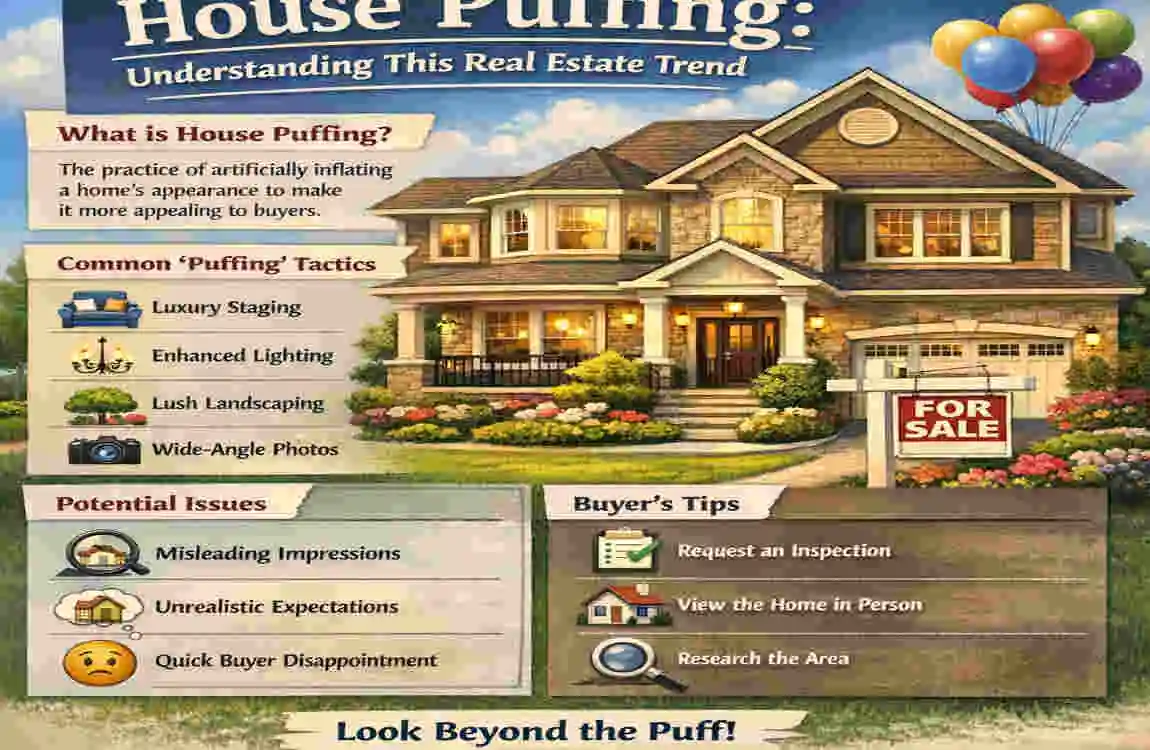
In simple terms, house puffing means using exaggerated opinions to make a property sound more appealing. It is usually based on subjective language rather than hard facts. That is why it can be legal. But legal does not always mean harmless. If buyers do not read the language carefully, puffing can lead to disappointment, confusion, and even financial mistakes.
What Is House Puffing in Real Estate?
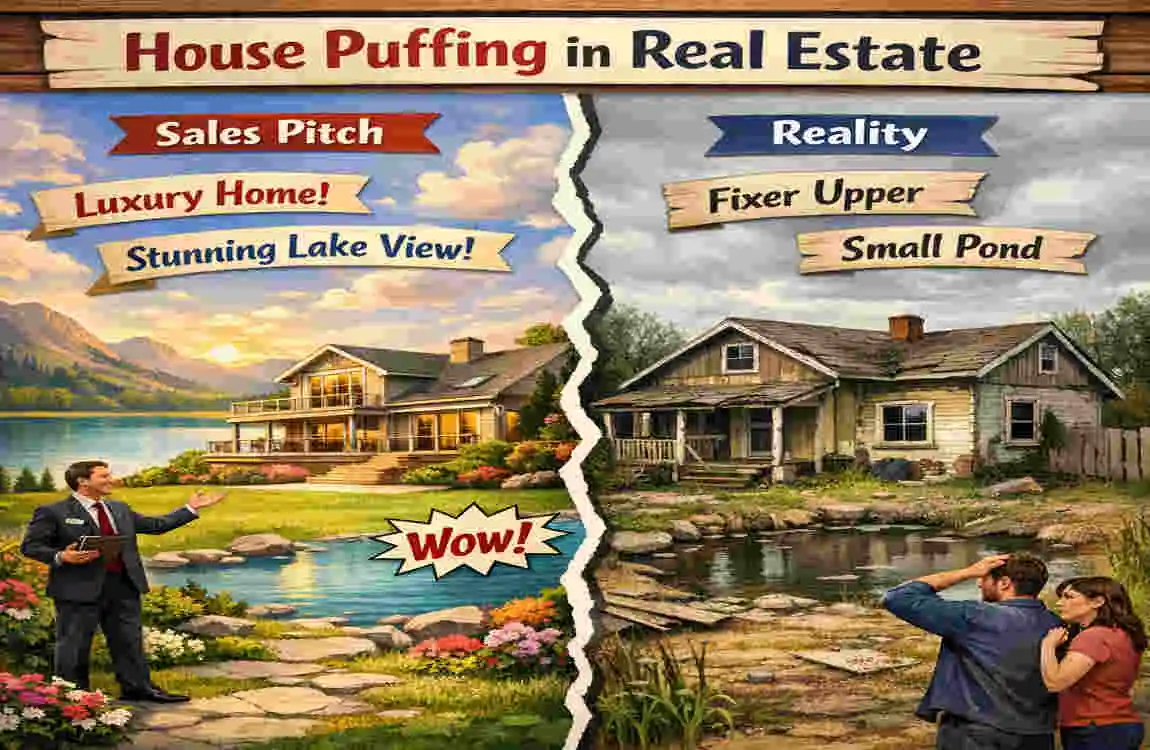
House puffing in real estate refers to exaggerated, opinion-based sales language used by agents, sellers, or marketers to make a property sound more attractive than it may actually be. It is not the same as lying about a concrete fact. Instead, it relies on vague, emotional, or highly subjective words.
A listing that says “cozy home with great charm” may be puffing if the home is actually small and plain. A description like “best neighborhood in the city” is also puffing because it is a matter of opinion. There is no easy way to prove that claim as fact.
That is the key difference. Puffing is usually about taste, feeling, and persuasion. Fraud, on the other hand, involves false statements about measurable facts. Saying a home has four bedrooms when it only has three is not puffing. That is a factual claim, and if it is false, it may be misrepresentation.
A simple definition you can remember
If a statement is:
- Subjective, it may be puffing.
- Verifiable, it may be a fact.
- False and material, it may be fraud or misrepresentation.
So, when someone calls a home “a dream property” or “a rare gem,” they are often not making a legal promise. They are trying to create interest and emotion.
Who uses house puffing?
House puffing can come from several people involved in the sale:
- Real estate agents
- Home sellers
- Marketing teams
- Property managers
- Listing writers or content creators
In most cases, they are trying to present the home in the best possible light. That is normal in real estate. After all, every seller wants attention. Every agent wants clicks, showings, and offers.
The problem begins when the language becomes so dramatic that it clouds the buyer’s judgment.
What puffing usually looks like
House puffing often has a few clear traits:
- It is opinion-based, such as “perfect for families.”
- It uses emotional language, such as “dream home” or “must-see gem.”
- It aims to create excitement, not to provide hard proof.
- It appears more often in competitive markets, where sellers want to stand out.
- It can sound convincing without saying much of substance.
This is why house puffing can be tricky. It sounds harmless on the surface. In reality, it can shape how buyers feel before they ever inspect the property.
Puffing is not the same as normal marketing
Not every positive description is puffery. Real estate marketing naturally uses attractive language. That is part of the industry. A good listing should highlight the home’s best features.
The issue is balance. If the listing focuses only on hype and leaves out important reality, buyers may walk in with the wrong expectations. When that happens, the sale experience becomes frustrating for everyone.
A smart buyer learns to read between the lines. A smart seller learns to promote the home honestly while still making it appealing.
Is House Puffing Illegal in Real Estate?
The short answer is usually no. House puffing in real estate is generally considered legal because it is viewed as opinion, not an objective falsehood. Courts often treat this kind of language as non-actionable puffery, meaning it is too vague or subjective to count as a legal promise.
This is why phrases like “best location,” “beautiful home,” “breathtaking view,” or “perfect family house” often do not create legal problems on their own. These statements are not easy to prove or disprove. One person’s “best” may be another person’s “average.”
Why puffing is usually legal
The law usually allows people to express opinions in sales language. Real estate is no different. Sellers and agents can highlight what they believe makes a home special.
For example:
- “Quiet neighborhood” may be an opinion unless the area is objectively noisy or not.
- “Amazing curb appeal” is subjective.
- “Ideal for entertaining” depends on how the buyer uses the space.
- “Best view in town” is a promotional claim, not a measurable fact.
These phrases are often protected because they are not specific enough to be treated as lies.
Where puffing crosses the line
Puffing becomes a problem when it turns into a false statement about something that can be checked. If a seller says the property has a new roof, but the roof is actually 20 years old, that is not puffing. That is a factual claim, and if false, it can lead to legal trouble.
The same applies to claims about:
- Number of bedrooms
- Square footage
- Renovation dates
- Property boundaries
- School zones
- Zoning status
- Flood history
- Major repairs
- Appliances included in the sale
These are not opinions. They are facts. If a seller or agent gets them wrong, buyers may have legal options.
State rules and ethical standards matter
Even though puffing is usually legal, real estate professionals still have to follow state laws and ethical rules. These rules often require honesty, fair disclosure, and accurate representation of material facts.
That means an agent cannot hide behind puffing if they knowingly mislead a buyer. A statement may be colorful, but it cannot be deceptive in a meaningful way.
For example, saying “charming older home with character” is usually fine. Saying “recently updated plumbing” when no updates were done is not fine.
Puffing vs. fraud: a clear comparison
AspectHouse PuffingFraud / Misrepresentation
Basis Subjective opinion Verifiable fact
Language style Emotional, vague, promotional Specific, factual, measurable
Legality Usually legal Illegal and potentially suable
Example “Breathtaking views” “New roof in 2024” when that is false
Buyer response Use judgment and verify May seek legal remedy
Risk level Misleading if overused Serious legal and financial risk
Why excessive puffing still matters
Even if puffing is legal, too much of it can cause real problems. A seller or agent who constantly exaggerates may lose trust. Buyers may feel manipulated. In some cases, a pattern of misleading language can lead to complaints, ethics violations, or even license issues if it crosses the line into deception.
So yes, house puffing is often legal. But legal puffing still needs to stay within reasonable limits.
The safest approach is simple: sell the value, not the fantasy.
Real-World House Puffing Examples in Listings
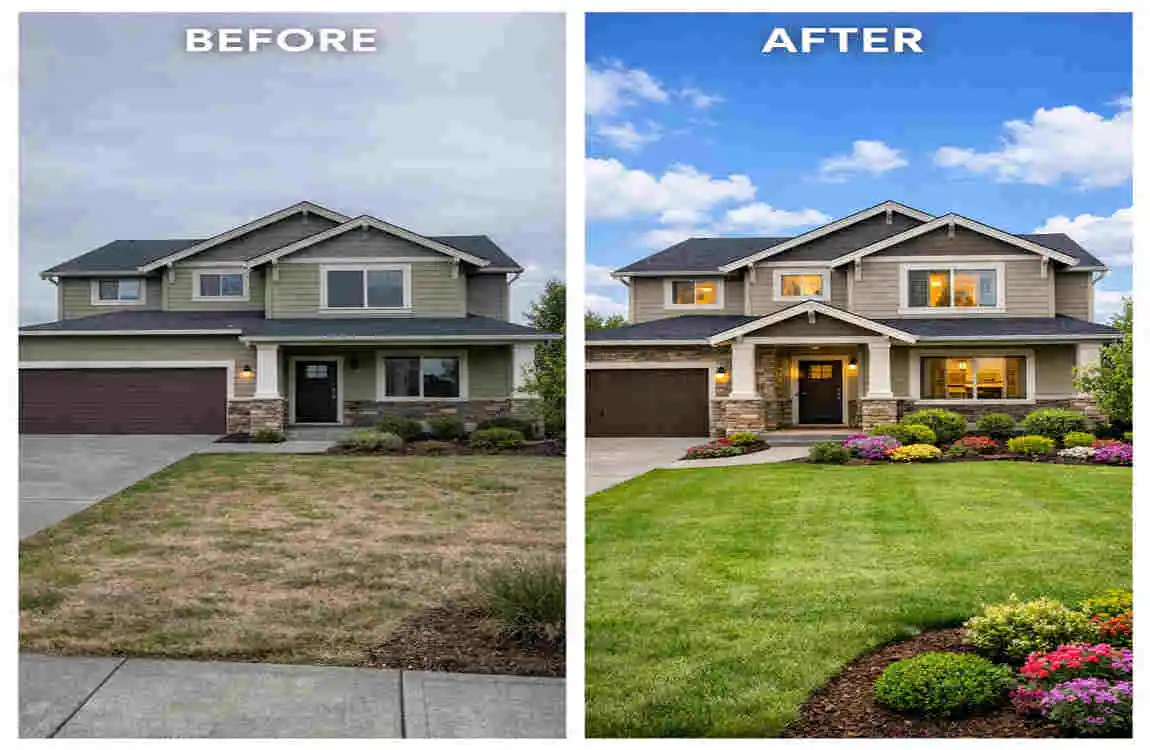
To better understand house puffing, it helps to see how it appears in real listings. In many cases, the wording is smooth, attractive, and harmless on the surface. But when you look closer, you can see how the language may stretch reality.
Common house puffing examples
Here are some common real estate puffing examples and what they often mean in practice:
“Spacious backyard oasis”
This phrase sounds relaxing and luxurious. But the actual backyard may be small, uneven, or not very private. Sometimes there may be a small patio and a tired lawn, yet the listing makes it sound like a resort.
“Prime urban location”
This could mean the home is close to the city center. It could also mean the property is on a busy road with traffic noise, crowded parking, and little privacy. “Prime” is a selling word, not a fact.
“Move-in ready gem”
This phrase is often used when the home looks decent in photos but still needs work. Maybe the paint is fresh, but the plumbing, roof, or flooring still needs attention. Buyers should never assume that “move-in ready” means no repairs are needed.
“Perfect for entertaining”
This might be true for some buyers, but not all. A dining room, patio, or open kitchen can support gatherings, but the word “perfect” is a matter of judgment. It sounds exciting, but it is not measurable.
“A rare opportunity”
This phrase is used to create urgency. It suggests the buyer should act fast because the home is special. Sometimes that is true. Other times it is simply marketing designed to push a quicker offer.
“Charming character home”
This could mean the home has beautiful details, or it could mean the home is old, dated, and slightly awkward. “Character” is one of the most common words in real estate puffing because it can describe almost anything.
“Best view in the neighborhood”
Unless there is an objective ranking system, this is an opinion. The view may be great, but “best” is a subjective word that can be used very loosely.
Why these phrases work so well
These phrases work because they appeal to emotion. Buyers do not just shop with logic. They also shop with feeling. When people imagine themselves in a home, they want it to feel warm, attractive, and safe.
Puffing takes advantage of that feeling. It paints a picture before the buyer has enough facts to judge the home fairly.
That does not always make the language bad. It simply means the language should not be taken at face value.
Digital puffing on listing platforms
House puffing is even more common online. On platforms like listing sites and social feeds, photos and captions can be edited to make a home seem brighter, larger, or more polished than it really is.
Here are a few examples of digital puffing:
- Wide-angle photos that make rooms seem bigger
- Bright filters that hide dull lighting
- Carefully cropped images that leave out flaws
- Captions that exaggerate lifestyle appeal
- Phrases like “luxury living” for a basic property
This kind of presentation is not always dishonest. Real estate photography is meant to be flattering. But buyers should remember that photos are designed to attract attention, not to replace full inspection.
The problem with too much hype
Hype can create expectations that the home cannot meet. A buyer may fall in love with the idea of a property before they understand its reality. When they finally visit, the house may feel smaller, noisier, or older than expected.
That emotional gap can lead to wasted time, lost trust, or rushed decisions.
The best way to handle puffing is not to panic. It is to stay alert, ask questions, and look for proof.
Risks and Impacts of House Puffing
House puffing may seem harmless, but it can create real risks for both buyers and sellers. The biggest issue is that it changes expectations. Once expectations are distorted, the entire buying process becomes less clear.
Risks for buyers
For buyers, the most obvious risk is disappointment. A home may look amazing in the listing but feel ordinary or even disappointing in person. That can be frustrating, especially if the buyer spent time, money, and emotional energy chasing the wrong property.
House puffing can also lead to overpaying. If the marketing language creates a sense of urgency or makes the property seem more valuable than it is, a buyer may stretch their budget or skip important comparisons.
Other buyer risks include:
- Missing warning signs
- Ignoring repair needs
- Overlooking neighborhood issues
- Rushing the offer process
- Failing to compare similar homes fairly
When buyers rely too much on emotional descriptions, they can make choices that are not fully grounded in facts.
Risks for sellers and agents
Sellers and agents also face risks. If puffing stays within the lines, it may help generate attention. But if it becomes misleading, it can backfire badly.
Possible risks include:
- Loss of trust
- Buyer complaints
- Failed deals
- Negative reviews
- Ethics concerns
- Legal exposure if statements become false claims
Trust is one of the most important parts of real estate. Once buyers feel tricked, it becomes much harder to close the sale or build a good reputation.
Market conditions make puffing more common
Puffing tends to be more common in tight markets, where demand is high and homes sell quickly. In those settings, agents and sellers often feel pressure to stand out. Strong language can quickly capture attention.
In a market where buyers are competing for fewer homes, listings can become more emotional and more aggressive. This is why puffing is often more noticeable during periods of low inventory, fast sales, or high buyer demand.
The long-term effect on the market
When puffing becomes common, buyers may start to distrust all listings. They stop believing words like “stunning,” “luxury,” or “dream home.” That can make the whole market harder to navigate.
A market works best when there is a healthy balance between good marketing and honest detail. If every listing sounds like a miracle, buyers stop paying attention to anything.
That is why the impact of puffing goes beyond one home. It can affect the tone of the entire market.
How to Spot House Puffing in Real Estate
The good news is that house puffing is not hard to spot once you know what to look for. You do not need to become a lawyer or a real estate expert. You only need to read listings with a sharper eye.
Common signs of house puffing
Watch for words and phrases that feel big but say very little. These often include:
- “Ultimate”
- “Unbeatable”
- “Perfect”
- “Stunning”
- “Rare”
- “Dream”
- “Charming”
- “Luxury”
- “Best”
- “Must-see”
These words are not always bad. But when a listing is full of them and short on details, that is a sign you should slow down and ask questions.
Other warning signs
- Vague praise without evidence
- Example: “A true gem” with no explanation of why.
- Emotional pressure
- Example: “This one will not last long” to convey urgency.
- Missing measurements
- Example: The listing mentions “space” but does not provide square footage.
- Cherry-picked photos
- Example: Only the nicest angles are shown, while flaws are hidden.
- Big claims without documents
- Example: “Fully renovated” with no permit or date details.
Questions you should ask
If a listing sounds too polished, ask direct questions like:
- What exactly was renovated, and when?
- Can I see the disclosures?
- How old is the roof, HVAC, plumbing, and electrical system?
- What does “move-in ready” actually mean here?
- Is the location noisy at certain times?
- How does this home compare with similar homes nearby?
These questions help move the conversation from opinion to fact.
Ways to verify the truth
You do not need to guess. You can check many claims through simple due diligence.
Use these tools and methods:
Home inspection
A professional inspector can reveal issues that a listing will not mention.
Comparable sales
Compare the home with similar properties nearby to see if the price matches the value.
MLS or listing data
Review the original listing facts, not just the marketing summary.
Appraisal
An appraiser can help establish whether the price aligns with market value.
Disclosures
Sellers are often required to share known problems or important facts.
Neighborhood research
Visit the area at different times of day to check traffic, noise, parking, and activity.
Public records
You can often confirm property details such as size, permits, and tax history.
A simple mindset that helps
When you read a listing, ask yourself one question:
What is fact, and what is flavor?
Facts are useful. Flavor is fine, but it should never replace the facts.
If a description sounds too emotional, pause and look for the details behind it.
How Buyers and Sellers Can Protect Themselves
House puffing does not have to be a trap. Buyers and sellers can both protect themselves by using clear habits and honest communication.
How buyers can avoid house puffing traps
Work with a buyer’s agent
A good buyer’s agent can help you read between the lines. They know how to compare homes, spot vague claims, and ask the right questions.
Ask for full disclosures
Do not rely solely on the listing language. Request the seller’s disclosures and any available records regarding repairs, upgrades, or known issues.
Get a home inspection
A good inspection can reveal structural problems, worn systems, water damage, and other issues that puffing will never mention.
Research independently
Look up comparable homes, neighborhood conditions, school details, commute times, and recent sales. Independent research keeps you grounded.
Take your time
Puffing often works by creating urgency. Slow down if you can. A home should make sense not only emotionally, but also practically and financially.
How sellers can stay ethical
Sellers do not need to sound boring to be honest. In fact, good marketing can still be warm, appealing, and memorable. The key is to stay truthful.
Sellers should:
- Highlight real strengths
- Use accurate descriptions
- Avoid false claims
- Back up renovation details with documents
- Disclose known issues
- Let the home speak for itself where possible
If a backyard is small, do not call it a huge oasis. If the kitchen is updated, say what was updated and when. If the view is nice, describe what can actually be seen.
That approach builds trust and reduces risk.
A practical rule for both sides
If a claim would matter to the buyer, it should be clear, specific, and verifiable.
That one rule can prevent many problems.
House Puffing Trends in 2026 Markets
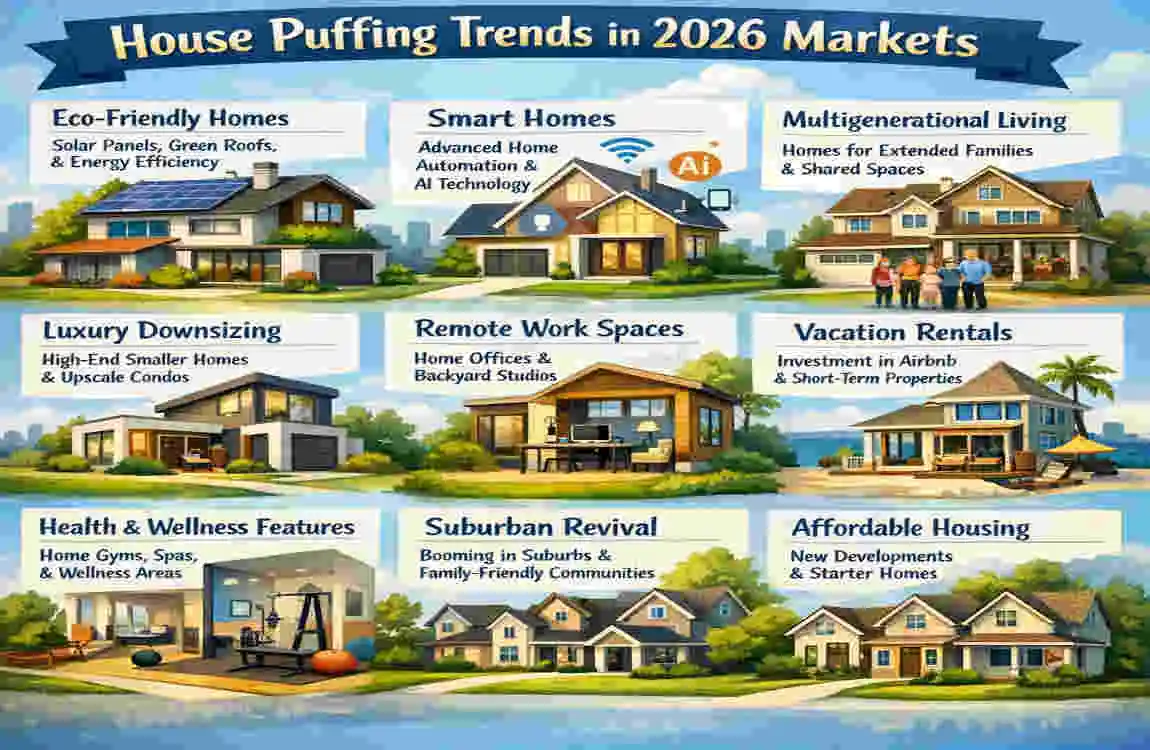
House puffing is not new, but it is changing. In 2026, the real estate market is more digital, more competitive, and more content-driven than ever. That means puffing can spread faster and look more polished than before.
AI and listing language
One major trend is the use of AI in property marketing. AI tools can help agents write quick, catchy listing descriptions. That sounds helpful, and often it is. But it can also make listings feel more generic or more exaggerated.
A system trained to sell attention may use words like “luxury,” “stunning,” “rare,” and “dream” far too often. If a human does not carefully review the tool, the result can be polished hype with very little substance.
Faster market cycles
In fast-moving markets, listings do not stay visible for long. Sellers want fast offers. Agents want quick attention. Buyers want to act before prices rise again. All of that pressure makes puffing more tempting.
When homes move quickly, people sometimes skip the deeper questions. That is when polished language can do the most damage.
Stronger buyer awareness
The good news is that buyers are becoming more aware. More people know that photos can be enhanced, words can be polished, and sales language can be selective. That awareness is helping buyers ask better questions and compare homes more carefully.
Regional differences still matter
In some places, the puffing style may be more subtle. In others, it may be bold and very obvious. For example, in rapidly growing urban markets, a seller may use intense wording to stand out from the crowd. In local markets with strong agent competition, the marketing language may become more dramatic over time.
No matter the region, the lesson is the same: always separate promotion from proof.
What the future may bring
As regulations, buyer awareness, and digital tools evolve, there may be more pressure for clearer listing standards. That could mean better disclosures, more precise language, and fewer vague claims.
For now, the smartest move is still simple. Read carefully. Verify everything important. And never let hype replace facts.
FAQ: What Is House Puffing in Real Estate?
What is house puffing in real estate?
House puffing in real estate is exaggerated, opinion-based language used to make a home sound more attractive. It includes phrases like “best view,” “dream home,” or “perfect for families.” These statements are usually subjective rather than factual.
Is puffing legal in real estate?
Yes, puffing is usually legal because it is considered opinion rather than a false statement of fact. However, if the language crosses into false claims about measurable details, it may become misrepresentation or fraud.
What is the difference between puffing and misrepresentation?
Puffing is vague and subjective. Misrepresentation is false and factual. For example, calling a home “great character” is puffery. Saying it has “a new roof installed last year” when it does not is misrepresentation.
What are common examples of puffing for buyers to watch for?
Common examples include:
- “Move-in ready”
- “Best location in town”
- “A rare gem”
- “Perfect family home”
- “Luxury living”
- “Unbeatable value”
These phrases are not always wrong, but they should be checked against the facts.
How can buyers protect themselves?
Buyers can protect themselves by:
- Reading disclosures carefully
- Hiring a home inspector
- Comparing similar homes
- Asking direct questions
- Verifying claims with records and data
