

You wash your hands, glance down, and there it is: a musty, sour, sometimes eggy smell drifting up from the sink. The basin looks spotless, so where is it coming from?
Good news: this is one of the easiest household problems to fix, and you almost certainly have everything you need in your kitchen.
Why Does My Bathroom Sink Drain Smell?
Before you pour anything down the drain, it helps to know what you are fighting. A bathroom sink drain usually smells for one of five reasons.
Biofilm and buildup inside the pipe
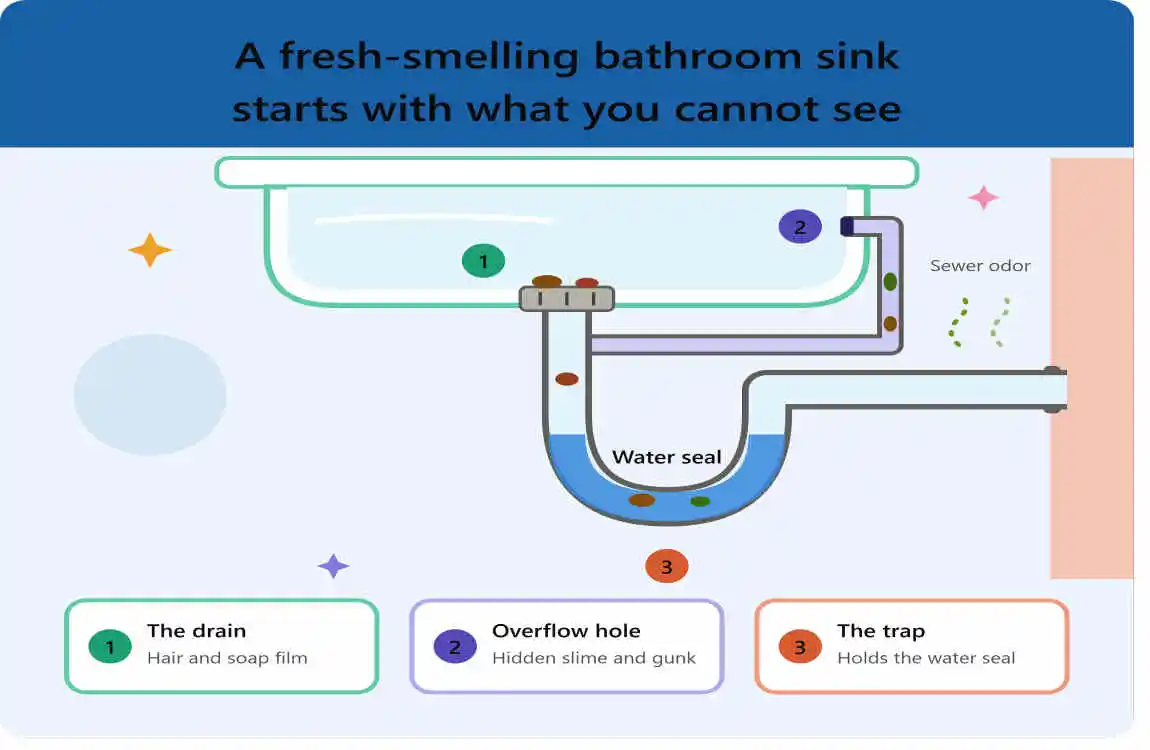
Toothpaste, soap, shaving residue, skin cells and hair slowly coat the inside of the drain. Bacteria feed on that layer and release smelly gases. According to Angi’s plumbing guides, mold, mildew and surface-level clogs are among the most common reasons a bathroom sink smells, and a baking soda and vinegar mix can help with the lighter cases.
A dirty overflow hole
That small hole near the top of the basin is part of your drain system. It lets air in and catches excess water, and it is a perfect hiding place for gunk. Hunker explains that bacteria growing in the overflow channel can cause a bad odor, and that simply pouring boiling water through it may not be enough to kill them. This is the number one reason people say the sink still stinks after they cleaned the drain.
A dry P-trap
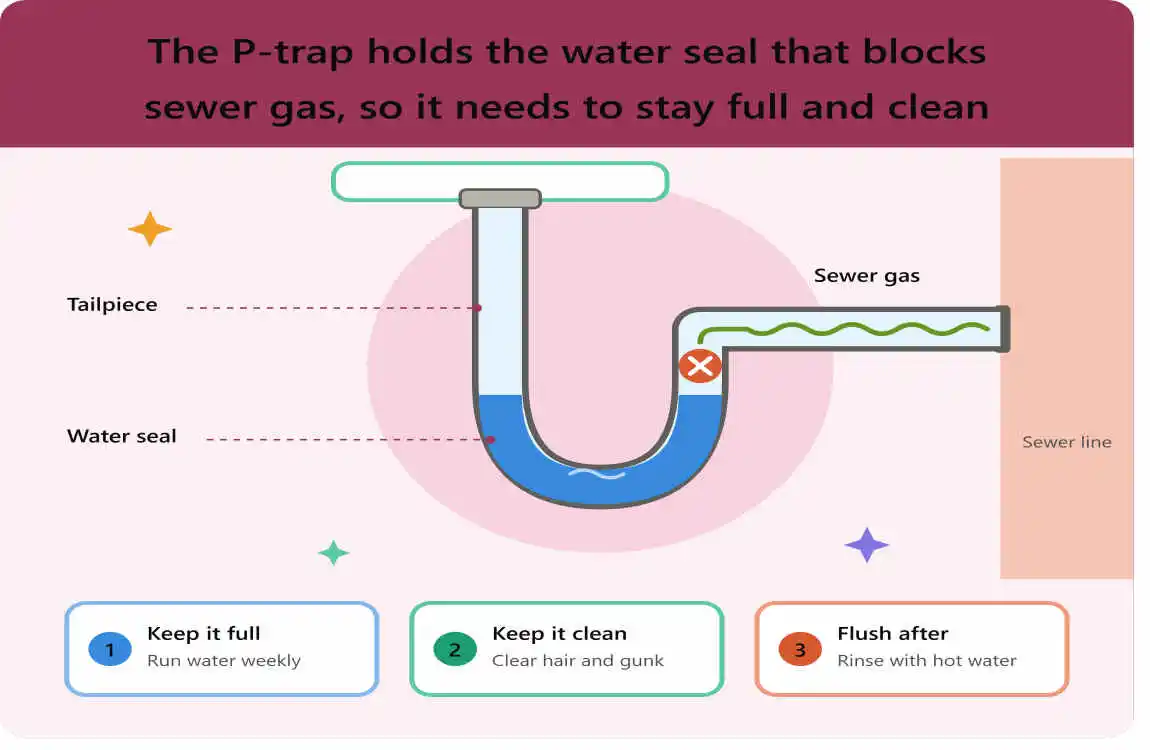
The curved pipe under your sink is called a P-trap. It holds a small amount of water that works as a barrier, stopping sewer gas from rising into your bathroom. Bob Vila’s plumbing contributors note that a sink drain can go dry in under 30 days, which is why guest bathrooms and rarely used sinks are the usual suspects.
A clogged plumbing vent
Your plumbing system needs air to drain smoothly. This Old House points out that a clogged vent can pull water out of a trap faster than normal evaporation, leaving the seal empty and the smell wide open.
Loose or damaged pipes
A cracked trap, worn washer or loose slip nut can leak water and let gas escape. This is rarer, but it is the reason some smells never fully go away with home cleaning.
Which Smell Do You Have? A Quick Diagnosis Chart
| Smell | Most likely cause | Best first fix |
|---|---|---|
| Musty or moldy | Overflow hole or drain buildup | Brush and flush the overflow, then clean the drain |
| Sour or rotten food | Biofilm, hair and toothpaste residue | Baking soda and vinegar, then hot water |
| Rotten eggs | Bacteria or sewer gas | Clean the drain, refill the P-trap |
| Sewage | Dry trap, vent problem or leak | Run water; if it stays, call a plumber |
What You Will Need
- Baking soda
- Distilled white vinegar
- A kettle or pot for very hot water
- A small funnel
- An old toothbrush or a bottle brush
- Rubber gloves
- A bucket and an adjustable wrench (only if you clean the P-trap)
How to Clean a Smelly Bathroom Sink Drain: Step by Step
Remove the stopper and clear the visible gunk
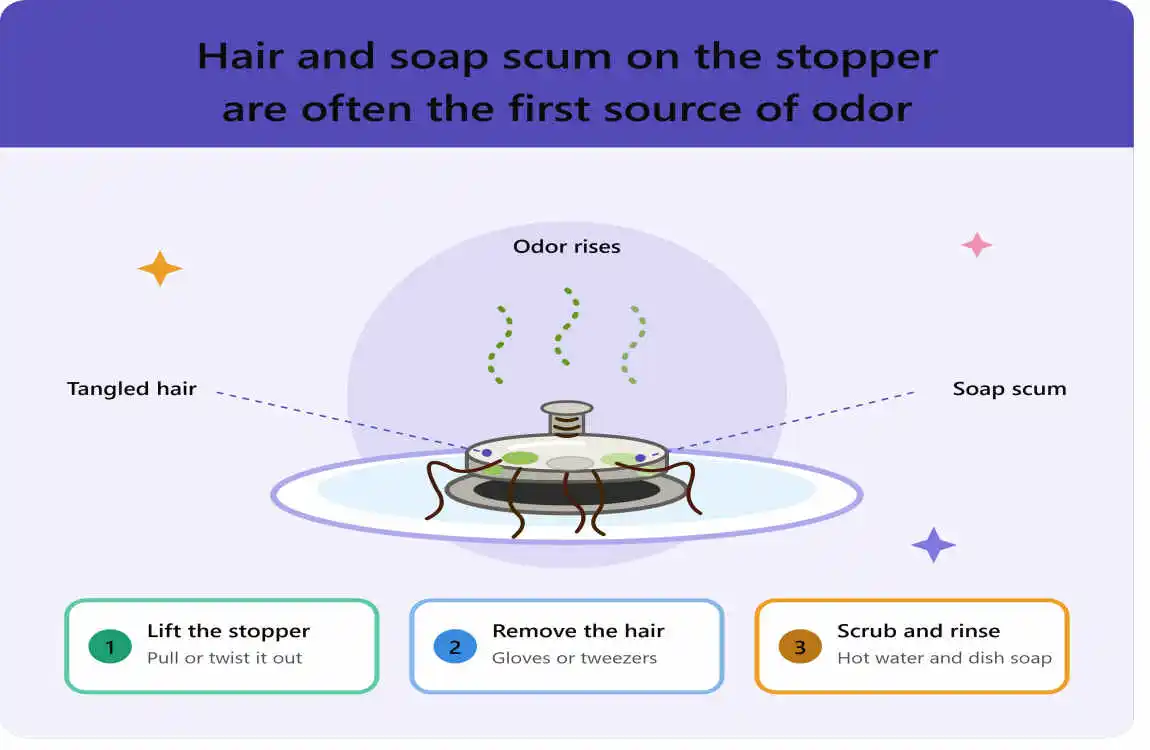
Many pop-up stoppers lift straight out or unscrew with a quarter turn. Pull it out, wipe off the slimy residue, and remove any hair wrapped around it. Honestly, this one step solves a surprising number of smelly sinks.
Flush with very hot water
Run very hot tap water for about a minute to loosen light residue. If your pipes are metal, you can carefully pour in water from a kettle. If you have plastic (PVC) pipes, stay with hot tap water instead of boiling water, because boiling water can soften or damage plastic fittings.
Use baking soda and vinegar
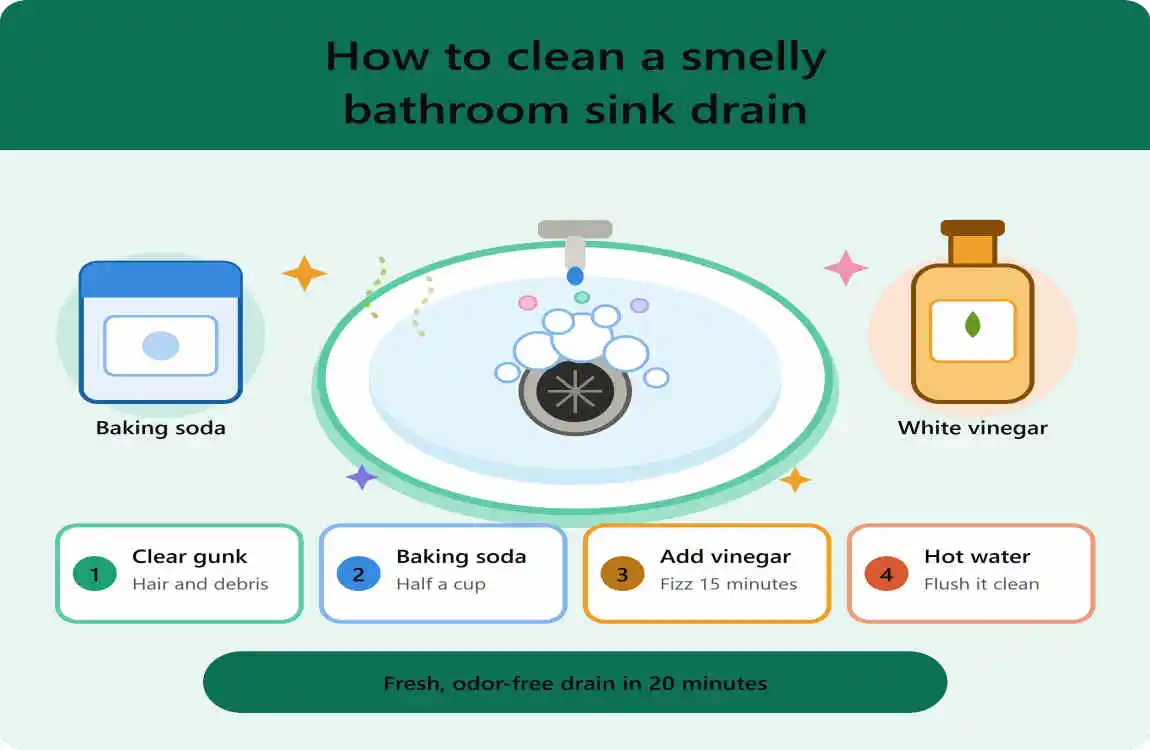
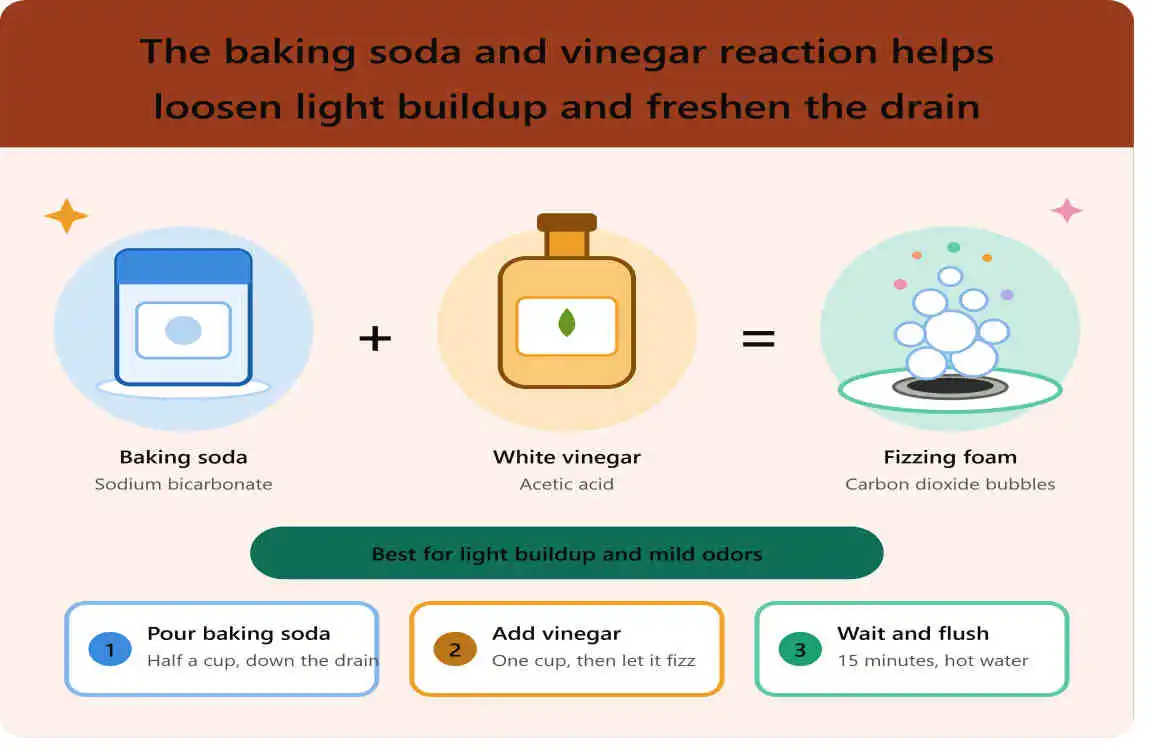
Spoon about ½ cup of baking soda into the drain, then slowly pour in 1 cup of white vinegar. Drano’s guide to bathroom sink smells suggests using this fizzing combination to help shift small clogs and flush away bacteria near the surface. Cover the drain opening with a cloth or the stopper and let it work for 10 to 15 minutes.
Do not forget the overflow hole
This is the step most guides skip. Place a small funnel in the overflow opening, pour in about 1 cup of baking soda, then slowly add 1 cup of vinegar. Bob Vila’s step-by-step guide to cleaning a sink overflow hole explains that the foaming action breaks down gunk and bacteria, and that toothpaste, soap, hair and mildew can all get trapped there. Scrub the opening with a toothbrush or pipe cleaner brush, then rinse the inside with hot water.
Rinse thoroughly
Flush with very hot tap water for a full minute, then run cold water to rinse away any remaining baking soda. Bob Vila’s guide to freshening a stinky sink recommends this same combination of baking soda, vinegar and hot water to scour grease and grime from the drain walls.
Clean or refill the P-trap if the smell remains
If the sink still smells, check the trap. First, simply run the tap for two to three minutes to refill the water seal. If the odor is gone, you had a dry trap. If it lingers, place a bucket under the sink, loosen the slip nuts by hand (or with a wrench if needed), remove the trap, and scrub out the sludge with a bottle brush. Rinse it, reconnect it snugly, and test for leaks.
What Not to Do
- Never mix bleach with vinegar or other cleaners. The combination can release dangerous fumes.
- Avoid repeated harsh chemical drain openers. They can damage older pipes, and they will not remove a dirty overflow hole.
- Do not tape over the overflow. It is there for ventilation and to prevent flooding.
- Do not ignore a persistent sewage smell. That calls for a professional, not another bottle of air freshener.
How to Keep Your Bathroom Sink Drain from Smelling Again
- Lift out the stopper and remove hair every one to two weeks.
- Do a baking soda and vinegar treatment once a month.
- Brush the overflow hole every few months.
- Run water in seldom-used sinks at least once a week so the trap stays full.
- Rinse the sink with hot water after brushing teeth or shaving to reduce residue.
When to Call a Plumber
Home cleaning has limits. Call a licensed plumber if:
- The smell returns within days of a full cleaning.
- More than one drain in your home smells.
- You notice gurgling sounds, slow draining or water stains under the sink.
- You detect a strong sewage or rotten-egg smell that does not clear after refilling the traps.
The reason to take this seriously: sewer gas can include hydrogen sulfide. Angi notes that, according to the U.S. Agency for Toxic Substances and Disease Registry, larger concentrations or prolonged exposure to hydrogen sulfide can create health risks. A vent blockage or cracked pipe is a repair job, not a cleaning job. And if you ever smell something like rotten eggs and are unsure whether it could be natural gas, leave the area and contact your gas provider or emergency services.
Frequently Asked Questions
Why does my bathroom sink drain smell like rotten eggs?
Usually it is bacteria feeding on hair, soap and toothpaste buildup, or sewer gas slipping past a dry P-trap. Clean the drain and overflow hole, then run water to refill the trap. If the smell stays, a blocked vent or damaged pipe may be involved.
Does baking soda and vinegar really get rid of drain smell?
Yes, for mild odors. It helps loosen light buildup and freshens the drain. It will not fix a dry trap, a blocked vent or a heavy clog, so treat it as one step in a full cleaning.
Why does my sink still smell after cleaning the drain?
The overflow hole is the most common hidden culprit. Scrub it with a brush and flush it with baking soda and vinegar. If that does not work, check the P-trap.
How often should I clean my bathroom sink drain?
A monthly baking soda and vinegar cleaning works for most households, with a quick stopper cleaning every week or two.
Is a smelly sink drain dangerous?
A musty smell from buildup is mostly a nuisance. A persistent sewer smell should be inspected by a plumber because sewer gas contains hydrogen sulfide.
Final Thoughts
A smelly bathroom sink looks like a mystery, but the fix is usually simple: clear the visible gunk, treat the drain, clean the overflow hole, and keep the trap full of water. Do those four things on a regular schedule and you will rarely smell your sink again. If the odor refuses to leave, trust your nose and bring in a plumber.
