

A dropped pan, a dragged chair, a pet’s claws or a leaky dishwasher: laminate takes a lot of punishment, and sooner or later it shows. The good news is that most damage is fixable in an afternoon, often without replacing a single board. This guide covers how to repair a laminate floor, from light scratches to swollen planks, and tells you when it’s smarter to call a pro.
First, Work Out What Kind of Damage You Have
The right fix depends on the damage, so inspect the new flooring design in good light before buying anything. Laminate is a photographic layer on top of a fibreboard core, which means surface damage and core floor damage need very different treatment.
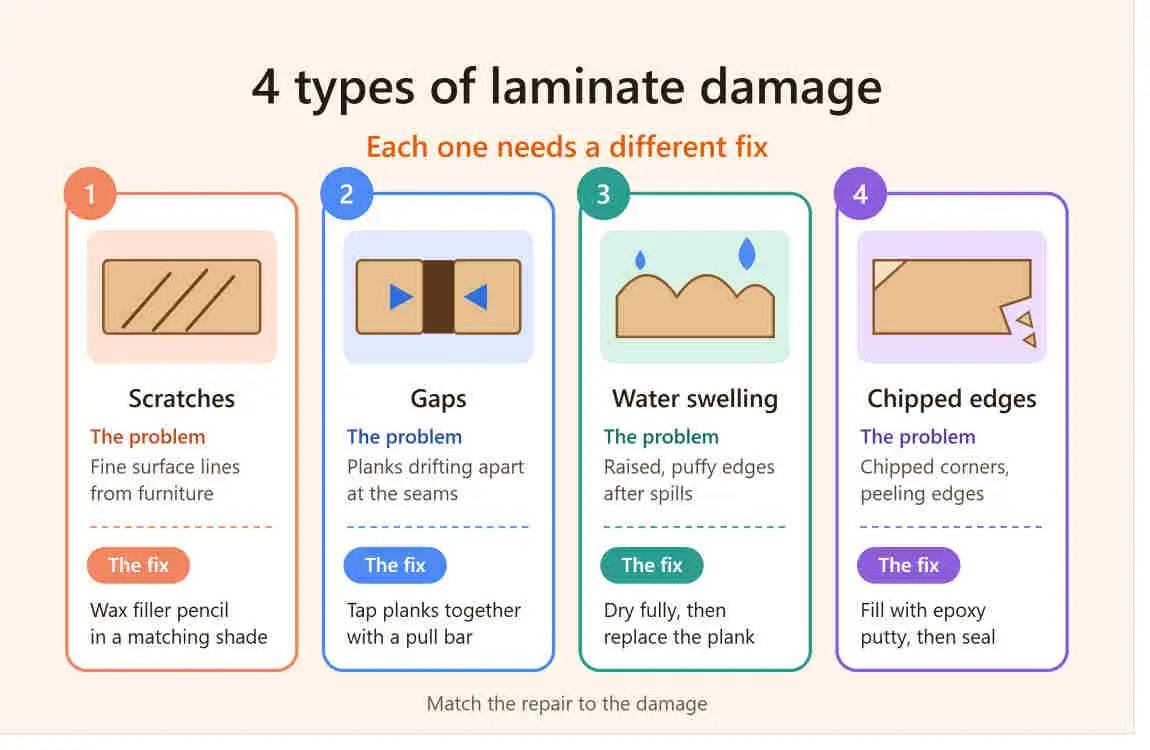
- Surface scuffs and light scratches: only the top layer is marked. These are cosmetic and the easiest to hide.
- Deep scratches, chips and gouges: the pattern layer is broken and the core may show. These need filler.
- Swelling, bubbling or lifting edges: moisture has reached the core. Speed matters here.
- Cracked or badly water-damaged planks: the board has failed and should be replaced.
What You’ll Need
- Laminate repair kit (wax filler sticks, putty, colour blending tools)
- Repair marker or furniture touch-up pen
- Soft cloths and a mild floor cleaner
- Plastic putty knife
- Fine sandpaper
- For plank replacement: pry bar, hammer, tapping block, utility knife, saw, wood glue and a spare matching plank
A handy tip: always keep spare planks from the original installation. Matching a discontinued colour years later is the hardest part of any repair.
How to Repair Scratches on Laminate Floors
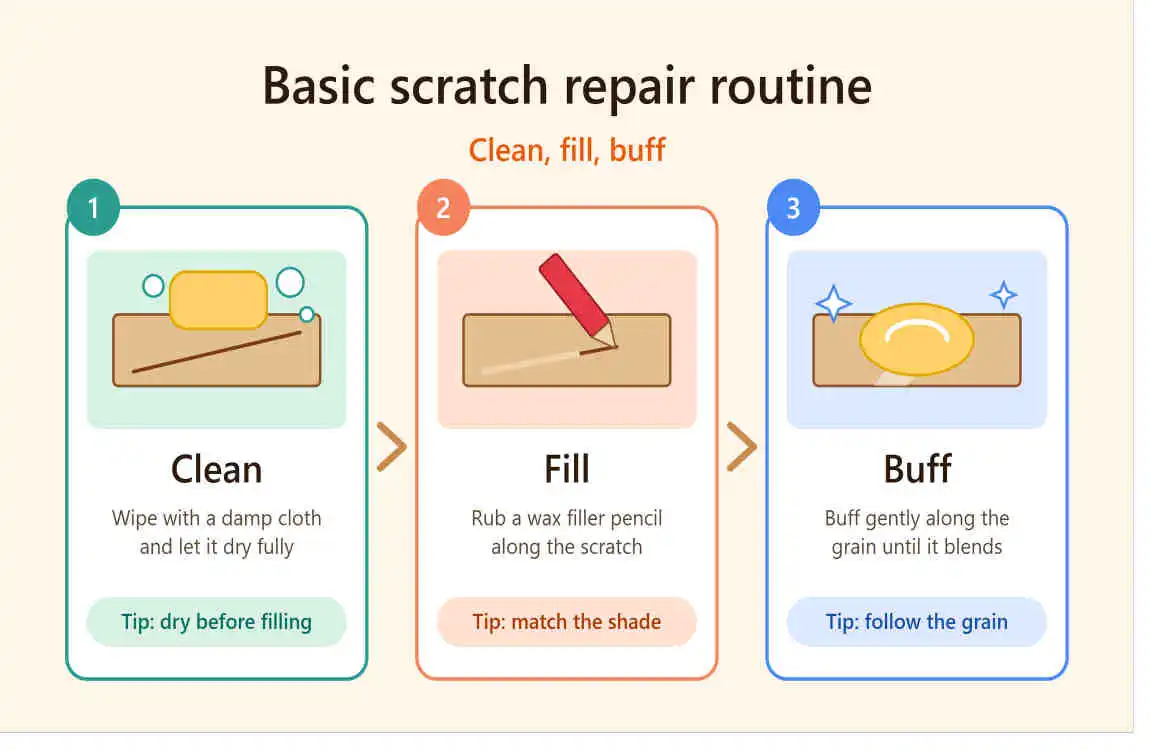
Clean the area. Wipe away dirt and dry the surface completely. Grit left behind can scratch the floor further and stops filler from bonding.
Start with the gentlest option. For cosmetic scratches, a repair marker or furniture touch-up pen often does the job, according to Wickes. Deeper scratches and chips call for a proper repair kit.
Fill deeper scratches. Choose a wax filler stick close to your floor colour and rub it into the scratch. Checkatrade notes that some kits include hard resin burn-in sticks that work in a similar way to wax.
Blend and buff. Mix two shades if needed, scrape off the excess with a plastic knife, and buff with a soft cloth until the repair disappears into the surrounding grain.
How to Fix Chips and Small Dents
Chips happen when something heavy or sharp lands on the board. Press repair putty into the hole, level it with a putty knife, and let it set. Family Handyman recommends cleaning off excess with solvent, allowing each coat about an hour to set, and then matching the grain pattern so the patch doesn’t stand out. A fine brush or grain pen makes this easy.
Putty is also useful for small peeling spots at the edges. Angi points out that wood-based and acrylic fillers both work well for chips, so simply pick the shade that best matches your boards.
How to Repair Swollen Laminate Flooring
Swelling almost always means moisture got into the fibreboard core, from spills, leaks, humidity or poor moisture protection underneath. Act quickly: Wickes warns that damp left on laminate for a long time can cause boards to lift and swell.
- Stop the source. Fix the leak, mop up spills and lift any rugs trapping moisture.
- Dry the floor thoroughly. Use towels, fans or a dehumidifier and give it time.
- Check the expansion gap. Laminate floats and needs a small gap at the walls. If boards are pushing against each other, trim back the gap or ease the skirting boards.
- Reassess. If a board has dried flat and the edges haven’t broken down, it may be fine. If it stays swollen or crumbles, replace it.
Bear in mind that a plank with true water damage generally can’t be repaired and has to be swapped, as explained in Angi’s water-damage guide.
How to Replace a Damaged Laminate Plank
When a board is cracked, deeply gouged or water-damaged, replacement is the honest answer. The method depends on where the plank sits.
Option A: Plank near a wall (click-lock floors)
- Remove the skirting board or quarter round.
- Release and lift the planks row by row, working back from the wall toward the damaged one. Number them so they go back in the same order.
- Swap in the new plank, click it into place, then re-lay the others in reverse order.
- Refit the skirting boards.
This is the same approach described by Direct Wood Flooring and Angi: because laminate clicks together, it’s usually easier to dismantle back to the damaged board than to cut it out.
Option B: Plank in the middle of the room
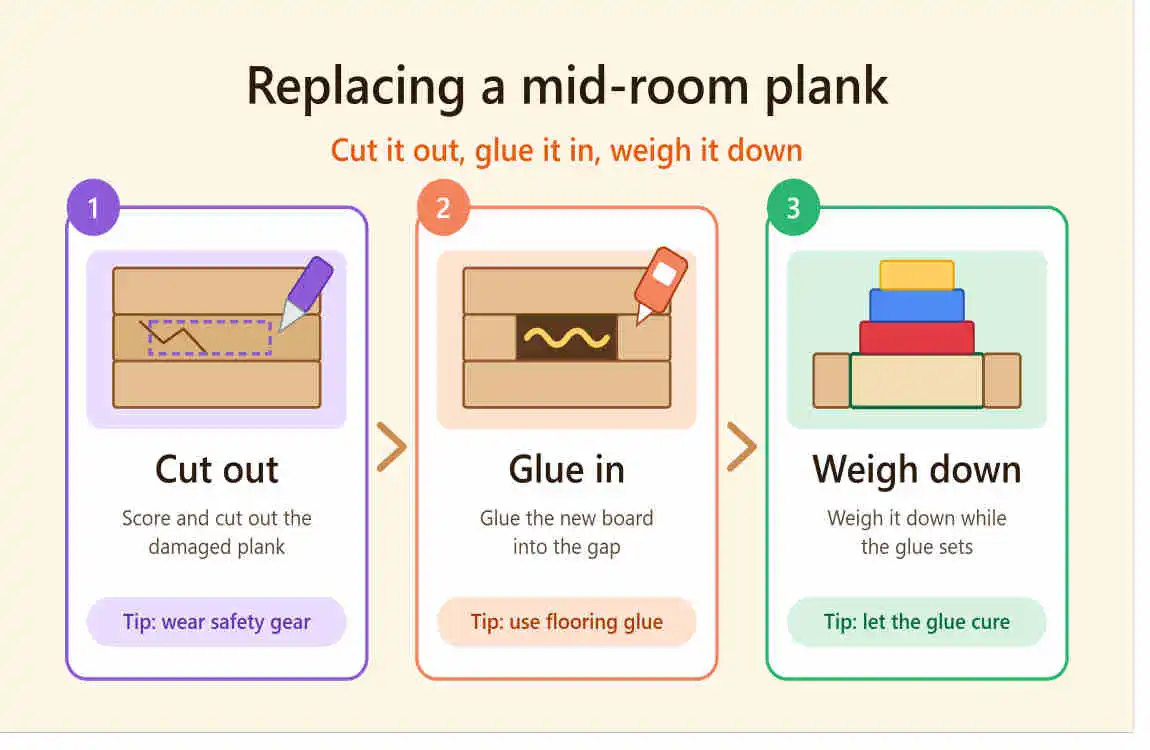
If taking up half the floor isn’t realistic, you can cut the damaged board out. Family Handyman shows the method: drill a hole near each corner, make cuts from the centre toward the corners, add relief cuts, break out the pieces with a chisel, and remove the bottom lip of the new plank so it can drop in. The replacement is then glued rather than clicked. Chip off old glue first so the surfaces sit flush.
Finally, weigh the new plank down. Checkatrade suggests heavy objects for at least two to four hours while the glue cures. Only then clean the floor and put furniture back.
How Much Does Laminate Floor Repair Cost?
DIY repairs are cheap, since a kit costs a small fraction of a new floor. Professional pricing varies by region, but Angi’s cost breakdown lists the following typical US ranges:
| Problem | Typical professional cost |
|---|---|
| Scratches and gouges | $100 to $300 |
| Stains | $75 to $300 |
| Replacing planks | $3 to $11 per sq. ft. |
| Buckling or bubbles | $3 to $11 per sq. ft. |
| Soft spots | $250 to $750 |
Prices are a guide only and will differ by location and contractor.
When to Call a Professional
- The floor feels soft or spongy underfoot, which can point to subfloor moisture.
- Many boards are buckling across a large area.
- You smell mustiness, suggesting trapped moisture.
- You can’t get a matching plank and want a seamless result.
How to Prevent Laminate Damage
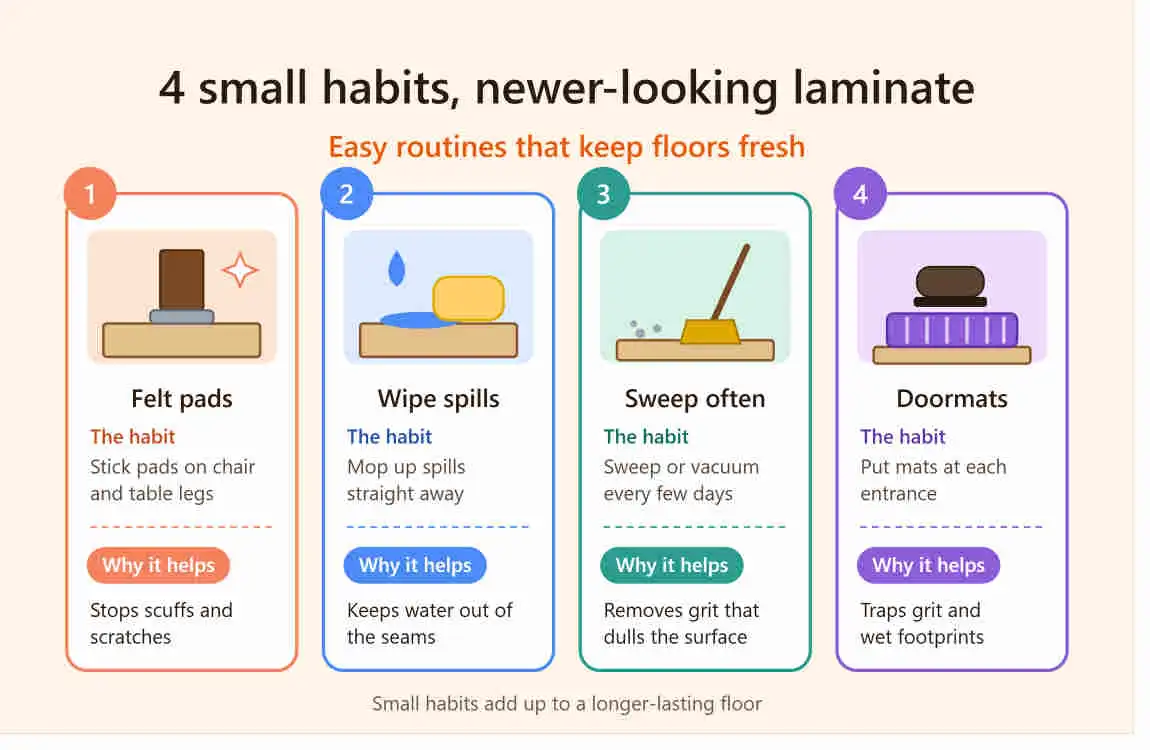
- Felt pads under furniture legs, and lift rather than drag.
- Sweep or vacuum regularly (hard floor setting) so grit doesn’t act like sandpaper. Direct Wood Flooring also highlights regular cleaning as the best defence against scratches.
- Mop damp, never wet, and wipe spills immediately.
- Use mats at entrances and in front of sinks and dishwashers.
- Trim pet nails and keep a small repair kit handy.
Frequently Asked Questions
Can laminate flooring be repaired at home?
Yes. Scratches, chips and even individual damaged planks can be repaired by a confident DIYer using a repair kit and basic tools.
Can you fix swollen laminate without replacing it?
Sometimes. If the board has dried completely, hasn’t broken down and the expansion gap is restored, it may recover. Boards that stay swollen or crumble must be replaced.
What fills deep scratches in laminate best?
Colour-matched wax filler sticks or putty from a laminate repair kit, followed by gentle buffing.
Can you sand laminate?
Avoid sanding the surface. The decorative layer is very thin, and sanding it away exposes the core. Use sandpaper only to smooth cured filler.
Final Thoughts
Most laminate problems look worse than they are. Match the fix to the damage: markers and wax for scratches, putty for chips, quick drying and expansion-gap checks for swelling, and plank replacement when a board has truly failed. Handle moisture fast, and your floor will stay looking sharp for years.
