

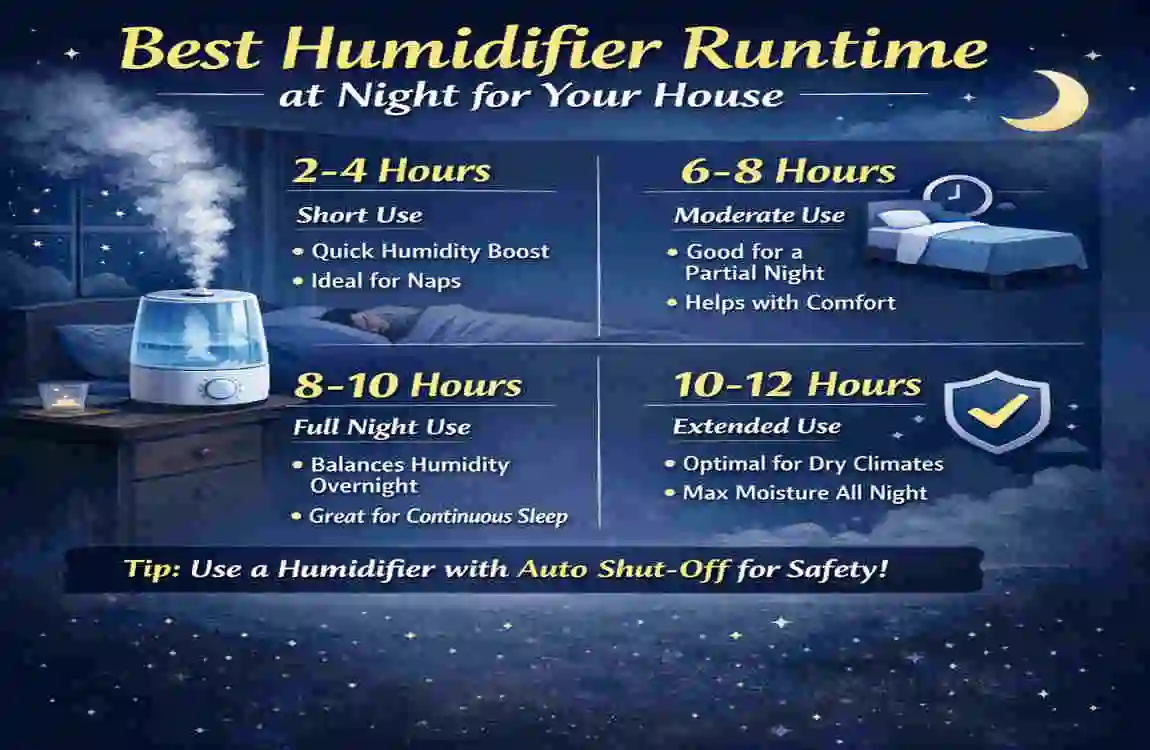
A humidifier adds moisture to the air, which can make your bedroom feel more comfortable, especially when the air is dry. If you wake up with a dry throat, itchy skin, or stuffy sinuses, the right humidity level can help a lot. This is why many people ask how long you should run a humidifier in a bedroom at night.
The short answer is: most people can run it for 6 to 8 hours, or all night if the humidity stays in the safe range. But the best runtime depends on your room size, the weather, and the type of humidifier you use. Running it too little may not help, while running it too long can make the room too damp.
Understanding Bedroom Humidity Levels

What Is Relative Humidity?
Relative humidity is the amount of water vapor in the air. It is shown as a percentage. For example, 40% humidity means the air holds moisture at 40% of its full capacity.
This matters because dry air can irritate your nose, throat, and skin. On the other hand, overly moist air can create a favorable environment for mold and mildew to grow.
Ideal Humidity Range for Bedrooms
For most homes, the best bedroom humidity level is between 30% and 50%.
This range is comfortable for sleeping and helps reduce dryness without making the air too wet. Staying in this range can also help protect wood furniture, floors, and even some household items from cracking.
Signs Your Bedroom Air Is Too Dry
You may need a humidifier if you notice:
- Dry skin or chapped lips
- Sore throat in the morning
- Static electricity
- Frequent nosebleeds
If these occur often, the air in your bedroom may be too dry, especially during winter.
How Long Should You Run a Humidifier in a Bedroom?
The General Recommendation
For many bedrooms, the best runtime is 6 to 8 hours at night. If the room is very dry, you may run it all night, but only if the humidity does not go above the safe level.
So, when asking how long to run a humidifier in a bedroom, think less about a fixed time and more about your room’s air quality.
Factors That Affect Runtime
Several things change how long you should run it:
- Room size: Bigger rooms need more time or a stronger unit.
- Humidifier capacity: Small models add moisture more slowly.
- Climate and season: Winter air is usually drier than summer air.
- Existing humidity: If the room is already near 50%, you may need less runtime.
Is It Safe to Run a Humidifier All Night?
Yes, it can be safe if the unit is clean and the humidity stays controlled. The main risk is making the room too damp. Too much moisture can lead to mold, mildew, and a sticky feeling in the room.
Benefits of Running a Humidifier at Night
Better Sleep Quality
Moist air can make breathing feel easier. This is helpful if dry air bothers your nose or throat while you sleep. Some people also notice less snoring when their air is less dry.
Relief From Dry Skin and Irritation
A humidifier helps the air feel softer on your skin. That can reduce dryness, itching, and irritation, especially in cold months when indoor heating dries out the room.
Helps Reduce Allergy and Cold Symptoms
Humid air can soothe dry nasal passages and ease throat discomfort. It may not cure allergies or a cold, but it can make symptoms feel more manageable.
Protects Wooden Furniture and Flooring
Dry air can cause wood to shrink and crack over time. Keeping humidity in the right range helps protect wood surfaces in your bedroom and around the house.
How to Determine the Right Runtime for Your Bedroom
Use a Hygrometer
A hygrometer is a small tool that measures humidity in the air. It helps you know whether your room is too dry or too moist.
If your bedroom stays between 30% and 50%, you are usually in a good range. If it falls below 30%, you may need to run the humidifier longer.
Adjust Runtime Based on Room Conditions
Here is a simple guide:
- Small bedroom: 4 to 6 hours may be enough
- Medium bedroom: 6 to 8 hours is often ideal
- Large bedroom: 8+ hours may be needed, depending on dryness
Seasonal Humidifier Usage Guide
In winter, you may need the humidifier more often because heating systems dry out the air.
In summer, you may need it less, especially if the air is naturally humid.
During spring and fall, check humidity often, because the need can change from day to day.
Common Mistakes When Running a Humidifier Overnight
Running It Too Long
If you overuse it, the room may become too humid. That can cause moisture buildup, mold, and a musty smell.
Ignoring Maintenance
A dirty tank can hold bacteria or mildew. That means the unit may push unclean moisture into the air. Clean it regularly to keep it safe.
Using Tap Water Without Checking Guidelines
Some humidifiers work better with distilled water. Tap water can leave mineral buildup or create white dust in the room.
Placing the Humidifier in the Wrong Location
Do not place it too close to the bed, walls, or wooden furniture. Keep it on a flat surface with some open space around it so moisture spreads evenly.
Recommended Humidifier Runtime Based on Bedroom Conditions
Bedroom Condition Recommended Runtime
Mildly dry air 3–5 hours
Moderately dry air 6–8 hours
Very dry winter air Overnight (8–10 hours)
Humidity above 50% Reduce or turn off
Small bedroom 4–6 hours
Large bedroom 8+ hours depending on humidity
Tips for Safe Overnight Humidifier Use
- Choose a humidifier with auto shut-off so it stops when the water runs out.
- Clean it weekly to prevent buildup and bad odors.
- Monitor humidity levels to keep the room within the safe range.
- Use distilled water when possible to reduce mineral deposits.
When You Should Not Run a Humidifier All Night
Do not run it all night if:
- Your area already has high humidity
- The room has poor ventilation
- You see condensation on windows
- You smell musty odors
- Walls or bedding feel damp
These are signs the room is getting too moist.
Choosing the Right Humidifier for Bedroom Use

Cool Mist vs. Warm Mist Humidifiers
Cool mist units are common for bedrooms and are usually safer around children. Warm mist units heat the water before releasing moisture, which some people like in colder weather.
Features to Look For
Look for a humidifier with:
- Humidistat
- Timer settings
- Auto shut-off
- Quiet operation
Energy Efficiency Considerations
Most bedroom humidifiers use very little electricity. If you use it only when needed and keep it clean, it can be a simple and affordable way to improve comfort.
FAQs
How long should you run a humidifier in a bedroom at night?
Most people can run it for 6 to 8 hours or overnight if the humidity stays within safe limits.
Is it okay to sleep with a humidifier on all night?
Yes, as long as it is clean and the room does not become too humid.
Can a humidifier run too long?
Yes. Too much humidity can lead to mold, mildew, and dust issues.
What humidity level should a bedroom be at night?
The ideal range is 30% to 50%.
Should I use a humidifier every night?
You can if your room is consistently dry, especially in winter.
| House Factor | Best Nighttime Humidifier Runtime | Why |
|---|---|---|
| Standard bedroom (any season) | 8–10 hours (all night) | Maintains 30–50% humidity continuously, preventing dry throat/nasal irritation while you sleep |
| Winter + central heating | All night (8–12 hours) | Heating dries air heavily; continuous run keeps moisture stable |
| Summer + AC running | All night (8–10 hours) | AC removes humidity; overnight runtime counters dryness |
| Humid climate / tropical area | 2–6 hours | Room already damp; shorter runtime prevents over-humidifying |
| Milder seasons (spring/fall) | 6–8 hours | Moderate dryness; medium runtime is sufficient |
| Small room (<150 sq ft) | 6–8 hours | Smaller space reaches target humidity faster |
| Large room (>400 sq ft) | 8–10+ hours | Needs longer runtime to humidify fully |
| Humidifier with auto-humidity sensor | Auto (until 30–50%) | Shuts off automatically when target reached; ideal “set-and-forget” |
