

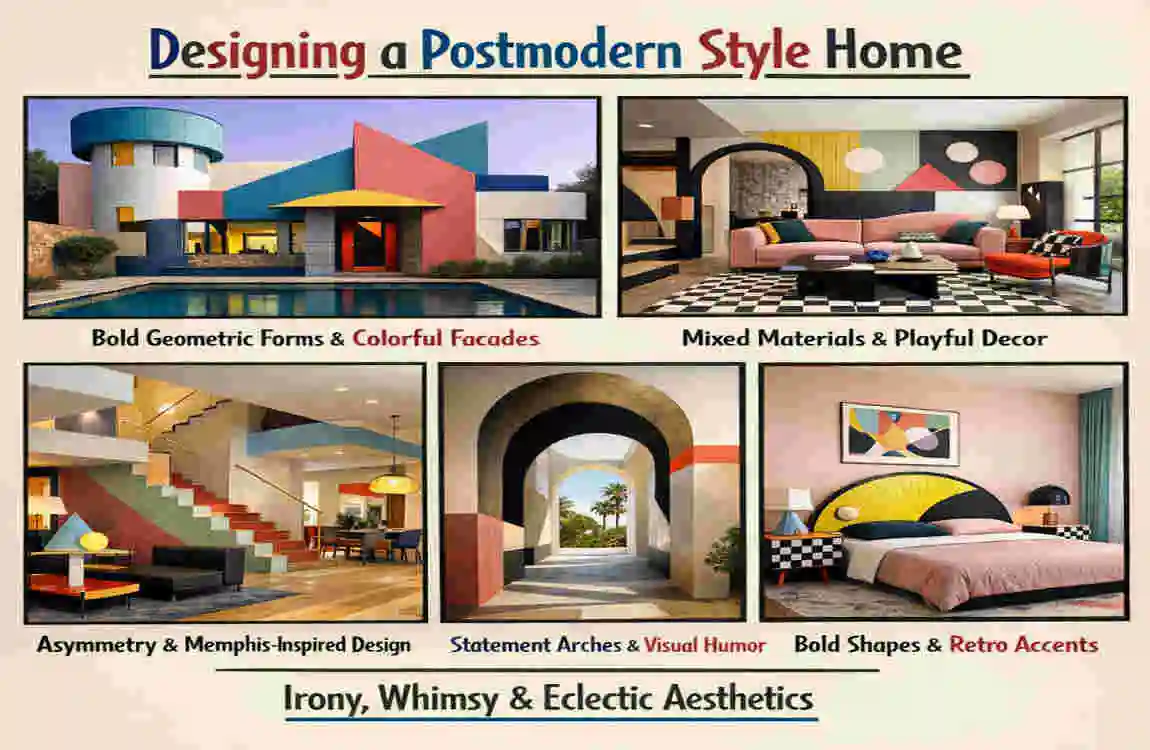
A postmodern-style home is all about personality, contrast, and creativity. It breaks away from plain, strict design and brings in shapes, colours, and details that feel playful and expressive. If modern homes often look clean and simple, postmodern homes feel more artistic and unexpected.
People love this style because it gives them freedom. You do not have to follow one fixed rule. You can mix old and new ideas, combine materials, and choose bold features that reflect your taste. That makes a postmodern-style home feel unique, personal, and memorable.
Understanding the Postmodern Style Home
What Defines Postmodern Architecture?
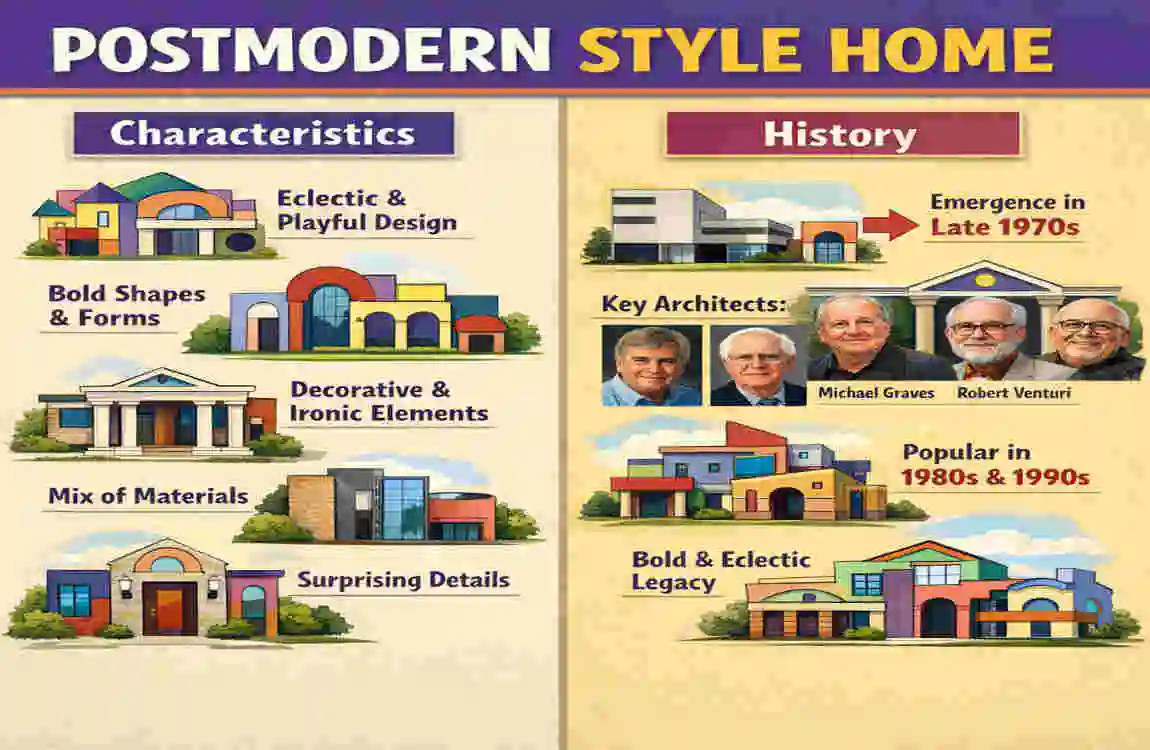
Postmodern design came as a reaction to modern minimalism. While modern architecture often tries to keep things simple, postmodern design does the opposite. It welcomes decoration, unusual shapes, and creative expression.
This style became popular because people wanted homes that felt less rigid and more human. A postmodern-style home often mixes different design ideas rather than sticking to a single one. That mix is what makes it so interesting.
You may see a home with a classic shape, bold colour, and modern materials all in one place. That blend of styles is one of the biggest signs of postmodern architecture.
Key Features of a Postmodern Style Home
A postmodern home usually includes a few standout traits:
- Bold geometric shapes
- Mixed materials and textures
- Decorative details
- Unexpected design elements
These features work together to create a home that feels artistic but still practical. The goal is not to look random. The goal is to create a space that feels carefully designed with personality.
Planning Your Post Modern Style Home Design
Define Your Design Vision
Before you start decorating or building, think about what you want your home to say about you. Do you want it to feel playful, dramatic, elegant, or colourful? Your vision will help guide every choice you make.
Also, think about how you live. A beautiful home still needs to work for your daily routine. If you have a family, need storage, or work from home, those needs should also shape the design.
Create a Flexible Floor plan.
A postmodern home often works best with a flexible layout. Open spaces can make the home feel larger and easier to move through. At the same time, you can use different zones for relaxing, eating, working, or entertaining.
You do not need every room to look the same. In fact, having small surprises in the layout can add charm. A reading corner, a sunken lounge, or a slightly angled wall can make the space feel more creative.
Balance Form and Function
This is one of the most important parts of the process. A postmodern-style home should look artistic but also feel comfortable and easy to use.
Think of it this way: beauty catches the eye, but function supports daily life. When both work together, the home feels complete. That balance is what makes postmodern design successful instead of overwhelming.
Exterior Design Elements
Unique Architectural Shapes
The outside of a postmodern home is often where the style becomes most noticeable. You might see curved walls, asymmetrical forms, or layered rooflines that create visual interest.
These shapes help the home stand out from more traditional houses. They also give you a chance to make the design feel more personal and less predictable.
Choosing Exterior Materials
Postmodern homes often combine different materials in bold ways. For example, you may see glass next to brick, or concrete paired with warm wood.
Here is a simple look at how materials can shape the outside of the home:
MaterialEffect on DesignBest Use
Glass Adds light and openness Large windows, entry areas
Metal creates a modern edge: trim, railings, accents
Brick brings warmth and texture to walls and feature sections
Concrete adds strength and structure to the main exterior surfaces
Wood Softens the look Panels, porch details
Mixing materials helps the home feel layered and interesting. The key is to use them with purpose so the design still feels balanced.
Bold Colour Schemes
Colour plays a huge role in postmodern design. Instead of sticking to soft neutral tones, you can use strong accents and contrast to create energy.
A bright front door, painted trim, or a colourful feature wall can change the whole mood of the house. Even if the main exterior stays neutral, one bold detail can make a strong statement.
Landscaping Ideas
The landscape should support the style of the house, not fight against it. Simple geometric pathways, sculptural plants, and clean garden edges often work well.
You can also use outdoor lighting to highlight the house’s shape at night. This adds drama and makes the home feel polished and intentional.
Interior Design for a Post-Modern Style Home
Creative Colour Palettes
Inside the home, colour helps set the tone. A postmodern interior does not need to be loud everywhere, but it should feel expressive.
You can pair deep blue with warm orange, soft beige with a bright accent, or black and white with one strong colour. The best combinations feel lively without becoming messy.
If you want a calmer look, use bold colours in smaller places like cushions, art, or a single feature wall. That way, you still get the postmodern feel without overwhelming the room.
Statement Furniture Selection
Furniture in a postmodern-style home often looks sculptural. That means the shapes matter as much as the comfort.
Choose pieces that feel a little unexpected. A curved sofa, a chair with a strong frame, or a table with an unusual base can all work well. You can also mix styles, such as pairing a modern chair with a vintage lamp.
The result should feel collected, not copied. That mix makes the room feel layered and lived in.
Unique Lighting Fixtures
Lighting is one of the easiest ways to bring in a postmodern look. Oversized pendants, artistic chandeliers, and geometric lamps can all act like statement pieces.
Instead of hiding the lights, let them become part of the decor. Good lighting adds shape, mood, and drama. It can make even a simple room feel more designed.
Incorporating Art and Decor
Art is essential in a postmodern interior. Large-scale artwork, abstract sculptures, and unusual decor pieces all help create personality.
Try to avoid filling every wall with small items. A few strong pieces often make a bigger impact than many little ones. This keeps the room feeling clear and focused.
A few smart decor ideas:
- Use one large artwork instead of many tiny frames
- Mix smooth and textured objects
- Place one sculptural piece in each main room
- Choose decor that feels meaningful and expressive
Materials and Textures That Enhance Postmodern Design
Mixing Materials
One of the most exciting parts of postmodern design is how it blends materials. Wood and metal can feel warm and strong at the same time. Glass and stone can create contrast between lightness and heaviness.
This mix adds depth. It also keeps the home from feeling flat or one-dimensional.
Texture Layering Tips
Texture makes a room feel richer. You can use patterned surfaces, textured walls, woven fabrics, or decorative finishes to add detail.
A smooth floor, a rough wall, and a soft chair can work together beautifully. When you layer textures well, the room feels more complete and inviting.
Smart Technology in a Post-Modern Style Home
Modern Convenience Meets Artistic Design
A postmodern-style home can still be very smart and efficient. In fact, technology can help the design work better without taking away its artistic feel.
Smart lighting, home automation, and energy-saving systems can make the home easier to manage. You can control mood, safety, and comfort with simple tools.
Sustainable Design Features
Many homeowners also want their postmodern homes to be eco-friendly. Solar panels, strong insulation, and sustainable materials can support that goal.
This is a great example of how postmodern design can mix creativity with modern living. You get style and responsibility at the same time.
Common Mistakes to Avoid
Overcrowding the Space
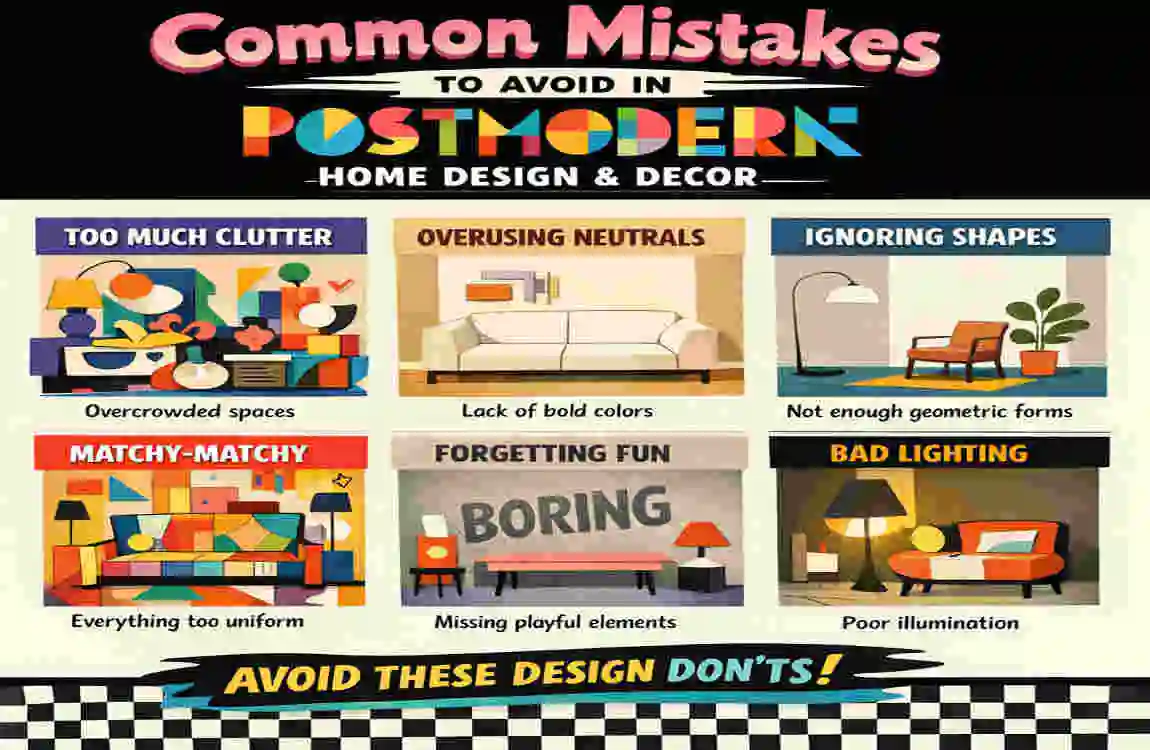
It can be tempting to use many bold ideas at once, but too much can make the home feel chaotic. Leave some open space so each feature can breathe.
Ignoring Functionality
A modern home should not only look interesting. It should also feel comfortable and easy to live in. Always check that furniture, storage, and layout support daily use.
Excessive Colour and Pattern Use
Colour and pattern are important, but balance matters. If everything is loud, nothing stands out. Try to let one or two features take the lead while the rest support them.
Benefits of Choosing a Postmodern Style Home
A postmodern-style home offers many strong benefits. It gives your luxury home distinctive curb appeal, so it stands out right away. It also offers greater personalisation, so your space can reflect your taste more clearly.
This style is also flexible. You can make it playful, elegant, dramatic, or calm depending on your choices. Most of all, it allows for timeless artistic expression by emphasising creativity over strict rules.
Frequently Asked Questions
What is a postmodern-style home?
A postmodern-style home is a residential design that mixes bold shapes, decorative details, mixed materials, and creative elements while remaining functional.
How is a postmodern-style home different from a modern home?
Modern homes usually focus on simplicity and clean lines, while postmodern homes are more expressive, colourful, and playful.
What colours work best in a postmodern-style home?
Bold accent colours, contrasting shades, and rich combinations work very well in this style.
Can a postmodern-style home be energy-efficient?
Yes. Smart systems, solar panels, strong insulation, and eco-friendly materials can make it energy-efficient.
What materials are commonly used in postmodern homes?
Common materials include glass, concrete, wood, metal, brick, and stone.
Is a postmodern-style home expensive to build?
It depends on the design, materials, and custom features. Some ideas can be costly, but there are also budget-friendly ways to use this style.
| Design Element | How to Apply It in a Post Modern Style Home |
|---|---|
| Bold Shapes | Combine geometric forms, curves, and unexpected architectural details. |
| Mixed Materials | Use a blend of glass, metal, wood, stone, and decorative finishes. |
| Vibrant Colors | Incorporate bright accent colors alongside neutral backgrounds. |
| Decorative Features | Add arches, columns, patterned walls, or artistic focal points. |
| Eclectic Furniture | Mix modern, vintage, and statement furniture pieces for character. |
| Creative Lighting | Use sculptural chandeliers, pendant lights, and unique fixtures. |
| Playful Design | Introduce unconventional layouts and eye-catching décor elements. |
| Personalized Touches | Display artwork, custom furnishings, and distinctive accessories. |
| Texture Variety | Layer smooth, rough, glossy, and matte surfaces for visual interest. |
| Balance & Contrast | Combine functional design with decorative and expressive elements. |
