

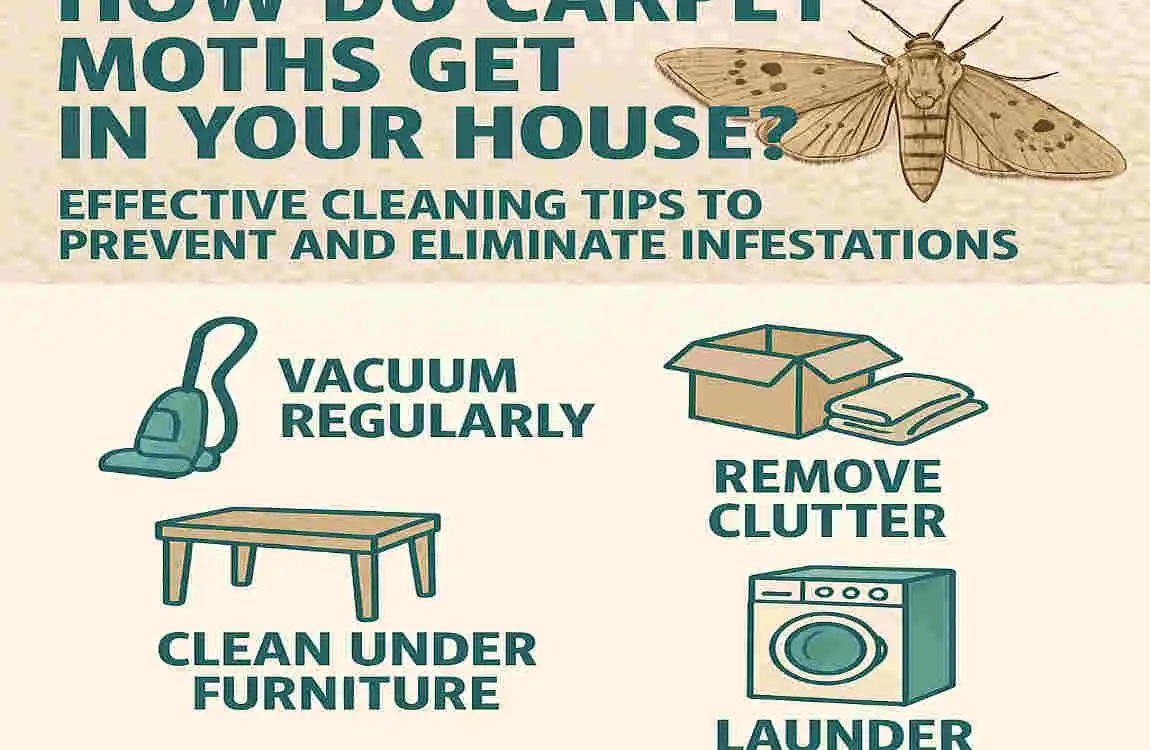
Have you ever found tiny holes in your favorite carpet or noticed mysterious webbing on your rugs? If so, you might be dealing with a carpet moth infestation. These pesky creatures can be a real headache for homeowners, causing damage to fabrics and carpets. But how do carpet moths get in your house? Understanding their entry points is crucial for preventing and eliminating infestations.
What Are Carpet Moths?
Definition and Types
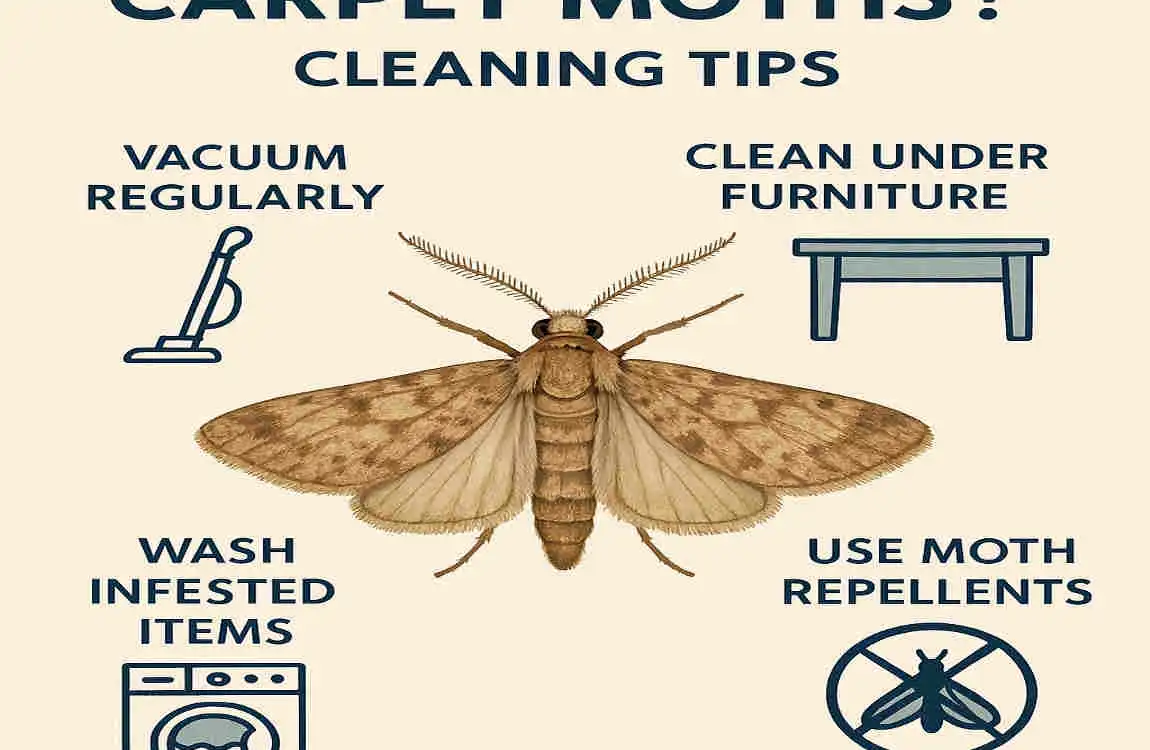
Carpet moths, also known as textile moths, are small insects that belong to the Tineidae family. The most common species found in homes are the webbing clothes moth (Tineola bisselliella) and the casemaking clothes moth (Tinea pellionella). These moths are attracted to natural fibers like wool, silk, and fur, making your carpets and textiles prime targets.
Life Cycle
The life cycle of carpet moths consists of four stages: egg, larva, pupa, and adult. Female moths lay their eggs on suitable food sources, such as your carpets or clothing. Once hatched, the larvae begin feeding on the fibers, causing damage. After a few weeks or months, depending on the species and environmental conditions, the larvae spin cocoons and enter the pupal stage. Finally, adult moths emerge, ready to mate and lay more eggs.
Attraction to Indoor Environments
Carpet moths prefer indoor environments because they offer a constant food supply and shelter from harsh weather conditions. They are particularly drawn to dark, undisturbed areas where they can feed and reproduce undisturbed. Factors like humidity, temperature, and the presence of natural fibers can make your home an ideal habitat for these pests.
Damage Caused by Larvae
The real culprits behind the damage to your carpets and textiles are the carpet moth larvae. These tiny caterpillars have strong jaws that can chew through even the toughest fibers. As they feed, they create irregular holes and leave behind webbing and fecal pellets. If left unchecked, a carpet moth infestation can lead to significant damage, requiring costly repairs or replacements.
How Do Carpet Moths Get in Your House?
Common Entry Points
So, how do carpet moths get into your house? These sneaky insects can find their way into your home through various entry points:
Through Open Doors and Windows
Carpet moths can easily fly or crawl through open doors and windows, especially during warmer months when they are more active. Be sure to keep your screens in good repair and close doors and windows when not in use to prevent their entry.
Hitchhiking on Clothing, Secondhand Furniture, or Fabric Items
Moths can also hitch a ride into your home on clothing, secondhand furniture, or fabric items. When purchasing used items, scrutinize them for signs of infestation before bringing them into your home. Wash or dry-clean new clothes and textiles before storing them to eliminate potential moth eggs or larvae.
Brought in via Infested Carpets, Rugs, or Upholstery
If you’ve recently purchased or installed new carpets, rugs, or upholstery, there’s a chance they could be harboring moth eggs or larvae. Always inspect these items thoroughly before bringing them into your home, and consider having them professionally cleaned or treated if you suspect an infestation.
Via Cracks and Gaps in Walls, Vents, or Air Ducts
Carpet moths can also find their way into your home through tiny cracks and gaps in walls, vents, or air ducts. Seal any openings you find with caulk or weatherstripping to prevent their entry. Regularly inspect and maintain your home’s exterior to keep moths from finding a way inside.
Environmental Factors
Certain environmental factors can make your home more attractive to carpet moths:
- Stored natural fibers outdoors: If you store natural fiber items, such as wool blankets or rugs, outside, they can attract moths. Please bring these items indoors and store them properly to prevent infestations.
- Poor home maintenance: Neglecting home maintenance can create ideal conditions for moths to thrive. Keep your home clean, dry, and well-ventilated to discourage moth activity.
Seasonal Patterns
Carpet moth activity can vary depending on the season. In warmer months, adult moths are more likely to be seen flying around your home. During winter, they may remain dormant in their larval or pupal stages, waiting for warmer temperatures to emerge. Be extra vigilant during spring and summer when moth populations are at their peak.
Real-Life Examples
Let’s consider a few scenarios to illustrate how carpet moths can enter your home:
- Scenario 1: You’ve just returned from a trip and unpack your suitcase in your bedroom. Unbeknownst to you, a few moth eggs were hiding in the seams of your luggage. A few weeks later, you notice tiny holes in your carpet near the suitcase.
- Scenario 2: You’ve purchased a beautiful antique rug from a secondhand store. Excited to bring it home, you roll it out in your living room. A month later, you discover webbing and larvae on the rug and nearby carpets.
- Scenario 3: During a warm summer evening, you leave your windows open to enjoy the breeze. A few carpet moths fly in and lay eggs on your curtains and carpets. By the time you notice the damage, the infestation has already spread.
Signs of a Carpet Moth Infestation
Visual Indicators
The most obvious signs of a carpet moth infestation are:
- Tiny holes in fabrics: Look for irregular, frayed holes in your carpets, rugs, or clothing made from natural fibers.
- Webbing on carpets: Carpet moth larvae create silken webbing as they feed and move around. Check for this webbing in dark, undisturbed areas.
Presence of Larvae or Adult Moths
If you spot tiny, cream-colored larvae or small, brownish moths around your carpets and stored fabric, it’s a clear indication of an infestation. Adult moths are usually about half an inch long and may be seen flying around lights or resting on walls and ceilings.
Musty Odors or Dust-like Particles
Carpet moth infestations can sometimes produce musty odors or leave behind dust-like particles near their feeding areas. If you notice these signs, it’s time to investigate further.
Proper Inspection Techniques
To properly inspect your home for signs of carpet moths:
- Use a flashlight: Shine a flashlight along baseboards, under furniture, and in dark corners to spot any larvae, webbing, or holes.
- Check all fabrics: Inspect all carpets, rugs, clothing, and textiles made from natural fibers for signs of damage or infestation.
- Look for cocoons: Carpet moth larvae create small, silken cocoons when they enter the pupal stage. Keep an eye out for these cocoons in hidden areas.
Importance of Early Detection
Early detection is key to preventing a carpet moth infestation from getting out of control. The sooner you spot the signs, the easier it will be to eliminate the moths and prevent further damage to your home and belongings.
Practical Cleaning Tips to Prevent Carpet Moth Infestations
Regular Vacuuming and Carpet Cleaning
One of the most effective ways to prevent carpet moth infestations is through regular vacuuming and carpet cleaning:
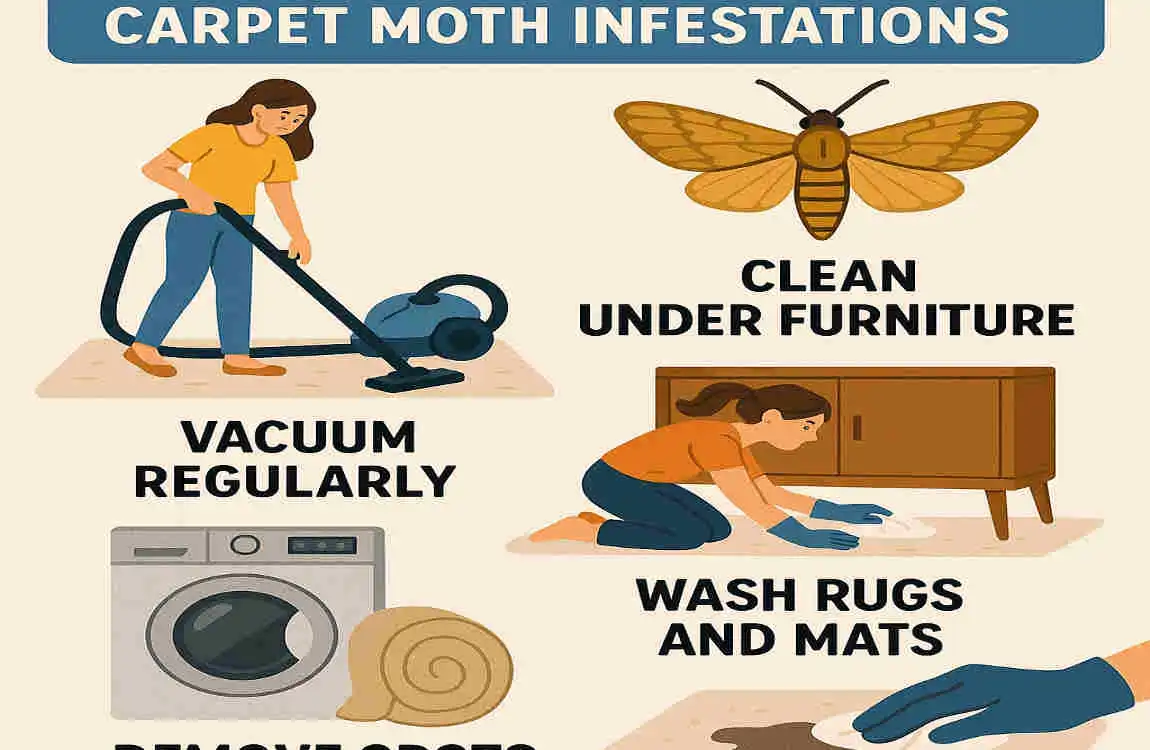
- Vacuum frequently: Vacuum your carpets, rugs, and upholstered furniture at least once a week to remove any moth eggs, larvae, or debris that may attract them.
- Use the proper attachments: Use the crevice tool to reach into corners, along baseboards, and under furniture where moths may hide.
- Empty the vacuum: Empty your vacuum cleaner’s canister or bag outside your home to prevent any captured moths from escaping back into your living space.
Proper Care of Natural Fiber Textiles
Natural fiber textiles like wool, silk, and fur are beautiful to carpet moths. To protect these items:
- Store them properly: Store natural fiber textiles in airtight containers or garment bags to prevent moths from accessing them. Consider using cedar blocks or lavender sachets for added protection.
- Clean before storing: Always clean natural fiber items before storing them to remove any food sources that may attract moths.
Washing and Drying Clothes and Linens
Washing and drying your clothes and linens at high temperatures can help kill any moth eggs or larvae:
- Wash in hot water: Wash your clothes and linens in the hottest water suitable for the fabric to kill any moths or eggs.
- Dry on high heat: Dry your items on the highest heat setting for at least 30 minutes to eliminate any remaining moths or eggs.
Decluttering to Reduce Moth Hiding Spots
Moths love to hide in cluttered, undisturbed areas. By decluttering your cleaning home, you can reduce its hiding spots:
- Organize your space: Keep your home organized and free of clutter, especially in areas where you store natural fiber items.
- Regularly rotate stored items: Prevent moths from settling in and laying eggs by rotating them regularly.
Using Moth Repellents and Preventive Sprays
Moth repellents and preventive sprays can be a practical addition to your moth prevention strategy:
- Choose the right product: Select a moth repellent or preventive spray that is safe for use around your family and pets. Look for products containing natural ingredients like cedar oil or pyrethrin.
- Follow the instructions: Always follow the manufacturer’s instructions when using moth repellents or sprays to ensure their effectiveness and safety.
Routine Inspection and Maintenance
Regular inspection and maintenance of your carpets and furniture can help you catch any signs of a carpet moth infestation early:
- Inspect regularly: Inspect your carpets, rugs, and upholstered furniture regularly for signs of moth activity, such as holes, webbing, or larvae.
- Maintain your home: Keep your home clean, dry, and well-ventilated to discourage moth activity. Repair any water leaks or moisture issues promptly.
Environmental Controls
Controlling the environment in your home can make it less attractive to carpet moths:
- Use dehumidifiers: Keep your home’s humidity below 50% to discourage moth activity.
- Control the temperature: Maintain a consistent temperature in your home, as fluctuations can trigger moth activity.
Professional Cleaning Services
For stubborn carpet moth infestations or if you’re unsure how to proceed, consider hiring professional cleaning services:
- Choose a reputable company: Select a cleaning company with experience treating carpet moth infestations.
- Discuss treatment options: Review available options with the cleaning professionals to determine the best course of action for your home.
How to Eliminate an Existing Moth Infestation
If you’ve already discovered a carpet moth infestation in your home, don’t panic. With the right approach, you can eliminate the moths and prevent further damage. Here’s a step-by-step guide to help you tackle the problem:
Isolating Infested Items
The first step in eliminating a carpet moth infestation is to isolate the affected items:
- Remove infested items: Carefully remove any infested carpets, rugs, or textiles from your home to prevent the moths from spreading.
- Seal them in bags: Place the infested items in sealed plastic bags to contain the moths and prevent them from escaping.
Cleaning and Vacuuming Thoroughly
Thorough cleaning and vacuuming are essential for eliminating carpet moths:
- Vacuum all surfaces: Vacuum all carpets, rugs, and upholstered furniture thoroughly, paying special attention to areas where you’ve spotted moths or larvae.
- Clean hard surfaces: Wipe down baseboards, window sills, and furniture legs to remove any moth eggs or larvae.
Freezing or Heating Infested Textiles
Freezing or heating infested textiles can help kill any remaining moth eggs or larvae:
- Freeze items: Place infested textiles in a freezer set to 0°F (-18°C) for at least 72 hours to kill any moths or eggs.
- Heat items: Alternatively, you can heat infested textiles in a dryer set to high heat for at least 30 minutes to kill any moths or eggs.
Using Insecticides or Natural Moth Traps
Insecticides and natural moth traps can be practical tools for eliminating carpet moths:
- Choose the right product: Select an insecticide or natural moth trap that is safe for use in your home and effective against carpet moths.
- Follow the instructions: Always follow the manufacturer’s instructions when using insecticides or moth traps to ensure their effectiveness and safety.
When to Call Pest Control Professionals
If your carpet moth infestation persists despite your best efforts, it may be time to call in the professionals:
- Assess the situation: If you’ve tried multiple treatments and the infestation continues to spread, consider calling a pest control professional.
- Discuss treatment options: Work with the pest control professional to determine the best course of action to eliminate the moths and prevent future infestations.
Safety Precautions During Treatment
When treating a carpet moth infestation, it’s essential to take safety precautions:
- Wear protective gear: Wear gloves, a mask, and eye protection when handling infested items or applying insecticides.
- Ventilate the area: Keep the treated area well-ventilated to prevent the buildup of fumes from insecticides or cleaning products.
- Keep children and pets away: Keep them away from the treated area until it is safe for them to return.
Long-Term Prevention Strategies
Preventing carpet moth infestations in the long term requires a multi-faceted approach:
Home Maintenance to Seal Entry Points
Sealing entry points is crucial for keeping carpet moths out of your home:
- Inspect your home: Regularly check for cracks, gaps, and other potential entry points for moths.
- Seal openings: Use caulk, weather stripping, or other appropriate materials to seal any openings you find.
Proper Storage Solutions for Textiles and Carpets
Proper storage is key to preventing carpet moth infestations:
- Use airtight containers: Store natural fiber textiles and carpets in them to prevent moths from accessing them.
- Consider using repellents: Use natural moth repellents like cedar blocks or lavender sachets in your storage containers for added protection.
Seasonal Cleaning Routines
Aligning your cleaning routines with the carpet moth life cycle can help prevent infestations:
- Spring cleaning: Conduct a thorough spring cleaning to remove any moth eggs or larvae that may have overwintered in your home.
- Fall cleaning: Prepare your home for winter and prevent moths from finding a cozy spot to settle in.
Educating Household Members
Educating all household members on carpet moth prevention is essential for long-term success:
- Explain the risks: Explain the dangers of carpet moth infestations and the importance of prevention to all household members.
- Encourage vigilance: Everyone should be on the lookout for signs of moth activity and report any sightings promptly.
Common Myths and Misconceptions About Carpet Moths
There are several common myths and misconceptions about carpet moths that need to be addressed:
“Moths Only Come from Dirty Homes”
Contrary to popular belief, carpet moths can infest even the cleanest of homes. While clutter and poor hygiene can contribute to infestations, moths are primarily attracted to natural fibers and can find their way into any home.
“Carpet Moths and Pantry Moths Are the Same”
Carpet moths and pantry moths are two different species with different habits and food preferences. Carpet moths feed on natural fibers, while pantry moths target stored food products. It’s essential to identify the type of moth you’re dealing with to implement the appropriate treatment.
“Chemical Treatments Are Always Necessary”
While chemical treatments can be effective for eliminating carpet moth infestations, they are not always necessary. Many infestations can be successfully treated with non-chemical methods such as vacuuming, freezing, and natural repellents. Always consider the potential risks and benefits of chemical treatments before using them in your home.
