Close Menu
Home Improvement Cast
    Facebook X (Twitter) Instagram
    Facebook X (Twitter) Instagram
    Home Improvement Cast
    SUBSCRIBE
    • CELEBRITY HOMES
    • ARCHITECTURE
      • BEDROOM
      • LIVING ROOM
      • KITCHEN
        • APPLIANCES
      • BATHROOM
      • CONSTRUCTION
      • EXTERIOR
        • GARAGE
      • INTERIOR
        • DOOR
        • WINDOW
    • HOME IMPROVEMENT
      • PLUMBING
      • FURNITURE
      • CLEANING
      • FLOOR
      • ROOFING
      • DIY
      • BASEMENT
    • REAL ESTATE
    • GARDENING
    • HOME DECOR
    • MOVERS
    • LIFESTYLE
      • ENTERTAINMENT
      • PETS
    Home Improvement Cast
    Home » Timeless Traditional German Kitchen Designs: Rustic Charm for Modern Homes
    HOME IMPROVEMENT

    Timeless Traditional German Kitchen Designs: Rustic Charm for Modern Homes

    Hannah AlfieBy Hannah AlfieMay 31, 2025No Comments14 Mins Read
    Timeless Traditional German Kitchen Designs: Rustic Charm for Modern Homes
    Share
    Facebook Twitter Reddit Telegram Pinterest Email

    Imagine stepping out of the cold, crisp air and into a room that immediately wraps you in a warm, inviting hug. The air is thick with the scent of fresh rosemary and baking sourdough bread. Above you, heavy wooden beams stretch across the ceiling, dark with age and history. Beneath your feet, cool stone tiles ground the space. You run your hand along a sturdy oak table that has seen generations of family meals. This isn’t just a cooking space; it’s a sanctuary.

    In the fast-paced world of 2026, where sleek minimalism and sterile smart homes often dominate the headlines, there is a powerful longing for something real. We crave textures that feel natural and spaces that encourage us to slow down. That is exactly why the rustic German aesthetic is making such a massive comeback. It offers a counter-narrative to the high-gloss, handle-less kitchens of the last decade. It prioritizes “Gemütlichkeit”—a unique German word that transcends simple translation but essentially means a state of warmth, friendliness, and good cheer.

    But here is the best part: adopting a historical style doesn’t mean you have to sacrifice modern convenience. Traditional German home kitchen design is incredibly adaptable. It fuses the rugged durability of the past with the seamless functionality of the present. Whether you are renovating a sprawling farmhouse or adding character to a city apartment, this style brings a heartbeat to your home.

    Table of Contents

    Toggle
    • The Roots of Traditional German Home Kitchen Design
      • A History of Practicality
      • Cultural Influences
      • The Influence of Fachwerk
    • Defining Features of Traditional German Kitchen Styles
      • Signature Materials: Built to Last
      • The Earthy Color Palette
      • Hardware and Intricate Details
      • Layout Essentials
    • Spotlight: The Schreibtisch – Heart of Traditional German Kitchens
      • The Historical Role
      • The Modern Twist
      • Why It Fits Your Home
    • Blending Rustic Charm with Modern Functionality
      • Hybrid Designs
      • Appliance Hacks
      • Lighting Upgrades
      • Storage Solutions
    • Iconic Regional Variations in German Kitchen Designs
      • Bavarian Style: The Alpine Dream
      • Black Forest Kitchens: Dark and Moody
      • Swabian Influences: Modesty and Function
      • Northern Coastal: The Maritime Breeze
      • Quick Comparison Guide
    • Bringing Traditional German Home Kitchen Design to Your Modern Home
      • Ideas for Small Spaces
      • Budget Breakdown
      • Your Renovation Roadmap
      • A Cultural Note for Global Homes
    • Inspiration: Real-Life Examples and Case Studies
      • The Munich Modernization
      • The Expat in Lahore
    • FAQs
      • What defines traditional German home kitchen design?
      • How can I modernize rustic German kitchens?
      • What is the cost of a Schreibtisch installation?
      • What are the best woods for German-style cabinets?

    The Roots of Traditional German Home Kitchen Design

    Timeless Traditional German Kitchen Designs: Rustic Charm for Modern Homes

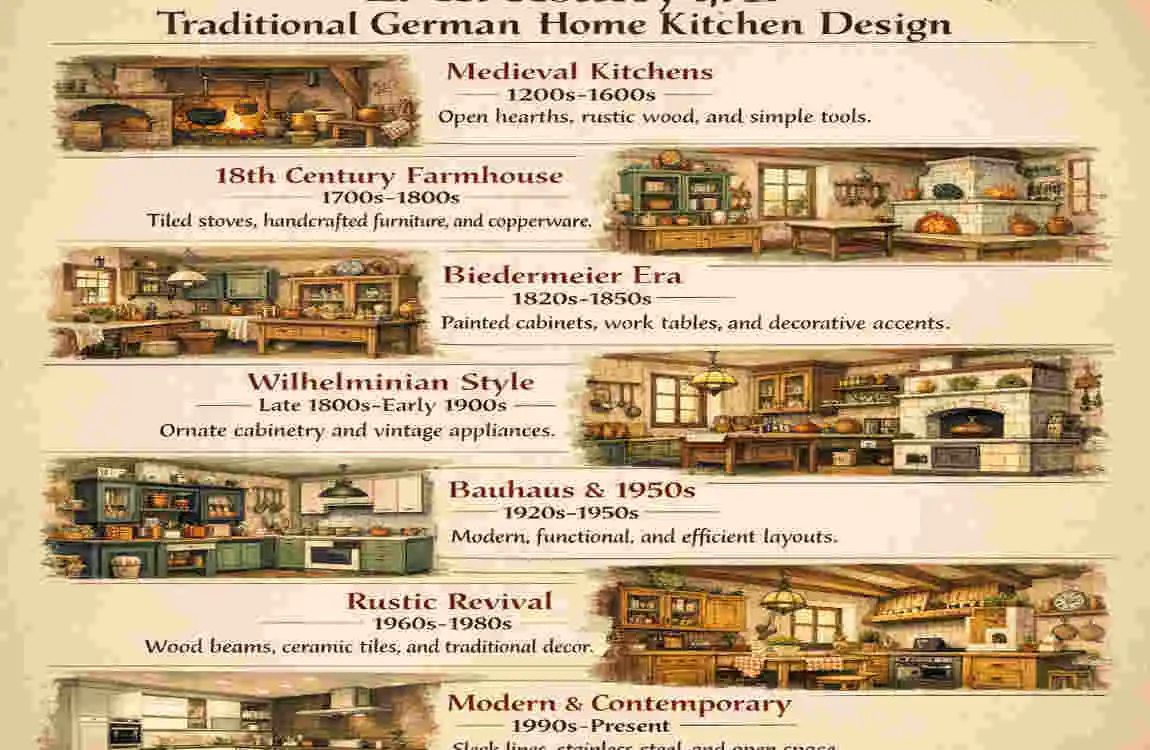
    To truly appreciate the beauty of traditional German home kitchen design, we have to look back at where it all began. This style didn’t just appear out of a catalogue; it was born from necessity, geography, and a deep-seated culture of craftsmanship.

    A History of Practicality

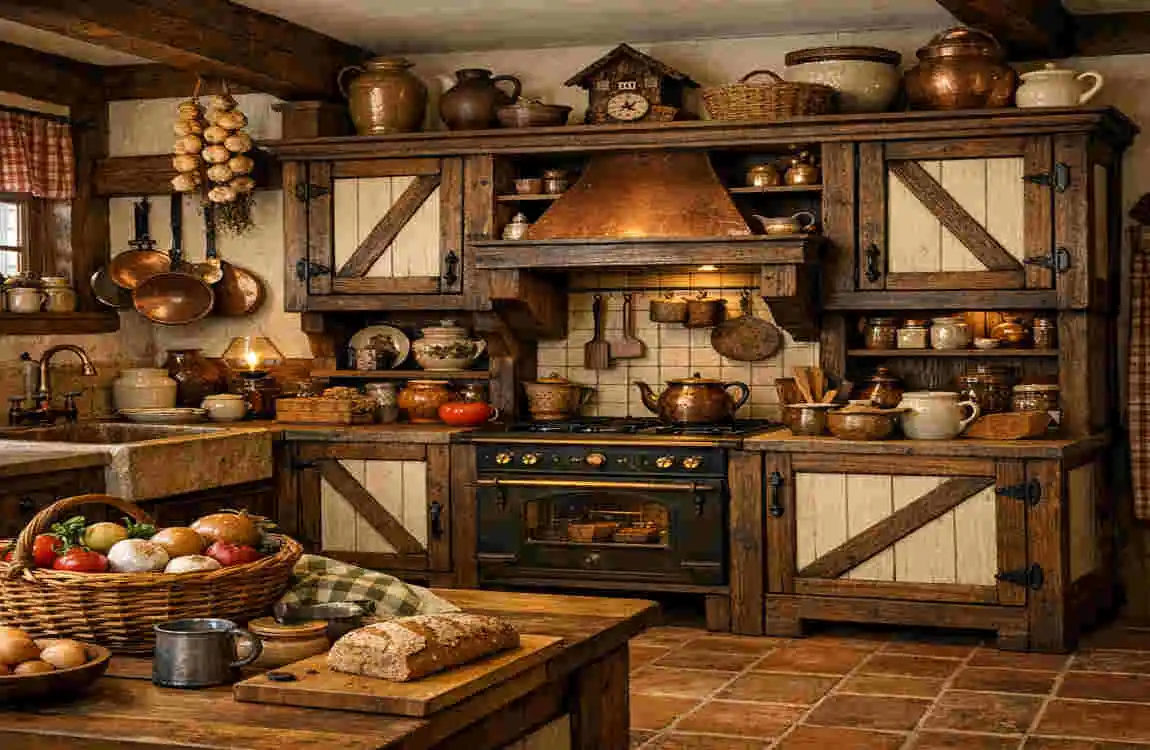
    The roots of these kitchens trace back to medieval farmhouses found across regions like Bavaria, the Black Forest, and Swabia. In these times, the kitchen was the engine room of the home. It was often the only room that was consistently heated, thanks to a large wood-burning stove. Consequently, life revolved around this space. It wasn’t just for cooking; it was for mending clothes, completing homework, and socializing.

    This history shaped the layout and the “vibe” of the design. Because these kitchens were working spaces, durability was key. Everything had to be solid. Flimsy furniture wasn’t an option. This is why you see such a heavy emphasis on solid timber framing and robust joinery in traditional German home kitchen design.

    Cultural Influences

    The Protestant work ethic, particularly prevalent in northern and central Germany, also played a role. It emphasized efficiency and modesty. You won’t find unnecessary frills in a truly authentic German kitchen. Every shelf, every hook, and every drawer has a purpose. However, this practicality is balanced by a deep cultural love for gathering. The “Abendbrot” (evening bread) tradition, in which families sit together for a cold meal, necessitated a design that was both comfortable and communal.

    The Influence of Fachwerk

    You cannot talk about German design without mentioning Fachwerk, or half-timbered houses. You have likely seen pictures of them—charming buildings with exposed wooden skeletons filled in with plaster or brick. This architectural style heavily influenced interior design. The exposed structural beams became a defining aesthetic feature, turning the house’s bones into a visual masterpiece.

    These historical roots are what make traditional German home kitchen design perfect for modern nostalgia. It connects us to a time when things were built to last, and the kitchen was the undisputed heart of the home.

    Defining Features of Traditional German Kitchen Styles

    So, what exactly does this look like in practice? If you want to replicate this look, you need to understand the building blocks. It is not just about buying a cuckoo clock and calling it a day. It is about a cohesive use of materials and layouts.

    Signature Materials: Built to Last

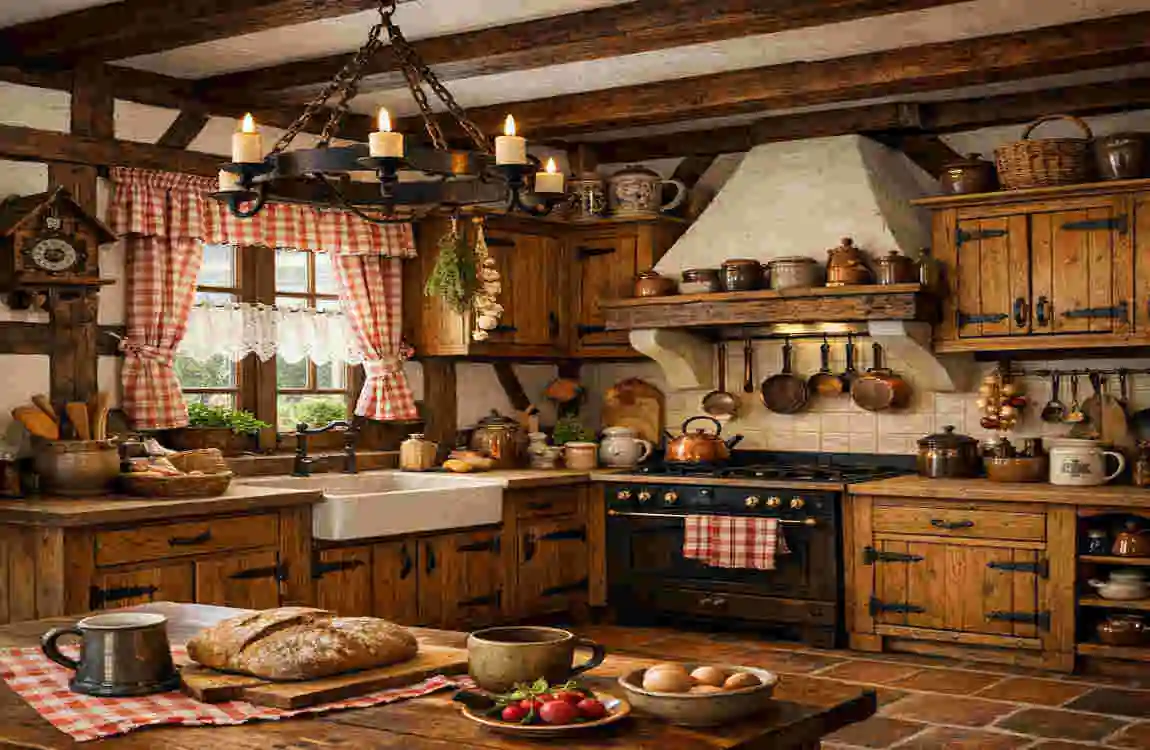
    The most defining feature of rustic German kitchens is the abundance of wood. But we aren’t talking about thin veneers or particle board. We are talking about solid, dark hardwoods. Oak (Eiche) and Beech (Buche) are the gold standards. These woods are chosen for their grain patterns and their ability to age gracefully. Over time, they develop a patina that makes them look even better.

    For the floors, you will rarely see carpet or laminate. Authenticity calls for stone, slate, or brick. These materials are cool in the summer, easy to clean, and incredibly durable. In modern adaptations, terracotta tiles are also popular for adding a bit of warmth to the color palette.

    The Earthy Color Palette

    When painting or accessorizing, think of the forest. The palette of a traditional German home kitchen design is plucked straight from nature.

    • Deep Greens: Reminiscent of the fir trees in the Black Forest.
    • Warm Browns: Echoing the timber beams and fertile soil.
    • Creamy Whites: Used on plaster walls to brighten the space and contrast against the dark wood.
    • Slate Greys: To match the stonework.

    You want to avoid neon brights or overly synthetic colors. The goal is a calming, grounded atmosphere.

    Hardware and Intricate Details

    The devil is in the details, and German craftsmanship shines here. Wooden cabinetry in traditional German home kitchen design is often accented with wrought iron handles or ceramic knobs. These heavy, tactile elements enhance the room’s sensory experience.

    Another lovely detail often seen is hand-painted tiles. Whether used as a backsplash behind the stove or as decorative trivets, these often feature floral motifs or folk art patterns, adding a splash of personality to the otherwise rustic room.

    Layout Essentials

    In terms of layout, efficiency reigns supreme. L-shaped counters are very common as they maximize corner space. However, the true hallmark is the seating area. Unlike modern American kitchens with bar stools lined up in rows, a German kitchen often features an Eckbank—a built-in wooden corner bench paired with a sturdy table. This invites people to sit face-to-face, fostering conversation rather than just eating on the run.

    Spotlight: The Schreibtisch – Heart of Traditional German Kitchens

    Timeless Traditional German Kitchen Designs: Rustic Charm for Modern Homes

    When we talk about the furniture inside these spaces, there is one unsung hero that deserves a spotlight. While the word Schreibtisch literally translates as “writing desk” in modern German, in the context of historical home life and evolving German kitchen styles, it refers to the multifunctional worktable that served as the household’s command center.

    The Historical Role

    In the 18th and 19th centuries, the farmhouse kitchen table wasn’t just for eating. It was where the accounts were balanced, where letters were written, and where vegetables were chopped. It was a “work desk” in the truest sense of the domestic sphere. This piece of furniture was usually massive, made of solid scrubbed pine or oak, and placed right in the center of the room.

    The Modern Twist

    In 2026, the concept of the Schreibtisch has evolved into a hybrid kitchen island/table. It captures the spirit of the old worktable but with modern utility. Designers are now creating custom Schreibtisch-style islands that feature beautiful wooden tops for that tactile heritage feel, but with hidden charging ports and storage underneath.

    Why It Fits Your Home

    Why should you consider this for your home? Because it promotes bonding. A Schreibtisch kitchen setup encourages the family to gather around a central point. It is durable enough to handle a child’s science project, a spouse’s laptop work, and the preparation of a three-course dinner all at once.

    For a modern renovation, imagine finding a vintage, heavy-legged table and having a stone fabricator install a granite slab on top. Or, keep the wood top and seal it for food safety. This blend of the “old office” feel with “new culinary” utility creates a unique focal point that feels deeply authentic.

    Blending Rustic Charm with Modern Functionality

    You might be thinking, “I love the look, but I don’t want to cook on a wood stove.” You are absolutely right. The goal of traditional German home kitchen design in the modern era is to look rustic but act smart. You want the charm without the inconvenience.

    Hybrid Designs

    The secret lies in integration. You can have high-tech appliances without ruining the aesthetic.

    • Hidden Appliances: This is the most effective trick. Your dishwasher and refrigerator should be “panel-ready.” This means the front of the appliance is covered with a custom door that matches your wooden cabinetry in traditional German home kitchen design. When closed, they look just like a pantry cupboard.
    • Induction Cooktops: Interestingly, sleek black glass induction cooktops blend very well with rustic stone countertops. They are low-profile and disappear into the surface, allowing the rustic elements to take center stage.

    Appliance Hacks

    If you can’t hide an appliance, make it a statement. Matte black ovens are incredibly popular in modern traditional kitchen ideas. They mimic the look of 1900s cast-iron stoves but come with convection settings and steam functions.

    Lighting Upgrades

    Lighting is where you can really have fun. In the old days, light came from fire or candles. Today, we need better visibility while keeping that warm glow.

    • Warm LEDs: Use LED strips tucked behind beams or under cabinets. Ensure you choose “warm white” (2700K-3000K) to mimic candlelight.
    • Statement Pendants: Hang wrought-iron or copper pendant lamps over your island or table. They look like old-world lanterns but provide focused task lighting.

    Storage Solutions

    German engineering is famous for efficiency, and your kitchen should be no exception. Behind those rustic oak drawer fronts, install modern soft-close runners and organizers. Use pull-out spice racks and “Le Mans” corner units to maximize every inch of space. This is especially helpful for homeowners in busy cities like Lahore or Berlin, where space is at a Premium but style is non-negotiable.

    Iconic Regional Variations in German Kitchen Designs

    Timeless Traditional German Kitchen Designs: Rustic Charm for Modern Homes

    Germany is not a monolith; each region has its own design flavor. Depending on your personal taste, you might lean towards one of these specific German kitchen styles.

    Bavarian Style: The Alpine Dream

    When most people think of a “German kitchen,” they are picturing Bavaria. The Alps heavily influence this style.

    • The Look: Think light-colored timber (often spruce or pine), heart-shaped cutouts in the chair backs, and plenty of red-and-white checkered textiles.
    • Details: Intricate carvings on the cabinet doors are common. Copper pots hanging from a rack are a must-have accessory. It feels like a cozy mountain chalet.

    Black Forest Kitchens: Dark and Moody

    If you prefer something more dramatic, look to the Black Forest (Schwarzwald).

    • The Look: This style uses much darker woods, often stained to a deep walnut or near-black tone.
    • Details: It pairs beautifully with deep forest greens. You might see motifs of pinecones or stag heads. The “tiled stove” (Kachelofen) is an iconic element here—a large ceramic heater that often has a bench built around it.

    Swabian Influences: Modesty and Function

    Swabian design is famously practical.

    • The Look: Cleaner lines and less ornamentation than the Bavarian style.
    • Details: It focuses on innovative storage. The “herb drying rack” hanging from the ceiling is a classic Swabian touch, perfect for the practical cook.

    Northern Coastal: The Maritime Breeze

    Up north near Hamburg and the coast, the style changes again.

    • The Look: This is the “Frisian” style. It uses painted wood—often in whites or pastoral blues—to reflect the maritime setting.
    • Details: It feels airier and lighter, sharing some DNA with Scandinavian design but retaining that German sturdiness.

    Quick Comparison Guide

    To help you decide which vibe fits your home, here is a quick breakdown:

    Region Key Feature Wood Tone Modern Adaptation

    Bavaria Carved cabinets & checks Light / Honey Pine LED-lit carved motifs

    Black Forest Tiled stoves & cuckoo motifs , Dark Walnut / Oak Matte finishes & dark stone

    Swabia Minimalist functionality Medium Oak Smart hidden storage

    Northern Painted finishes White / Blue Paint Shaker-style cabinets

    Bringing Traditional German Home Kitchen Design to Your Modern Home

    You don’t need to live in Munich to have a Munich-style kitchen. Whether you are in the suburbs of America or renovating a home in Pakistan, these design principles are universal. Here is how to make it happen.

    Ideas for Small Spaces

    If you live in an apartment, you might not have room for massive timber beams. That is okay.

    • Faux Beams: You can buy hollow polyurethane beams that look exactly like wood but weigh nothing. They add the look without lowering your ceiling height.
    • Compact Seating: Instead of a giant table, install a small corner bench (Eckbank). It saves space and provides more seating than chairs.

    Budget Breakdown

    Renovating is expensive, but there are ways to save.

    • The Save: DIY wood staining. You can buy unfinished cabinets and stain them yourself with a dark oak finish for under $500.
    • The Splurge: Hardware. Spend money on high-quality wrought iron handles. They are the first thing you touch and elevate the whole look.

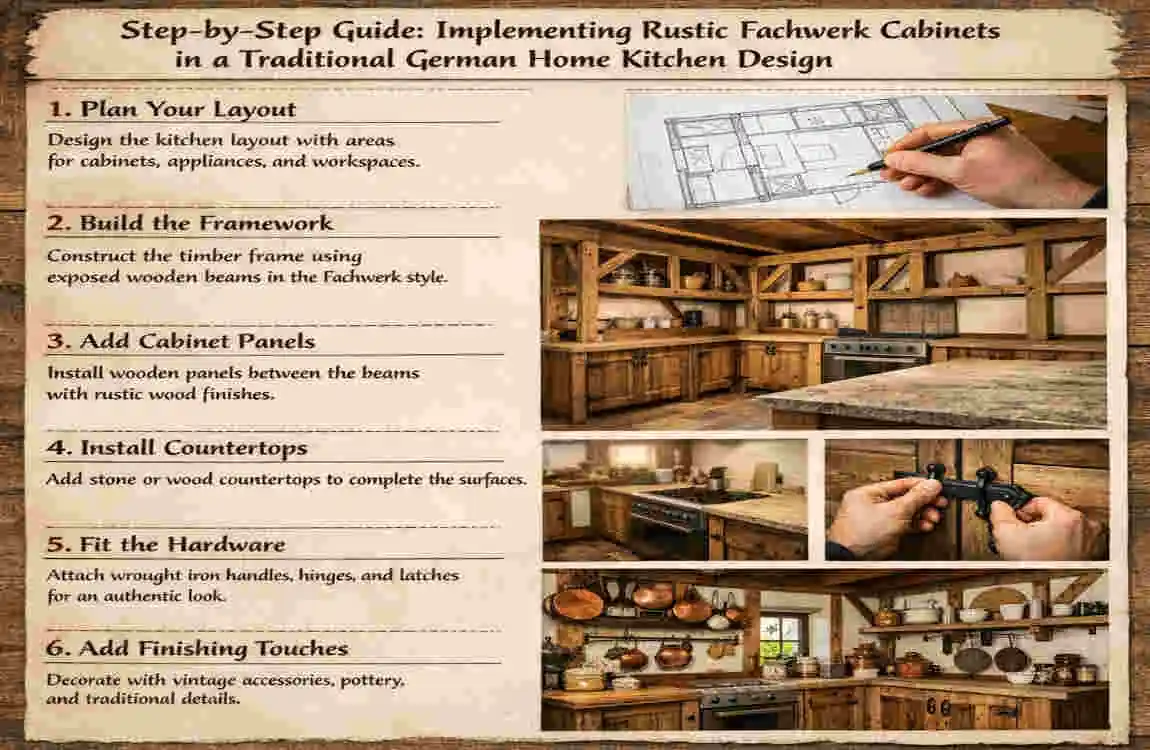
    Your Renovation Roadmap

    If you are ready to start, follow these steps to keep your project on track:

    1. Assess Your Layout: Can you fit an L-shaped counter or a central table? Prioritize flow.
    2. Source Materials: Look for reclaimed wood yards. Old barn wood makes for stunning open shelving.
    3. The “Bones”: install your flooring and any ceiling beams first. This sets the stage.
    4. Cabinetry: install your cabinets. Remember, wooden cabinetry in traditional German home kitchen design is the main visual element.
    5. Modern Tech: install your appliances. Ensure the modern tech (microwave, dishwasher) is tucked away or matches the aesthetic.
    6. Accessorize: Add the textiles, the copper pots, and the pottery.

    A Cultural Note for Global Homes

    Interestingly, this style adapts beautifully to other cultures. For example, in Pakistani homes, the concept of a “dirty kitchen” (heavy prep area) and a show kitchen is common. You can apply the rustic German kitchen aesthetic to the show kitchen, using open shelves to display spice jars, much like German herb shelves. The emphasis on heavy, durable wood works perfectly in climates where durability is a priority.

    Inspiration: Real-Life Examples and Case Studies

    Timeless Traditional German Kitchen Designs: Rustic Charm for Modern Homes

    Let’s look at two examples of how people are actually living with this style today.

    The Munich Modernization

    A young family in Munich inherited a 1970s home. The kitchen was dated and closed off.

    • The Change: They knocked down a wall to open the kitchen to the living room, but kept the original wooden ceiling beams.
    • The Design: They installed matte green cabinets (traditional color) with sleek brass handles (modern touch). They added a restored antique worktable as their island.
    • The Result: A space that felt historically respectful but worked for a busy family of four.

    The Expat in Lahore

    Sarah, a U.S. expat living in Lahore, wanted a kitchen that felt like the European holiday homes she loved.

    • The Change: She couldn’t find an antique German stove, so she used local brick to build a hearth-style surround for her modern range cooker.
    • The Design: She used local Sheesham wood (a durable, hard wood similar to walnut) to craft heavy, Black Forest-style cabinets.
    • The Result: A stunning fusion of local materials and traditional German home kitchen design aesthetics.

    FAQs

    What defines traditional German home kitchen design?

    It is defined by a focus on “Gemütlichkeit” (coziness) and durability. Key features include solid hardwood cabinetry, exposed ceiling beams, natural stone or brick flooring, and layouts that prioritize communal dining, often featuring a corner bench (Eckbank).

    How can I modernize rustic German kitchens?

    Focus on lighting and appliances. Use warm LED strips to highlight rustic beams. Integrate “panel-ready” appliances to hide modern fridges behind wooden doors. Use matte black fixtures to bridge the gap between old-world iron and modern minimalism.

    What is the cost of a Schreibtisch installation?

    A genuine antique worktable can cost anywhere from $500 to $3,000, depending on condition. A custom-built modern island designed to look like a Schreibtisch with integrated plumbing or electrical can range from $2,500 to $8,000+.

    What are the best woods for German-style cabinets?

    Oak (Eiche) is the most traditional and durable choice. Beech (Buche) is also very common in Germany. For a more budget-friendly or rustic look, Pine (Kiefer) is excellent, though it is softer and dents more easily, which adds to its character over time.

    Share. Facebook Twitter Pinterest LinkedIn Telegram Reddit Email
    Previous ArticleEasy Panasonic House Bathroom Fan Cleaning: Home Tips
    Next Article Moths in My House: Where They’re Coming From and How to Clean Them Out for Good
    Hannah Alfie

      Related Posts

      State-of-the-Art Home Security Measures : Smart Tech to Fortify Your House

      February 25, 2026

      How to Fix Marble Stair Steps and Tap Leaks: Ultimate Homeowner’s Guide

      February 23, 2026

      10 Stucco Exterior Paint Ideas to Elevate Your Home’s Curb Appeal

      February 18, 2026

      10 Easy Kitchen Cleaning Hacks to Keep Your Home Spotless in Minutes

      February 13, 2026

      Elevate Your House: Top Professional-Grade Appliances for Dream Kitchens

      February 12, 2026

      Floor-to-Ceiling Windows: Transform Your House into a Light-Filled Modern Haven

      February 11, 2026
      Add A Comment

      Comments are closed.

      Categories
      • APPLIANCES (15)
      • ARCHITECTURE (44)
      • BASEMENT (6)
      • BATHROOM (32)
      • BEDROOM (15)
      • Bsament (5)
      • CELEBRITY HOMES (696)
      • CLEANING (56)
      • CONSTRUCTION (47)
      • DIY (1)
      • DOOR (18)
      • ELECTRIC (13)
      • ENTERTAINMENT (2)
      • EXTERIOR (11)
      • FLOOR (15)
      • FURNITURE (10)
      • GARAGE (11)
      • GARDENING (4)
      • HOME DECOR (35)
      • HOME IMPROVEMENT (153)
      • INTERIOR (21)
      • KITCHEN (14)
      • LIFESTYLE (7)
      • LIVING ROOM (1)
      • outdoor (4)
      • PLUMBING (41)
      • REAL ESTATE (45)
      • ROOFING (35)
      • WINDOW (6)
      About Us

      Welcome to Home Improvementcast, where our enthusiasm revolves round everything related to cleaning. We’re driven by the conviction that housekeeping can be both quick and fun, allowing you to savour your house without having to deal with that cleaning problems.

      Information
      • Contact Us
      • Privacy Policy
      • Terms and Conditions
      • Popular
      • Recent
      • Top Reviews

      The Michael Blakey house in Beverly Hills

      October 13, 2023

      Explore Dave Matthews’ Seattle House: A Visitor’s Guide

      October 14, 2023

      What Is Industrial Architecture? Key Features for Designing Your Dream Industrial House

      February 28, 2026

      What Is Industrial Architecture? Key Features for Designing Your Dream Industrial House

      February 28, 2026

      Suzanne Collins House: Inside Her Private Sandy Hook CT Retreat Hunger Games Legacy

      February 27, 2026

      Martha Firestone Ford House: Inside the Lake St. Clair Mansion of Detroit Lions Legacy

      February 27, 2026
      Recent Posts
      • What Is Industrial Architecture? Key Features for Designing Your Dream Industrial House
      • Suzanne Collins House: Inside Her Private Sandy Hook CT Retreat Hunger Games Legacy
      • Martha Firestone Ford House: Inside the Lake St. Clair Mansion of Detroit Lions Legacy
      • How to Clean House Walls Like a Pro: Easy, Eco-Friendly Guide for Spotless Results
      • Demetria Gene Guynes House: Demi Moore’s Luxe Homes & Real Estate Secrets
      Trending posts

      What Is Industrial Architecture? Key Features for Designing Your Dream Industrial House

      February 28, 2026

      Suzanne Collins House: Inside Her Private Sandy Hook CT Retreat Hunger Games Legacy

      February 27, 2026

      Martha Firestone Ford House: Inside the Lake St. Clair Mansion of Detroit Lions Legacy

      February 27, 2026

      Subscribe to Updates

      Get the latest creative news from FooBar about art, design and business.

      Facebook X (Twitter) Instagram Pinterest
      • Home
      • Contact Us
      • Privacy Policy
      • Terms and Conditions
      • About Us
      © 2024 Home Improvement Cast. Designed by Digit Crawl

      Type above and press Enter to search. Press Esc to cancel.