

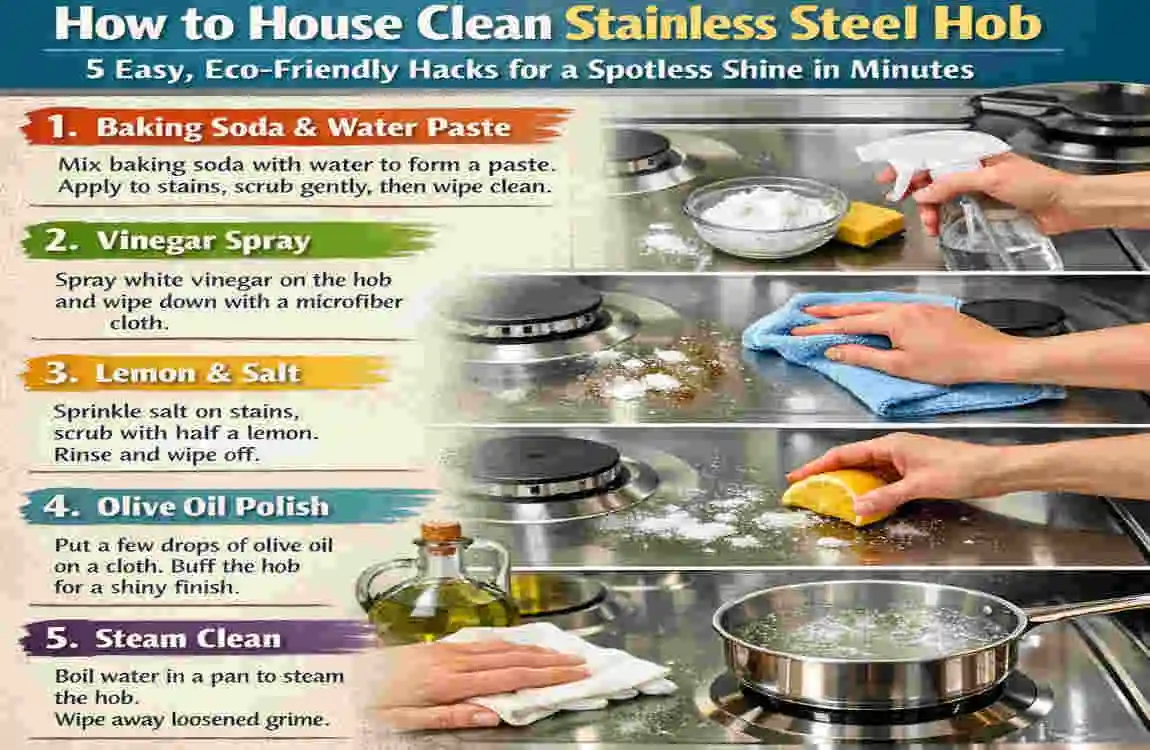
Staring at greasy fingerprints on your stainless steel hob after a nice dinner? You are definitely not alone. It is a scenario we all know too well. You’ve just finished cooking a delicious meal, the kitchen smells amazing, but then you look down. Your stovetop is covered in oil splatters, burnt-on sauce, and smudges that seem to multiply when you look away.
Millions of people search for how to clean a stainless steel hob every single month because, let’s face it, stainless steel is beautiful but can be high-maintenance. It is the centerpiece of the modern kitchen, screaming elegance and professionalism. But when it is dirty? It just makes the whole room look messy.
The problem with stainless steel is that it shows everything. A drop of water looks like a permanent stain. A fingerprint looks like a crime scene. And if you have ever tried to scrub it with a standard scourer, you probably ended up with scratches that broke your heart.
Why Stainless Steel Hobs Need Special Cleaning
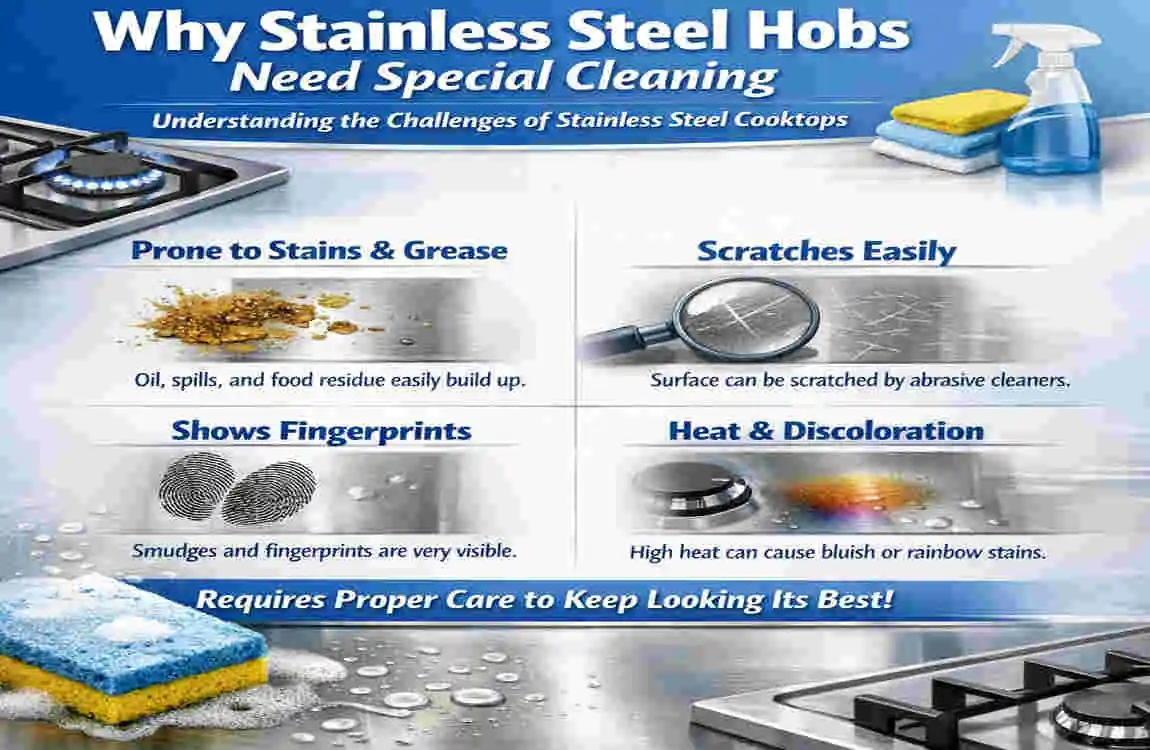
Before we start scrubbing, we need to understand what we are working with. Stainless steel isn’t like ceramic or enamel. It requires a specific approach to avoid damage.
Understanding the Material
Stainless steel is an alloy. It is made of steel, chromium, and nickel. That chromium is the secret ingredient. It reacts with oxygen in the air to create a passive layer that prevents rust. This is what makes it “stainless.” However, this layer is delicate.
When you see a smudge or a fingerprint, it is usually just surface oil sitting on top of that layer. But, because the surface is so smooth and reflective, it highlights every imperfection. This is why traditional abrasive cleaners are a nightmare for stainless steel. If you use a rough powder or a steel wool pad, you aren’t just cleaning the dirt; you are scratching that protective chromium layer. Once that layer is scratched, the steel can look dull and, in severe cases, can even begin to rust.
The Common Enemies
You are usually fighting three main things on a hob:
- Grease: This comes from cooking oils and animal fats. When heated, grease polymerizes, turning into a sticky, varnish-like substance that is hard to remove.
- Burnt Food: That pasta water that boiled over? It contains starch that burns onto the hot metal, creating a rock-hard residue.
- Limescale: If you live in an area with hard water, simply wiping your hob with water can leave behind white, chalky mineral deposits.
The Eco-Friendly Advantage
Many commercial cleaners contain bleach, ammonia, or chlorides. These are harsh chemicals. While they might strip away the grease, they can also cause “pitting” in your stainless steel, which are tiny microscopic holes that ruin the finish.
On the other hand, natural cleaners like white vinegar (acetic acid) and lemon juice (citric acid) are powerful enough to dissolve grease and minerals but gentle enough to leave the steel intact. Baking soda (sodium bicarbonate) has a mild abrasive quality that can scrub burnt-on food without scratching the metal.
Did you know that nearly 80% of modern homes have stainless steel appliances? It is the standard. Yet, so many of us are cleaning them wrong. By switching to these green methods, you are protecting your investment and keeping that shine for years to come.
Tools and Supplies You’ll Need for Eco-Friendly Cleaning
You do not need a shopping cart full of expensive bottles. The beauty of learning to clean a stainless steel hob naturally is that the toolkit is simple, cheap, and non-toxic.
Here is your essential checklist. You likely have most of these under your sink or in your pantry right now.
- White Vinegar: The holy grail of cleaning. It cuts through grease and disinfects.
- Baking Soda: The gentle scrubber. It lifts tough stains.
- Microfiber Cloths: These are non-negotiable. They grab dust and oil without scratching.
- Fresh Lemon: For a fresh scent and extra acid power against limescale.
- Olive Oil: The secret polishing weapon.
- Dish Soap: A mild degreaser for the initial wipe-down.
- Empty Spray Bottle: To mix your solutions.
Why Avoid Steel Wool?
I cannot stress this enough: Never use steel wool or abrasive scrubbing pads (the green ones). They will leave permanent scratches that you cannot buff out. Always opt for soft sponges or microfiber cloths.
Here is a quick breakdown of what these items cost and what they do:
Supply Item Purpose Estimated Cost Where to Buy
White Vinegar Dissolves grease & sanitizes £0.50 – £1.00 Supermarket
Baking Soda Mild abrasive for scrubbing £0.80 – £1.50 Supermarket / Bakery Aisle
Microfiber Cloths Scratch-free wiping & polishing £3.00 (pack of 4) Amazon / Home Stores
Lemon Limescale removal & scent £0.30 Produce Aisle
Olive Oil Polishing & protection £2.00+ Pantry / Supermarket
Dish Soap Lifting heavy oil £1.00 Supermarket
As you can see, you can gather your entire cleaning kit for under £10, and it will last you for months!
The 5 Easy, Eco-Friendly Hacks to House Clean Your Stainless Steel Hob
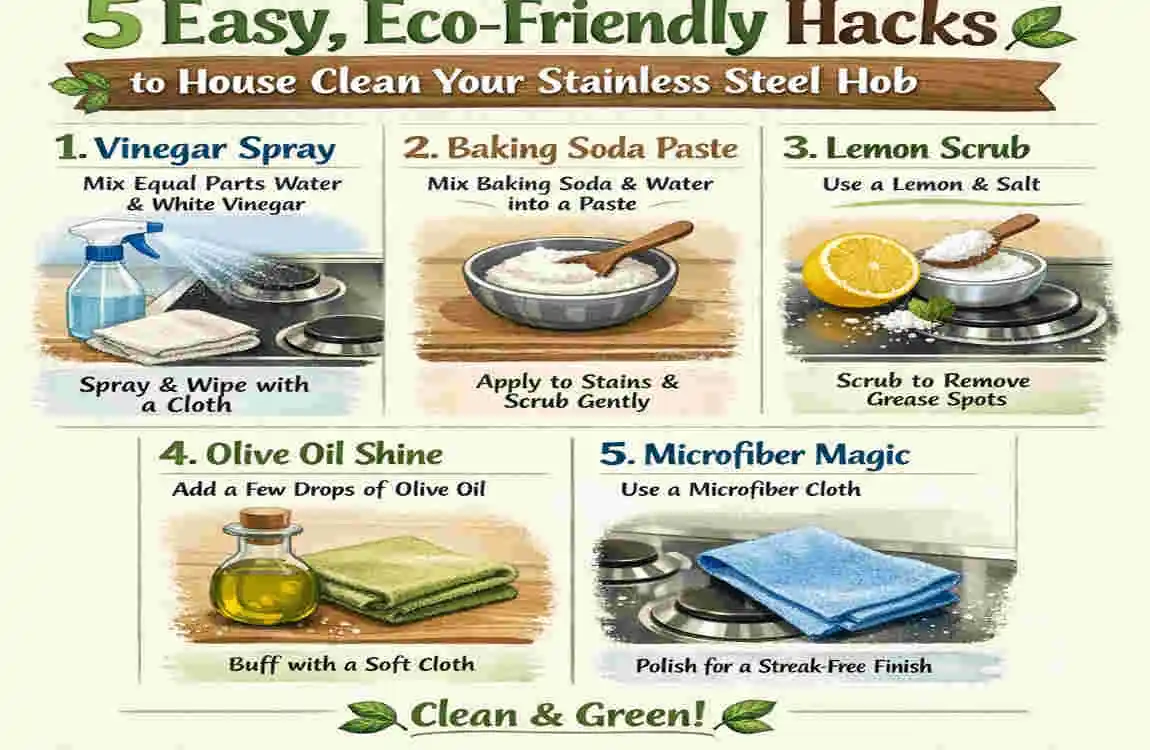
Now, let’s get into the action. These are the 5 proven hacks that will transform your kitchen. We have broken them down by the type of mess you are dealing with.
Vinegar and Water Spray for Everyday Smudges
This is your daily driver. If you just cooked a simple meal and have a few splatter marks or fingerprints, this is the quickest way to reset your kitchen.
Why it works: White vinegar contains acetic acid. Grease and oil are alkaline. When you apply acid to the alkaline grease, it breaks down the oil’s molecular structure, making it easy to wipe away. It evaporates quickly, leaving no streaky residue behind.
Step-by-Step Guide:
- Prepare the Mixture: Grab your spray bottle. Fill it halfway with white vinegar and fill the rest with tap water. This creates a 1:1 solution. Give it a gentle shake.
- Clear the Area: Make sure the hob is cool to the touch. Remove any heavy crumbs or loose food debris with a dry paper towel.
- Spray Generously: Mist the entire surface of the hob. Don’t be shy! You want it damp, but not so damp that it forms huge puddles that might seep into the burner mechanisms.
- The Magic Wait: This is the most important step. Wait for 2 minutes. Let the vinegar do the work. It needs time to eat into the grease.
- Wipe With the Grain: Look closely at your stainless steel. You will see faint lines running either horizontally or vertically. Take your microfiber cloth and wipe in the direction of those lines. This prevents streaks and lifts dirt out of the tiny grooves.
- Buff Dry: Flip the cloth to a dry side and give it a quick buff to remove any remaining moisture.
Time Saved: This entire process takes about 2 to 3 minutes. It is faster than finding the chemical cleaner under the sink!
Pro Tip: If the smell of vinegar bothers you, add a drop of essential oil (like lavender or tea tree) to your spray bottle. It won’t affect the cleaning power, but it makes the experience much nicer.
Baking Soda Paste for Burnt-On Grease
Sometimes, vinegar just isn’t enough. We have all had that moment where a pot boils over, hisses, and leaves a black, crusty ring around the burner. For this, we need the “Volcano Method.”
The Science: Baking soda is a base. When used as a paste, it acts as a mild abrasive. It is harder than the burnt food but softer than the steel. If you mix it with vinegar, the fizzing reaction (the release of carbon dioxide) helps physically lift the dirt from the surface.
Step-by-Step Guide:
- Make the Paste: In a small bowl, mix 3 tablespoons of baking soda with about 1 tablespoon of water. You are looking for a consistency like toothpaste—thick but spreadable.
- Apply to Stains: Spoon the paste directly onto the burnt-on areas. You want a thick layer that completely covers the stain.
- Let it Sit: Patience is key here. Let the paste sit for 5 to 10 minutes. It needs to hydrate the burnt food to soften it.
- The Scrub: Take a soft, damp sponge. Gently scrub the area in a circular motion. You don’t need to use hulk-like strength; let the baking soda grit do the work.
- The Rinse: Wipe away the dirty paste with a wet cloth. You might need to rinse the cloth a few times, as baking soda can leave a white film if not fully rinsed away.
- Dry Thoroughly: Use a fresh microfiber cloth to dry the area to prevent water spots.
Safety Note: If you have a gas hob, be very careful not to get the paste into the gas jets or ignition ports. It can clog them. It is best to tape off the burners or work very carefully around them.
Long-Tail Keyword Tip: This method is perfect if you are looking for a natural baking soda hob cleaner that tackles heavy-duty messes without scratching.
Lemon Juice for Water Spots and Limescale
If you have hard water, you know the pain of those white, chalky spots that appear even after you have cleaned. This is limescale (calcium carbonate).
Benefits: Lemon juice is high in citric acid, which is excellent at dissolving minerals. Plus, it leaves your kitchen smelling incredibly fresh.
Step-by-Step Guide:
- Prepare the Lemon: Cut a fresh lemon in half. You can save the other half for cooking or use both for a large hob.
- The Salt Boost (Optional): If the limescale is really thick, dip the cut side of the lemon into a little bit of table salt. The salt adds a scrubbing texture. Note: Be very gentle when using salt to avoid scratching.
- Rub it On: Use the lemon half like a sponge. Rub it directly over the water spots or the dull areas of the hob. Squeeze slightly as you rub to release the juice.
- Sit and Wait: Let the lemon juice sit on the surface for about 1 minute. Do not let it dry completely, or it will become sticky.
- Wipe Clean: Use a damp warm cloth to wipe away the lemon juice and dissolved minerals.
- Polish: Because lemon removes oils, the steel might look a bit “dry.” Follow up with a tiny drop of oil (see Hack 4) to restore the luster.
Eco-Win: This method produces zero plastic waste and uses 100% biodegradable ingredients. It is the ultimate eco-friendly stainless steel hob shine technique.
Olive Oil Polish for Fingerprint-Free Finish
You have cleaned the grease, scrubbed the burns, and removed the limescale. But does your hob look “showroom new”? Probably not yet. It might look clean but flat. This is where olive oil changes the game.
Why: Stainless steel has microscopic grooves. When you clean it, you strip out the oils, making those grooves visible and prone to catching new fingerprints. A tiny amount of oil fills these grooves, creating a unified, reflective surface that repels water and fingerprints.
Step-by-Step Guide:
- Ensure it is Dry: Make sure the hob is perfectly clean and completely dry from previous steps. Water and oil don’t mix!
- Apply to Cloth: Put a dime-sized amount of olive oil (or baby oil) onto a soft, dry microfiber cloth. Do not pour oil directly on the hob. You want a very thin layer.
- Buff it In: Rub the oil into the stainless steel, moving with the grain. Coat the entire surface. It might look smeary at first—don’t panic.
- The Final Buff: Flip the cloth to a clean, dry side (or grab a fresh one). Buff the surface vigorously. You aim to pick up any excess oil so the surface feels dry to the touch, not greasy.
Maintenance: Doing this once a week will create a barrier. Next time you spill sauce, it will sit on top of the oil layer rather than burning onto the steel, making your next cleanup much easier.
Pro Tip: This is the secret to that “mirror finish” you see in appliance stores. It also helps prevent future fingerprints from sticking!
Club Soda Fizz for Quick Sparkle Boost
This is the “I have guests coming in 5 minutes” hack. It is surprisingly effective for a quick brighten-up.
Secret Weapon: Club soda (carbonated water) is slightly acidic, and its carbonation provides gentle agitation that helps lift surface dirt.
Step-by-Step Guide:
- Pour: Pour a small amount of club soda directly onto the hob surface.
- The Fizz: You will see it bubbling. Let it fizz for about 30 seconds.
- Wipe: Wipe it away with a dry microfiber cloth.
- Dry: Ensure it is completely dry to avoid water marks.
Combo Hack: If you have a really dull spot, mix club soda with a splash of vinegar for a deep clean that sparkles.
Maintenance Tips to Keep Your Stainless Steel Hob Spotless
Now that you know how to house clean stainless steel hob, let’s talk about how to keep it that way. You don’t want to be deep cleaning every single day.
Developing a few simple habits can save you hours of scrubbing later on.
The “Clean as You Go” Rule
The best time to clean a spill is immediately after it happens (carefully, of course). If sauce drips, wipe it up immediately with a damp cloth. Do not let it bake on.
The Daily Routine
- Post-Dinner Wipe: Once the hob is cool, give it a quick spray with your vinegar solution (Hack 1).
- Dry it Off: Never leave water sitting on the hob. Water leads to limescale. Always dry it after wiping.
The Weekly Routine
- Full Polish: Do the full routine once a week. Clean with vinegar, scrub any burns with baking soda, and finish with the olive oil polish (Hack 4).
Prevention is Key
- Use Lids: Using lids on your pots reduces grease splatter by 90%.
- Use Larger Pans: If you are frying, use a larger pan or a splatter guard to contain the oil.
- Trivets: Never drag rough pots (like cast iron) across the surface. It will scratch the finish.
5 Long-Term Habits for a Shiny Hob:
- Wipe spills immediately.
- Always dry the surface.
- Polish with oil weekly.
- Avoid abrasive scrubbers.
- Check the burner caps for blockages regularly.
Common Mistakes to Avoid When Cleaning Stainless Steel Hobs
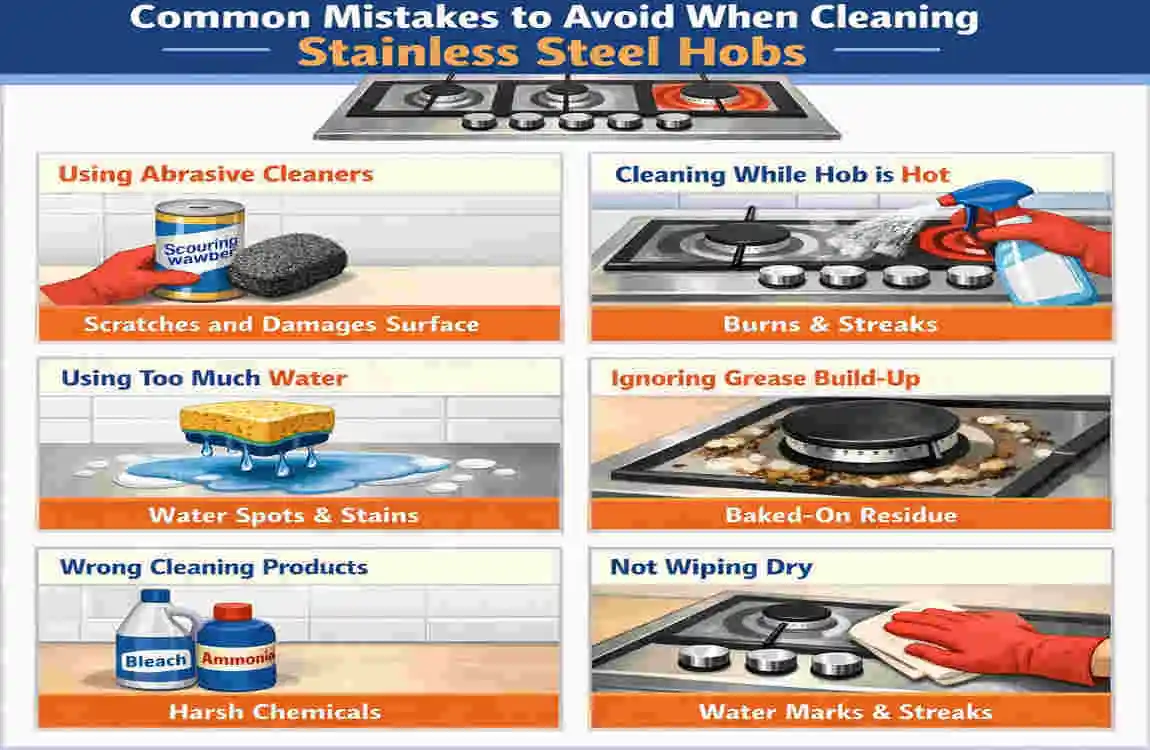
Even with the best intentions, you can damage your hob. Here are the big “No-Gos” to watch out for.
Using Bleach or Chlorides
Bleach is the enemy of stainless steel. It breaks down the protective chromium layer. Even if you rinse it off, it can lead to staining and pitting over time. Avoid any cleaner that lists “Sodium Hypochlorite” as an ingredient.
Scrubbing Against the Grain
We mentioned this before, but it bears repeating. Scrubbing in circles or against the grain creates a spiderweb of tiny scratches. Over time, this makes the steel look dull and foggy. Always follow the lines!
Letting Cleaners Dry on the Surface
Whether it is vinegar, lemon, or a store-bought cleaner, don’t let it dry completely. It can leave a residue that is harder to remove than the original stain.
The Myth: “Oil Attracts Dirt”
Some people are afraid to use the olive oil hack because they think it will make the hob sticky. This is a myth—if done correctly. The key is the “buffing.” If the surface feels greasy, you used too much oil or didn’t buff enough. It should feel smooth and dry.
Using Glass Cleaner (Ammonia)
While some people swear by glass cleaner for shine, many contain ammonia. Ammonia can be too harsh for some stainless steel finishes and can cause discoloration. Stick to vinegar—it’s safer and cheaper.
FAQs: How to House Clean Stainless Steel Hob
Here are the most common questions we get about keeping hobs clean.
How often should I clean my stainless steel hob? You should do a quick wipe-down with vinegar and water after every heavy cooking session. A deep clean with baking soda and oil polishing is recommended once a week to maintain the shine.
Can I use these hacks on gas hobs? Yes, absolutely. However, be extra careful not to get liquids or baking soda paste into the gas burner ports or the ignition mechanism. It helps to remove the burner caps and grates and clean them separately in the sink.
What if my hob has a textured finish? Textured stainless steel hides fingerprints better but holds dirt more stubbornly. You can use the same hacks, but you might need to use a soft toothbrush to gently scrub the vinegar or baking soda into the texture patterns.
Are these safe for induction hobs? Most induction hobs have glass-ceramic cooking surfaces, not stainless steel. However, many have stainless steel trim. These hacks are perfect for the trim. For the glass surface, vinegar works well, but avoid abrasive baking soda scrubbing which could scratch the glass.
Will vinegar cause my stainless steel to rust? No, vinegar is safe for stainless steel as long as it is wiped off. It removes the deposits that cause rust. However, do not soak the steel in vinegar for hours on end.
