
In today’s world, the need for state-of-the-art security measures has never been more critical. With the rapid evolution of technology and increasing threats to property and personal safety, it’s essential to stay ahead of potential risks. According to 2025 FBI crime statistics, burglaries in the United States rose by 7%, driven by criminals’ evolving tactics and vulnerabilities in outdated security systems.
Traditional security systems, such as basic locks and CCTV cameras, are no longer sufficient. Statistics show that 60% of break-ins exploit inadequate locking mechanisms (Statista). Whether you own a home or manage a business, you need advanced solutions that leverage modern technologies such as AI, biometrics, and IoT to safeguard your assets.
The Evolution of Home and Business security
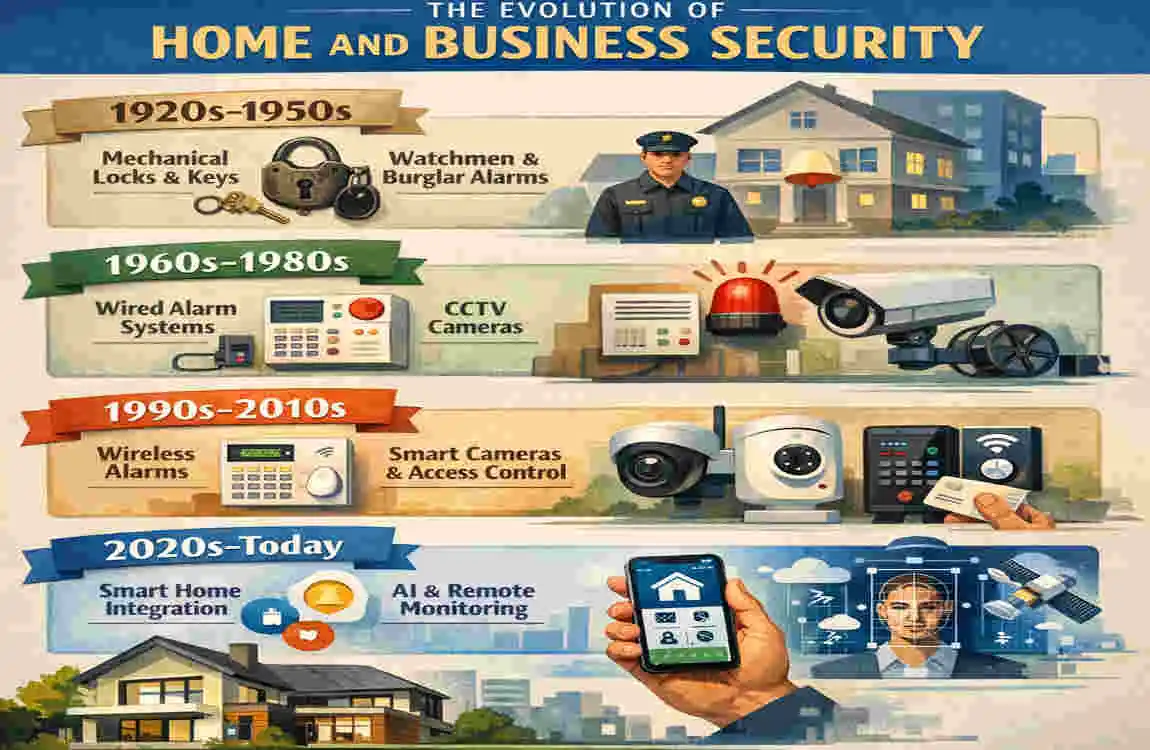
Security has come a long way since the days of simple locks and chains. Let’s take a quick look at how technology has revolutionized the way homes and businesses are protected.
A Brief Look at the Past
In the early 2000s, CCTV systems were the gold standard for property security. While effective as a deterrent, they were largely reactive, capturing events only after they occurred. Fast forward to the 2020s, and we saw the rise of smart cameras capable of sending real-time alerts and even predicting potential threats using basic motion detection.
Key Drivers of Change
The transition from traditional to state-of-the-art security systems has been driven by advancements in 5G connectivity, IoT (Internet of Things), and AI (Artificial Intelligence). These technologies enable seamless communication between devices and provide proactive protection. However, with these advancements come new challenges, such as the rise in smart lock hacking, which increased by 30% in 2025 (Cybersecurity Ventures).
Benefits of Modern security Tech
Here’s a quick comparison of how security has evolved:
EraTechnology UsedProtection Level
2000s CCTV Reactive
2020s Smart Cameras Predictive
2026+ AI Biometrics, IoT Proactive
With these advancements, it’s clear that the future of security lies in proactive systems that prevent incidents before they occur. Let’s explore the top 10 state-of-the-art security measures making waves in 2026.
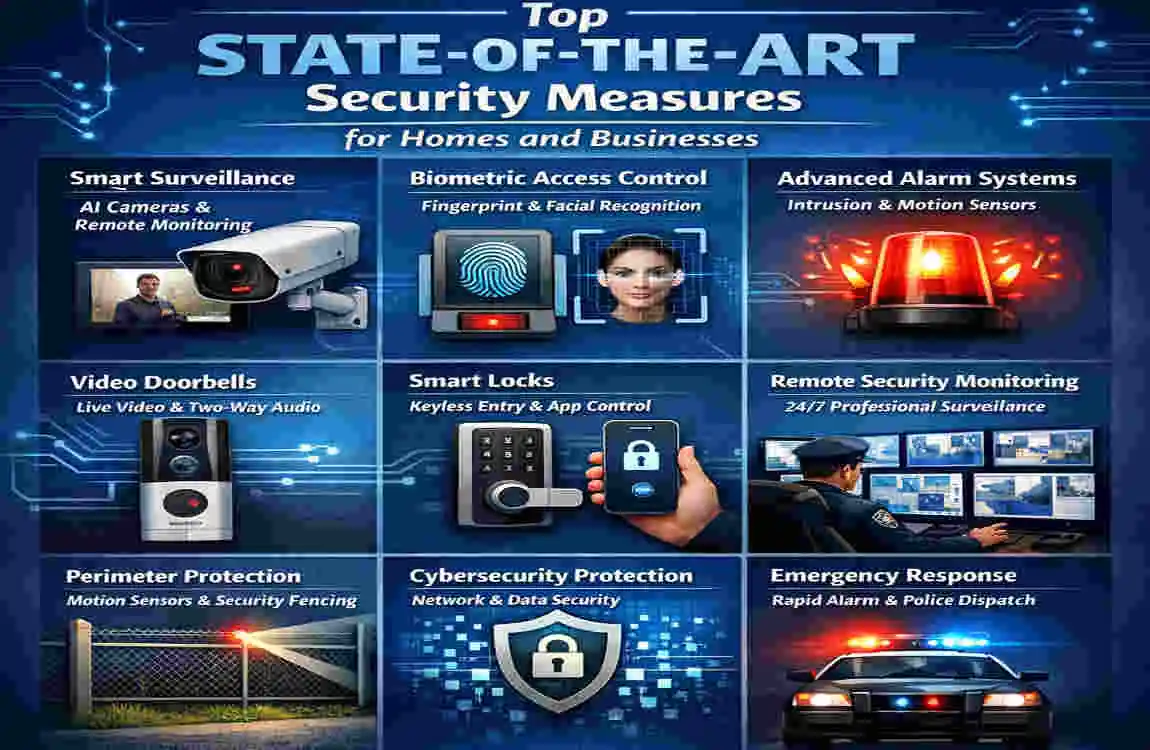
Top 10 State-of-the-Art security Measures for Homes
Below, we’ll break down the most advanced security measures available in 2026 and explain how they can enhance residential safety.
AI-Powered Surveillance Cameras
These cameras are the epitome of smart security, leveraging facial recognition and anomaly detection to identify potential threats. For instance, the Google Nest Cam IQ Pro can distinguish between a family member and an unfamiliar face.
- Pros: Real-time alerts, high-resolution footage, and predictive threat detection.
- Cons: May require a stable internet connection and regular updates.
- Cost: $200–$500 per unit, depending on features.
Biometric Smart Locks
Say goodbye to traditional keys! Biometric locks use fingerprint or iris scans for access control, offering unparalleled security. Popular models like the Ultraloq U-Bolt Pro even integrate with smart home assistants like Alexa or Google Home.
- Pros: No risk of lost keys, high precision.
- Cons: Limited by initial setup and cost.
Smart Doorbells with Video Analytics
Devices like the Ring Always Home Cam take doorbell cameras to the next level by employing video analytics to detect unusual behavior. Some even come equipped with drone patrol capabilities for enhanced monitoring.
Motion-Sensor Perimeter Alarms
These alarms use geofencing via mobile apps, ensuring your property is monitored even when you’re away.
Glass-Break and Environmental Sensors
These sensors not only detect break-ins but also monitor environmental threats such as floods and smoke, providing a layered security approach.
Advanced State-of-the-Art security Measures for Businesses

Businesses have unique security needs, particularly when managing large properties or sensitive data. Here are some of the most advanced solutions available in 2026.
Cloud-Based Access Control Systems
These systems combine RFID technology with facial recognition, enabling seamless employee entry management. For example, Kisi Pro offers scalable solutions for businesses of all sizes.
Intrusion Detection with Machine Learning
AI-powered panels, such as those from Ajax Systems, can detect unusual activity patterns and alert authorities in real time.
Remote Video Monitoring Centers
Businesses can now opt for 24/7 professional monitoring services, ensuring that every corner of the property is under constant surveillance.
Cybersecurity-Integrated Physical security
As IoT adoption increases, it’s vital to protect connected devices from cyberattacks. Combining physical and cyber security creates a robust defense mechanism.
Drone and Robotic Patrols
While still emerging, drones and robots are being used to patrol large properties, offering a futuristic solution to security challenges.
Key Features to Look for in State-of-the-Art security Measures
When choosing a security system, certain features are non-negotiable. Here’s what to prioritize:
- Two-Factor Authentication (2FA): Ensures that only authorized users can access your system.
- Battery Backups: Keep your system functional during power outages.
- GDPR-Compliant Data Handling: Protects your personal information from misuse.
- Integration Capabilities: Look for systems that can work with existing home wiring and smart devices.
Top Vendors to Consider
VendorKey Feature2026 Rating
ADT Professional Monitoring
SimpliSafe Affordable DIY Kits
Vivint Advanced AI Features
Installation and Cost Breakdown
Installing a state-of-the-art security system doesn’t have to be complicated. Here’s a step-by-step guide:
- Assess Vulnerabilities: Identify weak points in your home or business.
- Choose Wired or Wireless Systems: Wireless options are easier to install but may require battery changes.
- Decide Between Professional or DIY Installation: While professional installation ensures accuracy, many systems are DIY-friendly.
MeasureHome CostBusiness CostROI Timeline
AI Cameras $300 $1,500 6 months
Biometric Locks $250 $2,000 1 year
Common Myths About State-of-the-Art security Measures
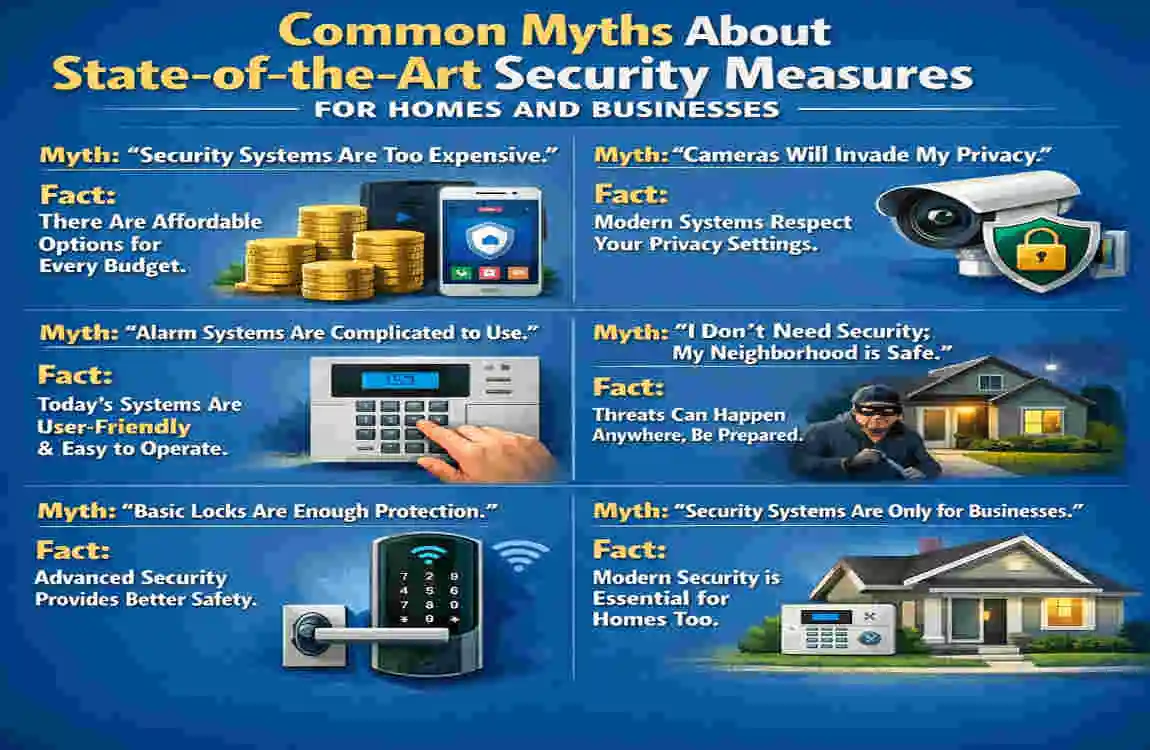
Myth: “Too Expensive”
While advanced systems may seem costly upfront, they often reduce insurance premiums by 15–20%, making them a worthwhile investment.
Myth: “Hack-Proof”
No system is entirely hack-proof. However, using strong passwords and enabling 2FA significantly reduces risks.
Future Trends in security Tech
Looking ahead, security systems will only become more advanced. By 2027, we can expect innovations such as quantum encryption and augmented reality overlays for threat detection. Experts predict that 80% of homes and businesses will adopt state-of-the-art systems by 2030.
FAQ: State-of-the-Art Security Measures
What are the best state-of-the-art security measures for apartments?
For apartments, consider smart doorbells, AI cameras, and biometric locks for enhanced safety.
How much do state-of-the-art security measures cost in Pakistan?
Costs vary, but a basic system starts at PKR 50,000, while advanced setups can go up to PKR 1,000,000.
Are state-of-the-art security measures worth it for small businesses?
Absolutely! They reduce risks, lower insurance costs, and enhance customer trust.
