

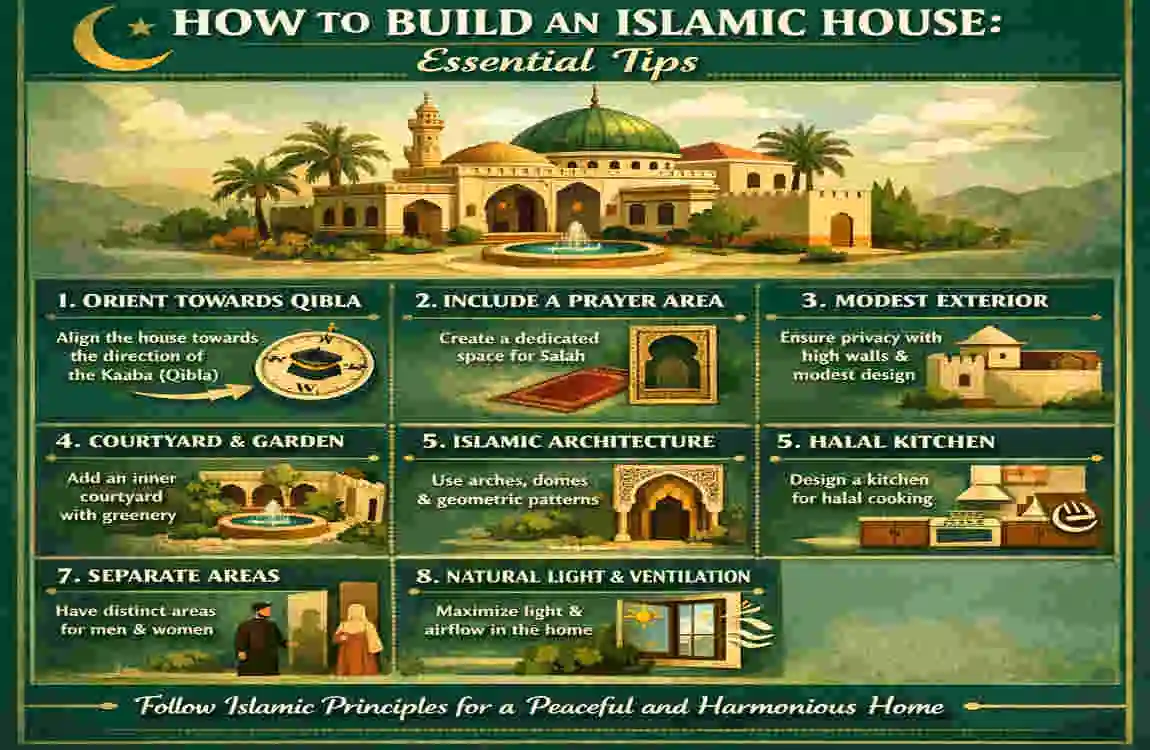
That is the heart of an Islamic house. It is not just a building with walls, rooms, and a roof. It is a home designed to support modesty, cleanliness, peace, family unity, and worship. It gives space for daily life, but it also reminds the people inside to live with purpose.
Furniture and Furnishings That Fit the Home
When people think about house design, they often focus only on looks, size, or luxury. But an Islamic house asks a deeper question: does this home help the family live in a way that feels calm, private, respectful, and spiritually grounded? That is what makes this idea so meaningful.
In today’s world, you can build an Islamic house without giving up beauty or comfort. In fact, modern design can make these values even stronger. You can plan a Qibla-facing prayer area, create private family zones, choose halal and sustainable materials, and include spaces that make wudu, hosting guests, and daily living much easier.
What an Islamic House Really Means
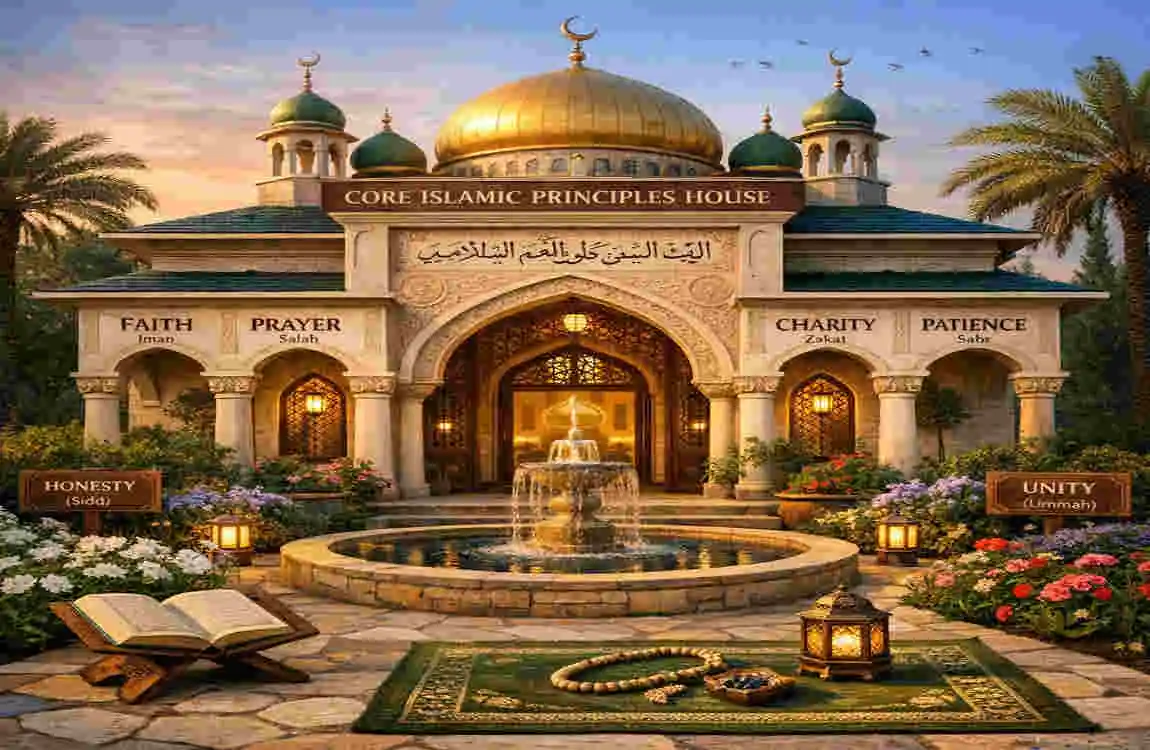
The Meaning Behind the Design
An Islamic house is not defined by a single architectural style. It can be modern, traditional, minimalist, or even a mix of styles. What truly matters is that the house reflects Islamic values in its planning and use.
That means the home should support:
- Privacy, so family life is protected
- Cleanliness, so daily worship and living are easier
- Modesty, so spaces feel respectful and balanced
- Simplicity, so the home does not become a symbol of waste or pride
- Family unity, so the home brings people together
- Spiritual awareness, so daily life stays connected to faith
These values shape every part of the house. They affect the entrance, windows, layout, prayer space, furniture, and even the garden. In other words, Islamic house design is not only about decoration. It is about how the home works for real life.
Why This Approach Matters Today
Many modern homes are beautiful, but they often miss privacy. Large glass fronts, open layouts, and busy interiors can create stress instead of peace. An Islamic house offers a better balance.
It gives you a home that feels calm and protected. It allows guests to be welcomed without exposing the entire family area. It makes prayer easy. It supports good habits. And it helps you live more intentionally.
That is why this type of home design matters so much. It brings faith into daily life without making the house feel old-fashioned or restrictive.
Core Islamic Principles That Shape the Home
Modesty and Privacy
Privacy is one of the most important ideas in Islamic house design. The home should protect the family from unwanted views and unnecessary exposure. This can be done through high boundary walls, controlled entrances, screened windows, and a smart internal layout.
A good Islamic house also separates public and private life. Guests should be able to enter and sit comfortably without passing through the family’s private areas. This creates dignity, ease, and peace for everyone.
You can also use a courtyard or an inward-facing layout to increase privacy. That way, the house turns inward for the family while staying welcoming for visitors.
Cleanliness and Purity
Cleanliness is a major part of Islamic living. A home should make it easy to stay neat, wash up, and maintain a sense of purity. This is why flooring, plumbing, and room planning matter so much.
Easy-clean surfaces, simple corners, durable tiles, and practical wash areas help the house stay fresh. A dedicated wudu space is especially useful, because it keeps the prayer routine smooth and organized.
When a house supports cleanliness, daily worship becomes easier too. That is one of the quiet strengths of an Islamic house.
Simplicity and Balance
An Islamic home does not need to be crowded with unnecessary detail. It should feel balanced, comfortable, and functional. This is where simplicity becomes important.
Simplicity does not mean plain or boring. It means choosing what is useful, beautiful, and meaningful. You can still use elegant finishes, good lighting, and refined decor. But the overall home should avoid excess.
This creates a calmer living environment. It also helps the family focus on what matters most.
Community and Good Relations
A home should also be thoughtful toward neighbors. That means carefully planning noise, windows, outdoor views, and access points. A house that respects nearby families shows good manners and social responsibility.
In this way, Islamic house design is not only about private life. It also reflects how you live with the wider community.
Table: Islamic Principles and Modern Features
PrincipleMeaningModern Application
Haya Modesty and privacy High walls, screened windows, inward-facing rooms
Tahara Cleanliness and purity Easy-clean tiles, wudu area, practical bathrooms
Wasatiyyah Balance and moderation Simple layouts, no wasteful design, functional rooms
Maslahah Welfare and benefit Solar panels, natural ventilation, efficient planning
Site Selection and House Orientation
Choose the Right Plot
The site you choose affects the whole home. If possible, select land that feels peaceful, accessible, and suitable for a private family house. A good plot should allow for proper sunlight, airflow, and a sensible layout.
Try to avoid cramped, noisy, or hard-to-adapt-to areas. A home meant to foster calm and worship should not feel squeezed from the start.
If you are building in a city like Lahore, it is also wise to pay attention to local building regulations, neighbourhood density, and ventilation requirements. These practical details matter just as much as the spiritual ones.
Face Important Spaces Toward the Qibla
One of the most meaningful aspects of an Islamic house is its Qibla orientation. The prayer area should be planned with the Qibla in mind. In some homes, the main prayer room can be aligned clearly. In others, the family may create a prayer corner that faces the correct direction.
This does not mean every wall must follow the Qibla. It simply means the prayer space should be thoughtfully planned so worship feels easy and natural.
You can also use simple tools or digital apps during planning to confirm orientation before construction begins. This small step can save a lot of trouble later.
Think About Light, Air, and Comfort
A house that supports faith should also support health. Natural light and fresh air help create a pleasant environment for prayer, rest, and family life.
Think about where the sun rises and sets. Plan windows so the home feels bright without becoming too hot. Use cross-ventilation where possible. Add shaded areas if the climate is warm.
This is where the spiritual and practical parts of design meet. A comfortable home is easier to live in, and a pleasant home helps the family feel more at ease in worship and daily routine.
Layout and Floor Plan: The Heart of the Islamic House
A Courtyard-Centered Design
One of the most distinctive features of an Islamic house is its courtyard. This design is deeply rooted in traditional architecture and still works beautifully today.
Why does it matter so much?
Because a courtyard creates privacy, light, airflow, and calm at the same time. It becomes the center of the home, while the surrounding rooms protect family life. The home opens inward rather than outward, which is a natural fit for the values of modesty and comfort.
A courtyard can also become a family gathering space, a place for plants, or a quiet area for reflection. It gives the house a peaceful core.
Public, Semi-Private, and Private Zones
A good layout should guide movement through the house carefully. Not every area should be equally exposed.
A simple way to think about it is:
- Public zone: entrance, guest seating, guest washroom
- Semi-private zone: dining area, family lounge, shared spaces
- Private zone: bedrooms, dressing areas, children’s rooms, family bathrooms
This separation makes the home more respectful and easier to manage. Guests can be received properly. Family members can relax without feeling watched. And daily life flows more smoothly.
This zoning is one of the easiest ways to make a house feel Islamic in practice, not just in appearance.
Plan for Family Life and Prayer
An Islamic house should support the needs of the whole family. That means planning enough bedrooms, storage, and shared space for daily life. It also means making room for prayer.
A musalla, or prayer room, does not need to be large. Even a quiet corner with clean flooring, proper orientation, and simple decor can work well. The key is to make prayer easy and consistent.
You may also want a space where family members can read Quran, teach children, or sit quietly after salah. These small spaces can make a big difference in daily life.
Make Movement Easy and Respectful
The flow of the house matters. People should be able to move through it without crossing private areas unnecessarily. This is especially important when guests visit.
A smart Islamic house often places the guest entrance near the majlis or guest sitting room. That way, visitors do not need to walk through family spaces. This protects privacy and reduces stress for the homeowners.
The same idea applies to bathrooms, kitchens, and laundry areas. When these spaces are placed carefully, the house becomes more efficient and easier to maintain.
Suggested Layout Features
Here are a few useful layout choices for an Islamic house:
- Separate guest access
- Courtyard or internal open space
- Dedicated prayer area
- Private bedroom wing
- Family lounge away from the front entrance
- Easy access to bathrooms and wudu space
- Storage for shoes, prayer mats, and modest clothing
These features may seem simple, but together they create a home that feels organized, respectful, and calm.
Halal Materials and Construction Choices
Choose Materials Carefully
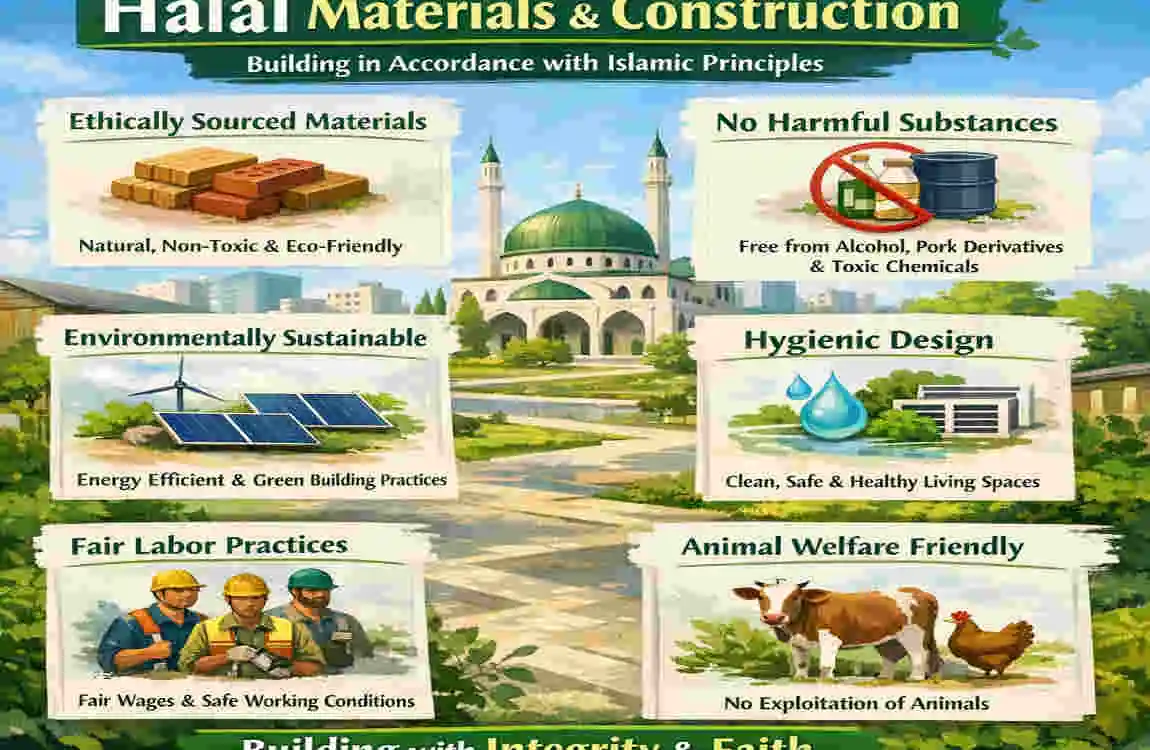
When people hear the phrase halal materials, they often think only about food. But in house construction, the idea is broader. It means choosing materials and products that are ethical, clean, safe, and in line with Islamic values of responsibility and care.
That includes everything from cement and paint to wood, tiles, sealants, and finishes. The goal is to build a home that is not only beautiful, but also honest, durable, and environmentally sensible.
Table: Recommended Materials for an Islamic House
ComponentRecommended OptionWhy It Works
Cement Standard quality Portland cement Strong, reliable, widely available
Paint Water-based low-VOC paint Cleaner indoor air and safer for families
Wood Sustainably sourced wood Ethical and environmentally responsible
Tiles Anti-slip porcelain or ceramic tiles Easy to clean and safer for wudu areas
Sealants Non-toxic sealants Better for indoor health
Insulation Energy-efficient insulation Helps comfort and reduces waste
Think Beyond the Label
Halal construction is also about honesty in the building process. That means fair labor, clean sourcing, transparent budgeting, and avoiding waste. A home built with care should reflect care in every stage.
If your contractor or designer suggests a cheaper shortcut that weakens quality, it may cost more later. A thoughtful Islamic house is built for long-term benefit, not short-term show.
Sustainability Is Part of Good Stewardship
Islam encourages responsibility with resources. That makes sustainability a natural fit for Islamic house design. Energy-saving windows, solar panels, efficient lighting, and water-conscious fixtures all help reduce waste.
This is good for the environment, the budget, and the spirit of the home. When a house uses resources wisely, it feels more balanced and more in line with faith-based living.
Work With Reliable Builders
Your contractor matters a great deal. Choose people who understand your goals, respect your priorities, and communicate clearly. You need a team that can handle both structure and values.
Before construction begins, walk through the plan carefully. Ask questions. Confirm room sizes. Confirm privacy needs. Confirm prayer orientation. This helps prevent problems later and keeps the project on track.
Plumbing and Wudu Facilities
Make Wudu Easy and Comfortable
A truly practical Islamic house should make wudu simple. If the washing area is awkward, cramped, or far from the prayer space, the daily rhythm of the house becomes harder.
A good solution is a dedicated wudu station near the prayer area or bathroom. It should include enough space for comfortable foot washing, good drainage, and materials that are easy to clean.
This does not need to be fancy. It just needs to be well planned.
Focus on Clean Water Flow
Plumbing design should support cleanliness and convenience. Pipes should be installed to minimise leaks and maintenance issues. Fixtures should be easy to use for children, adults, and older family members.
If possible, use separate water controls for washing areas to make the home easier to manage. Anti-slip flooring is also important around wet spaces.
Greywater and Garden Use
Some families also choose to reuse water responsibly for the garden, where local rules and safety allow it. This is a smart way to reduce waste and make the home more efficient.
Even small choices can help. A water-conscious bathroom or a well-designed wash area can make the house feel cleaner and more disciplined overall.
Electrical and Smart Technology Integration
Keep Technology Helpful, Not Distracting
Technology can support an Islamic household when used with purpose. The goal is not to make the home overly “smart” or filled with screens. The goal is to make daily worship and living easier.
For example, you might use:
- Soft prayer lighting
- Timers for outdoor lights
- Audio systems for Quran recitation
- Safe charging points in family areas
- Energy-saving fixtures throughout the home
These additions can improve comfort without changing the spirit of the house.
Plan Safe and Reliable Wiring
Electrical planning should never be an afterthought. A well-wired house is safer, more efficient, and easier to maintain. It also helps support things like fans, lights, air conditioning, and prayer devices without overload.
Surge protection is useful, especially where sensitive electronics are involved. Backup planning for power interruptions can also be helpful in many regions.
Use Light to Support Peace
Lighting matters more than many homeowners realize. Harsh lights can make a room feel stressful. Soft, warm lighting can make it feel calm and welcoming.
In an Islamic house, lighting should help the family pray, read, host guests, and relax. Good light creates comfort. It also makes the home feel more thoughtful and balanced.
Interior Design and Decor
Keep the Visual Language Respectful
Islamic interior design often uses geometric patterns, arabesques, calligraphy, and natural forms. These styles create beauty without turning the home into a place of distraction.
Instead of filling walls with noisy decor, you can use elegant pattern work and simple compositions. That keeps the room calm and meaningful.
Avoid Excessive Figural Decoration
Many Muslim families prefer to avoid decorative images of living beings in prominent places. Instead, they choose landscapes, floral forms, calligraphy, and abstract artwork. This approach keeps the space aligned with traditional values while still allowing creativity.
You do not need expensive decor to create a graceful home. A few well-chosen pieces can do much more than a room full of clutter.
Choose Colors That Support Calm
Colors shape mood. Earth tones, soft whites, warm neutrals, muted greens, and gentle blues often work well in an Islamic house. These shades feel calm and timeless.
Bright colours can still be used, but in moderation. The overall aim is balance. You want the rooms to feel alive without becoming overwhelming.
Use Decor That Supports Daily Worship
Think about where prayer mats will go. Think about where shoes will be stored. Think about a shelf for the Quran, tasbih, or books. When design supports habit, the family can live more comfortably.
This is the deeper value of Islamic decor. It is not simply about style. It is about helping the home function spiritually.
Furniture and Furnishings That Fit the Home
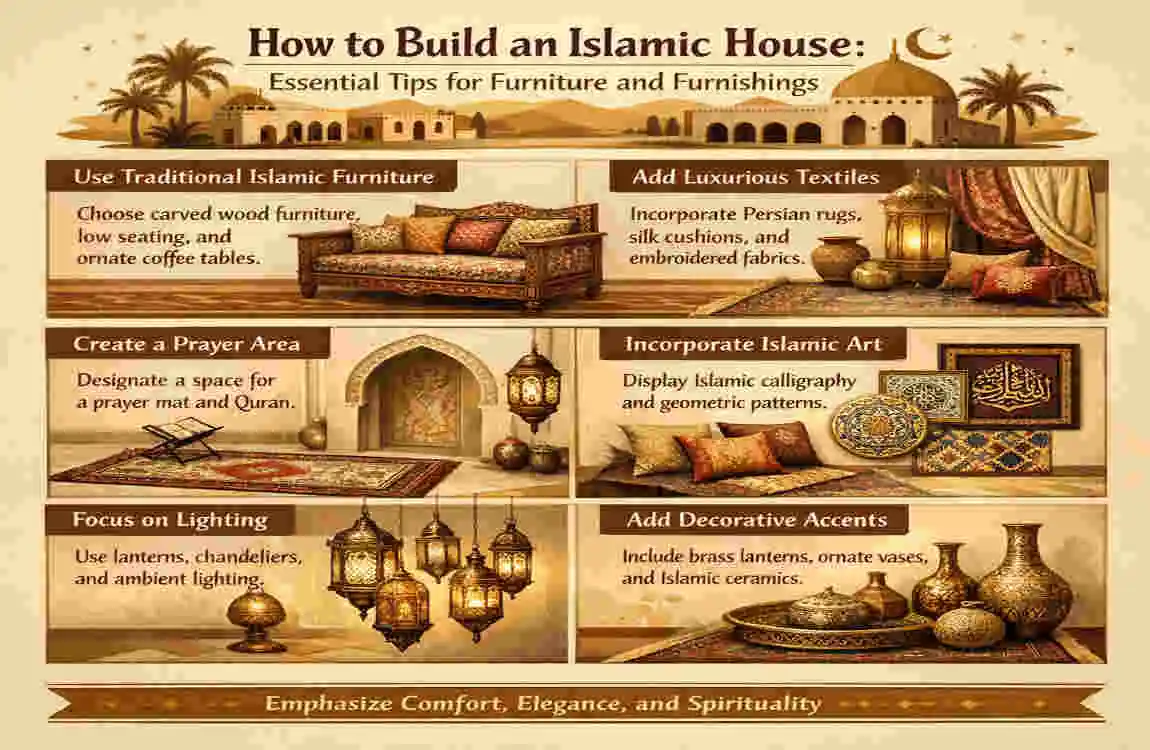
Choose Functional, Modest Furniture
Furniture in an Islamic house should feel comfortable, practical, and respectful. It does not need to be oversized or showy. Instead, it should serve the family well.
Low seating, simple sofas, and well-sized dining furniture often work beautifully. Built-in storage is especially useful because it keeps the home tidy and calm.
Plan for Guests and Family Together
A good home can host guests without making the family uncomfortable. Convertible sofas, separate guest seating, and flexible arrangements can help with this.
You may also want extra cushions, floor seating, or a flexible room that can serve multiple functions. This is especially helpful when the family hosts visitors often.
Storage Matters More Than People Think
Storage is one of the most underrated parts of an Islamic house. Shoes, prayer clothes, modest wear, cleaning items, books, and children’s belongings all need a place.
When storage is planned well, the house stays neat. And when the house stays neat, it feels more peaceful.
Landscaping and Outdoor Spaces
Bring Nature Into the Design
Islamic architecture has always had a close connection to nature. Courtyards, gardens, water features, shaded walkways, and planted areas all help the home feel alive and restful.
A garden can become a quiet reminder of beauty, mercy, and reflection. Even a small outdoor area can do a lot if it is designed thoughtfully.
Create Privacy Outdoors Too
Outdoor spaces should also respect modesty. Use hedges, walls, plants, or screens to keep the yard private. This lets the family enjoy fresh air without feeling exposed.
If you want to add a fountain, pool, or sitting area, place it in a spot that feels protected and calm. The goal is not display. The goal is serenity.
Useful Plants and Outdoor Features
Fruit trees, shade trees, and flowering plants can all add value to the home. They soften the landscape and make the house feel welcoming.
A few smart outdoor features include:
- Shaded seating
- Stone or tiled paths
- Water-saving irrigation
- Small herb or fruit gardens
- Private inner courtyards
These details bring the home closer to nature and make daily life more pleasant.
Budget and Timeline
What to Expect
The cost of building an Islamic house depends on size, location, finishes, labor, and custom features. A simple, well-planned home may cost less than a highly detailed one.
Instead of starting with decoration, start with structure, layout, plumbing, and privacy needs. These are the features that matter most.
Keep the Timeline Realistic
A typical home build may take several months, depending on complexity. If you are adding custom prayer areas, special cabinetry, or courtyard features, give the project enough time.
Rushing a home project often leads to mistakes. A thoughtful Islamic house deserves thoughtful planning.
Best Way to Save Money Without Losing Quality
If you want to stay within budget, focus on the essentials first:
- Strong layout
- Proper orientation
- Clean plumbing
- Good ventilation
- Durable materials
- Simple decor
You can always add extra details later. But if the core design is right, the house will already feel complete.
Common Mistakes to Avoid
Ignoring Privacy
One of the biggest mistakes is designing the house like a showroom instead of a family home. Too much openness can make people uncomfortable, especially when guests arrive.
Forgetting the Qibla
Another common mistake is failing to plan the prayer area properly. If the home is built without considering orientation, worship becomes less smooth and more awkward.
Overdoing Luxury
A home can be beautiful without being excessive. Too much ornament, too many costly features, or unnecessary display can distract from the house’s true purpose.
Poor Room Flow
If private areas are too exposed, the house loses its sense of dignity. Good planning prevents that problem from the start.
Weak Wudu or Bathroom Planning
If washing areas are poorly home designed, the family will feel the problem every single day. These small functional choices matter more than many homeowners expect.
FAQ
What makes an Islamic house different from a regular house?
An Islamic house is designed around privacy, cleanliness, modesty, family life, and prayer. It may look modern or traditional, but the layout and features are planned to support Islamic values in daily living.
Does an Islamic house need to face the Qibla?
Not every part of the home must face the Qibla. However, the prayer space should be oriented correctly whenever possible. That makes salah easier and more intentional.
Can a modern home still be an Islamic house?
Yes, absolutely. A modern home can still be an Islamic house if it includes the right values in its design. You can use modern finishes, smart technology, and contemporary styles while still protecting privacy and supporting worship.
Are halal materials more expensive?
Not always. In many cases, halal-friendly construction choices are simply safe, ethical, and practical. Some sustainable or low-toxicity materials may cost more at first. Still, they often save money over time because they last longer and support healthier living.
What is the best layout for an Islamic house?
A courtyard-centered layout works very well because it offers privacy, light, and natural airflow. It also allows you to separate guest areas from private family spaces, which is very important in Islamic house planning.
How can I make wudu easier at home?
The best way is to create a dedicated wudu area near the prayer space or bathroom. Use easy-clean surfaces, good drainage, anti-slip flooring, and enough room to sit or stand comfortably.
