
Thatched roofs have a special place in the UK. They look warm, timeless, and deeply tied to rural heritage. For many homeowners and buyers, a thatched cottage feels like a dream home. But one practical question always comes up: how long does a thatched house roof last uk?
a thatched roof usually lasts between 15 and 40 years, depending on the material, the roof design, the quality of the installation, and how well it is maintained. Some parts of the roof, like the ridge, wear out sooner and may need replacement every 10 to 15 years.
What Is a Thatched Roof? Understanding the Basics
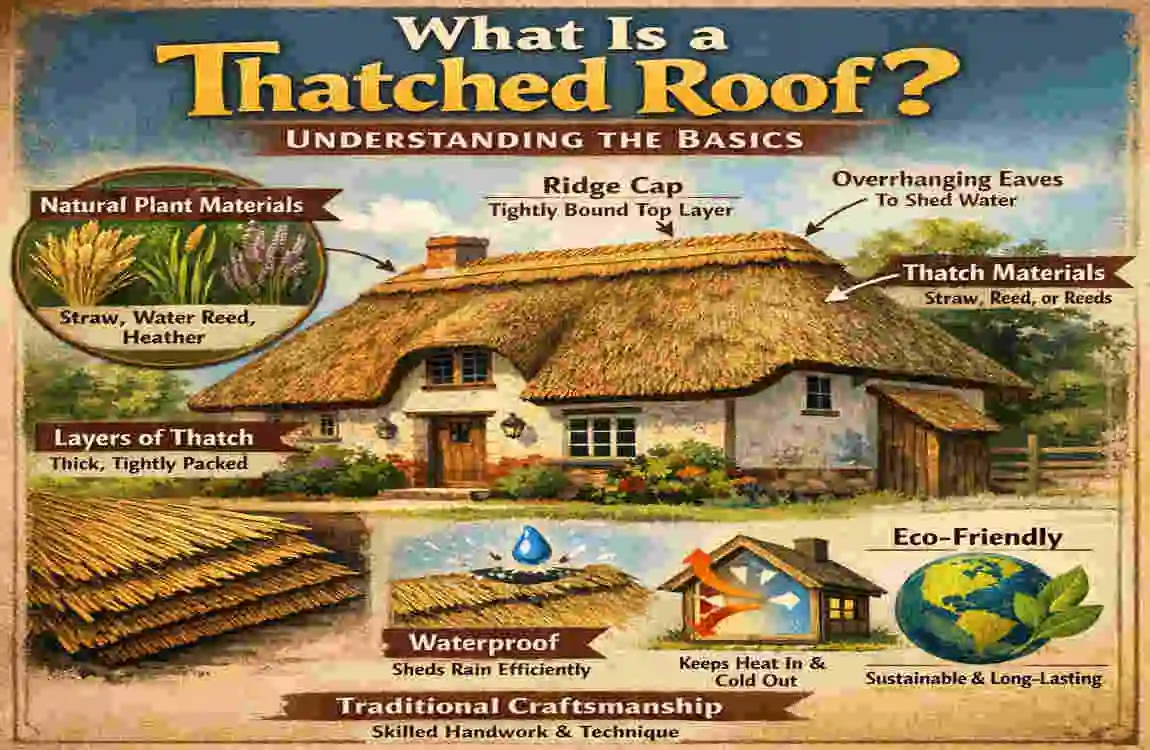
A thatched roof is a roof made from dry plant material layered tightly together so it sheds water and protects the home underneath. It is one of the oldest roofing methods still used today, and in the UK, it remains a strong part of architectural heritage.
Thatching is not just about looks. When done well, it creates a thick, insulating roof covering that helps keep a home warm in winter and cooler in summer. It also gives cottages and country homes their classic charm.
Common Materials Used in the UK
The most common thatching materials in the UK are:
- Water reed
- Long straw
- Combed wheat reed
Each material behaves a little differently. Some last longer, some need more care, and some suit certain regions better than others.
Water reed is often the most durable. It grows in wetland areas and produces a tough, dense finish. Long straw is softer in appearance and is often seen on older cottages, but it tends to wear faster. Combed wheat reed sits somewhere in the middle and is widely used because it balances appearance, durability, and cost.
Why Thatched Roofs Are Still Popular in the UK
Thatched roofs remain popular for several reasons.
First, they look beautiful. Many people feel that a thatched roof gives a home a story and a sense of place. Second, they can be highly insulating. Third, they connect modern living with traditional craftsmanship, which appeals strongly to heritage lovers.
For rural buyers and restoration enthusiasts, a thatched cottage often represents something special: a home with character, history, and individuality. That said, the beauty of a thatched roof also comes with responsibility. It must be looked after properly.
Traditional vs Modern Thatching Methods
Traditional thatching methods rely on old skills that have been passed down through generations. A skilled thatcher uses hand tools, careful layering, and a deep understanding of the material.
Modern thatching still respects these traditions, but it may use updated techniques, better protective measures, and improved fasteners or fixing systems. The goal is the same: to build a roof that drains water well, resists wear, and lasts as long as possible.
The best thatched roofs are usually the result of skill, care, and good materials working together.
How Long Does a Thatched House Roof Last in the UK? The Core Answer
So, how long does a thatched house roof last uk in real life?
The answer depends mostly on the material used.
Here is the typical lifespan by material:
Thatching MaterialTypical Lifespan in the UKNotes
Water reed 30–40 years Very durable, often longer in the right conditions
Combed wheat reed 25–35 years A strong middle-ground option
Long straw 15–25 years Traditional look, but usually shorter lifespan
Ridge section 10–15 years Wears faster than the main roof coat
The main coat of the roof is the bulk of the thatch that protects the house. The ridge is the topmost section, and it takes more direct weather exposure, so it usually needs attention sooner.
In simple terms, if the roof is well installed and maintained, a thatched roof can serve a home for decades. But no thatched roof lasts forever without care. Even the best one will need periodic repairs and partial replacement.
The Important Difference Between the Ridge and the Main Coat
Many people assume the whole roof will wear out at the same speed. In reality, that is not how thatching works.
The ridge is the most exposed part. It takes the full impact of rain, sun, frost, wind, and birds. Because of that, it often needs replacing much sooner than the rest of the roof.
The main coat can remain in good condition for many more years if the roof pitch is steep enough, the material is right, and maintenance stays consistent.
This is why you might hear a thatched roof described as “partly renewed” rather than fully replaced. In many cases, thatching work is gradual rather than all at once.
Factors That Affect the Lifespan of a Thatched Roof
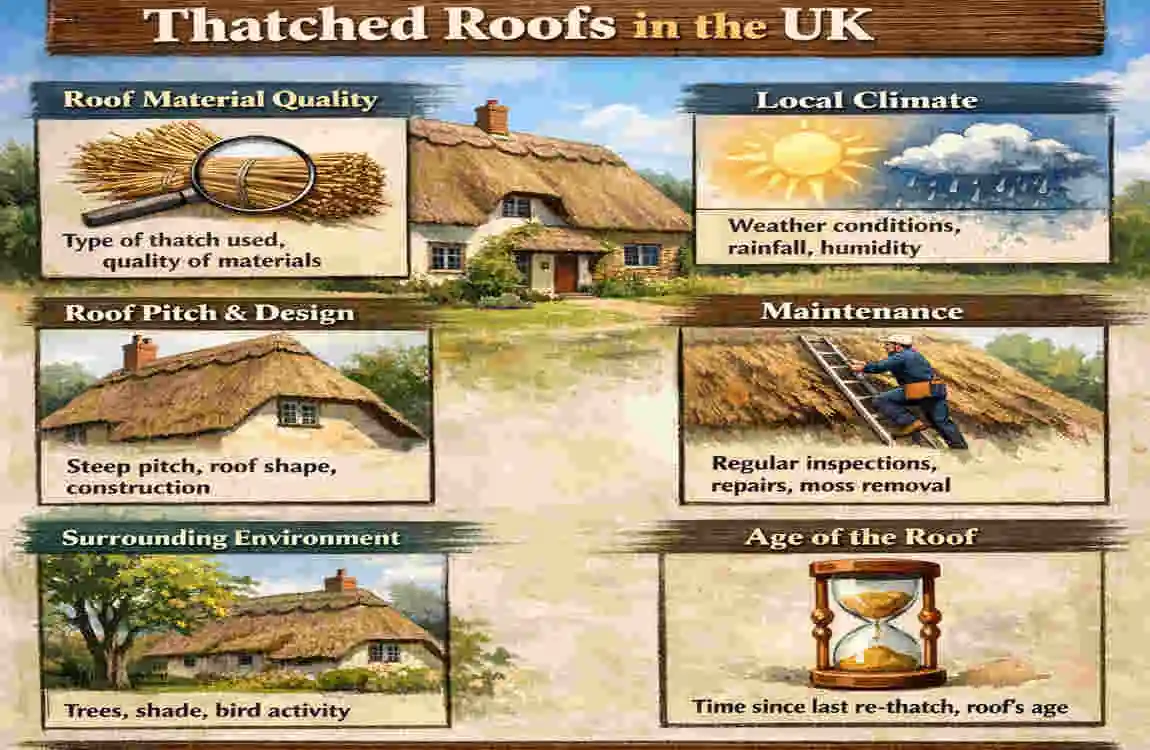
The lifespan of a thatched roof is not fixed. Two cottages built in the same village may age very differently. Why? Because several factors influence durability.
Type of Thatching Material
The material is one of the biggest factors.
Water reed usually lasts longest because it is dense and naturally resilient. It sheds water well and handles harsh weather better than softer materials. Combed wheat reed offers a solid balance between lifespan and appearance. Long straw creates a lovely traditional look, but it tends to break down sooner and may need more frequent upkeep.
If you are buying a thatched home or planning a re-thatch, the material choice will shape both the look and the long-term cost.
Roof Pitch and Design
The shape of the roof matters more than many people realise.
A steeper roof pitch helps water run off quickly. That means the thatch stays drier and lasts longer. A shallower roof can hold more moisture, which increases the risk of decay, moss growth, and early wear.
The design of the roof also matters. If the roof has awkward valleys, flat spots, or poor drainage, water may sit in places where it should not. That can shorten the roof’s life.
A well-designed thatched roof is not only attractive. It is also practical.
UK Weather Conditions
The UK climate can be tough on roofs. Thatched roofs face rain, wind, frost, damp air, and seasonal shifts throughout the year.
In coastal areas, salt-laden air and strong winds can increase wear. In colder inland areas, frost can create repeated freeze-thaw stress. In wetter regions, constant moisture can encourage moss and algae growth.
No matter where the house is located, weather exposure matters. A thatched roof in a sheltered rural setting may last longer than one exposed to strong Atlantic winds and heavy rain.
Quality of Installation
The quality of the original work has a huge impact on lifespan.
A roof installed by an experienced thatcher with the right materials and proper technique is more likely to last longer. Poor artistry can lead to uneven layers, weak drainage, exposed areas, and early deterioration.
A good thatcher understands how to place the thatch tightly, maintain the correct density, and shape the roof so water runs off efficiently.
In other words, a roof is only as good as the skill behind it.
Maintenance Frequency
Maintenance makes a major difference. A roof that is checked regularly will almost always outlast one that is ignored.
Small problems can be handled early before they turn into expensive repairs. Loose thatch, damaged ridge sections, and minor leaks are much easier to fix when caught in time.
If maintenance is neglected, the roof can thin out faster, absorb more moisture, and become vulnerable to structural issues.
Regular care does not just extend lifespan. It saves money too.
Signs Your Thatched Roof Needs Repair or Replacement
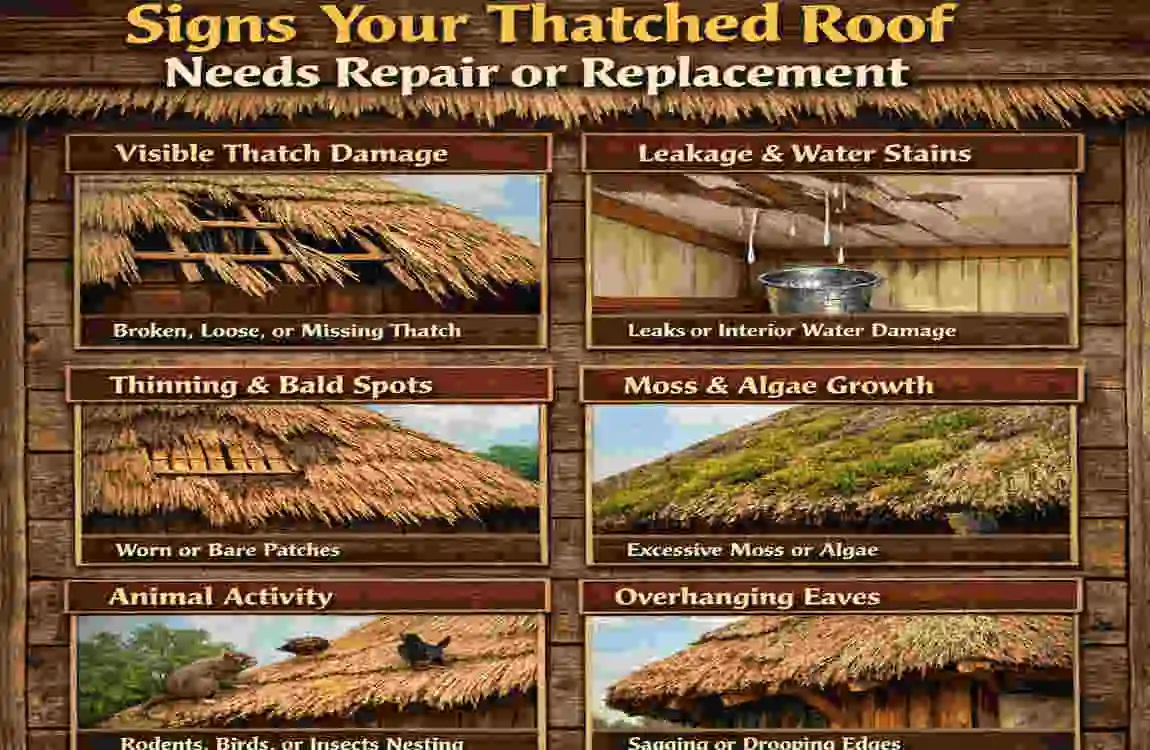
A thatched roof does not usually fail all at once. It gives warning signs first. If you know what to look for, you can act early and protect the structure of the home.
Watch for these signs:
- Moss and algae growth
- Water leaks or damp patches indoors
- Thinning, patchy, or sagging thatch
- Damage from birds or other animals
- Ridge deterioration
- Loose material falling from the roof
Moss and Algae Growth
A little moss is not always a disaster, but heavy growth can hold moisture against the thatch. Over time, this can speed up decay and reduce lifespan.
Water Leaks or Damp Patches
If you notice damp ceilings, brown marks, or water coming through after rain, the roof may be failing in one area. This should be checked quickly.
Thinning or Sagging Thatch
The roof should look even and full. If some parts look thin or sunken, it may mean the thatch is wearing down.
Animal or Bird Damage
Birds, rodents, and insects can all cause damage. They may pull at the material, create holes, or disturb the layers that keep the roof weatherproof.
Ridge Deterioration
The ridge often shows age first. Cracked, flattened, or missing ridge material is a clear sign that work may be needed soon.
How to Extend the Life of a Thatched Roof
A thatched roof can last longer than many people expect if it is treated with care. The goal is simple: keep moisture out, catch problems early, and protect the roof from unnecessary stress.
Regular Inspections
Inspect the roof at least once a year, and ideally after severe weather. A trained eye can spot issues early, even when the roof still looks fine from the ground.
Annual checks are one of the easiest ways to extend the life expectancy of a thatched cottage roof.
Proper Ventilation
Good ventilation helps prevent trapped moisture. If damp air stays inside the structure, the thatch can break down more quickly.
A breathable roof setup is important. This is especially true in older homes where airflow may already be limited.
Removing Moss and debris
Leaves, twigs, moss, and other debris can retain moisture. That is not good for thatch.
Cleaning should be done carefully. Harsh scrubbing or aggressive cleaning methods can damage the roof. The aim is to remove waste without disturbing the material structure.
Timely Ridge Replacement
Because the ridge wears faster, replacing it on time helps protect the rest of the roof. Waiting too long can allow water to get deeper into the roof structure.
A ridge replacement is often much cheaper than allowing widespread deterioration to spread across the full roof.
Pest Control Measures
Birds and rodents can become a real problem if they nest in or around a thatched roof. Simple pest control steps can make a big difference.
Keeping the area around the roof tidy, checking for entry points, and dealing with nesting activity early can help protect the roof’s condition.
Cost of Maintaining and Replacing a Thatched Roof in the UK
The cost of thatched roof UK maintenance can vary widely. The price depends on roof size, material, access, location, and the amount of work required.
Small maintenance tasks might be relatively affordable, while full re-thatching is a major project. Because thatched roofs are specialist work, labor costs play a big role in the final cost.
Here is a rough guide to typical costs:
Type of WorkTypical UK Cost RangeNotes
Annual inspection £100–£300 Can vary by region and roof access
Minor patch repairs £300–£1,000+ Depends on extent of wear
Ridge replacement £2,000–£6,000+ Size and style matter
Partial re-thatch £8,000–£20,000+ Based on area and material
Full re-thatch £20,000–£50,000+ Larger homes can cost more
These figures are only general estimates. A large or complex cottage may cost much more, while a smaller roof may cost less.
What Influences the Price?
Several things affect cost:
- Location: Rural access, travel time, and local labour rates can raise costs.
- Material choice: Water reed usually costs more than long straw, but it may last longer.
- Roof size and shape: Bigger roofs require more material and labor.
- Condition of the existing roof: More damage means more work.
- Access and scaffolding needs: Difficult access can increase the price.
If you own a thatched home, it is wise to budget for ongoing work rather than waiting until a big repair becomes unavoidable.
Thatched Roof vs Modern Roofing: Lifespan Comparison
Many homeowners compare thatch with more common roof types like tile and slate. The comparison is useful because it shows where thatch stands in terms of durability, maintenance, and long-term value.
Roof TypeTypical LifespanMaintenance LevelMain Strength
Thatched roof 15–40 years High Heritage charm and insulation
Clay tile roof 50–100 years Medium Strong balance of durability and cost
Slate roof 75–150 years Low to medium Very long life and weather resistance
Pros of Thatched Roofs
Thatched roofs have several strong points.
- They offer excellent insulation
- They create a unique, traditional look
- They can be eco-friendly when sourced responsibly
- They help preserve UK heritage character
Cons of Thatched Roofs
That said, they also come with clear challenges.
- They need regular maintenance
- They can be more expensive to insure
- They may face higher repair costs
- They need specialist skilled labour
For many owners, the charm outweighs the drawbacks. But it is important to be realistic.
Are Thatched Roofs Worth It in the UK Today?
For the right homeowner, yes, they can absolutely be worth it.
A thatched roof is not only a covering. It is part of the home’s identity. It adds character, beauty, and a strong sense of place. Many buyers are drawn to thatched cottages because they feel special and rare.
There are also practical benefits. A thick thatched roof can help with insulation, which may support comfort inside the home. In a well-managed property, thatch can be an excellent long-term choice.
But it is not the best option for everyone. If you want a very low-maintenance roof, a thatched house may not suit your lifestyle. If you want to avoid ongoing specialist care, traditional tiling or slate may be easier to maintain.
So the real question is not just whether thatch lasts. It is whether you are willing to care for it properly.
Insurance Considerations
Insurance is an important part of the decision.
Thatched homes can sometimes cost more to insure because insurers see them as specialist properties. Fire risk, repair costs, and access to trained tradespeople may all affect the Premium.
This does not mean insurance is impossible. It just means homeowners should shop carefully, keep the roof in good condition, and follow sensible safety measures.
UK Regulations and Insurance for Thatched Roofs
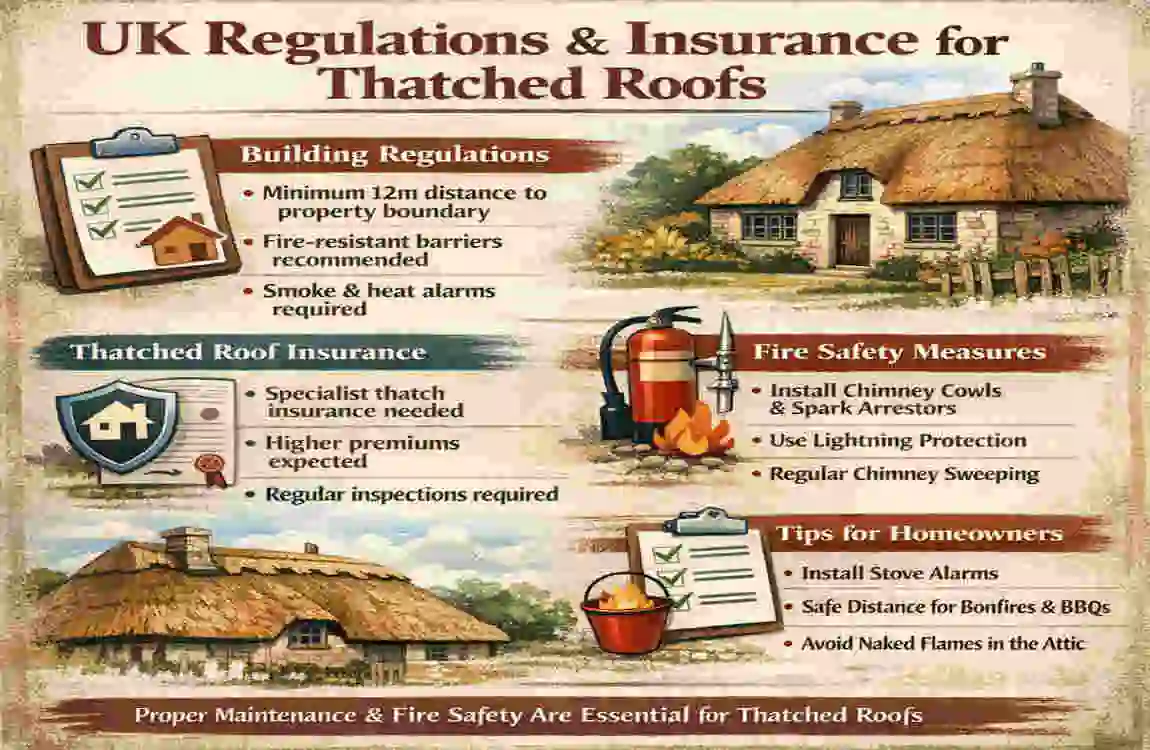
Thatched properties can be subject to extra rules, especially if they are listed buildings or in conservation areas. If you are buying or renovating one, you may need permission before making changes.
Planning Permissions for Listed Buildings
If the house is listed, you may need approval before altering the roof, changing materials, or making structural changes. The aim is to protect the building’s historic character.
Fire Safety Requirements
Fire safety is often taken seriously with thatched homes. Common precautions may include:
- Chimney maintenance
- Spark arrestors
- Safe distance from bonfires or open flames
- Electrical safety checks
- Careful placement of outdoor heat sources
Insurance Premiums and Challenges
Insurance providers may ask detailed questions about the roof’s age, condition, material, and maintenance history. Keeping records of inspections and repairs can help show that the property is well cared for.
Common Myths About Thatched Roof Lifespan
There are plenty of myths about thatched roofs. Some people assume they rot quickly or are almost impossible to maintain. Others think they must be replaced constantly.
Let’s clear up the most common myths.
Myth: Thatched Roofs Rot Quickly
This is not true when the roof is built and maintained properly. A thatched roof can last for decades. The key is to keep moisture under control and fix problems early.
Myth: Thatched Roofs Are Unsafe
A thatched roof is not automatically unsafe. Like any roof, it must meet certain standards and be properly maintained. Fire risk exists, but good practices can significantly reduce it.
Myth: They Need Constant Replacement
That is also false. In many cases, only parts of the roof need attention at a time. The ridge may be replaced well before the rest of the roof.
In short, thatched roof lifespan UK is not as short as many people think.
How to Choose the Right Thatcher in the UK
Choosing the right professional matters more than many homeowners realise. A skilled thatcher can make the difference between a roof that performs well for decades and one that causes problems too soon.
Look for Experience and Training
Ask about experience with the specific material your roof is made of. Water reed, long straw, and combed wheat reed each require different handling.
Check Their Portfolio
A good thatcher should be able to show examples of previous work. Photos of completed roofs can tell you a lot about quality and style.
Ask Practical Questions
Before hiring, ask:
- What material do you recommend for my roof?
- How long do you expect the work to last?
- What maintenance will be needed afterward?
- How do you handle ridge replacement?
- What signs should I watch for later?
Look for Reliable Communication
A professional who explains things clearly and answers questions patiently is usually easier to work with. Since thatching is a long-term investment, trust and communication matter.
Case Study: Typical Lifespan of a UK Thatched Cottage
Let’s imagine a typical thatched cottage in a rural English village.
The roof is installed with combed wheat reed, and the thatcher uses a steep pitch to help rain run off quickly. The homeowner arranges annual inspections and fixes small issues early. The ridge is replaced every 12 years, and moss is kept under control.
Because the property is well-maintained, the roof performs well for many years. The main coat may last more than 30 years before major work is needed. Some sections may need spot repairs along the way, but the roof remains sound.
Now compare that with a similar cottage where the roof is ignored. Moisture builds up, ridge wear is left too long, and animals cause damage. In that case, the roof could need major work much sooner.
This simple comparison shows the truth: maintenance often matters as much as the material.
FAQs About Thatched Roof Lifespan
How long does a thatched roof last without maintenance?
Without maintenance, a thatched roof may deteriorate much faster. While the material itself may last for decades, neglect can significantly shorten its lifespan. Small issues turn into bigger ones when left alone.
Do thatched roofs need replacing completely?
Not always. Many thatched roofs are repaired in stages. The ridge may be renewed before the rest of the roof. In some cases, a full re-thatch is needed, but partial work is common.
How often should the ridge be replaced?
Usually every 10 to 15 years, though this depends on exposure, material, and maintenance. The ridge wears faster because it sits at the top of the roof and is more exposed to weather damage.
Are thatched roofs durable in heavy rain?
Yes, if they are built correctly and kept in good condition. A steep pitch and healthy thatch help water run off efficiently. Problems usually come when the roof is thin, damaged, or poorly maintained.
Can you repair instead of replace?
Yes, often you can. Many issues can be fixed with patching, ridge replacement, or partial re-thatching. A skilled thatcher can help decide whether repair is enough or whether larger work is needed.
