

Have you ever stepped out of a refreshing shower only to be greeted by a bathroom mirror that looks more like a wall of grey fog? Or maybe you’ve noticed those tiny, unsightly black spots starting to creep up your painted ceiling corners. If that sounds familiar, you aren’t alone. These are the tell-tale signs that your bathroom isn’t breathing the way it should.
Here is a startling fact: 80% of bathroom ventilation issues stem from wrong fan placement, not necessarily the fan itself. You could buy the most expensive, high-tech fan on the market, but if you install it in the wrong spot, it is essentially just making noise and wasting electricity.
Understanding Bathroom Ventilation Basics
Before we drill any holes, let’s understand how airflow actually works. Think of air like water; it wants to flow from high pressure to low pressure, and it takes the path of least resistance.
How Extractor Fans Work
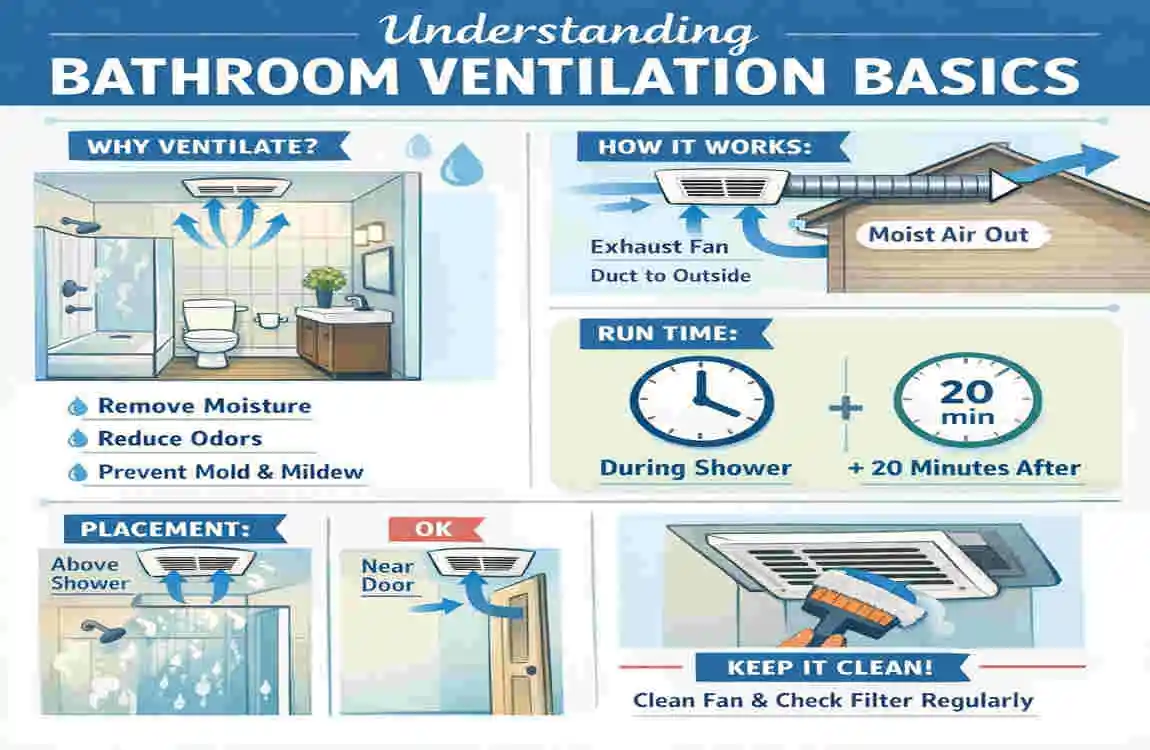
An extractor fan acts as a pump. It pulls stale, humid air out of the room and pushes it outside through a duct (a pipe). But for air to leave the room, fresh air must enter to replace it. This is usually through the gap under your bathroom door.
If you place the fan right next to the door, the fresh air comes in under the door and gets sucked straight out by the fan. The rest of the room—where the shower and steam are—remains untouched. This is called “short-circuiting” the airflow.
Understanding CFM
You will see the term CFM (Cubic Feet per Minute) often. This measures the fan’s power.
- Higher CFM: Moves more air (needed for large bathrooms).
- Lower CFM: Moves less air (fine for powder rooms).
However, even a high CFM fan fails if the placement doesn’t encourage air to flow across the wet areas.
Best Places to Put an Extractor Fan in a Bathroom: Top Recommendations
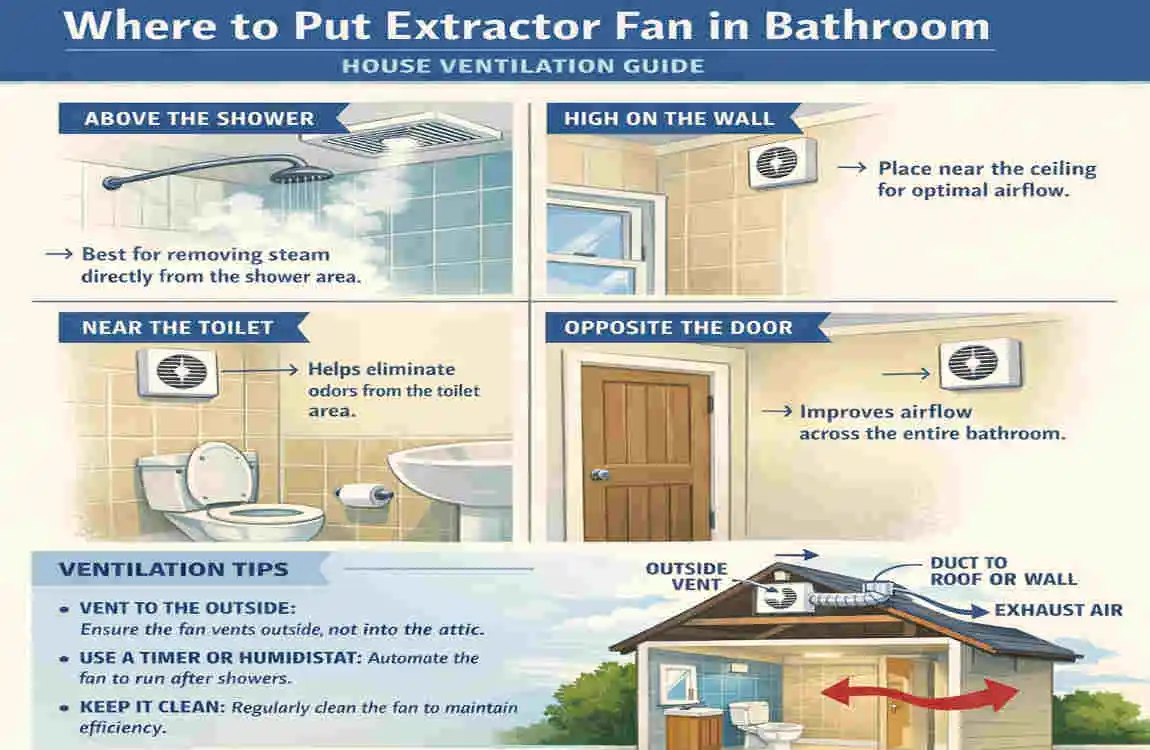
Now, let’s get to the core of the issue. You have your fan, and you have your drill—where does it go? The optimal extractor fan position for ventilation depends on your specific bathroom layout, but there are some golden rules.
Ceiling-Mounted Above the Shower or Bath (The Gold Standard)
For most modern homes, this is the ideal location. Since hot air and steam naturally rise, catching it at the highest point before it spreads is the most efficient strategy.
- Height: Ideally, your ceiling is standard height (around 2.1m to 2.4m).
- The Logic: By placing the fan directly over the source of the steam (the shower or tub), you extract the moisture immediately.
- Pros: Captures steam at the source: It stops the fog before it reaches the mirror.
- Discreet: Flush-mounted ceiling fans look cleaner and blend in with lighting.
- Efficiency: Requires less runtime to clear the room.
- Cons:Ducting: You need roof space or a ceiling void to run the ducting. If you live in a flat with a concrete ceiling, this might not be possible.
- Safety: You must use a fan with a specific IP (Ingress Protection) rating suitable for wet zones to avoid electrical shocks.
Wall-Mounted Opposite the Air Source
If you cannot install a fan in the ceiling, the wall is your next best bet. However, the specific wall matters immensely.
- Position: You should install the fan on the external wall opposite the replacement air source (usually the bathroom door).
- Height: Aim for it to be as high as possible, ideally 15-30cm below the ceiling or above the showerhead height.
- The Logic: This creates a cross-ventilation stream. Fresh air enters under the door, travels across the entire room (picking up steam along the way), and exits through the fan.
- Pros: Short Duct Runs: If it’s on an external wall, you vent it straight out.
- Easy install: Often easier for retrofitting in older homes.
- Cons:Appearance: It is more visible than a ceiling fan.
- Wind Pushback: If it’s a very windy day, wind can sometimes push back against wall fans if they don’t have a backdraft shutter.
Window-Mounted Fans
This is often the solution for small bathrooms or older buildings where cutting holes in walls isn’t an option.
- Best For: Small bathrooms, renters (sometimes), or glass-heavy rooms.
- Keywords: This is often the “best place for bathroom extractor fan near window” situation.
- Pros: No need for masonry work; utilises existing openings.
- Cons: You lose the view or light from that part of the window; it can be noisier; it requires a glazier to cut the glass professionally.
Avoid These Common Mistakes
Knowing where not to put the fan is just as important. Avoid these spots:
- Too Low: Steam rises. A fan near the floor will not catch the humidity.
- Near the Door: As mentioned, this causes short-circuiting. The humid air in the shower area will never move.
- Directly Above a Radiator/Heater: You don’t want to suck out all your expensive heat immediately!
Step-by-Step Guide: Installing Your Bathroom Extractor Fan
So, you have picked the spot. Now comes the installation. Whether you are a DIY enthusiast or want to know the process to supervise a contractor, this guide covers the bathroom extractor fan installation height and steps.
Tools and Materials Needed
Before you start, gather your gear:
- Power Drill with a core drill bit (masonry) or hole saw (drywall).
- Screwdrivers (Philips and flathead).
- Cable/Pipe Detector (Crucial! Don’t drill into pipes).
- The Fan Unit (Brands like Vent-Axia, Manrose, or Panasonic are reliable).
- Flexible Ducting (and jubilee clips to secure it).
- External Grille (to cover the hole on the outside of the house).
Preparation and Placement Tips
- Assess the Room: Identify your “Zones.” Zone 1 is directly inside the shower cubicle. Zone 2 is the area stretching 0.6m outside the shower. Ensure your fan is rated for the zone you chose.
- Mark the Position: Use a pencil to mark the centre point of the hole. If installing on the ceiling, go into the attic first to ensure there are no joists blocking that spot.
- Check for Obstructions: Use your detector to check for hidden wires or pipes in the wall or ceiling.
Cutting and Ducting
- Drill the Pilot Hole: Drill a small hole all the way through to the outside to mark your exit point.
- Cut the Main Hole: Using your core drill or hole saw, cut the large hole for the fan housing.
- Insert the Ducting: Slide your flexible ducting through the hole.
- Attach the External Grille: Go outside and screw the grille over the duct opening. This prevents birds and rain from entering.
Wiring and Testing
- Isolate Power: Turn off the mains electricity at the fuse box. Never work on live wires.
- Wiring: Connect the fan according to the manufacturer’s diagram. This usually involves a Live, Neutral, and sometimes a Switched Live (if you want it to turn on with the light).
- Secure the Fan: Screw the fan unit into the wall or ceiling plugs.
- Test: Turn the power back on. Hold a single square of toilet paper up to the fan. If the suction holds the paper in place, your fan is working!
Choosing the Right Extractor Fan Size and Type
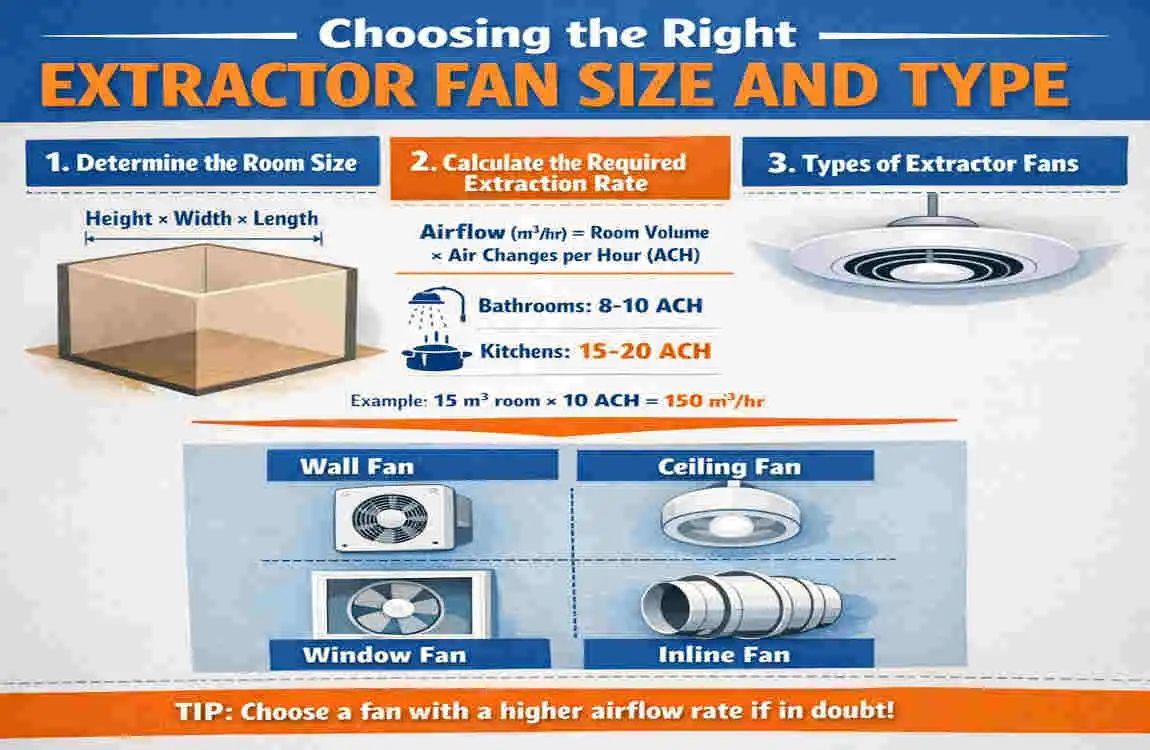
Not all fans are created equal. Buying a tiny fan for a huge main bathroom is like trying to empty a swimming pool with a teaspoon. Use this table to find the right size extractor fan for bathroom layouts.
Bathroom Size Recommended CFM Fan Type Price Range (Est.)Best Use Case
Small (<5m²) 50-80 CFM Inline or Axial $50 – $100 Powder rooms, half-baths.
Medium (5-10m²) 80-120 CFM Ceiling Mounted $100 – $200 Standard family bathrooms.
Large (>10m²) 120+ CFM Centrifugal / Wall $200+ Master baths, wet rooms.
Fan Types Explained
- Axial Fans: Standard fans that connect directly through a wall. Good for short distances.
- Centrifugal Fans: These generate more pressure. They are essential if your ducting is long (over 1.5 meters) or has bends, as they can push air harder.
- Inline Fans: These sit inside the ducting in the loft, not in the bathroom ceiling itself. They are incredibly powerful and much quieter because the motor isn’t in the room with you.
Features to Look For
- Timer: Keeps the fan running for a set time (e.g., 15 mins) after you leave the room to clear the steam fully.
- Humidistat: A smart feature that turns the fan on automatically when it detects moisture in the air.
- Noise Level: Look for fans labelled “Silent” or under 25-30dB if you enjoy peaceful baths.
Legal and Building Code Requirements for Fan Placement
Nobody likes red tape, but building codes exist to keep your home safe and rot-free.
- Extraction Rates: Most codes (like the UK Building Regs Part F) require a minimum extraction rate. For a bathroom with a shower, this is typically 15 litres per second (54m³/hr).
- Electrical Zones: As mentioned, electricity and water don’t mix.
- Zone 0: Inside the bath/shower. Requires 12V low-voltage fans (SELV).
- Zone 1: Directly above the bath/shower up to 2.25m. Requires IP45-rated fans or higher.
- Zone 2: The area stretching 0.6m from the bath.
- Make-up Air: Some US codes require that if a fan is very powerful, you must have a dedicated vent to bring fresh air in, so you don’t depressurise the house.
Always check your local extractor fan building regulations before purchasing.
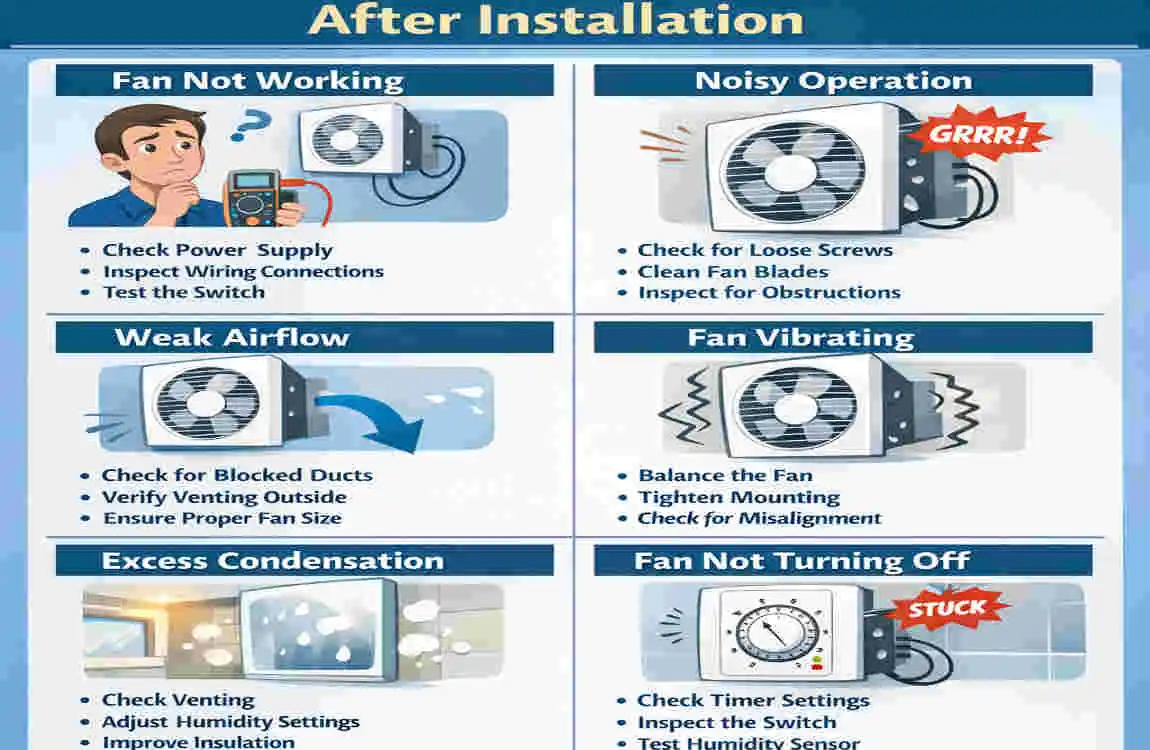
Troubleshooting Common Extractor Fan Issues After Installation
You installed the fan, but something feels off. Here are common issues and how to fix them.
The Fan is Too Noisy
- Cause: Usually caused by loose screws, vibration against the drywall, or ducting that is too tight/bent.
- Fix: Check the mountings. Use rubber washers to dampen vibration. Straighten the ducting.
The Fan Isn’t Clearing the Steam
- Cause: The fan might be underpowered (low CFM) for the room size, or the “makeup air” path is blocked (e.g., the gap under the door is too small).
- Fix: Ensure there is a 10mm gap under the bathroom door. Check the external grille for blockages like bird nests.
Cold Air is Coming IN Through the fan.
- Cause: Backdraft. The wind outside is blowing air back down the pipe.
- Fix: install a backdraft shutter. This is a simple flap inside the duct that opens when the fan blows out but snaps shut when the fan stops.
Condensation Persists on Walls
- Cause: The fan turns off too soon.
- Fix: Switch to a model with a timer or humidity sensor so it keeps running until the job is done.
Maintenance Tips to Keep Your Fan Running Efficiently
We often install these devices and forget about them for a decade. However, a dirty fan is a fire hazard and a useless noise machine.
- Vacuum it: Once every 3-6 months, take the plastic cover off. You will likely see a thick ring of grey dust. This dust weighs down the blades and strains the motor. Vacuum it out carefully.
- Wash the Cover: The plastic grille can usually be washed in warm soapy water. Dry it thoroughly before snapping it back on.
- Check the Vent: Once a year, go outside and check the external vent. Make sure leaves or overgrown ivy haven’t blocked the airflow.
Advanced Options: Smart Fans and Whole-House Ventilation
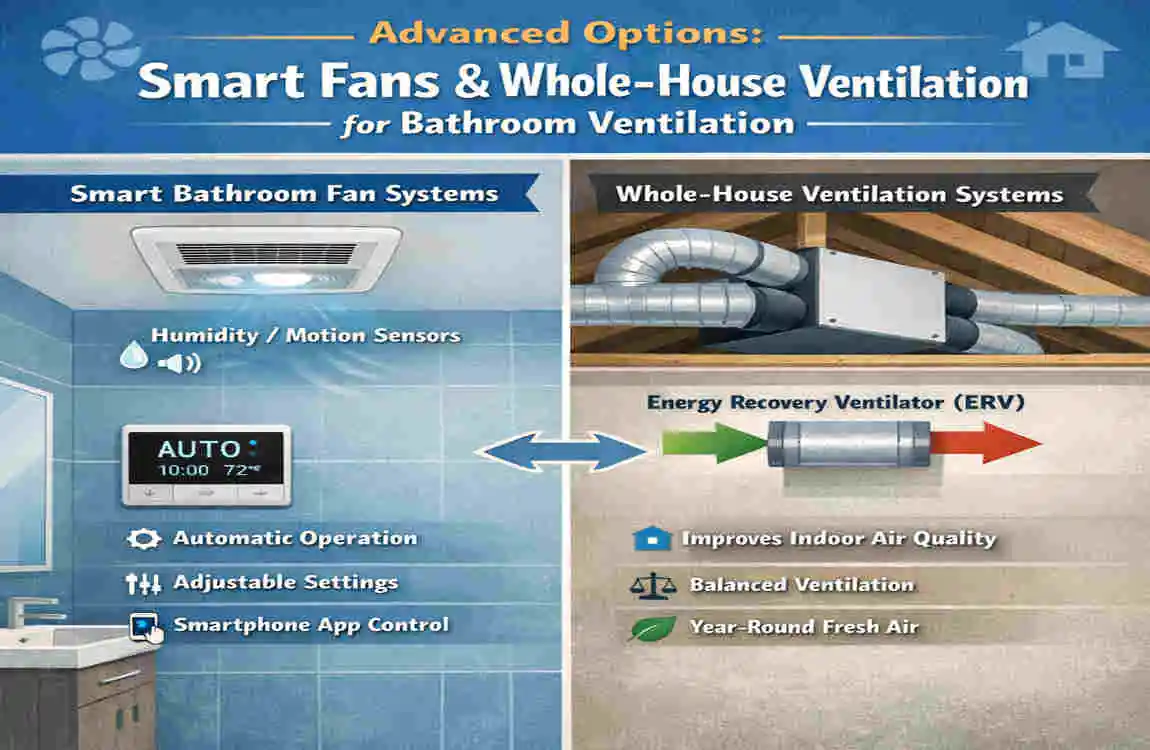
If you are renovating a high-end home or love technology, look beyond the standard white plastic fan.
Smart Fans: New models connect to apps on your phone. They can monitor air quality over time, track humidity spikes, and even run silently at a low speed constantly (trickle ventilation) to keep air fresh 24/7.
Whole-House Ventilation (MVHR): Instead of separate fans in every wet room, this system uses a central unit in the attic. It extracts stale air from bathrooms and kitchens, extracts the heat from that air, and uses it to warm incoming fresh air. It’s highly energy-efficient but requires professional installation.
Where to Put Extractor Fan in Bathroom: Quick FAQ
Q: What is the absolute best location for a bathroom extractor fan? A: The ideal spot is on the ceiling, directly above the shower or bathtub. Steam rises, so catching it at the source before it spreads to the rest of the room is the most efficient method.
Q: Where should I put the fan if I can’t install it in the ceiling? A: Install it on an external wall, as high up as possible. Crucially, place it opposite the bathroom door. This creates a “cross-flow” of air: fresh air enters under the door, sweeps across the room, and exits through the fan.
Q: Can I install an extractor fan directly inside the shower cubicle? A: Yes, but safety is key. You must use a specialized fan rated for “Zone 1.” Look for a fan with an IP45 rating (or higher) or a low-voltage (SELV) model to prevent electrical shock.
Q: Where should I strictly AVOID placing the fan? A: Avoid these three spots:
- Near the door: The fan will just suck out the fresh air entering the room, leaving the steam trapped in the shower area.
- Too close to a window: If the window is open, the fan will pull air in from the window and blow it straight back out, ignoring the damp air in the room.
- Low down on the wall: Since heat and steam rise, a low fan will struggle to remove moisture effectively.
Q: Does the fan need to vent directly outside? A: Yes. Never vent moisture into an attic, a crawlspace, or a wall cavity. The humid air will condense on building materials, causing rot and structural mold damage. It must always duct to the open air outside.
