

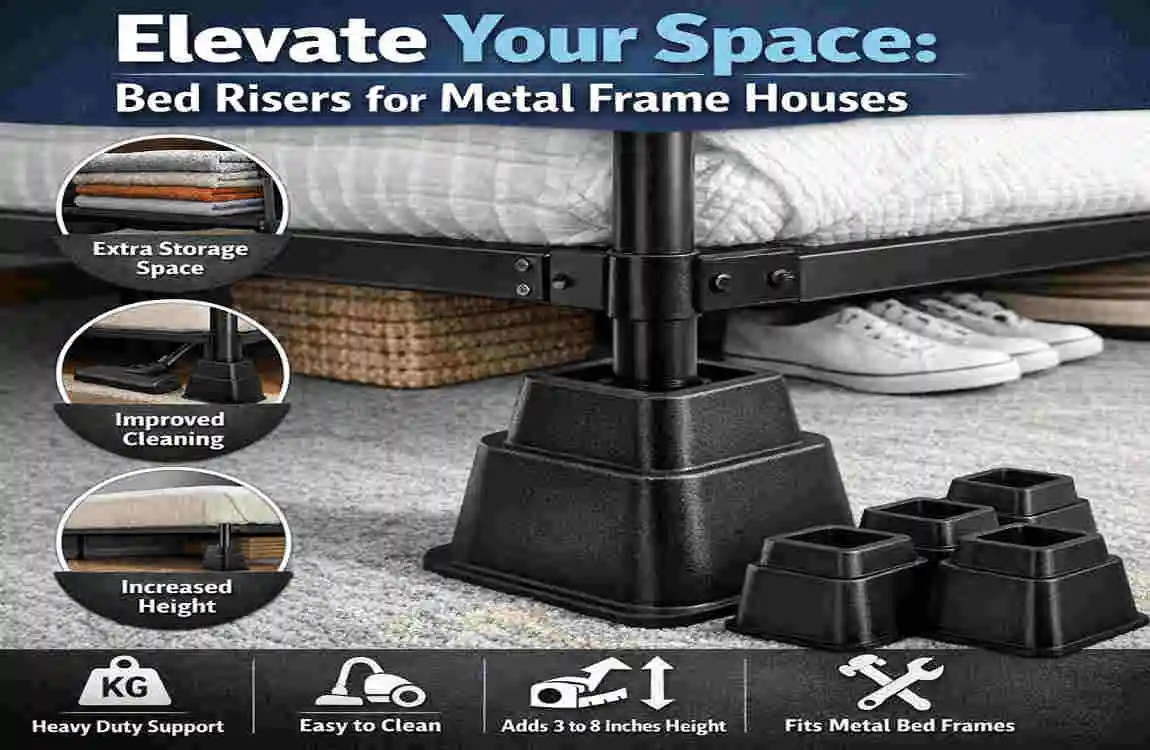
If you have ever looked at your low metal bed and thought, “Can you use bed risers house with metal frame?” the short answer is yes. In most cases, bed risers work very well with metal frame beds, as long as you choose the right type and install them properly.
In many modern homes, especially when space is tight, metal-frame beds are popular because they are affordable, practical, and easy to move. But they also sit low to the ground. That low height can make your room feel crowded, reduce storage space, and even make cleaning harder. Bed risers solve all of that.
Why Bed Risers Are a Game-Changer for Metal Frame Beds
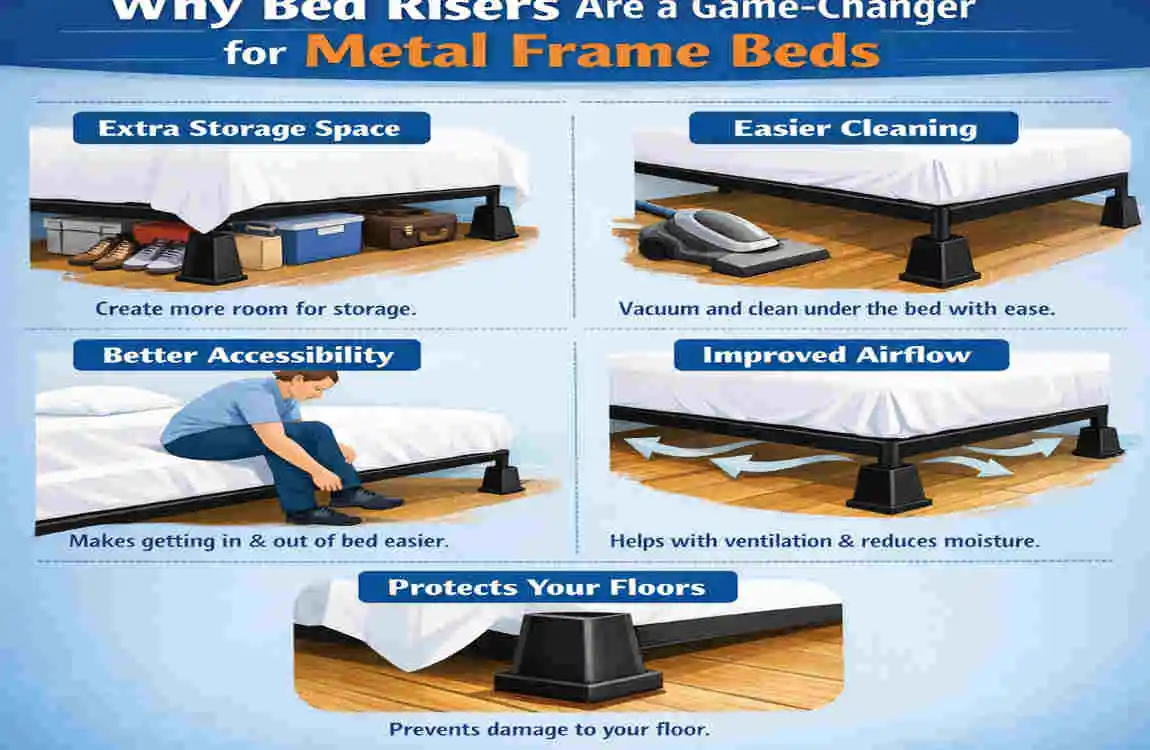
Bed risers may look small, but they can change the way a room works. That is especially true for metal frame beds, which are already known for being simple and functional. Once you raise them, they become even more useful.
More Storage in Small Rooms
One of the biggest reasons people use bed risers is storage.
When a bed sits low, the space underneath often goes to waste. You may not be able to fit proper boxes, bags, or organizers under it. But once you lift the bed by 3, 6, or even 12 inches, that hidden area becomes valuable storage space.
This is a big help in smaller city homes where every inch matters. You can keep seasonal clothes, extra bedding, shoes, travel bags, or even documents under the bed. For families trying to stay organized without buying more furniture, that extra space can make life much easier.
Better Airflow and a Fresher Room
Another benefit is airflow.
Beds that sit too close to the floor can trap dust and impede airflow. That often makes the area under the bed feel stuffy and harder to clean. When you raise the bed, air can move more freely. That can help the room feel fresher and less cramped.
This is helpful in homes where dust builds up quickly. It can also make a room feel healthier and easier to maintain. If you use a fan or air conditioner often, better airflow under and around the bed can make the whole room feel more balanced.
A Better Look Without Buying a New Bed
Bed risers can also improve the look of your bedroom.
A low metal bed sometimes looks too plain or unfinished, especially if the room has tall wardrobes, curtains, or high walls. Raising the bed gives it more presence. It can look more modern, more balanced, and more intentional.
That is one reason many people use risers in guest rooms, rental homes, and apartments. It is a low-cost change that makes the room feel more polished without a major renovation.
Why Metal Frames Work So Well with Risers
Metal frames are often a good match for risers because they are usually lighter and more uniform than some wooden frames. Many have straight legs or clear support points, which makes placement easier.
That said, the frame must still be sturdy. A metal bed that is bent, loose, or poorly welded should be repaired before you add risers. The risers should support the frame, not hide a problem.
The key idea is simple: a strong metal frame plus the right risers can create a safer, more useful bed setup.
Can You Use Bed Risers in a House with Metal Frame?
Yes, you can use bed risers in a house with a metal frame, and in many cases, they are a smart choice.
The important part is not just whether the risers fit. It is whether they match the leg shape, the frame weight, and the floor surface. When those details line up, bed risers can work very smoothly.
The Short Answer: Yes, If You Match the Right Type
If your metal bed has standard legs, stable joints, and a proper weight rating, bed risers can usually be used without trouble. The risers should cradle the leg securely, not just sit loosely under it.
That means you need to check a few things before buying:
- Leg shape: round, square, or flat-bottomed
- Leg width: the riser should fit without forcing
- Weight capacity: the set must hold the bed, mattress, and sleepers
- Floor type: smooth tiles, wood, or uneven surfaces may need anti-slip support
If you ignore these points, the bed may wobble or slide. That does not mean risers are unsafe. It simply means the fit is wrong.
What Makes Metal Frames Compatible?
Metal frame beds tend to work well with risers when they have clear, load-bearing legs. Many modern frames have four corner legs and sometimes center supports. That design gives a solid base for lifting.
A good match usually has these qualities:
- The legs make direct contact with the floor
- The bed does not already sway or bend
- The frame distributes weight evenly
- The risers have a flat, strong top surface
If your bed has a very thin leg, a decorative shape, or a curved base, you may need a different riser style. In some cases, a riser with a wider cup or a locking design works better than a simple block.
Common Problems People Run Into
Even though bed risers are useful, a few mistakes can lead to trouble.
The most common issue is slipping. This happens when the bed leg does not sit tightly in the riser cup. Another problem is over-lifting. If you raise the bed too much, the frame may feel unstable, especially if the center supports are weak.
Uneven floors are another concern. In older homes or rentals, the floor may not be perfectly level. That can create a slight tilt, and when a bed is raised, the tilt becomes more obvious.
Some people also choose cheap plastic risers that crack under pressure. That is risky for heavy beds or large mattresses. If the bed is queen-size or king-size, the risers should be strong enough to support both the frame and the people using it.
Pros and Cons of Bed Risers for Metal Frames
FeaturePros for Metal FramesCons & Fixes
Stability Can support straight, uniform legs well Add anti-slip pads if the legs slide
Height Options Easy to raise bed by 3–12 inches Too much height can affect balance; keep it reasonable
Cost Usually cheaper than replacing furniture Very cheap plastic may break; choose stronger material
Storage Creates more usable under-bed space Too much clutter under the bed can make cleaning harder
Look Makes the bed feel taller and more modern Poorly matched risers may look awkward
A Simple Rule to Follow
If you remember only one thing, make it this:
Choose risers based on the bed’s weight, leg shape, and floor condition, not just the height you want.
That one rule will help you avoid most problems.
Types of Bed Risers Perfect for Metal Frames
Not every riser works the same way. Some are better for light beds, while others are made for heavy frames or uneven floors. Choosing the right type makes a big difference in both comfort and safety.
Plastic Bed Risers
Plastic risers are the most common and usually the most affordable.
They are a good choice if you want a simple lift and your bed is not very heavy. Many people like them because they are easy to place and easy to replace. They also come in different heights, so you can choose how much space you want underneath the bed.
They work best for:
- Lightweight metal frames
- Guest rooms
- Budget setups
- Temporary use
The downside is that low-quality plastic can crack under pressure. That is why you should carefully check the weight rating.
Wooden Bed Risers
Wooden risers are less common, but they can be a nice option if you want the bed to look warmer or more natural.
They can match rooms with rustic, industrial, or mixed-material furniture. In some cases, wooden risers feel more stable because they are dense and heavy. However, they must be made well, because weak wood can split or wear down over time.
They work best for:
- Decorative bedroom styles
- Medium-weight metal frames
- People who want a less “plastic” look
The main thing to watch for is finish and strength. The bottom should grip the floor well, and the top should hold the bed leg securely.
Metal or Steel Bed Risers
Metal risers are usually the strongest choice.
If you have a heavy bed, a thick mattress, or want long-term durability, metal risers are often worth the extra cost. They are designed to handle more weight and usually feel more stable than light plastic versions.
They work best for:
- Heavy metal beds
- Queen or king frames
- Long-term use
- People who want maximum strength
The drawback is price. They can cost more, but they often last longer and give better peace of mind.
Adjustable or Swivel Risers
Adjustable risers are very helpful in older homes where the floor is not perfectly even.
Some designs have leveling features or swivel parts that help the bed sit more evenly. This can reduce wobble and make the bed feel safer. If you live in an older house or a rental with small floor changes, this type can be a smart pick.
They work best for:
- Uneven floors
- Older homes
- Beds that need extra balancing
They may cost a bit more, but the added comfort can be worth it.
Which Type Should You Choose?
If you want the simplest answer, here it is:
- Choose plastic if your bed is light and you want a low-cost solution.
- Choose wood if you care about the room’s style.
- Choose metal or steel if the bed is heavy and you want the strongest support.
- Choose adjustable risers if your floor is uneven.
Step-by-Step Installation Guide for Metal Frame Beds
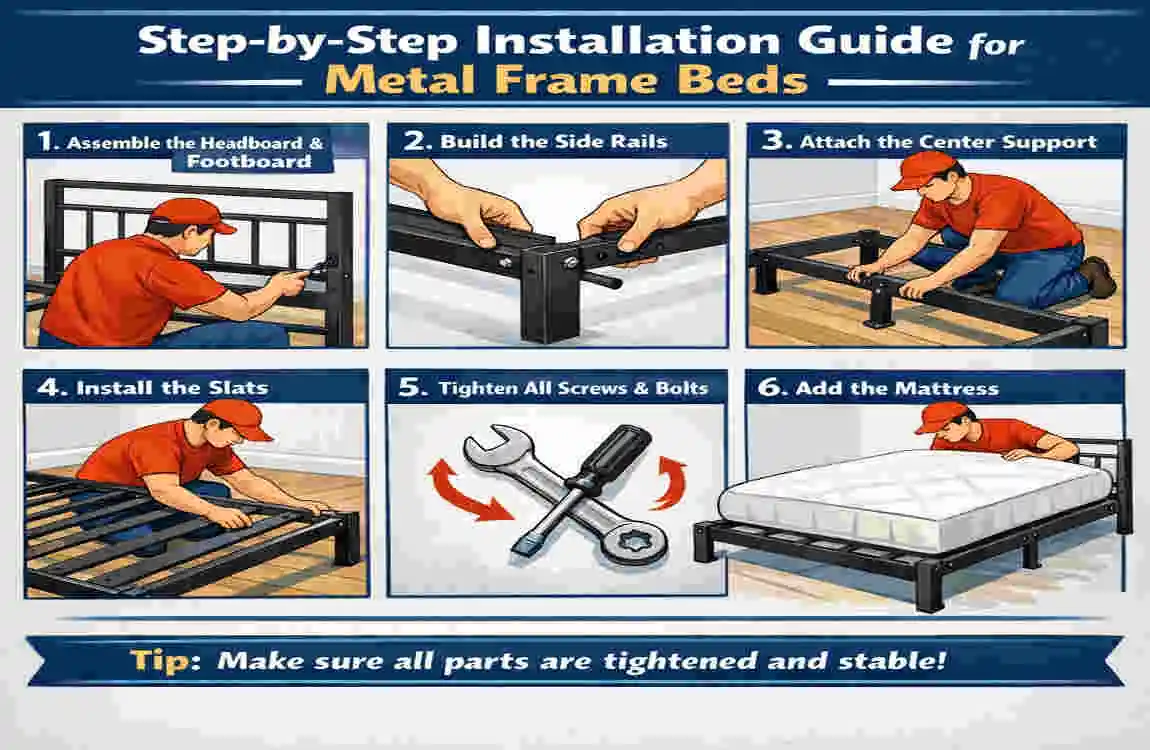
Installing bed risers is not hard, but it should be done carefully. A good installation helps protect the bed, the floor, and the people using it.
What You Will Need
Before you begin, gather a few simple tools and items:
- A measuring tape
- A level
- A clean cloth
- Anti-slip pads or grips
- A helper, if the bed is large or heavy
You do not need fancy tools. You need patience and a careful eye.
Measure the Bed Legs
Start by checking the leg shape and size.
Is the leg round, square, or flat? How wide is it? How tall is it already? These details matter because the riser cup must fit the leg properly.
If the fit is too tight, you may damage the frame. If it is too loose, the bed could shift later. A few minutes of measuring now can save you from problems later.
Choose the Right Riser Height
Decide how much lift you actually need.
A lift of 3 to 6 inches is enough for many people. If you want more storage, 8 to 12 inches may work, but only if the frame is strong enough. Do not lift a bed more than you need. Higher is not always better.
The right height depends on:
- Storage needs
- Room size
- Bed height comfort
- The age and strength of the bed frame
Clean the Floor and Bed Legs
Before placing the risers, clean the area.
Dust, grit, or moisture can reduce grip. Wipe the bottom of each leg and the floor where the riser will sit. This helps the riser stay in place and makes the installation more secure.
If the floor is slippery, add anti-slip pads under the risers. This is a simple but useful step.
Place the Risers Carefully
Lift one corner of the bed at a time and place the riser underneath. Make sure the leg sits fully inside the cup or top surface of the riser.
If the bed is too heavy to lift safely on your own, ask someone to help. Do not force it.
Once all risers are in place, step back and check whether the bed looks level.
Test for Wobble
After the risers are in position, gently press on different parts of the bed.
If the frame sways, rocks, or creaks more than usual, stop and check each leg. One leg may not be seated properly, or one riser may be the wrong size.
Use a level if needed. An unevenly sitting bed can cause stress on the frame over time.
Load-Test the Bed
After the bed looks stable, place the mattress back on and test it slowly.
Sit on the bed first. Then shift your weight gently from side to side. If everything feels secure, lie down and check again. A good installation should feel steady, not springy or shaky.
Secure the Setup if Needed
If you still notice movement, you may need extra support. Anti-slip pads, corner grips, or frame straps can help. In some cases, a stabilizer bar may also improve the setup.
Never ignore wobble. A small wobble today can become a bigger problem later.
Safety Tips to Keep in Mind
- Do not overload the bed beyond its rating
- Avoid risers that do not match the leg size
- Check frame welds before lifting
- Re-check the setup after a few days of use
Top Bed Riser Picks for Pakistani Homes with Metal Frames
If you are shopping for a home in Pakistan, you will likely want a riser that is affordable, durable, and readily available. The good news is that there are options for different budgets.
Budget-Friendly Choice
For light metal beds, simple plastic risers can work well. They are easy to buy, easy to replace, and often enough for a guest room or a smaller bed.
Look for:
- Strong plastic body
- Clear weight rating
- Wide base for floor grip
These are a good option if you want a quick and simple lift without spending too much.
Mid-Range Choice
If you want better strength and a cleaner look, a stronger plastic or wooden riser may be the right step up.
This type is helpful if the bed is used every day and you want a little more confidence in the support. Mid-range risers often feel sturdier and last longer than the cheapest ones.
Heavy-Duty Choice
For queen or king metal beds, or for heavier sleepers, metal or steel risers are usually the better choice.
They cost more, but they also give stronger support and better durability. If you want long-term peace of mind, this is often the smartest investment.
Quick Comparison Table
TypeBest ForApprox. HeightStrengthBudget Level
Plastic Light metal frames, guest rooms 3–8 inches Moderate Low
Wooden Stylish rooms, medium beds 3–6 inches Moderate to good Medium
Metal/Steel Heavy beds, long-term use 3–12 inches High Medium to high
Adjustable/Swivel Uneven floors, older homes Varies Good Medium
A Practical Buying Tip
When buying in a local market or online, do not focus only on price. Look at the leg fit, weight rating, and material quality first. Those three things matter more than the brand name.
If you are unsure, choose the stronger option. A riser that feels slightly overbuilt is usually better than one that feels too light.
Troubleshooting Common Issues with Bed Risers on Metal Frames
Even a good setup can have small problems at first. The good news is that most issues are easy to fix.
Wobbling
If the bed wobbles, check whether every leg is seated properly in the riser.
Sometimes the riser is fine, but one leg is slightly off-center. Uneven flooring can also cause wobble. Try moving the bed carefully and rechecking each corner. Anti-slip pads can also help.
Squeaking
Squeaking often comes from metal-on-metal contact or loose joints.
You can reduce noise by tightening frame bolts and checking whether the legs are rubbing inside the riser. A thin rubber layer or grip pad may help soften contact points.
Frame Damage
If the risers are too small or not shaped correctly, they can place stress on the frame legs.
That is why fit is so important. The leg should sit fully inside or securely on top of the riser. If the frame appears bent after installation, remove the risers immediately and re-evaluate the setup.
When to Call a Professional
You should ask a furniture expert or repair person for help if:
- The bed is very heavy
- The frame already has cracks or weak welds
- The floor is very uneven
- The bed still moves after several adjustments
A stable bed should feel solid the moment you lie down, not after several guesses.
Maintenance and Long-Term Tips
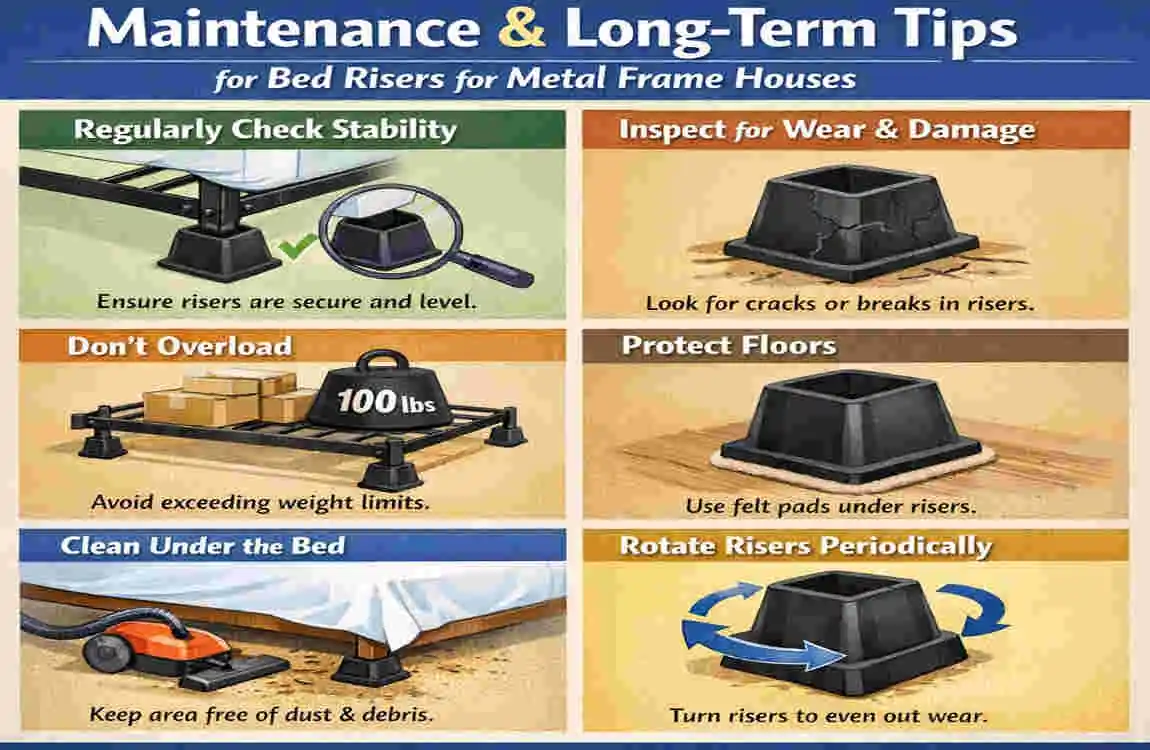
Once your bed risers are installed, a little maintenance will help them last longer and keep the bed safe.
Check the Setup Regularly
Every few weeks, take a quick look under the bed.
Make sure the risers have not shifted. Check that the frame still sits evenly. If the bed is used heavily, this habit becomes even more important.
Keep the Area Clean
Dust and clutter can build up under a raised bed, especially if you use the space for storage. Keep things organized so you can still clean the area easily.
A clean under-bed space also helps you spot cracks, rust, or movement sooner.
Watch for Rust or Wear
In humid weather, metal parts can sometimes show rust over time. If you notice any rust on the bed frame or risers, clean them immediately and replace any damaged parts if needed.
This is especially important in homes where rooms stay warm or damp for long periods.
Pair Risers with Other Support if Needed
If your bed feels slightly unstable, a stabilizer or grip pad may help. Some people also use corner supports or mattress guards to reduce movement.
Think of risers as part of the full bed system, not the only piece that matters.
FAQs
Can you use bed risers on a house with metal frame?
Yes, you can. Bed risers work well with metal frame beds when the fit is correct and the weight rating is high enough. The key is to match the riser to the leg shape and make sure the frame is stable before lifting it.
Are bed risers safe for heavy metal beds?
They can be safe if you choose heavy-duty risers made for the right weight. For large or heavy beds, steel or reinforced risers are usually the better choice. Avoid weak plastic options if the bed carries a lot of weight.
What height should I choose for under-bed storage?
A lift of 6 inches is often a good middle ground. It usually provides enough storage space without making the bed feel too high. If you need more room, 8 to 12 inches may work, but only if the frame stays stable.
Do metal bed frames need special risers?
Not always, but many metal bed frames do benefit from risers made for straight, narrow legs. If the legs are unusual in shape, you may need adjustable risers or a wider top cup for better support.
What if my floor is uneven?
If the floor is uneven, choose adjustable or swivel risers if possible. You can also use anti-slip pads or small leveling tools to help the bed sit more evenly. This can reduce wobble and noise.
Are plastic bed risers strong enough?
Some are, especially for lighter beds. But for larger metal frames or daily use, stronger plastic or metal risers are usually a safer choice. Always check the weight rating before buying.
Can bed risers damage my metal frame?
They can if they are the wrong size or force the legs into an unnatural position. A proper fit should support the frame, not press it unevenly. If the bed shows bending or stress after installation, remove the risers and try a different type.
What is the best choice for apartments in Lahore?
For many Lahore apartments, the best choice is a sturdy riser with anti-slip support and enough height for storage. If the room is small, a 6-inch lift is often practical. If the floor is uneven, adjustable risers may be the smartest option.
